Quick summary
Saposhnikovia divaricata (Turcz.) Schischk., known in English mainly by its Chinese name fangfeng, is a perennial herbaceous plant of the Apiaceae family, native to Northeast Asia, whose dried root has been used for centuries in Traditional Chinese Medicine (TCM). Tradition values it above all for its ability to…
Main caution: TCM lists as traditional contraindications Blood Deficiency with spasms, Wind Stroke, postpartum convulsions and Yin Deficiency with Empty Heat, categories from the language of Chinese medicine that should be read as a…
Saposhnikovia divaricata (Turcz.) Schischk., known in English mainly by its Chinese name fangfeng, is a perennial herbaceous plant of the Apiaceae family, native to Northeast Asia, whose dried root has been used for centuries in Traditional Chinese Medicine (TCM). Tradition values it above all for its ability to “expel wind”, a TCM concept that brings together conditions such as colds with chills, body aches and allergic manifestations, which is why it appears so often in classical formulas alongside other herbs.
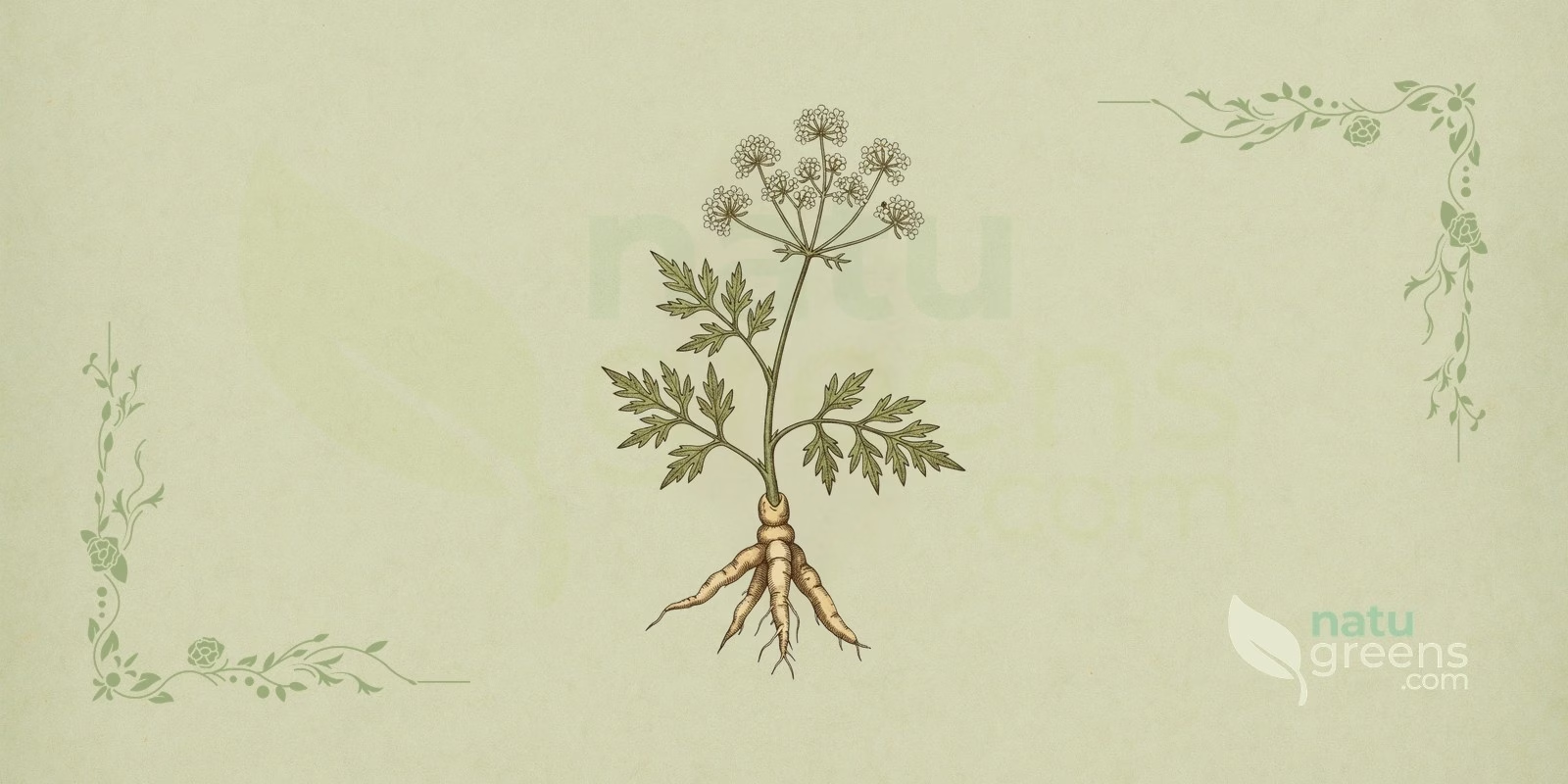
The root has a rich phytochemical composition that includes chromones, coumarins, furanocoumarins and essential oils, and laboratory and animal studies have linked these compounds to anti-inflammatory, analgesic and immunomodulatory activity. Modern scientific research is looking into some of the herb’s traditional uses, from joint pain to immune system balance, but the available clinical trials almost always assess combined TCM formulas rather than the root alone, which limits what can be concluded about fangfeng on its own.
Popular and International Names of Fangfeng
- English: Chinese Laserwort, Fangfeng, Siler.
- Chinese: fángfēng (防風).
- French: Fang Feng, Silère.
- German: Fang Feng, Siler.
- Italian: Fang Feng, Siler.
- Korean: bangpung.
- Portuguese: fang feng, fangfeng, siler.
- Spanish: Fang Feng, Siler.
Botanical Synonyms of Saposhnikovia divaricata
Saposhnikovia divaricata has gathered several botanical synonyms over a complex taxonomic history, and among the most frequently cited are Ledebouriella divaricata (Turcz.) Hiroe, Ledebouriella seseloides (Hoffm.) H.Wolff, Siler divaricatum (Turcz.) Benth. & Hook.f. and the basionym Stenocoelium divaricatum Turcz. These names appear in scientific publications, pharmacopoeias and herbarium collections, and in the Chinese Pharmacopoeia the herbal drug is listed as Saposhnikoviae Radix.
Botanical identification is mandatory when buying the root, because substitutes sold as fangfeng circulate in the Chinese trade, mainly species of Peucedanum, Seseli and other Apiaceae with similar-looking roots. Fangfeng should also not be confused with Glehnia littoralis, known as bei sha shen, a different Apiaceae with another use in Chinese tradition.
Botanical Family: Apiaceae
Saposhnikovia divaricata belongs to the Apiaceae family, also known as Umbelliferae, a vast group of flowering plants recognizable by their umbrella-shaped inflorescences. The family includes many species of economic and medicinal importance, such as carrot, celery and parsley, and its plants tend to be rich in essential oils and bioactive compounds. Fangfeng shares these traits, since its root concentrates coumarins, chromones and the volatiles typical of the umbellifers, which lie at the heart of scientific interest in the species.
Parts of Fangfeng Used
- Root
Ethnobotanical and Traditional Uses
- Allergic conditions
- Arthralgia (joint pain)
- Colds
- Complaints of the immune, nervous and respiratory systems (traditional record)
- Convulsions (traditional record)
- Dispersing dampness (TCM concept)
- Dispersing wind (TCM concept)
- Dysuria
- Eczema and inflamed wounds
- Flu
- Generalized aches
- Headaches and fever
- Immune system balance (traditional record)
- Infections (traditional record)
- Inflammation
- Pain relief
- Releasing the exterior (TCM concept)
- Rheumatism
- Spasms and tremors
- Wet beriberi
Therapeutic Properties of Fangfeng
- Analgesic (pain reduction observed in animal models)
- Anti-allergic (activity on allergic reactions in preclinical studies)
- Anti-arthritic (activity investigated in experimental models of arthritis)
- Anti-inflammatory (effect observed in laboratory and animal studies)
- Antioxidant (free radical neutralization in in vitro tests)
- Antipyretic (traditional record and fever reduction in animal models)
- Antirheumatic (traditional record for rheumatic pain)
- Antispasmodic (traditional record for spasms)
- Immunomodulatory (modulation of immune responses in preclinical studies)
- Neuroprotective (preliminary activity observed in the laboratory)
Detailed Phytochemical Profile of Fangfeng
- Alpha-pinene
- Alpha-terpineol
- Angelicin
- Bergapten
- Beta-pinene
- Caryophyllene oxide
- Chromones
- Cimifugin
- Coumarins
- Essential oils
- Furanochromones
- Furanocoumarins
- Hyperoside
- Imperatorin
- Myrtenal
- Myrtenol
- Nonanoic acid
- P-cymene
- Phenolic compounds
- Polyacetylenes
- Polysaccharides
- Prim-O-glucosylcimifugin
- Psoralen
- Sabinene
- Terpenes
Preparation and Administration Forms of Fangfeng
- Decoction (tea or soup)
- Extracts (aqueous or methanolic)
- Powder (for external application or internal use)
- Tincture
Synergy with Other Medicinal Plants
Classical TCM Formulas
Fangfeng is a central component of several Traditional Chinese Medicine formulas and is rarely used alone. In its best-known combination, Yu Ping Feng San, it is joined by astragalus (Astragalus membranaceus, huang qi) and Atractylodes macrocephala (bai zhu), a formula traditionally used to consolidate the body’s external defense and investigated in clinical trials on allergic rhinitis and recurrent colds, results that refer to the complete formula and not to the isolated root. It is also part of the classical formula Jing Fang Bai Du San, traditionally recorded for wind-cold syndromes. Alongside Ligusticum chuanxiong (chuan xiong) and Angelica sinensis (dang gui), it appears in preparations that tradition associates with nourishing the blood, while the combination with Schizonepeta tenuifolia (jing jie) and Gentiana macrophylla (qin jiao) is traditionally used to keep “wind” from entering the skin.
Dispersing Wind-Heat
In certain conditions, fangfeng is combined with other herbs to disperse “wind-heat”, a category of imbalance described by TCM. The Fang Feng Tong Sheng San formula is a classic example, in which the root works together with other ingredients according to the traditional logic of balancing the recipe, and it is this ability to blend well with other herbs that makes fangfeng such a versatile ingredient in Chinese herbal medicine.
Recipes and Usage Protocols of Fangfeng
Decoction for Traditional Use in Wind-Cold Syndromes
In Chinese tradition, the dried fangfeng root is boiled in water for about 15 to 20 minutes and the decoction is drunk warm, a traditional practice in colds with chills, fever, headache and body aches. The amount of root, the frequency and the duration of use should be set individually, so consult a healthcare professional before preparing it, especially since the herb usually goes into combined formulas that only a qualified TCM practitioner should put together.
Powder for Topical Application
In traditional practice, the dried root is ground into a fine powder, which is mixed with a little water or vegetable oil until it forms a paste and then applied to areas with muscle or joint pain or skin inflammation. Do not apply it to open wounds, and avoid exposing the area where it was applied to strong sun, since the root contains furanocoumarins that can cause photosensitization. The amount of powder and how often it is applied should be guided by a professional, so consult a healthcare professional before use.
Tincture for Traditional Use in Rheumatic Pain
Commercial fangfeng tinctures exist, usually prepared at a ratio of 1:5 in 45% alcohol, which tradition uses for rheumatic pain, arthralgia and spasms, diluted in water or juice. There are not enough safety data to indicate a standard dose for internal use, so the amount, frequency and duration of use should be set by a professional, and you should therefore consult a healthcare professional or herbalist before starting.
The preparations above follow traditional records and do not replace professional guidance. Before any internal use, check the contraindications and interactions described in this article.
Associated Therapies
Traditional Chinese Medicine (TCM)
Fangfeng is a fundamental herb in Traditional Chinese Medicine, widely used to “expel wind”, both external and internal, and traditionally recorded for relieving pain and inflammation and for wind-cold and wind-damp syndromes. Its nature is described as pungent and slightly warm, and it is usually incorporated into complex formulas traditionally used for colds, flu, headaches, muscle and joint pain and rheumatic diseases. For TCM, the value of fangfeng lies in its capacity to harmonize the body and bring energetic balance back, concepts specific to that medical system that do not correspond to clinical diagnoses in Western medicine.
Contraindications and Side Effects of Fangfeng
General Contraindications
TCM lists as traditional contraindications Blood Deficiency with spasms, Wind Stroke, postpartum convulsions and Yin Deficiency with Empty Heat, categories from the language of Chinese medicine that should be read as a traditional record, not as clinical fact. During pregnancy and breastfeeding, use should be avoided due to the lack of safety data, and the herb should not be used in children. People with liver disease should be cautious and only use fangfeng under medical supervision.
Photosensitization and Drug Interactions
The root contains chromones, such as prim-O-glucosylcimifugin and cimifugin, and furanocoumarins, such as imperatorin and psoralen, so photosensitization is possible at high doses, and it is advisable to avoid strong sun during use. In in vitro studies, coumarins and furanocoumarins inhibit the liver enzymes CYP3A4 and CYP2C9, which calls for caution in people taking warfarin or other anticoagulants and drugs with a narrow therapeutic index. Anyone taking long-term medication should talk to their doctor before using fangfeng.
Side Effects and Safety Data
In a preclinical study, aqueous extracts of Saposhnikovia divaricata showed no evident toxic effects in animals at doses of up to 5,000 mg/kg per day, a result that does not allow the conclusion that the herb is safe for people, since safety studies in humans with the isolated root are lacking. Fangfeng is almost always used in combined TCM formulas, such as Yu Ping Feng San, for “wind-cold” and allergies, and the published clinical trials assess these formulas, not the isolated root. Individual reactions may vary, and if any adverse reaction occurs, use should be stopped and a doctor consulted.
Historical Notes and Interesting Facts
Name and Meaning
The Chinese name fangfeng (防風) literally means “guarding against the wind”, reflecting the root’s main application in Traditional Chinese Medicine, where it is used for conditions attributed to the invasion of pathogenic “wind”, which according to this tradition show up as colds, flu, headaches and joint pain. This reputation as a protector against wind is a pillar of its age-old use and explains why the herb is found in so many classical formulas.
Historical Use
The root of Saposhnikovia divaricata has been a mainstay of Chinese herbal medicine for more than 2,000 years and appears in classical TCM texts that describe its properties in detail. Its long history of use and its inclusion in countless traditional formulas attest to its cultural importance, and the root remains one of the most widely used and researched herbs in Eastern medicine. This prestige, incidentally, explains why so many roots of other Apiaceae end up being sold as fangfeng in the Chinese trade.
Frequently Asked Questions about Fangfeng
What Is Fangfeng?
Fangfeng is the Chinese name for the dried root of Saposhnikovia divaricata, an Apiaceae native to Northeast Asia. In Traditional Chinese Medicine, the root is traditionally used for colds, flu, headaches and muscle aches, with the role of “expelling wind”. Laboratory studies are investigating its anti-inflammatory and analgesic activity, which has not yet been clinically proven for the isolated root.
What Are the Traditional Uses of Fangfeng?
Tradition uses fangfeng for joint and muscle pain, fever and cold symptoms with chills, as well as rheumatic and allergic conditions. In TCM, the decoction is used to promote sweating in wind-cold conditions. The existing clinical trials have assessed combined formulas, such as Yu Ping Feng San, and not the isolated root.
How Is Fangfeng Prepared in Chinese Tradition?
The traditional form is a decoction of the dried root in water for about 15 to 20 minutes, drunk warm, almost always as part of a formula with other herbs. The amount and duration of use depend on individual assessment, so consult a healthcare professional before preparing it.
Are There Contraindications for Fangfeng?
Yes. Pregnant and breastfeeding women should avoid fangfeng due to the lack of safety data, and the herb should not be used in children. People with liver disease need medical supervision, and TCM adds traditional contraindications such as Yin Deficiency with Empty Heat and Blood Deficiency with spasms.
Can Fangfeng Interact with Medications?
In in vitro studies, the root’s coumarins and furanocoumarins inhibit the CYP3A4 and CYP2C9 enzymes, which calls for caution with warfarin and other narrow-margin drugs. Furanocoumarins can also cause photosensitization at high doses, so it is advisable to avoid strong sun. Anyone taking long-term medication should consult their doctor first.
How Can You Avoid Confusing Fangfeng with Substitutes?
Roots of Peucedanum, Seseli and other Apiaceae species are sold as fangfeng in the Chinese trade, which is why botanical identification is mandatory. Fangfeng should also not be confused with Glehnia littoralis (bei sha shen), another Apiaceae with a different traditional use. Choose suppliers that state the binomial and the origin of the material.
Notice: this content is for informational purposes and does not replace professional medical advice. Consult a physician or herbal practitioner before using medicinal plants, especially during pregnancy, breastfeeding, or alongside medication.
How to cite this article
NATUGREENS. Fangfeng (Saposhnikovia divaricata): Properties and Benefits. Natugreens, 4 Nov. 2026. Disponível em: https://natugreens.com/fangfeng-saposhnikovia-divaricata/. Accessed: Nov. 4, 2026.
Natugreens. (2026). Fangfeng (Saposhnikovia divaricata): Properties and Benefits. Natugreens. https://natugreens.com/fangfeng-saposhnikovia-divaricata/
References and Scientific Studies
- PMC2025 Chen ZJ, et al. An integrated analysis strategy for characterization of chromones and coumarins from Saposhnikovia divaricata (Turcz.) Schischk. by UHPLC-QTOF-MS. J Pharm Biomed Anal. 2025.
- PMC2023 Erdenebileg S, et al. Saposhnikovia divaricata root and its major components ameliorate inflammation and altered gut microbial diversity and compositions in DSS-induced colitis. Integr Med Res. 2023.
- PMC2017 Kreiner J, et al. Saposhnikoviae divaricata: a phytochemical, pharmacological, and pharmacokinetic review. Chin J Nat Med. 2017.
- PMC2020 Yang M, et al. Saposhnikovia divaricata: An Ethnopharmacological, Phytochemical and Pharmacological Review. Chin J Integr Med. 2020.