



Quick summary
Passiflora alata Curtis, known in English as fragrant granadilla or winged-stem passion flower and in Brazil as maracujá-doce, is a perennial climbing vine of the Passifloraceae family, described by the English botanist William Curtis in the late eighteenth century. Native to South America, where it grows from Peru to…
Main caution: Pregnancy: medicinal use of the leaves is contraindicated. Safety data are lacking, and uterine activity has been attributed to alkaloids of the genus Passiflora. Breastfeeding and children under 12: not recommended…
Passiflora alata Curtis, known in English as fragrant granadilla or winged-stem passion flower and in Brazil as maracujá-doce, is a perennial climbing vine of the Passifloraceae family, described by the English botanist William Curtis in the late eighteenth century. Native to South America, where it grows from Peru to eastern Brazil, it stands out for its fragrant red flowers and its large fruits with sweet pulp. In Brazilian folk medicine, tea made from the leaves has a long tradition as a calming remedy, and the species is being studied for its flavonoids. Its effects on anxiety and sleep, however, remain under study, and data in humans are still limited.
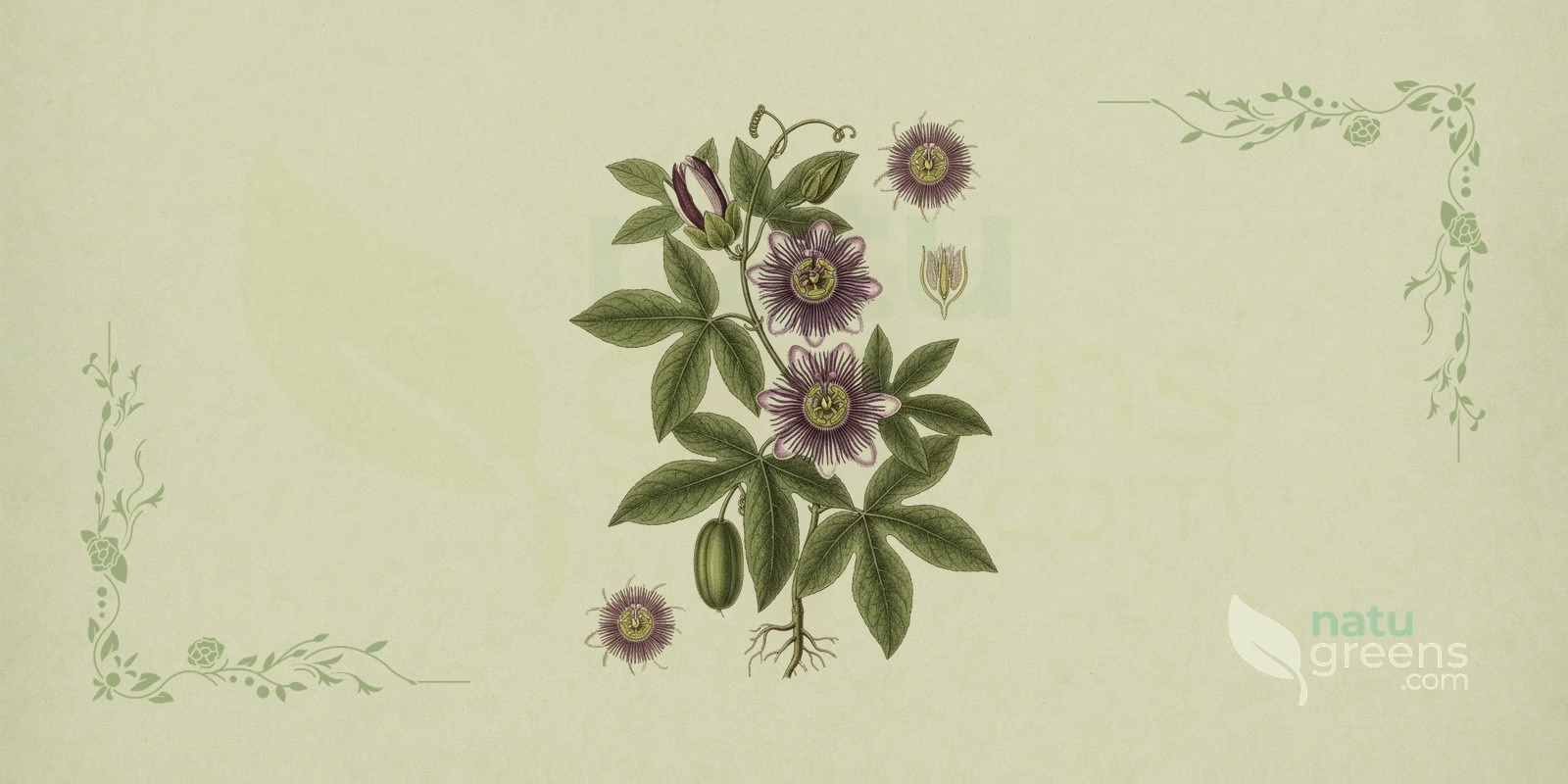
Popular and International Names of Fragrant Granadilla
- English: fragrant granadilla, winged-stem passion flower.
- French: grenadille ailée, passiflore ailée.
- German: Geflügelte Passionsblume.
- Italian: passiflora alata.
- Portuguese: maracujá-açu, maracujá-de-cerca, maracujá-de-cheiro, maracujá-doce, maracujá-grande, maracujá-mamão, maracujá-peroba.
- Spanish: granadilla alada, maracuyá alado.
Not to Be Confused with Other Passion Flowers
Fragrant granadilla is not Passiflora incarnata, the North American passionflower found in most imported herbal products, which has its own article on this site. Nor is it the sour passion fruit (Passiflora edulis), the one sold at juice stands. These are different species with different chemistry, and the results of studies carried out with one do not automatically apply to the other. Whenever you read about "passionflower", it is worth checking which species was actually studied.
Botanical Synonyms of Fragrant Granadilla
Passiflora alata Curtis is the accepted name and the only one in current use for the species. The genus has a complex taxonomy, with wide variation between populations and hybridization in cultivation, and some old names cited for fragrant granadilla correspond to misidentifications rather than recognized synonyms. In practice, correctly identifying the leaf used in teas depends on a reliable supplier, because the leaves of different passion flowers look alike once dried.
Botanical Family: Passifloraceae
The Passifloraceae family comprises hundreds of species from tropical and subtropical regions, with a strong concentration in the Americas. Their intricate flowers gave the group the name passion flower, because European missionaries saw in them the symbols of the Passion of Christ. Most species are climbers that cling to supports with tendrils.
The family is chemically rich in flavonoids, alkaloids and cyanogenic glycosides. The latter, found mainly in leaves and unripe fruits, are one of the reasons not to eat green, raw parts of passion flowers.
Parts of Fragrant Granadilla Used
The leaves are the traditional medicinal part and the most thoroughly studied. Flowers and roots have occasional folk uses with no research behind them. The ripe fruit is a food: its sweet, aromatic pulp is eaten fresh, and the cautions about medicinal use in this article do not apply to it.
Ethnobotanical and Traditional Uses of Fragrant Granadilla
In Brazil, leaf tea is remembered above all for nervousness, stress and trouble sleeping. Folk accounts also link it to menopausal symptoms, high blood pressure, palpitations, digestive complaints and intestinal worms. These are traditional uses handed down from generation to generation, and they do not amount to proven indications. Insomnia or anxiety that persists for weeks deserves medical assessment, since it may have causes that require specific treatment.
Therapeutic Properties of Fragrant Granadilla
The actions below were observed in laboratory and animal studies with Passiflora alata extracts, or belong to traditional use. None of them has been established in robust clinical trials with this species:
- Anti-inflammatory (observed in experimental models, under study)
- Antioxidant (activity against free radicals in laboratory assays)
- Anxiolytic (reduced anxious behavior in rodents, under study)
- Calming (traditional use of the leaf tea)
- Sleep-promoting (traditional use, under study)
Many texts credit fragrant granadilla with effects that were demonstrated with Passiflora incarnata. That transfer is not valid: every claim has to come from studies with P. alata itself.
Detailed Phytochemical Profile of Fragrant Granadilla
The chemistry of the leaves is dominated by glycosylated flavonoids, regarded as the markers of the species:
- C-glycosylflavones (isoorientin, isovitexin, orientin and vitexin, the most studied)
- Cyanogenic glycosides (characteristic of the genus, more abundant in green parts)
- Free flavonoids (such as apigenin and luteolin)
- Harman-type indole alkaloids (at very low levels, sometimes undetectable, depending on the material analyzed)
- Saponins (substances of interest in pharmacological studies)
Preparation and Administration Forms of Fragrant Granadilla
The dried leaves are used for tea by infusion and to produce tinctures, fluid extracts, capsules and tablets. Fragrant granadilla is one of the passion flower species with a recognized tradition of use in Brazil, and manufactured products made with its leaves should state the scientific name and the manufacturer's directions on the label.
Choose products with health authority registration and avoid combining several calming formulas at the same time. Anyone who needs to drive or operate machinery should be aware that drowsiness is a possible effect.
Synergy with Other Medicinal Plants
Combinations for Relaxation and Sleep
Fragrant granadilla often appears alongside valerian (Valeriana officinalis) and chamomile (Matricaria chamomilla) in calming formulas. The combination is traditional, but adding sedative plants together also adds to the chance of drowsiness, and no clinical trials have compared this blend with each plant on its own.
Combinations for Digestion
In folk teas for bloating and cramps, fragrant granadilla is combined with peppermint (Mentha × piperita) and lemon balm (Melissa officinalis). This is a traditional use without specific studies.
Recipes and Usage Protocols of Fragrant Granadilla
Leaf Tea in Folk Tradition
In Brazilian tradition, the tea is made by steeping dried leaves in freshly boiled water, covered for a few minutes and then strained, and it is usually taken in the evening. The amount and frequency should follow the advice of a health professional or the product manufacturer, and they should not be increased on your own in search of a stronger effect.
Tinctures and Extracts
Homemade tinctures circulate with doses given in drops, but the concentration varies widely from one preparation to another. Choose standardized formulations with a dose stated on the label or in the prescription.
The Fruit as Food
The pulp of the ripe fruit can be eaten fresh or used in juices and desserts. Avoid eating unripe fruits or raw leaves.
The preparations above follow traditional records and do not replace professional guidance. Before any internal use, check the contraindications and interactions described in this article.
Associated Therapies of Fragrant Granadilla
Clinical Herbal Medicine
In herbal medicine, Passiflora alata leaves are used in extracts, alone or in combination, as support for mild tension and trouble sleeping. Use should be guided by a professional and does not replace treatment for anxiety disorders or chronic insomnia.
Homeopathy
The homeopathic remedy Passiflora is traditionally prepared from Passiflora incarnata, not from fragrant granadilla. Homeopathy follows its own principles, unrelated to the phytochemical studies described here.
Contraindications and Side Effects of Fragrant Granadilla
Pregnancy: medicinal use of the leaves is contraindicated. Safety data are lacking, and uterine activity has been attributed to alkaloids of the genus Passiflora. Breastfeeding and children under 12: not recommended without professional guidance.
The most frequently reported adverse effect is drowsiness, so caution is needed when driving or operating machinery. Nausea, headache and a rapid heartbeat appear in occasional reports. Occupational asthma and rhinitis have been recorded in pharmacy workers who handled the powdered leaf, which shows that allergic reactions are possible.
Drug Interactions
Fragrant granadilla may add to the effect of benzodiazepines, hypnotics, sedating antihistamines, opioids and alcohol, increasing drowsiness. People taking antidepressants should also talk to their doctor first. Stop using it before surgery under anesthesia and let the medical team know.
Green Parts
The leaves and unripe fruits of passion flowers may contain cyanogenic glycosides. Do not eat green parts raw. The ripe fruit eaten as food is not subject to this caution.
Historical Notes and Interesting Facts about Fragrant Granadilla
The name Passiflora comes from Catholic missionaries in the Americas who saw in the flower a lesson about the Passion of Christ: the filaments recalled the crown of thorns, the styles the nails and the anthers the wounds. The image spread across Europe in engravings and helped make passion flowers popular as garden plants.
Fragrant granadilla, with its large carmine-red petals and filaments banded in purple and white, is among the most ornamental species in the genus. Its yellow-orange fruits can grow longer than a hand span and are sold at street markets in southeastern and southern Brazil as a dessert fruit.
Frequently Asked Questions about Fragrant Granadilla Tea
Is Fragrant Granadilla Tea Addictive?
There are no records of dependence associated with the tea. That does not make it risk-free: drowsiness and interactions with sleeping pills and alcohol deserve attention.
Can I Drink Fragrant Granadilla Tea Every Day?
Prolonged daily use has not been well studied. If trouble sleeping or anxiety keeps coming back, the best course is a medical assessment, not drinking more tea.
How Does Fragrant Granadilla Differ from Other Passion Fruit Species?
Fragrant granadilla is Passiflora alata. The passionflower in imported herbal products is usually Passiflora incarnata, and the sour passion fruit used for juice is Passiflora edulis. They are different species, and studies on one do not apply to the others.
Does Fragrant Granadilla Tea Make You Sleepy? Can I Drive Afterward?
It can make you sleepy. Avoid driving or operating machinery until you know how your body reacts, and never combine the tea with alcohol.
Can Pregnant Women Drink Fragrant Granadilla Leaf Tea?
No. Medicinal use of the leaves is contraindicated during pregnancy. Eating the ripe fruit as food is a different matter and is not covered by this restriction.
Can I Take the Tea Together with Sleeping Medication?
Only with your doctor's approval. Benzodiazepines, hypnotics, sedating antihistamines and opioids may have their effect added to that of the tea.
Does Fragrant Granadilla Cure Insomnia or Anxiety?
No. Its calming effect is part of traditional use and remains under study. Persistent insomnia and anxiety require professional assessment.
Notice: this content is for informational purposes and does not replace professional medical advice. Consult a physician or herbal practitioner before using medicinal plants, especially during pregnancy, breastfeeding, or alongside medication.
How to cite this article
NATUGREENS. Fragrant Granadilla (Passiflora alata): Uses, Studies and Precautions. Natugreens, 20 Nov. 2026. Disponível em: https://natugreens.com/passiflora-alata-fragrant-granadilla/. Accessed: Nov. 20, 2026.
Natugreens. (2026). Fragrant Granadilla (Passiflora alata): Uses, Studies and Precautions. Natugreens. https://natugreens.com/passiflora-alata-fragrant-granadilla/
References and Scientific Studies
- DOI2005 Doyama, J. T., Rodrigues, H. G., Novelli, E. L. B., Cereda, E. and Vilegas, W. (2005). Chemical investigation and effects of the tea of Passiflora alata on biochemical parameters in rats. Journal of Ethnopharmacology, 96(3), 371-374. Describes the composition of the leaf tea and its effects on biochemical parameters in rats. ↗
- DOI2007 Rudnicki, M. et al. (2007). Antioxidant and antiglycation properties of Passiflora alata and Passiflora edulis extracts. Food Chemistry. Leaf extracts showed antioxidant activity in vitro. ↗
- DOI2020 Amaral, R. G. et al. (2020). Cytotoxic, antitumor and toxicological profile of Passiflora alata leaf extract. Molecules, 25(20), 4814. Preclinical study of the toxicity and cytotoxicity of the leaf extract. ↗
- DOI1997 Giavina-Bianchi, P. F., Castro, F. F. M., Machado, M. L. S. and Duarte, A. J. S. (1997). Occupational respiratory allergic disease induced by Passiflora alata and Rhamnus purshiana. Annals of Allergy, Asthma and Immunology, 79(5), 449-454. Report of occupational allergic respiratory disease, with asthma and rhinitis, linked to handling the powdered leaves. ↗
You May Also Like

Take your time and tell us everything you think, details included. Every response is read by someone on our editorial team and goes into the article's revision. An honest critique helps us more than a polite compliment.
Take your time and tell us everything you think, details included. Every response is read by someone on our editorial team and goes into the article's revision. An honest critique helps us more than a polite compliment.