



Quick summary
Cyperus rotundus L., known in English as nutgrass or purple nutsedge, is a perennial herb of the Cyperaceae family found in almost every tropical and subtropical region of the world. Farmers and gardeners know it as the plant that sprouts again after every weeding. In the medical traditions of Asia, Africa and the…
Main caution: Nutgrass is traditionally used to bring on menstruation, and that action alone is reason to avoid it during pregnancy. There are no safety data for breastfeeding or for children, and use during these stages is not…
Cyperus rotundus L., known in English as nutgrass or purple nutsedge, is a perennial herb of the Cyperaceae family found in almost every tropical and subtropical region of the world. Farmers and gardeners know it as the plant that sprouts again after every weeding. In the medical traditions of Asia, Africa and the Middle East, however, its small aromatic tubers are an old remedy, recalled for digestive complaints, pain and menstrual discomfort. Most of the effects attributed to it have been observed in the laboratory and in animals, and studies in people are still scarce.
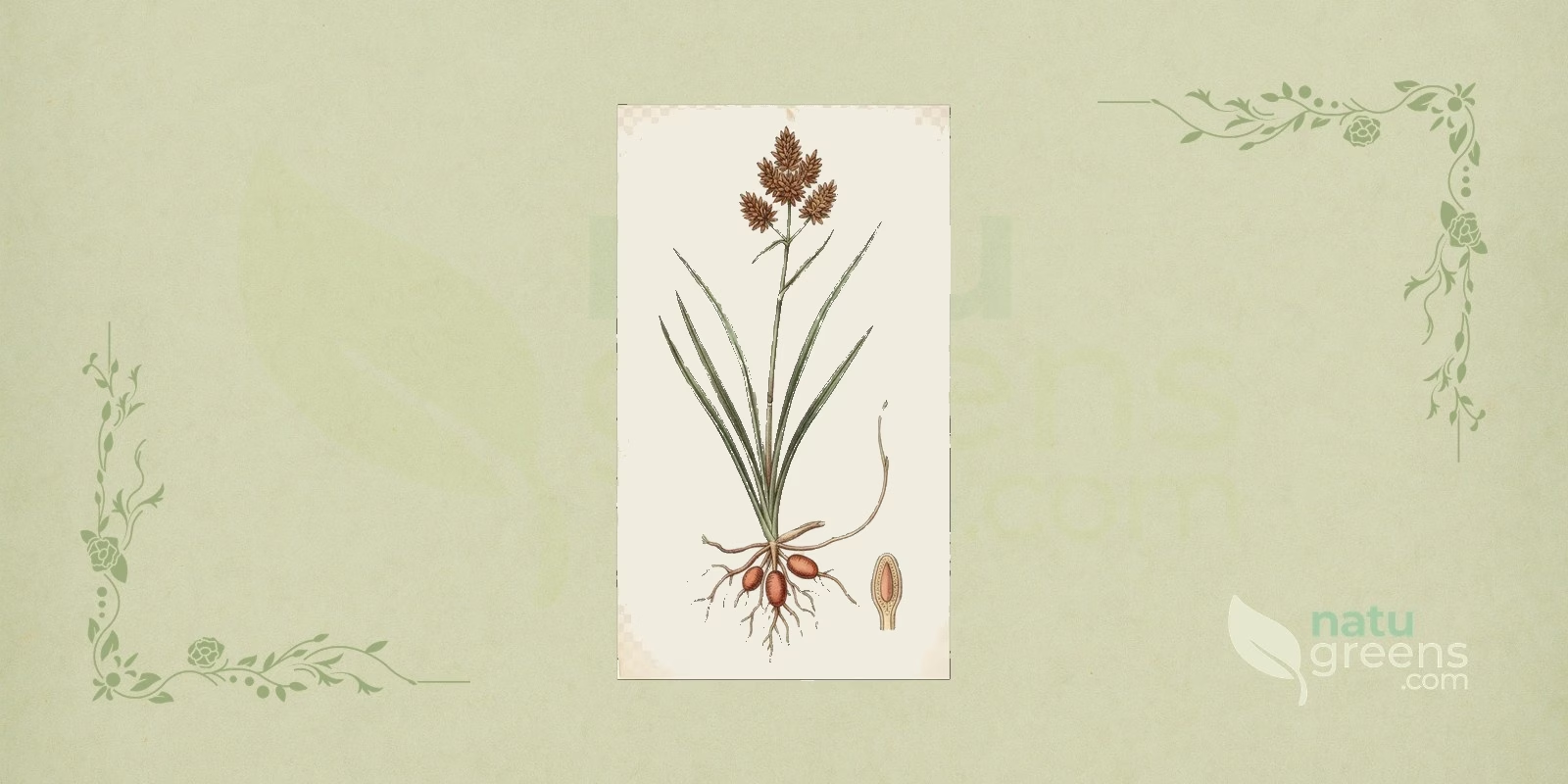
Popular and International Names of Nutgrass
In Brazil, the name tiririca covers several Cyperus species, so the plant needs to be identified with care. The common names below refer to Cyperus rotundus:
- English: cocograss, nutgrass, purple nutsedge.
- French: herbe à oignon, souchet rond.
- German: Knolliges Zypergras, Nussgras.
- Italian: cipero rotondo, zigolo infestante.
- Japanese: hamasuge.
- Portuguese: capim-dandá, juncinha, junça-aromática, junça-de-conta, tiririca.
- Spanish: castañuela, cebollín, coquillo.
Names in Traditional Medical Systems
In Traditional Chinese Medicine, the dried rhizome is the herbal drug known as xiang fu. In Ayurveda, the same raw material appears as musta or nagarmotha. These are names used within medical systems, not everyday common names in any particular country.
Species Not to Be Confused with Nutgrass
Nutgrass is not yellow nutsedge, or chufa (Cyperus esculentus), whose sweet, edible tuber is the base of Spanish horchata. Nor is it priprioca (Cyperus articulatus), an Amazonian aromatic used in perfumery. In English, the correct names for C. rotundus are nutgrass and purple nutsedge, while the term tiger nut belongs to chufa.
Botanical Synonyms of Nutgrass
Since Linnaeus described it, the species has received other names that are now treated as synonyms of Cyperus rotundus L.:
- Chlorocyperus rotundus (L.) Palla
- Cyperus badius Desf.
- Cyperus comosus Sm.
- Cyperus hexastachyus Rottb.
- Cyperus olivaris T.Koyama
- Cyperus stenostachyus Benth.
- Pycreus rotundus (L.) Hayek
Botanical Family: Cyperaceae
Nutgrass belongs to the Cyperaceae family, a cosmopolitan group of herbs that resemble grasses but can be told apart by their triangular stems and narrow leaves arranged in three rows. The family is most diverse in the tropics and also includes papyrus (Cyperus papyrus) and many marsh sedges. In nutgrass, a network of thin rhizomes links small underground tubers, and this structure is what earns it a reputation as a weed that is almost impossible to eradicate.
Parts of Nutgrass Used
Medicinal interest is concentrated in what grows underground. The tubers, which are small, dark on the outside and woody in scent when broken open, are the part most often cited in Asian traditions. The rhizomes that connect them go into the same preparations, while the leaves have a more limited role in local practices.
Ethnobotanical and Traditional Uses of Nutgrass
In India, Ayurveda turns to musta for diarrhea, fever and digestive complaints, and some popular texts also link it to diabetes. In Traditional Chinese Medicine, xiang fu is one of the classic herbal drugs for menstrual discomfort, pain and abdominal bloating. In various parts of Africa, the tuber is included in home remedies for fever and digestive upset, and in the Middle East it has been used as a diuretic and astringent.
In ancient Egypt the tubers were eaten as food and appear in funerary settings. All of these records describe traditional use and are no substitute for medical assessment when symptoms persist.
Therapeutic Properties of Nutgrass
The actions below are attributed to nutgrass by tradition or have been observed in in vitro and animal studies. Clinical trials in humans are few and small, so none of them can be considered proven for use in people:
- Analgesic (pain relief in animal models, under study)
- Antidiarrheal (observed in animals, under study)
- Anti-inflammatory (reduction of inflammatory markers in the laboratory, under study)
- Antioxidant (activity against free radicals in laboratory assays)
- Antispasmodic (relaxation of smooth muscle, traditional use)
- Astringent (tightening of tissues, traditional use)
- Carminative (relief of gas, traditional use)
- Diuretic (increased urine volume, traditional use)
- Emmenagogue (stimulation of menstrual flow, traditional use, and a reason to avoid it during pregnancy)
There is also preclinical research on blood sugar, in which extracts lowered glucose levels in animals. This is an early finding and does not justify using nutgrass in place of diabetes treatment.
Detailed Phytochemical Profile of Nutgrass
The chemistry of nutgrass is dominated by the essential oil of the tubers, which is rich in sesquiterpenes, alongside phenolic compounds common in medicinal plants:
- Essential oil (cyperene, alpha-cyperone and beta-selinene among the main sesquiterpenes)
- Flavonoids (phenolic compounds linked to antioxidant activity)
- Saponins (substances of interest in anti-inflammatory studies)
- Tannins (responsible for the astringent taste)
- Terpenoids (a broad group, with alpha-cyperone as a frequent chemical marker)
The composition of the oil varies considerably with geographical origin, which helps explain why results differ from one study to another.
Preparation and Administration Forms of Nutgrass
In the traditions that use it, nutgrass appears mainly as a decoction of the dried tubers and rhizomes, as well as powders, extracts and tinctures made by compounding pharmacies or specialized manufacturers. Because it is an emmenagogue plant with little safety data in humans, this article gives no amounts or dosing schedules: the form and dose should be decided by a health professional qualified in herbal medicine.
One practical precaution comes before any preparation. Nutgrass is among the most heavily controlled weeds in the world, and tubers gathered from crop fields, gardens, lawns and roadsides may carry herbicide residues. Do not harvest nutgrass from areas that may have been treated with pesticides.
Synergy with Other Medicinal Plants
Traditional Combinations for Digestion
Popular sources pair nutgrass with ginger (Zingiber officinale) in blends meant for gas, a heavy stomach and colic, bringing together two roots with a carminative tradition. No studies have evaluated this combination in people.
Traditional Combinations for Menstrual Discomfort
For menstrual cramps, tradition suggests combining it with chamomile (Matricaria chamomilla) or lemon balm (Melissa officinalis), both remembered for their relaxing effect. Severe cramps, cramps that change pattern or cramps accompanied by unusual bleeding need a gynecological assessment.
Recipes and Usage Protocols of Nutgrass
Home recipes with nutgrass circulate with fixed doses, but none of them has been validated in safety studies. So instead of protocols, here are the criteria for anyone considering using it under supervision:
- Talk to a doctor or herbalist first, especially if you take medication on a regular basis.
- Choose botanically identified raw material from a known source.
- Stop using it and seek medical care if allergic reactions, unusual bleeding or malaise appear.
As for food, the tubers of some populations were eaten in times of scarcity, but they are fibrous and bitter and have nothing like the culinary use of chufa.
The preparations above follow traditional records and do not replace professional guidance. Before any internal use, check the contraindications and interactions described in this article.
Associated Therapies of Nutgrass
Herbal Medicine
In herbal medicine, nutgrass is part of traditional Indian and Chinese formulas, usually combined with other herbal drugs. Modern research focuses on extracts standardized to alpha-cyperone, and in most cases this work is still at the preclinical stage.
Homeopathy
Homeopathic preparations of Cyperus rotundus exist. Homeopathy follows its own principles, and there are no clinical trials supporting specific indications for this preparation.
Contraindications and Side Effects of Nutgrass
Nutgrass is traditionally used to bring on menstruation, and that action alone is reason to avoid it during pregnancy. There are no safety data for breastfeeding or for children, and use during these stages is not recommended. People with a known hypersensitivity to plants of the Cyperaceae family should abstain, and allergic reactions, though rare, have been reported.
Drug Interactions
Preclinical studies suggest that nutgrass may lower blood sugar and interfere with platelet aggregation. As a precaution, anyone taking oral antidiabetic drugs or insulin, antiplatelet drugs such as aspirin, or anticoagulants such as warfarin should talk to their doctor before any use, because the effects may add up. Never adjust the dose of a medication on your own.
Watch Where It Comes From
Tubers from farmland, lawns, vacant lots and road verges may contain herbicide residues, since nutgrass is a constant target of chemical control. This risk is real and has nothing to do with the properties of the plant itself.
Historical Notes and Interesting Facts about Nutgrass
Nutgrass often appears on lists of the world's worst weeds. Each tuber can give rise to a new plant, and the underground network sprouts again even after being pulled up, which explains the frustration of farmers in dozens of countries.
The essential oil of the rhizomes has an earthy, woody scent, which is why it is used in perfumery as a base note, especially in India, where nagarmotha goes into traditional incense and attars. Remains of Cyperus tubers found at archaeological sites in the Nile valley show that the human relationship with these plants long predates modern agriculture.
Frequently Asked Questions about Nutgrass Tea
Does Nutgrass Tea Help with Weight Loss?
There is no evidence that nutgrass tea causes fat loss. Its diuretic reputation can at most lead to a temporary loss of fluid, which returns as soon as use stops.
Can Children Use Nutgrass?
It is not recommended. Safety in children has not been studied, and there are no established doses for this age group.
Can Pregnant Women Drink Nutgrass Tea?
No. Nutgrass is traditionally used to stimulate menstrual flow, which makes it inadvisable throughout pregnancy. During breastfeeding, the lack of data also means it should be avoided.
Can I Harvest Nutgrass from My Yard or Vegetable Garden?
Only if you are certain the area has never been treated with herbicide. Because it is such a heavily controlled weed, nutgrass in crop fields, gardens and along roadsides is often sprayed with chemicals that can remain in the tubers.
Are Nutgrass and Yellow Nutsedge the Same Plant?
No. Yellow nutsedge, or chufa, is Cyperus esculentus, with a sweet, edible tuber. The nutgrass covered in this article is Cyperus rotundus, with a bitter, aromatic tuber, and the two differ in uses and composition.
Does Nutgrass Interact with Medications?
It may. Laboratory and animal studies point to a possible additive effect with diabetes medications and with anticoagulants and antiplatelet drugs. Anyone taking these medicines should talk to their doctor first.
What Is the Best Way to Take Nutgrass?
There is no recommended form for self-medication. A decoction of the tubers is the preparation most often cited in tradition, but choosing the form and amount is a matter for a health professional.
Notice: this content is for informational purposes and does not replace professional medical advice. Consult a physician or herbal practitioner before using medicinal plants, especially during pregnancy, breastfeeding, or alongside medication.
How to cite this article
NATUGREENS. Nutgrass (Cyperus rotundus): Traditional Uses and Precautions. Natugreens, 20 Nov. 2026. Disponível em: https://natugreens.com/cyperus-rotundus-nutgrass/. Accessed: Nov. 20, 2026.
Natugreens. (2026). Nutgrass (Cyperus rotundus): Traditional Uses and Precautions. Natugreens. https://natugreens.com/cyperus-rotundus-nutgrass/
References and Scientific Studies
Peer-Reviewed Scientific Studies (3)
- DOI2015 Pirzada, A. M., Ali, H. H., Naeem, M., Latif, M., Bukhari, A. H. and Tanveer, A. (2015). Cyperus rotundus L.: Traditional uses, phytochemistry, and pharmacological activities. Journal of Ethnopharmacology, 174, 540-560. A review bringing together traditional uses and pharmacological activities, noting that most of the data come from experimental models. ↗
- DOI2018 Kamala, A., Middha, S. K. and Karigar, C. S. (2018). Plants in traditional medicine with special reference to Cyperus rotundus L.: a review. 3 Biotech, 8(7), 309. A review of the species' place in Ayurveda and Chinese medicine and of the related preclinical studies. ↗
- DOI2009 Lawal, O. A. and Oyedeji, A. O. (2009). Chemical composition of the essential oils of Cyperus rotundus L. from South Africa. Molecules, 14(8), 2909-2917. Characterizes the essential oil of the tubers and confirms the predominance of sesquiterpenes, with variation according to origin. ↗
Supplementary Readings (1)
- 2013 Sivapalan, S. R. (2013). Medicinal uses and pharmacological activities of Cyperus rotundus Linn: a review. International Journal of Scientific and Research Publications, 3(5). An overview of the medicinal uses and of the activities described in in vitro and animal studies.
You May Also Like





Take your time and tell us everything you think, details included. Every response is read by someone on our editorial team and goes into the article's revision. An honest critique helps us more than a polite compliment.
Take your time and tell us everything you think, details included. Every response is read by someone on our editorial team and goes into the article's revision. An honest critique helps us more than a polite compliment.