



Quick summary
Murraya koenigii (L.) Spreng. / Curry Leaf, commonly known as curry leaf, curry tree or sweet neem, and in Portuguese as folha-de-curry or carijeira, is a small tropical and subtropical tree of the Rutaceae family, the same family as citrus. Native to the Indian subcontinent, southern China and mainland Southeast…
Main caution: Warning: curry leaf (Murraya koenigii, Rutaceae) is not Helichrysum italicum, the English curry plant, a species from a completely different family (Asteraceae) with no connection to the spice curry, nor is it Murraya…
Murraya koenigii (L.) Spreng. / Curry Leaf, commonly known as curry leaf, curry tree or sweet neem, and in Portuguese as folha-de-curry or carijeira, is a small tropical and subtropical tree of the Rutaceae family, the same family as citrus. Native to the Indian subcontinent, southern China and mainland Southeast Asia, the species spread to other parts of Southeast Asia and to Australia largely through cooking, since its aromatic leaves are indispensable in the cuisines of southern India, Sri Lanka and Bangladesh.
The main and safest use of curry leaf is culinary, with the fresh or dried leaf fried in oil or ghee to perfume stews, lentils and sauces. Traditional Indian medicine also uses it for fever, diarrhea, dysentery, vomiting and anemia, and regards it as a hair tonic and blood purifier, while nutritional analyses show that the leaves are a source of minerals such as calcium. The hypoglycemic, lipid-lowering and liver-protective properties mentioned in the literature, however, come from preclinical and animal studies and remain under study, with no proven efficacy in people.
Popular and International Names of Curry Leaf
- English: curry bush, curry leaf, curry tree, sweet neem.
- French: arbre à curry, feuille de curry, neem doux.
- German: Currybaum, Curryblatt, Süßer Neem.
- Italian: albero del curry, foglia di curry, neem dolce.
- Portuguese: carijeira, folha-de-caril (Portugal), folha-de-curry, neem-doce.
- Spanish: árbol de curry, hoja de curry, nim dulce.
Despite the name, curry leaf should not be confused with Helichrysum italicum, known in English as the curry plant because of its similar scent. It is a different species from a different family (Asteraceae), with no connection to the spice. Nor is it the same plant as Murraya paniculata, orange jasmine, an ornamental species of the same genus with different traditional uses.
Botanical Synonyms of Murraya koenigii
The species was published by Carl Linnaeus in 1767 as Bergera koenigii L., and in 1825 Sprengel moved it to the genus Murraya as Murraya koenigii (L.) Spreng. Recent botanical classifications have returned to accepting Bergera koenigii L. as the correct name, but Murraya koenigii is still the name used in virtually all scientific, culinary and commercial literature, which is why it is kept as the main name in this article.
- Bergera koenigii L. (currently accepted name, Rutaceae)
- Chalcas koenigii (L.) Kurz
- Murraya koenigii (L.) Spreng.
Botanical Family: Rutaceae
Curry leaf belongs to the Rutaceae, known as the citrus family, which comprises around 160 genera and more than 2,000 species, mainly in tropical and subtropical regions. Members of the Rutaceae are characterized by oil glands in the leaves, visible against the light as tiny translucent dots, which give the plants a distinctive aroma, and the family includes species of enormous economic importance such as oranges, lemons and grapefruits.
The family is rich in alkaloids, flavonoids, terpenoids and coumarins, compounds that account for its aromatic uses and its pharmacological interest. In curry leaf, the carbazole alkaloids stand out, such as mahanine and girinimbine, which are typical of the group and widely studied in the laboratory.
Parts of Curry Leaf Used
- Bark
- Fruits
- Leaves (main culinary use)
- Roots
- Stem
Ethnobotanical and Traditional Uses of Curry Leaf
- Anemia (traditional record)
- Boils (traditional external use)
- Cataracts (folk belief, unproven)
- Culinary seasoning (Indian, Sri Lankan and Southeast Asian cuisine)
- Diarrhea (traditional use)
- Digestive complaints (traditional use)
- Dysentery (traditional record; requires medical assessment)
- Fever (traditional use)
- Hair tonic (traditional use)
- High cholesterol (traditional record; under study)
- Inflammation (folk use)
- Kidney pain (traditional record)
- Venomous animal bites (traditional record; require emergency medical care)
- Vomiting (traditional use)
- Wounds and cuts (traditional external use)
Therapeutic Properties of Curry Leaf
- Analgesic (preliminary animal studies)
- Anthelmintic (traditional record)
- Antibacterial (activity observed in laboratory studies)
- Antidiabetic (under study, with preclinical and animal data)
- Antidiarrheal (traditional use; animal studies)
- Anti-inflammatory (preliminary laboratory and animal studies)
- Antimicrobial (activity observed in laboratory studies)
- Antimutagenic (laboratory assays)
- Antioxidant (ability to neutralize free radicals in laboratory assays)
- Antiproliferative (activity observed in laboratory studies, without clinical evidence)
- Hepatoprotective (under study, with animal data)
- Hypoglycemic (under study, with preclinical and animal data)
- Hypolipidemic (under study, with animal data)
- Immunomodulatory (preliminary laboratory studies)
- Nephroprotective (preliminary animal studies)
- Neuroprotective (preliminary animal studies)
Detailed Phytochemical Profile of Curry Leaf
- Carbazole alkaloids (girinimbine, koenimbine, mahanine)
- Carbohydrates
- Carotene
- Coumarins
- Essential oil
- Flavonoids
- Furanocoumarins
- Minerals (including calcium)
- Mucilages
- Nicotinic acid
- Oxalic acid
- Phenolics
- Proteins
- Saponins
- Tannins
- Terpenoids
- Vitamin A
- Vitamin C
Preparation and Administration Forms of Curry Leaf
- Capsules
- Decoction
- Dry extract
- Fluid extract
- Fresh or dried leaf in cooking
- Infusion
- Leaf juice
- Paste (topical use)
- Powder
- Tincture
Synergy with Other Medicinal Plants
Traditional Pairings in the Context of Blood Sugar
In the Ayurvedic tradition, curry leaf appears alongside bitter melon (Momordica charantia) and gymnema (Gymnema sylvestre) in preparations associated with blood sugar control. All three plants are being investigated in preclinical research on blood glucose, but this combination is no substitute for medical care of diabetes, and in concentrated form it may add to the effect of glucose-lowering drugs, so medical supervision is required.
Culinary and Digestive Combinations
Pairing curry leaf with ginger (Zingiber officinale) and cumin (Cuminum cyminum) is a classic of Indian cooking and is traditionally used to ease flatulence, indigestion and mild diarrhea. The three ingredients have a carminative reputation in tradition, and it is precisely in this culinary setting, in normal seasoning amounts, that the combination finds its safest use.
Traditional Polyphenol-Rich Combinations
Curry leaf is also combined with amla (Phyllanthus emblica, syn. Emblica officinalis) and turmeric (Curcuma longa) in traditional Indian preparations. All three are rich in polyphenols studied for antioxidant activity in the laboratory, although no clinical studies have shown a combined protective effect in the body.
Recipes and Usage Protocols of Curry Leaf
Traditional Fresh Leaf Infusion
In India, an infusion of fresh leaves is traditionally used for mild episodes of diarrhea and digestive discomfort.
Ingredients: 10 to 15 fresh leaves of Murraya koenigii and 200 ml of boiling water.
Preparation: place the leaves in the boiling water and let them steep for 5 to 7 minutes, then strain and drink warm. Diarrhea that lasts more than two days, or comes with blood, fever or signs of dehydration, requires medical assessment.
Traditional Skin Paste
A paste of fresh leaves is a traditional external application on boils and small inflamed areas of skin.
Preparation: crush a handful of fresh leaves into a paste and apply it to the affected area, leaving it on for 30 minutes to 1 hour before rinsing with water. Stop if irritation occurs, and seek medical attention if the boil grows, becomes very painful or is accompanied by fever.
Traditional Fresh Leaf Juice
Fresh leaf juice is a traditional home preparation in India, taken in small amounts in the morning.
Preparation: blend 10 to 12 fresh leaves with a little water, strain and drink right away. Folk belief links this juice to eye health and the prevention of cataracts, but there is no scientific evidence for this, and any change in vision should be assessed by an ophthalmologist.
The preparations above follow traditional records and do not replace professional guidance. Before any internal use, check the contraindications and interactions described in this article.
Associated Therapies of Curry Leaf
Ayurveda
In Ayurvedic medicine, curry leaf, known as kadi patta, is used to balance the Kapha and Pitta doshas and is described as an herb with astringent, bitter and sweet tastes that sharpens the palate and kindles the digestive fire. The tradition employs it for fever, diarrhea, dysentery and anemia and values it as a blood purifier and hair tonic, always within the logic of the Ayurvedic system, which is not the same as scientific proof.
Phytotherapy
In contemporary herbal medicine, curry leaf is studied for antioxidant, antimicrobial, anti-inflammatory, antidiabetic and liver-protective activities, nearly all of them observed in the laboratory and in animals. Supplements and concentrated extracts are already sold with digestive and metabolic claims, but their effects in people remain under study, and concentrated use calls for caution in anyone taking diabetes medication.
Functional Nutrition
In nutrition, the leaves are recognized for their varied profile, with proteins, fiber, carbohydrates, carotene, vitamins A and C, nicotinic acid and minerals such as calcium, as well as oxalic acid. For this reason they are valued as an ingredient that enriches the diet, although effects on blood sugar or cholesterol have not been proven in humans.
Contraindications and Side Effects of Curry Leaf
Plant Identity
Warning: curry leaf (Murraya koenigii, Rutaceae) is not Helichrysum italicum, the English curry plant, a species from a completely different family (Asteraceae) with no connection to the spice curry, nor is it Murraya paniculata, orange jasmine, an ornamental species of the same genus with different traditional uses.
Allergies
Although rare, allergic reactions can occur, especially in people sensitive to other plants of the Rutaceae family, with skin rashes, itching or swelling, and in such cases use should be stopped and a doctor consulted.
Drug Interactions
There are no well-documented interactions at normal culinary amounts. In concentrated medicinal use, however, there is theoretical caution with glucose-lowering drugs, given the possibility of an additive effect on blood sugar, and anyone taking cholesterol medication should also consult a healthcare professional before using extracts or supplements.
Pregnancy, Breastfeeding and Children
Normal culinary use is safe during pregnancy and breastfeeding, but concentrated extracts lack sufficient safety data and should be avoided during these periods. In children, use should be limited to food.
Oxalic Acid
The leaves contain oxalic acid, and people with a history of calcium oxalate kidney stones should favor moderate culinary use over concentrated preparations.
Historical Notes and Interesting Facts about Curry Leaf
Origin of the Name
The genus name Murraya honors Johan Andreas Murray (1740-1791), a botanist who studied under Carl Linnaeus and took an interest in medicinal plants, while the epithet koenigii commemorates the botanist Johann Gerhard König, who worked in India. The currently accepted name, Bergera koenigii, reflects the way Linnaeus published the species in 1767.
Star of South Asian Kitchens
In southern India, Sri Lanka and parts of Southeast Asia, the leaves are fried in oil or ghee at the very start of cooking to perfume curries, soups, stews and lentils, a technique that defines the flavor of many regional dishes. That is why, despite the name, curry leaf is not the same as curry powder, a blend of ground spices that may or may not include it.
A Small, Fragrant Tree
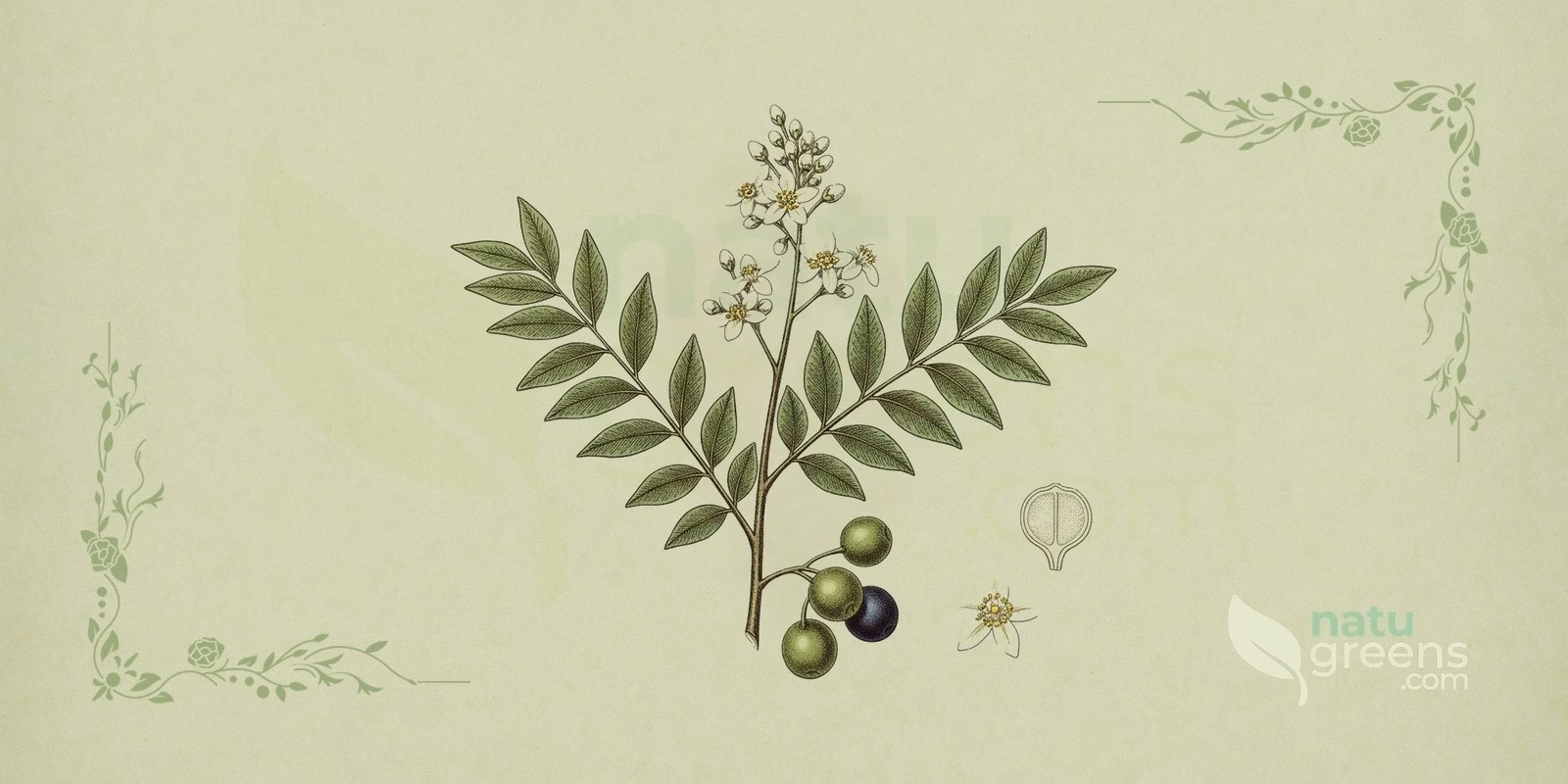
Curry leaf is a small tree reaching 4 to 6 meters, with pinnate leaves bearing 12 to 24 leaflets. The white, funnel-shaped flowers, gathered in panicles, have a sweet fragrance, and the round to oblong fruits turn from green to black when ripe and contain a single seed. The plant is propagated from seeds or cuttings and prefers a hot, humid climate.
Frequently Asked Questions about Curry Leaf
Is Curry Leaf the Same as Curry Powder?
No. Curry leaf (Murraya koenigii) is the fresh or dried leaf of a specific tree, whereas curry powder is a blend of ground spices that may or may not contain these leaves.
Are Curry Leaf and Curry Plant the Same Thing?
No. The so-called curry plant is Helichrysum italicum, of the Asteraceae family, which only has a similar scent and has nothing to do with the spice. Curry leaf should also not be confused with orange jasmine (Murraya paniculata).
How Should Fresh Curry Leaves Be Stored?
Fresh leaves keep for up to two weeks in the refrigerator, wrapped in paper towel inside a plastic bag. For longer storage they can be frozen or dried, and freezing them in ice cube trays with olive oil or water helps preserve their flavor.
Does Curry Leaf Help with Diabetes?
The effects on blood sugar and cholesterol come from preclinical and animal studies and remain under study. In concentrated form, the plant may add to the effect of glucose-lowering drugs, so anyone managing diabetes should talk to their doctor before using extracts.
Does Curry Leaf Have Side Effects?
In culinary amounts it is considered safe for most people, but it can cause allergies in those sensitive to plants of the Rutaceae family. Concentrated extracts should be avoided during pregnancy and breastfeeding because of a lack of safety data.
Can I Use Dried Leaves Instead of Fresh Ones?
Yes, but dried leaves have a less intense flavor, and you may need to use a slightly larger amount. Whenever possible, fresh leaves give the most aromatic result.
Notice: this content is for informational purposes and does not replace professional medical advice. Consult a physician or herbal practitioner before using medicinal plants, especially during pregnancy, breastfeeding, or alongside medication.
How to cite this article
NATUGREENS. Curry Leaf (Murraya koenigii): Properties and Benefits. Natugreens, 19 Nov. 2026. Disponível em: https://natugreens.com/murraya-koenigii-curry-leaf/. Accessed: Nov. 20, 2026.
Natugreens. (2026). Curry Leaf (Murraya koenigii): Properties and Benefits. Natugreens. https://natugreens.com/murraya-koenigii-curry-leaf/
References and Scientific Studies
- PMC2020 Balakrishnan R, et al. Medicinal Profile, Phytochemistry, and Pharmacological Activities of Murraya koenigii and its Primary Bioactive Compounds. Antioxidants (Basel). 2020.
- PMC2023 Singh S, et al. Phyto-Pharmacological Review on Murraya koenigii (L.) Spreng: As an Indigenous Plant of India with High Medicinal Potential. Chem Biodivers. 2023.
- PMC2024 Jachak SM, et al. Murraya koenigii (L.) Spreng. as a Natural Intervention for Diabesity: A Review. Curr Pharm Des. 2024.
- PMC2022 Tan MA, et al. Multi-Target Approach of Murraya koenigii Leaves in Treating Neurodegenerative Diseases. Pharmaceuticals (Basel). 2022.
You May Also Like
Take your time and tell us everything you think, details included. Every response is read by someone on our editorial team and goes into the article's revision. An honest critique helps us more than a polite compliment.
Take your time and tell us everything you think, details included. Every response is read by someone on our editorial team and goes into the article's revision. An honest critique helps us more than a polite compliment.