



Quick summary
Artocarpus heterophyllus Lam., the jackfruit tree, is a tropical tree of the Moraceae family and a relative of the fig and the mulberry. Native to the forests of southwestern India, it was carried throughout the tropics for the sake of its fruit, the jackfruit, which is the largest fruit borne by any tree. It reached…
Main caution: Eaten in excess, jackfruit can cause gas and abdominal discomfort.
Artocarpus heterophyllus Lam., the jackfruit tree, is a tropical tree of the Moraceae family and a relative of the fig and the mulberry. Native to the forests of southwestern India, it was carried throughout the tropics for the sake of its fruit, the jackfruit, which is the largest fruit borne by any tree. It reached Brazil in colonial times and became part of the landscape and the kitchen there, from jackfruit sweets to shredded green jackfruit. The leaves, bark and seeds are used in traditional Asian medicine, and the effects that have been investigated, such as those on blood sugar, are still under study.
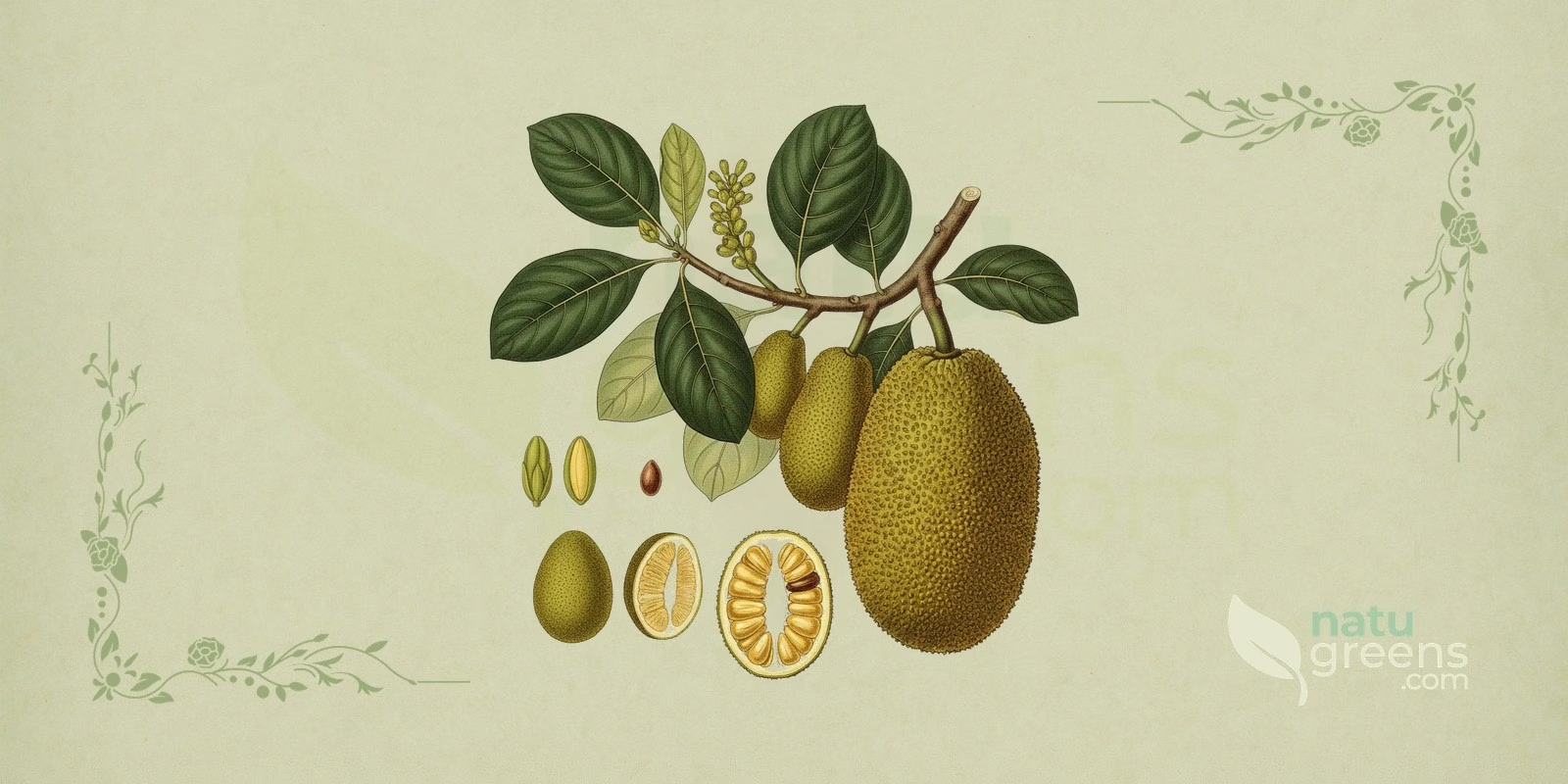
Popular and International Names of Jackfruit
- English: jackfruit.
- French: jacquier.
- German: Jackfruchtbaum.
- Italian: giaca.
- Portuguese: jaca (the fruit), jaqueira (the tree).
- Sanskrit: panasa.
- Spanish: jaca, yaca.
Species Not to Be Confused with Jackfruit
The jackfruit tree is not the breadfruit (Artocarpus altilis), a member of the same genus with a round fruit and starchy flesh, nor the cempedak (Artocarpus integer), an Asian relative with a smaller fruit. Nor should it be confused with the durian (Durio zibethinus), a spiny fruit from another family that is sometimes mixed up with it in markets and photos.
Botanical Synonyms of Jackfruit
The accepted name is Artocarpus heterophyllus Lam. The recorded synonyms include:
- Artocarpus maximus Blanco
- Artocarpus philippensis Lam.
- Polyphema jaca Lour.
- Saccus heterophyllus (Lam.) Kuntze
In older literature, the jackfruit tree often appears under the name Artocarpus integrifolius, which is a misapplication. The name Artocarpus integer belongs to the cempedak, a different species.
Botanical Family: Moraceae
The Moraceae family brings together trees and shrubs with milky latex, such as the fig (Ficus carica) and the black mulberry (Morus nigra). The family is notable for its complex inflorescences, which develop into multiple fruits. Jackfruit is an extreme example, since each yellow bulb is a developed flower and the whole fruit results from the fusion of hundreds of them. On the jackfruit tree, the fruits grow directly from the trunk and the thick branches, a trait known as cauliflory.
Parts of Jackfruit Used
The fruit is by far the most important part, eaten ripe, when it is sweet and fragrant, or unripe, as a vegetable. The large, starchy seeds are edible once boiled or roasted. The leaves, bark and roots appear in traditional Asian remedies, and the sticky latex found in every part of the tree is familiar to anyone who has ever cut open a jackfruit.
Ethnobotanical and Traditional Uses of Jackfruit
In Ayurveda, where it is called panasa, jackfruit is regarded as a nourishing and cooling food. In the folk medicine of South and Southeast Asia, the leaves and roots are made into teas for blood sugar, warmed leaves are applied to wounds, and an infusion of leaves and bark appears in remedies for cough and asthma. There are also reports of leaf ash being used on wounds and for diarrhea.
These are traditional uses. Wounds, persistent fever, prolonged diarrhea or asthma need medical assessment, and snake or scorpion bites are an emergency.
An Introduced Tree in Brazil
The jackfruit tree is not native to Brazil. Brought over from Asia, it has become invasive in parts of the Atlantic Forest, where its seeds spread and the tree competes with native species, so it should not be planted in or near forest areas.
Medicinal Properties of Jackfruit
The activities below have been observed in laboratory and animal studies, with very few trials in humans:
- Antibacterial (compounds from the wood and bark in the laboratory, under study)
- Anti-inflammatory (extracts in experimental models, under study)
- Antioxidant (flavonoids and carotenoids active in laboratory assays)
- Effect on blood sugar (leaves, seeds and green jackfruit flour, under study)
The blood sugar studies are promising but small. They do not justify using leaves, seeds or green jackfruit flour in place of diabetes treatment, and anyone taking insulin or oral antidiabetic drugs should never adjust their medication on their own.
Detailed Phytochemical Profile of Jackfruit
The chemistry of the jackfruit tree varies widely from one part of the tree to another:
- Artocarpin and other prenylated flavonoids (characteristic of the genus, concentrated in the wood and bark)
- Carotenoids (responsible for the yellow color of the ripe bulbs)
- Flavonoids (such as morin, quercetin and luteolin)
- Jacalin (a seed lectin used in biomedical research)
- Phenolic acids (such as ferulic and sinapic acids)
- Volatile esters (responsible for the strong, fruity smell of ripe jackfruit)
From a nutritional point of view, the ripe fruit is rich in sugars and fiber and contains a significant amount of potassium. The seed provides starch and some protein.
Preparation and Administration Forms of Jackfruit
Food is the reference use:
- Green fruit: boiled and shredded, in stir-fries, stews and fillings.
- Green jackfruit flour: used in breads and pasta, and studied for its effect on blood sugar.
- Ripe fruit: eaten fresh or made into sweets, preserves and ice cream.
- Seeds: always boiled or roasted, never raw, because raw seeds contain trypsin inhibitors and lectins that interfere with digestion.
Teas and extracts made from the leaves, bark and roots belong to tradition and have no established safe dose.
Synergy with Other Medicinal Plants
There are no traditional or studied combinations that would justify pairing jackfruit with other medicinal plants. In the kitchen, green jackfruit takes on flavor from seasonings such as annatto, coriander, garlic, ginger and onion, while ripe jackfruit goes well with coconut and sweet spices such as cinnamon and cloves. These are flavor pairings with no therapeutic claim.
Recipes and Usage Protocols of Jackfruit
Shredded Green Jackfruit
Choose a jackfruit that is very green and firm, and oil your hands and knife so the latex does not stick. Remove the bulbs and seeds, then boil the bulbs in water until tender. Once drained, shred them and sauté with seasonings to taste. Green jackfruit mimics the texture of pulled meat, but it is low in protein and is not nutritionally equivalent to meat. For a balanced meal, combine it with beans, lentils, chickpeas, eggs or another protein source.
Boiled Jackfruit Seeds
Wash the seeds, boil them in salted water for about half an hour and peel off the outer skin. Their flavor is reminiscent of boiled chestnuts, and they can also be roasted in the oven.
Ripe Jackfruit
The ripe bulbs can be eaten fresh or cooked into a sweet in syrup. People with diabetes should count the sugar in ripe jackfruit as part of their daily portions.
The preparations above follow traditional records and do not replace professional guidance. Before any internal use, check the contraindications and interactions described in this article.
Associated Therapies of Jackfruit
Ayurveda
In Ayurveda, panasa is considered a heavy, nourishing fruit to be eaten in moderation, and the seeds are seen as a strengthening food. These descriptions follow the internal logic of the Ayurvedic system.
Nutrition
In nutrition, green jackfruit has found a place on vegetarian menus thanks to its texture, and green jackfruit flour is being studied as a low glycemic index ingredient. For people with diabetes or kidney disease, adding jackfruit to the diet should be discussed with a dietitian.
Contraindications and Side Effects of Jackfruit
- Allergy: jackfruit allergy is documented, including cross-reactions in people allergic to birch pollen and to latex. Itching in the mouth, swollen lips or shortness of breath after eating jackfruit require medical attention.
- Chronic kidney disease: jackfruit has a considerable potassium content, and anyone who needs to restrict potassium should consult their nephrologist or dietitian.
- Diabetes: leaves, seeds and green jackfruit flour may add to the effect of insulin and oral antidiabetic drugs. Never adjust your medication without guidance. The ripe fruit carries a significant sugar load.
- Latex: the latex in the rind can irritate the skin. Oil your hands or wear gloves when cutting jackfruit.
- Pregnancy and breastfeeding: there are no data on the medicinal use of the leaves and roots, which is not recommended during these periods. The fruit eaten as food is not covered by this caution.
- Raw seeds: do not eat them. They must always be boiled or roasted.
Eaten in excess, jackfruit can cause gas and abdominal discomfort.
Historical Notes and Interesting Facts about Jackfruit
A single jackfruit can weigh several dozen kilos, and exceptional fruits have exceeded 40 kg. Jackfruit is the national fruit of Bangladesh and the official fruit of the Indian state of Kerala, where the harvest is so abundant that a large share goes to waste every season.
The wood of the jackfruit tree, yellowish orange and resistant to termites, is used in India and Southeast Asia for furniture and musical instruments. It also yields a yellow dye traditionally used to color the robes of Buddhist monks in parts of Southeast Asia.
Frequently Asked Questions about Jackfruit
Does Jackfruit Help Control Diabetes?
This has not been proven. Leaves, seeds and green jackfruit flour are being studied for their effect on blood sugar, but the results do not yet support any recommendation. Ripe jackfruit, on the other hand, is high in sugar. Anyone taking diabetes medication should talk to their doctor before using any preparation from the jackfruit tree.
Which Parts of Jackfruit Are Edible?
The ripe bulbs, the cooked green fruit and the boiled or roasted seeds. Raw seeds should not be eaten.
Can Green Jackfruit Replace Meat?
Only in texture. Green jackfruit is low in protein, so it needs to be combined with legumes, eggs or other protein sources.
Can Jackfruit Cause Allergies?
Yes. There are documented cases, including in people allergic to birch pollen and to latex. Symptoms in the mouth or difficulty breathing after eating jackfruit call for medical attention.
Can People with Kidney Problems Eat Jackfruit?
That depends on medical advice. Jackfruit is high in potassium, and people with chronic kidney disease on a potassium-restricted diet should consult their nephrologist or dietitian.
How Do You Choose and Store Jackfruit?
A ripe jackfruit has a yellowish rind, gives slightly when pressed and gives off a strong, sweet smell. For shredding, the fruit should be green and firm. Once opened, ripe jackfruit keeps for only a few days in the refrigerator, and the bulbs can be frozen.
Is It a Good Idea to Plant a Jackfruit Tree on Rural Land?
In orchards and backyards far from forest areas, the jackfruit tree is a productive tree. Near remnants of the Atlantic Forest, however, planting it is not recommended, because the species behaves as an invasive plant.
Notice: this content is for informational purposes and does not replace professional medical advice. Consult a physician or herbal practitioner before using medicinal plants, especially during pregnancy, breastfeeding, or alongside medication.
How to cite this article
NATUGREENS. Jackfruit (Artocarpus heterophyllus): Fruit, Uses and Precautions. Natugreens, 20 Nov. 2026. Disponível em: https://natugreens.com/artocarpus-heterophyllus-jackfruit/. Accessed: Nov. 20, 2026.
Natugreens. (2026). Jackfruit (Artocarpus heterophyllus): Fruit, Uses and Precautions. Natugreens. https://natugreens.com/artocarpus-heterophyllus-jackfruit/
References and Scientific Studies
- DOI2011 Baliga, M. S., Shivashankara, A. R., Haniadka, R., Dsouza, J. and Bhat, H. P. (2011). Phytochemistry, nutritional and pharmacological properties of Artocarpus heterophyllus Lam (jackfruit): a review. Food Research International, 44(7), 1800-1811. Review of the composition and pharmacological activities, mostly preclinical. ↗
- DOI2012 Swami, S. B., Thakor, N. J., Haldankar, P. M. and Kalse, S. B. (2012). Jackfruit and its many functional components as related to human health: a review. Comprehensive Reviews in Food Science and Food Safety, 11(6), 565-576. Nutritional review of the fruit and seeds. ↗
- DOI1991 Fernando, M. R. et al. (1991). Effect of Artocarpus heterophyllus and Asteracanthus longifolia on glucose tolerance in normal human subjects and in maturity-onset diabetic patients. Journal of Ethnopharmacology, 31(3), 277-282. Small study of a leaf extract and glucose tolerance. ↗
- DOI2004 Bolhaar, S. T. H. P. et al. (2004). Allergy to jackfruit: a novel example of Bet v 1-related food allergy. Allergy, 59(11), 1187-1192. Describes jackfruit allergy associated with birch pollen sensitization. ↗
You May Also Like
Take your time and tell us everything you think, details included. Every response is read by someone on our editorial team and goes into the article's revision. An honest critique helps us more than a polite compliment.
Take your time and tell us everything you think, details included. Every response is read by someone on our editorial team and goes into the article's revision. An honest critique helps us more than a polite compliment.