



Quick summary
Paullinia cupana Kunth / Guarana, a climbing vine (liana) of the Sapindaceae family, is native to the Amazon basin, where it grows wild along riverbanks and is also cultivated commercially, especially in the states of Bahia and Amazonas, which account for most of Brazil's production of the species. Its seeds, roasted…
Main caution: Guarana should be consumed with caution, mainly because of its caffeine content, which ranges between 2% and 8% of dry seed weight, one of the highest concentrations among plants traditionally used as stimulants. In…
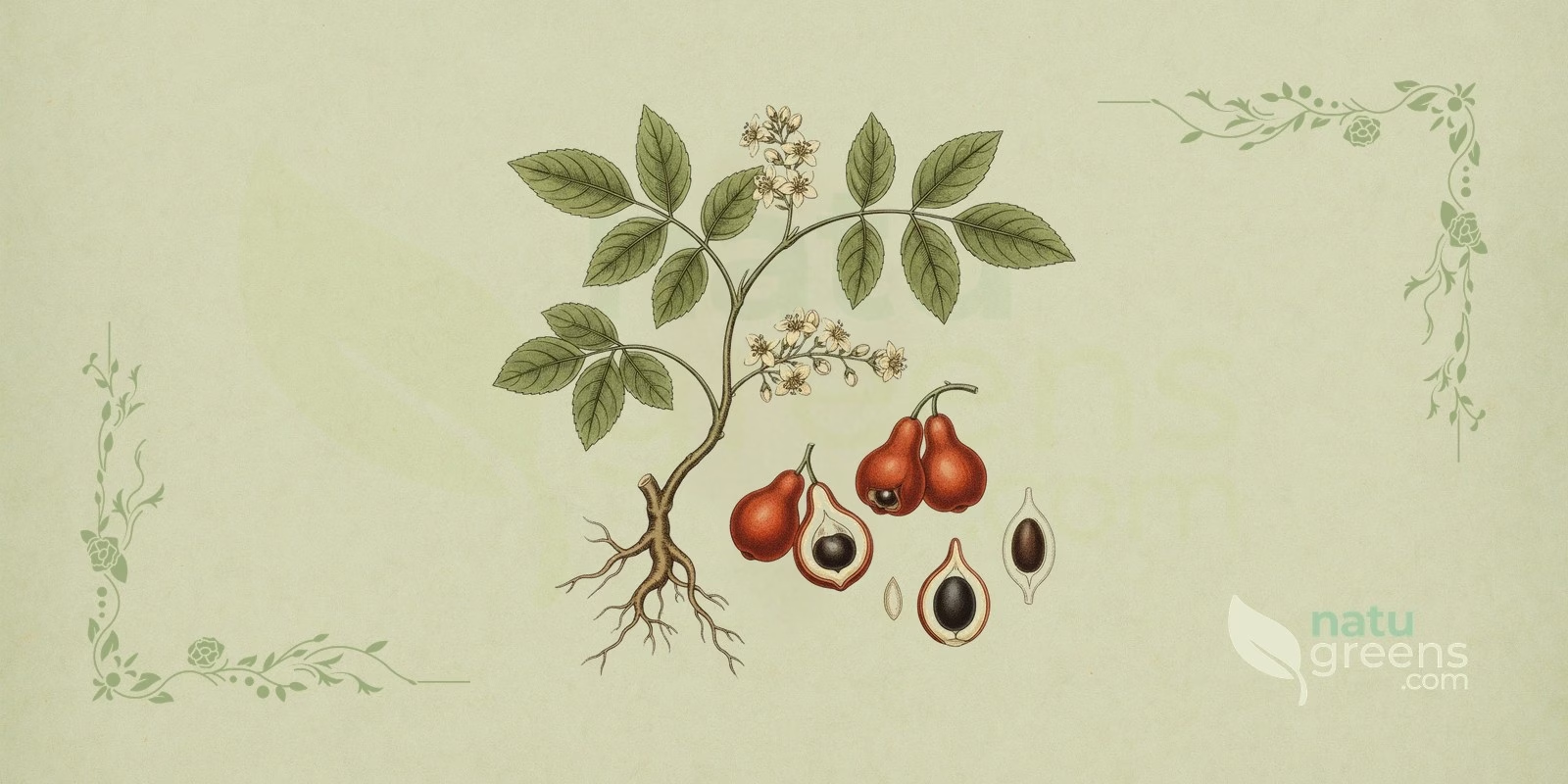
Paullinia cupana Kunth / Guarana, a climbing vine (liana) of the Sapindaceae family, is native to the Amazon basin, where it grows wild along riverbanks and is also cultivated commercially, especially in the states of Bahia and Amazonas, which account for most of Brazil's production of the species. Its seeds, roasted and ground, are among the most concentrated plant sources of caffeine known, which explains guarana's historical role as a stimulant in the culture of the Sateré-Mawé indigenous people, regarded as the plant's original domesticators. Many of the effects popularly attributed to guarana, however, still rest on preclinical studies, extrapolations from other caffeine sources, or traditional use, rather than on robust human clinical trials, which calls for caution when interpreting any claimed benefit.
Popular and International Names of Guarana
- English: Guarana, Brazilian Cocoa.
- French: Guarana.
- German: Guarana.
- Italian: Guaranà.
- Portuguese: cupana, guanáyuba, guaraná, guaraná-cipó, guaraná-da-amazônia, guaraná-uva, guaranaína, guaranaúva, guaranazeiro, narana, naraná, naranajeiro, narazazeiro, paulínia, uaraná, varaná.
- Spanish: Guaraná.
Botanical Synonyms of Guarana
The accepted botanical name for the species is Paullinia cupana Kunth. Over time, the scientific literature has also used the synonym Paullinia sorbilis Mart., now treated as the variety Paullinia cupana var. sorbilis (Mart.) Ducke, which corresponds to the cultivated form of the plant, reflecting successive taxonomic revisions within the genus Paullinia, which brings together more than 180 species of tropical American vines. Current botanical databases, however, recognize Paullinia cupana as the correct and preferred name, and this is the designation adopted by the leading pharmacopoeias and by the EMA/HMPC monograph on the species.
Botanical Family: Sapindaceae
Guarana belongs to the Sapindaceae family, a botanical group that brings together between 1,600 and 2,000 species distributed mainly across tropical and subtropical regions, organized into roughly 140 genera. The family covers quite diverse growth habits, from large trees to shrubs and woody vines like guarana itself, and is known for the frequent presence of saponins and tannins among its species. Among guarana's best known botanical relatives are lychee (Litchi chinensis) and rambutan (Nephelium lappaceum), commercially important tropical fruits that share the same family.
Parts Used of Guarana
In traditional practice and in industry, it is mainly the seeds of guarana that are used, harvested once the fruits open naturally and expose the dark seed wrapped in a white aril, a visual detail that resembles an eye and feeds part of the symbolism indigenous peoples of the Amazon attach to the plant. The seeds go through washing, roasting, and grinding before becoming the characteristic powder, and they also serve as the base for liquid extracts and dry extracts standardized for caffeine content.
Ethnobotanical and Traditional Uses of Guarana
Among Amazonian indigenous peoples, especially the Sateré-Mawé, guarana holds a central role as an everyday stimulant and also as a plant tied to rituals and the social life of the village. In folk medicine, the seed powder is commonly used, always as traditional use and without confirmation in robust clinical trials, in the following contexts:
- Folk use as a diuretic
- Folk use as a pain reliever for headaches and migraines
- Folk use as an antidote for animal bites and venoms
- Folk use as an astringent
- Traditional relief of fatigue and a perceived increase in energy
- Traditional support for diarrhea and dysentery
- Traditional use for fevers
Medicinal Properties of Guarana
The properties listed below derive mostly from preclinical studies, carried out in the lab and in animals, and from traditional use, not from controlled human clinical trials, and should be read as research signals rather than proven efficacy.
- Anti-inflammatory (inhibition of inflammatory mediators such as TNF-alpha in experimental models)
- Antidepressant (suggested by preclinical studies on mood and energy levels)
- Antigenotoxic (DNA protection observed in laboratory assays)
- Antimicrobial action (activity observed in vitro against some Gram-positive and Gram-negative bacteria and fungi)
- Antioxidant (attributed to its catechin and epicatechin content, with free-radical neutralization observed in the lab)
- Anxiolytic (effect observed in experimental models, still without robust clinical confirmation)
- Cardiotonic (effect described in preclinical studies on cardiac function)
- Cytoprotective (cell protection observed in laboratory models)
- Immunostimulant (suggested by preclinical studies, without confirmation in humans)
- Neuroprotective (studied experimentally in models related to neurodegenerative diseases, without direct extrapolation to humans)
- Perceived cognitive improvement (linked to caffeine's stimulant effect on attention and mental clarity)
- Reduction of mental fatigue (traditional use recognized by the EMA/HMPC, including studies in specific populations such as breast cancer patients)
- Stimulant action (reduces the perception of fatigue and increases alertness, an effect attributed to caffeine and the other methylxanthines)
- Thermogenic (increase in resting energy expenditure described in preclinical studies, with no proven link to weight loss in humans)
- Wound-healing support (traditional use and some preliminary studies on tissue repair)
Detailed Phytochemical Profile of Guarana
The chemical composition of guarana has been extensively studied, with particular attention to the high methylxanthine content found in the seeds. The main compounds identified include:
- B-complex vitamins (B2, B3, and B4)
- Caffeine (between 2% and 8% of dry seed weight, one of the highest concentrations ever recorded in a plant)
- Catechin and epicatechin (flavonoids with antioxidant activity)
- Essential oil
- Fatty acids
- Magnesium, manganese, and other minerals (calcium, iron, phosphorus, potassium)
- Polysaccharides
- Proteins
- Saponins
- Tannins
- Theobromine and theophylline (other methylxanthines present in smaller amounts than caffeine)
- Trace elements (rubidium, nickel, strontium, among others)
Preparation and Administration Forms of Guarana
The most traditional way to consume guarana is as the powder from roasted, ground seeds, dissolved in water or added to other drinks and foods. Industry also offers guarana as a fluid extract, a dry extract standardized for caffeine, capsules, and syrups, and it is an ingredient in energy drinks and soft drinks that are very popular in Brazil, although these usually contain a much more diluted amount of real guarana than the traditional drink made with pure powder.
Whichever form is chosen, it is advisable to start with low doses to assess individual sensitivity to caffeine, avoid consumption in the late afternoon or evening, and always add guarana to the other caffeine sources of the day, such as coffee, black tea, and yerba mate, when calculating total daily intake.
Synergy with Other Medicinal Plants
Energy and Physical Performance
In the search for more energy and stamina, guarana is often paired with adaptogens such as ginseng (Panax ginseng) and ashwagandha (Withania somnifera), plants that, according to traditional use, help the body cope with physical stress without the direct, and at times abrupt, stimulant effect of caffeine on its own. The idea behind this pairing is to balance guarana's immediate stimulation with more gradual support throughout the day, although clinical trials directly comparing this combination to guarana alone are still lacking.
Cognitive Support
For those seeking attention and mental clarity, some formulations combine guarana and ginkgo (Ginkgo biloba), pairing caffeine's immediate stimulant effect with ginkgo's traditional use for cerebral circulation. This combination is popular in the supplement industry, but it still lacks robust clinical studies carried out specifically on this pairing.
Antioxidant Action
Since guarana is rich in catechin and epicatechin, it is often combined with other plant sources of polyphenols, such as green tea (Camellia sinensis) and açaí (Euterpe oleracea), both Amazonian or widely present in the Brazilian diet. The combination aims to bring together different classes of antioxidants, although adding up effects observed in the lab does not necessarily translate into a proportionally greater clinical benefit in humans.
Recipes and Usage Protocols for Guarana
Traditional Powder Dissolved in Water
Dissolve 1 to 2 grams, roughly one level coffee spoon, of guarana powder in a glass of water, fruit juice, or another cold drink, and consume it in the morning or early afternoon. This is the form closest to traditional indigenous use, and its strength can be adjusted by reducing or increasing the amount of powder, always respecting individual sensitivity to caffeine and without exceeding the recommended total daily intake.
Standardized Capsules and Dry Extract
Manufactured products usually standardize caffeine content per capsule or per dose of dry extract, which makes it easier to control the amount consumed compared to raw powder, whose caffeine content varies with the batch and the origin of the seeds. The dose should always follow the package insert or the manufacturer's guidance, taking into account total caffeine use from all sources throughout the day. These uses follow traditional records and popular use and do not replace professional health guidance, especially for pregnant women, people with heart conditions, people with hypertension, and people who are anxious or have sleep disorders.
The preparations above follow traditional records and do not replace professional guidance. Before any internal use, check the contraindications and interactions described in this article.
Therapies Associated with Guarana
Clinical Herbal Medicine
In modern herbal medicine, guarana is recognized mainly within the traditional-use framework established by the EMA/HMPC, intended for relief of the sensation of mental and physical fatigue in healthy adults, always within safe caffeine limits. Herbal practitioners usually recommend it in short-term protocols, avoiding continuous use over long periods without a break, and assessing a person's cardiovascular and psychiatric history before suggesting any preparation based on the plant.
Homeopathy
In homeopathy, guarana appears under the name Paullinia or Paullinia sorbilis, traditionally indicated, in ultramolecular dilutions, for nervous exhaustion, mental fatigue, and tingling sensations. As with any homeopathic indication, this is a use based on practitioners' clinical experience and on homeopathic tradition, without the kind of proof required by evidence-based medicine, and the choice of remedy and dilution should be made by a qualified homeopath.
Contraindications and Side Effects of Guarana
Guarana should be consumed with caution, mainly because of its caffeine content, which ranges between 2% and 8% of dry seed weight, one of the highest concentrations among plants traditionally used as stimulants. In excess, it can cause insomnia, irritability, tachycardia, heartburn, tremors, and nervousness, and prolonged use at high doses is associated with cardiovascular changes and, in rare cases, seizures, in addition to a risk of physical dependence, with withdrawal symptoms such as headache, fatigue, and irritability after abrupt discontinuation.
Guarana consumption should be avoided by pregnant and breastfeeding women, who should limit total caffeine intake, adding up all sources in the day, to a maximum of 200 mg, as well as by people under 18 years of age, in line with the EMA/HMPC monograph on the species. It is also contraindicated for people with cardiac arrhythmia, uncontrolled hypertension, anxiety, and insomnia, since caffeine's stimulant effect tends to worsen these conditions. Healthy people who wish to consume guarana should keep their total caffeine intake from all sources within the limits considered safe for adults, and any doubt about the appropriate dose should be clarified with a physician or pharmacist.
It is essential to reinforce that the recognized traditional framework for guarana is relief of the sensation of fatigue, with no proven link to weight loss. Guarana should not be used as a weight-loss strategy, and any promise to that effect has no basis in recognized traditional use or in robust clinical evidence.
Drug Interactions
Guarana's caffeine can add to other stimulants, such as coffee, yerba mate, energy drinks, and certain medications for weight loss or attention, increasing the risk of adverse cardiovascular and nervous system effects. Combining it with monoamine oxidase inhibitors (MAOIs) should be avoided, because of the risk of a hypertensive crisis. Guarana can also interfere with lithium levels in the body and intensify the effects of theophylline, another bronchodilator in the methylxanthine class, raising the risk of toxicity. Antibiotics in the quinolone class can reduce the liver's elimination of caffeine, prolonging and intensifying its effects. Finally, in vitro studies suggest a possible antiplatelet effect of guarana, which raises the theoretical possibility of interaction with anticoagulants and the need for caution and medical follow-up in people already taking these medications.
Curiosities and Historical Facts
Among the Sateré-Mawé, the indigenous people regarded as guarana's original domesticators, a legend explains the plant's origin from the eyes of a village child killed by an evil being, eyes that a benevolent deity later transformed into the plant's two varieties, the wild one and the cultivated one. The resemblance between the dark seed wrapped in its white aril and a human eye is, to this day, one of the species' most discussed features and helps explain why guarana holds such a central place in this people's cosmology.
The oldest European record of guarana dates back to 1669, when the Jesuit missionary Johannes Philippus Bettendorf described indigenous people drinking a beverage prepared from the plant, to which he attributed diuretic properties and effectiveness against headaches and fevers. In 1826, the chemist who isolated the active substance from the seeds named it guaranine, a name that fell out of use once it was confirmed to be exactly the same molecule already known as caffeine. The 1977 Brazilian Pharmacopoeia officially recognized guarana as a medicinal plant, consolidating a use that had already extended over centuries among the indigenous peoples of the Amazon.
Frequently Asked Questions about Guarana
Does Guarana Help with Weight Loss?
There is no proof that guarana, on its own, promotes weight loss. The traditional framework recognized by the EMA/HMPC for the plant is relief of the sensation of mental and physical fatigue, not weight loss, and any thermogenic effect observed in the lab should not be confused with a guaranteed weight-loss result in humans. Anyone looking to manage body weight should prioritize individualized nutritional guidance, rather than placing weight-loss expectations on a stimulant like guarana.
What Is the Best Time to Take Guarana?
In general, morning and early afternoon are the most suitable times, since caffeine's stimulant effect can last several hours and interfere with sleep if consumption happens close to the end of the day. People who are more sensitive to caffeine often notice this effect even at times relatively far from bedtime, which reinforces the importance of observing one's own individual response before settling on a consumption schedule.
Does Guarana Cause Dependence?
Regular consumption at high doses can lead to physical caffeine dependence, with withdrawal symptoms such as headache, fatigue, and irritability when use is stopped abruptly. Reducing the amount gradually, instead of stopping all at once, tends to make the transition more comfortable, and if there is any doubt about one's own consumption pattern, it is worth seeking professional guidance.
What Are the Main Side Effects of Guarana?
The most common side effects, especially at high doses, are insomnia, nervousness, irritability, tachycardia, and heartburn, and tremors can also appear in people more sensitive to caffeine. People with heart problems, hypertension, anxiety, or sleep disorders deserve extra attention and should consult a physician before adding guarana to their routine.
Can Pregnant Women Consume Guarana?
The recommendation is to avoid guarana during pregnancy and breastfeeding or, at the very least, to respect a ceiling of 200 mg of caffeine per day adding up all sources consumed, since caffeine crosses the placenta and is also transferred through breast milk. Given the lack of robust safety data for these stages, guidance from an obstetrician or pediatrician should come before any decision to consume it.
Is Guaranine Different from Caffeine?
No. When guarana's active substance was isolated in 1826, it was named guaranine, but later research confirmed it to be exactly the same molecule as the caffeine found in coffee, yerba mate, and cocoa. The name guaranine still appears occasionally in marketing materials as if it were an exclusive and safer compound, but, from a chemical standpoint, there is no difference at all between the two names.
Notice: this content is for informational purposes and does not replace professional medical advice. Consult a physician or herbal practitioner before using medicinal plants, especially during pregnancy, breastfeeding, or alongside medication.
How to cite this article
NATUGREENS. Guarana (Paullinia cupana): Benefits, Uses, and Safety. Natugreens, 21 Nov. 2026. Disponível em: https://natugreens.com/guarana-paullinia-cupana/. Accessed: Nov. 21, 2026.
Natugreens. (2026). Guarana (Paullinia cupana): Benefits, Uses, and Safety. Natugreens. https://natugreens.com/guarana-paullinia-cupana/
References and Scientific Studies
View All 12 Cited References
Peer-Reviewed Scientific Studies (1)
- PEER2019 Marques, L. L. M., Ferreira, E. D. F., Paula, M. N. de, Klein, T., & Mello, J. C. P. (2019). Paullinia cupana: a multipurpose plant, a review. Revista Brasileira de Farmacognosia, 29(1), 77-110.
Supplementary Readings (11)
- 2026 Wikipedia. Guarana. Accessed November 20, 2026.
- 2026 WebMD. Guarana. Accessed November 20, 2026.
- 2026 Medical News Today. What are the benefits of guarana? Accessed November 20, 2026.
- 2026 Drugs.com. Guarana. Accessed November 20, 2026.
- 2026 Tua Saúde. Guaraná: para que serve, benefícios e como usar. Accessed November 20, 2026.
- 2026 HSNstore.pt. Guaraná em pó: para que serve e qual a forma certa de tomar. Accessed November 20, 2026.
- 2026 Mahta.bio. Guaraná em pó: para que serve e qual a forma certa de tomar. Accessed November 20, 2026.
- 2026 Bulas.med.br. Contraindicações guaraná Hertz. Accessed November 20, 2026.
- 2026 Health.com. Guarana benefits. Accessed November 20, 2026.
- 2026 Waterdrop.com. Guarana. Accessed November 20, 2026.
- 2026 Specialchem.com. Paullinia cupana seed extract. Accessed November 20, 2026.
You May Also Like
Take your time and tell us everything you think, details included. Every response is read by someone on our editorial team and goes into the article's revision. An honest critique helps us more than a polite compliment.
Take your time and tell us everything you think, details included. Every response is read by someone on our editorial team and goes into the article's revision. An honest critique helps us more than a polite compliment.