



Quick summary
Copaifera officinalis L. is a large tree of the Fabaceae family, popularly known as copaiba, native to the tropical forests of South America, with recorded occurrence in Bolivia, Brazil, and Venezuela. An aromatic oleoresin is extracted from its trunk, a substance Amazonian communities have used for generations and…
Main caution: Copaiba oleoresin, when taken orally in high doses, can cause gastrointestinal irritation, diarrhea, and skin rash. In topical use, although less frequently, there is a risk of contact dermatitis, especially on…
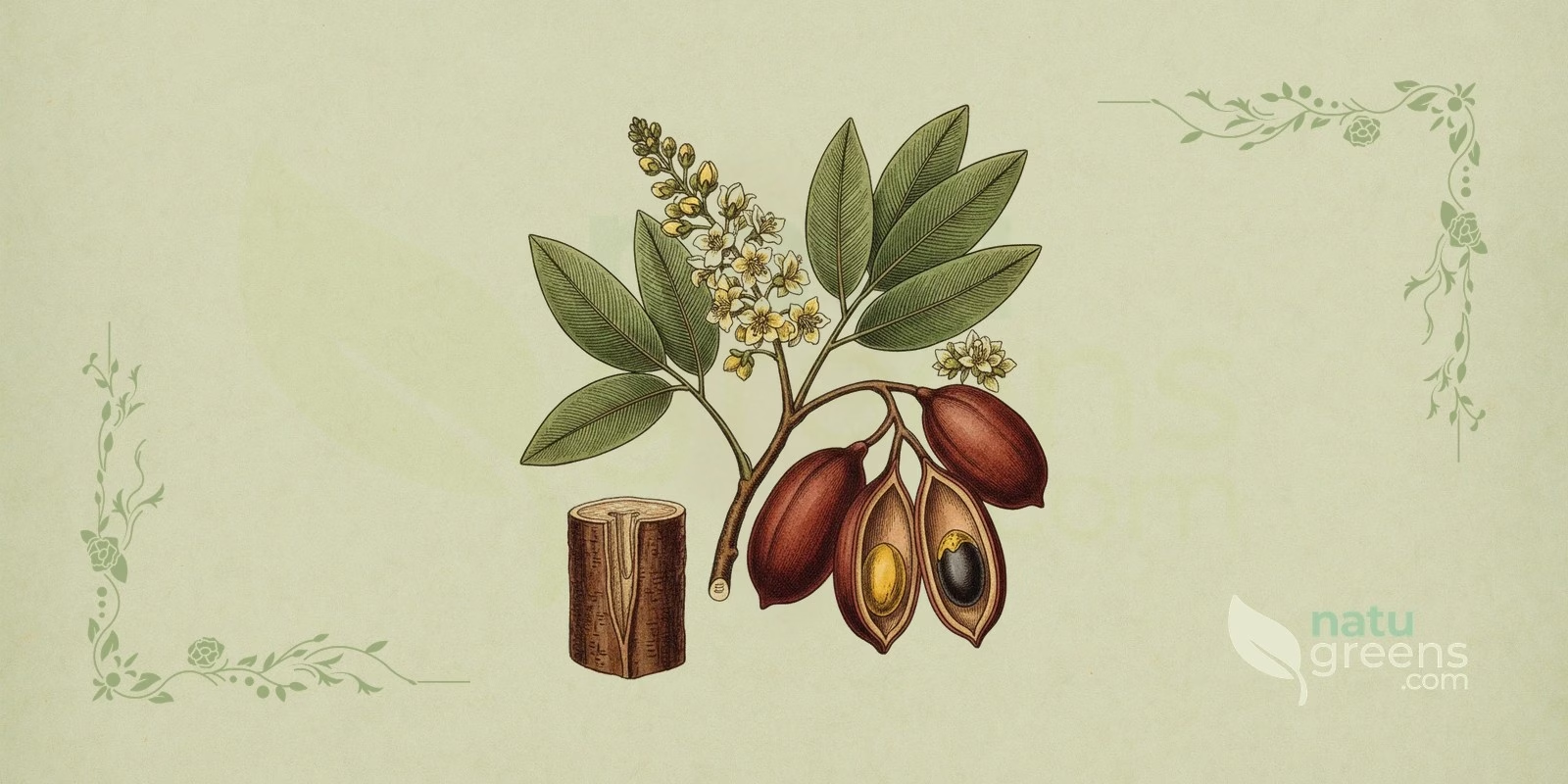
Copaifera officinalis L. is a large tree of the Fabaceae family, popularly known as copaiba, native to the tropical forests of South America, with recorded occurrence in Bolivia, Brazil, and Venezuela. An aromatic oleoresin is extracted from its trunk, a substance Amazonian communities have used for generations and one that has become one of Brazil's best known plant oils in folk herbal medicine. It should be noted from the outset that the copaiba oil sold commercially does not always come from this species alone, since other species of the same genus yield a very similar oleoresin that is sold under the same popular name. Scientific research on the plant remains mostly preclinical, with relatively little data collected directly in humans.
Popular and International Names of Copaiba
- English: copaiba balsam, copaiba oil.
- French: copaïba, baume de copaïba.
- German: Kopaivabalsam, Kopaibaöl.
- Italian: copaiba, balsamo di copaiba.
- Portuguese: copaíba, bálsamo-de-copaíba, copaíba-verdadeira, copaíva, óleo-de-copaíba.
- Spanish: copaiba, bálsamo de copaiba.
Do Not Confuse with Other Species of Copaiba
The oil sold as copaiba rarely comes from a single botanical species. Besides Copaifera officinalis, at least three other species of the genus supply the oleoresin marketed under the same popular name: Copaifera langsdorffii, Copaifera reticulata, and Copaifera multijuga. All four produce a liquid of similar composition, rich in sesquiterpenes and diterpenes, and product packaging rarely states which of them was used in the blend. For this reason, what popular literature calls copaiba oil corresponds, in practice, to a group of closely related species rather than to a single botanically distinct plant.
Botanical Synonyms of Copaiba
The accepted name for this species is Copaifera officinalis L., first described by Carl Linnaeus. Within the genus Copaifera, species boundaries are still debated among specialists, and similar populations are given different names depending on the region and the database consulted. In practice, for anyone buying copaiba oil commercially, the most relevant detail is not this academic debate but the fact that the popular name copaiba covers several closely related species, as already described in the previous section.
Botanical Family: Fabaceae
Copaiba belongs to the Fabaceae family, also called Leguminosae, one of the largest families of flowering plants, with thousands of species spread across almost every continent. The group is recognized by its characteristic pods and, in many species, by an association with nitrogen fixing bacteria that enrich the soil where the plants grow. Among copaiba's best known relatives are beans, soybeans, peanuts, and lentils, even though each belongs to a different subfamily within the group.
Plants in the Fabaceae family frequently produce bioactive compounds such as flavonoids, alkaloids, and terpenes, and copaiba is one of the most studied examples of this chemical richness in Brazilian flora, thanks to the oleoresin that accumulates in its trunk over the years.
Parts Used from Copaiba
The most used part of copaiba is its oleoresin, extracted through a hole drilled into the trunk of mature trees, a technique known as sustainable tapping when performed without felling the tree. The trunk bark also appears in traditional preparations, usually as a tea, although its use is far more limited than that of the oil itself.
Ethnobotanical and Traditional Uses of Copaiba
In the folk medicine of the Amazon and other regions of Brazil, copaiba oleoresin is associated with a long list of traditional uses, almost always through topical application or small oral doses. Among the most frequently cited records are:
- Acne and skin blemishes
- Bronchitis, cough, and colds
- Dermatitis, eczema, and psoriasis
- Gastritis, heartburn, and other digestive discomforts
- Healing of wounds and skin ulcers
- Muscle and joint pain
- Urinary tract infections
These are uses passed down between generations, supported by popular experience rather than by robust clinical evidence obtained specifically with this species.
Medicinal Properties of Copaiba
The properties listed below come from preclinical studies, carried out in the laboratory, in cell cultures, or in animals, as well as from traditional use. None of them has been confirmed in robust clinical trials in humans using Copaifera officinalis specifically:
- Analgesic (pain relief observed in experimental models)
- Antibacterial (activity recorded against bacteria such as Streptococcus mutans in laboratory tests)
- Anti-inflammatory (reduction of inflammatory markers in preclinical studies)
- Antimicrobial (activity against fungi and other microorganisms observed in vitro)
- Diuretic (traditional use, still little studied)
- Expectorant (traditional use for cough and bronchitis)
- Wound healing (traditional use, with some support from laboratory studies)
Detailed Phytochemical Profile of Copaiba
Copaiba oleoresin owes much of its properties to a group of sesquiterpenes and diterpenes, with the following compounds standing out:
- Beta-bisabolene (sesquiterpene present in the oil's volatile fraction)
- Beta-caryophyllene (abundant sesquiterpene also found in many other aromatic plants)
- Coumarins (phenolic compounds present in smaller amounts)
- Flavonoids (antioxidant compounds typical of the Fabaceae family)
- Gamma-muurolene (sesquiterpene that contributes to the oil's characteristic aroma)
- Kaurenoic acid (diterpene associated with anti-inflammatory activity in preclinical studies)
Forms of Preparation and Administration of Copaiba
Copaiba oil is sold today in several forms, from the raw oleoresin found in small bottles to standardized capsules available in pharmacies and natural product stores. For topical use, it is usually diluted in a vegetable oil before being massaged into the skin until fully absorbed. For internal use, it appears in fixed dose capsules or, in a more traditional and less standardized way, as a tea prepared from pieces of the trunk bark.
Synergy with Other Medicinal Plants
Combination with Anti-Inflammatory Plants
Copaiba is often combined with cat's claw (Uncaria tomentosa) or devil's claw (Harpagophytum procumbens) in formulations aimed at joint and muscle pain. The idea behind this traditional pairing is to add copaiba's sesquiterpenes to the alkaloids of cat's claw or the iridoids of devil's claw, but there are no clinical studies comparing the combination with each plant used on its own.
Pairing for Respiratory Health
In popular formulations for cough and bronchitis, copaiba is often paired with guaco (Mikania glomerata) or eucalyptus (Eucalyptus globulus), two well known traditional expectorants in Brazilian flora. The combination follows the logic of adding effects on the respiratory tract, although, once again, clinical trials confirming any advantage over using each plant alone are still lacking.
Recipes and Usage Protocols for Copaiba
Copaiba Oil for Topical Use
How it is prepared: a few drops of copaiba essential oil are diluted in a teaspoon of a vegetable oil, such as coconut or almond oil, and the mixture is applied to clean skin and massaged in until absorbed. The procedure is usually repeated once or twice a day, following the traditional use recorded for dermatitis, psoriasis, and small wounds.
Copaiba Bark Tea
For the tea, small pieces of trunk bark are boiled in water for about fifteen minutes, then strained and served warm, two to three times a day. This is a traditionally used preparation for digestive discomfort and urinary irritation, with very few studies having evaluated the bark on its own.
Copaiba Oil Capsules
Standardized capsules, usually of two hundred fifty milligrams, are generally taken once or twice a day with a glass of water. The dose and duration of use should be guided by a doctor or herbal medicine practitioner, especially when the goal involves respiratory or urinary complaints.
These uses follow traditional records and do not replace professional guidance, especially in the presence of any sign or symptom that persists longer than expected.
The preparations above follow traditional records and do not replace professional guidance. Before any internal use, check the contraindications and interactions described in this article.
Therapies Associated with Copaiba
Clinical Herbal Medicine
In herbal medicine, copaiba oleoresin serves as a raw material for tinctures, extracts, and ointments, always under the guidance of a qualified professional. This practice involves case by case evaluation, since the response to the oil can vary considerably from person to person, especially when there is a history of skin sensitivity.
Aromatherapy
Copaiba essential oil is also used in aromatherapy, diffused into the air or applied, well diluted, to pulse points. This aromatic use predates any modern research and relies almost entirely on popular tradition, without consistent scientific proof of a relaxing effect through this specific route.
Contraindications and Side Effects of Copaiba
Copaiba oleoresin, when taken orally in high doses, can cause gastrointestinal irritation, diarrhea, and skin rash. In topical use, although less frequently, there is a risk of contact dermatitis, especially on sensitive skin or when the oil is applied undiluted for prolonged periods. Use should be avoided during pregnancy, breastfeeding, and in children, due to the lack of studies confirming safety in these groups. Clinical evidence on copaiba in humans is still limited, and most of what is known today comes from laboratory and animal studies.
Drug Interactions
Systematic studies on drug interactions with copaiba are lacking, but given the anti-inflammatory activity attributed to other similar plant oleoresins, caution is advised for anyone using anti-inflammatory drugs, anticoagulants, or antiplatelet agents. It is always wise to inform a doctor about the use of the oil before any surgical procedure.
Curiosities and Historical Facts about Copaiba
Copaiba oil has been known in the Amazon since long before the arrival of Europeans, and explorers and naturalists were already describing it as early as the sixteenth century, when the plant began appearing in travel accounts as one of the forest's most valuable remedies. The traditional extraction method, made through a hole in the trunk without felling the tree, is known as sustainable tapping and allows the same copaiba tree to be tapped for decades.
Because the oleoresin of several species of the genus circulates under the same popular name, a bottle of copaiba oil bought at a pharmacy and another bought at a regional products fair in the Amazon may, in practice, contain substances extracted from different trees, even though chemically quite similar.
Frequently Asked Questions about Copaiba Oil
Does Copaiba Oil Always Come from the Same Species?
No. The oil marketed as copaiba can come from Copaifera officinalis or from other species of the genus, such as Copaifera langsdorffii, Copaifera reticulata, and Copaifera multijuga. The packaging rarely states which species was used, and all of them produce chemically similar oleoresins.
How Should I Use Copaiba Oil?
Topical use usually involves diluting it in a vegetable oil before applying it to the skin. For internal use, the safest approach is to rely on standardized capsules, always under the guidance of a health professional, who will assess the appropriate dose for each case.
Can Pregnant Women and Children Use Copaiba?
It is not recommended. Studies confirming the safety of copaiba oil during pregnancy, breastfeeding, and childhood are lacking, so its use should be avoided in these groups until more consistent data are available.
What Are the Main Side Effects of Copaiba?
In high oral doses, copaiba can cause gastrointestinal irritation, diarrhea, and skin rash. In topical use, the main risk is contact dermatitis. Clinical evidence in humans is still limited, which reinforces the importance of using the oil in moderation and with professional guidance.
Notice: this content is for informational purposes and does not replace professional medical advice. Consult a physician or herbal practitioner before using medicinal plants, especially during pregnancy, breastfeeding, or alongside medication.
How to cite this article
NATUGREENS. Copaiba Oil (Copaifera officinalis): Properties and Uses. Natugreens, 21 Nov. 2026. Disponível em: https://natugreens.com/copaiba-copaifera-officinalis/. Accessed: Nov. 21, 2026.
Natugreens. (2026). Copaiba Oil (Copaifera officinalis): Properties and Uses. Natugreens. https://natugreens.com/copaiba-copaifera-officinalis/
References and Scientific Studies
View All 13 Cited References
Peer-Reviewed Scientific Studies (2)
- PMC2018 Trindade, R. da, Silva, J. K. da e Setzer, W. N. (2018). Copaifera of the Neotropics: A Review of the Phytochemistry and Pharmacology. International Journal of Molecular Sciences. ↗
- PMC2023 Frazão, D. R. et al. (2023). Evaluation of the biological activities of Copaiba (Copaifera spp.) oleoresin: A systematic review. Biomedicine and Pharmacotherapy. ↗
Supplementary Readings (11)
- Wikipedia. Copaifera officinalis. ↗
- Tua Saúde. Copaíba: para que serve e como usar. ↗
- 2021 Santiago, M. B., Santos, R. A. dos e Martins, C. H. G. (2021). Guia das copaíbas: para que serve. Recife, ObservaPICS. ↗
- Useful Tropical Plants. Copaifera officinalis. ↗
- Plants For A Future. Copaifera officinalis. ↗
- Healthline. Copaiba Oil Benefits, Uses and Research. ↗
- Dr. Axe. Copaiba Oil Uses, Benefits and Side Effects. ↗
- Cosmacon. Copaifera officinalis Resin Oil. ↗
- Young Living. History of Copaiba. ↗
- Minireview about Medicinal Copaiba Oil in the Treatment of Skin Diseases. ↗
- 2012 Pieri, F. A. et al. (2012). Bacteriostatic effect of copaiba oil (Copaifera officinalis) against Streptococcus mutans. Brazilian Dental Journal. ↗
You May Also Like
 Desmodium (Desmodium adscendens): Uses, Risks and ChemistryDesmodium adscendens
- Candle Bush (Senna alata): Benefits, Uses and SafetySenna alata
- Sensitive Plant (Mimosa pudica): Uses, Science and SafetyMimosa pudica
- LicoriceGlycyrrhiza glabra
- Sambong (Blumea balsamifera): Uses and PrecautionsBlumea balsamifera





Take your time and tell us everything you think, details included. Every response is read by someone on our editorial team and goes into the article's revision. An honest critique helps us more than a polite compliment.
Take your time and tell us everything you think, details included. Every response is read by someone on our editorial team and goes into the article's revision. An honest critique helps us more than a polite compliment.