



Quick summary
Mimosa pudica L., best known in English as the sensitive plant and also called touch-me-not, shameplant, or humble plant, is a perennial herbaceous plant in the Fabaceae family, first described by the Swedish naturalist Carl Linnaeus in 1753. Native to the tropical regions of Central and South America, the species has…
Main caution: The sensitive plant contains mimosine, an alkaloid studied mainly for its effects on cell proliferation. In studies with rodents, extracts of the plant showed an antifertility effect, which is why medicinal use of the…
Mimosa pudica L., best known in English as the sensitive plant and also called touch-me-not, shameplant, or humble plant, is a perennial herbaceous plant in the Fabaceae family, first described by the Swedish naturalist Carl Linnaeus in 1753. Native to the tropical regions of Central and South America, the species has spread across nearly the entire tropical and subtropical world, where it grows spontaneously along roadsides, in vacant lots, and in cultivated areas. Its best-known name comes from the very movement that made it famous: at the slightest touch, its leaves fold inward and its branches droop, as if the plant were falling asleep for a moment. Much of what is known about its possible health benefits comes from traditional use and preclinical studies carried out in the laboratory or in animals, not from clinical research in humans, which calls for caution when interpreting any property attributed to it.
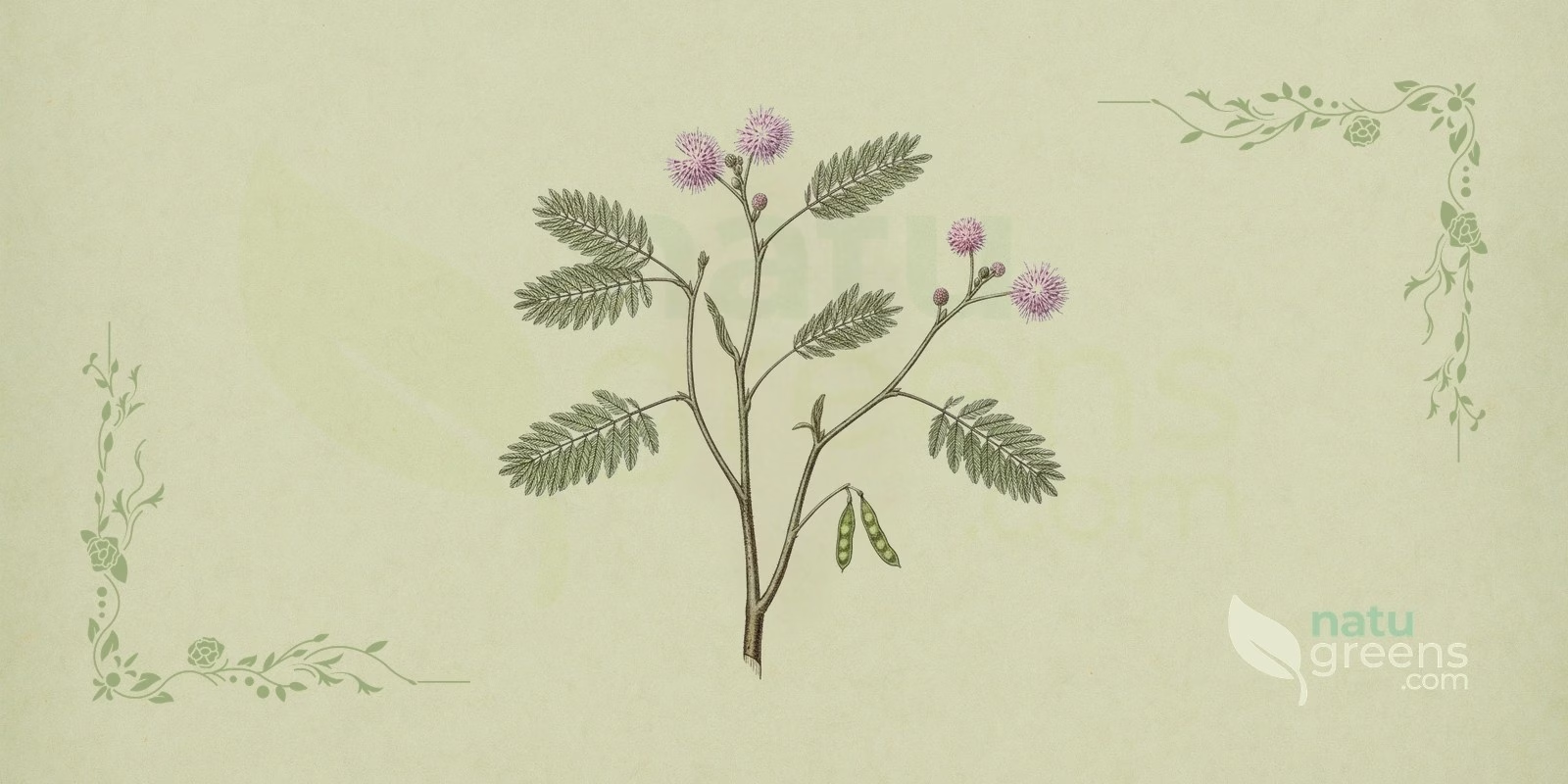
In popular herbal medicine, the sensitive plant occupies a curious place: it is both an ornamental garden plant, prized for its visible reaction to touch, and a medicinal resource recorded in different traditions, from Indian Ayurveda to the folk pharmacopoeias of Latin America and West Africa. Its chemical makeup includes alkaloids such as mimosine, glycosylated flavonoids, tannins, and saponins, a combination that helps explain the recent scientific interest in the species. Even so, most of the properties described below remain in the realm of traditional use or preclinical research, without confirmation from robust clinical studies conducted in people.
Common and International Names of the Sensitive Plant
- English: sensitive plant, touch-me-not, shameplant, humble plant, sleepy plant.
- French: sensitive, mimosa pudique, herbe sensible.
- German: Sinnpflanze, schamhafte Mimose.
- Italian: pianta sensitiva, mimosa pudica.
- Portuguese: dormideira, sensitiva, não-me-toque, dorme-maria, maria-fecha-a-porta, juquiri-rasteiro.
- Spanish: dormilona, moriviví, vergonzosa, planta sensitiva.
Botanical Synonyms of the Sensitive Plant
The scientific name accepted for the species is Mimosa pudica L. Over time, the plant has received several botanical synonyms, reflecting reclassifications and regional descriptions made by different researchers. Among the most frequently cited are Eburnax pudica (L.) Raf., Mimosa hispidula Kunth, Mimosa tetranda Humb. & Bonpl. ex Willd., Mimosa unijuga Duchass. & Walp., Mimosa endymionis Mart., and Mimosa irritabilis Dum.Cours. These names should not be used to refer to the species today, but they still appear frequently in older botanical literature.
Botanical Family: Fabaceae
The sensitive plant belongs to the Fabaceae family, the legume family, one of the largest groups of flowering plants on the planet. Within it, the species is classified in the subfamily Caesalpinioideae, in the clade known as the Mimosoid clade, which brings together species characterized by compound leaves and, in many cases, by the ability to associate with nitrogen-fixing bacteria in the soil. This association helps explain the high nitrogen content found in the leaves of Mimosa pudica and its ease in colonizing poor soils.
Parts of the Sensitive Plant Used
- Leaves
- Roots
- Whole plant
Ethnobotanical and Traditional Uses of the Sensitive Plant
In Ayurveda, the traditional Indian medical system, the sensitive plant is known as Lajjalu and appears in formulations aimed at hemorrhoids, diarrhea, persistent dysentery, urogenital infections, hair loss, and insomnia, as well as topical use on wounds and ulcers to support healing. These indications are records of traditional use, not clinical proof.
Within India itself, uses vary considerably from region to region. In some districts, the leaves are traditionally associated with male sexual vigor; in others, leaves and roots go into home preparations for kidney stones, hemorrhoids, and fistulas, while root decoctions are used as a gargle for gum problems. In rural areas of Orissa, leaf or root pastes are applied to boils, abscesses, cuts, and headaches, and leaf pastes mixed with honey appear in folk remedies for stomach pain and intestinal worms, always as a traditional practice passed down between generations, without the backing of controlled clinical studies.
Outside Asia, similar uses repeat under comparable forms. In Mexico, aqueous extracts of the dried leaves are traditionally used to ease symptoms of low mood; in Bangladesh, the leaves appear in folk remedies for hemorrhoids, persistent diarrhea, and childhood seizures. In West Africa, the leaves are valued for their traditional wound-healing action, and in Ecuador it is common to place leaves of the plant inside pillows to promote sleep in children and the elderly. More broadly, the sensitive plant is also popularly mentioned, without robust scientific proof, for insect bites, nervousness, and as a diuretic.
Medicinal Properties of the Sensitive Plant
The properties listed below come, for the most part, from traditional popular use or from preclinical studies carried out in the laboratory, in cell cultures, or in animals. None of them has been confirmed by robust clinical trials in humans, and the list should be read as a picture of what tradition and preliminary research suggest, not as a medical recommendation.
- Analgesic (traditional use for pain relief)
- Antibacterial (tested in the laboratory, in vitro)
- Anticonvulsant (findings in animal models)
- Antidepressant (traditional use with leaf extract)
- Antidiabetic (preclinical studies in animals)
- Antifertility (observed in rodent studies, see contraindications)
- Antifungal (tested in the laboratory, in vitro)
- Anti-hyperlipidemic (preclinical studies in animals)
- Anti-inflammatory (preclinical findings)
- Antioxidant (attributed to the plant's flavonoids)
- Antivenom (traditional use and preliminary studies)
- Antiviral (tested in the laboratory, in vitro)
- Aphrodisiac (traditional popular use, no human studies)
- Diuretic (traditional use)
- Emetic (traditional use at high doses)
- Hepatoprotective (preclinical findings in animals)
- Nerve-Regenerating (studies in animal models of nerve injury)
- Sedative (traditional use)
- Tonic (traditional popular use)
- Wound-Healing (traditional use and preclinical studies)
Detailed Phytochemical Profile of the Sensitive Plant
The chemical composition of the sensitive plant is quite complex and helps explain the pharmacological research interest in the species. Among the groups of compounds already identified are alkaloids, glycosylated flavonoids, tannins, saponins, and sterols, each associated with different biological effects observed in the laboratory.
- Cerebrosides (lipids with a polyunsaturated fatty acid and a long-chain sphingosine)
- C-Glycoside Flavonoids (glycosylated flavones already isolated from the species)
- Coumarins (phenolic compounds present in the plant)
- D-Pinitol (an inositol ether)
- Jasmonic Acid (a fatty acid found in the roots)
- Mimosine (the most studied alkaloid in the plant, with antiproliferative effects described in the laboratory)
- Norepinephrine (a nitrogen compound identified in the plant)
- Quinones (bioactive phenolic compounds)
- Saponins (glycosides with astringent action)
- Seed Mucilage (a polysaccharide of D-xylose and D-glucuronic acid)
- Sterols (such as beta-sitosterol)
- Tannins (present in leaves and roots)
- Terpenoids (including triterpenes)
Forms of Preparation and Administration of the Sensitive Plant
Traditionally, the sensitive plant is prepared in different ways, depending on the part of the plant used and the intended purpose. A decoction of roots and stems, boiled for fifteen to twenty minutes, is the form most often associated with urinary problems, fever, and nervousness. An infusion of the leaves, prepared like an ordinary tea, appears frequently in folk remedies for hemorrhoids and urinary discomfort. Topically, pastes made from fresh leaves or roots are applied to the skin for boils, swelling, and superficial wounds. In more pharmaceutical contexts, methanolic, ethanolic, and aqueous extracts of the plant are used in laboratory research, and some are even incorporated into ointment bases aimed at wound healing.
Synergy with Other Medicinal Plants
Combination for Urinary Comfort
In folk tradition, sensitive plant leaves are often combined with well-known diuretic plants, such as horsetail (Equisetum arvense), in an attempt to bring together complementary actions in the same tea for the urinary system. This practice follows traditional records and does not replace medical evaluation for urinary infections, which require diagnosis and, often, antibiotic treatment.
Combination for Relaxation and Sleep
Because of its traditional reputation as a sedative, the sensitive plant is also combined with well-established calming plants, such as chamomile (Matricaria chamomilla) and lemon balm (Melissa officinalis), in teas aimed at nighttime relaxation. The idea is to add together the mild effects of different plants, always within traditional use, with no claim to being a solution for anxiety disorders or persistent insomnia, which call for professional follow-up.
Recipes and Usage Protocols for the Sensitive Plant
Root Decoction for Urinary Discomfort
Boil ten to twenty grams of dried sensitive plant roots in five hundred milliliters of water for fifteen to twenty minutes over low heat. Strain and drink warm, up to twice a day. This decoction is traditionally associated with mild urinary discomfort and a diuretic action, but it does not replace medical evaluation in the presence of symptoms such as pain, fever, or blood in the urine.
Leaf Infusion for Hemorrhoids
Place a tablespoon of dried sensitive plant leaves in a cup and cover with two hundred and fifty milliliters of very hot water. Let it steep for ten minutes, strain, and drink warm, up to twice a day. The use for hemorrhoids and urinary discomfort follows popular tradition exclusively.
Leaf Paste for Topical Use
Mash fresh sensitive plant leaves with a little water until you get a smooth paste, and apply it to small swellings or boils that have already come to a head, only where the skin is unbroken. Do not use it on open or deep wounds without guidance from a health professional, and discontinue use if irritation occurs.
These recipes follow traditional records and do not replace professional health guidance; persistent symptoms, wounds that fail to heal, or any sign of infection call for medical evaluation.
The preparations above follow traditional records and do not replace professional guidance. Before any internal use, check the contraindications and interactions described in this article.
Therapies Associated with the Sensitive Plant
Clinical Phytotherapy
In contemporary clinical phytotherapy, the sensitive plant is studied mainly in the form of standardized extracts, with a focus on preclinical research into inflammation, blood sugar, and wound healing. So far, the most consistent results come from animal models and laboratory tests, which makes the species a promising research subject, but one still far from established clinical indications in humans.
Ayurveda
In Ayurveda, the sensitive plant is known as Lajjalu and holds a prominent place among the plants used for hemorrhoids, urogenital infections, and insomnia, always within the logic of this traditional Indian health system. The Ayurvedic indications for the plant are broad and ancient, but, as is the case with much of traditional herbal medicine, they are not equivalent to proof according to the criteria of evidence-based medicine.
Contraindications and Side Effects of the Sensitive Plant
The sensitive plant contains mimosine, an alkaloid studied mainly for its effects on cell proliferation. In studies with rodents, extracts of the plant showed an antifertility effect, which is why medicinal use of the sensitive plant should be avoided by pregnant women and by those trying to become pregnant. This evidence comes exclusively from preclinical research in animals, with no equivalent studies in humans, but caution for these two groups is recommended anyway, as a safety measure.
Ethanolic extracts of the leaves have shown a hyperglycemic effect in mice in certain studies, which calls for extra attention from people with diabetes, especially those already using medication to control blood sugar. Laboratory toxicity tests using the microcrustacean Artemia salina did not indicate relevant toxicity for extracts of the plant at the concentrations tested, but this does not guarantee safety at high doses or with prolonged use, an area that still needs more research.
In some regions, the seeds of the sensitive plant are popularly credited with acting as an "intestinal parasite cleanse." This claim has no scientific proof and should not be followed as a way to treat parasites; any suspicion of intestinal parasites deserves medical evaluation and appropriate laboratory testing.
Drug Interactions
Because of its possible effect on blood sugar, the sensitive plant may interact with medications used to manage diabetes, altering the expected response to treatment. Because of its traditional reputation as a sedative, it is also prudent to use caution when combining it with sedative or anti-anxiety medications or with alcoholic beverages, due to the possibility of additive effects. In the absence of human clinical interaction studies, the safest guidance is to inform a doctor or pharmacist about use of the plant before combining it with any medication taken on an ongoing basis.
Curiosities and Historical Facts
The sensitive plant draws attention for the rapid movement of its leaves in response to touch, heat, or a simple vibration, a phenomenon botanists call seismonasty. Within seconds, the leaflets fold inward and the branches droop, a defense mechanism that also helps the plant conserve water on very dry days. Outside of touch episodes, the species also closes its leaves on its own at night and reopens them with daylight, in its own rhythm called nyctinasty, regulated by an internal biological clock.
One of the most curious chapters in the scientific history of the sensitive plant involves experiments on plant memory. In the nineteenth century, the German botanist Wilhelm Pfeffer was already using the plant in studies on habituation, and, in more recent decades, research led by biologist Monica Gagliano suggested that the sensitive plant can "learn" to ignore repetitive, harmless stimuli, such as small controlled drops in the laboratory, and maintain that response for a considerable time. The finding fueled an academic debate about the limits of cognition in organisms without a central nervous system, still without a definitive conclusion among scientists.
Frequently Asked Questions about the Sensitive Plant
Is the Sensitive Plant Safe to Consume?
No human safety studies allow anyone to say so, even for small amounts taken in traditional forms such as tea or decoction, and a long history of folk use is not the same as an absence of risk. The plant contains mimosine, a substance that can be harmful in very high doses, and it should be avoided by pregnant women and by those trying to become pregnant, because of the antifertility effect observed in animal studies. People with diabetes, those on ongoing medication, or anyone with a relevant health condition should consult a professional before trying the plant.
Why Does the Sensitive Plant Close Its Leaves When Touched?
The rapid closing of the leaves, known as seismonasty, happens because of a sudden pressure change in specialized cells at the base of each leaflet. By losing turgor pressure, these cells make the leaf fold almost instantly, a mechanism that works as a defense against herbivores and as a way to reduce water loss under stress conditions.
What Are the Most Common Traditional Uses of the Sensitive Plant?
Among the most frequently cited traditional uses are relief from hemorrhoids, urinary discomfort, skin wounds, and mild nervousness, as well as use as a diuretic in different cultures. It is worth remembering that these are folk indications, without the backing of broad clinical studies, and that they do not replace medical diagnosis or treatment.
Can the Sensitive Plant Be Grown at Home?
Yes. The sensitive plant is a hardy species, easily propagated from seed, that adapts well to pots and gardens in tropical or subtropical climates, provided it gets plenty of light and well-drained soil. Because it spreads easily, in some regions it is treated as an invasive plant, which is worth checking before planting.
Notice: this content is for informational purposes and does not replace professional medical advice. Consult a physician or herbal practitioner before using medicinal plants, especially during pregnancy, breastfeeding, or alongside medication.
How to cite this article
NATUGREENS. Sensitive Plant (Mimosa pudica): Uses, Science and Safety. Natugreens, 21 Nov. 2026. Disponível em: https://natugreens.com/mimosa-pudica-sensitive-plant/. Accessed: Nov. 21, 2026.
Natugreens. (2026). Sensitive Plant (Mimosa pudica): Uses, Science and Safety. Natugreens. https://natugreens.com/mimosa-pudica-sensitive-plant/
References and Scientific Studies
Peer-Reviewed Scientific Studies (2)
- PMC2012 Ahmad, H., Sehgal, S., Mishra, A., & Gupta, R. (2012). Mimosa pudica L. (Laajvanti): An Overview. Pharmacognosy Reviews, 6(12), 115-124. pmc.ncbi.nlm.nih.gov
- PEER2014 Gagliano, M., et al. (2014). Experience Teaches Plants to Learn Faster and Forget Slower in Environments Where It Matters. Oecologia, 175(1), 63-72. link.springer.com
Supplementary Readings (3)
- Linnaeus, C. (1753). Species Plantarum. Stockholm: Laurentius Salvius.
- 2013 The Plant List. (2013). Mimosa pudica L. theplantlist.org
- World Flora Online. (n.d.). Mimosa pudica L. worldfloraonline.org
You May Also Like
Take your time and tell us everything you think, details included. Every response is read by someone on our editorial team and goes into the article's revision. An honest critique helps us more than a polite compliment.
Take your time and tell us everything you think, details included. Every response is read by someone on our editorial team and goes into the article's revision. An honest critique helps us more than a polite compliment.