



Quick summary
Desmodium adscendens (Sw.) DC., popularly known as desmodium and also called pega-pega in some regions of Brazil, is a perennial herbaceous plant of the Fabaceae family, native to tropical regions of Africa, South America, Asia, and Oceania. Over generations, its leaves have been incorporated into the folk…
Main caution: Desmodium has well-established folk use for liver support in France and traditional use in the management of asthma in Ghana, but clinical data in humans are still scarce, and any benefit attributed to the plant must be…
Desmodium adscendens (Sw.) DC., popularly known as desmodium and also called pega-pega in some regions of Brazil, is a perennial herbaceous plant of the Fabaceae family, native to tropical regions of Africa, South America, Asia, and Oceania. Over generations, its leaves have been incorporated into the folk pharmacopeia of different continents, from French liver support to Ghanaian respiratory relief, almost always through homemade decoctions and infusions. Traditional records are numerous, but clinical studies in humans remain scarce, which calls for extra caution when interpreting any benefit attributed to the plant.
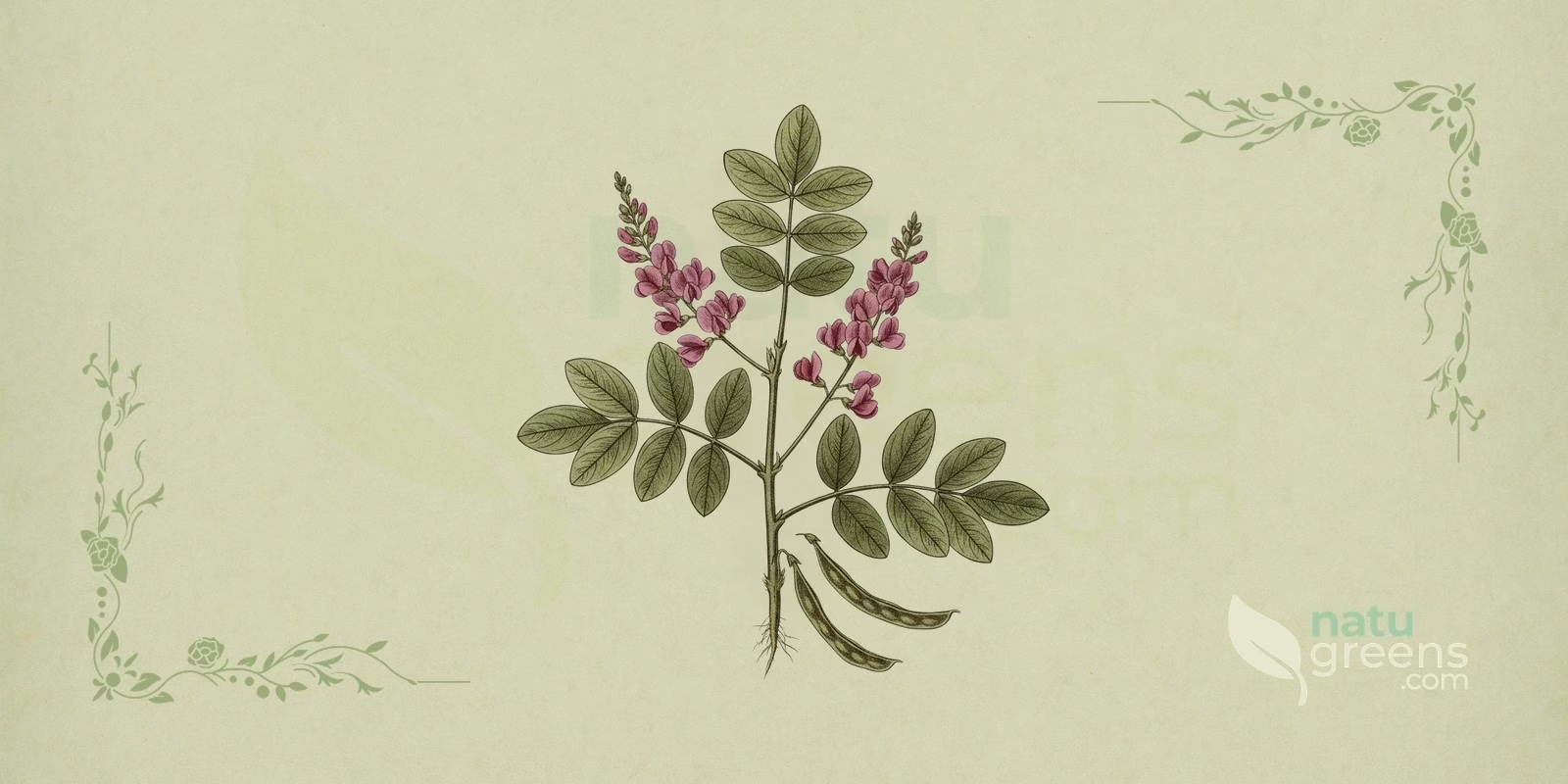
Popular and International Names of Desmodium
- English: strongback, tick trefoil, tick-clover, sweetheart, wild groundnut.
- French: cousin, kouzen, trèf savann.
- German: Bettlerkraut, Wandelklee.
- Italian: desmodio, trifoglio della savana.
- Portuguese: desmódio, pega-pega, trevinho-do-campo, amor-seco, carrapicho, carrapicho-beiço-de-boi.
- Spanish: zarzabacoa galana, guacarillo, hierba del infante.
Do Not Confuse Desmodium with Desmodium gangeticum and Desmodium styracifolium
The desmodium described in this article, Desmodium adscendens, should not be confused with Desmodium gangeticum or with Desmodium styracifolium, two other species of the same genus already covered in dedicated articles on this site. Although they belong to the same Fabaceae family and share part of the same botanical name, each species has a distinct chemical composition, geographic distribution, and history of traditional use, and research findings obtained for one species cannot be transferred to the others.
Botanical Synonyms of Desmodium
The name currently accepted by taxonomy is Grona adscendens (Sw.) H.Ohashi & K.Ohashi, the result of a recent reclassification within the Fabaceae family. Even so, most of the scientific literature, ethnobotanical records, and the herbal products trade continue to use the name Desmodium adscendens (Sw.) DC., which remains the most widely used botanical synonym and is the term adopted in this article.
Among the other recorded synonyms are Desmodium arinense Hoehne, Desmodium caespitosum (Poir.) DC., Desmodium coeruleum (Lindl.) G. Don, Desmodium ellipticum Macfad., Hedysarum adscendens Sw. and Meibomia adscendens (Sw.) Kuntze, among other variations described over more than two centuries of botanical study of the species.
Botanical Family: Fabaceae
Desmodium belongs to the Fabaceae family, also known by the older name Leguminosae, one of the largest families of flowering plants on the planet. Its species are characterized by pod-type fruits and by flowers with the typical papilionaceous structure, and the family includes both essential foods, such as beans, soybeans, lentils, and peanuts, and a significant number of traditional medicinal plants.
Species of the genus Desmodium, like those of the genus Grona, are able to fix atmospheric nitrogen thanks to a symbiosis with bacteria of the genus Rhizobium, which naturally enriches the soil where they grow. This ecological trait goes hand in hand with a diverse plant chemistry that includes alkaloids, flavonoids, and triterpene saponins, a combination that underlies much of the pharmacological interest in the plant.
Parts Used from Desmodium
In folk tradition and in phytochemical studies, the aerial parts of desmodium, leaves and stems, are the most widely used, generally in the form of crushed or whole dried leaves. These parts are also used to prepare standardized hydroalcoholic extracts, employed both in preclinical research and in some herbal products sold in Europe.
Ethnobotanical and Traditional Uses of Desmodium
The most documented use of desmodium in Europe is as a dietary supplement for liver support in France, where the leaf extract is part of formulations aimed at liver function. In Ghana and other regions of Africa, the plant is traditionally used in the management of asthma and conditions linked to smooth muscle contraction, as part of a folk practice passed down through generations. In Brazil, ethnobotanical reports also link desmodium, often called pega-pega there, to relief from body aches, diarrhea, ovarian inflammation, and excessive urination, along with isolated records of use in feverish and epileptic conditions with the aqueous leaf extract. In all of these contexts, this is traditional knowledge passed down orally, not an indication validated by evidence-based medicine.
Medicinal Properties of Desmodium
The properties listed below come mainly from preclinical laboratory studies and from records of traditional use, and none of them has been confirmed in robust clinical trials conducted in humans. They should be understood as research hypotheses and folk knowledge, not as established therapeutic indications.
- Antibacterial (activity observed against some strains in in vitro tests, without clinical confirmation)
- Antidiabetic (effect on glycemic markers reported in experimental studies, not extrapolable to humans)
- Antioxidant (phenolic compounds with free radical scavenging activity in laboratory assays)
- Antispasmodic (smooth muscle relaxation observed in experimental models, linked to traditional use for asthma)
- Antiviral (preliminary line of research, still far from any recommendation of use)
- Hepatoprotective (basis of traditional French use, with preclinical studies in liver cells, evidence still limited)
Detailed Phytochemical Profile of Desmodium
The chemical composition of desmodium helps explain the scientific interest in the species, even though the translation of these compounds into proven clinical effects remains incomplete.
- Alkaloids (broad group of nitrogen-containing compounds, some associated with the antispasmodic activity studied in the laboratory)
- Biogenic amines, including tyramine and hordenine (compounds relevant to the contraindications section further below)
- Flavonoids, including glycosylated derivatives of vitexin and isovitexin (associated with the antioxidant activity observed in laboratory assays)
- Glycosides (compounds bound to sugars, present in different parts of the plant)
- Polyphenols (group related to the antioxidant capacity reported in preclinical studies)
- Triterpene saponins (compounds typical of many Fabaceae, studied for their biological potential)
Forms of Preparation and Administration of Desmodium
Traditionally, desmodium is prepared as a decoction, with the dried leaves boiled for a few minutes, or as a simple infusion, with boiling water poured over the leaves and left to stand before straining. In France, standardized hydroalcoholic extracts and dry extract capsules also circulate, industrial forms that aim to standardize the herbal dose, unlike the natural variation of homemade preparations.
Synergy with Other Medicinal Plants
Combined Liver Support
In herbal tradition, desmodium is often paired with milk thistle (Silybum marianum), whose silymarin is widely studied for its action in supporting liver cells. The idea behind this combination is to add the flavonoids of desmodium to the compounds of milk thistle, but the pairing rests on tradition alone, has not been evaluated in clinical studies, and should always be seen as a complement, never as a substitute for medical evaluation.
Respiratory Support
For the traditional management of respiratory conditions such as asthma, some schools of herbal medicine pair desmodium with plants traditionally used for respiratory complaints, such as gumweed (Grindelia robusta). The logic behind this combination lies in the relaxing effect on smooth muscle attributed to desmodium in experimental studies, combined with the expectorant action traditionally attributed to other herbs, although the pairing has never been tested in humans and should always complement medical follow-up for respiratory conditions.
Recipes and Usage Protocols for Desmodium
Decoction for Liver Support
Ingredients: 10 to 15 grams of dried desmodium leaves, 500 ml of water.
Preparation: Place the leaves in cold water and bring to a boil, then let them simmer gently for 10 to 15 minutes. Remove from the heat, cover, and let stand for another 10 minutes before straining. The warm liquid is usually consumed in two or three cups a day, preferably before meals, as part of a traditional use for liver function support. These uses follow traditional records and do not replace professional guidance, especially in cases of previously diagnosed liver disease.
Infusion for Respiratory Use
Ingredients: 5 to 7 grams of dried desmodium leaves, 250 ml of boiling water.
Preparation: Pour the boiling water over the leaves, cover the container, and let stand for 5 to 10 minutes before straining. The infusion can be consumed twice a day as part of the traditional use associated with relief of respiratory symptoms, always with medical follow-up in cases of persistent or severe asthma, since the plant does not replace treatment prescribed by a doctor.
The preparations above follow traditional records and do not replace professional guidance. Before any internal use, check the contraindications and interactions described in this article.
Therapies Associated with Desmodium
Clinical Herbal Medicine
In European clinical herbal medicine, desmodium is best known for its presence in liver support supplements, usually as a standardized dry extract or fluid extract, forms that aim to offer a more consistent dose than a homemade infusion. The choice of formulation and dosage should be left to a qualified health professional, who also assesses possible drug interactions before recommending use.
Traditional African and South American Medicine
There is no consolidated record of homeopathic use of desmodium, so this section covers the plant's role in the traditional medicine systems of Africa and South America, where its use is older and better documented. In countries such as Ghana, desmodium is part of the repertoire of folk remedies for asthma and other respiratory conditions, while in Brazil and parts of South America it appears in homemade preparations aimed at body aches and digestive discomfort, always passed down through oral tradition among healers and families.
Contraindications and Side Effects of Desmodium
Desmodium has well-established folk use for liver support in France and traditional use in the management of asthma in Ghana, but clinical data in humans are still scarce, and any benefit attributed to the plant must be read with the caveat of limited evidence. Mild gastrointestinal effects, such as abdominal discomfort and occasional nausea, have been reported by users of the plant. There is not enough safety data for use during pregnancy, breastfeeding, or in children, which makes it advisable to avoid desmodium in these groups until more robust studies are available. The plant also contains biogenic amines, including tyramine and hordenine, which justifies a theoretical caution regarding interaction with monoamine oxidase inhibitors (MAOIs), since the combination of dietary or plant-derived amines with these medications is traditionally associated with a risk of hypertensive crisis.
Drug Interactions
Because it contains amines such as tyramine and hordenine, desmodium should be avoided, or used only under medical guidance, by anyone taking monoamine oxidase inhibitors (MAOIs), since the combination could, in theory, favor episodes of elevated blood pressure. In addition, a study in rats found that the aqueous leaf extract induced liver cytochrome P450 enzymes, which metabolize many drugs, suggesting a possible interaction with medications processed by the liver, such as anticoagulants or immunosuppressants. People taking these medications should consult a health professional before combining desmodium with their ongoing treatment, so that any interactions can be identified in time.
Curiosities and Historical Facts about Desmodium
The Brazilian name pega-pega, roughly "catch-catch", comes from the plant's fruits, small segmented pods covered in hooked hairs that cling easily to clothing and animal fur. This dispersal mechanism, called epizoochory, helped spread the plant across tropical and subtropical areas of several continents. Beyond its medicinal role, desmodium is also grown as forage and ground cover, since its ability to fix nitrogen helps improve depleted soils in agroforestry systems and tropical pastures.
Frequently Asked Questions about Desmodium
What Is Desmodium and What Is It Traditionally Used For?
Desmodium, whose most commonly used scientific name is Desmodium adscendens, also classified as Grona adscendens, is an herbaceous plant of the Fabaceae family with a long history of folk use. In France, it appears as a liver support supplement, while in Ghana and other regions of Africa it is traditionally associated with the management of asthma, always within what the literature describes as traditional use, not as a validated clinical indication.
Does Desmodium Have Scientific Studies That Prove Its Benefits?
There are preclinical studies, in cells and in animal models, that investigate properties such as the hepatoprotective and antispasmodic action of desmodium, but robust clinical trials in humans are still scarce. For this reason, the benefits traditionally attributed to the plant should be interpreted with the caveat of limited evidence, not as established clinical facts.
Can Desmodium Be Used during Pregnancy or by Children?
There is not enough safety data on the use of desmodium during pregnancy, breastfeeding, or by children, so the prudent recommendation is to avoid the plant in these groups until more conclusive studies exist. Any decision in this regard should involve the assessment of a health professional.
Does Desmodium Interact with Any Medication?
Yes. Because it contains amines such as tyramine and hordenine, desmodium calls for theoretical caution in anyone taking monoamine oxidase inhibitors (MAOIs), and since an animal study suggested an effect on the liver enzymes that metabolize drugs, it also deserves extra attention from anyone taking medications with hepatic metabolism, such as anticoagulants. Guidance from a health professional is always recommended before combining the plant with any ongoing treatment.
What Are the Most Common Side Effects Reported with Desmodium?
The side effects reported with the use of desmodium tend to be mild, mainly occasional gastrointestinal discomfort, such as nausea or abdominal malaise. Allergic reactions are not well documented, but if they occur, use should be stopped and a health professional should be consulted.
Notice: this content is for informational purposes and does not replace professional medical advice. Consult a physician or herbal practitioner before using medicinal plants, especially during pregnancy, breastfeeding, or alongside medication.
How to cite this article
NATUGREENS. Desmodium (Desmodium adscendens): Uses, Risks and Chemistry. Natugreens, 21 Nov. 2026. Disponível em: https://natugreens.com/desmodium-adscendens-medicinal-plant/. Accessed: Nov. 21, 2026.
Natugreens. (2026). Desmodium (Desmodium adscendens): Uses, Risks and Chemistry. Natugreens. https://natugreens.com/desmodium-adscendens-medicinal-plant/
References and Scientific Studies
Peer-Reviewed Scientific Studies (2)
- PMC2015 François, C., Fares, M., Baiocchi, C., & Maixent, J. M. (2015). Safety of Desmodium adscendens extract on hepatocytes and renal cells. Protective effect against oxidative stress. Journal of Intercultural Ethnopharmacology, 4(1), 1-5. ↗
- PMC2017 Quaye, O., Cramer, P., Ofosuhene, M., Okine, L. K. N., & Nyarko, A. K. (2017). Acute and subchronic toxicity studies of aqueous extract of Desmodium adscendens (Sw) DC. Journal of Evidence-Based Complementary & Alternative Medicine, 22(4), 753-759. ↗
Supplementary Readings (3)
- 2011 Rastogi, S., Pandey, M. M., & Rawat, A. K. S. (2011). An ethnomedicinal, phytochemical and pharmacological profile of Desmodium gangeticum (L.) DC. and Desmodium adscendens (Sw.) DC. Journal of Ethnopharmacology, 136(2), 283-296.
- 2022 Manzione, M. G., et al. (2022). Desmodium adscendens (Sw.) DC.: A magnificent plant with biological and pharmacological properties. Food Frontiers, 3(4), 677-688.
- 2019 Seriki, S. A., et al. (2019). Analysis of phytoconstituents of Desmodium adscendens in relation to its therapeutic properties. American Journal of Biomedical Science & Research, 2. doi:10.34297/AJBSR.2019.02.000598
You May Also Like



Take your time and tell us everything you think, details included. Every response is read by someone on our editorial team and goes into the article's revision. An honest critique helps us more than a polite compliment.
Take your time and tell us everything you think, details included. Every response is read by someone on our editorial team and goes into the article's revision. An honest critique helps us more than a polite compliment.