



Quick summary
Hancornia speciosa Gomes, known in Brazil as mangabeira and in English as the mangaba tree, belongs to the Apocynaceae family and is native to South America, growing widely across the Cerrado savanna, the coastal restingas and the sandy coastal plains (tabuleiros) of northeastern Brazil, with further records in Peru…
Main caution: The ripe fruit of the mangaba tree is a common and safe food, and the cautions in this section refer to the medicinal use of the leaves, the bark and, above all, the latex. The latex must not be ingested, because its…
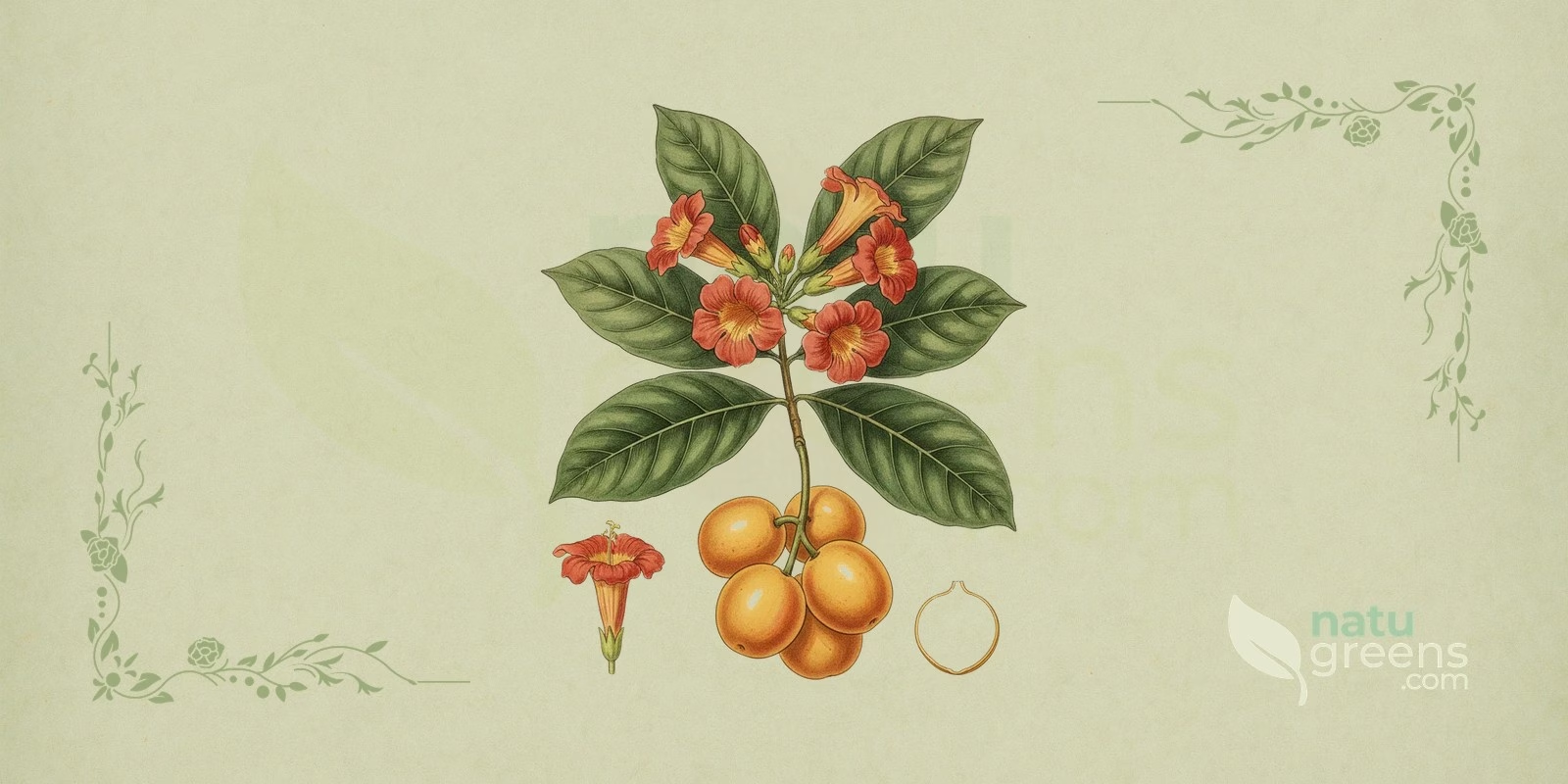
Hancornia speciosa Gomes, known in Brazil as mangabeira and in English as the mangaba tree, belongs to the Apocynaceae family and is native to South America, growing widely across the Cerrado savanna, the coastal restingas and the sandy coastal plains (tabuleiros) of northeastern Brazil, with further records in Peru, Bolivia and Paraguay. Its fruit, the mangaba, has been eaten for centuries and supports entire gathering communities, while the leaves, bark and latex appear in folk medicine records. Most of what is known about these non-food parts comes from laboratory and animal studies, and no human clinical trials have yet confirmed their efficacy or established safe doses.
Common and International Names of the Mangaba Tree
- English: mangaba, mangaba tree
- French: mangaba
- Portuguese (Brazil): mangaba, mangabeira, mangabinha-do-norte, mangava, mangaveira
- Spanish: mangaba
- Tupi (origin of the name): mangaba, a word traditionally interpreted as "good thing to eat"
Not to Be Confused with Mango or Mangava-Brava
Despite the similar sound, the mangaba is not related to the mango (Mangifera indica), an Asian fruit in the Anacardiaceae family. It is also often mixed up with mangava-brava or pacari (Lafoensia pacari), a Cerrado tree in the Lythraceae family that has its own folk uses and a different chemical makeup. This article covers Hancornia speciosa only, and the safety notes below should not be carried over to those other species, nor the other way around.
Botanical Synonyms of the Mangaba Tree
The accepted name is Hancornia speciosa Gomes, published in the early nineteenth century by the Portuguese physician and naturalist Bernardino Antônio Gomes. Flora do Brasil lists as synonyms Echites glaucus Roem. & Schult., Hancornia gardneri (A.DC.) Miers, Hancornia pubescens Nees & Mart. and Willughbeia pubescens (Nees & Mart.) Mart. Several botanical varieties have been described, and Flora do Brasil officially recognizes two of them, H. speciosa var. speciosa and H. speciosa var. pubescens (Nees & Mart.) Müll.Arg. Recent genetic studies support the existence of distinct groups within the species, linked to the Cerrado and to the coastal strip, although the exact number of varieties is still debated among taxonomists.
Botanical Family: Apocynaceae
The Apocynaceae family brings together trees, shrubs and climbers found mostly in the tropics, and one of its best-known traits is a system of laticifers, channels that release a milky latex whenever the tissue is wounded. Many members of the family contain alkaloids or cardioactive glycosides of known toxicity, oleander (Nerium oleander) being a familiar example, so botanical kinship alone is reason enough for caution with any internal use of non-food parts. In the mangaba tree, the whole plant exudes a white or pale pink latex, and the flowers are tubular, fragrant and white, features shared across the group.
Parts Used of the Mangaba Tree
The ripe fruit is by far the most widely used part, and its use is essentially culinary, in juices, frozen pulp, ice creams, jams and sweets. The leaves appear in ethnobotanical records as an ingredient for teas, and the trunk bark and roots are also mentioned in folk preparations. The latex, once tapped to make rubber, is now used in craft work and is being researched as a biomaterial for external application. Each of these parts has a different safety profile, and the distinction between the edible fruit and the parts used medicinally is central to reading the rest of this article.
Ethnobotanical and Traditional Uses of the Mangaba Tree
In northeastern Brazil and the Cerrado, mangaba leaves, roots and bark are traditionally prepared as teas and infusions for medicinal purposes, according to surveys by agricultural research institutions. Folk accounts link the leaf tea to complaints such as high blood pressure, diabetes and skin problems, while the latex is usually mentioned for brief external applications on wounds and bruises. The scientific literature reviewed also notes that local communities use different parts of the plant for a range of illnesses, although none of these uses has been standardized or clinically validated. Between the late nineteenth and early twentieth centuries the latex was also exploited commercially as rubber, an activity later abandoned because yields were low compared with the rubber tree (Hevea brasiliensis). Today it is still used, for example, to make balls for children's games and for traditional Indigenous games.
Medicinal Properties of the Mangaba Tree
The properties listed below come from cell studies, animal models or records of traditional use, and none of them has been confirmed in clinical trials in humans.
- Antioxidant activity (described for leaf extracts and for the fruit pulp in laboratory assays)
- Blood glucose effects (seen with an aqueous leaf extract in diabetic rats and with a latex extract in zebrafish; preclinical evidence only)
- Hypotensive activity (leaf extracts and fractions lowered blood pressure in rodents, involving nitric oxide and inhibition of angiotensin-converting enzyme; no human data)
- Local anti-inflammatory activity (observed with latex formulations on wounds in rats, in preclinical studies)
- Possible antimicrobial activity (trunk bark extracts were tested against bacteria and fungi in the laboratory, with no established clinical application)
- Vasodilatory activity (relaxation of isolated animal blood vessels, attributed mainly to the cyclitol L-(+)-bornesitol in the leaves)
- Wound healing support (latex fractions stimulated blood vessel formation and tissue remodeling in experimental models; the leaves have also been evaluated, with preliminary results)
Detailed Phytochemical Profile of the Mangaba Tree
Chemical composition varies considerably with the plant part, the botanical variety and the collection site. Published reviews highlight the leaves as the most studied tissue, followed by the fruit and the latex.
- Alpha- and beta-amyrin (triterpenes reported in the leaves and fruit)
- Ascorbic acid (vitamin C, at levels that can be high in the fruit pulp depending on origin)
- Beta-carotene (a carotenoid present in the fruit and leaves)
- Catechin (a flavonoid found in the leaves, bark, fruit and latex)
- Chlorogenic acid (the main compound identified in the serum fraction of the latex, also present in the fruit)
- L-(+)-bornesitol (a cyclitol identified as the main leaf constituent and the chemical marker associated with the hypotensive effect in animals)
- Lupeol (a triterpene described in the leaves)
- Proanthocyanidins (condensed tannins isolated from leaf fractions and studied in inflammatory cells)
- Quinic acid (identified in leaf extracts)
- Rutin (a flavonoid abundant in the leaves, also detected in the fruit and bark)
Preparation and Administration of the Mangaba Tree
The ripe fruit is eaten fresh or made into juice, frozen pulp, ice cream, ice pops, jam, liqueur and many desserts, and this is the only use of the plant with a long culinary tradition and no significant safety warnings. Harvesting calls for care, because unripe fruit does not ripen evenly and "de caída" mangabas, the ones that drop from the tree on their own, must be eaten or processed within a few hours. The leaves are traditionally used in homemade infusions or decoctions, with no dose standardized by any regulatory body. When the latex appears in folk practice, it is applied externally and only briefly, never swallowed. No registered herbal medicines based on the mangaba tree exist in Brazil, and the latex formulations described in the literature, such as creams and biomembranes, are still at the experimental stage.
Synergy with Other Medicinal Plants
Topical Skin Care
In wound healing studies, the mangaba tree is often compared with other plants traditionally used on the skin, such as barbatimão (Stryphnodendron adstringens), also native to the Cerrado, and calendula (Calendula officinalis). These pairings belong to the folk repertoire for minor injuries and have not been tested together in controlled research, so any combination should remain limited to brief external use.
Food Pairings with Native Fruits
In regional cooking, mangaba pulp is blended with other fruits, such as cashew apple (Anacardium occidentale) and cagaita (Eugenia dysenterica), in juices, nectars and jams, a practice that agricultural researchers themselves see as a promising way to open new markets. The appeal of these blends is nutritional and culinary, with no medicinal claim attached.
Plants Linked to Blood Sugar in Folk Tradition
In some regions, the leaf tea is used alongside plants such as pata-de-vaca (Bauhinia forficata), which is also popularly sought by people with high blood sugar. Since both have reported effects on blood glucose in animals, their combined effect may be unpredictable, especially for anyone already taking diabetes medication, and this pairing should only be considered under the supervision of a healthcare professional.
Recipes and Usage Protocols of the Mangaba Tree
Mangaba Juice
For a homemade juice, blend about one cup of ripe, seedless mangaba pulp with two glasses of cold water and sweeten to taste. The frozen pulp sold in supermarkets in northeastern and central-western Brazil gives the same result and makes it easy to enjoy outside the harvest season. This is a food preparation, valued for its flavor and for the vitamin C content of the fruit.
Leaf Tea in Folk Practice
Ethnobotanical records describe steeping a few dried mangaba leaves in hot water, covered for a few minutes, as a homemade method of preparation. No dose has been established by human studies, and the hypotensive effect observed in animals makes this tea unsuitable for anyone taking blood pressure medication, diuretics or diabetes medication without medical guidance. These uses follow traditional records and do not replace professional advice.
External Use of the Latex
In folk practice, drops of fresh latex are dabbed on intact skin around small injuries, a custom that inspired research on latex creams and biomembranes for wounds in animals. The latex must not be swallowed, and anyone with sensitive skin or a history of latex allergy should avoid direct contact.
The preparations above follow traditional records and do not replace professional guidance. Before any internal use, check the contraindications and interactions described in this article.
Related Practices Involving the Mangaba Tree
Clinical Herbal Medicine
The mangaba tree is not covered by the monographs of the European Medicines Agency or by the list of herbal medicines eligible for simplified registration with Anvisa, Brazil's health regulator, and therefore has no recognized indication in clinical herbal medicine. Current interest is mainly in research, with Brazilian groups working on the chemical standardization of leaf extracts, using bornesitol and rutin as markers, and on wound dressings made from the serum fraction of the latex, which did not prove allergenic in laboratory tests.
Folk Medicine of the Cerrado and the Northeast
There is no consistently documented homeopathic use for this species. The setting in which the mangaba tree actually appears is folk medicine, passed down orally by herbalists known as raizeiros, traditional healers (benzedeiras) and gathering families of the Cerrado and the coastal plains, where the tree is at once a source of food, income and home remedies.
Contraindications and Side Effects of the Mangaba Tree
The ripe fruit of the mangaba tree is a common and safe food, and the cautions in this section refer to the medicinal use of the leaves, the bark and, above all, the latex. The latex must not be ingested, because its traditional use is external and brief, and there are no safety data to support oral consumption in people. In preclinical animal studies, leaf extracts showed vasodilatory and antihypertensive effects, and a diuretic action has also been suggested, which means that concentrated preparations could lower blood pressure more than expected in sensitive people or in those whose blood pressure is already low. During pregnancy, concentrated use of the leaves, bark or latex should be avoided because there are no safety data for this period, and the same caution applies to breastfeeding and to children. People with a known latex allergy should avoid contact with the plant's sap. Symptoms such as dizziness, weakness or feeling faint after drinking teas made from the plant are a signal to stop using it and seek medical care.
Drug Interactions
Because of the hypotensive and possibly diuretic action suggested by animal studies, medicinal use of mangaba leaves or extracts calls for caution in anyone taking antihypertensives, such as angiotensin-converting enzyme inhibitors, calcium channel blockers and beta blockers, or diuretics, given the risk of additive effects and an excessive drop in blood pressure. The blood glucose effects seen in rats and zebrafish call for the same attention in people using insulin or oral hypoglycemic drugs. Anyone taking any of these medications should talk to their doctor before using teas or extracts of the plant, a precaution that does not apply to eating the fruit as food.
Curiosities and Historical Facts
The name mangaba comes from Tupi and is usually translated as "good thing to eat", a description that suits the fruit's place in northeastern Brazilian culture. In Sergipe and other coastal states, much of the harvest is gathered by women who call themselves catadoras de mangaba (mangaba gatherers), and Sergipe State Law No. 7,082 recognized these communities as a distinct cultural group. The mangaba tree thrives in sandy, acidic and nutrient-poor soils where few fruit trees prosper, but its natural stands have been shrinking under urban expansion, sugarcane and other monocultures, which has prompted germplasm banks and genetic conservation studies. Growers distinguish two harvest stages, "de vez" fruit, picked from the tree as it begins to turn yellow, and "de caída" fruit, which falls on its own and finishes ripening within 12 to 24 hours.
Frequently Asked Questions About the Mangaba Tree
Is Mangaba Fruit Safe to Eat?
Yes, the ripe fruit has been eaten for centuries, fresh or in juices, sweets and ice creams, and scientific reviews do not report toxic substances in it. The safety cautions concern the medicinal use of the latex and leaves, not eating ripe mangaba.
Does Mangaba Leaf Tea Lower Blood Pressure?
Studies in rodents have shown that leaf extracts and compounds reduce blood pressure, but there are no human clinical trials confirming this effect or indicating a safe dose. For that reason the tea should not replace prescribed treatment, and anyone already taking antihypertensives or diuretics needs medical advice before trying it.
Can I Swallow Mangaba Latex?
No, the latex has a traditional use that is external and brief, and the most advanced research on it involves creams and dressings applied to the skin of animals. There are no safety data that would allow oral consumption of the latex to be recommended.
Can Pregnant Women Use the Mangaba Tree?
Eating the ripe fruit as part of a normal diet carries no specific warnings. Concentrated use of the leaves, bark or latex, however, should be avoided during pregnancy because safety studies for this period are lacking.
What Is the Difference Between Mangaba and Mango?
They are plants from different families: the mangaba is the native fruit of Hancornia speciosa, in the Apocynaceae family, small and yellowish with a sticky pulp, while the mango comes from Mangifera indica, a tree of Asian origin in the Anacardiaceae family.
Notice: this content is for informational purposes and does not replace professional medical advice. Consult a physician or herbal practitioner before using medicinal plants, especially during pregnancy, breastfeeding, or alongside medication.
How to cite this article
NATUGREENS. Mangaba Tree (Hancornia speciosa): Properties and Uses. Natugreens, 22 Nov. 2026. Disponível em: https://natugreens.com/hancornia-speciosa-mangaba-tree/. Accessed: Nov. 22, 2026.
Natugreens. (2026). Mangaba Tree (Hancornia speciosa): Properties and Uses. Natugreens. https://natugreens.com/hancornia-speciosa-mangaba-tree/
References and Scientific Studies
View All 19 Cited References
Peer-Reviewed Scientific Studies (18)
- DOI2022 Nunes, V. V., Silva-Mann, R., Souza, J. L., & Calazans, C. C. (2022). Pharmaceutical, food potential, and molecular data of Hancornia speciosa Gomes: a systematic review. Genetic Resources and Crop Evolution, 69, 525-543. ↗
- DOI2022 Reis, V. H. O. T., Rodrigues, B. M., Loubet Filho, P. S., Cazarin, C. B. B., Rafacho, B. P. M., & Dos Santos, E. F. (2022). Biotechnological potential of Hancornia speciosa whole tree: A narrative review from composition to health applicability. Heliyon, 8, e11018. ↗
- DOI2016 Silva, G. C., Braga, F. C., Lemos, V. S., & Cortes, S. F. (2016). Potent antihypertensive effect of Hancornia speciosa leaves extract. Phytomedicine, 23, 214-219. ↗
- DOI2019 Moreira, L. N., Silva, G. C., Câmara, D. V., Pádua, R. M., Lemos, V. S., Braga, F. C., & Cortes, S. F. (2019). The Cyclitol L-(+)-Bornesitol as an Active Marker for the Cardiovascular Activity of the Brazilian Medicinal Plant Hancornia speciosa. Biological and Pharmaceutical Bulletin, 42, 2076-2082. ↗
- DOI2020 Moreira, L. N., Feltrin, C., Gonçalves, J. E., de Castro, W. V., Simões, C. M. O., de Pádua, R. M., Cortes, S. F., & Braga, F. C. (2020). Determination of L-(+)-bornesitol, the hypotensive constituent of Hancornia speciosa, in rat plasma by LC-MS/MS and its application on a pharmacokinetic study. Biomedicine & Pharmacotherapy, 132, 110900. ↗
- DOI2022 Pereira, A. B. D., Gomes, J. H. S., Pereira, A. C., Pádua, R. M., Côrtes, S. F., Sena, M. M., & Braga, F. C. (2022). Definition of chemical markers for Hancornia speciosa Gomes by chemometric analysis based on the chemical composition of extracts, their vasorelaxant effect and alpha-glucosidase inhibition. Journal of Ethnopharmacology, 299, 115692. ↗
- DOI2020 D'Abadia, P. L., Bailão, E. F. L. C., Lino Júnior, R. S., Oliveira, M. G., Silva, V. B., Oliveira, L. A. R., Conceição, E. C., Melo-Reis, P. R., Borges, L. L., Gonçalves, P. J., & Almeida, L. M. (2020). Hancornia speciosa serum fraction latex stimulates the angiogenesis and extracellular matrix remodeling processes. Anais da Academia Brasileira de Ciências, 92, e20190107. ↗
- DOI2022 D'Abadia, P. L., Lemes, S. R., Melo-Reis, P. R., Lino Júnior, R. S., Gonçalves, P. J., Reis, D. D. S., Caixeta, G. A. B., Amaral, V. C. S., & Almeida, L. M. (2022). Tissue healing changes on wounds in rats after treatment with Hancornia speciosa latex in cream-gel formulation. Acta Cirúrgica Brasileira, 37, e371001. ↗
- DOI2023 Martins, K. L. E., Thomaz, M. M., Magno, L. N., Vinaud, M. C., Almeida, L. M., Gonçalves, P. J., & Lino Junior, R. S. (2023). Macroporous latex biomembrane from Hancornia speciosa modulates the inflammatory process and has a debridement effect on wound healing in rats. Acta Cirúrgica Brasileira, 38, e385323. ↗
- DOI2015 Geller, F. C., Teixeira, M. R., Pereira, A. B., Dourado, L. P., Souza, D. G., Braga, F. C., & Simões, C. M. (2015). Evaluation of the Wound Healing Properties of Hancornia speciosa Leaves. Phytotherapy Research, 29, 1887-1893. ↗
- DOI2020 Neto, L. S., Moraes-Souza, R. Q., Soares, T. S., Pinheiro, M. S., Leal-Silva, T., Hoffmann, J. C., Américo, M. F., Campos, K. E., Damasceno, D. C., & Volpato, G. T. (2020). A treatment with a boiled aqueous extract of Hancornia speciosa Gomes leaves improves the metabolic status of streptozotocin-induced diabetic rats. BMC Complementary Medicine and Therapies, 20, 114. ↗
- DOI2021 Tomazi, R., Figueira, A. C., Ferreira, A. M., Ferreira, D. Q., de Souza, G. C., et al. (2021). Hypoglycemic Activity of Aqueous Extract of Latex from Hancornia speciosa Gomes: A Study in Zebrafish and In Silico. Pharmaceuticals, 14, 856. ↗
- DOI2019 Felipetti, F. A., Bereta, R. M., Piedade, S. M. S., & Novaes, P. D. (2019). Oral Administrations of Hancornia speciosa Gomes Latex Do Not Increase Bone Neoformation. Revista Brasileira de Ortopedia, 54, 692-696. ↗
- DOI2021 Costa, A. F., Gonçalves, K. C., Bailão, E. F. L. C., Caramori, S. S., Valadares, M. C., Gonçalves, P. J., & Almeida, L. M. (2021). Hancornia speciosa serum latex fraction: a non-allergenic biomaterial. Brazilian Journal of Biology, 83, e251075. ↗
- DOI2024 Carneiro Junior, W. O., Guimarães, M. L. R., Freitas, K. M., Pereira, R. S., Pádua, R. M., Campana, P. R. V., & Braga, F. C. (2024). Structural characterization of a proanthocyanidin-rich fraction from Hancornia speciosa leaves and its effect on the release of pro-inflammatory cytokines and oxidative stress in THP-1 cells. Journal of Ethnopharmacology, 333, 118471. ↗
- DOI2024 Silva, V. B., Almeida-Bezerra, J. W., Pereira, R. L. S., Alcântara, B. M., Furlan, C. M., Coelho, J. J., Coutinho, H. D. M., Morais-Braga, M. F. B., & Oliveira, A. F. M. (2024). Chemical composition, antibacterial potential, and toxicity of the extracts from the stem bark of Hancornia speciosa Gomes (Apocynaceae). Journal of Ethnopharmacology, 335, 118631. ↗
- DOI2018 Dos Santos, U. P., Tolentino, G. S., Morais, J. S., de Picoli Souza, K., Estevinho, L. M., & Dos Santos, E. L. (2018). Physicochemical Characterization, Microbiological Quality and Safety, and Pharmacological Potential of Hancornia speciosa Gomes. Oxidative Medicine and Cellular Longevity, 2018, 2976985. ↗
- DOI2018 Collevatti, R. G., Rodrigues, E. E., Vitorino, L. C., Lima-Ribeiro, M. S., Chaves, L. J., & Telles, M. P. C. (2018). Unravelling the genetic differentiation among varieties of the Neotropical savanna tree Hancornia speciosa Gomes. Annals of Botany, 122, 973-984. ↗
Supplementary Readings (1)
- 2018 Silva Junior, J. F., Lédo, A. S., Muniz, A. V. C. S., Ferreira, E. G., Mota, D. M., Alves, R. E., & Lemos, E. E. P. (2018). Hancornia speciosa: Mangaba. In: Plantas para o Futuro, Região Nordeste. Brasília: Ministério do Meio Ambiente / Embrapa. ↗
You May Also Like
Take your time and tell us everything you think, details included. Every response is read by someone on our editorial team and goes into the article's revision. An honest critique helps us more than a polite compliment.
Take your time and tell us everything you think, details included. Every response is read by someone on our editorial team and goes into the article's revision. An honest critique helps us more than a polite compliment.