



Quick summary
Endopleura uchi (Huber) Cuatrec. / Yellow Uxi, a large tree of the Humiriaceae family, is native to the Amazon, with a recorded range stretching from southern Venezuela to northern Bolivia and a presence across almost the entire Brazilian part of the basin, always in upland terra firme forests that do not flood. Known…
Main caution: The folk use of yellow uxi bark for fibroids, ovarian cysts and other gynecological complaints is an ethnobotanical record, not a treatment of demonstrated efficacy. Fibroids, cysts, polycystic ovaries, abnormal…
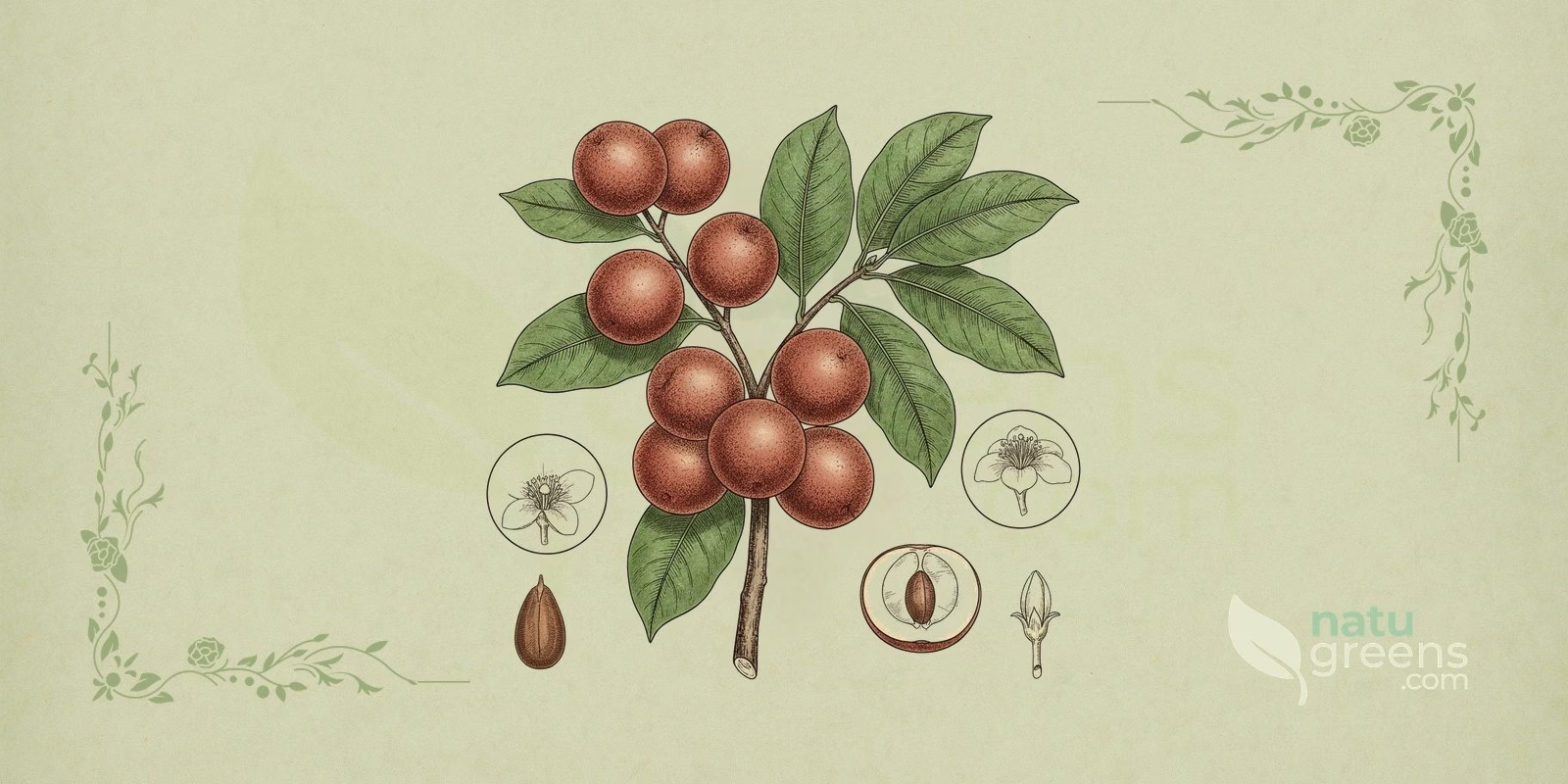
Endopleura uchi (Huber) Cuatrec. / Yellow Uxi, a large tree of the Humiriaceae family, is native to the Amazon, with a recorded range stretching from southern Venezuela to northern Bolivia and a presence across almost the entire Brazilian part of the basin, always in upland terra firme forests that do not flood. Known both for its oily fruit, sold at the markets of Belém and Manaus, and for its trunk bark, which riverside communities have brewed into tea for generations, the species has gained a popular reputation above all among women seeking relief from gynecological and inflammatory complaints. Nearly everything known about the action of the bark, however, comes from experiments in cells, rodents and zebrafish, and no controlled clinical trial in humans has confirmed its efficacy or established a safe dose, so any benefit attributed to the plant calls for a cautious reading.
Common and International Names of Yellow Uxi
- English: uxi, yellow uxi.
- Historical spelling: uchi (the form recorded by Jacques Huber in 1898).
- Portuguese: uxi, uxi-amarelo.
Outside Brazil, scientific and trade literature usually keeps the name of Indigenous origin untranslated, and it was precisely the spelling "uchi", recorded by the botanist Jacques Huber at the end of the nineteenth century, that gave the species its specific epithet.
Not to Be Confused with Uxi-Curuá (Duckesia verrucosa)
At Amazonian markets, the name "uxi" is also attached to uxi-curuá, or uxicuruá, the fruit of Duckesia verrucosa, another species in the same Humiriaceae family, whose skin is rough and warty. The chemical composition and safety studies cited in this article refer exclusively to Endopleura uchi, whose fruit has a smooth, greenish yellow skin when ripe, and they cannot be transferred to the related species. Anyone buying dried bark at popular markets should also bear in mind that botanical identification is rarely assured in this kind of trade.
Botanical Synonyms of Yellow Uxi
The name accepted by the main taxonomic databases, such as Plants of the World Online (Kew) and World Flora Online, is Endopleura uchi (Huber) Cuatrec., a combination published in 1961 by the Colombian botanist José Cuatrecasas in his revision of the Humiriaceae family. The basionym is Sacoglottis uchi Huber, described in 1898 in the Boletim do Museu Paraense from material collected in the state of Pará. When he moved the species to a genus of its own, Cuatrecasas took into account the structural differences of the fruit and endocarp compared with Sacoglottis, and to this day Endopleura is treated as a monotypic genus, with a single known species.
Botanical Family: Humiriaceae
The Humiriaceae family comprises a few dozen species, nearly all of them Neotropical trees and shrubs distributed across the Amazon, the Guianas and the Atlantic coast, with a single genus that reaches West Africa. Its members tend to have simple, alternate, leathery leaves, often with slightly scalloped margins, small flowers gathered in axillary inflorescences and drupe fruits with a woody endocarp, frequently fitted with resin cavities. Besides uxi, the family includes genera such as Duckesia, Humiria, Sacoglottis and Vantanea, several of them with heavy timber and fruits eaten by wildlife and by local people.
Parts Used of Yellow Uxi
The part of greatest interest in folk medicine is the trunk bark, stripped from mature trees and sold dried, in chips or as a powder, at markets in northern Brazil. The fruit, an ellipsoid drupe with yellowish, oily and aromatic flesh surrounding a very hard woody stone, is eaten as food, and a yellow oil used in cooking and homemade preparations is pressed from the pulp. Leaves and thin twigs are not part of the most widespread traditional use, although recent research has detected in them the same compounds found in the bark. The dense, durable wood is put to use in construction, posts and joinery.
Ethnobotanical and Traditional Uses of Yellow Uxi
Ethnobotanical records describe the bark, almost always as a decoction, as a home remedy for inflammation in general, arthritis, diarrhea, diabetes, high cholesterol and, above all, complaints of the female reproductive system. Among these complaints, the literature mentions uterine inflammation and infections, fibroids, ovarian cysts, polycystic ovaries and menstrual irregularities, and there are reports that the bark was also used as a contraceptive and even as an abortifacient. These uses belong to Amazonian oral tradition and to informal sales at markets and herb shops, but they are not the same as a proven treatment: no study in humans has shown that uxi tea shrinks fibroids or cysts, and these conditions require diagnosis and follow-up by a gynecologist. The fruit, for its part, is used essentially as food, eaten fresh, with cassava flour, in ice creams and in creams.
Medicinal Properties of Yellow Uxi
The properties listed below come from laboratory assays, animal studies or traditional use, and none of them has been confirmed in clinical trials with human beings.
- Alpha-glucosidase inhibitor (an effect seen only in vitro, which helps explain the folk use in diabetes without endorsing that use)
- Anti-inflammatory (bergenin isolated from the bark selectively inhibited the COX-2 enzyme in vitro, and extracts reduced swelling in mice; there is no confirmation in people)
- Antinociceptive (fewer induced abdominal writhes in mice given a hydroethanolic bark extract)
- Antioxidant (free radical scavenging activity in chemical tests and greater resistance to oxidative stress in the worm Caenorhabditis elegans)
- Cholinesterase inhibitor (in vitro data only, with no established clinical relevance)
- Mildly antibacterial (modest action against Gram-positive bacteria in the laboratory; other studies found weak or no antimicrobial activity)
Detailed Phytochemical Profile of Yellow Uxi
The chemistry of the bark is dominated by phenolic compounds, with bergenin as the main marker, while the fruit stands out for its content of lipids, fiber and antioxidant substances.
- Arabinogalactan (a polysaccharide isolated from the bark decoction and studied only in cell culture)
- Bergenin (a C-glycosylated derivative of 4-O-methylgallic acid, making up about 3% of the dried bark in the traditional tea and up to 4.75% in methanolic extracts; it also occurs in the pulp, leaves and twigs)
- Ellagitannins such as castalagin, punicalin and punicalagin (detected in an enriched phenolic extract of the bark)
- Fiber, calcium and potassium (relevant nutrients in the pulp, which also showed a high aluminum content compared with other Amazonian fruits)
- Friedelin and oleanane-type triterpenes, such as maslinic acid (triterpenes isolated from nonpolar fractions of the bark)
- Gallic acid, epicatechin and isoquercitrin (phenolics identified by chromatography in the aqueous extract and in enriched fractions of the bark)
- Tannins (total content between 16% and 33% in bark extracts, depending on the extraction method, which accounts for the astringent taste of the tea)
- Unsaturated fatty acids, mainly oleic acid (the main component of the pulp oil, along with palmitic acid, phytosterols and tocopherols)
Preparation and Administration of Yellow Uxi
In Amazonian tradition, the bark is boiled in water for a few minutes to make an astringent decoction, usually drunk throughout the day for varying periods, with no standardized dose. In the marketplace, the bark comes dried and chopped, powdered, in capsules and as liquid extracts, often without health registration and with no guarantee of botanical identity or bergenin content, a problem already pointed out by Brazilian researchers who analyzed products sold in the country. The fruit is eaten fresh or made into sweets, ice creams and creams, and the yellow pulp oil is used in regional cooking. Any use of the bark for health purposes should be discussed first with a qualified professional, especially by women of childbearing age.
Synergy with Other Medicinal Plants
Popular Pairing with Cat's Claw
In herb shops and markets in northern and northeastern Brazil, yellow uxi bark is often sold together with cat's claw bark (Uncaria tomentosa), a combination promoted in popular circles for gynecological complaints such as fibroids and cysts. This pairing is an informal sales custom, with no clinical study assessing its efficacy or the safety of combined use, and so it should not be seen as an alternative to the medical investigation of these conditions. Both plants carry their own restrictions, including during pregnancy, which underlines the need for professional guidance before combining them.
Amazonian Anti-Inflammatory Tradition
Yellow uxi belongs to a group of Amazonian remedies used popularly for inflammatory conditions, alongside copaiba oil (Copaifera spp.) and andiroba oil (Carapa guianensis), the latter two applied mostly to the skin. The link between these plants is cultural and rooted in traditional use, not pharmacological: no studies have tested combinations of them, and stacking several preparations raises the chance of interactions and unwanted effects.
Recipes and Usage Protocols for Yellow Uxi
Traditional Bark Decoction
The preparation described in folk records consists of boiling a small portion of chopped dried bark in water for a few minutes, letting the mixture stand covered and straining it before drinking. These uses follow traditional records and do not replace professional guidance, and the decoction has no safe dose established by studies in humans. In cases of fibroids, cysts, bleeding outside the menstrual period, pelvic pain or any other gynecological complaint, the first step is always a visit to a gynecologist, and the tea must not delay tests or replace the treatment prescribed by the doctor. Pregnant women, breastfeeding women and women trying to conceive should neither prepare nor drink the decoction.
Eating the Fruit and Using the Oil
As food, uxi pulp is scraped off the stone and eaten fresh, mixed with cassava flour or blended with milk into creams and ice creams, a common habit in Belém and in inland towns of Pará and Amazonas. The oil pressed from the pulp, rich in oleic acid, is used in cooking much like other vegetable oils. Because of the aluminum content found in the pulp in a recent study, the researchers suggest moderate consumption, without the fruit needing to be excluded from a varied diet.
The preparations above follow traditional records and do not replace professional guidance. Before any internal use, check the contraindications and interactions described in this article.
Practices Associated with Yellow Uxi
Clinical Herbal Medicine
Yellow uxi is not included in Brazil's National List of Medicinal Plants of Interest to the public health system (RENISUS), nor does it have an official monograph in pharmacopoeias or from agencies such as the EMA, which means there is no recognized clinical indication, standardized dosage form or validated dosing for the bark. In research, interest centers on bergenin and the anti-inflammatory potential of the extracts, which remain at the preclinical stage. Herbal practitioners who might consider the plant need to weigh the scarcity of safety data, the genotoxicity findings in cells and the signs of toxicity to embryonic development in animal models.
Traditional Amazonian Medicine
There is no documented homeopathic use of yellow uxi. The plant's place is in traditional Amazonian medicine, in which root healers, midwives and herb sellers pass on orally how to prepare the bark and what it is used for, especially in women's health. This knowledge is a significant cultural heritage and has guided much of the scientific research on the species, but the fact that a use is old does not show that it is effective or safe, particularly when pregnancy or gynecological diseases that require diagnosis are involved.
Contraindications and Side Effects of Yellow Uxi
The folk use of yellow uxi bark for fibroids, ovarian cysts and other gynecological complaints is an ethnobotanical record, not a treatment of demonstrated efficacy. Fibroids, cysts, polycystic ovaries, abnormal bleeding, pelvic pain, cycle changes and reproductive tract infections require medical and gynecological evaluation, with appropriate tests, and use of the plant must not replace or delay that evaluation or the treatment prescribed by the doctor. The bark is contraindicated during pregnancy, in women trying to conceive and while breastfeeding: there are traditional reports of its use as an abortifacient and contraceptive, and in a zebrafish study the hydroethanolic extract increased the frequency of malformations in embryos, leading the authors themselves to advise special care in pregnant women. It should also not be given to children and adolescents, as there are no data at all for this age group. In laboratory cells, the aqueous bark extract and bergenin showed a genotoxic effect, meaning they caused DNA damage, and the aqueous extract also proved mutagenic in some tests; another study, with an enriched extract, found no mutations, but taken together these results advise against prolonged use without medical supervision. The high tannin content can cause stomach discomfort, constipation and reduced iron absorption, which calls for caution in people with gastritis, ulcers or anemia. Acute toxicity tests in mice and zebrafish showed no lethality at the doses assessed, but chronic toxicity in humans has never been studied. If any unusual reaction appears after use, the advice is to stop taking it and seek medical care.
Drug Interactions
Computational predictions indicate that bergenin may inhibit the liver enzymes CYP2C9, CYP3A4 and CYP2C19, which metabolize many medicines, among them anticoagulants such as warfarin, anticonvulsants, antidepressants and proton pump inhibitors, so taking them at the same time could, in theory, alter blood levels of these drugs. Because bark extracts inhibited alpha-glucosidase in the laboratory, people who use diabetes medication or insulin should consider the theoretical risk of an additional drop in blood sugar. There are no studies on interactions with hormonal contraceptives, hormone replacement treatment or medicines used to treat fibroids and endometriosis, which is why the combination should be avoided without a doctor's approval. Tannins may reduce the absorption of iron supplements and other oral medicines, so it is wise to leave a gap of a few hours between them. Anyone taking any medication on an ongoing basis should tell their doctor or pharmacist before using the bark.
Curiosities and Historical Facts
The word "uxi", of Indigenous origin usually attributed to Tupi, was in use in the Amazon long before the tree was described scientifically by Jacques Huber, a Swiss botanist who worked for years at the Museu Paraense, now the Museu Paraense Emílio Goeldi, in Belém. The tree grows slowly and may take more than a decade to bear fruit, which is why much of the harvest still comes from wild collection in native forests rather than from orchards. The very hard woody stone of the fruit has also drawn scientific interest, and a 2025 study linked the genetic variability of seed trees from the eastern Amazon to fruit and stone traits, information useful for future cultivation programs. In 2019, German and Brazilian researchers showed that the aqueous bark extract extended the lifespan of the worm Caenorhabditis elegans in the laboratory, a curious result that, as the authors themselves stressed, is far from implying any equivalent effect in human beings.
Frequently Asked Questions About Yellow Uxi
Does Yellow Uxi Tea Shrink Fibroids or Cysts?
There is no scientific evidence that it does. Using the bark for fibroids and ovarian cysts is a record of Amazonian folk medicine, and no study in humans has evaluated this effect. Fibroids and cysts need to be diagnosed through medical tests and followed by a gynecologist, and the tea must not replace or delay that evaluation.
Can Pregnant Women Drink Yellow Uxi Tea?
No. The bark has a history of traditional use as an abortifacient and contraceptive, and a zebrafish study observed more malformations in embryos exposed to the extract. For this reason, it should be avoided during pregnancy, by anyone trying to conceive and while breastfeeding.
What Is the Difference Between Yellow Uxi and Uxi-Curuá?
They are different species in the same family. Yellow uxi is Endopleura uchi, whose fruit has a smooth skin, while uxi-curuá is Duckesia verrucosa, whose fruit has a rough surface. The studies on the medicinal bark and on bergenin concern yellow uxi.
Does the Yellow Uxi Fruit Carry the Same Restrictions as the Bark?
Not exactly. The fruit is a traditional food, eaten for generations in the Amazon, and it does not raise the same concerns as concentrated medicinal use of the bark. Even so, one study found a relatively high aluminum content in the pulp, and the authors recommend moderate consumption.
Can Yellow Uxi Be Taken Alongside Medications?
It is best not to do so without guidance. Computational predictions suggest that bergenin may interfere with liver enzymes that metabolize several medicines, and the tannins in the bark may reduce the absorption of iron and other oral drugs. Anyone on long-term medication should talk to their doctor or pharmacist first.
Notice: this content is for informational purposes and does not replace professional medical advice. Consult a physician or herbal practitioner before using medicinal plants, especially during pregnancy, breastfeeding, or alongside medication.
How to cite this article
NATUGREENS. Yellow Uxi (Endopleura uchi): Properties and Uses. Natugreens, 22 Nov. 2026. Disponível em: https://natugreens.com/endopleura-uchi-yellow-uxi/. Accessed: Nov. 22, 2026.
Natugreens. (2026). Yellow Uxi (Endopleura uchi): Properties and Uses. Natugreens. https://natugreens.com/endopleura-uchi-yellow-uxi/
References and Scientific Studies
View All 15 Cited References
Peer-Reviewed Scientific Studies (14)
- DOI2009 Nunomura, R. C. S., Oliveira, V. G., Da Silva, S. L., Nunomura, S. M. (2009). Characterization of bergenin in Endopleura uchi bark and its anti-inflammatory activity. Journal of the Brazilian Chemical Society, 20(6). ↗
- DOI2011 Politi, F. A. S., de Mello, J. C. P., Migliato, K. F., Nepomuceno, A. L. A., Moreira, R. R. D., Pietro, R. C. L. R. (2011). Antimicrobial, cytotoxic and antioxidant activities and determination of the total tannin content of bark extracts Endopleura uchi. International Journal of Molecular Sciences, 12(4), 2757-2768. ↗
- DOI2020 Muniz, M. P., Nunomura, S. M., Lima, E. S., Lima, A. S., Almeida, P. D. O., Nunomura, R. C. S. (2020). Quantification of bergenin, antioxidant activity and nitric oxide inhibition from bark, leaf and twig of Endopleura uchi. Química Nova, 43(4). ↗
- DOI2015 Silva, L. R., Teixeira, R. (2015). Phenolic profile and biological potential of Endopleura uchi extracts. Asian Pacific Journal of Tropical Medicine, 8(11), 889-897. ↗
- DOI2019 Peixoto, H., Roxo, M., Silva, E., Valente, K., Braun, M., Wang, X., Wink, M. (2019). Bark extract of the Amazonian tree Endopleura uchi (Humiriaceae) extends lifespan and enhances stress resistance in Caenorhabditis elegans. Molecules, 24(5), 915. ↗
- DOI2020 de Sá Hyacienth, B. M., Sánchez-Ortiz, B. L., Picanço, K. R. T., Pereira, A. C. M., de Sá Hyacienth, D. C., de Souza, G. C., Sarquis, R. S. F. R., Aduanga, G. M. G., Navarrete, A., Carvalho, J. C. T. (2020). Endopleura uchi (Huber) Cuatrec.: A medicinal plant for gynecological treatments. A reproductive toxicity assessment in zebrafish (Danio rerio). Journal of Ethnopharmacology, 250, 112457. ↗
- DOI2020 de Sá Hyacienth, B. M., Picanço, K. R. T., Sánchez-Ortiz, B. L., et al. (2020). Hydroethanolic extract from Endopleura uchi (Huber) Cuatrecasas and its marker bergenin: Toxicological and pharmacokinetic studies in silico and in vivo on zebrafish. Toxicology Reports, 7, 217-232. ↗
- DOI2024 de Lima e Souza Mesquita, G. C., Da Cruz, E. R., Corrêa, D. S., et al. (2024). Genotoxic and antiproliferative properties of Endopleura uchi bark aqueous extract. Journal of Toxicology and Environmental Health, Part A, 87, 516-531. ↗
- DOI2025 da Cruz, E. R., Corrêa, D. S., Miri, J. M., et al. (2025). Mutagenic assessment and toxicological impact of bergenin in a phenolic-enriched extract from Endopleura uchi (Huber) Cuatrec bark, a medicinal plant from the Amazon rainforest. Journal of Toxicology and Environmental Health, Part A, 88, 495-504. ↗
- DOI2021 Souza, M. K., Soares, G., Guilhon-Simplicio, F., Perez, A., Moura, C. (2021). Pharmacological evaluation of the antinociceptive and antiinflammatory activity of the species Endopleura uchi. Enciclopédia Biosfera, 18(38). ↗
- DOI2021 de Oliveira, R. T., dos Santos Rolim, C. S., do Nascimento Rolim, L., et al. (2021). Endopleura uchi: A review about its nutritional compounds, biological activities and production market. Food Research International, 139, 109884. ↗
- DOI2023 Oliveira, R. T., Castro, L. M., Nascimento, W. M., et al. (2023). Nutritional characterization, antioxidant activity and bergenin content of the pulp of Endopleura uchi. Acta Amazonica, 53(3), 254-263. ↗
- DOI2014 Bento, J. F., Noleto, G. R., de Oliveira Petkowicz, C. L. (2014). Isolation of an arabinogalactan from Endopleura uchi bark decoction and its effect on HeLa cells. Carbohydrate Polymers, 101, 871-877. ↗
- DOI2025 Costa, R. J. C., Rodrigues, J. I. M., Gallo, R., Corrêa, T. R., Felipe, S. H. S., Martins, W. B. R. (2025). Linking genetic variability to fruit and pyrene traits in Endopleura uchi genotypes from the Eastern Brazilian Amazon. Brazilian Journal of Biology, 85, e290725. ↗
Supplementary Readings (1)
- 2025 Royal Botanic Gardens, Kew. (2025). Endopleura uchi (Huber) Cuatrec. Plants of the World Online. ↗
You May Also Like

Take your time and tell us everything you think, details included. Every response is read by someone on our editorial team and goes into the article's revision. An honest critique helps us more than a polite compliment.
Take your time and tell us everything you think, details included. Every response is read by someone on our editorial team and goes into the article's revision. An honest critique helps us more than a polite compliment.