



Quick summary
Byrsonima crassifolia (L.) Kunth, known in English as nance and in Brazil as murici, is a tree or shrub of the Malpighiaceae family that ranges from southern Mexico through Central America and the Caribbean down to Bolivia and much of Brazil, where it is common in the cerrado, the Amazonian savannas and the coastal…
Main caution: Nance bark and leaves have a traditional use against diarrhea and for wound healing precisely because they are very rich in tannins, and that same feature calls for caution. Internal use should be short-term, because…
Byrsonima crassifolia (L.) Kunth, known in English as nance and in Brazil as murici, is a tree or shrub of the Malpighiaceae family that ranges from southern Mexico through Central America and the Caribbean down to Bolivia and much of Brazil, where it is common in the cerrado, the Amazonian savannas and the coastal restinga scrub. Its small yellow fruit, with a strong and distinctive smell, is enjoyed fresh, in juices and in ice creams, while the tannin-rich bark and leaves have a long history as a home remedy for diarrhea and for washing wounds. Nearly all of the available research comes from laboratory or animal studies, so none of these traditional uses has been confirmed in clinical trials with people.
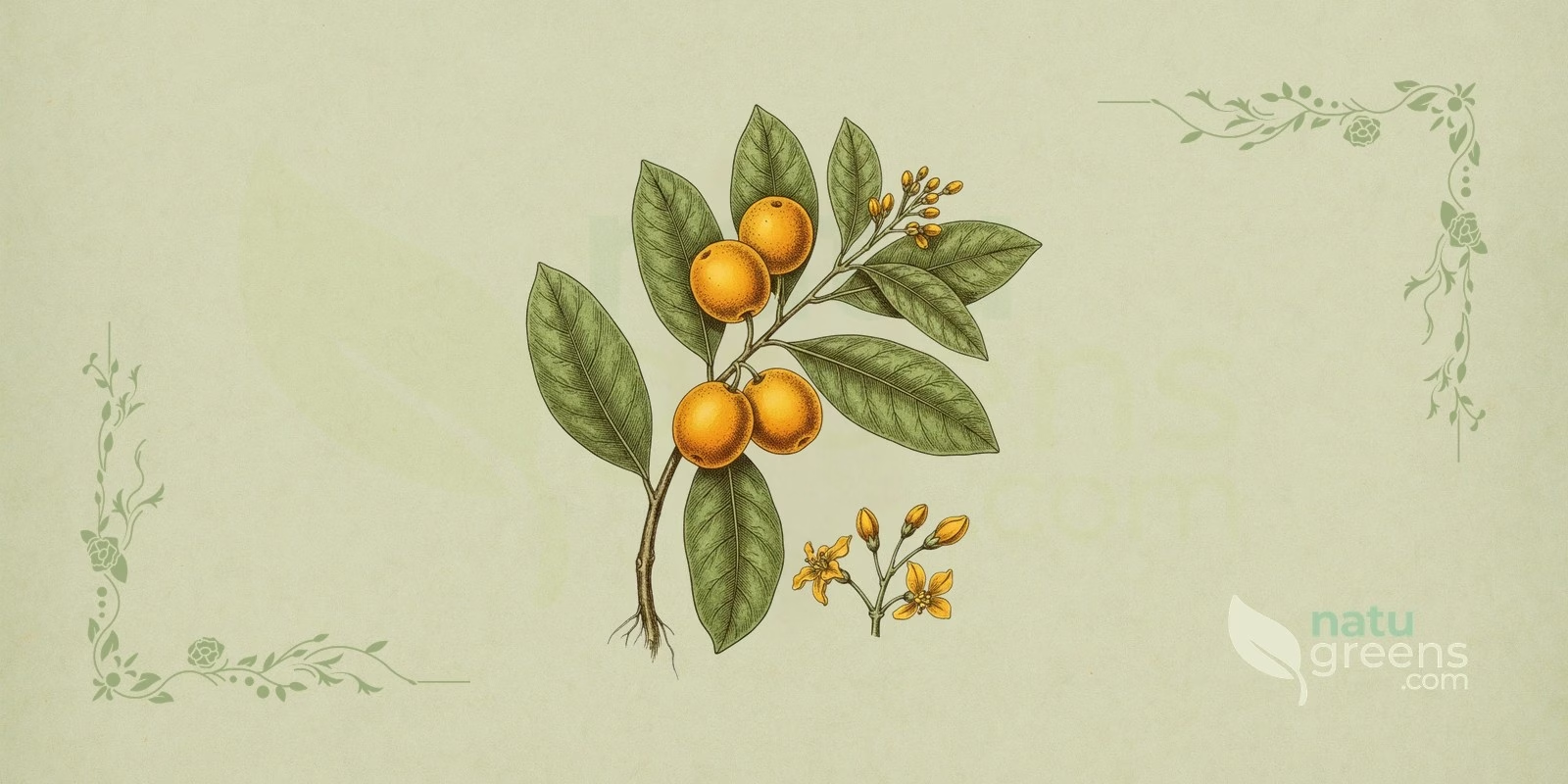
Common and International Names of Nance
- English: nance
- Nahuatl: nantzinxocotl
- Portuguese (Brazil): murici, murici-do-campo, muruci
- Spanish: nance, nanche
Not to Be Confused with Other Murici Species
In Brazil, the name murici is given to several species of the genus Byrsonima, such as Byrsonima verbascifolia, Byrsonima coccolobifolia and Byrsonima intermedia, which differ in leaf shape, size and chemical makeup. Since most of the studies cited here were carried out with B. crassifolia, their results should not be applied automatically to the other muricis sold at street markets or gathered in the wild.
Botanical Synonyms of Nance
The accepted name is Byrsonima crassifolia (L.) Kunth, published in 1822. Its basionym is Malpighia crassifolia L., described by Linnaeus in 1753, which is why the abbreviation "(L.)" appears in the current name. Taxonomic databases such as Plants of the World Online, maintained by the Royal Botanic Gardens, Kew, also list Malpighia rhopalifolia Spreng. and Byrsonima crassifolia subsp. insulata Cuatrec. as synonyms, along with a few varieties described in the past that are now treated as part of the same species.
Botanical Family: Malpighiaceae
The Malpighiaceae family comprises about 1,300 species, mostly tropical, with great diversity in South America. One of the best known relatives of nance is the acerola, or Barbados cherry (Malpighia emarginata), famous for its vitamin C content. Many species in the family bear oil glands on the flower calyx that attract bees specialized in collecting floral oils, and nance shares this trait, with yellow flowers that turn orange or reddish as they age.
Parts of Nance Used
In folk tradition, the trunk bark is the part most often used for medicinal purposes, followed by the leaves, and both taste astringent because of their high tannin concentration. The fruit, a small yellow drupe with oily pulp and a strong aroma, is used mainly as food. The seeds appear in some laboratory studies but are not part of the most widespread home use.
Ethnobotanical and Traditional Uses of Nance
Ethnobotanical surveys in Mexico and Guatemala record the use of a bark decoction for diarrhea, dysentery and other intestinal complaints, and the same preparation is used to wash wounds, irritated skin and gynecological infections. Among the Mixe people of Oaxaca, the plant is counted among the remedies for gastrointestinal complaints, and there are scattered reports of its use for snakebites, always as a folk practice with no clinical backing. In Brazil, communities in the cerrado and the Amazon turn to the bark and leaves of different muricis as astringents, and the fruit is part of everyday food in juices, sweets, liqueurs and ice creams. For a long time the bark was also used to tan leather, taking advantage of its abundant tannins.
Medicinal Properties of Nance
The properties below come from traditional use and from laboratory or animal studies, and none of them has been confirmed in clinical trials with humans.
- Antibacterial (extracts inhibited enterobacteria in an in vitro screening of plants used in Guatemala for digestive disorders)
- Antioxidant (leaf extracts showed high antioxidant capacity in an ORAC assay, and the fruit carotenoids neutralized peroxyl radicals in vitro)
- Astringent (attributed to the tannins in the bark and leaves, the basis of folk use in mild diarrhea and for washing wounds)
- Gastroprotective (a leaf extract reduced ethanol-induced gastric lesions in rats, a finding not yet confirmed in humans)
- Hypoglycemic (fruit and seed extracts lowered blood glucose in diabetic rats after a single dose, a result limited to an animal model)
- Neuroactive (a flavonoid-rich methanolic extract had an antidepressant-like effect in a forced swim test with mice, with no studies in people)
- Topical anti-inflammatory (a chloroform extract of the bark reduced croton oil-induced ear edema in mice)
Detailed Phytochemical Profile of Nance
The chemical composition of nance varies considerably from one part of the plant to another. The bark and leaves are concentrated in phenolic compounds and tannins, while the fruit stands out for the carotenoids that give the pulp its yellow color.
- Carotenoids, especially lutein and zeaxanthin (the main pigments of the fruit, with xanthophylls predominating in an analysis of Brazilian nance)
- Catechin (a flavan-3-ol identified in an active fraction of the bark extract and a building block of proanthocyanidins)
- Gallic acid and galloylated derivatives (present in the bark, these structures are able to bind dietary iron)
- Proanthocyanidins (condensed tannins) (abundant in the bark and linked to its astringent taste and its traditional use against diarrhea)
- Quercetin and glycosides such as quercetin-3-O-xyloside, rutin and hesperidin (flavonoids identified in the methanolic extract used in a study with mice)
- Triterpenes, such as birsonimadiol (isolated from the seeds and studied for a possible anti-inflammatory action in laboratory models)
Preparation and Administration of Nance
The most common traditional preparation is a decoction of dried bark pieces boiled in water, taken by mouth in small doses or, once cooled, used for compresses and external washes. The leaves go into infusions and sitz baths, following the same astringent logic. The fruit, on the other hand, is eaten fresh or as juice, frozen pulp, jam and ice cream, and in Mexico it is also preserved in syrup or made into liqueurs. There are no registered herbal medicines based on nance in Brazil, so there are no standardized doses and no extracts with a defined tannin content.
Synergy with Other Medicinal Plants
Astringent Pairing for the Gut
In Latin American tradition, nance bark is often mentioned alongside guava leaves (Psidium guajava), another tannin-rich plant that also showed activity against enterobacteria in the same Guatemalan screening. The idea behind the combination is to add up the astringent effect of both plants during episodes of mild diarrhea, although no study has evaluated the mixture in people.
Wound-Healing Pairing for External Use
In skin washes, nance is sometimes combined with barbatimão (Stryphnodendron adstringens) and chamomile (Matricaria chamomilla), joining astringent plants with a flower traditionally valued for soothing the skin. This pairing follows folk reasoning and has not been tested in controlled trials.
Nance Recipes and Usage Protocols
Bark Decoction for Short-Term Internal Use
According to folk records, about one tablespoon of chopped dried bark is boiled in 500 ml of water for ten minutes and then strained, and the liquid is sipped in small cups throughout the day for no more than two or three days during episodes of mild diarrhea. Because of its high tannin content, this preparation should be taken at least two hours apart from iron-rich meals, supplements and medications, and diarrhea with blood, high fever or signs of dehydration calls for prompt medical care, with no attempt at home management.
Compress and External Wash with Leaves or Bark
For external use, the same decoction, once cooled, is applied with clean compresses to small scrapes or used to wash irritated skin once or twice a day. Deep wounds, wounds with pus or wounds that do not close within a few days need professional care. These uses follow traditional records and do not replace professional guidance.
The preparations above follow traditional records and do not replace professional guidance. Before any internal use, check the contraindications and interactions described in this article.
Practices Associated with Nance
Clinical Herbal Medicine
In clinical herbal medicine, nance is seen mainly as an astringent plant for occasional use, in the same group of tannin-rich species employed for mild diarrhea and external skin care. The lack of clinical trials and standardized extracts leads practitioners to prefer, when needed, plants with official monographs, leaving nance mostly as a subject of research and a food.
Traditional Mesoamerican Medicine
There is no consistent record of homeopathic use of nance. Its strongest place is in traditional Mesoamerican medicine, where Indigenous peoples of Mexico and Central America have used the bark for generations for intestinal and skin complaints, and the fruit, called nance or nanche, plays an important role in the food and popular festivities of the region.
Contraindications and Side Effects of Nance
Nance bark and leaves have a traditional use against diarrhea and for wound healing precisely because they are very rich in tannins, and that same feature calls for caution. Internal use should be short-term, because tannins can cause constipation and reduce the absorption of dietary iron, which is a particular concern for people with anemia or low iron stores. Tannins can also lower the absorption of other medications taken by mouth, so the advice is to take nance tea at least two hours apart from any medication or supplement. During pregnancy and breastfeeding, concentrated use of the bark or leaves should be avoided, since there are no safety data for these stages. Young children, people with chronic constipation and anyone under follow-up for a gastrointestinal condition should also talk to a health professional before using it. Eating the fruit as food, in usual amounts, does not tend to cause the same problems, since the tannin content of the ripe pulp is much lower than that of the bark.
Drug Interactions
There are no clinical interaction studies specific to nance, but tannins are known to bind iron and a range of molecules in the gut. In practice, this means that iron supplements, long-term oral medications and other herbal products may be absorbed less well if taken together with bark or leaf tea, and keeping a gap of at least two hours between them is the safest recommendation. People taking diabetes medications should be especially careful, since fruit and seed extracts lowered blood glucose in rats, even though it is not known whether this effect occurs in people.
Curiosities and Historical Facts
The genus name, Byrsonima, comes from the Greek byrsa, meaning leather, a reference to the use of these trees' bark for tanning hides, a practice that relies on exactly those tannins. The name nanche, used in Mexico, derives from the Nahuatl nantzinxocotl. In Brazil, murici has earned a place in regional cooking, and its frozen pulp is easy to find at markets in the North and Northeast. The flowers, which shift from yellow to red, are visited by bees that collect oil instead of nectar, a pollination relationship typical of the Malpighiaceae.
Frequently Asked Questions About Nance
Is Nance Used for Diarrhea?
Nance bark is traditionally used during episodes of mild diarrhea because of the astringent effect of its tannins, and extracts of the plant inhibited intestinal bacteria in the laboratory. However, no clinical studies have confirmed this use in people, and severe diarrhea, diarrhea with blood or diarrhea accompanied by fever requires medical evaluation.
Is Nance Fruit Bad for You?
Eaten as food, whether in juices, ice creams or fresh, the ripe fruit is considered safe for most people. The cautions about tannins, iron and medications apply mainly to concentrated tea made from the bark and leaves.
Can Pregnant Women Drink Nance Tea?
Concentrated use of the bark or leaves should be avoided during pregnancy and breastfeeding, because there are no safety data for these stages. When in doubt, a pregnant woman should talk to her obstetrician before using any preparation of the plant.
Are Nance and Acerola Related?
Yes. Nance and acerola belong to the same botanical family, Malpighiaceae, although they are in different genera and their fruits have quite different compositions, since acerola is known for vitamin C and nance for the carotenoids in its pulp.
Can I Take Nance Tea Together with an Iron Supplement?
This is not recommended. The tannins in the bark can reduce the absorption of iron and of other medications, so it is best to keep a gap of at least two hours between the tea and the supplement, and to limit use to just a few days.
Notice: this content is for informational purposes and does not replace professional medical advice. Consult a physician or herbal practitioner before using medicinal plants, especially during pregnancy, breastfeeding, or alongside medication.
How to cite this article
NATUGREENS. Nance (Byrsonima crassifolia): Properties and Uses. Natugreens, 22 Nov. 2026. Disponível em: https://natugreens.com/byrsonima-crassifolia-nance/. Accessed: Nov. 22, 2026.
Natugreens. (2026). Nance (Byrsonima crassifolia): Properties and Uses. Natugreens. https://natugreens.com/byrsonima-crassifolia-nance/
References and Scientific Studies
View All 10 Cited References
Peer-Reviewed Scientific Studies (7)
- PMC1989 Brune, M.; Rossander, L.; Hallberg, L. (1989). Iron absorption and phenolic compounds: importance of different phenolic structures. European Journal of Clinical Nutrition, 43(8), 547-557. ↗
- DOI1990 Cáceres, A.; Cano, O.; Samayoa, B.; Aguilar, L. (1990). Plants used in Guatemala for the treatment of gastrointestinal disorders. 1. Screening of 84 plants against enterobacteria. Journal of Ethnopharmacology, 30(1), 55-73. ↗
- DOI2011 Guilhon-Simplicio, F.; Pereira, M. M. (2011). Aspectos químicos e farmacológicos de Byrsonima (Malpighiaceae). Química Nova, 34(6), 1032-1041. ↗
- DOI2011 Herrera-Ruiz, M. et al. (2011). Antidepressant effect and pharmacological evaluation of standardized extract of flavonoids from Byrsonima crassifolia. Phytomedicine, 18(14), 1255-1261. ↗
- PMC2009 Maldini, M. et al. (2009). Screening of the topical anti-inflammatory activity of the bark of Acacia cornigera Willdenow, Byrsonima crassifolia Kunth, Sweetia panamensis Yakovlev and the leaves of Sphagneticola trilobata Hitchcock. Journal of Ethnopharmacology, 122(3), 430-433. ↗
- DOI2010 Pérez-Gutiérrez, R. M. et al. (2010). Antihyperglycemic, antihyperlipidemic and antiglycation effects of Byrsonima crassifolia fruit and seed in normal and streptozotocin-induced diabetic rats. Plant Foods for Human Nutrition, 65(4), 350-357. ↗
- DOI2016 Pérez-Gutiérrez, R. M. et al. (2016). Anti-inflammatory effect of birsonimadiol from seeds of Byrsonima crassifolia. Food Science and Biotechnology, 25(2), 561-566. ↗
Supplementary Readings (3)
- 1993 Béjar, E.; Malone, M. H. (1993). Pharmacological and chemical screening of Byrsonima crassifolia, a medicinal tree from Mexico. Part I. Journal of Ethnopharmacology, 39(2), 141-158. ↗
- 2013 Mariutti, L. R. B.; Rodrigues, E.; Mercadante, A. Z. (2013). Carotenoids from Byrsonima crassifolia: identification, quantification and in vitro scavenging capacity against peroxyl radicals. Journal of Food Composition and Analysis. ↗
- 2012 Pompeu, D. R.; Rogez, H.; Monteiro, K. M.; Tinti, S. V.; Carvalho, J. E. (2012). Capacidade antioxidante e triagem farmacológica de extratos brutos de folhas de Byrsonima crassifolia e de Inga edulis. Acta Amazonica, 42(1), 165-172. ↗
You May Also Like
Take your time and tell us everything you think, details included. Every response is read by someone on our editorial team and goes into the article's revision. An honest critique helps us more than a polite compliment.
Take your time and tell us everything you think, details included. Every response is read by someone on our editorial team and goes into the article's revision. An honest critique helps us more than a polite compliment.