



Quick summary
Lonicera caerulea L., popularly known as haskap or blue honeysuckle, is a deciduous shrub of the Caprifoliaceae family, native to cold regions of the Northern Hemisphere, from Siberia to Japan and Canada. Gathered from the wild for centuries by peoples of northern Asia for its sweet, bluish fruit, the species has…
Main caution: Haskap fruit is, in general, considered safe for dietary consumption. The European Commission, through Implementing Regulation (EU) 2018/1991, recognized the fruit of Lonicera caerulea as a traditional food from a third…
Lonicera caerulea L., popularly known as haskap or blue honeysuckle, is a deciduous shrub of the Caprifoliaceae family, native to cold regions of the Northern Hemisphere, from Siberia to Japan and Canada. Gathered from the wild for centuries by peoples of northern Asia for its sweet, bluish fruit, the species has drawn growing attention from researchers interested in its rich profile of anthocyanins and other antioxidant compounds. Much of the available research is still small in scale or limited to laboratory and animal models, so any possible benefits to human health continue to be investigated with caution.
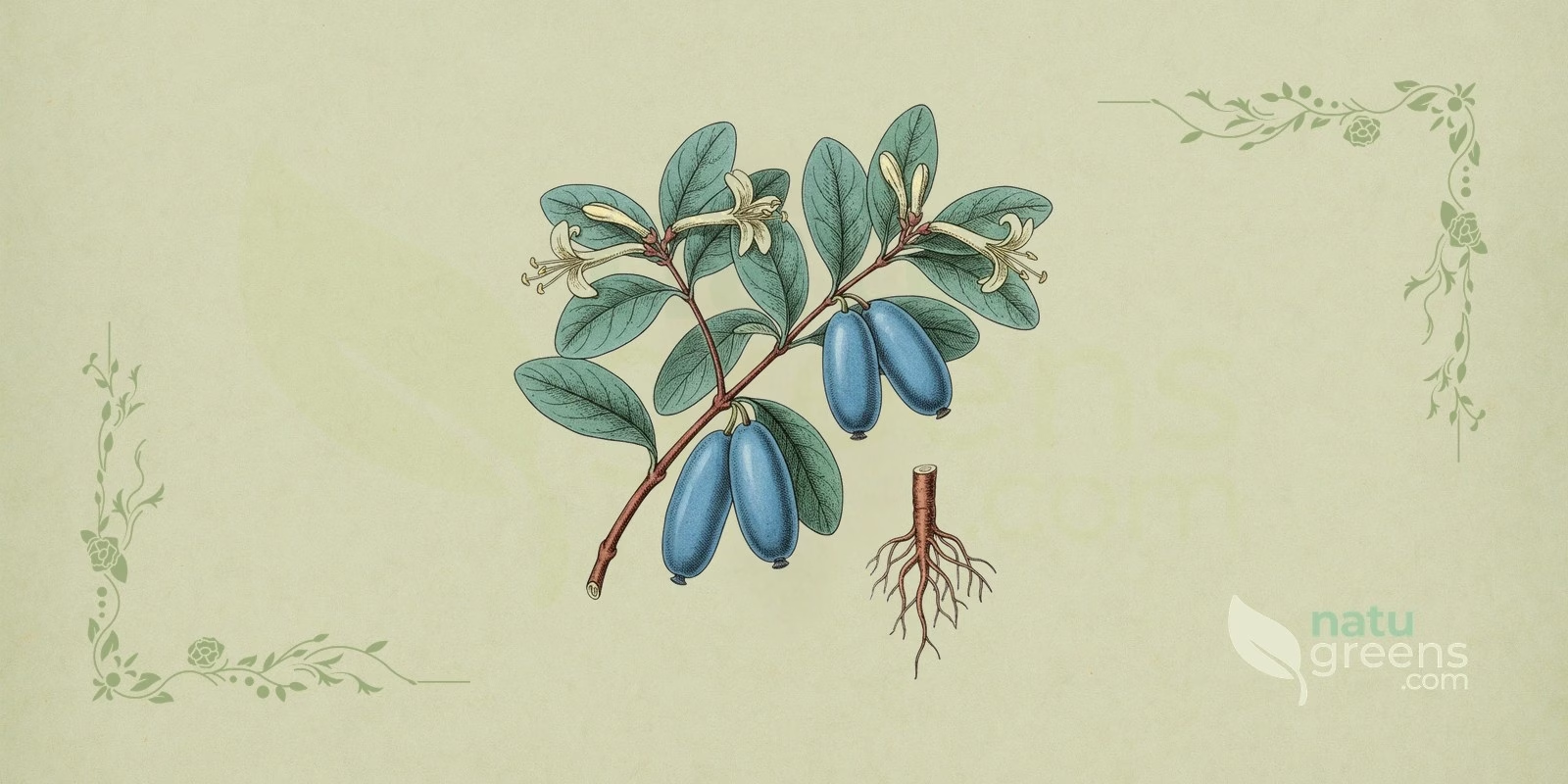
Popular and International Names for Haskap
- Portuguese: haskap, madressilva-azul, baga-de-mel.
- English: haskap, honeyberry, blue honeysuckle, sweetberry honeysuckle.
- Spanish: haskap, madreselva azul, baya de miel.
- German: Haskap, Blaue Heckenkirsche, Honigbeere.
- French: haskap, chèvrefeuille bleu, baie de miel.
- Italian: haskap, caprifoglio blu, bacca di miele.
- Japanese: hasukappu, a term of Ainu origin also adopted into Japanese.
Not to Be Confused with Other Honeysuckles
The genus Lonicera includes more than one hundred and eighty species, and several of them appear in very different contexts from haskap. Lonicera japonica, already covered in another article on this site, is valued mainly for its flower, used in infusions, rather than for its fruit. Lonicera periclymenum, also featured on the site, produces red berries considered toxic, used only ornamentally. Haskap is clearly distinct from both: its blue, elongated fruit, covered with a thin waxy bloom, is the edible part of the plant and the one of nutritional interest.
Botanical Synonyms of Haskap
The accepted scientific name is Lonicera caerulea L. Synonyms recorded in the botanical literature include Caprifolium caeruleum (L.) Lam. and Chamaecerasus caerulea (L.) Delarbre, along with several taxonomic varieties described over time, such as Lonicera caerulea var. altaica, var. edulis, var. emphyllocalyx, and var. kamtschatica, among others. These varieties reflect the species' wide geographic distribution, which stretches from eastern Europe to Japan, through Siberia and Canada.
Botanical Family: Caprifoliaceae
The Caprifoliaceae family includes shrubs and vines distributed mainly across temperate regions of the Northern Hemisphere, many of them valued for ornamental flowers and for fruit that is either edible or purely decorative. Its species typically have tubular flowers, sometimes strongly scented, and berry-like fruit that feeds birds and other wildlife. Within this family, the genus Lonicera is one of the largest and includes both edible-fruited species, such as haskap, and ornamental species whose berries should not be eaten.
Parts of the Plant Used
In traditional use, as well as in more recent scientific research, the most important part of haskap is the ripe fruit, eaten fresh or processed. The leaves and young shoots appear in home preparations such as infusions, although they are far less documented than the fruit.
Ethnobotanical and Traditional Uses of Haskap
In communities across northern Asia, especially among Indigenous peoples of Hokkaido, Japan, and of Siberia, haskap fruit has been gathered for generations for direct consumption and for making preserves. As a traditional use, without robust scientific confirmation in humans, the fruit and other parts of the plant have also been associated with folk care for stomach and liver complaints, and with older attempts at supporting cardiovascular health. These uses helped spark the scientific interest the species receives today, but they do not replace medical diagnosis or treatment.
Medicinal Properties of Haskap
The properties listed below come mainly from preclinical studies, conducted in the laboratory or in animal models, and from records of traditional use. None of them has been confirmed by robust clinical studies in humans, and haskap fruit should not be regarded as a substitute for medical treatment.
- Antioxidant (reduces oxidative stress in laboratory models, thanks to the fruit's high anthocyanin content)
- Anti-inflammatory (preclinical finding, associated with the phenolic compounds in the fruit)
- Cardioprotective (effect observed in animal studies, still without confirmation in large human trials)
- Neuroprotective (suggested by a small pilot study in older adults)
- Antimicrobial (activity observed in laboratory tests against some microorganisms)
- Antidiabetic (preclinical indications of an effect on glucose metabolism, not confirmed in humans)
Detailed Phytochemical Profile of Haskap
Haskap fruit brings together a diverse combination of bioactive compounds, which explains the growing interest of nutritional research in the species.
- Anthocyanins (cyanidin 3-glucoside, cyanidin 3-rutinoside, and peonidin 3-glucoside, responsible for the deep blue-purple color)
- Vitamin C (present in meaningful amounts in the fresh fruit)
- Phenolic compounds (a variety of phenolic acids, linked to antioxidant activity)
- Flavonoids (a class of compounds associated with the fruit's antioxidant effects)
- Iridoids (bitter compounds typical of several Caprifoliaceae species)
- Proanthocyanidins (condensed tannins present in the skin and pulp)
- Organic acids (such as citric acid, which contributes to the fruit's mildly tart flavor)
Forms of Preparation and Use of Haskap
Haskap is eaten mainly fresh or frozen, but it also appears in juices, jams, preserves, and baked goods. The leaves, far less documented in use, are usually prepared as an infusion. Standardized fruit extracts aimed at the supplement market are available in some countries, generally as capsules or freeze-dried powders.
Synergy with Other Medicinal Plants
Pairing with Other Anthocyanin-Rich Fruits
So far, there is no specific research on synergy between haskap and other medicinal plants. Because it shares a rich anthocyanin profile, the fruit often appears, in home recipes, alongside blueberry, blackberry, and raspberry, combined in the same drink or dish, as a way of bringing together different sources of antioxidant compounds in a single preparation.
Pairing with Plants Traditionally Used for Inflammation
In popular Asian preparations, haskap also appears alongside plants such as ginger and turmeric. The combination aims to bring together, without robust clinical confirmation, different sources of compounds of interest for the immune system and for digestive comfort, always as part of the diet rather than as a substitute for medical guidance.
Recipes and Usage Protocols for Haskap
Haskap Jam
For a simple jam, use half a kilo of well-washed haskap fruit, two hundred and fifty grams of sugar, and the juice of one lemon. The ingredients go into a pan over medium heat, stirred from time to time, until the fruit breaks down and the mixture reaches the desired consistency, which usually takes between twenty and thirty minutes. Once ready, the jam is transferred into sterilized jars and sealed while still hot.
Haskap Juice or Smoothie
One cup of frozen haskap fruit, one banana, half a cup of plain yogurt, and half a cup of milk or a plant-based drink are blended together until smooth. Those who prefer can sweeten it with a spoonful of honey. The drink is usually served right after preparation, as part of breakfast or a light snack.
Haskap Leaf Infusion
One teaspoon of dried haskap leaves is placed in a cup, covered with two hundred milliliters of freshly boiled water, and left to infuse for about five to seven minutes before being strained. These uses follow traditional records and do not replace professional guidance, especially in cases of frequent or prolonged use.
The preparations above follow traditional records and do not replace professional guidance. Before any internal use, check the contraindications and interactions described in this article.
Therapies Associated with Haskap
Clinical Herbal Medicine
In modern herbal medicine, haskap is studied mainly as a functional food rather than as a stand-alone remedy. Standardized fruit extracts have been tested in research on cardiovascular function, antioxidant profile, and, on a smaller scale, cognition in older adults, always in small, preliminary studies. Use along these lines is meant to complement healthy eating habits, not to replace medical follow-up for conditions that have already been diagnosed.
Traditional Asian Medicine
In folk medicine systems of northern Asia, parts of haskap have historically been used in attempts to address high blood pressure, vision problems, anemia, and stomach and liver complaints. These uses reflect knowledge accumulated over generations, but they have not been validated by the standards of evidence-based medicine, and they should not guide treatment decisions without professional follow-up.
Contraindications and Side Effects of Haskap
Haskap fruit is, in general, considered safe for dietary consumption. The European Commission, through Implementing Regulation (EU) 2018/1991, recognized the fruit of Lonicera caerulea as a traditional food from a third country, and the European Food Safety Authority raised no safety objections to its marketing. Even so, human studies remain small in both the number of participants and their duration, so the effects of prolonged use or of concentrated doses, such as extracts and supplements, are less understood than those of eating the fruit as an everyday food.
An essential safety point concerns correctly identifying the plant. The genus Lonicera includes species with toxic berries, such as Lonicera xylosteum and Lonicera periclymenum, whose round red fruit can cause nausea, vomiting, and diarrhea if ingested, and which in some cases grow in the same regions where haskap is cultivated or found growing wild. Haskap's edible fruit is blue, elongated, and covered with a thin waxy bloom, an appearance clearly different from the round, red berries of these toxic species. Color alone is not enough to identify the plant, however, because other honeysuckles also bear dark berries, from deep blue to black, that are not considered edible. For this reason, no honeysuckle berry gathered in the wild should ever be eaten without reliable botanical identification, and children deserve extra attention near these ornamental plants.
People with a known allergy to other plants in the Caprifoliaceae family, or to wild fruit in general, should be cautious the first time they try haskap. Pregnant women, breastfeeding women, and people with chronic conditions or on ongoing medication should consult a health professional before adopting the fruit, its leaves, or concentrated extracts as part of a therapeutic protocol, even though occasional consumption of the fruit as food does not usually pose any special risk.
Drug Interactions
In the scientific literature reviewed, there are no robust reports of serious drug interactions associated with eating haskap fruit as food. Because the fruit contains compounds with a possible effect on blood glucose and on mechanisms related to blood clotting, observed in preclinical studies, people being treated with antidiabetic or anticoagulant medications should tell their doctor about regular use of the fruit or of concentrated extracts, so that clinical follow-up can take this information into account.
Curiosities and Historical Facts
The name haskap comes from the language of the Ainu people, an Indigenous group from Hokkaido in northern Japan, and is usually translated as berry of long life and good vision, a reference to the abundance of fruit on the branches and to the value these communities placed on the plant. The term became internationally popular through breeding programs carried out in Japan, Russia, and later Canada, which gave rise to the varieties most widely planted in commercial orchards today. The fruit is often compared to blueberry for its bluish color, but it has a more elongated shape and a flavor described as a mix of blueberry and raspberry, sweet and tart at the same time. The plant also stands out for its resistance to very low temperatures, which explains its popularity in regions with harsh winters, from Siberia to Canada.
Frequently Asked Questions about Haskap
What Is Haskap?
Haskap is the fruit of the plant Lonicera caerulea, also called blue honeysuckle, a shrub native to cold regions of the Northern Hemisphere. The fruit is blue, elongated, and valued for its high content of anthocyanins and other antioxidants.
What Does Haskap Taste Like?
The flavor is usually described as a combination of blueberry and raspberry, sweet and tart at the same time, and some people also notice similarities to blackberry or currant.
Is Haskap the Same Plant as Japanese Honeysuckle?
No, it is not the same plant. Haskap corresponds to the species Lonicera caerulea, whose fruit is the part used, while Japanese honeysuckle, Lonicera japonica, is a different species in the same genus, valued mainly for its flower rather than its fruit.
Is It Safe to Pick Honeysuckle Berries Directly from the Wild?
In general, this is not recommended. Several species in the genus Lonicera, such as Lonicera xylosteum and Lonicera periclymenum, produce toxic red berries that look quite different from haskap's blue, elongated fruit. Some dark-berried honeysuckles are not edible either, so a blue color alone does not prove that a berry is haskap. Without reliable botanical identification, the safest approach is to eat only fruit of known origin, either grown yourself or bought from a trustworthy source.
How Can Haskap Be Eaten Day to Day?
The fruit can be eaten fresh, frozen, in juices, smoothies, jams, and preserves, and it also appears in baked goods. The leaves, far less studied in use, are sometimes prepared as an infusion.
Notice: this content is for informational purposes and does not replace professional medical advice. Consult a physician or herbal practitioner before using medicinal plants, especially during pregnancy, breastfeeding, or alongside medication.
How to cite this article
NATUGREENS. Haskap (Lonicera caerulea): Properties and Precautions. Natugreens, 21 Nov. 2026. Disponível em: https://natugreens.com/haskap-lonicera-caerulea/. Accessed: Nov. 21, 2026.
Natugreens. (2026). Haskap (Lonicera caerulea): Properties and Precautions. Natugreens. https://natugreens.com/haskap-lonicera-caerulea/
References and Scientific Studies
View All 9 Cited References
Peer-Reviewed Scientific Studies (7)
- DOI2019 Bell, L., & Williams, C. M. (2019). A Pilot Dose-Response Study of the Acute Effects of Haskap Berry Extract (Lonicera caerulea L.) on Cognition, Mood, and Blood Pressure in Older Adults. European Journal of Nutrition, 58(8), 3325-3334. ↗
- DOI2024 Bora, L., et al. (2024). A Systematic Review of Cardio-Metabolic Properties of Lonicera caerulea L. Antioxidants, 13(6), 694. ↗
- DOI2021 Dayar, E., et al. (2021). Antioxidant Effect of Lonicera caerulea L. in the Cardiovascular System of Obese Zucker Rats. Antioxidants, 10(8), 1199. ↗
- DOI2020 Gołba, M., et al. (2020). Health Properties and Composition of Honeysuckle Berry Lonicera caerulea L. An Update on Recent Studies. Molecules, 25(3), 749. ↗
- DOI2012 Jurikova, T., et al. (2012). Phenolic Profile of Edible Honeysuckle Berries (Genus Lonicera) and Their Biological Effects. Molecules, 17(1), 61-79. ↗
- DOI2015 Rupasinghe, H. P. V., et al. (2015). Anti-Inflammatory Activity of Haskap Cultivars is Polyphenols-Dependent. Biomolecules, 5(2), 1079-1098. ↗
- DOI2018 Rupasinghe, H. P. V., et al. (2018). The Potential Health Benefits of Haskap (Lonicera caerulea L.): Role of Cyanidin-3-O-Glucoside. Journal of Functional Foods, 44, 24-39. ↗
Supplementary Readings (2)
- 2021 Centre Antipoison de Lille (2021). Chèvrefeuille, plante à baies toxique. CHU de Lille. ↗
- 2018 European Commission (2018). Commission Implementing Regulation (EU) 2018/1991 of 13 December 2018 on the authorisation to place on the market berries of Lonicera caerulea L. as a traditional food from a third country. Official Journal of the European Union, L 320, 22-24. ↗
You May Also Like
Take your time and tell us everything you think, details included. Every response is read by someone on our editorial team and goes into the article's revision. An honest critique helps us more than a polite compliment.
Take your time and tell us everything you think, details included. Every response is read by someone on our editorial team and goes into the article's revision. An honest critique helps us more than a polite compliment.