Quick summary
Abelmoschus esculentus (L.) Moench / Okra, popularly known as okra, lady's fingers, gumbo and bhindi, among other names, is an annual herbaceous plant of the Malvaceae family. Native to East Africa, the species spread to every continent thanks to its edible fruits, and for thousands of years it has been part of…
Main caution: Okra is a food, and the basis of this article is nutritional and ethnobotanical: there is no proof that it controls blood glucose or cholesterol. Studies on its hypoglycemic effect were carried out in animals and in…
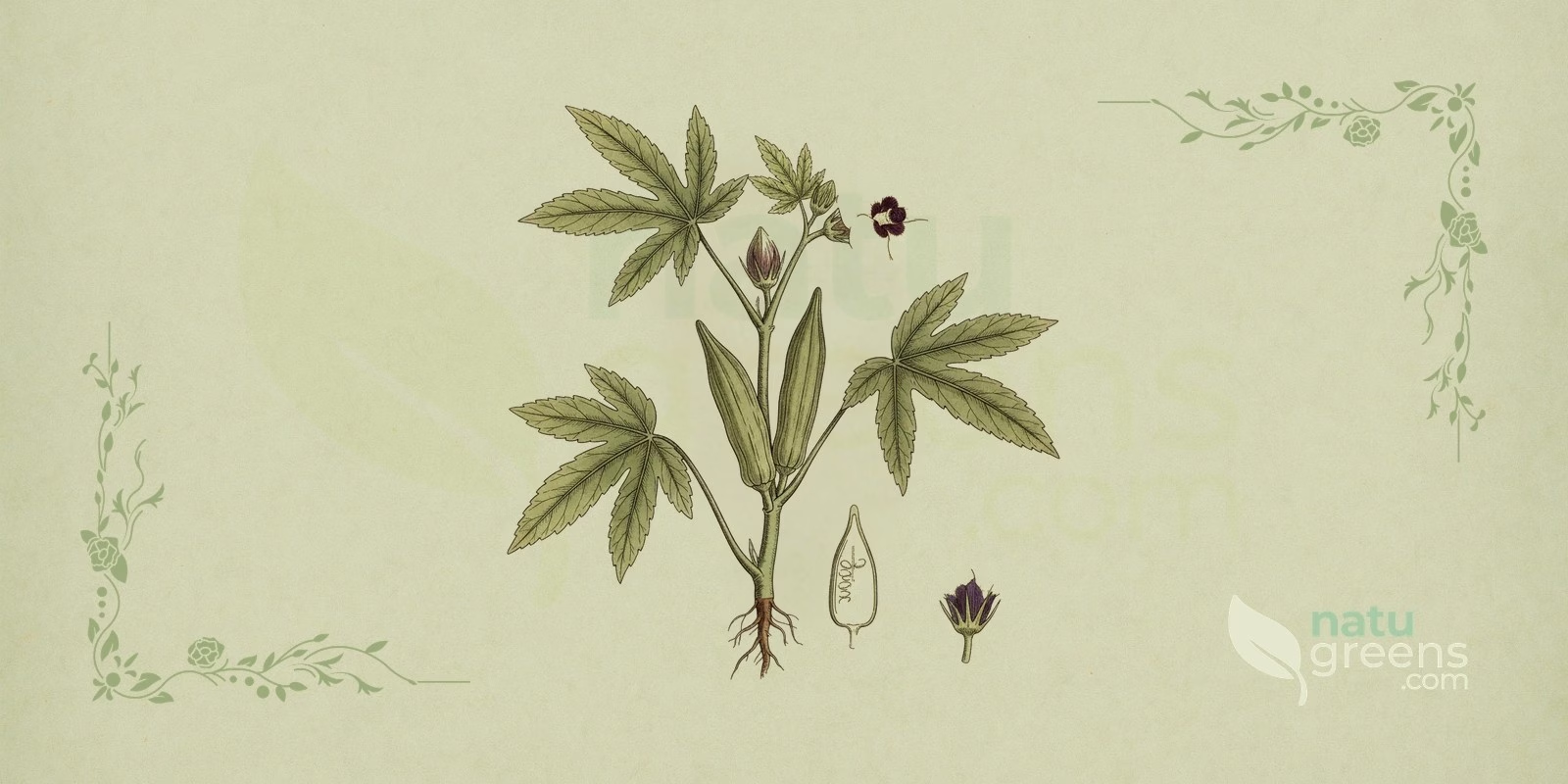
Abelmoschus esculentus (L.) Moench / Okra, popularly known as okra, lady's fingers, gumbo and bhindi, among other names, is an annual herbaceous plant of the Malvaceae family. Native to East Africa, the species spread to every continent thanks to its edible fruits, and for thousands of years it has been part of traditional African and Asian medicine, valued both in the kitchen and in folk herbalism. The pods, five-angled and mucilaginous in texture, are harvested while still immature, whether to be eaten as a vegetable or to prepare extracts and other okra-based products.
In herbal tradition, okra holds a prominent place as a digestive plant, and the records of its use range from easing gastrointestinal discomfort and inflammatory conditions to serving as a supportive food for people living with diabetes. This reputation rests on a composition rich in mucilage, flavonoids and vitamins, to which the antioxidant and gastroprotective activities observed in the laboratory are attributed. Modern scientific research has been investigating several of these traditional uses, and okra is now among the most studied vegetables as a functional food, although most of the evidence still comes from animal studies and small clinical trials.
Popular and International Names of Okra
- English: bhindi, gumbo, lady's fingers, okra.
- French: corne grecque, gombo, okra.
- German: Damenfinger, Gemüse-Eibisch, Okra.
- Italian: dita di dama, gombo, okra.
- Portuguese: bâmia (BR), bendé (BR), chifre-de-veado (BR), gombô (BR), quiabeiro, quiabo, quiabo-chifre-de-veado (BR), quiabo-de-metro (BR), quiabo-de-rama (BR), quiabo-do-reino (BR), quiabo-paulista (BR), quingombô (BR).
- Spanish: molondrón, okra, quimbombó.
Botanical Synonyms of Abelmoschus esculentus
Hibiscus esculentus L. is the botanical synonym most often found in the older scientific literature, since this is the name under which Carl Linnaeus described the plant before it was transferred to the genus Abelmoschus. Although Abelmoschus esculentus (L.) Moench is the name accepted by most contemporary botanical authorities, including The Plant List and World Flora Online, the name Hibiscus esculentus still appears frequently in historical publications and in some regions.
Other recorded synonyms include Abelmoschus bammia Webb, Abelmoschus longifolius (Willd.) Kostel., Abelmoschus officinalis (DC.) Endl., Abelmoschus praecox Sickenb., Abelmoschus tuberculatus Pal & Singh, Hibiscus hispidissimus A.Chev. nom. illeg., Hibiscus longifolius Willd. and Hibiscus praecox Forssk.
Botanical Family: Malvaceae
The Malvaceae family is a vast and diverse group of flowering plants, comprising about 243 genera and more than 4,225 species distributed throughout the world. It is characterized by the presence of mucilage, alternate leaves and five-petaled flowers, often with the stamens fused into a tube, and it includes plants of great economic, food and medicinal importance, such as cotton, cacao, hibiscus and mallow.
Okra shares several morphological traits typical of the family, among them its herbaceous habit and the abundant mucilage in its pods. The Malvaceae are known for producing bioactive compounds, above all polysaccharides, flavonoids and phenolic acids, and this chemical diversity has been the subject of intense pharmacological research, with effects on the development of herbal medicines and dietary supplements.
Parts of Okra Used
- Fruits (pods)
- Leaves
- Roots
- Seeds
Ethnobotanical and Traditional Uses
- Constipation and dysentery
- Digestive complaints such as gastritis and ulcers (traditional record)
- Diuretic (traditional record)
- Intestinal worms (traditional record)
- Relief of intestinal cramps and flatulence
- Relief of throat and stomach irritation
- Respiratory complaints such as asthma and bronchitis (traditional record)
- Skin inflammation and minor wounds, in external use
- Type 2 diabetes, as a supportive food (traditional record; effect still under study)
Therapeutic Properties of Okra
- Antibacterial (activity against bacteria observed in laboratory studies)
- Antifatigue (effect observed in animal studies)
- Anti-inflammatory (reduction of inflammatory markers in preclinical studies)
- Antioxidant (flavonoids and vitamin C neutralize free radicals in laboratory assays)
- Antiproliferative (activity observed in laboratory studies, with no clinical confirmation)
- Cardioprotective (effect investigated in preclinical studies)
- Demulcent (the mucilage forms a soft film over irritated mucous membranes)
- Diuretic (traditional record of increased fluid elimination)
- Emollient (softens and moisturizes the skin in external use)
- Gastroprotective (protection of the gastric mucosa observed in preclinical studies)
- Hepatoprotective (effect on the liver observed in animal studies)
- Hypocholesterolemic (effect on cholesterol under study, with results from small clinical trials)
- Hypoglycemic (under study, with data from animals and small clinical trials)
- Neuroprotective (effect observed in animal studies)
Detailed Phytochemical Profile of Okra
- B vitamins (B1, B6)
- Carotenoids
- Catechins
- Dietary fiber (soluble and insoluble)
- Flavonoids (isoquercitrin, quercetin, rutin)
- Folate
- Fructans
- Galactose
- Galacturonic acid
- Linoleic acid
- Magnesium
- Mucilage (polysaccharides)
- Oleic acid
- Oxalates
- Potassium
- Proteins
- Rhamnose
- Seed oil
- Tocopherols
- Vitamin C
- Vitamin K
Preparation and Administration Forms of Okra
- Cold maceration
- Decoction
- Extract
- Infusion
- Oil
- Poultice
- Syrup
Synergy with Other Medicinal Plants
Okra, Green Plantain and Bitter Yam
Combining okra (Abelmoschus esculentus) with green plantain (Musa paradisiaca) and bitter yam (Dioscorea dumetorum) showed a joint effect on blood glucose in preclinical studies carried out in animals, which led researchers to look into this mixture as a possible complementary dietary approach in type 2 diabetes. The hypothesis is that the bioactive compounds of each plant act in combination, but there are still no human trials that would allow the pairing to be recommended, and it is no substitute for medical care.
Okra and Ashwagandha for Constipation
A blend of okra fruit extract with the root of Withania somnifera (ashwagandha) was evaluated in a small proof-of-concept clinical study, in which participants reported relief from constipation and better bowel function. The authors attribute the result partly to okra mucilage, which is rich in soluble fiber and has a gentle laxative action, while the components of ashwagandha might contribute to regulating intestinal transit, a finding that still needs to be confirmed in larger studies.
Recipes and Usage Protocols of Okra
Cold-Soaked Okra Water
Ingredients: 2 to 3 fresh okra pods, 250 ml of water.
Preparation: Wash the pods well, trim the ends and slice them into thin rounds, placing them in a glass with the room-temperature water to rest overnight, for 8 to 12 hours. The next morning, strain the mixture and drink the liquid, which is traditionally used as dietary support by people who keep an eye on their blood sugar levels, since the mucilage tends to slow the absorption of glucose in the intestine. Tradition recommends drinking it daily, preferably on an empty stomach, but anyone taking metformin or other diabetes medicines should talk to their doctor first and should not take the drink at the same time as the medicine.
Leaf Poultice for the Skin
Ingredients: Fresh okra leaves, water.
Preparation: Wearing gloves, since the hairs on the leaves can irritate the skin, wash and mash the fresh leaves into a paste, which is applied directly to areas with mild inflammation, small wounds or insect bites. Cover with a clean cloth and leave it on for 20 to 30 minutes, repeating 2 to 3 times a day as needed. This preparation is traditionally used to soothe the skin, a role attributed to the emollient mucilage of the leaves, and it is best to test it first on a small area to rule out sensitivity.
Homemade Throat Syrup
Ingredients: 5 to 6 fresh okra pods, 500 ml of water, 250 g of honey (optional).
Preparation: Wash the pods, cut them into pieces and boil them in the water for 15 to 20 minutes, until the liquid thickens slightly because of the mucilage. Strain the mixture, discard the pieces and, if you wish, add the honey to the still-warm liquid, stirring until it dissolves completely. Store the syrup in a sterilized glass jar in the refrigerator and, according to traditional use, take 1 tablespoon 2 to 3 times a day to soothe a cough and an irritated throat, since the mucilage forms a protective layer over the mucous membranes. The version with honey must not be given to children under 1 year of age.
The preparations above follow traditional records and do not replace professional guidance. Before any internal use, check the contraindications and interactions described in this article.
Associated Therapies
Herbal Medicine
In modern herbal medicine, okra attracts interest for its antioxidant and gastroprotective activities and for its possible effect on blood glucose, which is still under study. Okra extracts are being evaluated in formulations aimed at people with type 2 diabetes, on the hypothesis that they may reduce glucose absorption and enhance insulin sensitivity, but the available results come from animal studies and small clinical trials. The mucilage also appears in preparations for digestive complaints such as gastritis, and clinical herbal medicine regards it only as an adjunct, always with professional supervision and never as a replacement for prescribed medicines.
Nutraceuticals
Because of its nutritional and phytochemical profile, okra is considered a functional food with potential for the development of nutraceuticals, and supplements based on its extracts are being investigated in relation to chronic conditions such as diabetes, dyslipidemia and cardiovascular disease. The combination of fiber, vitamins, minerals and antioxidants explains why the vegetable is incorporated into diets and functional food products, although the benefits of these supplements still depend on confirmation in larger clinical studies.
Contraindications and Side Effects of Okra
A Food, Not a Medicine
Okra is a food, and the basis of this article is nutritional and ethnobotanical: there is no proof that it controls blood glucose or cholesterol. Studies on its hypoglycemic effect were carried out in animals and in small trials, so this effect should be understood as under study, preliminary in nature, and never as a substitute for medicines or medical supervision. For pregnant and breastfeeding women and for children, eating okra in normal food amounts is common, but safety data on concentrated extracts and supplements are lacking, and these should only be used under professional guidance.
Metformin and Other Diabetes Medicines
A study in rats showed that okra reduced the absorption of metformin when the two were taken together. This is a preclinical finding and not an interaction proven in humans, but as a precaution anyone taking metformin should separate their intake of okra and of the medicine and talk to their doctor. Another rat study suggested that the fruit extract may also interfere with the action of acarbose, so people taking blood-sugar-lowering medicines should keep up their medical follow-up and monitor their blood sugar levels before adding okra regularly to their diet or taking it as a supplement.
Warfarin and Vitamin K
Okra is rich in vitamin K, a nutrient involved in blood clotting. Anyone taking warfarin should keep their intake constant, without fluctuations, since sudden changes in vitamin K intake can alter the effect of the anticoagulant, and any significant change in diet should be reported to the doctor in charge of monitoring their clotting.
Oxalates and Kidney Stones
Okra contains oxalates, so it calls for moderation in people with a history of calcium oxalate kidney stones, who should discuss the appropriate amount within their diet with their doctor or dietitian.
Fructans and Gastrointestinal Discomfort
The fructans present in okra may worsen symptoms in people with irritable bowel syndrome. In addition, the high fiber content can cause bloating, gas or diarrhea in some people, especially when the vegetable is eaten in large quantities or by those not used to a high-fiber diet, and the most sensible approach is to start with moderate portions and increase them gradually so that the digestive system can adapt.
Allergy
People with a known allergy to plants of the Malvaceae family, to which okra belongs, should avoid eating it, since reactions can take the form of contact dermatitis, hives or, in more severe cases, anaphylaxis. Any sign of hypersensitivity after eating or touching the plant warrants medical attention.
Contact Dermatitis During Harvesting and Handling
The trichomes on the fruit and leaves cause contact dermatitis and itching during harvesting and handling, a nuisance well known to anyone who grows and prepares the vegetable. Wearing gloves is recommended when picking, washing and cutting okra, especially for people with sensitive skin or a history of skin reactions.
Historical Notes and Interesting Facts
Origin and Spread
Okra, whose scientific name is Abelmoschus esculentus, originated in East Africa, specifically in the regions of Ethiopia, Eritrea and Sudan. It spread around the world along trade routes and, later, through the transatlantic trade in enslaved people, which brought it to the Americas in the 17th century, and the plant adapted so well to different cultures and to tropical and subtropical climates that it became a staple food and a plant of popular use in many parts of the globe.
The National Vegetable of Pakistan
In Pakistan, okra is considered the national vegetable and is a key ingredient in many traditional dishes of the local cuisine. This popularity is owed to its flavor and versatility in the kitchen, but also to its recognized nutritional value, and it is commonly found in markets and in home-cooked meals, which reflects its cultural and dietary importance in the country.
Etymology and Popular Names
The Portuguese word "quiabo" derives from the African term "ki-ngombo", which also gave rise to "gumbo" in the United States, the name of a popular dish in the Cajun and Creole cuisine of Louisiana. The genus name, Abelmoschus, comes from the Arabic "abu al-misk", meaning "father of musk", in reference to the sweet, musky aroma of the seeds when crushed, while esculentus is Latin for "edible", highlighting the plant's main use. This musky aroma is far more pronounced in Abelmoschus moschatus, known as ambrette or musk mallow, which is a different species with aromatic seeds and a very different use, and it should not be confused with okra.
Industrial and Sustainable Applications
Beyond its culinary and folk uses, okra has been studied for a range of industrial and sustainable applications. Its mucilage, for example, is being investigated for the development of biodegradable packaging as an eco-friendly alternative to conventional plastics, and its flocculating properties make it promising for wastewater treatment, where it helps remove turbidity, while the oil extracted from the seeds is being evaluated as a potential source of biofuel.
Hardiness and Cultivation
Okra is among the crops most tolerant of heat and drought, which makes it valuable in arid and semi-arid regions, and this ability to thrive in adverse conditions, together with its relative ease of cultivation, contributes to the food security of many communities. The plant is grown in tropical and subtropical regions around the world and is an important crop for smallholder farmers and for subsistence agriculture.
Frequently Asked Questions about Okra
Is Okra Safe for Everyone?
As a food, okra is safe for most people, but anyone allergic to plants of the Malvaceae family should avoid it. People with calcium oxalate kidney stones should eat it in moderation, and those with irritable bowel syndrome may find their symptoms worsened by the fructans. Eating too much of it can also cause gastrointestinal discomfort because of its high fiber content.
What Do Studies Say about Okra and Blood Glucose?
The mucilage and soluble fiber in okra tend to slow the absorption of glucose in the intestine, which is why its effect on blood sugar is being investigated. The available studies, however, were carried out in animals and in small clinical trials, so this effect is still considered to be under study and does not justify speaking of blood glucose control. Okra can be part of a balanced diet, but it does not replace the medical treatment of diabetes.
Can People Taking Metformin or Warfarin Eat Okra?
A study in rats showed that okra reduced the absorption of metformin when the two were taken together, a preclinical finding that is not equivalent to an interaction proven in humans. Even so, anyone taking metformin should separate the two and talk to their doctor. People taking warfarin, for their part, should keep their okra intake constant, without fluctuations, because the vegetable is rich in vitamin K.
What Role Does Okra Play in Digestive Health?
Okra is rich in mucilage and dietary fiber, and tradition uses the mucilage as a demulcent, since it forms a soft layer over the mucous membranes of the gastrointestinal tract. The fiber supports regular bowel movements, which explains its popular use for constipation, and studies are investigating a possible prebiotic effect on the gut microbiota.
Does Okra Have Antioxidant Properties?
Yes, okra contains antioxidants such as flavonoids (isoquercitrin, quercetin and rutin), vitamin C and carotenoids, compounds that neutralize free radicals in laboratory assays and help protect cells from oxidative stress. This profile makes okra a good component of a varied diet, but its effects on the risk of chronic disease in humans have not yet been established.
Can Okra Be Used for Skin Problems?
Poultices of mashed okra leaves are traditionally applied to soothe insect bites, minor burns and mild irritation, a role attributed to the emollient action of the mucilage. Because the hairs on the leaves and fruit can cause contact dermatitis, the preparation should be made wearing gloves, and it is a good idea to test it first on a small area of skin.
Notice: this content is for informational purposes and does not replace professional medical advice. Consult a physician or herbal practitioner before using medicinal plants, especially during pregnancy, breastfeeding, or alongside medication.
How to cite this article
NATUGREENS. Okra (Abelmoschus esculentus): Properties and Benefits. Natugreens, 8 Nov. 2026. Disponível em: https://natugreens.com/abelmoschus-esculentus-okra/. Accessed: Nov. 8, 2026.
Natugreens. (2026). Okra (Abelmoschus esculentus): Properties and Benefits. Natugreens. https://natugreens.com/abelmoschus-esculentus-okra/
References and Scientific Studies
- PMC2021 Elkhalifa AEO, et al. Okra (Abelmoschus Esculentus) as a Potential Dietary Medicine with Nutraceutical Importance for Sustainable Health Applications. Molecules. 2021.
- PMC2011 Khatun H, et al. Water-soluble Fraction of Abelmoschus esculentus L Interacts with Glucose and Metformin Hydrochloride and Alters Their Absorption Kinetics after Coadministration in Rats. ISRN Pharmaceutics. 2011.
- PMC2024 Mokgalaboni K, et al. Effect of Abelmoschus esculentus L. (Okra) on Dyslipidemia: Systematic Review and Meta-Analysis of Clinical Studies. International Journal of Molecular Sciences. 2024.
- PMC2024 Punukollu RS, et al. A blend of Withania somnifera (L.) Dunal root and Abelmoschus esculentus (L.) Moench fruit extracts relieves constipation and improves bowel function: A proof-of-concept clinical investigation. Journal of Ethnopharmacology. 2024.
- PMC2023 Tavakolizadeh M, et al. Clinical efficacy and safety of okra (Abelmoschus esculentus (L.) Moench) in type 2 diabetic patients: a randomized, double-blind, placebo-controlled, clinical trial. Acta Diabetologica. 2023.