Quick summary
Panax quinquefolius L. / American Ginseng, commonly known as American ginseng, is a perennial herbaceous species of the Araliaceae family native to eastern North America, where it grows in the understory of deciduous hardwood forests and favors deeply shaded sites. Valued for centuries for the adaptogenic properties…
Main caution: American ginseng should be avoided by people with a known allergy to plants of the Araliaceae family, and there are no safety data for pregnancy, breastfeeding or children, which is why its use is not recommended in…
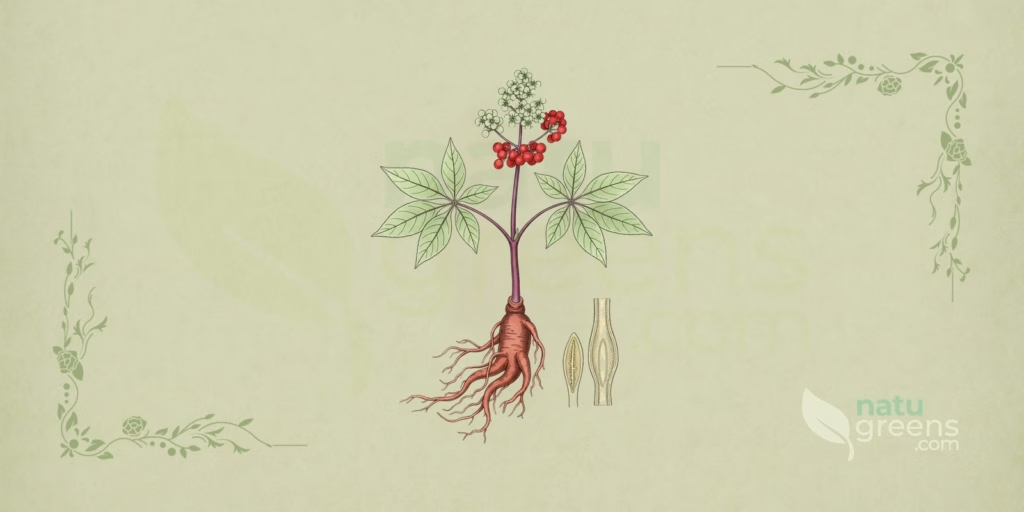
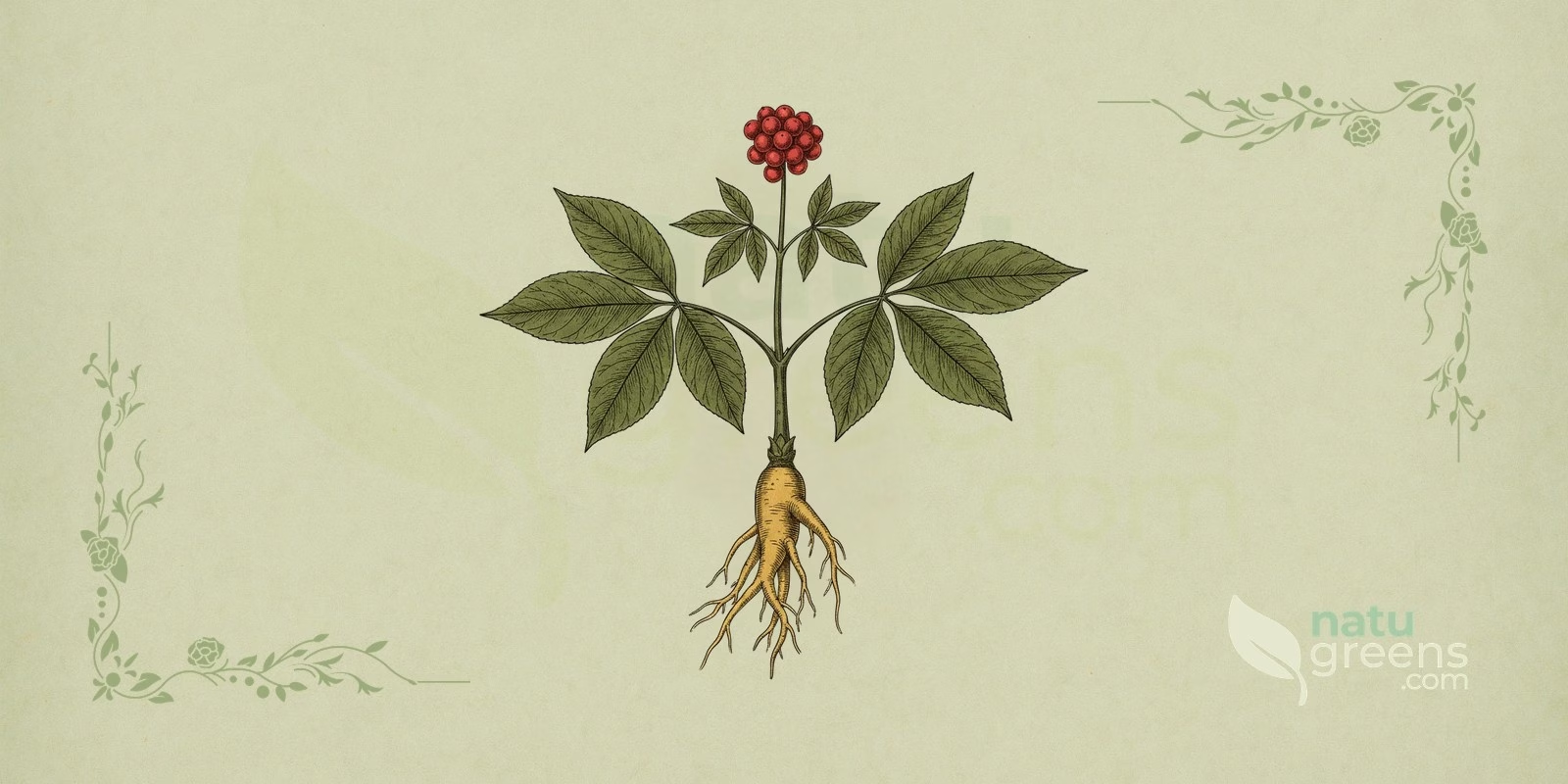
Panax quinquefolius L. / American Ginseng, commonly known as American ginseng, is a perennial herbaceous species of the Araliaceae family native to eastern North America, where it grows in the understory of deciduous hardwood forests and favors deeply shaded sites. Valued for centuries for the adaptogenic properties attributed to it by tradition, American ginseng is recognized by its aromatic, fleshy root, which resembles a small parsnip and often branches into shapes reminiscent of the human body.
Several Indigenous peoples of North America used the root in their traditional systems, with records of use for headaches, cramps, mental fatigue and fertility concerns. The root's arrival in China, where it gained great prestige, drove trade and later large-scale cultivation, and modern research has turned to its ginsenosides as the main bioactive compounds, although much of the evidence still comes from laboratory studies or small clinical trials, often carried out with specific extracts.
Popular and International Names of American Ginseng
- English: American ginseng, five-fingers, man-root, red berry, sang, shangs, wild ginseng.
- French: ginseng à cinq folioles, ginseng américain.
- German: Amerikanischer Ginseng, Fünfblatt-Ginseng.
- Italian: ginseng a cinque foglie, ginseng americano.
- Portuguese: ginseng americano, ginseng-americano, ginseng-de-cinco-folhas.
- Spanish: cinco dedos, ginseng americano, raíz de hombre.
Botanical Synonyms of Panax quinquefolius
- Aureliana canadensis Lafitau ex Catesby
- Panax americanus Raf.
- Panax quinquefolium L.
Botanical Family: Araliaceae
The Araliaceae family brings together herbs, shrubs and trees found mainly in tropical and subtropical regions, and it is known for species of medicinal and ornamental importance, such as the ginsengs of the genus Panax and the ivies of the genus Hedera. Its plants usually have compound leaves and small flowers grouped in umbels, a trait that helps with identification in the field.
As a member of this family, Panax quinquefolius shares features that set it apart from other understory plants, including palmate leaves and the presence of bioactive compounds, above all ginsenosides. The family is noted for its chemical diversity and includes species with adaptogenic, anti-inflammatory and antioxidant activities investigated by modern herbal medicine, almost always in experimental studies.
Parts of American Ginseng Used
- Fruits
- Leaves
- Root
- Stems
Ethnobotanical and Traditional Uses
- Cramp relief (traditional record)
- Digestive complaints (recorded among the Ojibwe, in the Midewiwin society)
- Fertility support (traditional record)
- General tonic (recorded among the Menominee)
- Headache relief (traditional record)
- Mental stimulation (traditional record)
- Panacea (recorded among the Iroquois)
- Use on wounds (ethnographic record among the Seminole)
Ethnobotanical records show that the root held a prominent place in the medicine of several peoples of eastern North America, who used it as a general tonic, as a remedy for headaches and cramps and, in some groups, as a kind of cure-all, which echoes the very name of the genus. These uses reflect traditional knowledge passed down through generations and do not amount to clinical proof, so they serve as a historical starting point for research rather than as a treatment recommendation.
In China, where the root began to be exported in large volumes from the 18th century onward, American ginseng was incorporated into traditional herbal medicine under the name xiyangshen and classified as a herb with a cooling nature. This reading sets it apart from Panax ginseng, Asian ginseng, which the same tradition considers warming, and explains why the two roots receive different traditional indications despite their botanical kinship.
Therapeutic Properties of American Ginseng
- Adaptogen (traditional use to help the body cope with stress, with limited clinical evidence)
- Antibacterial (activity observed in laboratory studies)
- Anti-inflammatory (effect observed in experimental studies)
- Antioxidant (activity observed in laboratory studies)
- Antiproliferative (activity observed in laboratory studies, without clinical confirmation)
- Antiviral (activity observed in laboratory studies)
- Cardioprotective (investigated in preliminary studies)
- Hypocholesterolemic (investigated in preliminary studies, with inconsistent results)
- Hypoglycemic (effect observed in small clinical trials, under study with specific extracts)
- Immunomodulatory (under study, with a specific extract)
- Neuroprotective (investigated in experimental studies)
Detailed Phytochemical Profile of American Ginseng
- Flavonoids
- Ginsenosides (dammarane type)
- Phenolic acids
- Saponins
- Terpenes
Ginsenosides, dammarane-type triterpene saponins, are the most studied compounds in the root, and their relative proportions vary with species, geographic origin and cultivation, which makes the profile of American ginseng different from that of Asian ginseng and Panax notoginseng. This chemical variation is one of the reasons why results obtained with one extract cannot automatically be transferred to another product or to another species of the genus.
Preparation and Administration Forms of American Ginseng
- Capsules
- Extracts
- Powder
- Tea/Infusion
- Tinctures
Synergy with Other Medicinal Plants
For Energy and Vitality
In traditional herbal practice, American ginseng is often paired with Rhodiola rosea and Siberian ginseng (Eleutherococcus senticosus), a combination traditionally used for physical and mental stamina during periods of fatigue and stress. The rationale is to add the ginsenosides of American ginseng to the rosavins of rhodiola and the eleutherosides of Siberian ginseng, although no clinical trials confirm a combined effect greater than that of each plant on its own.
For Cognitive Support
The combination of American ginseng with Ginkgo biloba and Bacopa monnieri appears in formulas traditionally used for memory and concentration, in which ginkgo is associated with cerebral circulation and bacopa with learning and information retention. This is a record of combined use, with no synergy demonstrated in clinical studies, and ginkgo can also interfere with blood clotting, which calls for extra care in people taking anticoagulants.
For Immune Support
In formulas from the naturopathic tradition, American ginseng is combined with echinacea (Echinacea purpurea) and astragalus (Astragalus membranaceus) with the aim of supporting the immune response at times of greater exposure to infections. The polysaccharides of echinacea and the astragalosides of astragalus are being investigated in the laboratory alongside ginsenosides, but the combination remains a traditional record, with no clinical data on the blend as a whole.
Recipes and Usage Protocols of American Ginseng
American Ginseng Extract Capsules
Ingredients: standardized American ginseng extract capsules, of identified origin and made from cultivated root.
Preparation: follow the manufacturer's instructions on quantity and frequency, preferably with meals, since this form is traditionally used by people who want a consistent dose throughout the day. Because concentration varies widely between products, consult a healthcare professional to determine the right dose for your situation, especially if you take any long-term medication.
Traditional American Ginseng Root Infusion
Ingredients: 1 teaspoon of sliced or powdered dried American ginseng root, 200 ml of boiling water.
Preparation: add the root to the boiling water, cover and let it steep for 10 to 15 minutes before straining. The infusion is traditionally used in times of stress and has a mild, slightly sweet taste, but anyone prone to insomnia should avoid drinking it at night, because ginseng can disturb sleep. If you wish to sweeten it, choose a little honey or stevia rather than sugar.
American Ginseng Powder in Smoothies
Ingredients: a small amount of American ginseng root powder, 250 ml of fruit or vegetable smoothie.
Preparation: add the powder to the smoothie and blend well until fully dissolved to avoid lumps. This form is traditionally used by people who prefer to include the root in their diet, usually in the morning or early afternoon, and the appropriate amount should be guided by a healthcare professional.
American Ginseng Tincture
Ingredients: American ginseng tincture of identified origin.
Preparation: dilute the tincture in a little water at the time of use. As a concentrated form traditionally used during periods of greater vulnerability and stress, its dose and duration should be set with a healthcare professional, since the ginsenoside content varies from one product to another.
The preparations above follow traditional records and do not replace professional guidance. Before any internal use, check the contraindications and interactions described in this article.
Associated Therapies
Acupuncture
In Traditional Chinese Medicine (TCM), American ginseng may be used alongside acupuncture with the traditional aim of balancing vital energy (Qi) and supporting the internal organs. In this approach, stimulation of specific points is seen as complementary to the herb in cases of fatigue, stress and energy deficiency, always within a traditional framework that seeks to restore the body's harmony and that does not replace medical assessment.
Chinese Herbal Medicine
Known as xiyangshen (西洋参), American ginseng is a traditional herb of Chinese herbal medicine, valued for nourishing Yin, clearing heat and generating fluids, and it is therefore traditionally indicated in Yin deficiency patterns that include fatigue, dry mouth, thirst and a sensation of internal heat. It is usually included in compound formulas adjusted by the practitioner to each person's characteristics, and its cooling nature is precisely what separates it from Asian ginseng in traditional practice.
Naturopathy
In naturopathy, American ginseng is used as an adaptogen with the aim of supporting the stress response and immunity, and it may be recommended as a tea, tincture or capsule. Its use is usually part of a broader plan that includes adjustments to diet, lifestyle and other natural practices, and it is often considered for people with persistent fatigue, stress and low immunity, always as a complement to medical follow-up.
Contraindications and Side Effects of American Ginseng
General Contraindications
American ginseng should be avoided by people with a known allergy to plants of the Araliaceae family, and there are no safety data for pregnancy, breastfeeding or children, which is why its use is not recommended in these groups. A single pediatric trial with a specific standardized extract does not support a general recommendation. People with autoimmune diseases should use it with caution and under guidance, since ginseng can modulate the immune system.
Drug Interactions
A randomized clinical trial showed a reduction in INR (which affects blood clotting) in patients taking warfarin, so combining the two without medical supervision is contraindicated. The hypoglycemic effect has been demonstrated in trials, which calls for caution with insulin and oral antidiabetic drugs because of the risk of hypoglycemia. There are case reports of mania and insomnia with the use of Panax combined with MAO inhibitors (e.g. phenelzine), so combining it with antidepressants without professional guidance should be avoided. People taking immunosuppressants should also avoid American ginseng, which may antagonize these drugs, and any combination with long-term medication should be discussed beforehand with a healthcare professional.
Potential Side Effects
American ginseng can cause insomnia, headache and stomach discomfort, and some users also report nervousness, diarrhea, dizziness and changes in blood pressure or heart rate. High doses may cause agitation or irritability, and in the event of any adverse effect, use should be stopped and a healthcare professional consulted.
Clinical Evidence, Quality and Sourcing
The most cited studies on cold prevention and glycemic control use a specific patented extract funded by the manufacturer, so these results should be understood as under study, with a specific extract, and not generalized to the plant or to any commercial product. Since adulteration and commercial substitution among American ginseng, Panax ginseng and Panax notoginseng are common, and these species have distinct ginsenoside profiles and traditional uses, it is advisable to choose only products with botanical identification on the label.
The species has been listed in CITES Appendix II since 1975 for roots of wild origin, and the recommendation is to use only cultivated material, such as that grown in Wisconsin, Ontario or China, and never wild root without documented legal provenance.
Historical Notes and Interesting Facts
Tradition regards American ginseng as an adaptogen, a term for substances credited with the ability to help the body adapt to physical and mental stress. Wild root has always fetched high prices on the international market, which fueled illegal harvesting and concern for the conservation of the species and led to its protection under CITES, while growing demand spurred large-scale cultivation, mainly in China and in North American regions such as Wisconsin and Ontario.
The genus name, Panax, comes from Greek and combines the ideas of "all" and "remedy", the same root as panacea, reflecting the old belief in its many virtues. The epithet quinquefolius means "five leaves" and refers to the typical number of leaflets on each palmate leaf, a distinctive feature of the plant, which also produces bright red fruits that have been investigated in studies for antioxidant activity, although the root remains the most widely used part.
Despite the similar common name, American ginseng should not be confused with Asian ginseng (Panax ginseng) or with Panax notoginseng: they are different species, with distinct ginsenoside profiles and traditional uses, and in TCM the American root is classified as cooling, while the Asian one is considered warming.
Frequently Asked Questions about American Ginseng
What Is American Ginseng?
It is the root of Panax quinquefolius, a perennial herbaceous plant of the Araliaceae family native to the deciduous forests of eastern North America. Tradition considers it an adaptogen, and in Chinese herbal medicine it is known as xiyangshen and classified as a herb with a cooling nature.
What Is the Difference Between American Ginseng and Asian Ginseng?
Panax quinquefolius and Panax ginseng are different species, with distinct ginsenoside profiles and traditional uses. In TCM the American root is classified as cooling and the Asian one as warming, and since commercial substitution between them is common, it is worth choosing products with botanical identification.
How Is American Ginseng Tea Prepared?
The traditional preparation uses 1 teaspoon of sliced or powdered dried root in 200 ml of boiling water, steeped for 10 to 15 minutes before straining. Anyone prone to insomnia should avoid the drink at night, and the frequency of use should be guided by a healthcare professional.
Does American Ginseng Help Prevent Colds or Control Blood Sugar?
The most cited studies on cold prevention and glycemic control use a specific patented extract funded by the manufacturer. These findings are under study, with a specific extract, and cannot be generalized to the plant or to any commercial product.
Who Should Not Use American Ginseng?
There are no safety data for pregnancy, breastfeeding or children, and people allergic to plants of the Araliaceae family should avoid it. Combined use with warfarin is contraindicated without medical supervision, since a randomized clinical trial showed a reduction in INR, and caution is also needed with insulin, oral antidiabetic drugs, antidepressants, especially MAO inhibitors, and immunosuppressants.
Why Choose Cultivated American Ginseng?
The species has been listed in CITES Appendix II since 1975 for roots of wild origin because of overharvesting. For this reason, only cultivated material is recommended, such as that from Wisconsin, Ontario or China, and never wild root without documented legal provenance.
Notice: this content is for informational purposes and does not replace professional medical advice. Consult a physician or herbal practitioner before using medicinal plants, especially during pregnancy, breastfeeding, or alongside medication.
How to cite this article
NATUGREENS. American Ginseng (Panax quinquefolius): Properties and Benefits. Natugreens, 8 Nov. 2026. Disponível em: https://natugreens.com/panax-quinquefolius-american-ginseng/. Accessed: Nov. 8, 2026.
Natugreens. (2026). American Ginseng (Panax quinquefolius): Properties and Benefits. Natugreens. https://natugreens.com/panax-quinquefolius-american-ginseng/
References and Scientific Studies
- PMC2012 High KP, et al. A randomized, controlled trial of Panax quinquefolius extract (CVT-E002) to reduce respiratory infection in patients with chronic lymphocytic leukemia. J Support Oncol. 2012.
- PMC2019 Szczuka D, et al. American Ginseng (Panax quinquefolium L.) as a Source of Bioactive Phytochemicals with Pro-Health Properties. Nutrients. 2019.
- PMC2019 Vuksan V, et al. Efficacy and safety of American ginseng (Panax quinquefolius L.) extract on glycemic control and cardiovascular risk factors in individuals with type 2 diabetes: a double-blind, randomized, cross-over clinical trial. Eur J Nutr. 2019.
- PMC2004 Yuan CS, et al. Brief communication: American ginseng reduces warfarin's effect in healthy patients: a randomized, controlled Trial. Ann Intern Med. 2004.