Tinospora cordifolia (Willd.) Miers / Guduchi, also known as giloy or heart-leaved moonseed, is a herbaceous climbing vine of the Menispermaceae family, native to South and Southeast Asia. Widely used in Ayurvedic medicine, this plant is valued for its immunomodulatory, anti-inflammatory, and antioxidant properties, being a pillar of traditional Indian herbal medicine.
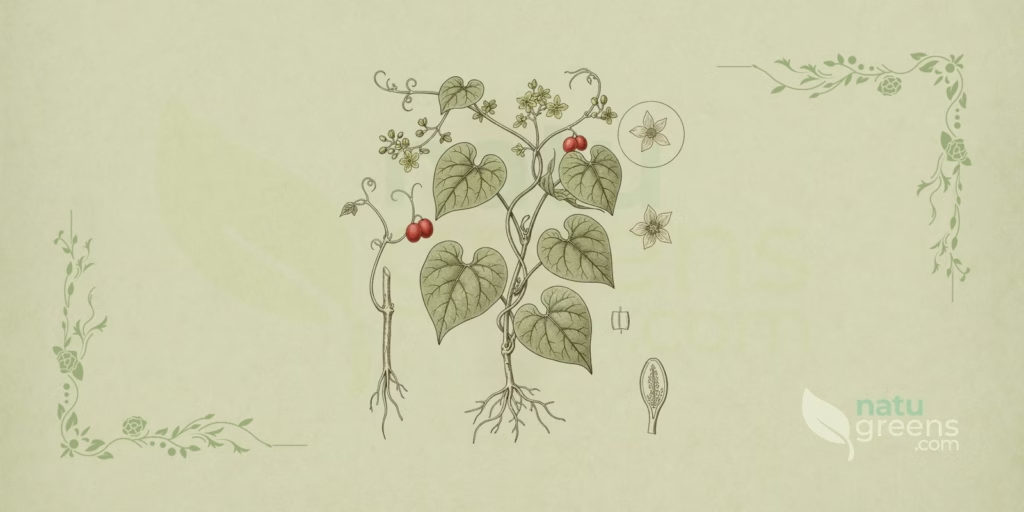
In the Ayurvedic tradition, Tinospora cordifolia is frequently referred to as “amrita”, meaning “nectar of immortality”, for its ability to promote longevity and vitality. Modern scientific research has been validating many of its traditional uses, highlighting its rich phytochemical composition. This plant has been the subject of numerous studies exploring its anti-inflammatory, antioxidant, antidiabetic, and hepatoprotective effects, consolidating its role as one of the most important medicinal plants in global phytotherapy.
Popular and International Names of Guduchi
- English: guduchi, giloy, heart-leaved moonseed, Indian tinospora, amrita.
- Spanish: guduchi, giloy, semilla de luna con hojas de corazón.
- Portuguese: guduchi, giloy, amrita.
- French: guduchi, giloy.
- Italian: guduchi, giloy.
- German: Guduchi, Giloy.
- Sanskrit (Ayurveda): guduchi, amrita.
- Hindi: giloy.
Botanical Synonyms of Guduchi
Tinospora cordifolia (Willd.) Miers has several botanical synonyms found in the literature. Among the most common are Menispermum cordifolium Willd. and Cocculus cordifolius (Willd.) DC. These historical denominations reflect different taxonomic classifications over time; however, Tinospora cordifolia is the currently accepted and widely recognized name in modern botany and pharmacology. Another less common synonym is Tinospora glabra (N.Burman) Merr.
Botanical Family: Menispermaceae
Tinospora cordifolia belongs to the Menispermaceae family, a group of dicotyledonous plants that includes several species with medicinal properties. This family is characterized by woody or herbaceous climbers with alternate leaves and unisexual flowers. The Menispermaceae are distributed mainly in tropical and subtropical regions, and many of their species are known for the presence of alkaloids and other bioactive compounds.
The Menispermaceae family is recognized for its chemical diversity, which contributes to its applications in traditional medicine. Tinospora cordifolia, in particular, stands out for its wealth of phytochemicals that give it a broad spectrum of pharmacological activities. Understanding its botanical classification is essential for the in-depth study of its properties and for its correct identification.
Parts of Guduchi Used
- Leaves
- Roots
- Stem (the most common and most studied)
The parts of Tinospora cordifolia most frequently used for medicinal purposes include the stems, leaves, and roots. The stem, in particular, is the most valued part because of its concentration of bioactive compounds.
Ethnobotanical and Traditional Uses of Guduchi
- Anemia
- Chronic diarrhea and dysentery
- Diabetes (hypoglycemic)
- Digestive disorders and dyspepsia
- Fever (antipyretic)
- General tonic and rejuvenator (rasayana)
- Gout
- Immunity enhancement (immunomodulator)
- Jaundice (historical record; today jaundice is a reason to stop the plant at once and seek medical assessment)
- Joint pain and rheumatism (ethnobotanical record; rheumatoid arthritis is an autoimmune disease and guduchi is contraindicated in such cases, as noted in the contraindications section)
- Skin complaints
- Stress and anxiety (adaptogenic)
Therapeutic Properties of Guduchi
- Adaptogenic (helps the body adapt to stress)
- Antiarthritic (fights arthritis)
- Antibacterial (fights bacteria); traditional use, without established clinical efficacy
- Anticancer (investigated in the laboratory; no efficacy demonstrated in people); traditional use, without established clinical efficacy
- Antidiabetic (helps control blood sugar); traditional use, without established clinical efficacy
- Anti-inflammatory (reduces inflammation)
- Antioxidant (fights free radicals)
- Antipyretic (reduces fever)
- Antispasmodic (relieves spasms)
- Antiviral (fights viruses); traditional use, without established clinical efficacy
- Cardioprotective (protects the heart); traditional use, without established clinical efficacy
- Hepatoprotective (protects the liver); traditional use, without established clinical efficacy
- Immunomodulatory (modulates the immune system); traditional use, without established clinical efficacy
- Neuroprotective (protects the nervous system); traditional use, without established clinical efficacy
Detailed Phytochemical Profile of Guduchi
- Alkaloids: berberine, jatrorrhizine, magnoflorine, palmatine, tinosporine.
- Diterpenoids: cordifoliosides A-E, furanoditerpenoids, tinosporide, tinosporone.
- Glycosides: syringin, tinocordiside.
- Steroids: beta-sitosterol, ecdysterone.
- Other compounds: phenolic acids, aliphatic compounds, flavonoids, lignans, polysaccharides, sesquiterpenoids.
These bioactive components are responsible for the wide range of pharmacological activities attributed to the plant, giving it its medicinal and therapeutic properties.
Preparation and Administration Forms of Guduchi
- Decoction (stem tea)
- Fresh stem juice
- Powder (from the dried stem)
- Standardized extracts (capsules, tablets)
- Tinctures
Synergy with Other Medicinal Plants
Immune Support
Tinospora cordifolia, known as guduchi, shows remarkable synergy with other plants for strengthening the immune system. Combining it with ashwagandha (Withania somnifera) and tulsi (Ocimum sanctum) can enhance its adaptogenic and immunomodulatory effects. Guduchi, with its polysaccharides and alkaloids, works together with ashwagandha’s withanolides and tulsi’s eugenols, promoting a balanced, robust immune response, essential for infection resistance and general well-being.
Liver Health
Combining guduchi with amla (Phyllanthus emblica) and kalmegh (Andrographis paniculata) is effective for liver protection and regeneration. This synergy is particularly useful in cases of liver toxicity or for maintaining liver health. Guduchi offers hepatoprotective and antioxidant properties, while amla and kalmegh contribute compounds that detoxify the liver and promote biliary function, resulting in a protective, restorative action on the organ.
Blood Sugar Control
The association of guduchi with bitter melon (Momordica charantia) and Indian kino (Pterocarpus marsupium) can be beneficial for controlling blood glucose levels. This combination is valued in Ayurvedic medicine for diabetes management. The alkaloids and glycosides of Tinospora cordifolia work together with bitter melon’s charantin and Indian kino’s pterostilbenes, promoting insulin sensitivity and reducing blood sugar, offering natural support for metabolic health.
Recipes and Usage Protocols of Guduchi
Decoction for Immunity
Ingredients: a 10-15 cm piece of fresh Tinospora cordifolia (guduchi) stem, 2 cups of water.
Preparation: Wash the stem well and cut it into small pieces. Lightly crush the pieces to release the juices. Place the crushed stem in a pan with the water and bring to the boil. Reduce the heat and simmer until the water is reduced by half (approximately 1 cup). Strain and drink warm. Drink 1 cup a day to strengthen the immune system and as a general tonic, in cycles of up to four to six weeks with a break between them. Stop and see a doctor at the first sign of dark urine, yellowing eyes, persistent nausea, or unusual fatigue. This decoction is traditionally used for fevers and to increase the body’s resistance.
Guduchi Powder for Diabetes
Ingredients: 1 teaspoon (3-5 g) of dried guduchi powder.
Preparation: Mix the guduchi powder only with warm water, never with honey, and take once a day, before meals. This form of administration is traditionally used to help manage blood sugar levels in individuals with type 2 diabetes. It is important to monitor glucose levels regularly and consult a health professional to adjust the dosage and avoid interactions with antidiabetic medications. Keep use to cycles of up to four to six weeks with a break between them, and stop at the first sign of dark urine, yellowing eyes, persistent nausea, or unusual fatigue.
Guduchi Powder for Digestive Support
Ingredients: 1 teaspoon of Tinospora cordifolia (guduchi) powder, 1 cup of warm water or a spoonful of honey.
Preparation: Mix the guduchi powder into the warm water or with a spoonful of honey until smooth. Take this mixture once or twice a day, preferably before meals. This protocol benefits digestion, relieves acidity, and supports gastrointestinal health. Guduchi powder is known for its bitter properties that stimulate appetite and digestive function. Use the preparation in cycles of up to four to six weeks with a break between them, and stop at the first sign of dark urine, yellowing eyes, persistent nausea, or unusual fatigue.
Fresh Juice for Fever
Ingredients: a 20-30 cm piece of fresh guduchi stem, 50 ml of water.
Preparation: Wash the fresh stem well and cut it into small pieces. Blend the pieces with the water until smooth. Strain the paste through a fine cloth to extract the juice. Take 15-20 ml of the fresh juice, once a day, preferably in the morning. This juice is known for its antipyretic properties and can help reduce fever and inflammation.
Guduchi Tincture for Adaptogenic Stress Support
Ingredients: 200 g of dried, chopped Tinospora cordifolia (guduchi) stem, 1 liter of 70% alcohol.
Preparation: Place the chopped stem in a dark glass jar and cover with the alcohol. Close tightly and let macerate for 2 to 4 weeks in a cool, dark place, shaking daily. After maceration, strain the mixture through a fine cloth or coffee filter and store the resulting tincture in a dark glass bottle. Take 20-30 drops diluted in water, two to three times a day, to help the body adapt to stress and promote overall vitality. Work in cycles of up to four to six weeks with a break between them, and stop at the first sign of dark urine, yellowing eyes, persistent nausea, or unusual fatigue.
Associated Therapies
Ayurveda
In Ayurvedic medicine, Tinospora cordifolia, or guduchi, is revered as one of the most important herbs, classified as a rasayana, meaning it promotes longevity and rejuvenates the body. It is widely used to balance the three doshas (Vata, Pitta, and Kapha) and is considered a bitter tonic that purifies the blood and liver. Guduchi is prescribed for a wide range of conditions, including chronic fevers, diabetes, autoimmune disease, and digestive disorders, thanks to its adaptogenic, immunomodulatory, and anti-inflammatory properties. Its application in Ayurveda is holistic, aiming to restore balance and integral health.
Modern Phytotherapy
Modern phytotherapy has shown growing interest in Tinospora cordifolia, with studies investigating its pharmacological properties and potential clinical applications. Standardized guduchi extracts are used as supplements for immune support, blood sugar control, and as anti-inflammatory agents. Research focuses on identifying and isolating its bioactive compounds, such as alkaloids and glycosides, to develop more targeted therapies. Modern phytotherapy integrates traditional knowledge with scientific evidence, positioning guduchi as a promising plant for various health conditions.
Contraindications and Side Effects of Guduchi
General Contraindications
Tinospora cordifolia, or guduchi, is generally considered safe when used at recommended doses. The most relevant exception is the liver: a multicenter Indian study cited in the references described liver injury associated with Giloy itself, including autoimmune-hepatitis-like presentations; people with liver disease should avoid the plant, and symptoms such as jaundice require immediate discontinuation and medical evaluation. In addition, it should be avoided by individuals with known hypersensitivity to any of its components. Pregnant and breastfeeding women should consult a health professional before using guduchi, given the lack of conclusive safety studies in these groups. People with autoimmune diseases, such as lupus or rheumatoid arthritis, should avoid it, as the immunostimulant properties of guduchi can aggravate the condition.
Common Side Effects
Although rare, some side effects can occur with the use of Tinospora cordifolia. The most common include mild gastrointestinal complaints, such as nausea, vomiting, diarrhea, or constipation. In some cases, a mild skin rash can occur. These effects are usually transient and disappear when use is stopped or the dose adjusted. Importantly, the use of guduchi has been associated with cases of liver injury, including autoimmune hepatitis-like presentations, even with authentic products, as reported in recent studies in India. People with pre-existing liver disease should avoid the plant.
Drug Interactions
Tinospora cordifolia can interact with certain medications. Because of its hypoglycemic properties, it can potentiate the effect of diabetes medications, leading to hypoglycemia. Individuals taking immunosuppressants should use guduchi with caution, since the plant can stimulate the immune system, which can be counterproductive. Because the plant has been linked to cases of liver injury, taking it alongside medicines that carry hepatic risk, such as high-dose paracetamol, statins, antitubercular drugs, and methotrexate, calls for medical supervision and periodic liver enzyme testing. Consulting a health professional before combining guduchi with any medication is crucial.
Interesting Facts about Guduchi
The Legend of Amrita: The Nectar of Immortality
In Hindu mythology, guduchi is associated with “amrita”, the nectar of immortality. Legend has it that during the Samudra manthan (the churning of the ocean of milk by gods and demons to obtain the nectar), a few drops of amrita fell to Earth, giving rise to Tinospora cordifolia. This mythical belief underscores the deep reverence for the plant in Indian culture and its reputation as a rejuvenator and promoter of health. The plant is frequently grown in home gardens in India, considered a symbol of vitality and well-being.
Growth on Other Trees
An interesting curiosity about Tinospora cordifolia is its ability to grow on other trees, such as mango or neem. Guduchi growing on neem trees (Azadirachta indica) is believed to absorb some of the neem’s medicinal properties, making it even more potent. This phenomenon is known as “neem giloy” and is highly valued in Ayurvedic medicine, considered superior in therapeutic efficacy.
An Adaptogenic Plant
Guduchi is classified as an adaptogen, meaning it helps the body adapt to physical, chemical, and biological stress, restoring homeostatic balance. This unique property allows the plant to act non-specifically, increasing the body’s overall resistance to various stress factors. Its ability to modulate the stress response makes it valuable for maintaining health and well-being in the modern world.
Modern Scientific Studies
In recent decades, Tinospora cordifolia has been the subject of intense scientific research, which has validated many of its traditional uses. Phytochemical studies have identified a wide range of bioactive compounds, including alkaloids, diterpenoids, and glycosides, responsible for its therapeutic properties. Research has focused on its immunomodulatory, anti-inflammatory, antioxidant, and antidiabetic effects, with promising results supporting its application in several areas of health.
Guduchi and Ayurvedic Medicine
Guduchi is one of the most important and versatile herbs in Ayurvedic medicine, mentioned in classic texts such as the Charaka Samhita and the Sushruta Samhita. It is classified as a rasayana, a category of herbs that promote health, longevity, and disease resistance. Its use goes back thousands of years, with records describing its application for a wide range of conditions, from chronic fevers to metabolic disorders.
Frequently Asked Questions about Guduchi
Can Guduchi Be Consumed Every Day?
Yes, guduchi can be consumed daily in moderate doses, usually as a decoction or powder, for immune support and general well-being. However, it is always advisable to consult a health professional or an Ayurveda practitioner to determine the appropriate dosage and duration, especially for specific health conditions or prolonged use.
Does Guduchi Help Control Blood Sugar?
Yes, Tinospora cordifolia has hypoglycemic properties and is traditionally used in Ayurveda to help manage blood sugar levels. Scientific studies have shown that it can improve insulin sensitivity and lower blood glucose. However, it should not replace prescribed diabetes medication and should be used with medical follow-up to avoid hypoglycemia.
Can Children Consume Guduchi?
The use of guduchi in children calls for caution and the supervision of a qualified health professional. There are no safety data supporting the use of the plant in children, and the liver injury signal described in adults calls for even greater care. Fever in a child needs medical assessment, never self-medication with the plant.
Can Guduchi Cause Liver Injury?
Although Tinospora cordifolia is traditionally valued for its hepatoprotective properties, there have been reports of liver injury associated with its use, even with authentic products at usual doses; adulteration and excessive use raise the risk further. It is crucial to buy guduchi from reliable sources and follow the recommended dosages. If symptoms of liver dysfunction occur, such as jaundice or extreme fatigue, use should be stopped and a doctor consulted immediately.
What Is the Best Way to Consume Guduchi?
The best way to consume guduchi depends on the condition being treated and individual preference. The most common forms include decoctions (teas), powders, tinctures, and standardized extracts in capsules. The decoction is ideal for daily use and immune support, while extracts can offer more concentrated dosing for specific conditions. An Ayurveda professional can recommend the most suitable form and dosage for each case.
What Is Guduchi Tea?
Guduchi tea is an infusion or decoction prepared from the stem of the plant Tinospora cordifolia. It is a beverage traditionally consumed in Ayurvedic medicine for its medicinal properties, such as immune support, fever reduction, and blood sugar regulation. It can be made with fresh or dried stem and is valued for its bitter flavor and its benefits for general health.
What Are the Main Benefits of Guduchi Tea?
The main benefits of guduchi tea include strengthening the immune system, reducing inflammation, protecting the liver, regulating blood sugar levels, and lowering fever. It is also known for its adaptogenic properties, which help the body cope with stress. In addition, it can aid digestion and improve skin health, making it a versatile tonic for well-being.
How Do I Prepare Guduchi Tea?
To prepare guduchi tea, use about a 10-15 cm piece of fresh stem, cut into pieces and lightly crushed, or 1 teaspoon of dried stem powder. Boil the fresh stem in 500 ml of water until reduced by half, strain, and drink. If using powder, add it to 250 ml of boiling water and simmer for 5-7 minutes. The tea can be drunk warm, once or twice a day, depending on the condition being treated and the guidance of a health professional.
Are There Contraindications for Guduchi Tea?
Yes, there are contraindications for guduchi tea. It is not recommended for pregnant or breastfeeding women, individuals with autoimmune diseases (such as lupus or rheumatoid arthritis), and people with hypersensitivity to the plant. It should be used with caution by diabetics because of its hypoglycemic effect and by those taking immunosuppressants or medications that affect the liver. Always consult a health professional before starting consumption.
Does Guduchi Tea Have Side Effects?
Side effects of guduchi tea are generally rare and mild. They can include gastrointestinal complaints such as nausea, vomiting, or diarrhea, especially at high doses. In rare cases, allergic skin reactions can occur. Watch for any adverse reaction and discontinue use if they occur. A health professional can help determine the appropriate dosage and minimize the risk of unwanted effects.
Notice: this content is for informational purposes and does not replace professional medical advice. Consult a physician or herbal practitioner before using medicinal plants, especially during pregnancy, breastfeeding, or alongside medication.
References and Scientific Studies
View All 8 Cited References
Peer-Reviewed Scientific Studies (7)
- PMC2020 Kumar, P., et al. (2020). Tinospora cordifolia (Giloy): Phytochemistry, ethnopharmacology, clinical application and conservation strategies. Current Pharmaceutical Biotechnology.
- PMC2019 Sharma, P., et al. (2019). The chemical constituents and diverse pharmacological importance of Tinospora cordifolia. Heliyon.
- PMC2021 Nagral, A., et al. (2021). Herbal Immune Booster-Induced Liver Injury in the COVID-19 Pandemic – A Case Series. Journal of Clinical and Experimental Hepatology.
- PMC2022 Kulkarni, A. V., et al. (2022). Tinospora cordifolia (Giloy)-induced liver injury during the COVID-19 pandemic – Multicenter nationwide study from India. Hepatology Communications.
- PMC2012 Saha, S., & Ghosh, S. (2012). Tinospora cordifolia: One plant, many roles. Ancient Science of Life.
- PMC2024 Philips, C. A., & Theruvath, A. H. (2024). A comprehensive review on the hepatotoxicity of herbs used in the Indian (Ayush) systems of alternative medicine. Medicine (Baltimore).
- PMC2024 Gupta, A., et al. (2024). Tinospora cordifolia (Giloy): An insight on the multifarious therapeutic potential. Heliyon.
Supplementary Readings (1)
- 2004 Sinha, K., et al. (2004). Tinospora cordifolia (Guduchi), a reservoir plant for therapeutic applications: A review. Indian Journal of Traditional Knowledge.