Centella asiatica (L.) Urban / ツボクサは、ゴツコラ、アジアツボクサ、あるいはブラーミー(ただしこの呼称は本来Bacopa monnieriを指すことが多い)として知られる、セリ科の多年生草本植物である。カール・リンネによって記載され、のちにイグナーツ・ウルバンによって再分類されたツボクサは、インド、スリランカ、中国、インドネシア、マレーシアを含む東南アジアの湿潤な地域を原産地とし、南アフリカやマダガスカルの一部にも分布を広げている。Centella asiaticaは、脳の強壮剤として、また創傷治癒のために、アーユルヴェーダ医学と中国伝統医学において何千年にもわたって重用されてきた。
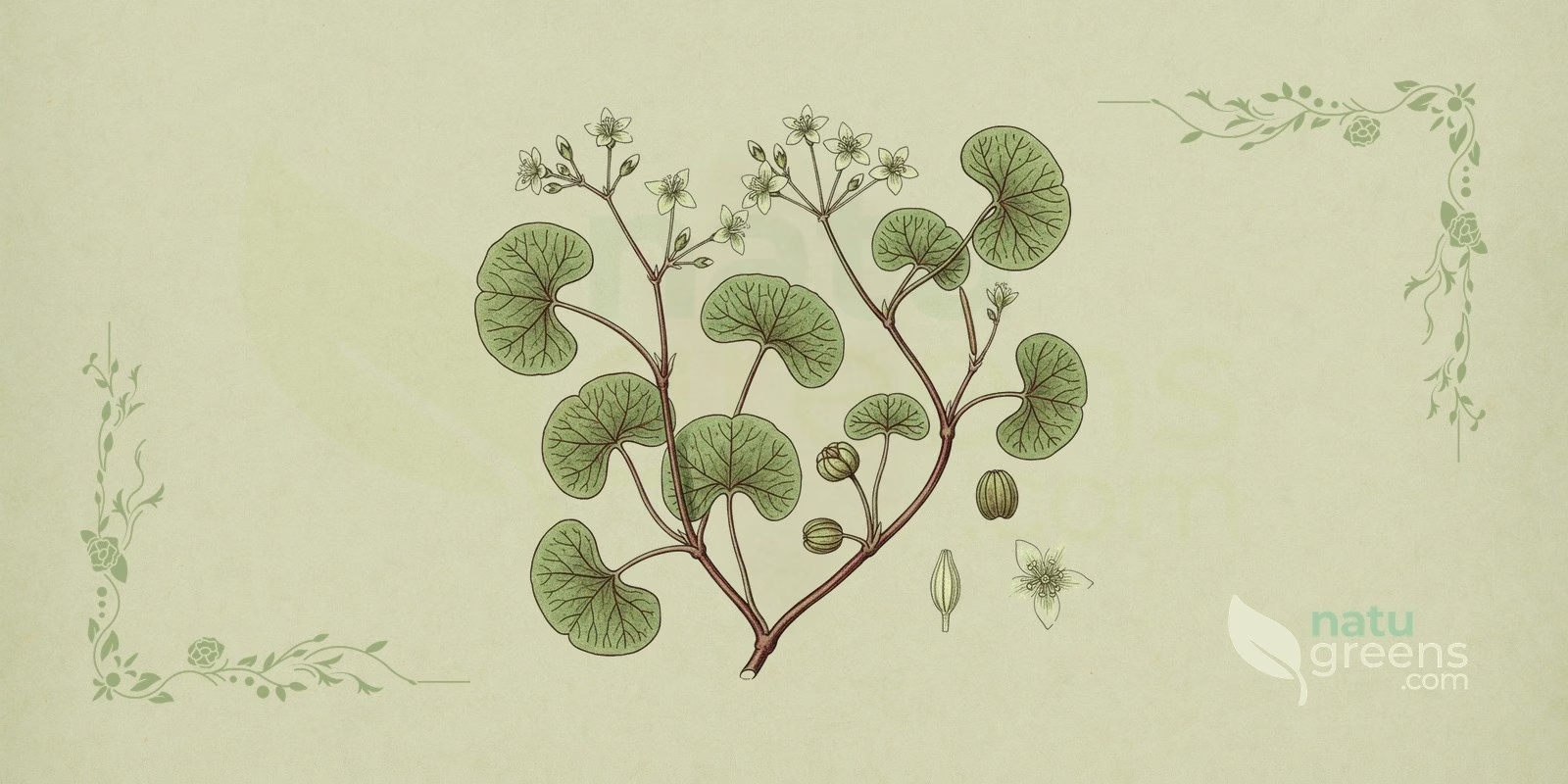
ツボクサは地を這うように成長し、土に根を下ろす匍匐枝を伸ばす。葉は黄緑色で薄く互生し、葉柄が長く、腎形、円形または長楕円形で、7本の葉脈が入っている。白、ピンクまたは紫の小さな花をつける。Centella asiaticaの重要性は、欧州薬局方、ドイツ保健省コミッションE、世界保健機関(WHO)のモノグラフによって認められており、創傷治癒と記憶力向上への効果が強調されている。現代の科学研究は、この薬用植物が持つ広大な可能性を検証し、探求し続けている。
一般名と国際名
- 日本語: ツボクサ、ゴツコラ。
- ポルトガル語: brahmi(ブラジル)、centelha asiática、gotu kola、hidrocotile、pata-de-cavalo。
- 英語: asiatic pennywort、gotu kola、indian pennywort、indian water navelwort、tiger herb、wild violet。
- スペイン語: brahmi、centella asiática、gotu kola、hierba de tigre。
- フランス語: centella asiatica、gotu kola、herbe du tigre。
- イタリア語: centella asiatica、erba della tigre、gotu kola。
- ドイツ語: Gotu Kola、Indischer Wassernabel、Tigergras。
学名上の異名
Centella asiatica (L.) Urbanの学名上の異名には、Centella coriacea Nannfd.、Hydrocotyle asiatica L.、Hydrocotyle lunata Lam.、Trisanthus cochinchinensis Lour.が含まれる。これらの名称は、ツボクサの分類が歴史的にたどってきた複雑な経緯を反映している。現在受け入れられている名称はCentella asiaticaであるが、複数の異名が科学文献や伝統文献に見られること自体が、その分布の広さと世界的な認知度の高さを物語っている。
科:セリ科(Apiaceae)
Centella asiaticaはセリ科(旧称:ウンベリフェラエ科)に属する。この科は広大で世界各地に分布しており、約434属3,700種を含む。中空の茎と互生する葉を持つ草本植物が多く、葉はしばしば複葉で、よく発達した葉鞘を伴う。花は一般に小さく、傘状の花序に集まって咲くことから、旧名の由来となった。セリ科の多くの種は芳香性・薬用性で知られており、パセリ、コリアンダー、ニンジンなどの食用植物のほか、ドクニンジンやウイキョウのように薬理学的に重要な種も含まれる。クマリン類、フラボノイド類、精油などの生理活性化合物が科全体を通して広く見られ、多様な用途に寄与している。
茶や調製に用いる部位
- 標準化エキス
- 葉
- 地上部
民族植物学的・伝統的用途
- アルツハイマー病に関する予備的研究も見られる、認知機能低下に対する伝統的な支援
- 眼のトラブル
- 下痢・消化不良
- 関節リウマチ様の痛み
- 記憶力・認知機能の向上
- 創傷治癒と皮膚トラブル
- ハンセン病への伝統的用途(歴史的記録)
- 発熱
- 不安・ストレスの緩和
- 泌尿生殖器の不調
薬用特性
- 抗炎症 (炎症の軽減への効果が研究されている)
- 抗菌 (細菌に対する活性が研究されている)
- 抗増殖 (実験室レベルの研究で観察された活性であり、臨床的な裏づけはない)
- 抗けいれん (けいれんの軽減への効果が研究されている)
- 抗糖尿病 (血糖値への効果が研究されている)
- 抗真菌 (真菌に対する活性が研究されている)
- 抗酸化 (フリーラジカルに対する活性が研究されている)
- 抗乾癬 (乾癬モデルでの効果が研究されている)
- 抗潰瘍 (潰瘍に対する保護効果が研究されている)
- 抗ウイルス (ウイルスに対する活性が研究されている)
- 心臓保護 (心臓への保護効果が研究されている)
- 肝保護 (肝臓への保護効果が研究されている)
- 免疫刺激 (免疫系への効果が研究されている)
- 殺虫 (昆虫を忌避する)
- 神経保護 (神経系への保護効果が研究されている)
- 鎮静 (リラックスへの効果が研究されている)
フィトケミカルプロファイル
- 3,4-ジ-O-カフェオイルキナ酸
- 3,5-ジ-O-カフェオイルキナ酸
- 4,5-ジ-O-カフェオイルキナ酸
- アジア酸
- アジアチコシド
- アジアチシン
- ウルソル酸
- エステロール類(11-オキソヘネイコサニルシクロヘキサン、ドトリアコント-8-エン-1-酸、シトステロール3-O-β-グリコシド、スティグマステロール3-O-β-グリコシド)
- オルトクマル酸
- カジノール
- カスタステロン
- カスティリセチン
- カスティリフェロール
- クロロゲン酸
- ケイヒ酸(トランス体)
- セントエラサポゲノールA
- セントエラサポニンA-D
- セントエリシン
- セントエリン
- セントエロース
- タンクン酸
- トリテルペン類(23-O-アセチルアジアチコシドB、23-O-アセチルマデカソシド、3-O-[α-L-アラビノフラノシル]2α,3β,6β,23-α-テトラヒドロキシウルス-12-エン-28-酸、3β,6β,23-トリヒドロキシオレアン-12-エン-28-酸、3β,6β,23-トリヒドロキシウルス-12-エン-28-酸)
- パラクマル酸
- パラヒドロキシ安息香酸
- バヨゲニン
- フラボノイド類(アピゲニン、ケンフェロール、ルテオリン、ミリセチン、パツレチン、ケルセチン、ルチン)
- ブラフミン酸
- ポモール酸
- ポリアセチレン類(アセトキシセントエリノール)
- マダシア酸
- マデカシン酸(6-ヒドロキシアジア酸)
- マデカソシド
- モノテルペンおよびセスキテルペン(精油、α-コパエンを含む)
- ロスマリン酸
- イソクロロゲン酸
- イソタンクン酸
- エタクリン酸
- ベツリン酸
調製方法(茶、チンキ、エキス)
- カプセル
- クリーム
- 錠剤
- 浸剤(茶)
- 精油
- チンキ
- 乾燥エキス
- 流エキス
他の植物との相乗効果
創傷治癒と皮膚の健康
外用の場合、Centella asiaticaはアロエベラ(Aloe vera)やカレンデュラ(Calendula officinalis)との相乗効果を示す。センテラのトリテルペン類がコラーゲンの生成と組織の再生を刺激する一方、アロエベラは保湿と抗炎症の性質を、カレンデュラは創傷治癒と抗菌の作用をもたらす。この組み合わせは、傷、やけど、皮膚炎のケア、そして肌の健康全般の支援に伝統的に用いられている。
認知機能と記憶
Centella asiaticaは、記憶力と認知機能に関わる効果を高めるために、Bacopa monnieri(ブラーミー)やイチョウ(Ginkgo biloba)と組み合わせることができる。センテラのトリテルペン類とバコパのバコシド類、そしてイチョウのフラボノイド類・テルペノイド類との相乗作用は、神経保護と脳循環を最適化する可能性について研究されている。この組み合わせは脳の健康を目的としたサプリメントによく用いられるが、3種を併用した場合の科学的根拠は依然として限られている。
不安とストレスの軽減
Centella asiaticaとバレリアン(Valeriana officinalis)、パッションフラワー(Passiflora incarnata)の組み合わせは、不安やストレスの緩和に伝統的に用いられている。センテラのトリテルペン類による抗不安作用は、バレリアンの鎮静成分やパッションフラワーのアルカロイド類を補完し、より顕著な鎮静効果をもたらす。この相乗効果はリラックスの促進と睡眠の質を支えるために用いられるが、鎮静作用を持つ植物同士の組み合わせであるため、鎮静剤やベンゾジアゼピン系の薬を服用している人は特に注意を払い、併用前に専門家の助言を求めるべきである。
レシピと利用法
手作り創傷ケアクリーム
材料: Centella asiaticaの流エキス10ml、無香料の中性クリームベース50g。
作り方: 流エキスを中性クリームベースに混ぜ、均一になるまでよく混合する。清潔で暗所の容器に保存する。清潔で患部となる肌に少量を塗布し、1日2回、創傷の治癒、炎症の軽減、肌の弾力の維持を助ける目的で用いる。傷跡、妊娠線、小さな傷などに適している。刺激やアレルギー反応が生じた場合は使用を中止し、医師の助言を求める。
認知機能サポートのための浸剤
材料: Centella asiaticaの乾燥葉小さじ1杯、熱湯200ml。
作り方: 熱湯に乾燥葉を加える。ふたをして10〜15分浸出させる。濾して飲用する。1日1〜2杯を、脳機能とストレス管理の伝統的な支援として飲むことが推奨される。この浸剤は、ツボクサで研究されている神経保護化合物を穏やかに取り入れる方法である。
不安と神経過敏のためのチンキ
材料: Centella asiaticaの乾燥葉50g、70度の穀物アルコール250ml。
作り方: 葉を暗色のガラス瓶に入れ、アルコールで満たす。しっかりと蓋をして、涼しく暗い場所で2〜4週間、毎日振り混ぜながら浸出させる。濾して、スポイト付きの容器にチンキを保存する。水で薄めた20〜30滴を1日2〜3回、不安や神経過敏の緩和への伝統的な支援として服用する。このチンキは植物の有効成分を濃縮した形態であり、鎮静剤、ベンゾジアゼピン系薬、抗凝固薬を服用している人は、相互作用の可能性があるため、使用前に医療専門家に相談すべきである。
上記の調製法は伝統的な記録に基づくものであり、専門家の助言に代わるものではない。内服する前に、本記事に記載されている禁忌および相互作用を必ず確認すること。
上記の調製法は伝統的な記録に基づくものであり、専門家の助言に代わるものではありません。内服される前に、本記事に記載されている禁忌および相互作用をご確認ください。
関連する療法
アロマテラピー
Centella asiaticaの精油は一般的ではないが、ツボクサのエキスはマッサージや外用トリートメント向けのアロマテラピー製品に配合される。特にトリテルペン類を含む生理活性化合物が、細胞の再生と炎症の軽減に寄与し、肌に塗布した際に安らぎとリラックスの感覚をもたらすと考えられている。鎮静作用のある精油との相乗使用により、効果が高まる可能性がある。
臨床フィトセラピー
臨床フィトセラピーにおいて、Centella asiaticaは乾燥エキスや流エキス、カプセル、錠剤といった標準化された製剤の形で広く用いられている。慢性静脈不全のサポート、創傷治癒、認知機能の支援、不安の軽減など、さまざまな目的に応じた製剤に配合されており、常に専門家の指導のもとで用いられる。用量は、望ましい治療効果を得つつ有害な作用を最小限に抑えるために、アジアチコシドなどの有効成分の濃度に基づいて慎重に調整される。近代のフィトセラピーは、その堅固な科学的裏づけゆえにツボクサを高く評価している。
ホメオパシー
ホメオパシーでは、Centella asiaticaの異名であるHydrocotyle asiaticaが、ホメオパシーの実践において、乾癬、湿疹、潰瘍などの皮膚症状、また循環器の不調や炎症に対して用いられる。ホメオパシー製剤は希釈と振とうの原則に従い、生体の自己治癒力を刺激することを目指す。乾燥して厚みがあり、皮がむけやすい肌質の人や、血行不良による脚の重だるさを訴える人に対してよく処方される。
禁忌と副作用
一般的な禁忌
Centella asiaticaは、ツボクサの成分やセリ科のほかの植物に対して既知の過敏症がある人には禁忌である。妊娠中および授乳中の女性は高用量の治療的使用を避けるべきであり、この植物が子宮収縮を促す可能性があるとの報告や、動物実験で不妊との関連が示された例があるためである。食品として少量を時折摂取する程度は概ね安全とされるが、妊娠中・授乳中の定期的な使用や濃縮された用量での使用の前には、慎重を期して医師に相談することが望ましい。生後6か月未満の乳児には、医師の監督なしに使用すべきではなく、特にはちみつと組み合わせる場合は、ボツリヌス菌汚染の理論上のリスクがあるため注意が必要である。
よくある副作用
Centella asiaticaの副作用は一般にまれで軽度である。特に敏感な人が希釈していないエキスを外用した場合、接触性皮膚炎、じんましん、刺激感などの皮膚アレルギー反応が生じることがある。摂取した場合には、吐き気や消化器の不快感を経験する人もいる。ツボクサへの個人の反応を観察し、持続的または重度の有害反応が生じた場合は使用を中止することが重要である。
薬物相互作用
Centella asiaticaは特定の薬剤と相互作用する可能性がある。クマリン類を含むため、ワルファリンなどの抗凝固薬の効果を強め、出血リスクを高める可能性がある。糖尿病治療薬を使用している人は、ツボクサが軽度の血糖降下作用を持つ可能性があるため、血糖値を注意深く監視すべきである。さらに、鎮静剤やベンゾジアゼピン系薬との併用は、中枢神経系への抑制作用により眠気を強める可能性がある。ほかの薬剤を服用している場合は特に、Centella asiaticaの使用を始める前に必ず医療専門家に相談することが推奨される。
豆知識
虎の伝説
Centella asiaticaは、一部のアジアの文化圏でTiger Herb(虎の草)としてもよく知られている。この俗称は、野生の虎が戦いや負傷の後、傷の治りを早めるためにツボクサの葉に体をこすりつけるのが観察されたという言い伝えに由来する。この伝説は、Centella asiaticaの治癒力、とりわけ組織再生と抗炎症の作用に関する古くからの民間の知恵を物語っており、それは今日、現代科学によって研究され続けている。
長寿と知恵
中国伝統医学とアーユルヴェーダ医学において、Centella asiaticaは長寿と知恵の草として敬われてきた。活力、精神の明晰さ、寿命の延伸を促すものとしてしばしば結びつけられている。ツボクサを定期的に摂取することで、記憶力、集中力、そして全般的な認知機能を支え、健やかで活動的な老いに寄与すると考えられている。この千年来の評判は、ストレスに対処し、体のバランスを保つのを助ける伝統的なアダプトゲンとしての地位をこの植物に与えている。
食用および化粧品としての利用
薬用としての利用に加えて、Centella asiaticaはアジアの一部地域の料理でも親しまれており、新鮮な葉がサラダやジュース、伝統料理に用いられる。ほのかな苦みと爽やかさが、食事に特別な風味を加える。化粧品の分野では、抗酸化作用、抗炎症作用、コラーゲン産生の促進作用により、皮膚用製品の貴重な原料として注目を集めており、しわ、セルライト、妊娠線のケアや、より引き締まった健やかな肌づくりに用いられている。
よくある質問
子どもに使用できるか
Centella asiaticaを子どもに使用する場合は、慎重を期し、特に生後6か月未満の乳児には医師の監督のもとで行う必要がある。腹痛などの小児期の症状に伝統的に用いられてきたが、正しい用量とアレルギーの有無を確認することが不可欠である。乳児向けの製剤にはちみつを組み合わせることは、乳児ボツリヌス症の理論上のリスクがあるため避けるべきである。
どのような摂取方法がよいか
最適な摂取方法は、使用の目的によって異なる。内服の場合は、浸剤(茶)、流エキスまたはカプセル入りの乾燥エキスがよく用いられる。外用の場合は、クリームや軟膏が適している。理想的な選択は、治療対象の状態と有効成分の濃度を考慮したうえで、医療専門家の指導のもとで行うべきである。
薬と相互作用するか
はい、Centella asiaticaは抗凝固薬(クマリン類による)や鎮静剤(作用の増強)など、一部の薬剤と相互作用する可能性がある。また、糖尿病患者の血糖値に影響を与える可能性もある。この植物の使用を始める前に、使用中のすべての薬剤とサプリメントについて、必ず医師または薬剤師に伝えることが重要である。
重篤な副作用は報告されているか
Centella asiaticaの副作用は一般に軽度でまれであり、皮膚アレルギー反応や消化器の不快感が含まれる。不妊や自然流産といったより重篤な影響は、動物実験における非常に高用量の投与や特定の事例で観察されたものであり、推奨用量での使用では稀である。常に指示された用量を守り、専門家の助言を求めることが重要である。
ご注意:本コンテンツは情報提供を目的としており、医療専門家の助言に代わるものではありません。薬用植物を使用する前に、特に妊娠中、授乳中、または薬を服用中の場合は、医師または専門家にご相談ください。
参考文献
引用文献92件をすべて見る
査読済み科学研究 (1)
- PMC2012 Orhan, I. E. (2012). Centella asiatica (L.) Urban: From Traditional Medicine to Modern Medicine with Neuroprotective Potential. Evidence-Based Complementary and Alternative Medicine, 2012, 946259. Recuperado de PMC NCBI
補足資料 (91)
- 2007 Jamil, S. S., Nizami, Q., & Salam, M. (2007). Centella asiatica (Linn.) Urban: a review. Natural Product Radiance, 6(2), 158-170.
- 2001 Meulenbeld, G. J., & Wujastyk, D. (2001). Studies on Indian Medical History. Motilal Banarsidas.
- 1986 Chopra, R. N., Nayar, S. L., & Chopra, I. C. (1986). Glossary of Indian Medicinal Plants (Including the Supplement). Council of Scientific and Industrial Research.
- 2003 Howes, M. J. R., & Houghton, P. (2003). Plants used in Chinese and Indian traditional medicine for improvement of memory and cognitive function. Pharmacology Biochemistry and Behavior, 75(3), 513-527.
- 1988 Tenni, R., Zanaboni, G., De Agostini, M. P., Rossi, A., Bendotti, C., & Cetta, G. (1988). Effect of the triterpenoid fraction of Centella asiatica on macromolecules of the connective matrix in human skin fibroblast cultures. Italian Journal of Biochemistry, 37(2), 69-77.
- 1996 Suguna, L., Sivakumar, P., & Chandrakasan, G. (1996). Effects of Centella asiatica extract on dermal wound healing in rats. Indian Journal of Experimental Biology, 34(12), 1208-1211.
- 2008 Shetty, B. S., Udupa, S. L., & Udupa, A. L. (2008). Biochemical analysis of granulation tissue in steroid and Centella asiatica (Linn) treated rats. Pharmacologyonline, 2, 624-632.
- 2004 Somchit, M. N., Sulaiman, M. R., Zuraini, A., et al. (2004). Antinociceptive and antiinflammatory effects of Centella asiatica. Indian Journal of Pharmacology, 36(6), 377-380.
- 2009 George, M., Joseph, L., & Ramaswamy. (2009). Anti-allergic, anti-pruritic, and anti-inflammatory activities of Centella asiatica extracts. African Journal of Traditional, Complementary and Alternative Medicines, 6(4), 554-559.
- 2001 Sampson, J. H., Raman, A., Karlsen, G., Navsaria, H., & Leigh, I. (2001). In vitro keratinocyte antiproliferant effect of Centella asiatica extract and triterpenoid saponins. Phytomedicine, 8(3), 230-235.
- 2000 Cheng, C. L., & Koo, M. W. L. (2000). Effects of Centella asiatica on ethanol induced gastric mucosal lesions in rats. Life Sciences, 67(21), 2647-2653.
- 2004 Cheng, C. L., Guo, J. S., Luk, J., & Koo, M. W. L. (2004). The healing effects of Centella extract and asiaticoside on acetic acid induced gastric ulcers in rats. Life Sciences, 74(18), 2237-2249.
- 2008 Pingale, S. S. (2008). Evaluation of effect of Centella asiatica on CCL4 induced rat liver damage. Pharmacologyonline, 3, 537-543.
- 2002 Sudha, S., Kumaresan, S., Amit, A., David, J., & Venkataraman, B. V. (2002). Anti-convulsant activity of different extracts of Centella asiatica and Bacopa monnieri in animals. Journal of Natural Remedies, 2(1), 33-41.
- 2006 Wijeweera, P., Arnason, J. T., Koszycki, D., & Merali, Z. (2006). Evaluation of anxiolytic properties of Gotukola, (Centella asiatica) extracts and asiaticoside in rat behavioral models. Phytomedicine, 13(9-10), 668-676.
- 2003 Wang, X. S., Dong, Q., Zuo, J. P., & Fang, J. N. (2003). Structure and potential immunological activity of a pectin from Centella asiatica (L.) Urban. Carbohydrate Research, 338(22), 2393-2402.
- 2004 Gnanapragasam, A., Kumar Ebenezar, K., Sathish, V., Govindaraju, P., & Devaki, T. (2004). Protective effect of Centella asiatica on antioxidant tissue defense system against adriamycin induced cardiomyopathy in rats. Life Sciences, 76(5), 585-597.
- 2009 Raghavendra, M., Maiti, R., Kumar, S., Trigunayat, A., Mitra, S., & Acharya, S. (2009). Role of Centella asiatica on cerebral post-ischemic reperfusion and long-term hypoperfusion in rats. International Journal of Green Pharmacy, 3(2), 88-96.
- 2007 Venu Gopal Rao, M. L., & Mastan, S. A. (2007). Antidiabetic effects of methanolic extract of Centella asiatica (Linn.) on induced hyperglycemic rats. Biosciences Biotechnology Research Asia, 4(2), 721-724.
- 2002 Lee, Y. S., Jin, D. Q., Kwon, E. J., et al. (2002). Asiatic acid, a triterpene, induces apoptosis through intracellular Ca2+ release and enhanced expression of p53 in HepG2 human hepatoma cells. Cancer Letters, 186(1), 83-91.
- 2004 Bunpo, P., Kataoka, K., Arimochi, H., et al. (2004). Inhibitory effects of Centella asiatica on azoxymethane-induced aberrant crypt focus formation and carcinogenesis in the intestines of F344 rats. Food and Chemical Toxicology, 42(12), 1987-1997.
- 2000 Yoosook, C., Bunyapraphatsara, N., Boonyakiat, Y., & Kantasuk, C. (2000). Anti-herpes simplex virus activities of crude water extracts of Thai medicinal plants. Phytomedicine, 6(6), 411-419.
- 2005 Zaidan, M. R., Noor Rain, A., Badrul, A. R., Adlin, A., Norazah, A., & Zakiah, I. (2005). In vitro screening of five local medicinal plants for antibacterial activity using disc diffusion method. Tropical Biomedicine, 22(2), 165-170.
- 2009 Senthilkumar, N., Varma, P., & Gurusubramanian, G. (2009). Larvicidal and adulticidal activities of some medicinal plants against the Malarial Vector, Anopheles stephensi (Liston). Parasitology Research, 104(2), 237-244.
- 2009 Naz, E., & Ahmad, M. (2009). Evaluation of five indigenous medicinal plants of Sindh, Pakistan for their antifungal potential. Pakistan Journal of Scientific and Industrial Research, 52(6), 328-333.
- 2002 Hamid, A. A., Shah, Z., Muse, R., & Mohamed, S. (2002). Characterisation of antioxidative activities of various extracts of Centella asiatica (L) Urban. Food Chemistry, 77(4), 465-469.
- 2003 Jayashree, G., Kurup Muraleedhara, G., Sudarslal, S., & Jacob, V. B. (2003). Anti-oxidant activity of Centella asiatica on lymphoma-bearing mice. Fitoterapia, 74(5), 431-434.
- 2005 Bajpai, M., Pande, A., Tewari, S. K., & Prakash, D. (2005). Phenolic contents and antioxidant activity of some food and medicinal plants. International Journal of Food Sciences and Nutrition, 56(4), 287-291.
- 1978 Chaudhuri, S., Ghosh, S., & Chakraborty, T. (1978). Use of a common Indian herb “Mandukaparni” in the treatment of leprosy. (Preliminary report). Journal of the Indian Medical Association, 70(8), 177-180.
- 1987 Pointel, J. P., Boccalon, H., & Cloarec, M. (1987). Titrated extract of Centella asiatica (TECA) in the treatment of venous insufficiency of the lower limbs. Angiology, 38(1), 46-50.
- 2001 Cesarone, M. R., Belcaro, G., Rulo, A., et al. (2001). Microcirculatory effects of total triterpenic fraction of Centella asiatica in chronic venous hypertension: measurement by laser Doppler, TcPo2-co2, and leg volumetry. Angiology, 52(10), S45, S48.
- 2002 Williamson, E. (2002). Centella asiatica (L.) Urb. In E. Williamson (Ed.), Major Herbs of Ayurveda (pp. 102-110). Elsevier Science.
- 2007 Pan, J., Kai, G., Yuan, C., Zhou, B., Jin, R., & Yuan, Y. (2007). Separation and determination of madecassic acid in extracts of Centella asiatica using high performance liquid chromatography with β-cyclodextrin as mobile phase additive. Chinese Journal of Chromatography, 25(3), 316-318.
- 1989 Sahu, N. P., Roy, S. K., & Mahato, S. B. (1989). Spectroscopic determination of structures of triterpenoid trisaccharides from Centella asiatica. Phytochemistry, 28(10), 2852-2854.
- 2001 Kuroda, M., Mimaki, Y., Harada, H., Sakagami, H., & Sashida, Y. (2001). Five new triterpene glycosides from Centella asiatica. Natural Medicines, 55(3), 134-138.
- 2007 Siddiqui, B. S., Aslam, H., Ali, S. T., Khan, S., & Begum, S. (2007). Chemical constituents of Centella asiatica. Journal of Asian Natural Products Research, 9(4), 407-414.
- 2000 Shukla, Y. N., Srivastava, R., Tripathi, A. K., & Prajapati, V. (2000). Characterization of an ursane triterpenoid from Centella asiatica with growth inhibitory activity against Spilarctia obliqua. Pharmaceutical Biology, 38(4), 262-267.
- 2001 Matsuda, H., Morikawa, T., Ueda, H., & Yoshikawa, M. (2001). Medicinal foodstuffs. XXVI. Inhibitors of aldose reductase and new triterpene and its oligoglycoside, centellasapogenol A and centellasaponin A, from Centella asiatica (Gotu Kola). Heterocycles, 55(8), 1499-1504.
- 2001 Matsuda, H., Morikawa, T., Ueda, H., & Yoshikawa, M. (2001). Medicinal foodstuffs. XXVII. Saponin constituents of gotu kola (2): structures of new ursane- and oleanane-type triterpene oligoglycosides, centellasaponins B, C, and D, from Centella asiatica cultivated in Sri Lanka. Chemical and Pharmaceutical Bulletin, 49(10), 1368-1371.
- 2005 Yoshida, M., Fuchigami, M., Nagao, T., et al. (2005). Antiproliferative constituents from umbelliferae plants VII. Active triterpenes and rosmarinic acid from Centella asiatica. Biological and Pharmaceutical Bulletin, 28(1), 173-175.
- 2010 Rumalla, C. S., Ali, Z., Weerasooriya, A. D., Smillie, T. J., & Khan, I. A. (2010). Two new triterpene glycosides from Centella asiatica. Planta Medica, 76(10), 1018-1021.
- 2008 Subban, R., Veerakumar, A., Manimaran, R., Hashim, K. M., & Balachandran, I. (2008). Two new flavonoids from Centella asiatica (Linn.). Journal of Natural Medicines, 62(3), 369-373.
- 2004 Wang, X. S., Duan, J. Y., & Fang, J. N. (2004). Structural features of a polysaccharide from Centella asiatica. Chinese Chemical Letters, 15(2), 187-190.
- 2007 Govindan, G., Sambandan, T. G., Govindan, M., et al. (2007). A bioactive polyacetylene compound isolated from Centella asiatica. Planta Medica, 73(6), 597-599.
- 1996 Srivastava, R., & Shukla, Y. N. (1996). Some chemical constituents from Centella asiatica. Indian Drugs, 33(5), 233-234.
- 2010 Sondhi, N., Bhardwaj, R., Kaur, S., Chandel, M., Kumar, N., & Singh, B. (2010). Inhibition of H2O2-induced DNA damage in single cell gel electrophoresis assay (comet assay) by castasterone isolated from leaves of Centella asiatica. Health, 2(6), 595-602.
- 2005 Suntornsuk, L., & Anurukvorakun, O. (2005). Precision improvement for the analysis of flavonoids in selected Thai plants by capillary zone electrophoresis. Electrophoresis, 26(3), 648-660.
- Erdogan Orhan, I., Atasu, E., Senol, F. S., et al. (n.d.). High-throughput bioactivity screening of the Southeast Asian vegetable Centella asiatica (L.) Urban (gotu kola) and its phytochemical analysis. Food Chemistry. (Under review).
- 1982 Asakawa, Y., Matsuda, R., & Takemoto, T. (1982). Mono- and sesquiterpenoids from Hydrocotyle and Centella species. Phytochemistry, 21(10), 2590-2592.
- 2005 Oyedeji, O. A., & Afolayan, A. J. (2005). Chemical composition and antibacterial activity of the essential oil of Centella asiatica growing in South Africa. Pharmaceutical Biology, 43(3), 249-252.
- 2010 Wongfhun, P., Gordon, M. H., & Apichartsrangkoon, A. (2010). Flavour characterisation of fresh and processed pennywort (Centella asiatica L.) juices. Food Chemistry, 119(1), 69-74.
- 2003 Howes, M. J. R., & Houghton, P. J. (2003). Plants used in Chinese and Indian traditional medicine for improvement of memory and cognitive function. Pharmacology Biochemistry and Behavior, 75(3), 513-527.
- 2006 Orhan, G., Orhan, I., & Şener, B. (2006). Recent developments in natural and synthetic drug research for Alzheimer’s Disease. Letters in Drug Design and Discovery, 3(4), 268-274.
- 2007 Mukherjee, P. K., Kumar, V., & Houghton, P. J. (2007). Screening of Indian medicinal plants for acetylcholinesterase inhibitory activity. Phytotherapy Research, 21(12), 1142-1145.
- 2007 Khan, M. T. H. (2007). Molecular design of tyrosinase inhibitors: a critical review of promising novel inhibitors from synthetic origins. Pure and Applied Chemistry, 79(12), 2277-2295.
- 2007 Awad, R., Levac, D., Cybulska, P., Merali, Z., Trudeau, V. L., & Arnason, J. T. (2007). Effects of traditionally used anxiolytic botanicals on enzymes of the γ-aminobutyric acid (GABA) system. Canadian Journal of Physiology and Pharmacology, 85(9), 933-942.
- 2008 Xu, Y., Cao, Z., Khan, I., & Luo, Y. (2008). Gotu Kola (Centella Asiatica) extract enhances phosphorylation of cyclic AMP response element binding protein in neuroblastoma cells expressing amyloid beta peptide. Journal of Alzheimer’s Disease, 13(3), 341-349.
- 2010 Ramesh, B. N., Indi, S. S., & Rao, K. S. J. (2010). Studies to understand the effect of Centella asiatica on Aβ(42) aggregation in vitro. Current Trends in Biotechnology and Pharmacy, 4(2), 716-724.
- 2008 Barbosa, N. R., Pittella, F., & Gattaz, W. F. (2008). Centella asiatica water extract inhibits iPLA2 and cPLA2 activities in rat cerebellum. Phytomedicine, 15(10), 896-900.
- 2005 Soumyanath, A., Zhong, Y. P., Gold, S. A., et al. (2005). Centella asiatica accelerates nerve regeneration upon oral administration and contains multiple active fractions increasing neurite elongation in-vitro. Journal of Pharmacy and Pharmacology, 57(9), 1221-1229.
- 2000 Lee, M. K., Kim, S. R., Sung, S. H., et al. (2000). Asiatic acid derivatives protect cultured cortical neurons from glutamate-induced excitotoxicity. Research Communications in Molecular Pathology and Pharmacology, 108(1-2), 75-86.
- 2002 Veerendra Kumar, M. H., & Gupta, Y. K. (2002). Effect of different extracts of Centella asiatica on cognition and markers of oxidative stress in rats. Journal of Ethnopharmacology, 79(2), 253-260.
- 2003 Veerendra Kumar, M. H., & Gupta, Y. K. (2003). Effect of Centella asiatica on cognition and oxidative stress in an intracerebroventricular streptozotocin model of Alzheimer’s disease in rats. Clinical and Experimental Pharmacology and Physiology, 30(5-6), 336-342.
- 2003 Gupta, Y. K., Kumar, M. H. V., & Srivastava, A. K. (2003). Effect of Centella asiatica on pentylenetetrazole-induced kindling, cognition and oxidative stress in rats. Pharmacology Biochemistry and Behavior, 74(3), 579-585.
- 2005 Rao, S. B., Chetana, M., & Uma Devi, P. (2005). Centella asiatica treatment during postnatal period enhances learning and memory in mice. Physiology and Behavior, 86(4), 449-457.
- 2008 Gadahad, M. R., Rao, M., & Rao, G. (2008). Enhancement of hippocampal CA3 neuronal dendritic arborization by Centella asiatica (Linn) fresh leaf extract treatment in adult rats. Journal of the Chinese Medical Association, 71(1), 6-13.
- 2009 Rao, K. G. M., Muddanna Rao, S., & Gurumadhva Rao, S. (2009). Enhancement of amygdaloid neuronal dendritic arborization by fresh leaf juice of Centella asiatica (Linn) during growth spurt period in rats. Evidence-based Complementary and Alternative Medicine, 6(2), 203-210.
- 2009 Dhanasekaran, M., Holcomb, L. A., Hitt, A. R., et al. (2009). Centella asiatica extract selectively decreases amyloid β levels in hippocampus of alzheimer’s disease animal model. Phytotherapy Research, 23(1), 14-19.
- 2008 Shinomol, G. K., & Muralidhara, K. (2008). Effect of Centella asiatica leaf powder on oxidative markers in brain regions of prepubertal mice in vivo and its in vitro efficacy to ameliorate 3-NPA-induced oxidative stress in mitochondria. Phytomedicine, 15(11), 971-984.
- 2010 Haleagrahara, N., & Ponnusamy, K. (2010). Neuroprotective effect of Centella asiatica extract (CAE) on experimentally induced parkinsonism in aged Sprague-Dawley rats. Journal of Toxicological Sciences, 35(1), 41-47.
- 2004 Ganachari, M. S., Veeresh Babu, S. V., & Katare, S. S. (2004). Neuropharmacology of an extract derived from Centella asiatica. Pharmaceutical Biology, 42(3), 246-252.
- 2005 Vattanajun, A., Watanabe, H., Tantisira, M. H., & Tantisira, B. (2005). Isobolographically additive anticonvulsant activity between Centella asiatica’s ethyl acetate fraction and some antiepileptic drugs. Journal of the Medical Association of Thailand, 88(supplement 3), S131-140.
- 1997 De Lucia, R., Sertie, J. A. A., Camargo, E. A., & Panizza, S. (1997). Pharmacological and toxicological studies on Centella asiatica extract. Fitoterapia, 68(5), 413-416.
- 2010 Visweswari, G., Siva Prasad, K., Lokanatha, V., & Rajendra, W. (2010). The antiepileptic effect of Centella asiatica on the activities of Na+ /K+ , Mg2+ and Ca2+ -ATPases in rat brain during pentylenetetrazol-induced epilepsy. Indian Journal of Pharmacology, 42(2), 82-86.
- 2005 Bajpai, M., Pande, A., Tewari, S. K., & Prakash, D. (2005). Phenolic contents and antioxidant activity of some food and medicinal plants. International Journal of Food Sciences and Nutrition, 56(4), 287-291.
- 2007 Hussin, M., Abdul-Hamid, A., Mohamad, S., Saari, N., Ismail, M., & Bejo, M. H. (2007). Protective effect of Centella asiatica extract and powder on oxidative stress in rats. Food Chemistry, 100(2), 535-541.
- 2007 Flora, S. J. S., & Gupta, R. (2007). Beneficial effects of Centella asiatica aqueous extract against arsenic-induced oxidative stress and essential metal status in rats. Phytotherapy Research, 21(10), 980-988.
- 2009 Krishnamurthy, R. G., Senut, M. C., Zemke, D., et al. (2009). Asiatic acid, a pentacyclic triterpene from Centella asiatica, is neuroprotective in a mouse model of focal cerebral ischemia. Journal of Neuroscience Research, 87(11), 2541-2550.
- 2009 Kumar, A., Dogra, S., & Prakash, A. (2009). Neuroprotective effects of Centella asiatica against Intracerebroventricular colchicine-induced cognitive impairment and oxidative stress. International Journal of Alzheimer’s Disease, 2009, 8 pages. Article ID 972178.
- 2012 Xu, C. L., Wang, Q. Z., Sun, L. M., et al. (2012). Asiaticoside: attenuation of neurotoxicity induced by MPTP in a rat model of Parkinsonism via maintaining redox balance and up-regulating the ratio of Bcl-2/Bax. Pharmacology Biochemistry and Behavior, 100, 413-418.
- 2005 Chen, Y., Han, T., Rui, Y., Yin, M., Qin, L., & Zheng, H. (2005). Effects of total triterpenes of Centella asiatica on the corticosterone levels in serum and contents of monoamine in depression rat brain. Zhong yao Cai, 28(6), 492-496.
- 1977 Appa Rao, M. V. R., Srinivasan, K., & Koteswara Rao, T. (1977). The effect of Centella asiatica on the general mental ability of mentally retarded children. Indian Journal of Psychiatry, 19(4), 54-59.
- 2008 Wattanathorn, J., Mator, L., Muchimapura, S., et al. (2008). Positive modulation of cognition and mood in the healthy elderly volunteer following the administration of Centella asiatica. Journal of Ethnopharmacology, 116(2), 325-332.
- 2009 Dev, R. D. O., Mohamed, S., Hambali, Z., & Samah, B. A. (2009). Comparison on cognitive effects of Centella asiatica in healthy middle age female and male volunteers. European Journal of Scientific Research, 31(4), 553-565.
- 2008 Tiwari, S., Singh, S., Patwardhan, K., Gehlot, S., & Gambhir, I. S. (2008). Effect of Centella asiatica on mild cognitive impairment (MCI) and other common age-related clinical problems. Digest Journal of Nanomaterials and Biostructures, 3, 215-220.
- 1995 Bilbao, I., Aguirre, A., Zabala, R., Gonzalez, R., Raton, J., & Perez, J. L. D. (1995). Allergic contact dermatitis from butoxyethyl nicotinic acid and Centella asiatica extract. Contact Dermatitis, 33(6), 435-436.
- 1996 Gonzalo-Garijo, M. A., Revenga-Arranz, F., & Bobadilla-Gonzalez, P. (1996). Allergic contact dermatitis due to Centella asiatica: a new case. Allergy and Immunopathology, 24, 132-134.
- 2010 Gomes, J., Pereira, T., Vilarinho, C., Duarte, M. D. L., & Brito, C. (2010). Contact dermatitis due to Centella asiatica. Contact Dermatitis, 62(1), 54-55.
- 1968 Singh, B., & Rastogi, R. P. (1968). Chemical examination of Centella asiatica linn-III. Constitution of brahmic acid. Phytochemistry, 7(8), 1385-1393.
- 1996 Newall, C. A., Anderson, L. A., & Phillipson, J. D. (1996). Herbal Medicines. Pharmaceutical Press.
- 1968 Dutta, T., & Basu, U. P. (1968). Crude extract of Centella asiatica and products derived from its glycosides as oral antifertility agents. Indian Journal of Experimental Biology, 6(3), 181-182.