Myristica fragrans / Nutmeg, commonly known as nutmeg or mace tree, is a perennial aromatic tree of the Myristicaceae family, native to the Moluccas Islands in Indonesia, a region where the spice was already valued in antiquity. Used both in cooking and in traditional medicine, nutmeg has widely recognized properties when used in small amounts, such as those used to season food, but doses far above culinary levels are toxic and should be avoided, as detailed in the contraindications sections of this article.
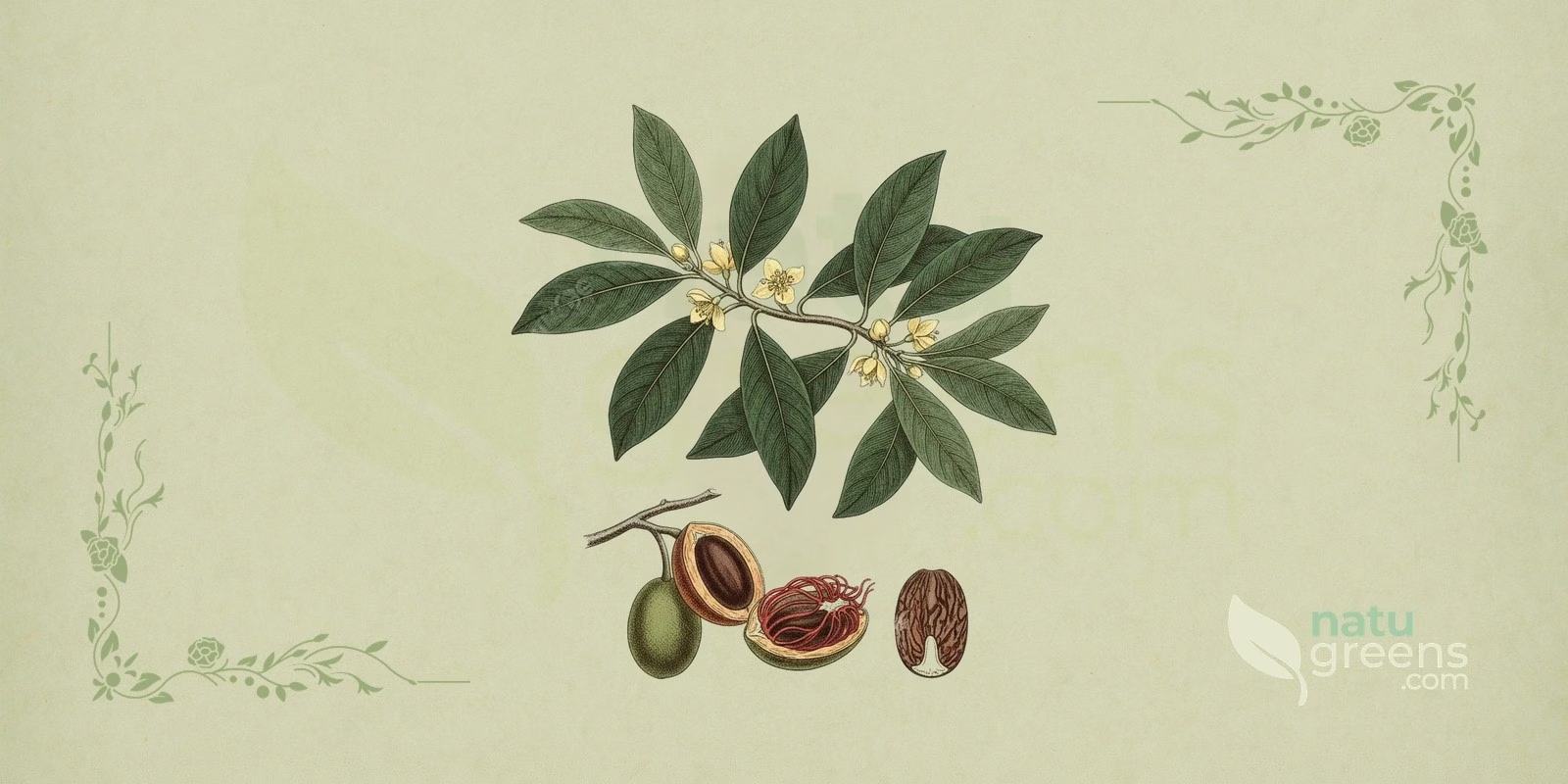
Nutmeg’s history is rich and marked by the high commercial value the spice reached in the Middle Ages, when Arab merchants distributed it across Europe at steep prices, until the Portuguese became, in 1512, the first Europeans to reach the Banda Islands, its place of origin. Now grown in various tropical regions, nutmeg retains its versatility and remains an essential ingredient in many cultures around the world.
Popular and International Names of Nutmeg
- English: fragrant nutmeg, mace, nutmeg, true nutmeg.
- Spanish: macis, nuez moscada.
- Portuguese: moscadeira (BR); noz-moscada (PT), noz-moscada.
- French: macis, noix de muscade.
- Italian: macis, noce moscata.
- German: Muskatblüte, Muskatnuss.
Botanical Synonyms of Myristica fragrans
Myristica fragrans has a few notable botanical synonyms, used in different periods or by different taxonomists, among which Myristica aromatica Lam., Myristica moschata Thunb., and Myristica officinalis L. f. stand out. Understanding these synonyms matters for botanical and pharmacological research, as it helps correctly identify the species across various scientific publications.
Botanical Family: Myristicaceae
Myristica fragrans belongs to the Myristicaceae family, made up of tropical trees and shrubs known for producing aromatic, resinous seeds and distributed mainly across the tropical regions of Asia, Africa, and the Americas. Many species in this family hold economic and medicinal importance, and nutmeg is the most prominent example, with fairly distinctive botanical characteristics.
Parts of Nutmeg Used
- Aril (mace)
- Seed (nutmeg)
Ethnobotanical and Traditional Uses
- Traditional use against diarrhea, constipation, and abdominal bloating.
- Traditional use to boost concentration and reduce stress.
- Traditional use to promote relaxation and support sleep.
- Traditional use to support digestion and relieve stomach pain.
- Traditional use, in China, for rheumatism and stomach pain.
- Traditional use, in Chinese medicine, to relieve abdominal pain and inflammation.
- Traditional use, in Southeast Asia, against dysentery and colic.
- Used as a flea repellent (Black Death in Europe).
Therapeutic Properties of Nutmeg
- Analgesic (traditional use to relieve pain)
- Anti-inflammatory (effect studied in reducing inflammation)
- Antibacterial (activity studied against bacteria)
- Antidiarrheal (effect studied in reducing diarrhea)
- Antirheumatic (activity studied against rheumatism)
- Carminative (effect studied in reducing intestinal gas)
- Cerebral Stimulant (effect studied on concentration)
- Digestive (aids digestion)
- Hypoglycemic (effect studied in reducing blood sugar, a preliminary finding without clinical confirmation)
- Relaxant (effect studied on relaxation)
Detailed Phytochemical Profile of Nutmeg
- Ash
- Cellulose
- Elemicin
- Essential oil
- Fats
- Fatty acids (palmitic, stearic, oleic, linoleic)
- Hydrocarbons
- Myristic acid
- Myristicin
- Nitrogenous compounds
- Non-nitrogenous extracts
- Starch
- Trimyristin
- Water
Preparation and Administration Forms of Nutmeg
- Culinary spice (grated)
- Essential oil (diluted topical use)
- Powder (in small amounts)
Synergy with Other Medicinal Plants
For Digestive Support
Nutmeg can be combined with ginger (Zingiber officinale) and cardamom (Elettaria cardamomum), a combination that enhances the carminative and digestive effects, since both plants are recognized for easing gastrointestinal discomfort and reducing bloating and gas. This pairing is often suggested for heavy meals or after large dinners.
For Stress Relief and Sleep Support
Nutmeg can be used together with chamomile (Matricaria chamomilla) and lavender (Lavandula angustifolia), a combination traditionally associated with a relaxing and anxiety-easing effect, as both plants are widely recognized for their calming properties. The synergy with nutmeg, always in very small amounts, is traditionally suggested for easing insomnia and states of nervousness.
Recipes and Usage Protocols of Nutmeg
Nutmeg-Spiced Nighttime Tea
Ingredients: a small pinch of grated nutmeg (the amount used as a culinary spice, never more than that), 200ml of warm milk or water, 1 teaspoon of honey (optional).
Preparation: warm the milk or water until lukewarm, add the pinch of grated nutmeg and the honey, if desired, and stir well. Drink it about 30 minutes before bed; in folk tradition, this beverage is associated with relaxation before sleep, but it should never be repeated in amounts larger than the culinary dose, and if in doubt about the right amount, consult a healthcare professional.
Massage Oil for Muscle Pain
Ingredients: 5 drops of nutmeg essential oil, 30ml of carrier vegetable oil (sweet almond, jojoba, or coconut).
Preparation: mix the nutmeg essential oil with the carrier vegetable oil and apply the blend to areas affected by muscle or joint pain, massaging gently until absorbed. This oil, for external use only, may provide relief from local pain and inflammation, but sun exposure should be avoided after application, and the essential oil must never be ingested.
The preparations above follow traditional records and do not replace professional guidance. Before any internal use, check the contraindications and interactions described in this article.
Associated Therapies
Aromatherapy
Nutmeg essential oil is valued in aromatherapy for its stimulating and invigorating properties, with inhalation of its aroma traditionally associated with relieving mental fatigue and boosting concentration. It is frequently used in diffusers to create an energizing atmosphere, and when applied topically it should always be diluted in a carrier oil. For these reasons, nutmeg aromatherapy is often suggested for study or work sessions, helping maintain focus and mental clarity.
Ayurvedic Medicine
In Ayurvedic medicine, nutmeg, known as Jatiphala, is traditionally used, always in small amounts, for a variety of conditions, being regarded as a tonic for the brain and nervous system and used to support digestion, ease insomnia, and reduce anxiety. It is also used in formulations aimed at respiratory issues and joint pain, valued for its warming and aromatic qualities, which make it a common ingredient in many preparations within this tradition.
Contraindications and Side Effects of Nutmeg
General Contraindications
Nutmeg must be used with extreme caution, as its toxicity rises rapidly above the culinary dose, generally cited as above 1 tablespoon or 5 to 10 grams of powder in an adult: the shavings and pinches used to season dishes are considered safe, but any amount beyond that should be avoided. It is categorically contraindicated for pregnant women, as it may have an abortifacient effect and trigger uterine contractions, and it should not be used by children, whose bodies tolerate proportionally much smaller doses. Individuals with liver problems and people with a history of psychiatric illness should also avoid consuming it, with extreme moderation being the only safe way to use this spice for medicinal purposes.
Common Side Effects
Consuming a whole nutmeg or about 5 grams of its powder can already cause intoxication, with symptoms including auditory and visual hallucinations, loss of motor control, depersonalization, tachycardia, intense nausea, vomiting, dizziness, and, in more severe cases, delirium. Myristicin and elemicin, present in nutmeg, are responsible for these psychoactive effects, and the literature records severe poisonings and rare deaths linked to attempts at recreational use of the spice in high doses. For this reason, it is essential never to exceed the culinary dose: nutmeg’s psychoactive effect should not be sought as a benefit or a curiosity, but avoided as a real health risk.
Drug Interactions
Nutmeg may interact with certain medications: due to the presence of myristicin, which acts as a monoamine oxidase inhibitor (MAOI), it may interact with antidepressants, as well as potentiate the effect of sedatives and anxiolytics. Individuals taking heart or liver medications should consult a doctor before using the spice for medicinal purposes, since these interactions can lead to unwanted side effects, and it is always advisable to inform your doctor about the use of any natural supplement.
Historical Notes and Interesting Facts
The Spice of the Black Death
During the Black Death in Europe, nutmeg was regarded as a protective amulet, and people carried small pouches of the spice around their necks, believing its strong aroma warded off the disease. Although it had no real effect against the plague, this use reflects the cultural importance the spice achieved as a symbol of hope and protection in times of crisis, when it reached an almost inestimable commercial value.
Uses Beyond the Kitchen
Beyond its culinary use, nutmeg is used industrially as an ingredient in perfumery, tobacco products, and pharmaceuticals, while its wood is valued in furniture making. Myristic acid, derived from the spice, is also used in creams and cosmetic lotions, which shows how the plant’s versatility extends far beyond the kitchen, making it a natural resource with multiple applications.
Frequently Asked Questions about Nutmeg
Is Nutmeg Safe for Daily Consumption?
In small amounts, as a culinary spice, nutmeg is generally considered safe for daily consumption, but high doses are not recommended, as they can lead to toxic and hallucinogenic effects. Moderation is the key to avoiding health risks, and it is always worth consulting a professional if in doubt about regular use.
What Are the Main Benefits of Nutmeg?
Among its most cited traditional uses are support for digestion and relief of abdominal pain, along with relaxing and stimulating properties that link it to easing insomnia and stress. The spice also has antibacterial activity studied in the laboratory, and preliminary studies are investigating a possible hypoglycemic effect, a finding that still lacks clinical confirmation; for this reason, its use should always be mindful and moderate.
Can Nutmeg Cause Hallucinations?
Yes: consuming doses above the culinary amount, such as a whole nutmeg or about 5 grams of the powder, can already cause intoxication with hallucinations, tachycardia, intense nausea, depersonalization, and loss of motor control, effects caused mainly by the myristicin and elemicin present in the spice. In severe cases there are records of delirium and, more rarely, of deaths linked to attempts at recreational use, which is why the psychoactive effect should be seen as a risk to avoid, never as a form of relaxation or curiosity to pursue.
How Should Nutmeg Be Stored Properly?
Nutmeg should be stored in a cool, dry, and dark place, preferably in airtight containers that help preserve its aroma and flavor. It is best to keep the whole nut and grate it only when needed, avoiding exposure to light and moisture, which keeps its properties intact for longer and ensures the spice’s quality.
Notice: this content is for informational purposes and does not replace professional medical advice. Consult a physician or herbal practitioner before using medicinal plants, especially during pregnancy, breastfeeding, or alongside medication.
References and Scientific Studies
- 2009 Erowid. (2009). Effects of Nutmeg & Myristicine by Scott Dorsey. Recuperado de Erowid
- 1963 Truitt Jr., E. B., Duritz, G., & Ebersberger, E. M. (1963). Evidence of Monoamine Oxidase Inhibition by Myristicin and Nutmeg. Exp Biol Med (Maywood), 112, 647.
- 1991 Hannard, P. (1991). Nathaniel’s Nutmeg. London: Sceptre.
- 2006 LE COUTER, P., & BURRESON, J. (2006). Os botões de Napoleão: as 17 moléculas que mudaram a história. Rio de Janeiro: Jorge Zahar Editora.
- 2014 Duarte, R. C. (2014). ESTUDO DOS COMPOSTOS BIOATIVOS EM ESPECIARIAS (Syzygium aromaticum L, Cinnamomum zeylanicum Blume e Myristica fragrans Houtt) PROCESSADAS POR RADIAÇÃO IONIZANTE. Universidade de São Paulo.
- Minerva Foods. (n.d.). Veja os benefícios da noz-moscada para a saúde. Recuperado de Minerva Foods
- Academia Botânica. (n.d.). Noz-moscada: Benefícios e Malefícios. Recuperado de Academia Botânica