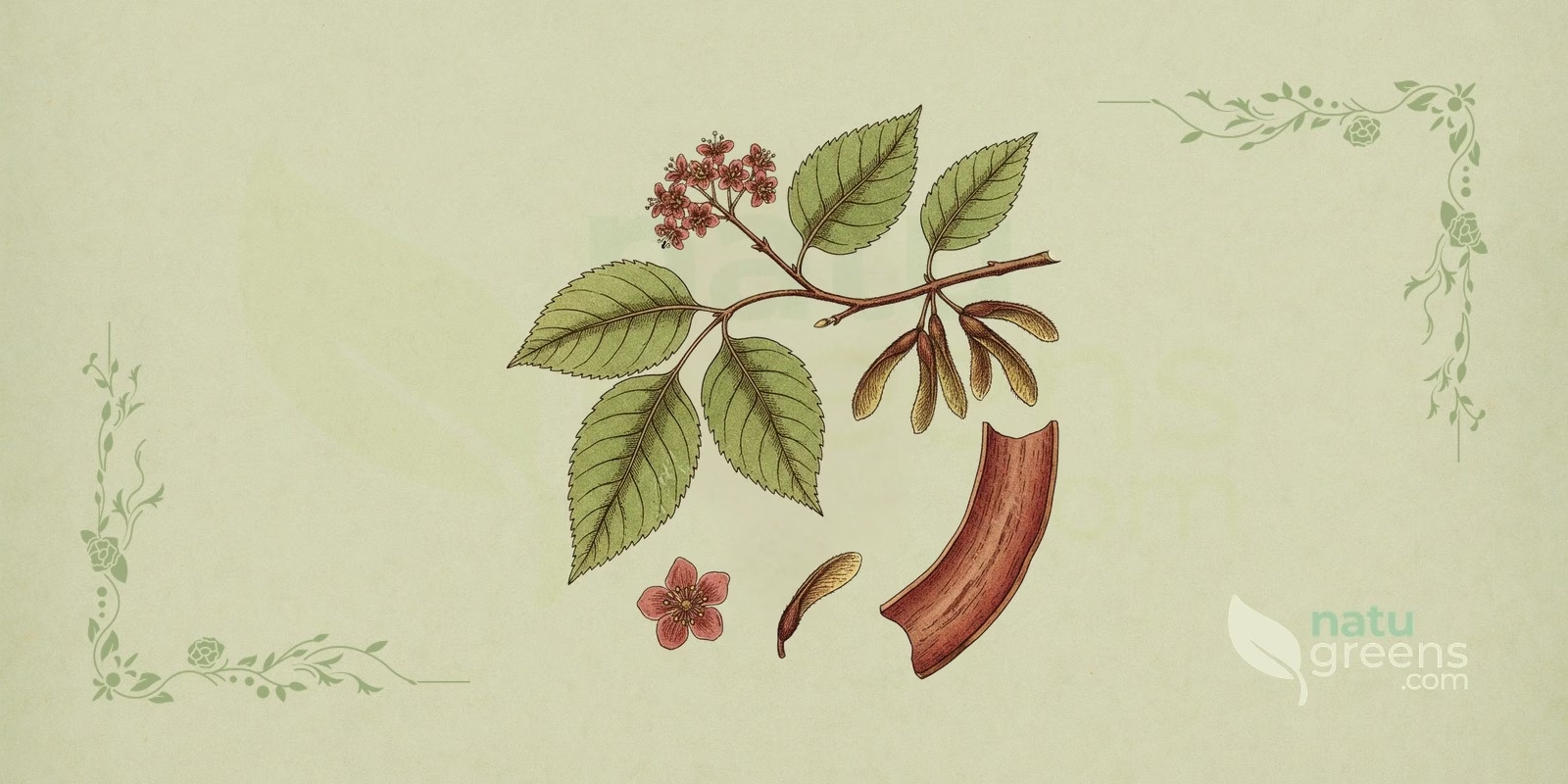
Ulmus rubra Muhl. / Slippery Elm, popularly known as slippery elm, red elm or moose elm, is a deciduous tree of the Ulmaceae family, described by Gotthilf Muhlenberg in 1793. Native to eastern North America, this species is valued for its mucilaginous inner bark, traditionally used for medicinal purposes. The plant thrives in moist uplands, though it also adapts to dry and intermediate soils. Historically, Native Americans used the bark of slippery elm for a variety of therapeutic applications, from soothing sore throats to treating gastrointestinal problems. Its phytochemical composition, rich in mucilage, gives it demulcent and anti-inflammatory properties, making it a valuable resource in herbal medicine.
Popular and International Names of Slippery Elm
- English: gray elm, Indian elm, moose elm, red elm, slippery elm, soft elm.
- Spanish: olmo alce, olmo gris, olmo indio, olmo resbaladizo, olmo rojo, olmo suave.
- Portuguese: olmo-cinzento, olmo-escorregadio, olmo-indiano, olmo-macio, olmo-vermelho.
- French: orme glissant, orme gras, orme rouge.
- Italian: olmo rosso, olmo scivoloso.
- German: Rot-Ulme, Schleim-Ulme.
Botanical Synonyms of Ulmus rubra
Ulmus fulva Michx. is a widely recognized botanical synonym, especially in the context of dietary supplements and alternative medicine. This name was published by André Michaux in 1803. Although Ulmus rubra Muhl. is the name accepted by most botanical authorities, the use of Ulmus fulva persists in numerous publications and in commerce. Other synonyms include Ulmus americana L. var. rubra Aiton, Ulmus crispa Willd., Ulmus dimidiata Raf., Ulmus elliptica Anon., Ulmus Heyderi Späth, Ulmus pinguis Raf. and Ulmus pubescens Walter.
Botanical Family: Ulmaceae
The Ulmaceae family, to which slippery elm belongs, comprises trees and shrubs distributed mainly across temperate and subtropical regions of the Northern Hemisphere. This family is characterized by alternate, simple leaves with serrated margins and deciduous stipules. The flowers are generally small and inconspicuous, often wind-pollinated. The fruits are samaras or drupes. Ulmaceae includes genera such as Ulmus (elms) and Celtis (hackberries), many of which have economic and ecological importance. The wood of several Ulmaceae species is valued for its durability and strength. In addition, some species are recognized for their medicinal properties, as is the case with slippery elm, which stands out for its mucilage-rich bark.
Parts of Slippery Elm Used
- Inner bark
Ethnobotanical and Traditional Uses
- Constipation
- Cough
- Dysentery
- Gastrointestinal problems (stomach ulcers)
- Labor induction
- Laxative
- Skin irritation (topical use)
- Sore throat
- Thirst relief
- Wound healing
Therapeutic Properties of Slippery Elm
- Anti-inflammatory (studied effect in reducing inflammation)
- Antioxidant (studied activity against free radicals)
- Astringent (contracts tissues)
- Demulcent (soothes and protects mucous membranes)
- Emollient (softens and smooths)
- Prebiotic (studied effect on beneficial bacteria)
Detailed Phytochemical Profile of Slippery Elm
- Alkaloids (berberine, berberastine, canadine, corypalmine, hydrastine)
- Flavonoids
- Mucilage (polysaccharides)
- Phenolic acids
- Sterols
- Tannins
Preparation and Administration Forms of Slippery Elm
- Decoction
- Liquid extract
- Lozenges
- Poultice
- Powder
- Tea/infusion
- Tincture
Synergy with Other Medicinal Plants
Relief of Digestive Disorders
Slippery elm can be combined with marshmallow root (Althaea officinalis) to enhance the demulcent and mucosa-protective effects on the digestive tract. The synergy between these plants is beneficial for relieving irritation in the gastrointestinal tract, such as gastritis and ulcers. Adding licorice root (Glycyrrhiza glabra) can complement this action, offering additional anti-inflammatory properties and support for gastric health. These combinations are frequently used in traditional herbal formulations aimed at soothing the intestinal lining and reducing inflammation.
Support for Sore Throat and Cough
For relief from sore throat and cough, slippery elm can be paired with herbs such as ginger (Zingiber officinale) and honey. Ginger offers anti-inflammatory and expectorant properties, while honey acts as a natural soother. This combination results in a syrup or infusion traditionally used to calm throat irritation and support expectoration. The mucilage in slippery elm forms a protective layer, reducing irritation and supporting tissue recovery.
Recipes and Usage Protocols of Slippery Elm
Infusion for Digestive Problems
Ingredients: 1 teaspoon of slippery elm inner bark powder, 200 ml of hot (not boiling) water.
Preparation: Add the slippery elm inner bark powder to the hot water and stir well until fully dissolved, forming a gel-like consistency. Let it sit for a few minutes. Drink 1 to 3 times a day, preferably between meals. This infusion is traditionally used to soothe the digestive tract and relieve heartburn, gastritis and the symptoms of irritable bowel syndrome, forming a protective barrier over irritated mucous membranes.
Poultice for Skin Irritation
Ingredients: 2 tablespoons of slippery elm inner bark powder, enough warm water to form a paste.
Preparation: Mix the powder with warm water until you get a thick, smooth paste. Apply directly to the affected area of skin, such as wounds, minor burns, insect bites or rashes. Cover with a clean cloth and let it act for 30 minutes to 1 hour. Repeat 2 to 3 times a day as needed. The poultice is traditionally used to relieve inflammation and pain and to support healing, thanks to the emollient and demulcent properties of slippery elm.
The preparations above follow traditional records and do not replace professional guidance. Before any internal use, check the contraindications and interactions described in this article.
Associated Therapies
Herbal Medicine
In herbal medicine, slippery elm is widely used as a demulcent and anti-inflammatory for the gastrointestinal and respiratory tracts. It is often recommended for conditions such as inflammatory bowel disease, irritable bowel syndrome, gastritis, peptic ulcers, cough and sore throat. Its protective action comes from the mucilaginous layer it forms over the mucous membranes, easing irritation and promoting healing. It is also used in formulations for nutritional support, especially during convalescence or when eating is difficult, thanks to its nutrient content and easy digestibility.
Traditional Native American Medicine
Slippery elm has a long history of use in traditional Native American medicine. It was valued not only for its healing properties but also as a food source in times of scarcity. Native Americans used the inner bark to treat a wide range of ailments, including digestive problems, infections, wounds and sore throats. The bark was made into teas, poultices and even a type of nutritious flour. Its cultural and medicinal importance stands as a testament to the deep connection between Indigenous communities and natural resources.
Contraindications and Side Effects of Slippery Elm
General Contraindications
Slippery elm is generally considered safe for most people when used at the recommended doses. However, due to its high mucilage content, it may interfere with the absorption of medications and other supplements. It is therefore recommended that slippery elm be taken at least one to two hours before or after other medications. Pregnant or breastfeeding women should consult a healthcare professional before use, as there are not enough studies confirming its safety in these groups. Individuals with a known allergy to plants in the Ulmaceae family should avoid its use.
Side Effects
Side effects of slippery elm are rare and generally mild. They may include allergic reactions in sensitive individuals, manifesting as skin rashes or irritation. In some cases, bloating or gas may occur, especially if consumed in large amounts or without adequate hydration, due to its capacity to absorb water and form a gel. It is essential to follow recommended dosages and ensure sufficient fluid intake to minimize any gastrointestinal discomfort. If adverse reactions occur, use should be discontinued and a physician consulted.
Historical Notes and Interesting Facts
A Peculiar Name
The popular name slippery elm refers to the most distinctive feature of the plant: its inner bark. When mixed with water, this bark produces a mucilaginous, slippery substance, which gives it its demulcent properties. This trait was noted by Native Americans, who used it to relieve thirst and treat various conditions, taking advantage of its unique texture to create a protective barrier on mucous membranes. The name red elm comes from the tree’s reddish brown heartwood, another characteristic that sets it apart.
A Historical Use in Baseball
A fascinating fact about slippery elm dates back to the world of baseball. In the past, spitball pitchers chewed on slippery elm lozenges. The mucilage produced increased the viscosity of their saliva, which was then applied to the ball to alter its trajectory and make it harder to hit. Although this practice is now banned in professional baseball, it highlights the versatility and unique properties of slippery elm’s inner bark, which found unexpected applications in different corners of American popular culture.
The Versatility of the Fibrous Bark
Beyond its medicinal uses, the fibrous inner bark of slippery elm was extremely versatile for Native Americans. They used it to create a variety of everyday essentials, such as ropes, thread and even jewelry. The strength and durability of the fibers made them ideal for binding snowshoes and other tools. In some cases, the bark was used in building musical instruments, demonstrating the ingenuity and deep knowledge of natural resources held by these communities. This versatility underscores the importance of slippery elm not only as a medicinal plant but also as an integral resource for subsistence and culture.
Frequently Asked Questions about Slippery Elm
What Is Slippery Elm?
Slippery elm (Ulmus rubra) is a tree native to North America, known for its inner bark, which is rich in mucilage. This gel-like substance gives it demulcent properties, and it is traditionally used to soothe irritation and inflammation in the digestive and respiratory tracts. It is valued in herbal medicine for its protective and soothing actions and is used in a variety of medicinal preparations. The tree is known for its adaptability to different soil types and for its historical importance to Native Americans.
What Is Slippery Elm Tea Used For?
Slippery elm tea is widely used to relieve a range of conditions, mainly related to the digestive and respiratory systems. It is used to soothe sore throat, reduce cough, and relieve heartburn, gastritis, stomach ulcers and the symptoms of irritable bowel syndrome. The mucilage in the bark forms a protective layer over the mucous membranes, helping to reduce inflammation and promote healing. It is also used as a gentle laxative and to support the recovery of skin irritations when applied topically.
How Do You Prepare Slippery Elm Tea?
To prepare slippery elm tea, mix one teaspoon of inner bark powder into 200 ml of hot (not boiling) water. Stir vigorously until the powder fully dissolves and the mixture takes on a gel-like consistency. Let it sit for a few minutes before drinking. It is important not to use boiling water, as it can affect the mucilage. It can be consumed 1 to 3 times a day, preferably between meals, to make the most of its traditional benefits. Sweetening with honey is optional.
Does Slippery Elm Tea Have Side Effects?
Side effects of slippery elm tea are generally rare and mild. They may include allergic reactions in sensitive individuals, manifesting as skin rashes. In some cases, bloating or gas may occur, especially if consumed in large amounts or without adequate hydration, due to its capacity to absorb water and form a gel. The main concern is its potential to interfere with medication absorption, so it should be taken at least one to two hours apart from other drugs. Always consult a healthcare professional if you have questions.
Who Should Not Use Slippery Elm Tea?
Individuals with a known allergy to plants in the Ulmaceae family should avoid slippery elm tea. Pregnant or breastfeeding women should exercise caution and seek medical guidance before consuming it, due to the lack of conclusive studies on its safety during these periods. People who take medications regularly should be aware of the potential interaction with drug absorption and follow the recommendation to space out tea consumption from their medications. In the case of pre-existing medical conditions, consulting a healthcare professional is always advised.
Notice: this content is for informational purposes and does not replace professional medical advice. Consult a physician or herbal practitioner before using medicinal plants, especially during pregnancy, breastfeeding, or alongside medication.
References and Scientific Studies
Institutional Sources (2)
- GOV2020 National Center for Complementary and Integrative Health. (2020). Slippery Elm. Recuperado de NCCIH
- GOV U.S. Department of Agriculture, Forest Service. (n.d.). Ulmus rubra Muhl. Recuperado de FEIS
Supplementary Readings (3)
- 2003 Bone, K. (2003). A Clinical Guide to Blending Liquid Herbs: Herbal Formulations for the Individual Patient. Churchill Livingstone.
- 2015 Braun, L., & Cohen, M. (2015). Herbs and Natural Supplements: An Evidence-Based Guide (4th ed.). Elsevier.
- 2003 Hoffmann, D. (2003). Medical Herbalism: The Science and Practice of Herbal Medicine. Healing Arts Press.