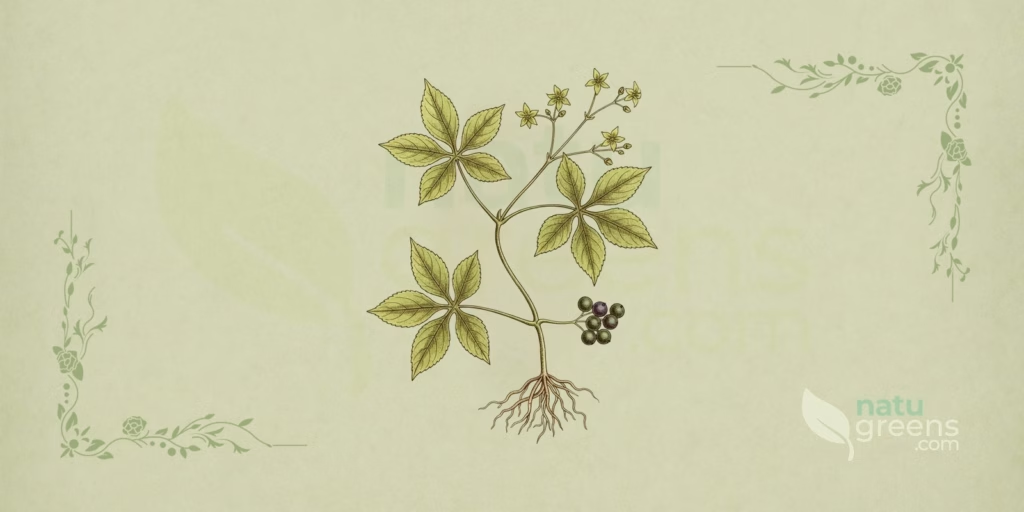
Gynostemma pentaphyllum (Thunb.) Makino / Jiaogulan, popularly known as Southern Ginseng or the Herb of Immortality, is a climbing herbaceous vine of the Cucurbitaceae family. This plant is widely distributed across South and East Asia, including China, Korea, Japan, and Vietnam. Gynostemma pentaphyllum has been used for thousands of years in Traditional Chinese Medicine, not only as a survival food but also for its remarkable therapeutic properties. Its leaves are frequently harvested for the preparation of teas and extracts, valued for their health benefits.
In the Asian tradition, jiaogulan is revered for its ability to promote longevity and general well-being. The plant is rich in bioactive compounds, such as saponins (gypenosides), polysaccharides, and flavonoids, which contribute to its many pharmacological actions. Modern scientific research has investigated many of its traditional uses, with early results in the adaptogenic, antioxidant, and anti-inflammatory fields that still await clinical confirmation. Jiaogulan is considered one of the most promising medicinal plants for cardiovascular, metabolic, and neurological health, consolidating its reputation as a valuable herbal resource.
Popular and International Names of Gynostemma pentaphyllum
- English: jiaogulan, five-leaf ginseng, poor man’s ginseng, miracle grass, fairy herb, sweet tea vine, gospel herb, Southern Ginseng, immortality herb.
- Spanish: jiaogulan, ginseng del sur, hierba de la inmortalidad.
- Portuguese: jiaogulan, ginseng-do-sul, erva-da-imortalidade.
- French: jiaogulan, ginseng du sud, herbe de l’immortalité.
- Italian: jiaogulan, ginseng del sud, erba dell’immortalità.
- German: Jiaogulan, Fünfblättriger Ginseng, Kraut der Unsterblichkeit.
- Japanese: amachazuru.
- Chinese (TCM): jiao gu lan, qi ye dan, nan fang ren shen (southern ginseng).
Botanical Synonyms of Gynostemma pentaphyllum
The accepted scientific name for this species is Gynostemma pentaphyllum (Thunb.) Makino. Recorded synonyms include Vitis pentaphylla Thunb. and Gynostemma pedatum Blume, both little used in contemporary literature. The denomination was established by Carl Peter Thunberg and later validated by Tomitaro Makino in 1902. The taxonomic stability of the name reflects the consensus among botanical authorities, facilitating the identification and study of the plant in different regions of the world.
Botanical Family: Cucurbitaceae
Gynostemma pentaphyllum belongs to the Cucurbitaceae family, which includes well-known plants such as cucumbers, pumpkins, and melons. This family is characterized by climbing vines and the presence of tendrils, which help the plants attach to supports. The Cucurbitaceae are widely distributed in tropical and subtropical regions, with many species cultivated for their edible fruits. The chemical diversity within this family is remarkable, with several species containing bioactive compounds of medicinal and nutritional interest.
Parts of Gynostemma pentaphyllum Used
- Immature stems
- Leaves
- Whole herb
Ethnobotanical and Traditional Uses of Gynostemma pentaphyllum
- Appetizer to stimulate the spleen
- Body detoxification
- Cholesterol reduction
- Gastrointestinal disorders (chronic gastroenteritis)
- Headache relief
- Hematuria
- Herbal tea
- Hyperlipidemia
- Hypertension relief
- Immunity improvement
- Insomnia relief
- Liver disease (fatty liver, viral hepatitis)
- Qi regulation
- Relief of throat and neck swelling
- Survival food (documented in 1406 CE)
- Treatment of chronic bronchitis
- Treatment of diabetes
- Tumor relief
- Wound relief
Therapeutic Properties of Gynostemma pentaphyllum
- Adaptogenic (helps restore the body’s balance)
- Antianxiety (reduces stress and anxiety)
- Anticancer (under study for tumor cell proliferation and apoptosis induction)
- Antifatigue (increases endurance and energy)
- Anti-inflammatory (reduces inflammation)
- Antiobesity (reduces body weight, BMI, and fat mass); traditional use, without established clinical efficacy
- Antioxidant (fights free radicals)
- Cardioprotective (protects the heart); traditional use, without established clinical efficacy
- Hepatoprotective (protects the liver); traditional use, without established clinical efficacy
- Hypoglycemic (helps control blood sugar); traditional use, without established clinical efficacy
- Hypolipidemic (lowers cholesterol and triglyceride levels); traditional use, without established clinical efficacy
- Immunomodulatory (regulates the immune system); traditional use, without established clinical efficacy
- Neuroprotective (protects the nervous system); traditional use, without established clinical efficacy
- Prebiotic (modulates the gut microbiota)
Detailed Phytochemical Profile of Gynostemma pentaphyllum
- Flavonoids (quercetin, rhamnazin)
- Free triterpenoids (dammarane aglycones)
- Gypenosides (dammarane saponins characteristic of the species, including some identical to Panax ginsenosides, such as Rb1, Rb3, F2, Rg3, and Rd, plus the malonylated forms of its own)
- Organic acids
- Polysaccharides
- Sterols
- Trace elements
Preparation and Administration Forms of Gynostemma pentaphyllum
- Alcoholic extract
- Powder
- Supplements (capsules, tablets, oral liquids)
- Tea/Infusion
Synergy with Other Medicinal Plants
Herbal Formulations
Jiaogulan can be combined with other herbs to enhance its therapeutic effects and improve flavor. Laboratory assays indicate that combining Gynostemma pentaphyllum with other plants can add to the effects seen on tumor cells in culture, a result that has not yet been tested in people. These formulations are frequently used in traditional medicine to treat various conditions, taking advantage of the complexity of the bioactive compounds present in multiple plant species. Combined formulations follow the herbal traditions of pairing plants with related actions, and no study compares these mixtures with jiaogulan used on its own.
Recipes and Usage Protocols of Gynostemma pentaphyllum
Jiaogulan Tea for General Well-Being
To prepare jiaogulan tea, use 1/2 to 3/4 of a teaspoon of dried leaves or powder per cup of hot water. The ideal water temperature is between 60-80°C (140-176°F) to preserve heat-sensitive compounds. Steep for 3-5 minutes. Strain and drink. This tea can be re-steeped several times while keeping its beneficial properties. It is ideal for daily consumption, promoting relaxation and adaptogenic support.
Concentrated Liquid Extract
A concentrated liquid extract of jiaogulan can be prepared as an alcoholic or glycerin extract. For the alcoholic extract, macerate the dried leaves in 40-60% grain alcohol for 2 to 4 weeks, shaking daily. Strain and store in a dark bottle. The typical dosage is 20-30 drops, 2-3 times a day, diluted in water. This method offers a potent way to consume the gypenosides and other phytochemicals, useful for conditions requiring more intense action.
Iced Jiaogulan Infusion with Citrus
For a refreshing, healthy drink, prepare a concentrated jiaogulan infusion (following the tea recipe) and let it cool. Add slices of lemon, orange, or lime, and fresh mint leaves. Sweeten to taste with honey or stevia, if desired. Serve with ice. This iced infusion is an excellent way to hydrate and enjoy the plant’s benefits, especially in hot weather, combining jiaogulan’s unique flavor with the acidity and freshness of citrus.
Associated Therapies
Traditional Chinese Herbal Medicine
In Traditional Chinese herbal medicine, jiaogulan is classified as an herb that tonifies Qi, calms the Shen (mind/spirit), and clears heat and toxicity. It is frequently used to balance body and mind, considered an adaptogen that helps cope with physical and mental stress. The plant is incorporated into various herbal formulations to treat a wide range of conditions, from digestive disorders to cardiovascular complaints, always with a holistic, individualized approach.
Integrative Medicine
Gynostemma pentaphyllum has gained recognition in integrative medicine thanks to its adaptogenic properties and its ability to modulate multiple physiological pathways. It is used as a complement in wellness programs for cardiovascular support, glycemic control, stress management, and immune support. The integration of jiaogulan into modern treatment plans reflects the growing interest in natural, evidence-based approaches to health promotion and disease prevention, combining traditional knowledge with scientific research.
Contraindications and Side Effects of Gynostemma pentaphyllum
General Contraindications
Gynostemma pentaphyllum is generally well tolerated, but there are some important contraindications. Individuals with a known allergy to Cucurbitaceae plants should avoid it. Pregnant or breastfeeding women should abstain from consumption, as one of the plant’s components has been reported to be associated with birth defects, and safety during breastfeeding has not been sufficiently established. People with autoimmune diseases, such as multiple sclerosis, lupus, or rheumatoid arthritis, should avoid jiaogulan, as it can increase immune system activity, potentially worsening symptoms. Young children should not use it without medical supervision.
Common Side Effects
The most frequently reported side effects of jiaogulan are diarrhea and nausea. These are usually mild and transient and can be minimized by adjusting the dosage or the form of administration. In rare cases, allergic skin reactions can occur, especially in sensitive individuals. In people who handle the plant or its concentrated extracts, direct contact with the skin can cause local irritation. There is not enough information on the safety of long-term use, so consulting a health professional is recommended for continuous use.
Drug Interactions
Jiaogulan can interact with several medications. Because of its ability to slow blood clotting, concurrent use with anticoagulants (such as warfarin) or antiplatelet drugs can increase the risk of bleeding and bruising. For the same reason, jiaogulan should be stopped at least two weeks before surgery or invasive dental work, and the care team should be told about it. Diabetic patients using blood-sugar-lowering medications should carefully monitor their glucose levels, since jiaogulan can have hypoglycemic effects that could cause hypoglycemia. Anyone taking blood pressure medication should be careful as well, since jiaogulan has a traditional use in hypertension and the combination may lower blood pressure more than expected, bringing on dizziness and faintness. In addition, jiaogulan can increase immune system activity, which can reduce the efficacy of immunosuppressant medications, such as those used after organ transplants. It is crucial to inform your doctor about jiaogulan use before starting any drug treatment.
Interesting Facts about Gynostemma pentaphyllum
The Herb of Immortality
Gynostemma pentaphyllum is affectionately known as the “Herb of Immortality” in many Asian cultures, especially in China. According to local tradition, this nickname arose from accounts that the inhabitants of regions where the plant is regularly consumed tend to live longer, healthier lives, with a lower incidence of chronic disease. The association with longevity and well-being has been a key factor in its popularity and continued use in traditional medicine and as a dietary supplement.
Discovery and Recognition
The first formal documentation of jiaogulan dates from 1406 CE, when Zhu Xiao described it as a survival food during times of famine. Later, in 1578, Li Shizhen included it in his Compendium of Materia Medica, although with some taxonomic confusion, which was rectified in 1848 by Wu Qi-Jun. In 1986, China’s State Science and Technology Commission recognized Gynostemma pentaphyllum as the first “precious Chinese medicine” to be developed under the “Spark Program”, boosting its research and commercialization.
Comparison with Ginseng
Although frequently called “Southern Ginseng”, Gynostemma pentaphyllum does not belong to the genus Panax, to which true ginseng (Panax ginseng) belongs. However, jiaogulan contains saponins, known as gypenosides, that are chemically similar to the ginsenosides found in ginseng. This structural and pharmacological similarity contributed to its reputation and to the nickname “Southern Ginseng”, highlighting its adaptogenic and revitalizing properties.
Frequently Asked Questions about Jiaogulan Tea
What Is Jiaogulan Tea?
Jiaogulan tea is an infusion prepared from the leaves of the plant Gynostemma pentaphyllum. It is widely consumed in Asia for its medicinal and adaptogenic properties. It is known for its slightly sweet flavor and as a healthy alternative to other beverages, offering several health benefits, such as antioxidant and anti-inflammatory support.
What Are the Main Benefits of Jiaogulan Tea?
The main benefits of jiaogulan tea include, according to preliminary studies, help in regulating cholesterol and blood sugar levels, protect the heart and liver, and act as an adaptogen, helping the body cope with stress. It also has antioxidant and anti-inflammatory properties, contributing to general health and well-being.
How Should I Prepare Jiaogulan Tea?
To prepare jiaogulan tea, use 1/2 to 3/4 of a teaspoon of dried leaves or powder per cup of water. Heat the water to between 60-80°C (140-176°F), avoiding boiling to preserve the active compounds. Pour the water over the leaves and steep for 3-5 minutes. Strain and serve. The tea can be re-steeped several times, keeping its flavor and properties.
Are There Side Effects or Contraindications for Jiaogulan Tea?
Yes, although generally safe, jiaogulan tea can cause diarrhea and nausea in some people. It is contraindicated for pregnant or breastfeeding women, individuals with autoimmune diseases, and those using anticoagulant or diabetes medications, because of possible interactions. Always consult a health professional before starting consumption, especially if you have pre-existing medical conditions or take other medications.
Notice: this content is for informational purposes and does not replace professional medical advice. Consult a physician or herbal practitioner before using medicinal plants, especially during pregnancy, breastfeeding, or alongside medication.
References and Scientific Studies
Peer-Reviewed Scientific Studies (6)
- DOI2025 Li, X., Liu, L., & Wei, S. (2025). Gynostemma pentaphyllum: A review on its traditional uses, phytochemistry and pharmacology. Journal of Functional Foods.
- PMC2022 Rao, A., et al. (2022). The effect of an orally-dosed Gynostemma pentaphyllum extract (ActivAMP®) on body composition in overweight, adult men and women: A double-blind, randomised, placebo-controlled study. Journal of Human Nutrition and Dietetics.
- PMC2022 Huang, G., et al. (2022). Prebiotic properties of jiaogulan in the context of gut microbiome. Food Science & Nutrition.
- PMC2016 Li, Y., et al. (2016). Anti-cancer effects of Gynostemma pentaphyllum (Thunb.) Makino (Jiaogulan). Chinese Medicine.
- PMC2022 Liang, R., et al. (2022). Molecular Mechanisms of Gynostemma pentaphyllum in Prevention and Treatment of Non-Small-Cell Lung Cancer. Evidence-Based Complementary and Alternative Medicine.
- PEER2023 Ahmed, A., et al. (2023). Gynostemma pentaphyllum an immortal herb with promising therapeutic potential: a comprehensive review on its phytochemistry and pharmacological perspective. International Journal of Food Properties.
Supplementary Readings (1)
- Royal Botanic Gardens, Kew. Gynostemma pentaphyllum (Thunb.) Makino. Plants of the World Online.