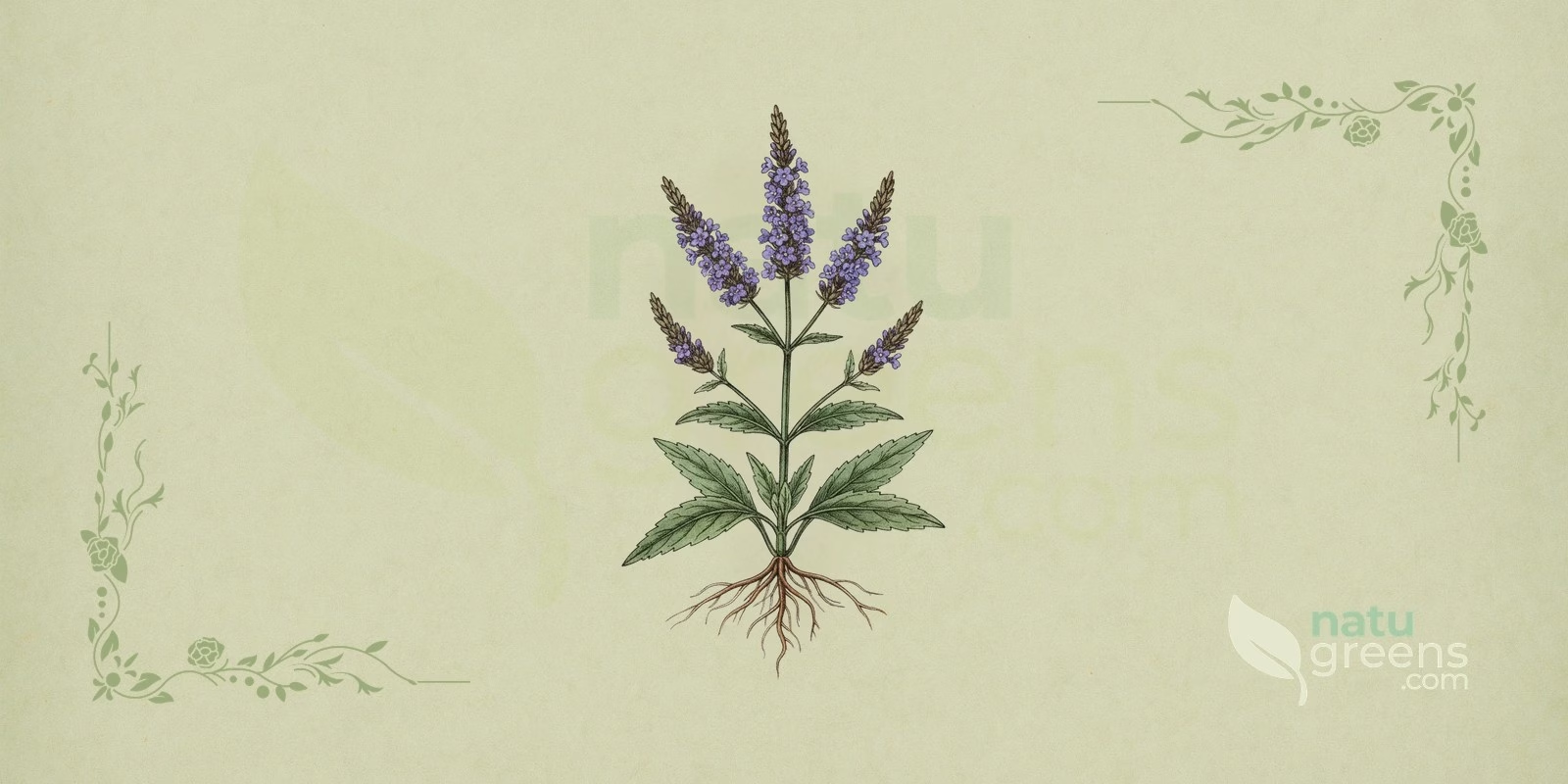
Verbena hastata L. / Blue Vervain, commonly known in English as blue vervain, American vervain or swamp verbena, is a perennial herbaceous plant of the Verbenaceae family, native to North America and described by Carl Linnaeus. The species is valued both for its ornamental qualities and for its traditional medicinal use, which different cultures have associated with health and well-being, and it stands out for its spikes of violet or deep purple flowers that open from midsummer to late summer in the Northern Hemisphere, attracting pollinators and contributing to local biodiversity.
Historically, Verbena hastata has been used in folk medicine for a wide range of complaints, from nervous disorders to digestive problems, and its complex phytochemical makeup, which includes iridoid glycosides, phenolic compounds and flavonoids, is often cited as the basis for many of these traditional uses. Scientific research on the species is still scarce, but recent studies have begun to examine it, such as one that assessed in the laboratory the inhibitory activity of its compounds against the formation of advanced glycation end products (AGEs), a result that suggests an antioxidant potential not yet confirmed in humans.
Popular and International Names of Blue Vervain
- English: American vervain, blue vervain, simpler’s joy, swamp verbena.
- Spanish: verbena americana, verbena azul.
- Portuguese: verbena-americana, verbena-azul, verbena-hastada.
- French: verveine bleue, verveine hastée.
- Italian: verbena americana, verbena blu.
- German: Amerikanisches Eisenkraut, Blaues Eisenkraut.
Botanical Synonyms of Verbena hastata
Although Verbena hastata L. is the widely accepted scientific name, recent literature records few direct botanical synonyms for the species, and the main source of confusion tends to be another plant of the same genus, Verbena officinalis, the common vervain of Europe. The resemblance between the two has a genetic basis: in a DNA authentication study, blue vervain emerged as the closest relative of the European vervain among the species analyzed, to the point that one of the molecular markers tested could not tell them apart, although another technique, high-resolution melting (HRM) analysis, distinguished the two without difficulty. For this reason, correct taxonomic identification, confirmed by the scientific name on the label rather than by the common name alone, is the starting point for any use of the plant.
Botanical Family: Verbenaceae
The Verbenaceae family, to which Verbena hastata belongs, comprises approximately 1,200 species distributed across about 30 genera, mainly in tropical and subtropical regions, and includes plants of both ornamental and medicinal interest. Its species usually have square stems, opposite leaves and inflorescences arranged in spikes or panicles, features that are easy to observe in blue vervain. Many plants in the family are rich in bioactive compounds such as iridoids, flavonoids and essential oils, which contribute to the pharmacological properties attributed to the group.
Parts of Blue Vervain Used
In teas and other traditional preparations, the parts mainly used are the aerial parts of the plant, harvested during flowering:
- Aerial parts (stem, leaves and flowers)
- Flowers
- Leaves
Ethnobotanical and Traditional Uses
Folk medicine records the use of blue vervain in the situations listed below, uses handed down by tradition that, for the most part, have not been confirmed by clinical studies and do not replace an assessment by a healthcare professional:
- Acne, ulcers and cuts, used externally
- Coughs
- Cramps
- Fevers
- Headaches
- Hormonal support, according to folk records
- Jaundice, a historical use that does not replace medical evaluation
- Low mood, as folk support that does not replace treatment for depression
- Nerve tonic and mild sedative
- Respiratory complaints
Therapeutic Properties of Blue Vervain
The properties attributed to the plant come largely from traditional use, and only a few of them have been observed in laboratory studies, still without confirmation in human trials:
- Anti-AGEs (compounds isolated from the plant inhibited the formation of advanced glycation end products in the laboratory)
- Anti-inflammatory (action attributed by tradition and little studied in this species)
- Antioxidant (potential suggested by laboratory studies)
- Antipyretic (traditionally recorded for use in fevers)
- Anxiolytic (traditional use to reduce anxiety, without clinical confirmation)
- Calming (traditionally used to encourage relaxation)
- Digestive (folk use to aid digestion)
- Emmenagogue (traditionally recorded as stimulating menstrual flow and uterine contractions, which is why the plant is contraindicated in pregnancy)
- Nervine (regarded by tradition as a tonic for the nervous system)
- Sedative (folk use to induce sleep and relaxation)
Detailed Phytochemical Profile of Blue Vervain
Verbena hastata contains a variety of bioactive compounds associated with its medicinal properties, and the phytochemicals identified in the whole plant include the following:
- Apigenin 7-O-β-D-glucuronide methyl ether
- Hastatoside
- Leucosceptoside A
- Lophirone B
- Lophirone C
- Luteorin
- Luxenchalcone
- Martynoside
- Naphthoquinone derivative (4R)-4,9-dihydroxy-α-lapachone
- Oleanolic acid
- Sterol (22R)-stigmast-5-ene-3β,4β,7α,22-tetrol
- Ursolic acid
- Verbascoside
- Verbenalin
These compounds belong to a range of classes, including iridoid glycosides, phenolic glycosides, flavonoids, triterpenes, a sterol and a naphthoquinone derivative, and tradition attributes the plant’s actions to this combination. In a laboratory assay, the phenolic glycosides and the biflavonoid lophirone C showed inhibitory activity against the production of advanced glycation end products (AGEs), a finding that points to antioxidant potential and protection against cellular aging, but one that still needs to be confirmed in human studies.
The essential oil of the species, obtained by hydrodistillation, had its composition described for the first time only in 2021, in a survey of aromatic medicinal plants used by Indigenous peoples of North America, and it proved rich in 1-octen-3-ol (up to 29%) and palmitic acid (up to 22%).
Preparation and Administration Forms of Blue Vervain
Traditional preparations of blue vervain include forms for internal and external use, each calling for its own precautions:
- Gargles or mouth rinses: concentrated infusions are traditionally used for discomfort of the mouth and throat, such as inflammation or irritation, without swallowing the liquid.
- Infusion (tea): prepared with a small amount of dried leaves and flowers in a cup of boiling water, left to steep for 5 to 10 minutes and strained before drinking; tradition uses it for relaxation, stress relief and digestive support, and the amount of herb and the frequency of use should be decided with a healthcare professional, since high doses can cause vomiting.
- Poultice or compresses: prepared with crushed parts of the plant or with concentrated infusions and applied to the skin over superficial wounds, ulcers or inflamed areas, in line with traditional use.
- Tincture: an alcoholic extract obtained by macerating the aerial parts in alcohol, a more concentrated form whose dosage always depends on professional guidance.
Synergy with Other Medicinal Plants
For Relaxation and Nervous System Support
In the herbal medicine tradition, Verbena hastata is combined with lemon balm, also known as melissa (Melissa officinalis), and with German chamomile (Matricaria chamomilla), a pairing traditionally used to add together the calming effects attributed to each plant and to support the nervous system. The blend appears in folk records related to anxiety, stress and sleep, but combining plants with sedative action can also intensify drowsiness, which is why it calls for extra caution in people already taking sedatives or anxiolytics and does not replace professional follow-up.
For Digestive Support
The combination of blue vervain with peppermint (Mentha × piperita) is traditionally used for mild digestive complaints such as indigestion, flatulence and colic, because the carminative and antispasmodic actions attributed to peppermint would complement the folk digestive use of blue vervain. This use is based on tradition, and persistent or severe gastrointestinal discomfort should be evaluated by a doctor.
Recipes and Usage Protocols of Blue Vervain
Calming Blue Vervain Infusion
Ingredients: a small amount of dried Verbena hastata leaves and flowers, in the proportion recommended by a healthcare professional, one cup of boiling water, and honey or another natural sweetener (optional).
Preparation: place the dried leaves and flowers in a cup, pour the boiling water over the herb, cover and let it steep for 5 to 10 minutes; then strain and sweeten to taste, if desired. By tradition, this infusion is taken in the evening to encourage relaxation before bed, or during the day at times of stress and anxiety, and it also appears in folk records as a digestive aid. Because high doses can cause vomiting and diarrhea, ask a healthcare professional about the appropriate amount and frequency, do not use the infusion during pregnancy or breastfeeding, and do not combine it with sedatives without guidance.
Topical Compress for Skin Irritations
Ingredients: 2 tablespoons of dried Verbena hastata leaves and flowers, 250 ml of boiling water, and gauze or a clean cloth.
Preparation: make a concentrated infusion by adding the leaves and flowers to the boiling water and letting them steep for 15 minutes; then strain and allow the liquid to cool until lukewarm. Soak the gauze or clean cloth in the infusion and apply it to the area of skin affected by acne, small ulcers or superficial cuts for 15 to 20 minutes, repeating 2 to 3 times a day, following traditional practice, in which the compress is used to soothe irritation while the skin heals. Do not apply it to deep, infected or non-healing wounds, which require medical evaluation, and stop using it if redness or itching appears, as these may be signs of contact dermatitis.
The preparations above follow traditional records and do not replace professional guidance. Before any internal use, check the contraindications and interactions described in this article.
Associated Therapies
Herbal Medicine
In herbal medicine, Verbena hastata is traditionally used as a nerve tonic and mild sedative, particularly in cases of anxiety, insomnia, stress and chronic nervous tension. Herbalists describe the plant as having a relaxing action that would stop short of excessive sedation, a description grounded in traditional practice rather than in clinical trials, and modern herbal medicine is also investigating, in studies that are still at an early stage, its possible anti-inflammatory and antioxidant properties. Anyone taking medication for anxiety, insomnia or depression should talk to their doctor before adding the plant to their treatment.
Homeopathy
Although less common than Verbena officinalis, Verbena hastata may be considered in homeopathic preparations aimed, according to the principles of this practice, at symptoms linked to the nervous system, such as irritability and hypersensitivity. Homeopathy works with ultra-diluted doses of the plant, and its effectiveness has not been confirmed by controlled clinical studies, so this use does not replace conventional treatment.
Aromatherapy
The essential oil of Verbena hastata is far less available than that of other verbenas, and its composition was described for the first time only in 2021, with a predominance of 1-octen-3-ol and palmitic acid, which leaves the use of the species in aromatherapy poorly documented. In this practice, it is mentioned for possible relaxing and calming properties, and inhaling its vapors through diffusers or personal inhalers is used to ease stress and create a calm atmosphere. Before any application to the skin, the essential oil must be diluted in a carrier oil, and since products sold as “verbena” may come from different species, it is wise to check the scientific name on the label.
Contraindications and Side Effects of Blue Vervain
General Contraindications
Verbena hastata is contraindicated in people with known hypersensitivity to any component of the plant or to other species of the Verbenaceae family. There is not enough information on the plant’s safety in children, so any preparation intended for this age group depends on the guidance of a pediatrician or an herbalist experienced in pediatrics. People with bleeding disorders or who take anticoagulants should also be cautious and consult their doctor before use, because the plant’s interaction with these medications has not been studied.
Pregnancy, Breastfeeding and Uterine Bleeding
Blue vervain is traditionally used as an emmenagogue and uterotonic, that is, to stimulate menstrual flow and uterine contractions, a traditional record that does not amount to proven efficacy but is enough to call for caution. For this reason, the plant is contraindicated during pregnancy, due to the risk of uterine contractions and miscarriage, and contraindicated during breastfeeding, a period for which conclusive safety studies are also lacking. The recommendation is not to use it in cases of undiagnosed uterine bleeding, a situation that requires medical evaluation before any herbal preparation.
Drug Interactions
Caution is advised with sedatives and antihypertensives, owing to the plant’s effect on the nervous system and blood pressure, since blue vervain may add its calming action to that of sedatives and anxiolytics and cause excessive drowsiness, and anyone taking antidepressants or hormonal medications should also talk to their doctor before using the plant. Blue vervain may also interact with drugs metabolized by the liver; the possibility raised involves the cytochrome P450 enzyme CYP2B1, an isoform studied in rodents, and it has not yet been confirmed in humans, but if it does occur, it could alter the efficacy or toxicity of these drugs. For this reason, always consult a healthcare professional before starting to use Verbena hastata, especially if you are taking other medications.
Common Side Effects
In high doses, Verbena hastata can induce vomiting and diarrhea, while other side effects tend to be mild and rare, such as gastrointestinal discomfort or allergic reactions in sensitive individuals. When applied to the skin, the plant may, in rare cases, cause contact dermatitis, and any persistent reaction should lead to stopping use and seeking medical advice.
Historical Notes and Interesting Facts
The English folk name simpler’s joy refers to the simplers of old, healers who prepared remedies from a single plant, the so-called “simples”, and reflects the historical prestige that vervains enjoyed among these herbalists. Folk accounts also link the plant to protection and purification rituals among Indigenous peoples of North America, although this use is less well documented than its medicinal one, and medical interest in it goes back a long way, to the point that the Buffalo Medical Journal published a note in 1854 devoted to blue vervain and Verbena urticifolia. Beyond its medicinal uses, blue vervain plays an important ecological role, attracting bees, butterflies such as the common buckeye (Junonia coenia) and other pollinators, and thus contributing to healthy ecosystems. The specific epithet hastata comes from Latin and means “spear-shaped”, a reference to the characteristic shape of its leaves.
Frequently Asked Questions about Blue Vervain
What Is the Difference between Blue Vervain and Verbena officinalis?
Although both belong to the genus Verbena and share some traditional medicinal uses, they are distinct species: Verbena hastata is native to North America, while Verbena officinalis is the common vervain of Europe. Because they are very closely related, telling them apart by their scientific names is essential for correct and safe use.
What Is the Best Way to Use Blue Vervain?
Infusion is the most common way of using the plant, but the amount and frequency should be decided with a healthcare professional, since high doses can cause vomiting and diarrhea. Tinctures require careful dosing and preparation under professional guidance, and for external use, tradition relies on compresses and poultices.
Is Blue Vervain Safe for Children?
There is not enough information on the safety of Verbena hastata in children, especially young ones. For this reason, always consult a doctor or an herbalist experienced in pediatrics before giving any preparation of the plant to a child.
Can Pregnant or Breastfeeding Women Use Blue Vervain?
No, because blue vervain is traditionally used as an emmenagogue and uterotonic and is therefore contraindicated during pregnancy, due to the risk of uterine contractions and miscarriage, and contraindicated during breastfeeding. For the same reason, the recommendation is not to use it in cases of undiagnosed uterine bleeding.
Can Blue Vervain Be Used with Other Medications?
Only under professional guidance, because Verbena hastata may interact with several medications, including anticoagulants, antihypertensives, hormones and drugs metabolized by the liver, and may also intensify the effect of sedatives and anxiolytics. Always tell your doctor or pharmacist about any medicinal herb you use, to avoid adverse interactions.
What Side Effects Can Blue Vervain Cause?
In high doses, the plant can cause vomiting and diarrhea, and other effects, which are usually mild and rare, include gastrointestinal discomfort and allergic reactions in sensitive individuals. Use on the skin may, in rare cases, cause contact dermatitis, in which case the application should be stopped.
Notice: this content is for informational purposes and does not replace professional medical advice. Consult a physician or herbal practitioner before using medicinal plants, especially during pregnancy, breastfeeding, or alongside medication.
References and Scientific Studies
Peer-Reviewed Scientific Studies (4)
- DOI2021 Yokosuka A, et al. Chemical Constituents of the Whole Plant of Verbena hastata and Their Inhibitory Activity Against the Production of AGEs. Natural Product Communications. 2021.
- PMC2021 Lawson SK, et al. The Volatile Phytochemistry of Seven Native American Aromatic Medicinal Plants. Plants (Basel). 2021.
- PMC2009 Ruzicka J, et al. Identification of Verbena officinalis Based on ITS Sequence Analysis and RAPD-Derived Molecular Markers. Planta Medica. 2009.
- PMC Hubbard S. Verbena Hastata (Tall Blue Vervain) and V. Urticifolia (Common Vervain). Buffalo Medical Journal and Monthly Review of Medical and Surgical Science. 1854.
Supplementary Readings (2)
- Missouri Botanical Garden. Verbena hastata (Plant Finder). Missouri Botanical Garden.
- Lady Bird Johnson Wildflower Center. Verbena hastata (Swamp Verbena). University of Texas at Austin.