Quick summary
Sea buckthorn (Hippophae rhamnoides L.) is a deciduous, thorny shrub of the Elaeagnaceae family, also known as seaberry, sandthorn or sallowthorn. Native to the temperate and cold regions of Eurasia, the species has adapted to very diverse environments, from the shores of the Baltic Sea to the Himalayan mountains, and…
Main caution: Although sea buckthorn is widely eaten as a food and is usually well tolerated, it is important to know its contraindications and possible side effects, especially in more sensitive groups and in people who take…
Sea buckthorn (Hippophae rhamnoides L.) is a deciduous, thorny shrub of the Elaeagnaceae family, also known as seaberry, sandthorn or sallowthorn. Native to the temperate and cold regions of Eurasia, the species has adapted to very diverse environments, from the shores of the Baltic Sea to the Himalayan mountains, and for millennia it has been prized for its bright orange berries and for its leaves, which are used in traditional medicine, in the food and cosmetics industries and in ecological projects, thanks to the plant’s ability to enrich the soil and hold back erosion.
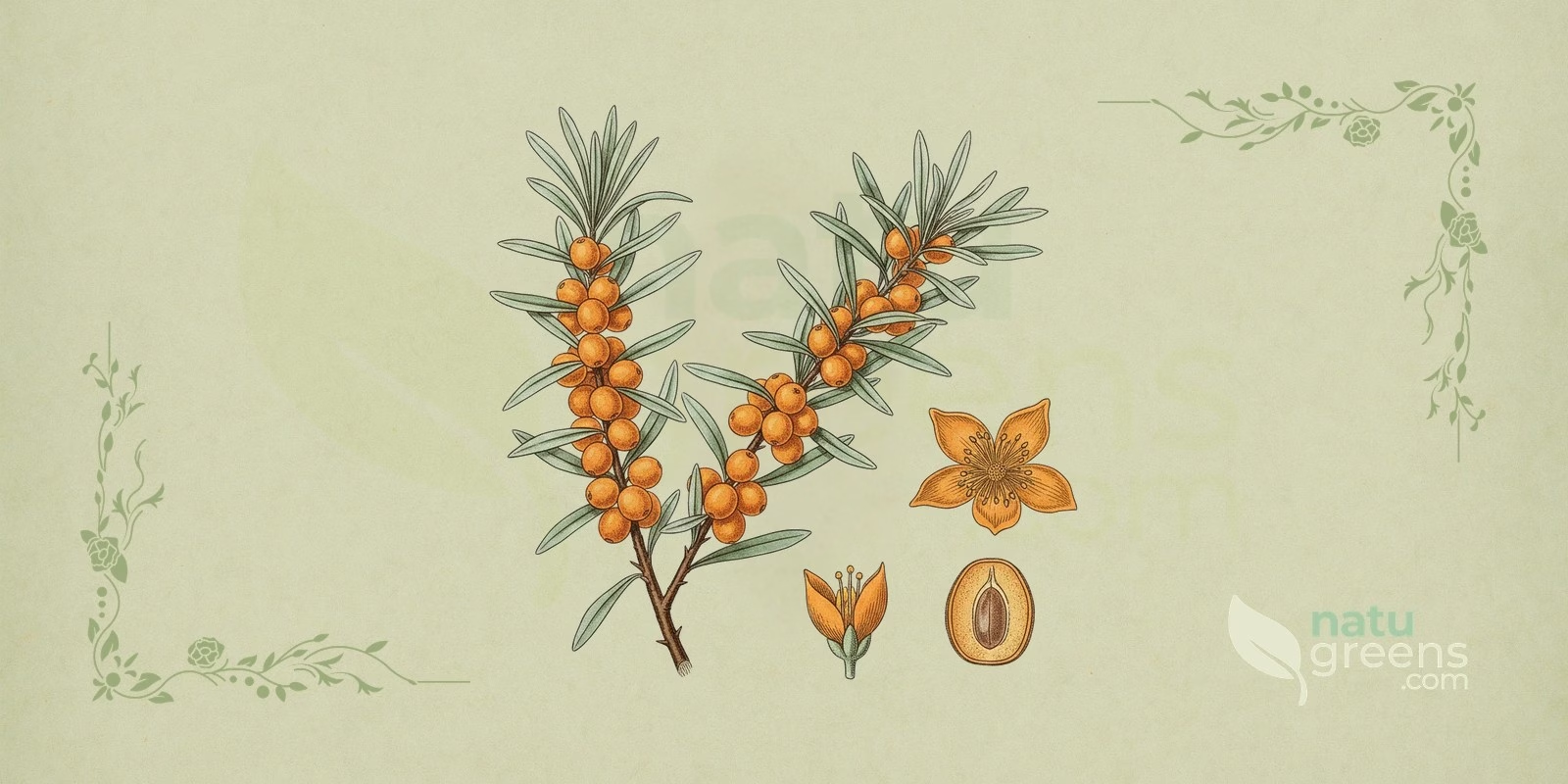
Its chemical composition brings together a wide range of vitamins, antioxidants, essential fatty acids and minerals, which explains the interest the plant arouses in both tradition and research. Since antiquity, sea buckthorn has been used in folk medicine for digestive and inflammatory complaints, as well as for skin and cardiovascular problems, and modern scientific research has been examining many of these traditional uses, with promising laboratory results, although clinical studies in humans are still limited and do not support any promise of cure.
Popular and International Names of Sea Buckthorn
Sea buckthorn is the standard English name, used alongside regional variants such as seaberry and sandthorn. The list below also gathers the most common names in other languages, including Portuguese, in which espinheiro-marítimo is the form in everyday use in both Brazil and Portugal, even though no common name for the plant has been formally recorded in Brazil.
- English: sallowthorn, sandthorn, sea buckthorn, seaberry, Siberian pineapple.
- French: argousier, olivier de Sibérie.
- German: Sanddorn, Stranddorn.
- Italian: olivello spinoso.
- Portuguese: espinheiro-amarelo, espinheiro-cerval-marinho, espinheiro-marítimo, falso-espinheiro.
- Russian: oblepikha (transliteration of облепиха).
- Spanish: espino amarillo, espino cerval de mar, espino de mar.
Botanical Synonyms of Hippophae rhamnoides
The scientific name Hippophae rhamnoides L. is the accepted name for this species, but botanical history has recorded several synonyms that reflect taxonomic reclassifications and different regional interpretations, the most notable of which are the following:
- Argussiera rhamnoides (L.) Bubani
- Elaeagnus rhamnoides (L.) A.Nelson
- Hippophaes rhamnoideum (L.) St.-Lag.
- Osyris rhamnoides (L.) Scop.
- Rhamnoides hippophae Moench
Botanical Family: Elaeagnaceae
Sea buckthorn belongs to the Elaeagnaceae family, a group of plants notable for their ability to fix atmospheric nitrogen through a symbiosis with bacteria of the genus Frankia, housed in the roots. This trait gives the species of the family an important ecological advantage, since it allows them to thrive in nutrient-poor soils while also contributing to soil fertility, and the group includes shrubs and small trees, often with silvery or scaly leaves and very distinctive fruits.
Species of the Elaeagnaceae usually occupy difficult habitats, such as coastal dunes, arid slopes and disturbed soils, and this hardiness, combined with their nutritious fruits, gives them ecological and economic importance. Besides the genus Hippophae, the family includes well-known genera such as Elaeagnus and Shepherdia, which share the same toughness and the nutritional value of their fruits.
Parts of Sea Buckthorn Used
- Bark
- Berries (fruits)
- Leaves
- Oil (extracted from the pulp and seeds)
- Seeds
Ethnobotanical and Traditional Uses
The uses listed below come from records of Eurasian folk medicine and show how the plant has been employed over time, without this representing clinical proof or replacing medical diagnosis and treatment:
- Acne, eczema, wounds and burns, applied topically
- Asthma
- Blood circulation support
- Cardiovascular problems
- Cough
- Digestive support
- Gastric and duodenal ulcers
- Gout
- High blood pressure
- Indigestion
- Infections, with preventive intent
- Lung problems
- Rheumatoid arthritis
- Skin rashes
- Slowing of aging, according to folk belief
Therapeutic Properties of Sea Buckthorn
The properties below summarize activities described in the scientific literature, most of them observed in laboratory or animal studies, and should therefore not be read as a recommendation to treat any disease.
- Anti-hyperlipidemic (reduction of blood lipids observed in preliminary studies)
- Anti-inflammatory (activity observed in experimental studies)
- Antimicrobial (action against microorganisms in laboratory tests)
- Anti-obesity (effect on weight management investigated in preliminary studies)
- Antioxidant (neutralization of free radicals in laboratory assays)
- Antiviral (activity observed in vitro)
- Cardioprotective (cardiovascular protection investigated in preliminary studies)
- Dermatological (support for skin regeneration reported in traditional use and in early studies)
- Hepatoprotective (liver protection observed in experimental models)
- Immunomodulatory (modulation of the immune system in preliminary studies)
- Neuroprotective (protection of the nervous system observed in experimental models)
Detailed Phytochemical Profile of Sea Buckthorn
Sea buckthorn is often described as a gold mine of bioactive compounds, since analyses identify around 200 different nutrients and phytochemicals in its parts, a richness that underpins the nutritional and pharmacological interest in the species. Its exact composition, however, varies with the subspecies, climatic conditions and processing methods, which explains the wide ranges of content reported in the literature.
Vitamins and Minerals
- Minerals: aluminum, boron, calcium, copper, iron, magnesium, manganese, phosphorus and potassium.
- Vitamins: niacin (B3), pantothenic acid (B5), riboflavin (B2), vitamin A (as beta-carotene), vitamin B6, vitamin B12, vitamin C (from 52.86 to 896 mg/100 g, a content that in the richest varieties far exceeds that of oranges), vitamin E and vitamin K.
Carotenoids
- Alpha-carotene
- Beta-carotene (main provitamin A)
- Beta-cryptoxanthin
- Delta-carotene
- Gamma-carotene
- Lutein
- Lycopene
- Zeaxanthin
Polyphenols
- Flavonoids: catechin, isorhamnetin, kaempferol, quercetin and rutin.
- Phenolic Acids: caffeic acid, ferulic acid, gallic acid, p-coumaric acid, protocatechuic acid, quinic acid, salicylic acid, syringic acid and vanillic acid.
Fatty Acids
- Alpha-linolenic acid (omega-3)
- Arachidic acid
- Linoleic acid (omega-6)
- Oleic acid (omega-9)
- Palmitic acid
- Palmitoleic acid (omega-7)
- Stearic acid
- Vaccenic acid
Phytosterols
- Beta-sitosterol (main)
- Campesterol
- Squalene (triterpene precursor of sterols)
- Stigmasterol
Organic Acids
- Acetic acid
- Citric acid
- Formic acid
- Isocitric acid
- Malic acid
- Oxalic acid
- Pyruvic acid
- Quinic acid
- Succinic acid
- Tartaric acid
Preparation and Administration Forms of Sea Buckthorn
Sea buckthorn can be prepared and consumed in many ways, since its berries, leaves and oil, the most widely used parts, each have their own applications that move between the kitchen and herbal medicine, as the list below shows.
- Berry Juice: obtained by pressing the berries, it can be drunk neat, diluted in water or mixed with other juices, and it concentrates a good share of the fruit’s nutrients.
- Berry Tea: dried or fresh berries also make infusions, which result in a drink with a tangier, fruitier flavor.
- Creams and Lotions: the oil is a frequent ingredient in skin care products, chosen for the regenerating and anti-inflammatory properties that tradition attributes to it and that studies have been investigating.
- Fresh or Frozen Berries: they can be eaten raw or added to juices, smoothies, yogurts and cereals, and they are a good source of vitamins and antioxidants.
- Leaf Tea: the dried leaves are used to make milder-tasting infusions, valued in tradition for the properties attributed to the plant.
- Pomace: the residue left after pressing the berries can be used in jams and fruit sweets or as an ingredient in breads, cakes and other baked goods.
- Sea Buckthorn Oil: extracted from the pulp, the seeds or both, it is rich in essential fatty acids and fat-soluble vitamins and appears in skin and hair cosmetics or, taken orally, in food supplement capsules, in which case the precautions described in the contraindications apply.
Synergy with Other Medicinal Plants
In traditional practice, sea buckthorn is often combined with other medicinal plants in blends designed both for flavor and for specific purposes, combinations that belong to the traditional record and that have not yet been evaluated as formulas in clinical studies.
For Immunity and Vitality
Blending sea buckthorn with ginger (Zingiber officinale) and hibiscus (Hibiscus sabdariffa) produces a drink rich in antioxidants, traditionally used to support the body’s defenses. Hibiscus adds an intense flavor and is traditionally associated with cardiovascular health, while ginger contributes the warming and digestive qualities that folk medicine has attributed to it for centuries.
For Relaxation and Stress Relief
When the aim is to relax, tradition pairs sea buckthorn with chamomile (Matricaria chamomilla) and lemon balm (Melissa officinalis), two plants with a traditional calming use whose mild anxiolytic and sedative effects are being investigated, and which, together with the nutrients of sea buckthorn, make up an infusion traditionally used for physical and mental well-being.
For Digestive Support
For digestion, the combination recorded in tradition is with fennel (Foeniculum vulgare) or peppermint (Mentha × piperita), in which the anti-inflammatory activity investigated in sea buckthorn adds to the carminative and antispasmodic effects traditionally attributed to fennel and peppermint, a blend used in folk practice for bloating, gas and indigestion.
Recipes and Usage Protocols of Sea Buckthorn
The tart, nutritious berries of sea buckthorn lend themselves to drinks, sauces and homemade preparations, and the recipes below bring together culinary uses and one topical protocol from the traditional record, always as a complement to a balanced diet.
Invigorating Sea Buckthorn and Ginger Tea
This tea combines sea buckthorn berries with ginger, a pairing traditionally enjoyed as a warming drink on cold days or as an invigorating break during the day.
Ingredients:
- 1 tablespoon of dried sea buckthorn berries
- 1 piece of fresh ginger, about 2 cm long, thinly sliced
- 250 ml of water
- Honey or natural sweetener to taste
Directions:
- In a small saucepan, place the water, the sea buckthorn berries and the ginger.
- Bring to a boil, then lower the heat and let it simmer for 10 minutes.
- Turn off the heat, strain and sweeten with honey or sweetener to taste. Serve hot.
Sea Buckthorn and Mixed Berry Smoothie
This nourishing smoothie is a practical option for breakfast or a snack, as it brings together in a single glass fruits rich in vitamins and antioxidants.
Ingredients:
- 1/4 cup of fresh or frozen sea buckthorn berries
- 1/2 cup of mixed berries (blueberries, raspberries and strawberries)
- 1/2 ripe banana
- 200 ml of plain yogurt or plant-based milk
- 1 teaspoon of chia seeds (optional)
Directions:
- Place all the ingredients in a blender.
- Blend until smooth and creamy.
- Serve right away.
Sea Buckthorn and Jojoba Facial Oil
Sea buckthorn oil is traditionally used in skin care, and this protocol, intended for topical use only and drawn from the traditional record, was designed to moisturize and nourish the skin of the face.
Ingredients:
- 5 ml of pure, cold-pressed sea buckthorn oil
- 20 ml of jojoba or sweet almond oil (carrier oil)
- 2 to 3 drops of lavender essential oil (optional, traditionally used to soothe the skin)
Directions:
- In a dark glass dropper bottle, mix the sea buckthorn oil with the jojoba or sweet almond oil.
- If you wish, add the drops of lavender essential oil and shake gently to blend.
- Before the first use, apply a drop of the mixture to the inside of your forearm and wait 24 hours to check for any irritation.
- After cleansing and toning your face, place 2 to 3 drops in the palm of your hand and gently massage them into the skin until fully absorbed, in the morning, at night or both. Because the pulp oil has an intense orange color, it is best to avoid contact with light-colored clothing right after application.
The preparations above follow traditional records and do not replace professional guidance. Before any internal use, check the contraindications and interactions described in this article.
Associated Therapies
Beyond its direct use in herbal medicine and cooking, sea buckthorn appears in several complementary approaches, always as part of a broader care for well-being and never as a substitute for medical follow-up.
Aromatherapy
In aromatherapy, sea buckthorn is used mainly as a vegetable oil, since the plant is not a relevant source of volatile essential oil and what is sold under that name is usually a vegetable oil or an oily extract of the berries. For this reason it is always diluted in carrier oils for massage, where its nourishing effect on the skin is valued, and it is not suitable for diffusion in aroma devices, which are designed for essential oils.
Western Herbal Medicine
In Western herbal medicine, sea buckthorn is traditionally described as a general tonic and, by some authors, as an adaptogen, a category assigned to plants believed to help the body cope with stress and maintain its defenses, although this classification still lacks clinical confirmation. In practice, it appears in standardized extracts, capsules and tinctures that practitioners use as support in cardiovascular, skin and digestive contexts.
Traditional Chinese Medicine (TCM)
In TCM, sea buckthorn berries, known as sha ji, are classified as warm in nature and sour in taste, with an action described on the spleen, stomach and lung meridians. Chinese tradition uses them to tonify Qi, resolve food stagnation, relieve cough and activate blood circulation, and the classical repertoire mentions them for indigestion, cough with phlegm and blood stasis.
Ayurveda
In contemporary Ayurvedic interpretation, sea buckthorn is valued for its nourishing and rejuvenating qualities and considered balancing for all three doshas (Kapha, Pitta and Vata), with a more marked traditional indication for pacifying Vata and Kapha because of its warming and nourishing character. In this system, the plant appears in preparations aimed at immunity, digestion and skin health.
Contraindications and Side Effects of Sea Buckthorn
Although sea buckthorn is widely eaten as a food and is usually well tolerated, it is important to know its contraindications and possible side effects, especially in more sensitive groups and in people who take medications on an ongoing basis, which is why guidance from a healthcare professional is recommended before starting any supplementation.
Safety note: the oil extracted from the seed and pulp calls for caution in people who take anticoagulants, antiplatelet agents and antihypertensives, as it may add a mild effect to these medications; stop using it before surgery; there are no safety data for concentrated extracts during pregnancy, so avoid them during this period.
Contraindications
- Allergies: although rare, allergic reactions can occur in people sensitive to plants of the Elaeagnaceae family, and any sign of itching, redness or swelling calls for stopping use.
- Children: before giving the tea, extracts or capsules, consult a pediatrician, especially for children under 5 years old, and do not give the oil orally without professional guidance.
- Coagulation Disorders and Use of Anticoagulants or Antiplatelet Agents: laboratory studies and a small trial in healthy volunteers observed reduced platelet aggregation with the berry oil and with flavonoids from the plant, so people with coagulation disorders or who take anticoagulants (such as heparin and warfarin) or antiplatelet agents (such as acetylsalicylic acid and clopidogrel) should only use sea buckthorn under medical supervision, given the possibility of an increased risk of bleeding.
- Hypotension and Use of Antihypertensives: people with low blood pressure should use the plant with caution, as it may lower blood pressure further, and those taking antihypertensives need to consider that the oil may add a mild effect to that of the medication.
- Pregnancy and Breastfeeding: there are no safety data for concentrated extracts during pregnancy, so their use should be avoided during this period, and during breastfeeding safety has not been established by sufficient studies either, so extracts, capsules and oral oil should be avoided unless advised by a doctor.
- Surgery: it is recommended to stop sea buckthorn oil, extracts and supplements at least two weeks before any surgical procedure, or within the time frame indicated by the medical team, because of the possible effect on blood clotting.
Side Effects
- Mild Digestive Discomfort: some people, especially when consuming large amounts, may experience mild gastrointestinal symptoms such as bloating, gas, diarrhea or abdominal discomfort.
- Skin Reactions: topical use of the oil is usually well tolerated, but in rare cases it may cause irritation or an allergic skin reaction, which is why a patch test on a small area is recommended before the first application.
Drug Interactions
- Anticoagulants and Antiplatelet Agents: possible additive effect on blood clotting, with an increased risk of bleeding, as described above.
- Diuretics and Antihypertensives: possible enhancement of the drop in blood pressure and, in the case of diuretics, increased fluid elimination.
- Hypoglycemic Agents and Insulin: the plant may enhance the lowering of blood sugar, which calls for blood glucose monitoring in people being treated for diabetes.
- Sedatives: the combinations with chamomile and lemon balm described in the synergy section may add a calming effect to that of sedative and sleep-inducing medications.
Historical Notes and Interesting Facts
With a history spanning millennia and properties that still spark interest today, sea buckthorn has gathered curious facts that show its cultural, ecological and medicinal importance in different parts of the world.
Origin of the Name and Symbolism
The genus name, Hippophae, comes from ancient Greek and combines híppos (horse) and pháos (light, shine), in reference to an old Greek practice of feeding horses the leaves of the plant, which were believed to make their coats shinier and healthier. The epithet rhamnoides, in turn, indicates a resemblance to plants of the genus Rhamnus, and sea buckthorn is often symbolically associated with vitality, resilience and renewal.
Not to Be Confused with Other Thorny Shrubs
Despite the similar names, sea buckthorn should not be confused with hawthorn (Crataegus monogyna), of the Rosaceae family, or with common buckthorn (Rhamnus cathartica), of the Rhamnaceae family, known for the strong laxative effect of its berries. They are different plants, each with its own composition and risks, which is why identification by scientific name is always the safest way to avoid mix-ups when buying and preparing them.
The Wonder Plant of Eurasia
Thanks to its remarkable hardiness, its wealth of nutrients and the wide range of biological activities studied, sea buckthorn has earned nicknames such as wonder plant, golden bush and gold mine in various cultures of Eurasia, names that reflect both its many uses and its ability to thrive in harsh conditions.
Use by Russian Cosmonauts
Since the 1940s, Russian scientists have been studying the berries, leaves and bark of sea buckthorn, and this research led, according to accounts widely cited in the literature, to the development of foods and radiation-protection creams used by Russian cosmonauts. The episode shows how highly the plant was valued as a source of nutrients in extreme environments, even though this use does not amount to clinical proof of a protective effect.
A Pioneer in Environmental Restoration
In ecology, sea buckthorn is a pioneer species of great importance, since it fixes nitrogen in the soil, holds back erosion caused by wind and sand and helps conserve soil and water, qualities that make it valuable for restoring degraded areas and for forming protective barriers in fragile ecosystems.
International Association and Global Production
The plant’s global importance led to the creation of the International Sea Buckthorn Association (ISA), founded in 1999 with the participation of countries such as Canada, China and India, with the aim of promoting its role in environmental protection, economic development and human health. Today, China is the largest agricultural producer of H. rhamnoides, with millions of hectares between cultivated areas and wild populations.
Frequently Asked Questions about Sea Buckthorn
What Does Sea Buckthorn Tea Taste Like?
Sea buckthorn tea has a bold, tart and citrusy flavor that many people compare to a mix of orange and passion fruit, especially when the drink is sweetened. The taste varies with the preparation, since fresh berries, dried berries and leaves produce infusions of different intensity.
Can You Drink Sea Buckthorn Tea Every Day?
Many people include sea buckthorn tea in their daily routine as a beverage, and the berries are part of the diet in several Eurasian countries. The most prudent approach is to start with small amounts to see how your body reacts and, if you have doubts, specific health conditions or take medications on an ongoing basis, to talk to a healthcare professional first.
Is Sea Buckthorn Safe for Children?
In moderate amounts, sea buckthorn tea may be suitable for children, but it is essential to consult a pediatrician before offering it, especially to children under 5 years old, to rule out contraindications and interactions. Extracts, capsules and oral oil should not be given to children without professional guidance.
Does Sea Buckthorn Tea Contain Caffeine?
No, tea made with sea buckthorn berries or leaves contains no caffeine, so it can also be enjoyed in the evening. Ready-made blends, however, may include green or black tea, which do contain caffeine, so it is worth checking the ingredient list on the label.
Can Sea Buckthorn Be Mixed with Other Herbs?
Yes, sea buckthorn pairs well with several herbs, such as chamomile, ginger, green tea, hibiscus and lemon balm, and these blends create infusions with complementary flavor profiles. People who take sedatives, antihypertensives or anticoagulants should talk to their doctor before adopting combinations with chamomile, hibiscus or lemon balm, which may add to the effects of these medications.
Can People Taking Anticoagulants Use Sea Buckthorn Oil?
The oil extracted from the seed and pulp calls for caution in people who take anticoagulants, antiplatelet agents and antihypertensives, as it may add a mild effect to these medications, so it should only be used under medical supervision. It is also advisable to stop it before surgery and to avoid concentrated extracts during pregnancy, a period for which there are no safety data.
Notice: this content is for informational purposes and does not replace professional medical advice. Consult a physician or herbal practitioner before using medicinal plants, especially during pregnancy, breastfeeding, or alongside medication.
How to cite this article
NATUGREENS. Sea Buckthorn (Hippophae rhamnoides): Properties and Benefits. Natugreens, 3 Nov. 2026. Disponível em: https://natugreens.com/sea-buckthorn-hippophae-rhamnoides/. Accessed: Nov. 4, 2026.
Natugreens. (2026). Sea Buckthorn (Hippophae rhamnoides): Properties and Benefits. Natugreens. https://natugreens.com/sea-buckthorn-hippophae-rhamnoides/
References and Scientific Studies
- PMC2022 Wang Z, et al. Phytochemistry, health benefits, and food applications of sea buckthorn (Hippophae rhamnoides L.): A comprehensive review. Front Nutr. 2022.
- PMC2011 Suryakumar G, Gupta A. Medicinal and therapeutic potential of Sea buckthorn (Hippophae rhamnoides L.). J Ethnopharmacol. 2011.
- PMC2021 Jaśniewska A, Diowksz A. Wide Spectrum of Active Compounds in Sea Buckthorn (Hippophae rhamnoides) for Disease Prevention and Food Production. Antioxidants (Basel). 2021.
- PMC2023 Ma QG, et al. Hippophae rhamnoides L.: A Comprehensive Review on the Botany, Traditional Uses, Phytonutrients, Health Benefits, Quality Markers, and Applications. J Agric Food Chem. 2023.
- Pregnancy
- Breastfeeding
- Children
- Drug interactions
- Low blood pressure
- Diabetes
- Surgery
- Allergy
- Bleeding / coagulation disorders
Not an exhaustive list. Read the full contraindications section before considering use.
Read full section