Quick summary
Rose geranium (Pelargonium graveolens L'Hér.) is an aromatic, perennial subshrub of the Geraniaceae family, native to the Cape provinces and northern South Africa as well as Zimbabwe and Mozambique, and prized for a striking fragrance reminiscent of roses. Now grown in many parts of the world for both its ornamental…
Main caution: Rose geranium is generally well tolerated in culinary use and when correctly applied to the skin, but it has contraindications and side effects that should be known before any medicinal use. People allergic to plants of…
Rose geranium (Pelargonium graveolens L'Hér.) is an aromatic, perennial subshrub of the Geraniaceae family, native to the Cape provinces and northern South Africa as well as Zimbabwe and Mozambique, and prized for a striking fragrance reminiscent of roses. Now grown in many parts of the world for both its ornamental value and the essential oil extracted from its leaves, the species has built up centuries of medicinal, culinary and aromatic use across different cultures. That history explains its prominent place in traditional herbal medicine and in the perfume industry.
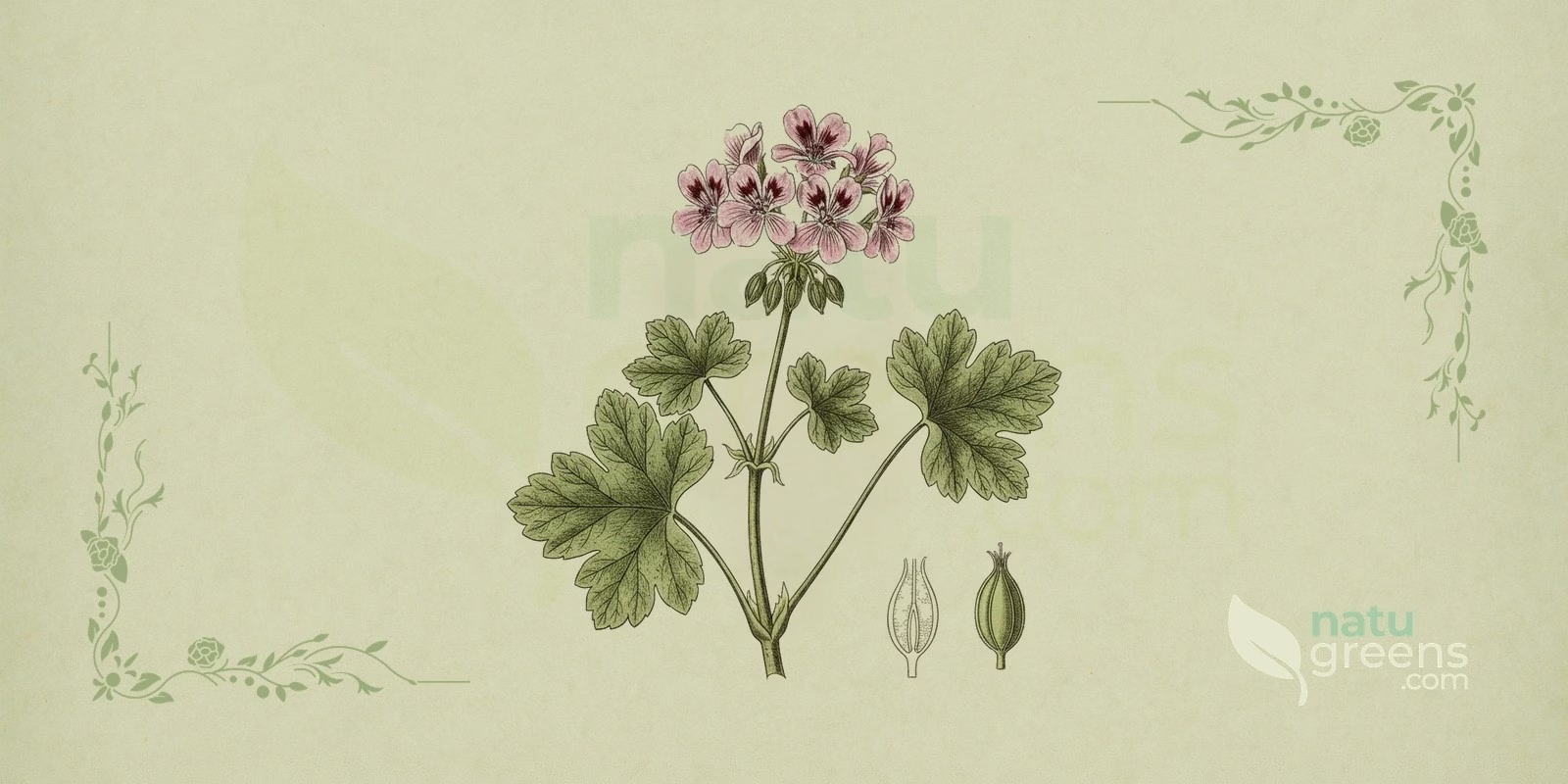
Commercial cultivars are especially valued for the intensity and complexity of their scent, which can range from citrus to minty notes depending on the variety and the growing conditions. The velvety, deeply lobed leaves concentrate the volatile compounds behind both the plant's aromatic value and the properties that science has been investigating. Laboratory and animal studies point to antioxidant, anti-inflammatory and antimicrobial potential, but clinical trials confirming these effects in people are still lacking. For this reason, most of the uses described in this article remain a matter of traditional record.
Popular and International Names of Rose Geranium
- English: old-fashioned rose geranium, rose geranium, rose-scent geranium, sweet-scented geranium.
- French: géranium odorant, géranium rosat.
- German: Duftgeranie, Rosengeranie.
- Italian: geranio odoroso, geranio rosa.
- Portuguese: gerânio-cheiroso, gerânio-de-cheiro, gerânio-perfumado, gerânio-rosa, malva-cheirosa.
- Spanish: geranio de olor, geranio rosa.
Despite what its Portuguese common name suggests, malva-cheirosa ("scented mallow") has nothing to do with the true mallows of the genus Malva, which belong to the family Malvaceae. Likewise, the "geraniums" sold for gardens and balconies are, in the vast majority of cases, species and hybrids of Pelargonium rather than of the genus Geranium, although both genera belong to the same family. Rose geranium should also not be confused with umckaloabo (Pelargonium sidoides), another species of the same genus whose root is used as a standardized extract in the context of respiratory infections.
Botanical Synonyms of Pelargonium graveolens
The accepted name of the species is Pelargonium graveolens L'Hér., and the designation "var. odorata", which appears in some sources and in the nursery trade, is not a valid botanical name. The synonyms recorded for the species include the following:
- Geranium terebinthinaceum Cav.
- Pelargonium terebinthinaceum (Cav.) Desf.
The name rose geranium is also sometimes applied to Pelargonium incrassatum (Andrews) Sims or to its synonym Pelargonium roseum (Andrews) DC., names used mainly in the herb trade, which adds to the confusion. With the essential oil, the naming confusion runs even deeper and has practical consequences. Commercial geranium oil, whether of the Bourbon or the Egyptian type, usually comes from hybrid cultivars such as Pelargonium 'Rosé' and Pelargonium × asperum, which suppliers label as Pelargonium graveolens regardless of the exact botanical nomenclature.
This naming confusion should not lead to mixing it up with umckaloabo (Pelargonium sidoides), a distinct species whose root is used as a standardized extract for respiratory infections. Studies carried out with that extract do not apply to rose geranium, and the reverse is equally true, so information about one plant should not be transferred to the other.
Botanical Family: Geraniaceae
The Geraniaceae family, to which rose geranium belongs, comprises about 800 species distributed among 5 to 7 genera, the best known being Geranium and Pelargonium. Cosmopolitan in distribution, the family reaches its greatest diversity in the temperate and subtropical regions of the southern hemisphere, above all in South Africa. Its plants usually bear pentamerous flowers with five sepals, five petals and ten stamens, along with an elongated, beak-shaped fruit resembling a stork's bill. That detail gave rise to the name of the genus Pelargonium, derived from the Greek pelargos (stork).
The Geraniaceae are highly valued as ornamentals, and several species are grown in gardens and pots for the beauty of their flowers and foliage. Some, like rose geranium, play an important role in perfumery and cosmetics thanks to their aromatic essential oils. Others form part of the traditional medicine of different peoples because they contain bioactive compounds such as tannins, flavonoids and essential oils, to which astringent, anti-inflammatory and antimicrobial actions are attributed.
Parts of Rose Geranium Used
- Essential oil
- Flowers
- Leaves
The leaves are the most widely used part, both fresh and dried, because they concentrate the volatile compounds that are distilled to obtain the essential oil. The flowers are used mainly in cooking, for example to flavor desserts.
Ethnobotanical and Traditional Uses
Traditional and folk records attribute the uses listed below to rose geranium, which combine the leaves taken as tea with the topical and aromatic application of the essential oil. None of them has enough clinical evidence to replace an assessment by a health professional.
- Acne and head lice, applied topically
- Antisepsis of minor skin lesions
- Bruises, eczema and fungal skin infections
- Intestinal cramps and abdominal discomfort
- Minor bleeding, through its astringent action
- Muscle and joint pain, in massage
- Nausea
- Nervousness and emotional tension
- Premenstrual and menopausal discomfort
- Sadness and low spirits, used aromatically
- Skin inflammation and superficial wounds
Therapeutic Properties of Rose Geranium
The properties below summarize what tradition attributes to the plant and what laboratory and animal studies have observed so far, which does not amount to proven indications for clinical use in people.
- Analgesic (traditionally recorded for the relief of mild pain, in massages and compresses)
- Antibacterial (activity against bacteria observed in laboratory tests)
- Antifungal (activity against fungi observed in laboratory tests)
- Anti-inflammatory (effect of the essential oil observed in animal studies)
- Antimicrobial (action on microorganisms in in vitro assays)
- Antioxidant (neutralization of free radicals in laboratory assays)
- Antiseptic (traditional use in cleansing minor wounds)
- Antiviral (activity investigated only in preliminary studies)
- Astringent (contracts tissues and small vessels, according to traditional use)
- Hemostatic (traditional use to stop minor bleeding)
- Hypoglycemic (effect observed in diabetic rats, unproven in humans)
- Relaxant (aroma used in aromatherapy at times of tension and low spirits, effect still under study)
- Repellent (essential oil used to keep insects such as ticks away)
- Wound-healing (traditionally recorded for superficial wounds, with preliminary animal studies)
Detailed Phytochemical Profile of Rose Geranium
Rose geranium essential oil contains more than 50 organic compounds, and their proportions vary with the cultivar, the growing conditions and even the plant's stage of development at harvest. The constituents most often cited in the literature are listed below, notably citronellol and geraniol, which are associated with the rose scent that gives the species its name:
- Citronellol
- Citronellyl formate
- Essential oils (with more than 50 organic compounds)
- Geraniol
- Isomenthone
- Linalool
- Menthone
- Nerol
Although geraniol and citronellol account for much of the fragrance, they also appear on the list of fragrance allergens, which is why the oil should be diluted and a patch test carried out before any application to the skin.
Preparation and Administration Forms of Rose Geranium
- Culinary flavoring (desserts, jams, vinegars and teas)
- Essential oil (aromatherapy, massage and baths, always diluted)
- Tea or infusion (fresh or dried leaves)
- Topical application (always diluted in a carrier oil)
Leaf tea and culinary use reflect traditional records, whereas the essential oil, being highly concentrated, is restricted to aromatic use and to application on the skin after dilution, and must never be swallowed.
Synergy with Other Medicinal Plants
Relaxation and Everyday Tension
In aromatherapy, rose geranium is traditionally combined with lavender (Lavandula angustifolia) and chamomile (Matricaria chamomilla) in blends used for relaxation. Lavender contributes linalool and linalyl acetate, compounds associated with its calming effect, while the apigenin in chamomile is being investigated for a possible action on GABA receptors. Tradition uses this combination in diffusers and massage oils at stressful times and before bed, as a traditional aid to well-being with no proven clinical effect.
Skin Care
In traditional skin care, rose geranium is often paired with calendula (Calendula officinalis) and tea tree oil (Melaleuca alternifolia). Calendula is known for its traditional use as a wound-healing and anti-inflammatory herb, and tea tree oil has antimicrobial activity described in laboratory studies. The three plants go together into creams and lotions traditionally used on skin with acne, eczema, small wounds and other irritations, always in diluted formulations and after a patch test.
Natural Repellent
The combination of rose geranium with citronella (Cymbopogon nardus) and lemon eucalyptus (Corymbia citriodora) is traditionally used as a natural insect repellent, including against ticks and mosquitoes. The essential oils of these plants, rich in citronellal, citronellol and p-menthane-3,8-diol, are used in a complementary way to keep pests away and appear in body sprays, diffusers and candles as an aromatic alternative to synthetic repellents. Even so, they do not replace registered products in areas at risk of mosquito-borne diseases.
Recipes and Usage Protocols of Rose Geranium
Traditional Rose Geranium Leaf Infusion
Ingredients: a few fresh or dried rose geranium leaves and 1 cup of boiling water.
Method: Place the leaves in a cup, add the boiling water, cover and leave to infuse for 5 to 7 minutes before straining. The drink is traditionally taken at times of stress and tension as an aid to relaxation, but how often to drink it should be decided with a health professional, as there are no clinical safety studies on regular use. It is not recommended during pregnancy or breastfeeding, or for young children.
Rose Geranium Massage Oil
Ingredients: 5 drops of rose geranium essential oil and 30 ml of a carrier vegetable oil, such as sweet almond or jojoba oil.
Method: Mix the essential oil into the carrier oil in a dark glass bottle and do a patch test on a small area of skin first. Apply with a gentle massage to areas with muscle or joint pain, a use traditionally associated with easing discomfort, and avoid direct sun exposure after application.
Rose Geranium Facial Toner Spray
Ingredients: 10 drops of rose geranium essential oil and 100 ml of rose hydrosol or distilled water.
Method: Add the essential oil to the hydrosol or distilled water in a dark glass spray bottle and shake well before each use, since the oil does not mix with water. Mist over a clean face with your eyes closed, for the astringent and toning effect traditionally associated with the plant on oily or acne-prone skin, and stop using it if you notice stinging or redness.
Warm Compress for Irritated Skin
Ingredients: 3 drops of rose geranium essential oil, 1 cup of warm water and a clean cloth or gauze.
Method: Add the essential oil to the warm water and mix well, soak the cloth or gauze in the solution, wring out the excess and lay it on the irritated area, whether affected by eczema or insect bites, for 10 to 15 minutes. The procedure can be repeated as needed, as a traditional way to soothe irritation, but it should not be done on open or extensive wounds.
Homemade Rose Geranium Leaf Syrup
Ingredients: a handful of fresh rose geranium leaves, 500 ml of water and 250 g of honey.
Method: Make a strong infusion with the leaves and the water, let it stand for 15 minutes and strain. Add the honey and warm gently in a double boiler until it has fully dissolved, then store the syrup in a sterilized glass jar in the refrigerator. It is traditionally used in small portions for colic and digestive discomfort, and the amount and frequency should be guided by a health professional. It is not recommended during pregnancy or breastfeeding, or for young children, and honey must never be given to babies under 1 year old.
The preparations above follow traditional records and do not replace professional guidance. Before any internal use, check the contraindications and interactions described in this article.
Associated Therapies
Aromatherapy
Rose geranium essential oil is one of the most versatile in aromatherapy, which traditionally uses it to support emotional well-being. Its floral, slightly sweet aroma is used at times of stress, tension and low spirits, and preliminary studies are investigating this effect, still without firm clinical conclusions. It can be diffused into the room, inhaled directly from the bottle or applied to the pulse points and temples, always diluted in a carrier oil. It also features in traditional practices aimed at easing nervous tension and supporting concentration.
Clinical Herbal Medicine
In herbal medicine, rose geranium appears in topical formulations because of the anti-inflammatory, antimicrobial and astringent properties described in laboratory and animal studies. Extracts and tinctures are used in preparations traditionally applied to acne, eczema, dermatitis and other skin inflammations, without robust clinical trials to confirm their efficacy. Internal use to regulate blood glucose has no clinical support, since the hypoglycemic effect has been observed only in preclinical studies in rats. Any oral use, including for digestive complaints, should be individualized and supervised by a qualified health professional, who will assess each person's condition and any possible drug interactions.
Natural Cosmetics
Thanks to the antioxidant activity observed in the laboratory and its pleasant aroma, rose geranium is a popular ingredient in natural cosmetics, found in serums, face creams, body lotions and hair products. The cosmetics industry associates it with skin toning, a reduced appearance of wrinkles and fine lines, and cell renewal, but these effects still lack robust clinical evidence. Tradition recommends it for oily and combination skin, because of a supposed effect on sebum production, and also for sensitive and irritated skin. In that last case, dilution and a patch test become even more important, as the fragrance allergens in the oil can trigger a reaction.
Contraindications and Side Effects of Rose Geranium
Rose geranium is generally well tolerated in culinary use and when correctly applied to the skin, but it has contraindications and side effects that should be known before any medicinal use. People allergic to plants of the Geraniaceae family should avoid it, as reactions such as contact dermatitis, hives and, in rare cases, anaphylaxis can occur.
The essential oil, rich in citronellol, geraniol and linalool, must never be ingested. On the skin, it should always be diluted in a carrier oil and used only after a patch test on a small area, since geraniol and citronellol are listed fragrance allergens. If swallowed accidentally, especially in large amounts, the oil can cause gastric irritation. People with very sensitive skin may experience redness or itching even with the diluted product.
Medicinal use of the plant and its essential oil should be avoided during pregnancy and breastfeeding and in young children, owing to the lack of conclusive safety studies at these stages of life. The hypoglycemic effect of the extract was observed in a preclinical study, so people taking antidiabetic medication need to be cautious and under medical supervision. The leaf infusion is a traditional record, with no clinical studies establishing a safe dose or efficacy in people.
Drug Interactions
No drug interactions are widely documented for Pelargonium graveolens, but anyone taking medication on a continuous basis, especially anticoagulants or antidiabetic drugs, should consult a health professional before using the plant or its essential oil for medicinal purposes. This caution stems from the hypothesis that coumarins present in the plant may influence blood clotting and from the hypoglycemic effect observed in animals, which could add to that of glucose-lowering medication.
Historical Notes and Interesting Facts
Origin and Spread
Rose geranium is native to South Africa, where it grows in mountainous regions. South African pelargoniums began reaching Europe in the 17th century, brought by botanists and explorers, which paved the way for the species to gain rapid popularity thanks to its scent and beauty. Its spread around the world gathered pace with demand from perfumery, which was looking for an alternative to the extremely expensive rose oil. Today, rose geranium is grown on a large scale in countries such as Algeria, China, Egypt and Morocco, the main producers of geranium essential oil.
Variety of Scents
Despite its name, rose geranium and its hybrids can display a surprising range of aromas that go well beyond rose and include cultivars with notes of apple, chocolate, lemon, mint, nutmeg and pine. This diversity stems from the complex chemical makeup of the essential oils, shaped by genetic, environmental and cultivation factors, and it makes the plant a coveted prize for collectors and scent enthusiasts.
Culinary Use
Beyond its medicinal and aromatic uses, the leaves and flowers of rose geranium are appreciated in the kitchen, where they flavor desserts such as cakes, ice creams, jams and puddings with a refined floral touch. The fresh leaves also go into salads and vinegars, lending them a unique flavor. In some cultures they are used to make teas and infusions, an aromatic drink that tradition associates with relaxation. This versatility has made rose geranium a special ingredient in fine cuisine.
Frequently Asked Questions about Rose Geranium
Does Rose Geranium Tea Help You Sleep?
There are no clinical studies proving this effect in people. The leaf infusion is traditionally drunk in the evening as a relaxing beverage, and the plant's aroma is used in aromatherapy at times of stress and tension, factors that often disrupt sleep. If insomnia persists, the safest course is to see a health professional to investigate the cause.
What Are the Benefits of Rose Geranium Essential Oil for the Skin?
In laboratory and animal studies, the essential oil has shown antimicrobial, anti-inflammatory and antioxidant activity, and cosmetic tradition uses it as an astringent and toner for oily or acne-prone skin. These effects have not yet been confirmed in robust clinical trials, so the oil is no substitute for dermatological treatment. It should always be applied diluted and after a patch test, because it contains geraniol and citronellol, well-known fragrance allergens.
Can Rose Geranium Be Used by Children?
Medicinal use of rose geranium should be avoided in young children, and the essential oil, being highly concentrated, should not be used on babies. For older children, any use, even of infusions or well-diluted oil, requires guidance from a pediatrician or another health professional. The honey in the homemade syrup should also not be given to children under 1 year old.
Are There Any Interactions with Medications?
Serious interactions are not widely documented, but anyone taking anticoagulants or antidiabetic drugs should talk to their doctor or pharmacist before using the plant or its essential oil. The caution is based on the hypothesis that some of its components may influence blood clotting and on the hypoglycemic effect observed in preclinical studies, which could add to that of glucose-lowering medication.
How Should I Store Rose Geranium Leaves?
To preserve their aroma, the leaves should be kept in a cool, dry and dark place, in tightly sealed containers. Dried leaves must be completely dehydrated before storage to avoid mold, while fresh leaves can be kept for a few days in the refrigerator or frozen, which preserves their aroma and flavor for longer.
What Is the Difference between Rose Geranium and Umckaloabo?
Rose geranium and umckaloabo (Pelargonium sidoides) are different species of the same genus: umckaloabo is used for its root, as a standardized extract, in the context of respiratory infections, while rose geranium is used for its leaves and aromatic essential oil. Studies carried out with umckaloabo extract do not apply to rose geranium, so the two plants should not be substituted for each other.
Notice: this content is for informational purposes and does not replace professional medical advice. Consult a physician or herbal practitioner before using medicinal plants, especially during pregnancy, breastfeeding, or alongside medication.
How to cite this article
NATUGREENS. Rose Geranium (Pelargonium graveolens): Benefits and Uses. Natugreens, 3 Nov. 2026. Disponível em: https://natugreens.com/pelargonium-graveolens-rose-geranium/. Accessed: Nov. 5, 2026.
Natugreens. (2026). Rose Geranium (Pelargonium graveolens): Benefits and Uses. Natugreens. https://natugreens.com/pelargonium-graveolens-rose-geranium/
References and Scientific Studies
- PMC2022 Al-Mijalli SH, et al. Chemical Profiling and Biological Activities of Pelargonium graveolens Essential Oils at Three Different Phenological Stages. Plants (Basel). 2022.
- PMC2012 Boukhris M, et al. Hypoglycemic and antioxidant effects of leaf essential oil of Pelargonium graveolens L'Hér. in alloxan induced diabetic rats. Lipids in Health and Disease. 2012.
- PMC2021 Fekri N, et al. Studies on essential oil from rose-scented geranium, Pelargonium graveolens L'Hérit. (Geraniaceae). Natural Product Research. 2021.
Not an exhaustive list. Read the full contraindications section before considering use.
Read full section