Quick summary
Gum rockrose (Cistus ladanifer L.) is an evergreen shrub of the Cistaceae family, known as esteva in Portugal and as jara pringosa in Spain. The Portuguese name is also the one used in Brazil, where the plant has no common name of its own. Described by Carl Linnaeus in 1753, the species is native to the western…
Main caution: Gum rockrose has no safe dose established by clinical studies, and tea made from the leaves and flowering tops remains a traditional Iberian practice (as an astringent, for wounds and for digestion), with no clinical…
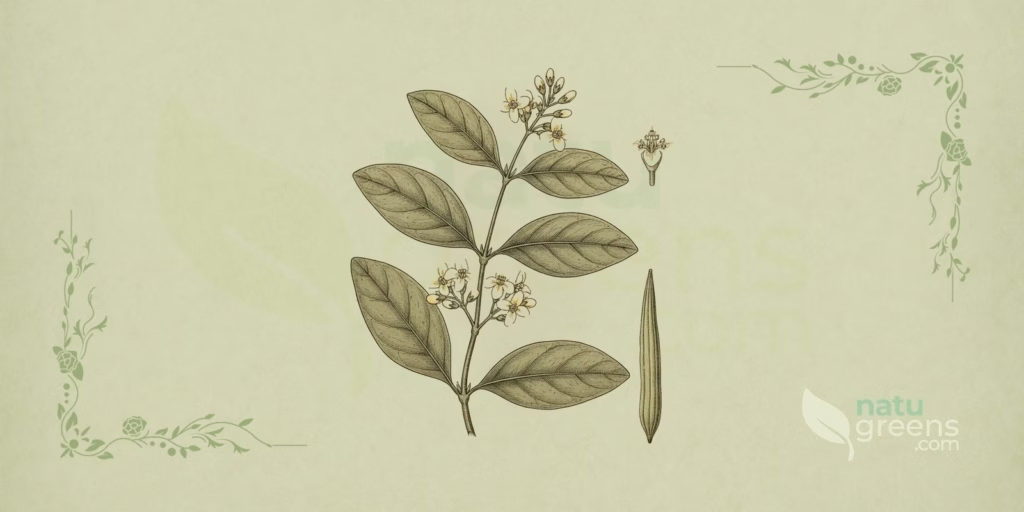
Gum rockrose (Cistus ladanifer L.) is an evergreen shrub of the Cistaceae family, known as esteva in Portugal and as jara pringosa in Spain. The Portuguese name is also the one used in Brazil, where the plant has no common name of its own. Described by Carl Linnaeus in 1753, the species is native to the western Mediterranean and stands out for the aromatic resin that coats its leaves and stems, known as labdanum (lábdano or ládano in Portuguese). Used for centuries in folk medicine and perfumery, gum rockrose has become an emblematic plant of the Iberian landscape.
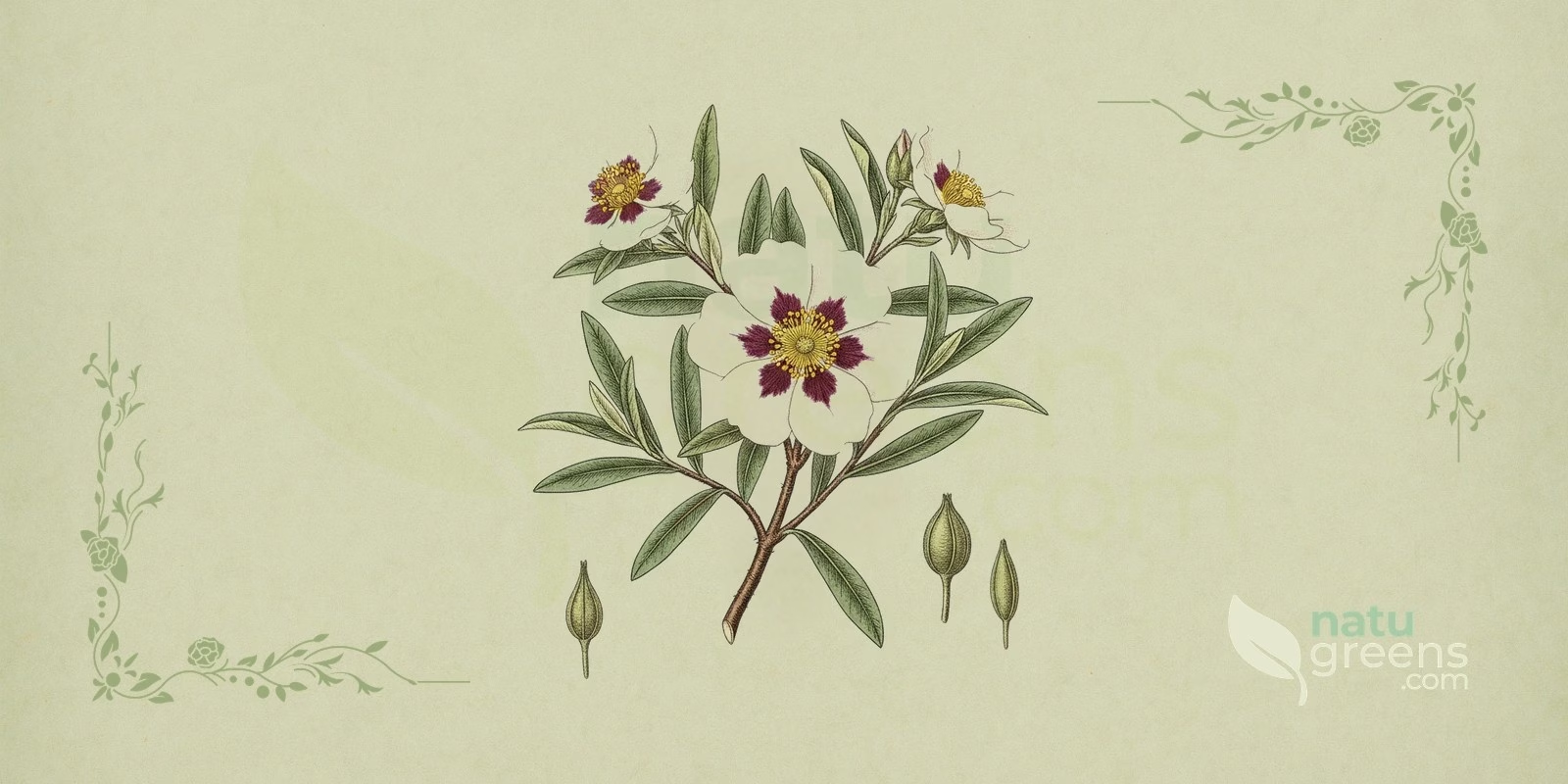
In herbal tradition, gum rockrose is associated with skin conditions, digestive complaints and respiratory ailments, uses that belong to folk practice rather than to established clinical indications. The plant is rich in polyphenols and terpenes, compounds credited with antioxidant, anti-inflammatory and antimicrobial activity in laboratory studies. Modern scientific research is looking into some of these traditional uses, but there are still no clinical trials with the species, which is why internal use of the tea remains under study.
Popular and International Names of Gum Rockrose
Gum rockrose goes by different names from country to country, and many of them refer to the sticky resin that covers the leaves and young branches of the plant.
- English: brown-eyed rockrose, common gum cistus, gum rockrose, labdanum.
- French: ciste à gomme, ciste ladanifère.
- German: Lack-Zistrose.
- Italian: cisto, ladano.
- Portuguese: esteva, esteva-de-ládano, lábdano (or ládano).
- Spanish: jara de las cinco llagas, jara pringosa, ládano.
Botanical Synonyms of Cistus ladanifer
Cistus palhinhae Ingram is a botanical synonym of gum rockrose, often associated with a specific subspecies, while Cistus ladanifer L. remains the name accepted by most botanical authorities, including World Flora Online and the former The Plant List.
The trade name cistus is applied to several species of the genus Cistus, which often leads to confusion with gum rockrose. The clinical studies of cistus tea and of the standardized extract for respiratory infections were carried out with Cistus × incanus and Cistus creticus, not with gum rockrose, and their results cannot be transferred to Cistus ladanifer.
Botanical Family: Cistaceae
The Cistaceae family comprises about 8 genera and 200 species distributed across the Northern Hemisphere, with the greatest diversity concentrated in the Mediterranean region. They are shrubs and herbaceous plants, many of them with showy flowers, adapted to poor, dry soils and known for producing aromatic resins. These plants are ecologically important in fire-prone ecosystems, an environment in which gum rockrose itself behaves as a pioneer species.
Parts of Gum Rockrose Used
Folk medicine uses the aerial parts of gum rockrose and the aromatic products extracted from them, each with its own purposes and precautions.
- Essential oil (external use only)
- Flowers
- Leaves
- Resin (labdanum)
The leaves and flowering tops are the basis of the traditional tea, while the resin and essential oil are intended only for diluted external use and perfumery, never for ingestion.
Ethnobotanical and Traditional Uses
The uses below come from folk medicine, mainly the Iberian tradition, and describe how the plant has been used over time, without confirmation from clinical trials.
- Anthelmintic
- Antirheumatic
- Antiseptic
- Burns
- Catarrh
- Diarrhea
- Emmenagogue
- Natural pesticide
- Skin conditions
- Toothache
- Ulcers
Among these records, its use as an emmenagogue, that is, to stimulate menstrual flow, reinforces the recommendation to avoid the plant during pregnancy.
Therapeutic Properties of Gum Rockrose
Most of the properties listed come from laboratory studies with extracts, resin or essential oil and are not equivalent to proven effects in people.
- Antibacterial (activity against bacteria observed in vitro)
- Antifungal (activity of the essential oil against fungi observed in vitro)
- Anti-inflammatory (effect observed in preliminary studies)
- Antioxidant (free radical scavenging observed in vitro)
- Antiplatelet (effect on platelet aggregation suggested in preliminary studies)
- Antiproliferative (activity observed in laboratory studies, without clinical evidence)
- Antispasmodic (spasm relief in the traditional record, with preliminary studies)
- Antiviral (activity against viruses observed in vitro)
- Astringent (action attributed to the high tannin content, the basis of the traditional record)
- Wound healing (traditional record in wound care)
Detailed Phytochemical Profile of Gum Rockrose
The chemical composition of gum rockrose varies with the plant part and the origin of the material, but studies highlight volatile compounds in the essential oil and a fraction rich in polyphenols and tannins in the leaves.
- Alpha-pinene
- Borneol
- Camphene
- Flavonoids
- Labdanum (resin)
- Polyphenols
- Sesquiterpene lactones
- Tannins
- Trimethylcyclohexanone
- Viridiflorol
The tannins explain the astringent action that tradition attributes to the plant, as well as its possible interaction with iron and medicines, which is why a 2-hour gap between the tea and these products is recommended.
Preparation and Administration Forms of Gum Rockrose
The recorded preparations of gum rockrose fall into traditional internal use and external applications, which require dilution and a prior skin test.
- Cream
- Decoction
- Essential oil (external and diluted use)
- Extract
- Infusion
- Poultice
- Tincture
Infusion and decoction of the leaves correspond to traditional internal use, which remains under study and has no established dose. Poultices, creams and diluted essential oil are forms of external use, while the extract and tincture should only be used under the guidance of a healthcare professional.
Synergy with Other Medicinal Plants
Traditional Combinations for the Cold Season
In folk herbal medicine, gum rockrose is combined with echinacea (Echinacea purpurea) and elder (Sambucus nigra) in blends traditionally used during seasonal transitions and in periods of greater exposure to respiratory infections. This combination has not been evaluated in clinical studies, and the cistus tea trials in this area used a different species, so they cannot serve as evidence for gum rockrose.
Combinations for Topical Use
For external use, gum rockrose is combined with calendula (Calendula officinalis) and aloe (Aloe vera) in preparations traditionally used in the care of minor wounds and mild burns. In this tradition, the wound-healing action attributed to gum rockrose would add to the soothing and regenerating qualities associated with calendula and aloe, although no study has evaluated the blend. Any preparation with essential oil or resin must be diluted and tested on the skin first, and people with dermatitis or sensitive skin should avoid it.
Recipes and Usage Protocols of Gum Rockrose
Traditional Leaf Infusion
In the Iberian tradition, gum rockrose tea is made with a small amount of dried leaves in hot water, left covered for 5 to 10 minutes and strained before drinking, a use traditionally associated with the antioxidant and astringent qualities of the plant. Since no dose has been established by clinical studies, the amount and frequency should be set with a healthcare professional.
Consult a healthcare professional before use, keep a 2-hour gap between the tea and iron supplements or medicines, and do not use it during pregnancy or breastfeeding.
Diluted Oil for Topical Use
For external use, dilute 2 to 3 drops of gum rockrose essential oil in 10 ml of a carrier oil such as jojoba or sweet almond, a blend traditionally used in the care of minor wounds and skin irritations. Before the first application, test a small amount on the inner forearm and wait 24 hours, since the resin and essential oil are contact sensitizers.
Do not apply the oil undiluted, avoid deep or extensive wounds, which require professional assessment, and never ingest the essential oil.
The preparations above follow traditional records and do not replace professional guidance. Before any internal use, check the contraindications and interactions described in this article.
Associated Therapies
Aromatherapy
In aromatherapy, gum rockrose essential oil is diffused into the room to create a sense of well-being, and tradition records its use by inhalation for respiratory conditions such as bronchitis and laryngitis. This use has not been confirmed by clinical studies, and respiratory symptoms that persist or come with fever call for medical evaluation, not self-treatment with essential oils.
Herbal Medicine
In herbal medicine, gum rockrose is included in preparations such as extracts and tinctures that seek to make use of the antimicrobial, anti-inflammatory and antioxidant activities observed in the laboratory. The traditional record includes its use for catarrh and diarrhea and as an emmenagogue, an application that calls for extra caution and makes the plant contraindicated for pregnant women.
Contraindications and Side Effects of Gum Rockrose
Gum rockrose has no safe dose established by clinical studies, and tea made from the leaves and flowering tops remains a traditional Iberian practice (as an astringent, for wounds and for digestion), with no clinical trial and still under study. Some studies suggest that leaf exudates may interfere with muscle relaxation, and excessive consumption of the tea may cause gastrointestinal discomfort.
The resin and essential oil are contact sensitizers, with allergic dermatitis documented from the use of labdanum in fragrances, so topical use should only be done with the diluted product and after a test on a small area of skin. Never ingest the essential oil or the resin, and people with a known allergy to plants of the Cistaceae family should avoid any form of use.
Because it is rich in tannins, gum rockrose should be taken 2 hours apart from iron supplements and medicines, since these compounds can reduce their absorption. As the antiplatelet activity described in preliminary studies suggests a possible interaction with anticoagulants and antiplatelet drugs, people taking these medicines need medical advice before drinking the tea.
Avoid gum rockrose during pregnancy and breastfeeding due to the lack of safety data, a caution reinforced by the traditional use of the plant as an emmenagogue, and do not give it to children without professional guidance. The clinical results for cistus tea and the standardized extract for respiratory infections come from Cistus × incanus and Cistus creticus, not from gum rockrose, so they do not support using Cistus ladanifer for the same purpose. Consult a healthcare professional before using the plant, especially if you are taking other medicines.
Historical Notes and Interesting Facts
Labdanum in Antiquity
Labdanum, the sticky resin produced by Cistus species, has been used since antiquity, and in ancient Egypt it was part of kyphi incense and embalming practices. Since gum rockrose is native to the western Mediterranean, the labdanum of these ancient sources probably came from eastern species of the genus, such as Cistus creticus. In perfumery, gum rockrose labdanum is prized as a fixative and gives fragrances an ambery, woody note.
Adaptation to Fire
Gum rockrose is a pioneer plant, notable for its ability to regenerate after wildfires, because its seeds are stimulated by the heat of fire. This allows them to germinate and rapidly colonize burned areas, which gives the species an important role in the ecological succession of Mediterranean landscapes.
Frequently Asked Questions about Gum Rockrose
Is Gum Rockrose Tea Good for the Immune System?
There are no clinical studies showing an effect of gum rockrose tea on immunity. The leaves contain polyphenols and tannins with antioxidant and antiviral activity observed in the laboratory, but these results are not equivalent to a proven benefit in people, and the tea remains a traditional Iberian practice, still under study.
Do Studies on Cistus Tea Apply to Gum Rockrose?
No, because the clinical studies of cistus tea and of the standardized extract for respiratory infections were carried out with Cistus × incanus and Cistus creticus, not with gum rockrose. These results cannot be transferred to Cistus ladanifer, and it is worth checking the label to see which species a product contains before buying it.
How Is Gum Rockrose Used for Digestive Complaints?
In folk tradition, gum rockrose is used for catarrh and diarrhea, a use linked to the astringent action attributed to the tannins in its leaves. This use has not been confirmed by clinical trials, and diarrhea that is persistent, bloody or accompanied by fever requires medical evaluation.
Are There Known Side Effects of Using Gum Rockrose?
Excessive consumption of the tea may cause gastrointestinal discomfort, and the resin and essential oil are contact sensitizers, with allergic dermatitis documented from the use of labdanum in fragrances. People allergic to plants of the Cistaceae family should avoid gum rockrose, and the tea should be kept 2 hours apart from iron supplements and medicines. Always consult a healthcare professional before starting to use any medicinal plant.
Is It Safe to Ingest Gum Rockrose Essential Oil or Resin?
No, gum rockrose essential oil and resin should never be ingested, in any amount. These products are intended for perfumery and topical use, always diluted and after a test on a small area of skin, because they can cause allergic contact dermatitis.
Can Pregnant and Breastfeeding Women Use Gum Rockrose?
No, gum rockrose should be avoided during pregnancy and breastfeeding due to the lack of safety data. The traditional record of the plant as an emmenagogue, that is, a stimulant of menstrual flow, reinforces this caution, and children should also use it only under professional guidance.
Notice: this content is for informational purposes and does not replace professional medical advice. Consult a physician or herbal practitioner before using medicinal plants, especially during pregnancy, breastfeeding, or alongside medication.
How to cite this article
NATUGREENS. Gum Rockrose (Cistus ladanifer): Properties and Benefits. Natugreens, 3 Nov. 2026. Disponível em: https://natugreens.com/cistus-ladanifer-gum-rockrose/. Accessed: Nov. 4, 2026.
Natugreens. (2026). Gum Rockrose (Cistus ladanifer): Properties and Benefits. Natugreens. https://natugreens.com/cistus-ladanifer-gum-rockrose/
References and Scientific Studies
- PMC2021 El Karkouri J, et al. Chemical Composition, Antibacterial and Antifungal Activity of the Essential Oil from Cistus ladanifer L. Plants (Basel). 2021.
- PMC2024 Frazão DF, et al. Labdanum Resin from Cistus ladanifer L. as a Source of Compounds with Anti-Diabetic, Neuroprotective and Anti-Proliferative Activity. Molecules. 2024.
- PMC2025 Gago C, et al. Cistus ladanifer L.: Essential Oils, Volatiles, By-Products, and Their Biological Properties. Molecules. 2025.
- PMC2001 García-González JJ, et al. Cistus ladanifer contact dermatitis. Contact Dermatitis. 2001.
Not an exhaustive list. Read the full contraindications section before considering use.
Read full section