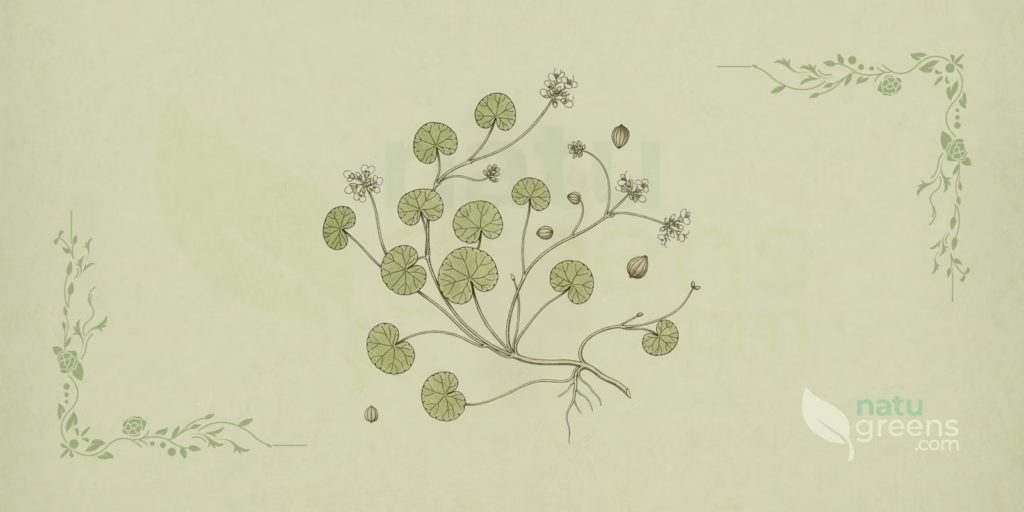
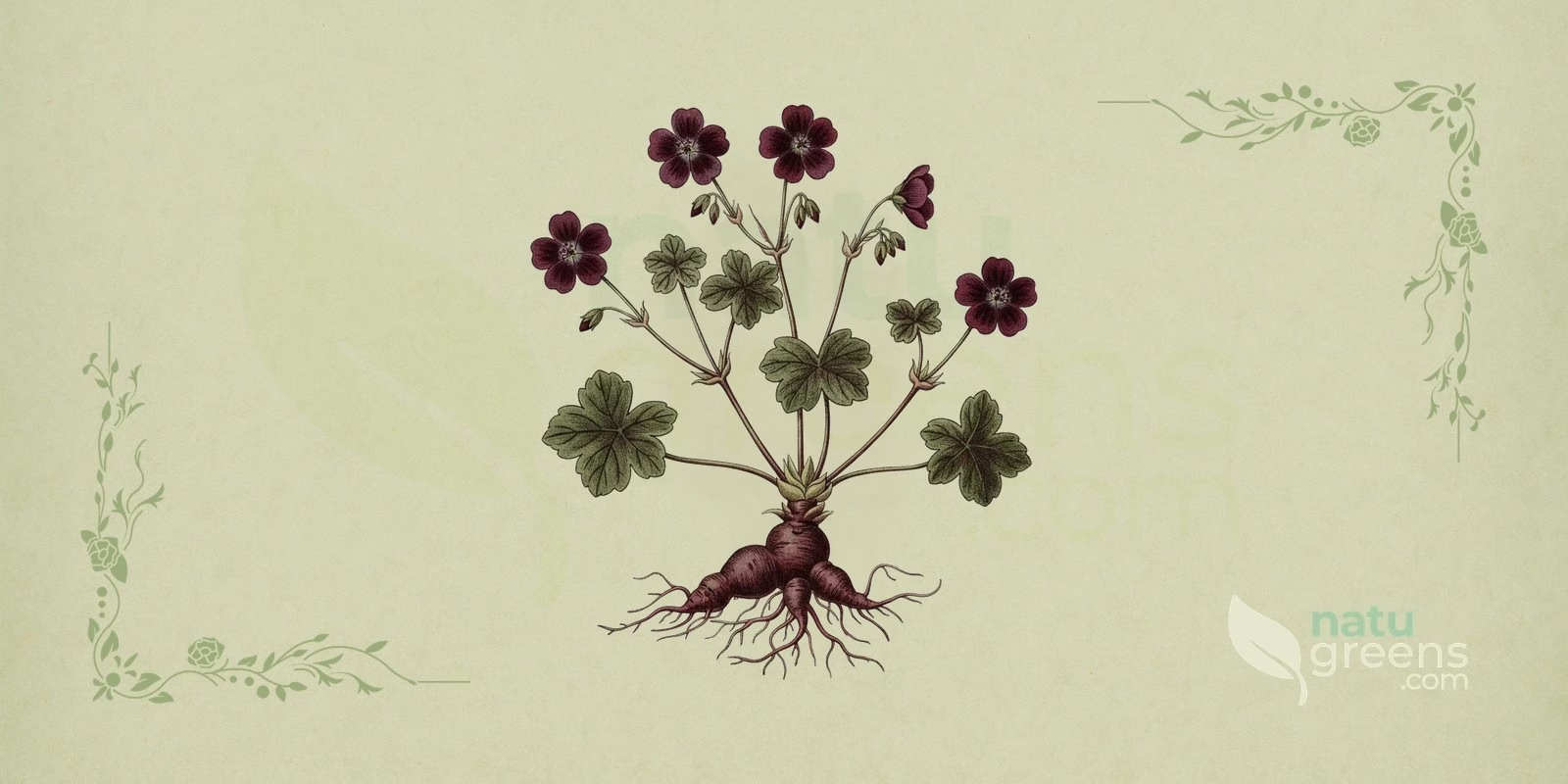
Pelargonium sidoides DC. / African Geranium, a herbaceous perennial of the Geraniaceae family native to South Africa, Lesotho, and Eswatini, is marketed internationally as Umckaloabo/Kaloba, registered trade names that do not substitute for the species’ botanical classification. Described by Augustin Pyramus de Candolle, it should not be confused with the genus Geranium: although both belong to the Geraniaceae family, Pelargonium and Geranium are botanically distinct genera, and African geranium is unrelated to the ornamental geranium species common in gardens. Its tuberous roots are the most widely used part, employed for generations in traditional South African medicine to support acute respiratory infections such as colds and bronchitis. The plant produces flowers ranging in color from dark red to nearly black and has velvety, heart-shaped leaves.
The standardized root extract of African geranium has gained international recognition as a phytotherapeutic resource for supporting conditions that affect the respiratory system, and the related species Pelargonium reniforme is recognized as a second official source species of the same genus, with a similar traditional use. Modern research has investigated root extracts, which contain compounds with antimicrobial, antiviral, and immunomodulatory activity observed in laboratory studies and clinical trials. This growing interest has validated part of the plant’s traditional use, although the clinical efficacy of each indication remains a subject of research.
Popular and International Names of African Geranium
- English: african geranium, kaloban, rabas, south african geranium, umckaloabo.
- Spanish: geranio africano, umckaloabo.
- Portuguese: gerânio sul-africano, pelargônio-do-cabo.
- French: géranium du cap, umckaloabo.
- Italian: geranio africano, umckaloabo.
- German: afrikanische geranie, umckaloabo.
Botanical Synonyms of Pelargonium sidoides
Pelargonium sidoides DC. is the accepted botanical name. However, several synonyms have been used throughout the plant’s taxonomic history. The Plant List and World Flora Online recognize Pelargonium sidoides DC. as the correct nomenclature for this species. The plant was first described by Carl Peter Thunberg as Geranium sidifolium Thunb., but was later reclassified.
Cortusina sidifolia (Thunb.) Eckl. & Zeyh., Geraniospermum sidifolium (Thunb.) Kuntze, Geranium sidifolium Thunb., Pelargonium purpurascens J.A.Eeden.
Botanical Family: Geraniaceae
The Geraniaceae family is made up of herbaceous and shrubby plants, widely distributed in temperate and subtropical regions, with the greatest diversity in South Africa. This family includes about 800 species in 5 to 7 genera, with Pelargonium and Geranium being the best known, though botanically distinct from each other. Geraniaceae are characterized by flowers with five petals and stamens, and a fruit shaped like a crane’s beak, which splits into five mericarps when ripe.
Many species in this family are cultivated as ornamental plants, while others hold medicinal and aromatic importance. The genus Pelargonium, in particular, is known for producing essential oils and bioactive compounds studied for their pharmacological properties. The Geraniaceae family is an example of Africa’s rich botanical biodiversity and its contribution to traditional and modern medicine.
Parts of African Geranium Used
- Root extracts
- Roots (mainly tuberous)
Ethnobotanical and Traditional Uses
- Bronchitis.
- Colic.
- Common cold.
- Cough.
- Diarrhea.
- Dysentery.
- Flu.
- Lung diseases.
- Mucus.
- Respiratory tract infections.
- Sinusitis.
- Tuberculosis.
Therapeutic Properties of African Geranium
- Antibacterial (activity studied against bacteria)
- Antiviral (activity studied against viruses)
- Expectorant (traditional use to help clear mucus)
- Immunomodulatory (effect studied on the immune system)
- Mucolytic (activity studied in thinning mucus)
Detailed Phytochemical Profile of African Geranium
- Coumarins (especially umckalin and scopoletin)
- Flavonoids
- Phenolic acids
- Tannins
Preparation and Administration Forms of African Geranium
- Dry extract
- Fluid extract
- Infusion (of the roots)
- Tincture
Synergy with Other Medicinal Plants
Respiratory Infections
African geranium can be combined with echinacea (Echinacea purpurea) as a traditional use aimed at the immune response during respiratory infections. Echinacea is known for its immunostimulant properties, while African geranium acts on pathogens and modulates the inflammatory response, according to preliminary studies. This combination is associated, in traditional use, with a more comfortable recovery and a perceived reduction in symptom severity, without replacing medical evaluation.
Cough Relief
The pairing of African geranium with thyme (Thymus vulgaris) or ivy (Hedera helix) is traditionally used for cough and expectoration relief. Thyme and ivy have studied mucolytic and expectorant properties, complementing African geranium’s action in thinning mucus and reducing irritation of the airways. This combination is used for bronchitis and colds with a productive cough, as traditional support.
Recipes and Usage Protocols of African Geranium
Infusion for Colds and Flu
Ingredients: 1 teaspoon of dried Pelargonium sidoides root (chopped), 200 ml of boiling water.
Preparation: Add the chopped root to the boiling water. Cover and let steep for 10-15 minutes. Strain and drink warm. It is traditionally consumed 2 to 3 times a day as support for relieving symptoms of colds, flu, and cough. The infusion is associated, in folk use, with thinning respiratory secretions.
Tincture for Immune Support
Ingredients: 50 g of dried Pelargonium sidoides root, 250 ml of 70% grain alcohol.
Preparation: Place the root in a dark glass jar and cover with the alcohol. Let macerate for 2 to 4 weeks in a cool, dark place, shaking daily. Strain and store in a dropper bottle. Take 20-30 drops diluted in water, twice a day, as a traditional immune support use against respiratory infections. Consult a healthcare professional for the appropriate dosage, especially for anyone taking anticoagulants.
The preparations above follow traditional records and do not replace professional guidance. Before any internal use, review the contraindications and interactions described in this article.
The preparations above follow traditional records and do not replace professional guidance. Before any internal use, check the contraindications and interactions described in this article.
Associated Therapies
Phytotherapy
In phytotherapy, African geranium is widely used in standardized extracts, especially the EPs 7630 extract, which is well studied and commercially available. This extract is investigated as support for acute respiratory tract infections, such as acute bronchitis and the common cold, with results evaluated in clinical trials. Modern phytotherapy values standardization to ensure dose consistency, drawing on evidence suggesting antimicrobial and immunomodulatory properties, even though the magnitude of the clinical effect varies between studies.
Homeopathy
Although less common than in phytotherapy, African geranium can be used in homeopathic preparations for respiratory symptoms, given in specific dilutions according to the principles of that practice. The choice of homeopathic remedy is individualized, taking into account the totality of the patient’s symptoms. The homeopathic approach differs significantly from phytotherapy in terms of preparation and proposed mechanism of action.
Contraindications and Side Effects of African Geranium
General Contraindications
African geranium is contraindicated in cases of known hypersensitivity to the plant or any of its components. It is not recommended for patients with severe liver or kidney disease, due to a lack of safety studies in these populations. Pregnant or breastfeeding women should avoid use, as there is insufficient data to guarantee safety during these periods. Children under 1 year of age should also not use the extract without medical guidance.
Common Side Effects
The most frequently reported side effects include mild gastrointestinal disturbances, such as stomach pain, nausea, diarrhea, and vomiting. Allergic skin reactions, such as rashes and itching, are rare but can occur. In very rare cases, mild bleeding has been observed, such as nosebleeds or gum bleeding, although a causal relationship with African geranium has not been fully established. It is crucial to stop use and seek medical attention if serious adverse reactions occur.
Drug Interactions
Due to its possible mild influence on blood clotting, African geranium should be used with caution by people taking anticoagulants or antiplatelet agents, always under the guidance of a healthcare professional. Rare reports of hepatotoxicity led the German health authority (BfArM) to issue a safety warning in 2012 regarding preparations based on the plant’s root; the causal relationship between the use of African geranium and the reported cases has not been proven, but it is recommended to discontinue use and seek medical evaluation if signs of liver problems appear, such as jaundice, dark urine, or unusual fatigue. There is also insufficient data on the safety of use during pregnancy, which reinforces the advice to avoid it during that period.
Historical Notes and Interesting Facts
Origin of the International Trade Name
The name under which the root extract became internationally known derives from terms in the Zulu language of South Africa: one associated with complaints related to lung diseases, and another with chest pain. This origin reflects the traditional use of the plant by the indigenous peoples of the region to treat a variety of respiratory conditions, including cough, colds, and tuberculosis. The plant was introduced to Western medicine in the 19th century by Charles Henry Stevens, who used it to treat his own tuberculosis.
Discovery and Use in Europe
The discovery of African geranium by Western medicine is credited to Charles Henry Stevens, an Englishman who, in the late 19th century, traveled to South Africa seeking treatment for his own tuberculosis. He was treated by a Zulu healer with a remedy based on the plant’s root and, after improving, brought it back to Europe. There, the root extract began to be marketed under the name “Stevens’ Consumption Cure” (a historical English trade name for the tuberculosis preparation), becoming popular in supporting respiratory conditions, especially before the advent of antibiotics.
Frequently Asked Questions about African Geranium Tea
Can African Geranium Tea Be Used by Children?
The use of Pelargonium sidoides extracts in children should be done with caution and under medical guidance. Although some studies suggest safety and favorable results in children over 1 year of age in supporting respiratory infections, it is essential to consult a pediatrician before administering any preparation based on the plant. For infants under 1 year of age, use is generally contraindicated due to a lack of safety data and the risk of adverse effects.
What Is the Difference between Pelargonium sidoides and Common Geranium?
Although both belong to the genus Pelargonium, Pelargonium sidoides (African geranium) is a distinct species from common geranium (usually Pelargonium graveolens or other ornamental species). Pelargonium sidoides is valued for its roots with studied medicinal properties, while common geranium is better known for its ornamental flowers and, in some varieties, its aromatic essential oil. The chemical properties and traditional uses differ between the species.
What Sets African Geranium Apart from Pelargonium Reniforme?
African geranium (Pelargonium sidoides) is the most studied species and the main source of the roots used in standardized extracts, but Pelargonium reniforme is recognized as a second official source species, with similar phytochemical composition and traditional use. In commercial practice and in the literature, the two species are sometimes confused, but they remain taxonomically distinct within the same genus.
How Is African Geranium Root Infusion Prepared?
The traditional infusion is made by adding dried, chopped root of the plant to boiling water, letting it steep covered for 10 to 15 minutes before straining. The preparation is consumed warm, generally 2 to 3 times a day, as traditional support for colds, flu, and cough, always for a limited time and with attention to contraindications.
Can African Geranium Cause Liver Problems?
Rare reports of hepatotoxicity led the German authority BfArM to issue a warning in 2012 about preparations based on African geranium root, although causality between the plant’s use and the reported cases has not been proven. As a precaution, it is recommended to discontinue use and see a doctor if signs such as jaundice, dark urine, or unusual fatigue appear, especially in those who already have liver disease.
Does African Geranium Interact with Other Medications?
Yes, Pelargonium sidoides can interact with certain medications. Due to its potential immunomodulatory effect and, in some cases, its mild influence on blood clotting, caution is important. Patients using anticoagulants, immunosuppressants, or other ongoing medications should consult a doctor or pharmacist before starting to use preparations based on Pelargonium sidoides to avoid unwanted interactions.
Notice: this content is for informational purposes and does not replace professional medical advice. Consult a physician or herbal practitioner before using medicinal plants, especially during pregnancy, breastfeeding, or alongside medication.