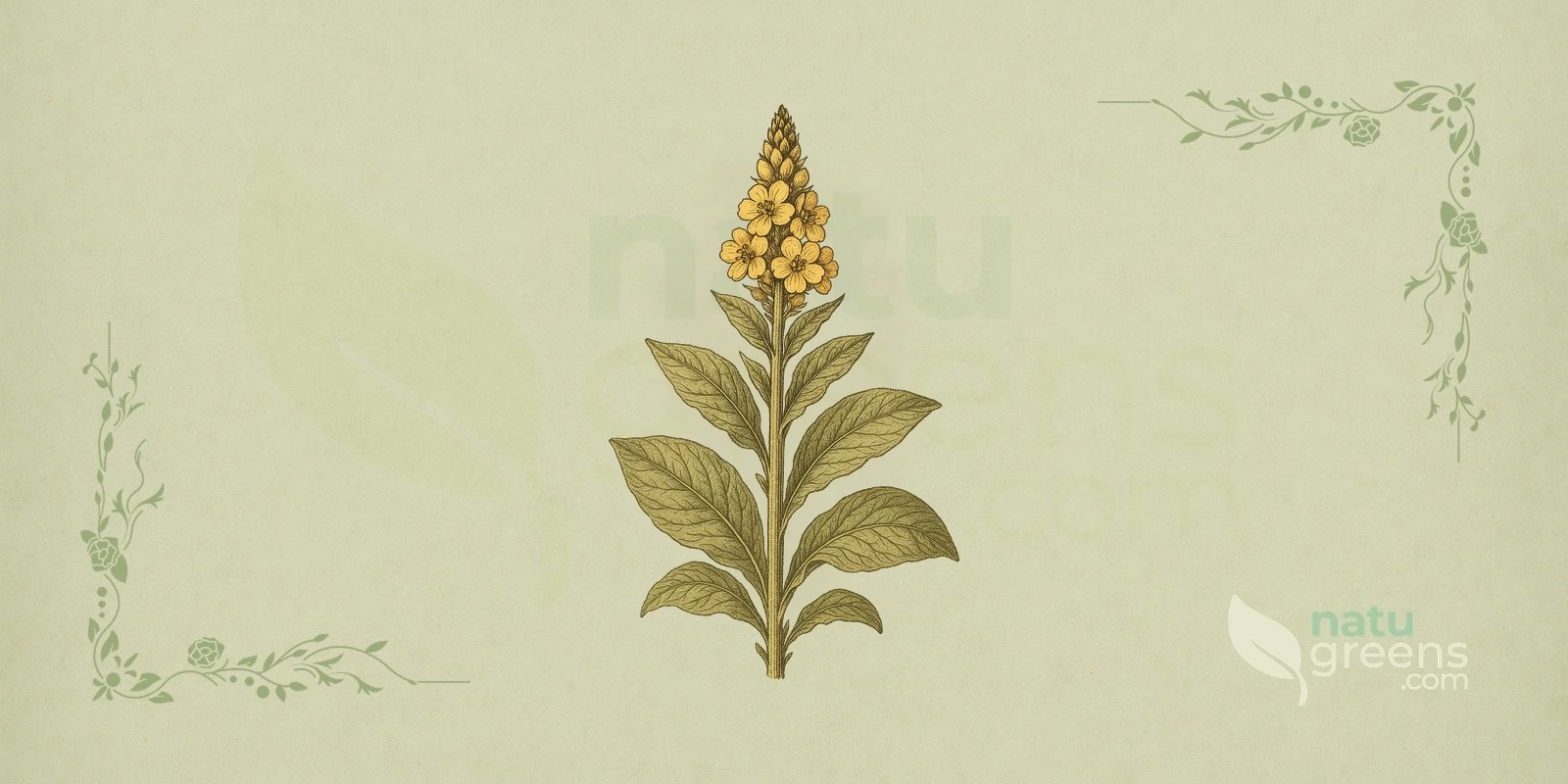
Verbascum thapsus L. / Mullein, commonly known as great mullein or common mullein, is a biennial herbaceous plant of the Scrophulariaceae family, described by Carl Linnaeus in 1753. Native to Europe, North Africa, and Asia, this species has spread across several continents because of its traditional properties. Its yellow flowers, densely clustered on a tall stem, emerge from a rosette of large, velvety leaves. The plant is harvested at the peak of flowering for the preparation of infusions, extracts, and other herbal products.
In European herbal tradition, mullein holds a prominent place as an expectorant and throat-soothing plant. Its traditional applications range from relieving cough and respiratory irritation to the topical care of skin inflammation. The plant is recognized for its rich phytochemical composition, especially in saponins, mucilage, and flavonoids, which underlie its properties. The European Medicines Agency (EMA) formally recognizes the traditional use of mullein flower for cough associated with the common cold and for throat irritation, based on centuries of established use, even as modern scientific research continues to investigate other effects of the plant.
Popular and International Names of Mullein
- English: common mullein, great mullein, velvet mullein, woolly mullein.
- Spanish: barbasco, candelaria, gordolobo, verbasco.
- Portuguese: barbasco, vela-de-bruxa (BR), verbasco, verbasco-comum (PT); verbasco-grande.
- French: bouillon-blanc, cierge de Notre-Dame, herbe de Saint-Fiacre, molène.
- Italian: candela regia, orecchio d’orso, tasso barbasso, verbasco.
- German: Himmelsbrand, Königskerze, Wetterkerze, Wollkraut.
Botanical Synonyms of Verbascum thapsus
Verbascum thapsus L. has no widely accepted botanical synonyms used in contemporary scientific literature for taxonomic reclassification, and the original name given by Carl Linnaeus in 1753 remains the most used and recognized, although some sources may list variants or obsolete names that are not considered valid synonyms. The species is well established taxonomically, with little controversy regarding its nomenclature. It is worth noting that the European Pharmacopoeia, in the monograph for the herbal drug “Verbasci flos” (mullein flower), also recognizes as equivalent sources Verbascum densiflorum Bertol. and Verbascum phlomoides L., two closely related species whose flowers are traditionally harvested and sold together with those of Verbascum thapsus.
Botanical Family: Scrophulariaceae
The Scrophulariaceae family, also known as the figwort family, is a diverse group of flowering plants that includes about 1,800 species in 80 genera, characterized by generally bilabiate flowers and capsular fruits. Many species in the Scrophulariaceae are known for their medicinal, ornamental, or toxic properties. Historically, this family was much larger, but recent phylogenetic reclassifications have moved many genera to other families, such as Plantaginaceae.
Mullein shares morphological characteristics typical of the family, including its distinctive flowers and fruit structure. The Scrophulariaceae family is known for producing bioactive compounds such as iridoid glycosides, saponins, and flavonoids, which contribute to the properties of many of its species, and this chemical diversity has been the subject of pharmacological research, contributing to the study of phytopharmaceuticals and dietary supplements.
Parts of Mullein Used
- Flowers
- Leaves
- Root
- Seeds (not used in preparations: contain rotenone and toxic saponins)
Ethnobotanical and Traditional Uses
- Athlete’s foot and skin infections (topical use)
- Asthma and bronchitis (traditional record)
- Congestion and nasal catarrh
- Croup and cough
- Diarrhea (traditional record)
- Earache and colic relief
- Pulmonary inflammation (traditional record)
- Sunburn (topical use)
- Wound and skin rash healing (topical use)
Therapeutic Properties of Mullein
- Analgesic (traditional use for pain relief)
- Anthelmintic (activity studied against worms)
- Anti-inflammatory (effect studied for reducing inflammation)
- Antibacterial (activity studied in the laboratory against bacteria such as pneumonia-causing strains, staphylococci, and E. coli)
- Antioxidant (activity studied against free radicals)
- Antiviral (activity studied in the laboratory against some viruses)
- Bronchodilator (helps dilate the bronchi)
- Expectorant (helps expel excess mucus)
- Sedative (calming properties)
Detailed Phytochemical Profile of Mullein
- Essential oils
- Flavonoids
- Glycyrrhizin
- Iridoid glycosides
- Lignan glycosides
- Mucilage
- Polysaccharides
- Rotenone (in the seeds)
- Saponins
- Tannins
Preparation and Administration Forms of Mullein
- Extract
- Oil (from the flowers)
- Poultice
- Tea (infusion)
- Tincture
Synergy with Other Medicinal Plants
Respiratory Complaints
Combining mullein with plantain (Plantago major) and marsh mallow (Althaea officinalis) is traditionally used to enhance the expectorant and throat-soothing effects, with this synergy associated, in folk practice, with relief of cough and respiratory irritation. Mullein contributes mucilage and saponins, which help soothe the airways and promote expectoration, while plantain and marsh mallow add their emollient and anti-inflammatory properties, creating a soothing, protective effect for the respiratory system.
Skin Inflammation
In topical applications, mullein is traditionally combined with calendula (Calendula officinalis) and chamomile (Matricaria chamomilla) in the care of wounds, skin rashes, and minor burns. Mullein’s saponins and mucilage, together with calendula’s triterpenes and chamomile’s chamazulene, act in a complementary way: this combination is associated with wound healing, reduced inflammation, and protection against secondary skin infections.
Pain and Inflammation Relief
Pairing mullein with white willow (Salix alba) and devil’s claw (Harpagophytum procumbens) is traditionally used for the relief of muscle and joint pain. Mullein offers analgesic and anti-inflammatory properties, while white willow contains salicin, a precursor of salicylic acid, and devil’s claw is rich in harpagosides, known for their anti-inflammatory effects. This synergy is traditionally associated with pain and inflammation relief; because it contains salicin, it should be avoided by people taking anticoagulants.
Recipes and Usage Protocols of Mullein
Poultice for Wounds
Ingredients: Fresh mullein leaves, hot water.
Preparation: Mash the fresh mullein leaves into a paste and warm it slightly with hot water. Apply directly to closed wounds, skin rashes, or skin inflammation, covering with a clean cloth and leaving it in place for 30 minutes to 1 hour, 2 to 3 times a day. This poultice is traditionally used to support local comfort and skin recovery.
Infusion for Cough and Throat Irritation
Ingredients: 1 teaspoon dried mullein leaves or flowers, 200 ml boiling water, honey (optional).
Preparation: Place the leaves or flowers in a cup and add freshly boiled water. Cover and steep for 10 to 15 minutes, straining carefully to remove the plant’s fine hairs, which can be irritating to the throat. Sweeten with honey if desired, and drink 1 cup, 2 to 3 times a day. This infusion corresponds to the traditional use recognized by the European Medicines Agency for cough associated with colds and throat irritation.
Mullein Oil for Earache
Ingredients: Fresh mullein flowers, extra virgin olive oil.
Preparation: Fill a glass jar with fresh mullein flowers and cover completely with olive oil. Seal well and let it macerate in a sunny spot for 2 to 4 weeks, shaking daily, then strain and store the oil in a dark bottle. Warm the oil slightly before use and place 2 to 3 drops in the affected ear, 2 to 3 times a day, as a traditional remedy for mild ear discomfort. Consult a doctor before use, especially if a perforated eardrum is suspected.
Mullein Tincture for Traditional Use
Ingredients: 50 g dried mullein leaves or flowers, 250 ml 70% alcohol.
Preparation: Place the leaves or flowers in a glass jar and cover with the alcohol, sealing tightly and letting it macerate for 2 to 4 weeks, shaking daily. Strain through a fine cloth and store in a dark glass bottle. The tincture concentrates mullein’s bioactive compounds; the number of drops to dilute in water should be determined by a health professional, with no standard numeric dose given here, since the herbal drug is traditionally validated only in infusion form for cough and throat irritation.
The preparations above follow traditional records and do not replace professional guidance. Before any internal use, review the contraindications and interactions described in this article.
The preparations above follow traditional records and do not replace professional guidance. Before any internal use, check the contraindications and interactions described in this article.
Associated Therapies
Clinical Phytotherapy
In modern clinical phytotherapy, mullein is used in various pharmaceutical forms, including standardized extracts, capsules, and tablets, often titrated for saponins and flavonoids to standardize product quality. Clinical phytotherapy regards mullein as a traditional adjunct for respiratory disorders, such as bronchitis and cough, and for the care of inflammation. Prescription is individualized, taking into account each patient’s specific needs and possible interactions with other medications.
Homeopathy
In homeopathy, Verbascum thapsus is a remedy used for respiratory conditions, such as dry cough and hoarseness, and also for facial neuralgic pain. The homeopathic remedy is prepared from the fresh plant, following the dilution and dynamization process characteristic of homeopathy, and is often prescribed at low potencies for acute symptoms, being traditionally indicated for irritative cough and pain that worsens with cold, according to homeopathic practice.
Contraindications and Side Effects of Mullein
General Contraindications
Mullein is generally considered safe when used correctly. However, individuals with a known allergy to plants in the Scrophulariaceae family should avoid its use, and mullein seeds contain rotenone, which is toxic, and should therefore never be ingested under any circumstances. Pregnant and breastfeeding women should consult a health professional before using mullein, as there is not enough information on the safety of its use during these periods, and young children should also use it only under medical supervision.
Common Side Effects
Side effects of mullein are rare and generally mild. In some people, drinking infusions may cause mild gastrointestinal discomfort, and topical application of mullein preparations can occasionally result in skin irritation in sensitive individuals. It is important to strain infusions well to remove the fine hairs from the leaves and flowers, which can cause throat irritation.
Drug Interactions
There are no well-documented drug interactions for mullein. However, because of its sedative and anti-inflammatory properties, caution is advisable when combining mullein with other medications that have similar effects, such as sedatives or anti-inflammatories, and it is always best to consult a health professional before combining mullein with other medications or supplements, especially in cases of ongoing medication.
Historical Notes and Interesting Facts
Mullein, with its imposing flower stalk, was used in antiquity as a torch, with the stalk dipped in tallow or wax; this is the origin of some of its popular names, such as “hag’s taper” or “candlewick plant.” Pliny the Elder described its use as a fish repellent, and in the Middle Ages the plant was considered a protector against evil spirits and witchcraft. Its velvety leaves gave rise to names such as “poor man’s blanket” or “cowboy toilet paper” in some regions. Carl Linnaeus described the species in 1753, cementing its scientific name, and mullein carries a rich history of folk use that spans many cultures and eras, from antiquity to the present day.
Frequently Asked Questions about Mullein
Can Mullein Tea Help with Cough?
Yes, mullein tea is traditionally used and recognized, including by the European Medicines Agency, for its use in cough associated with the common cold and in throat irritation. It helps soothe cough, making it easier to clear mucus built up in the airways, since the mucilage present in the plant forms a protective layer on the mucous membranes, easing irritation of the throat and bronchi. It is a traditional remedy for both dry and productive coughs, without replacing medical evaluation in persistent cases.
Are There Side Effects from Drinking Mullein Tea?
Generally, mullein tea is well tolerated and side effects are rare and mild, although some people may experience mild gastrointestinal discomfort. It is crucial to strain the tea well to remove the fine hairs from the leaves and flowers, which can cause throat irritation. Individuals with an allergy to plants in the Scrophulariaceae family should avoid consuming it, and pregnant and breastfeeding women should consult a health professional before use.
What Is the Best Way to Prepare Mullein Tea?
The best way to prepare mullein tea is by infusion: use one teaspoon of dried leaves or flowers for every 200 ml of boiling water, cover, and steep for 10 to 15 minutes. It is essential to strain the infusion carefully, preferably with a coffee filter or a fine cloth, to remove the small hairs that can be irritating; it can be sweetened with honey if desired and drunk warm.
Can Mullein Be Used for Skin Problems?
Yes, mullein has anti-inflammatory and wound-healing properties that make it useful, in herbal tradition, for skin problems, and it can be applied topically as poultices or compresses on closed wounds, skin rashes, minor burns, and inflammation. Mullein oil, prepared from the flowers macerated in olive oil, is traditionally used for mild ear discomfort and skin irritation. Always perform a sensitivity test on a small area of skin before applying to larger areas.
Who Should Not Use Mullein?
Mullein should not be used by people with a known allergy to plants in the Scrophulariaceae family. The plant’s seeds are toxic and should not be ingested, and pregnant and breastfeeding women should avoid use without medical guidance. Although there are no well-documented drug interactions, it is prudent to consult a health professional if taking other medications, especially sedatives or anti-inflammatories, to avoid potential additive effects.
Notice: this content is for informational purposes and does not replace professional medical advice. Consult a physician or herbal practitioner before using medicinal plants, especially during pregnancy, breastfeeding, or alongside medication.
References and Scientific Studies
Institutional Sources (1)
- GOV NCSU Extension. (n.d.). Verbascum thapsus (Common Mullein, Woolly Mullein). Recuperado de NCSU Extension
Supplementary Readings (3)
- 2015 CABI Compendium. (2015). Verbascum thapsus (common mullein). Recuperado de CABI Compendium
- 2023 Facebook. (2023). What is common mullein Verbascum thapsus ssp. Recuperado de Facebook
- Wildspecies.ca. (n.d.). Common Mullein (Verbascum thapsus). Recuperado de Wildspecies.ca