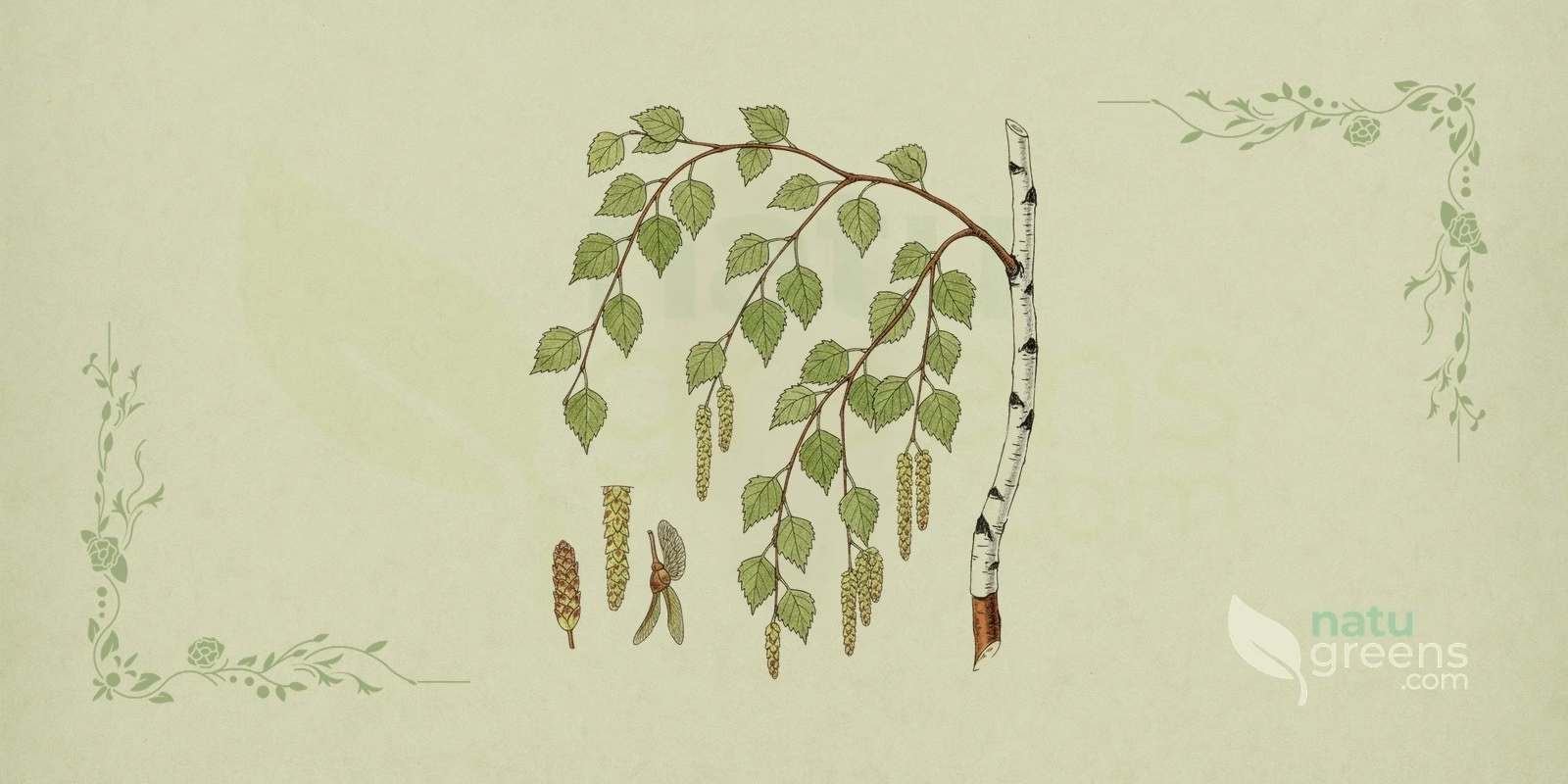
Betula pendula Roth / Silver Birch, also known as European white birch or warty birch, is a deciduous tree of the Betulaceae family, described by Albrecht Wilhelm Roth in 1788. Native to Europe and parts of Asia, this species is valued for its therapeutic and ornamental qualities. Its leaves, bark, and sap are traditionally used in folk medicine for various purposes, especially as a diuretic and anti-inflammatory. Silver birch is a symbol of renewal and purification in several European cultures, its leaves and bark being rich in bioactive compounds that contribute to its medicinal effects. Modern research has been investigating many of its traditional uses, reinforcing its importance in phytotherapy.
Popular and International Names of Silver Birch
- English: European white birch, silver birch, warty birch.
- Spanish: abedul blanco, abedul péndulo, abedul verrugoso.
- Portuguese: bétula-branca, bétula-chorona (BR), vidoeiro-branco (PT); bétula-prateada.
- French: bouleau blanc, bouleau pleureur, bouleau verruqueux.
- Italian: betulla bianca, betulla verrucosa.
- German: Hängebirke, Sandbirke, Weißbirke.
Botanical Synonyms of Betula pendula
The scientific name accepted for silver birch is Betula pendula Roth. However, throughout botanical history, this species has been described under several other names. A common synonym is Betula verrucosa Ehrh., which refers to the warty bark and resinous glands present on young branches. Other synonyms include Betula alba L., a more generic name that historically came to encompass both Betula pendula and its close relative, downy birch (Betula pubescens), which still causes confusion in older texts today; there is also Betula platyphylla Sukaczev, although this latter name is now generally considered a distinct species, Asian white birch. Birch taxonomy is complex due to high morphological variability and frequent hybridization between species, which has led to various biometric and chemotaxonomic studies aimed at distinguishing related species. For this reason, the European Pharmacopoeia recognizes the leaves of both Betula pendula and Betula pubescens as accepted sources of the plant drug used in herbal preparations, and the two names may appear interchangeably in references about birch leaf tea and extract.
Botanical Family: Betulaceae
Betula pendula belongs to the Betulaceae family, which includes six genera of trees and shrubs, such as Alnus (alders), Carpinus (hornbeams), and Corylus (hazels). This family predominates in the Northern Hemisphere, in temperate and boreal zones. The Betulaceae are known for their simple, alternate leaves and unisexual flowers arranged in catkins. Many species in this family hold ecological, economic, and medicinal importance. Silver birch, in particular, is valued for its wood, sap, and bark, which are used in various industries and in traditional medicine. The family is characterized by the presence of compounds such as triterpenoids, flavonoids, and tannins, which give many of its plants their therapeutic properties.
Parts of Silver Birch Used
- Bark
- Leaves
- Sap
Ethnobotanical and Traditional Uses
- Blood purification
- Gout
- Hair growth and dandruff treatment
- Inflammatory skin conditions
- Kidney stones and urinary problems
- Liver and gallbladder problems
- Relief of rheumatic and arthritic pain
- Swelling and fluid retention
- Urinary tract infections
Therapeutic Properties of Silver Birch
- Anti-inflammatory (studied effect in reducing inflammation)
- Antibacterial (studied activity against bacteria)
- Antioxidant (studied activity against free radicals)
- Antiproliferative (activity observed in laboratory studies, without clinical proof)
- Antiviral (studied activity against viruses)
- Depurative (traditional use associated with toxin elimination)
- Diuretic (studied effect on urine production)
- Immunomodulatory (studied effect on immune response)
- Uricosuric (studied effect on uric acid excretion)
Detailed Phytochemical Profile of Silver Birch
Betula pendula is rich in a variety of phytochemical compounds that contribute to its medicinal properties. The main constituents include triterpenoids, such as betulin and betulinic acid, abundant in the bark and studied in the laboratory for their antiproliferative and anti-inflammatory activity, without this constituting proof of efficacy in humans. The leaves contain flavonoids (such as quercetin and rutin), which are potent antioxidants, and phenolic acids. Other important compounds include lignans, phenylpropanoids, and tannins. The essential oil from the buds and bark contains monoterpenes and sesquiterpenes, such as α-copaene and germacrene D. The complex chemical composition of silver birch accounts for its broad spectrum of pharmacological activities studied in the laboratory, including immunomodulatory, antimicrobial, and hepatoprotective effects.
- Betulin
- Betulinic acid
- Chamazulene
- Essential oils (α-copaene, germacrene D)
- Flavonoids (quercetin, rutin)
- Lignans
- Saponins
- Tannins
- Triterpenoids
Preparation and Administration Forms of Silver Birch
- Bark decoction
- Capsules
- Dry extract
- Fluid extract
- Fresh sap
- Leaf infusion
- Ointment
- Poultice
- Tincture
Synergy with Other Medicinal Plants
Kidney and Urinary Health
Silver birch, with its diuretic and depurative properties, is combined, in herbal tradition, with horsetail (Equisetum arvense) and nettle (Urtica dioica) to enhance the elimination of fluids and toxins. This synergy is traditionally used in the prevention of and support for kidney stones, urinary infections, and mild swelling. Horsetail contributes silica, which may support the health of the connective tissue in the urinary tract, while nettle adds anti-inflammatory and remineralizing properties, creating a combined effect that supports kidney and urinary function comprehensively. People with severe kidney or heart failure should avoid this combination, due to its more pronounced diuretic effect.
Joint Pain Relief
For traditional support of pain associated with arthritis and rheumatism, silver birch can be combined with white willow (Salix alba) and devil’s claw (Harpagophytum procumbens). Birch bark, rich in betulin, works together with willow’s salicin and devil’s claw’s harpagosides, in a combined effect that herbal tradition associates with relief of inflammation and joint pain, contributing to greater mobility and comfort. People taking anticoagulants or with an allergy to salicylates should avoid this combination without medical guidance, given the increased risk of bleeding.
Skin and Hair Health
Silver birch, known for its astringent and purifying properties, can be used synergistically with calendula (Calendula officinalis) and rosemary (Rosmarinus officinalis) for traditional skin and hair care, being used for conditions such as dandruff, eczema, and mild skin irritation. Calendula offers healing and anti-inflammatory effects, while rosemary stimulates scalp circulation and has antiseptic properties, resulting in a combined action that nourishes and revitalizes the skin and hair. People with a known allergy to birch pollen should test the combination on a small area of skin before use, due to the risk of a cross-reactive skin reaction.
Recipes and Usage Protocols of Silver Birch
Sitz Baths for Inflammation
Prepare a decoction with silver birch bark in water, at a ratio of about 50 grams per liter. Boil for 10 minutes, strain, and let cool to a lukewarm temperature. Use this decoction in sitz baths for the traditional relief of mild anal or genital inflammation, such as hemorrhoids or irritation. Take the bath for 15 to 20 minutes, twice a day, and consult a healthcare professional if symptoms persist.
Compresses for Joint Pain
Make a strong infusion with dried silver birch leaves in boiling water. Let it steep for 15 minutes, strain, and let cool. Soak a clean cloth in the infusion and apply as a compress over painful joints or inflamed areas. Keep in place for 20 to 30 minutes, several times a day, as traditional support to reduce local discomfort and swelling.
Bark Decoction for Internal Use
Add a small amount of chopped dried silver birch bark to cold water. Bring to a boil and simmer over low heat for 5 to 10 minutes. Strain and drink a small portion, two to three times a day. This decoction is traditionally used as a diuretic and depurative, helping eliminate toxins and support kidney function. Do not exceed the usual amount consumed, and consult a healthcare professional before regular use, especially in cases of heart failure, kidney failure, pregnancy, or breastfeeding.
Leaf Infusion for Diuretic Tea
Place dried silver birch leaves in a cup of boiling water. Cover and let steep for 5 to 10 minutes. Strain and drink warm, between meals. This infusion is traditionally associated with promoting diuresis and supporting fluid elimination, being useful as an adjunct in cases of water retention, always under professional supervision if used for a prolonged period.
Birch Sap as a Tonic
Silver birch sap, chemically distinct from leaf infusion or bark decoction, can be consumed fresh, usually in spring, when it is harvested. Drink a small amount of pure sap per day, on an empty stomach, for a few weeks. The sap is traditionally valued for its depurative and remineralizing properties, being used as a natural tonic associated with cleansing the body. It can be stored in the refrigerator for a few days.
The preparations above follow traditional records and do not replace professional guidance. Before any internal use, consult the contraindications and interactions described in this article.
The preparations above follow traditional records and do not replace professional guidance. Before any internal use, check the contraindications and interactions described in this article.
Associated Therapies
Western Phytotherapy
In Western phytotherapy, silver birch is widely recognized for its diuretic, anti-inflammatory, and depurative properties. It is frequently used in formulations for kidney and urinary problems, such as cystitis and stones, as well as for rheumatic and dermatological conditions. The leaves and bark are the most commonly used parts, in the form of infusions, decoctions, tinctures, and extracts. Its use is supported both by tradition and by scientific studies investigating its bioactive compounds.
Homeopathy
In homeopathy, Betula pendula is used in diluted preparations to treat conditions such as rheumatism, gout, swelling, and skin problems. The homeopathic remedy is prepared from the mother tincture of the bark or fresh leaves. The homeopathic approach aims to stimulate the body’s self-healing capacity, and birch is chosen based on the totality of the patient’s symptoms, including their physical and emotional characteristics.
Gemmotherapy
Gemmotherapy uses extracts from the buds and shoots of young plants. In the case of silver birch, bud extracts are traditionally used to stimulate kidney and liver drainage, help eliminate uric acid and toxins, and provide anti-inflammatory support for the joints. Birch gemmotherapy is considered, in this tradition, a gentle treatment aimed at detoxification and overall well-being.
Contraindications and Side Effects of Silver Birch
Contraindications
- Birch Allergy: individuals with a known allergy to birch pollen or to other plants in the Betulaceae family should avoid using silver birch due to the risk of allergic reactions, which may include contact dermatitis, hives, or respiratory problems. This allergy has a known cross-reaction with apple, hazelnut, and carrot, and may trigger oral allergy syndrome (itching or swelling of the lips, mouth, and throat when eating these foods raw).
- Severe Heart or Kidney Failure: due to its diuretic properties, the use of silver birch is contraindicated in cases of severe heart or kidney failure, where excessive fluid elimination can be harmful.
- Swelling of Cardiac or Renal Origin: should not be used to treat swelling caused by heart or kidney dysfunction, as it may worsen the underlying condition.
- Pregnancy and Breastfeeding: use during pregnancy and breastfeeding should be avoided due to the lack of conclusive studies on its safety during these periods.
Side Effects
- Allergic Reactions: allergic reactions may occur, especially in individuals sensitive to birch pollen, manifesting as skin rashes, itching, or swelling.
- Gastric Irritation: in some people, consuming birch preparations may cause mild gastric irritation.
Historical Notes and Interesting Facts
Silver birch has been a tree of great cultural and practical importance throughout history. In Norse and Slavic mythology, birch is often associated with the goddess of spring and fertility, symbolizing renewal and purification. Its bark, water-resistant and easy to work with, was widely used by Indigenous peoples of North America and Siberia to build canoes, shelters, and containers. In Finland, birch sap is a traditional spring beverage, valued for its nutritional and depurative properties, and is a product distinct from tea made with the dried leaves. In addition, birch wood is prized in the manufacture of furniture and musical instruments. Its ornamental beauty, with silvery bark and drooping branches, makes it a popular tree in gardens and parks throughout Europe.
Frequently Asked Questions about Silver Birch
Can Silver Birch Tea Help with Weight Loss?
Silver birch tea is known for its diuretic properties, which can help eliminate excess fluid from the body. This action can result in a temporary reduction in weight due to water loss. However, it is not a direct method for fat loss and should be used as part of a balanced diet and healthy lifestyle, not as a standalone solution for weight loss.
Is It Safe to Drink Silver Birch Tea Daily?
Moderate consumption of silver birch tea is generally considered safe for most people. However, due to its diuretic properties, prolonged use or large amounts may lead to an electrolyte imbalance. It is always advisable to consult a healthcare professional before starting daily consumption, especially if you have preexisting medical conditions or are taking other medications.
What Are the Main Skin Benefits of Silver Birch Tea?
Silver birch tea, when applied topically or consumed, may benefit the skin due to its anti-inflammatory, antiseptic, and depurative properties, potentially helping to relieve conditions such as eczema, psoriasis, and acne, and supporting healing. Birch sap, in turn, is a popular ingredient in cosmetic products for toning and purifying the skin, but it is a different preparation from leaf tea, with its own composition.
Does Silver Birch Interact with Any Medications?
Yes, silver birch can interact with certain medications. Due to its diuretic properties, it may potentiate the effect of synthetic diuretics, leading to excessive electrolyte loss. In addition, the presence of coumarins in birch may increase the effect of anticoagulant medications, raising the risk of bleeding. It is crucial to inform your doctor or pharmacist about the use of silver birch if you are taking any medication.
Is Silver Birch the Same Thing as Chaga?
No. Chaga (Inonotus obliquus) is a fungus that grows on the trunk of birches and other trees, but it is a completely different organism from silver birch, with its own chemical composition and traditional uses. The properties and contraindications described in this article refer specifically to the leaves, bark, and sap of Betula pendula, and should not be confused with those of chaga preparations.
Notice: this content is for informational purposes and does not replace professional medical advice. Consult a physician or herbal practitioner before using medicinal plants, especially during pregnancy, breastfeeding, or alongside medication.
References and Scientific Studies
- DOI1992 Atkinson, M. D. (1992). Betula pendula Roth (B. verrucosa Ehrh.) and B. pubescens Ehrh. Journal of Ecology, 80(4), 837-870. ↗
- PMC2023 Kou J, et al. Physiological response mechanism of European birch (Betula pendula Roth) to PEG-induced drought stress and hydration. Frontiers in plant science. 2023.
- PMC2024 EFSA Panel on Plant Health (PLH), et al. Commodity risk assessment of Betula pendula and Betula pubescens plants from the UK. EFSA journal. European Food Safety Authority. 2024.