Quick summary
Albizia julibrissin Durazz. / Persian Silk Tree, also known as silk tree, mimosa tree or albizia, is a deciduous tree of the Fabaceae family native to southwestern and eastern Asia, in a range that stretches from Iran and Azerbaijan to China and Korea. Widely prized as an ornamental, it catches the eye with its lavish…
Main caution: In TCM, the bark (he huan pi) and the flower (he huan hua) are used as calming remedies and “for the mood”, but this is a traditional record under study, based on animal models of anxiety and depression…
Albizia julibrissin Durazz. / Persian Silk Tree, also known as silk tree, mimosa tree or albizia, is a deciduous tree of the Fabaceae family native to southwestern and eastern Asia, in a range that stretches from Iran and Azerbaijan to China and Korea. Widely prized as an ornamental, it catches the eye with its lavish flowering, made up of pompons of pink stamens, and with its delicate foliage of tiny leaflets, which turn it into a highlight of squares, parks and gardens.
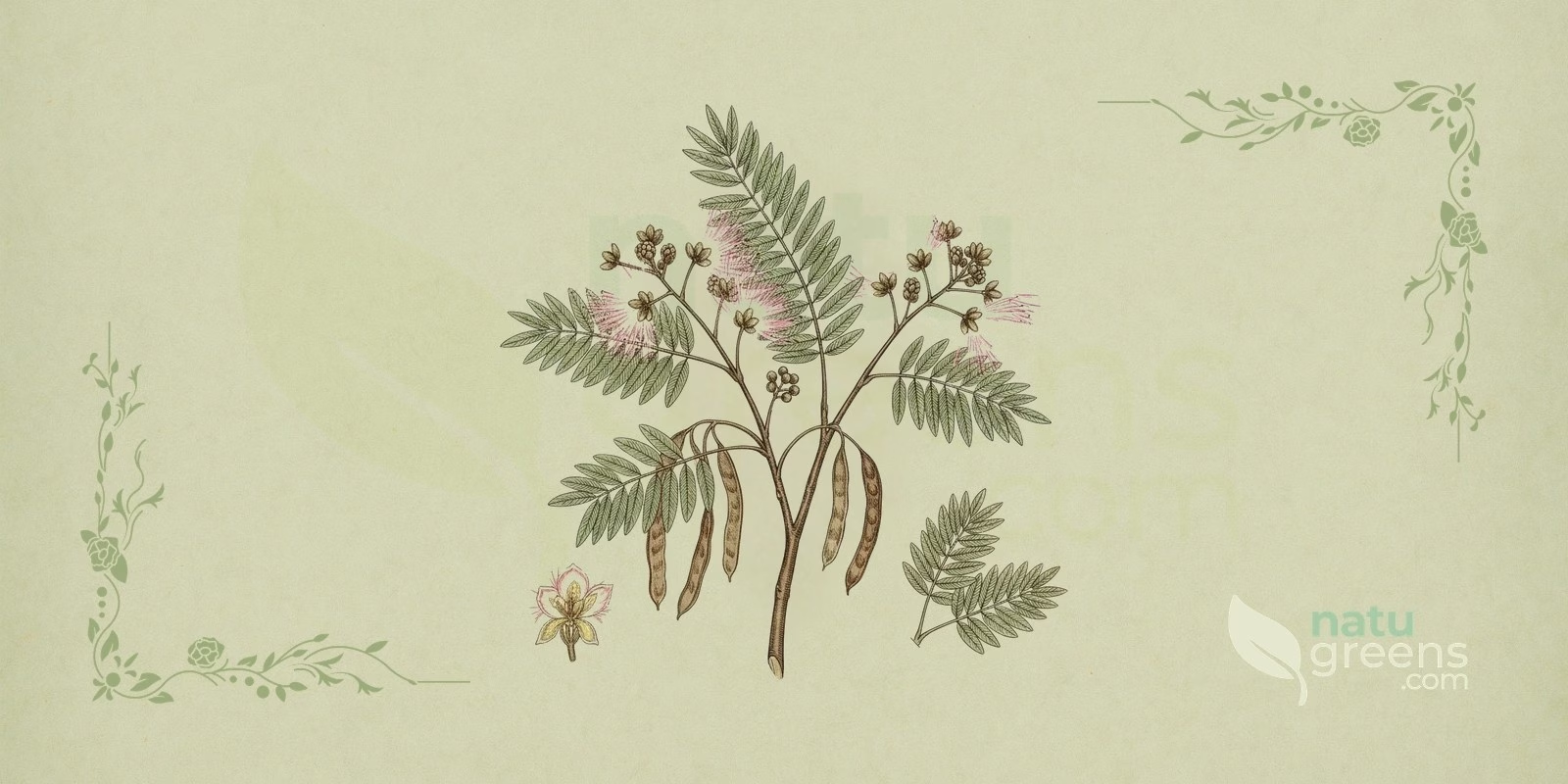
In traditional Chinese medicine (TCM), the stem bark and flowers of Albizia julibrissin have been used for centuries as calming remedies and “for the mood”, which is why the plant became, in some cultures, a symbol of happiness and serenity. Modern research has begun to investigate these traditional uses, mainly in animal models of anxiety and depression, but there are still no robust clinical trials confirming the effects in humans.
Popular and International Names of the Persian Silk Tree
- English: mimosa tree, Persian silk tree, pink silk tree, silk tree.
- Chinese: he huan, he huan shu.
- French: acacia de Constantinople, arbre à soie, mimosa.
- German: Persischer Seidenbaum, Schlafbaum, Seidenbaum.
- Italian: acacia di Costantinopoli, albero della seta, mimosa.
- Japanese: nemunoki.
- Portuguese: acácia-de-constantinopla, acácia-rosa, albízia, árvore-da-seda, árvore-da-seda-persa, mimosa.
- Spanish: acacia de Constantinopla, árbol de la seda, mimosa.
Despite the common name “mimosa tree” and the “acacia” found in several European names, the Persian silk tree belongs neither to the genus Acacia nor to the genus Mimosa, and this similarity in names comes only from the look of its leaves and flowers, which resemble those of other mimosoid legumes.
Botanical Synonyms of Albizia julibrissin
The accepted scientific name is Albizia julibrissin Durazz., but over the course of botanical history the species has received other names, which reflect successive taxonomic reclassifications and still turn up in older literature and in nursery catalogs:
- Acacia julibrissin (Durazz.) Willd.
- Albizzia julibrissin Durazz.
- Feuilleea julibrissin (Durazz.) Kuntze
- Mimosa julibrissin (Durazz.) Scop.
The Persian silk tree should not be confused with Albizia lebbeck, known as siris and, in the Ayurvedic tradition, as shirish. It is a different species of the same genus, with its own composition and traditional uses, and information about one should not be transferred to the other.
Botanical Family: Fabaceae
Albizia julibrissin belongs to the vast Fabaceae family, also known as Leguminosae or the legume family, and, within it, to the subfamily Caesalpinioideae, in the so-called mimosoid clade; the name Mimosaceae, which sometimes appears in older works, corresponds to a family classification that is no longer used. The Fabaceae form one of the largest families of flowering plants, spanning an enormous diversity of trees, shrubs and herbs, and they are characterized by pod-shaped fruits and by the ability of many species to fix nitrogen in the soil, which contributes to the fertility of ecosystems.
The family includes plants of great economic, nutritional and medicinal importance around the world, such as beans, lentils, peanuts, peas and soybeans. Many of its species accumulate bioactive compounds, such as alkaloids, flavonoids and saponins, which attract interest in pharmacological research, and Albizia julibrissin is a good example of this phytochemical richness, with the saponins of the bark standing out.
Parts of the Persian Silk Tree Used
- Flowers
- Leaves
- Seeds
- Stem bark
Ethnobotanical and Traditional Uses
- Agitation and irritability, in the traditional record of calming use
- Anxiety and low mood, a traditional TCM use still under study
- Insomnia and restless sleep, a traditional use mainly of the flowers
- Pain and swelling (fractures, boils), in traditional topical application
- Poor memory and palpitations, as recorded in TCM tradition
- Tonic for the “heart and spirit”, according to TCM concepts
Therapeutic Properties of the Persian Silk Tree
- Analgesic (traditional record; effect investigated in preliminary studies)
- Antidepressant (effect observed in animal models, without robust clinical trials; does not replace medication)
- Anti-inflammatory (activity observed in laboratory studies)
- Antioxidant (activity observed in laboratory studies)
- Anxiolytic (effect observed in animal models, without robust clinical trials)
- Cardiotonic (traditional TCM record, without clinical evidence)
- Hypnotic (traditional record of sleep induction, under study)
- Sedative (traditional record; may add to the effect of other sedatives)
Detailed Phytochemical Profile of the Persian Silk Tree
- Flavonoids (luteolin, quercetin)
- Lignans
- Phenolic glycosides
- Triterpenoid saponins (julibrosides), concentrated in the bark
Preparation and Administration Forms of the Persian Silk Tree
- Capsules
- Decoction (bark)
- Dry extract (only under professional guidance; concentrated bark extracts are not recommended)
- Fluid extract (only under professional guidance)
- Infusion (flowers)
- Tincture
Synergy with Other Medicinal Plants
For Anxiety and Insomnia
In traditional herbal medicine, Albizia julibrissin is often paired with valerian (Valeriana officinalis) and passionflower (Passiflora incarnata), a combination traditionally used for nervousness and restless sleep, on the idea that the three plants complement one another in promoting relaxation. Since all of them have a described sedative effect, taking them together can increase drowsiness, so the combination should only be used with professional guidance and never before driving.
For Emotional Balance
The Persian silk tree also appears in herbalists’ records alongside St. John’s wort (Hypericum perforatum) or rhodiola (Rhodiola rosea), with the traditional intention of supporting emotional balance: in TCM thinking, Albizia calms the spirit and relieves the stagnation of Qi, while St. John’s wort and rhodiola contribute their history of use for mood and for adaptation to stress, respectively. This combination calls for extra caution, because St. John’s wort interacts with many medications and because a serotonergic mechanism has been proposed for Albizia in animal models, so it should only be considered under professional supervision and never as a substitute for antidepressants.
For Pain and Swelling
In traditional records of pain and swelling, such as those associated with bruises or boils, Albizia julibrissin is combined with turmeric (Curcuma longa) or ginger (Zingiber officinale), two plants with anti-inflammatory activity observed in studies. The pairing follows the traditional logic of bringing together herbs with complementary actions, although no clinical studies have evaluated this specific combination, and it does not replace a medical assessment in the case of a fracture or persistent inflammation.
Recipes and Usage Protocols of the Persian Silk Tree
Traditional Flower Infusion
Ingredients: a small portion of dried Persian silk tree flowers and one cup of boiling water.
Preparation: place the flowers in a cup, cover them with freshly boiled water and let them steep, covered, for a few minutes before straining. This preparation is traditionally used to unwind at the end of the day, but the amount and frequency should be set with a healthcare professional, and you should not drive after drinking it.
Traditional Bark Decoction
Ingredients: dried Persian silk tree bark and water, in the proportion indicated by a healthcare professional.
Preparation: put the bark and the water in a saucepan, bring to a boil and simmer over low heat for about 20 to 30 minutes, then strain. In TCM, the bark decoction (he huan pi) is the classic way of preparing the plant, but because the bark is rich in saponins that can irritate the stomach at high doses, this preparation should only be used under the guidance of a healthcare professional.
Tincture for Traditional Calming Use
Ingredients: Albizia julibrissin tincture from a reliable source.
Preparation: the tincture is traditionally used as a practical form of continuous intake in the records of calming use and mood support, always diluted in a little water. Consult a healthcare professional to set the dose, frequency and duration of use, especially if you already take any medication that acts on the nervous system.
The preparations above follow traditional records and do not replace professional guidance. Before any internal use, check the contraindications and interactions described in this article.
Associated Therapies
Aromatherapy
Although Albizia julibrissin essential oil is not widely sold, the sweet fragrance of the flowers is traditionally associated with feelings of relaxation and lightness, and in some practices fresh flowers are arranged around a room to create a calm atmosphere. This olfactory use is only complementary and does not replace health care for stress or anxiety.
Traditional Chinese Herbal Medicine (TCM)
In TCM, Albizia julibrissin is a classic herb, known as he huan pi (the bark) and he huan hua (the flower), classified among the herbs that “calm the spirit” (an shen) and “nourish the heart”. The tradition uses it for emotional restlessness, sadness, insomnia, irritability and poor memory, especially when these are attributed to repressed emotions or to stagnation of Liver Qi, and also applies it topically to pain and swelling. This traditional record is under study, with results obtained mainly in animal models, and it does not justify using the plant in place of medical treatment for depression or anxiety.
Western Herbal Medicine
In Western herbalism, Albizia julibrissin has been gaining ground as a supportive plant for the nervous system, described by some herbalists as a mood modulator and mentioned in formulations aimed at emotional well-being during periods of stress. Bark and flower extracts appear in these contexts with the traditional intention of encouraging relaxation and sleep, but the available scientific literature is limited to laboratory and animal studies, which calls for prudence and professional supervision.
Contraindications and Side Effects of the Persian Silk Tree
General Contraindications
In TCM, the bark (he huan pi) and the flower (he huan hua) are used as calming remedies and “for the mood”, but this is a traditional record under study, based on animal models of anxiety and depression, without robust clinical trials. The Persian silk tree does not treat depression or anxiety and must not replace antidepressants or any prescribed medication, and anyone undergoing treatment should not stop their medication on their own. Use is contraindicated for people with a known allergy to plants of the Fabaceae family.
Pregnancy, Breastfeeding and Children
During pregnancy, the plant is contraindicated, because TCM regards it as a uterine stimulant. During breastfeeding and in children, it should not be used, since there are no safety data for these groups.
Drug Interactions
There is a risk of additive sedation when the Persian silk tree is combined with alcohol, benzodiazepines, hypnotics, antidepressants and sedating antihistamines, which can increase drowsiness and slow reflexes. There is also a theoretical interaction with selective serotonin reuptake inhibitors (SSRIs), since a serotonergic mechanism has been proposed in animal models, so anyone taking these medications needs professional guidance before any use. People taking anticoagulants should also be cautious, as a possible potentiation of these drugs is only theoretical and has not been ruled out.
Side Effects and Precautions
The bark is rich in saponins (julibrosides), which can cause gastric irritation at high doses, and for this reason concentrated extracts are not recommended. Excessive drowsiness is the most expected effect, especially when the plant is combined with other sedatives, and you should not drive or operate machinery after use. In the event of any adverse reaction, such as digestive discomfort or signs of allergy, use should be stopped and a healthcare professional consulted.
Historical Notes and Interesting Facts
The Tree of Happiness
In China, Albizia julibrissin is affectionately called the “tree of happy union” (he huan shu), a name born from the observation that its leaves close at night, like a couple sleeping in each other’s arms, and which made the plant a symbol of marital harmony. The flowers, with their delicate pink filaments, often appear in wedding ceremonies and in poetic imagery linked to love and lasting happiness.
A Gift from Persia
The specific epithet “julibrissin” is a corruption of the Persian expression “gul-i abrisham”, meaning “silk flower”. The plant reached Europe in the 18th century thanks to the Italian nobleman Filippo degli Albizzi, who brought seeds from Asia and ended up honored in the name of the genus, Albizia; the exotic beauty and silky texture of the flowers soon made it a favorite of ornamental gardens, spreading its presence far beyond its native lands.
Nyctinastic Behavior
One of the most curious features of Albizia julibrissin is its nyctinastic behavior, that is, the movement by which the leaflets fold and close at nightfall and open again in the morning, a phenomenon also seen in other legumes and for which functions such as reducing water loss have been proposed. In Japanese, the plant is called nemunoki, “sleeping tree”, precisely because of this daily leaf movement.
Frequently Asked Questions about the Persian Silk Tree
Is the Persian Silk Tree Safe for Daily Use?
There are no long-term studies that would allow the safety of daily, prolonged use to be confirmed, and the plant can add to the effect of sedatives and interact with antidepressants. For this reason, any regular use should be agreed with a healthcare professional, and the plant should not be used during pregnancy, while breastfeeding or in children.
Can the Persian Silk Tree Replace Antidepressants?
No. In TCM, the bark (he huan pi) and the flower (he huan hua) are used as calming remedies and “for the mood”, but this is a traditional record under study, with results obtained in animal models of anxiety and depression and without robust clinical trials. Anyone undergoing treatment should not switch or stop their medication on their own, and concurrent use with SSRIs requires professional guidance.
What Are the Known Side Effects?
The most expected effect is drowsiness, which can intensify when the plant is combined with alcohol, benzodiazepines, hypnotics, antidepressants or sedating antihistamines, so you should not drive after use. The bark, rich in saponins, can irritate the stomach at high doses, and people sensitive to legumes may have allergic reactions.
Who Should Not Use the Persian Silk Tree?
The plant is contraindicated during pregnancy, since TCM regards it as a uterine stimulant, and it should not be used while breastfeeding or in children. People allergic to plants of the Fabaceae family, those taking sedatives, antidepressants or anticoagulants, and anyone who needs to drive or operate machinery should also avoid it or seek professional guidance first.
How Is the Flower Tea Traditionally Prepared?
Traditionally, the dried flowers are steeped in freshly boiled water for a few minutes, without being boiled along with it, while the bark is prepared as a decoction. The amount and frequency should be set with a healthcare professional, who can also assess possible interactions with any medications in use.
What Is the Difference between the Persian Silk Tree and Albizia lebbeck?
They are different species of the same genus. Albizia lebbeck, known as siris and called shirish in the Ayurvedic tradition, has its own composition and traditional uses, which should not be transferred to Albizia julibrissin, and vice versa, so it is always worth checking the scientific name on the label of any product.
Notice: this content is for informational purposes and does not replace professional medical advice. Consult a physician or herbal practitioner before using medicinal plants, especially during pregnancy, breastfeeding, or alongside medication.
How to cite this article
NATUGREENS. Persian Silk Tree (Albizia julibrissin): Properties and Benefits. Natugreens, 4 Nov. 2026. Disponível em: https://natugreens.com/albizia-julibrissin-persian-silk-tree/. Accessed: Nov. 4, 2026.
Natugreens. (2026). Persian Silk Tree (Albizia julibrissin): Properties and Benefits. Natugreens. https://natugreens.com/albizia-julibrissin-persian-silk-tree/
References and Scientific Studies
- PMC2019 Chang JS, et al. Albizia julibrissin Ameliorates Memory Loss Induced by Insomnia in Drosophila. Evid Based Complement Alternat Med. 2019.
- PMC2021 Han Q, et al. Oleanane-type saponins and prosapogenins from Albizia julibrissin and their cytotoxic activities. Phytochemistry. 2021.
- PMC2022 Huang B, et al. Two Lignan Glycosides from Albizia julibrissin Durazz. Noncompetitively Inhibit Serotonin Transporter. Pharmaceuticals (Basel). 2022.
- PMC2023 Huang B, et al. Molecular basis and mechanism of action of Albizia julibrissin in depression treatment and clinical application of its formulae. Chin Herb Med. 2023.
- PMC2025 Yang Y, et al. Pharmacological Spectrum of Substances Derived from Albizia julibrissin Durazz. Int J Mol Sci. 2025.