Quick summary
Eleutherococcus senticosus / Eleuthero, formerly sold as "Siberian ginseng", is a small woody shrub of the Araliaceae family that, despite that old trade name, is not a true ginseng, since it does not belong to the genus Panax, home to Asian and American ginseng. Described by Franz Josef Ruprecht and Carl Johann…
Main caution: Eleuthero is contraindicated for anyone with known hypersensitivity to any of its components. There are no safety data for pregnancy, breastfeeding or children, so pregnant women, breastfeeding women and children should…
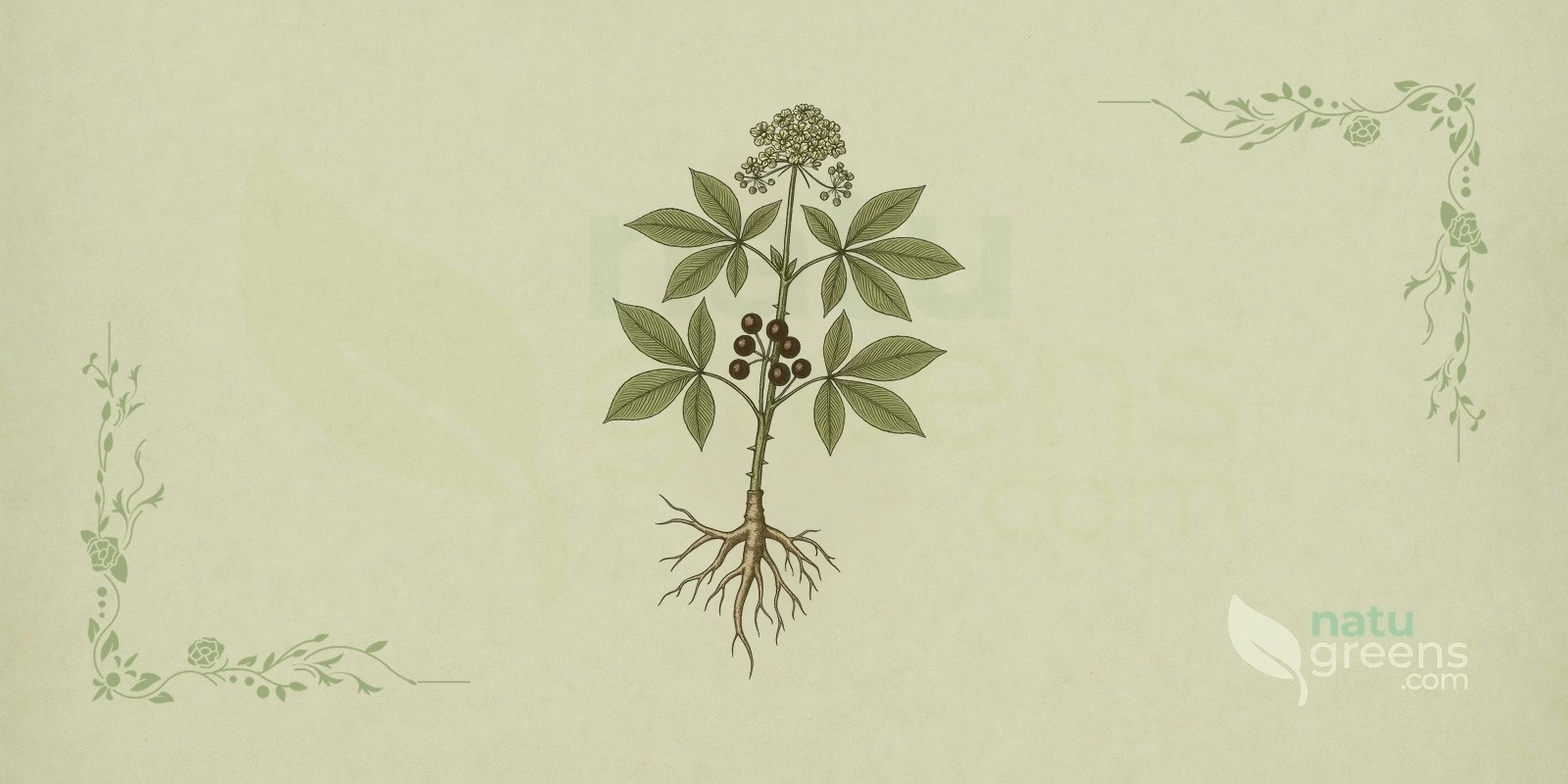
Eleutherococcus senticosus / Eleuthero, formerly sold as "Siberian ginseng", is a small woody shrub of the Araliaceae family that, despite that old trade name, is not a true ginseng, since it does not belong to the genus Panax, home to Asian and American ginseng. Described by Franz Josef Ruprecht and Carl Johann Maximowicz, the species is native to Northeast Asia, in parts of China, Japan, Korea and Russia, and has a long history of use in traditional Chinese and Russian medicine, which values it as a revitalizing tonic and a way to build resistance. The roots are the part most often used, although the leaves and berries also contain bioactive compounds, and modern research is looking at its role in supporting the immune system, physical and mental performance and the stress response, with results that are still preliminary on most of these fronts. Because it is more abundant and less expensive, eleuthero is often sought as an alternative to true ginseng, but it has its own phytochemical profile and mode of action.
Popular and International Names of Eleuthero
- English: ciwujia, devil's bush, devil's shrub, eleuthero, shigoka, taiga root, wild pepper.
- Chinese: ciwujia (刺五加).
- French: éleuthérocoque, ginseng sibérien.
- German: Taigawurzel, Sibirischer Ginseng.
- Italian: eleuterococco.
- Japanese: ezo-ukogi (エゾウコギ), shigoka (シゴカ).
- Korean: ogapi (오가피).
- Portuguese: arbusto-do-diabo, ciwujia, eleutero, ginseng siberiano, pimenta-selvagem, raiz-da-taiga, shigoka.
- Spanish: eleuterococo, ginseng siberiano.
Botanical Synonyms of Eleutherococcus senticosus
The accepted name is Eleutherococcus senticosus (Rupr. & Maxim.) Maxim., and in older literature and in the trade the species also appears under the following synonyms: Acanthopanax senticosus (Rupr. & Maxim.) Harms and Hedera senticosa Rupr. & Maxim. The name Acanthopanax senticosus is still very common in Asian scientific papers, which is worth knowing when searching for studies on the plant.
Botanical Family: Araliaceae
The Araliaceae family comprises about 43 genera and more than 1,500 species, found mainly in tropical and subtropical regions but also present in temperate zones. It includes plants of ornamental, food and medicinal importance, such as ivy (Hedera helix) and ginseng (Panax ginseng), and its species usually have compound leaves, small flowers grouped in umbels and fruits that are berries or drupes.
Eleuthero shares its botanical family with true ginseng, but not its genus, and it contains its own bioactive compounds, such as the eleutherosides, which account for much of the scientific interest in the species. The chemical and morphological diversity of the family has been the subject of botanical and pharmacological studies exploring the potential of many of its species for health and wellness applications.
Parts of Eleuthero Used
- Berries
- Leaves
- Root
- Stems
Ethnobotanical and Traditional Uses
- Endurance and vitality support (traditional record)
- Immune system support (traditional record)
- Physical and mental energy, as a traditionally used tonic
- Stress management (traditional record)
- Tonic and adaptogen in traditional Korean medicine
- Tonic and anti-fatigue agent in Northeast Asia and eastern Russia
- Tonic and sedative in China and other parts of Asia
- Traditional use for weakness, rheumatism, impotence and hemorrhoids (Northeast China)
Therapeutic Properties of Eleuthero
- Adaptogen (a traditional-use concept; the German Commission E recognizes its use as a tonic for fatigue, which does not amount to a proven effect)
- Antidiabetic (potential observed only in preclinical studies; caution is needed alongside antidiabetic drugs)
- Antifatigue (traditional use as a tonic for fatigue, recognized by the German Commission E)
- Anti-inflammatory (activity observed in laboratory studies)
- Antioxidant (activity observed in laboratory studies)
- Antiviral (preliminary studies, without clinical confirmation)
- Bone health support (preliminary studies in experimental models)
- Cardioprotective (effect investigated in experimental models)
- Cognitive support (preliminary studies on focus and memory)
- Hepatoprotective (effect investigated in preclinical studies)
- Immunostimulant (preliminary studies on the immune response)
- Neuroprotective (effect investigated in experimental models)
- Radioprotective (effect observed in experimental studies, with no established clinical application)
- Revitalizing (traditional record as a tonic for energy and vitality)
Detailed Phytochemical Profile of Eleuthero
- Alpha-bisabolol
- Beta-caryophyllene
- Beta-sitosterol
- Caffeic acid
- Chlorogenic acid
- Coumarins
- Daucosterol
- Eleutherans
- Eleutherosides (A to M, a group that includes isofraxidin, sesamin and syringin derivatives)
- Ferulic acid
- Friedelin
- Germacrene D
- Isofraxidin
- Lignans
- p-Coumaric acid
- Phenylpropanoids
- Polyphenols
- Saponins
- Sesamin
- Syringin
- Vanillic acid
Preparation and Administration Forms of Eleuthero
- Capsules
- Dried root powder
- Standardized dry extracts
- Tea made by decoction of the ground dried root
- Tincture
Synergy with Other Medicinal Plants
In traditional herbal medicine, eleuthero often goes into compound formulas alongside other plants, a common practice in which the constituents of each herb are expected to work together and, at times, one plant is meant to soften the unwanted effects of another. The combinations below are records of traditional use and herbal practice, not promises of results, and every added plant brings its own contraindications.
Echinacea and Andrographis
In the context of immune support, eleuthero is traditionally combined with echinacea (Echinacea purpurea) and andrographis (Andrographis paniculata), especially in the winter months or during periods of greater exposure to respiratory infections. Echinacea is studied for its activity on the immune response, and andrographis is being investigated for antiviral and anti-inflammatory effects, so the blend seeks to add these lines of use to the tonic tradition of eleuthero, bearing in mind that traditional guidance advises against eleuthero during an acute infection with fever.
Rhodiola and Holy Basil
For the traditional management of stress and tiredness, eleuthero appears in formulas with other plants described as adaptogens, such as rhodiola (Rhodiola rosea) and holy basil or tulsi (Ocimum tenuiflorum, synonym Ocimum sanctum). This combination is traditionally used to support energy and mental clarity during physically and mentally demanding phases, as rhodiola is studied for its link to fatigue resistance and tulsi is valued in the Ayurvedic tradition for an effect described as calming.
Recipes and Usage Protocols of Eleuthero
Standardized Extract Capsules
Capsules of dry extract standardized to eleutherosides B and E are the form traditionally used for regular intake of eleuthero in modern herbal medicine. The literature often cites a range of 300 to 400 mg of dry extract per day, split into two or three doses taken with meals to reduce gastrointestinal discomfort, but the exact dose depends on the concentration of the product and should be set with a healthcare professional. Doses are best taken in the morning and early afternoon, because the plant can cause insomnia when used at night, and the traditional schedule calls for cycles of 6 to 8 weeks followed by a break.
Root Tea or Decoction
A decoction of the dried root is the form closest to the traditional record and is traditionally used as a morning tonic. To prepare it, place the chopped dried root in cold water, bring it to a boil and let it simmer over low heat for 15 to 20 minutes, then strain it and drink it warm. There is also a cold preparation, in which the root soaks in cold water for 8 to 12 hours. The amount of root per cup and the number of cups per day vary widely between sources, so consult a healthcare professional to set the right proportion, and preferably drink the tea in the first half of the day.
Dried Root Powder
Dried root powder is traditionally used by people who prefer to add the plant to their diet, and the daily range cited in the literature is 2 to 3 grams. It can be mixed into juices, smoothies, yogurt or cereal, with plenty of water, and it can be taken as a single morning dose or split into two doses up to early afternoon, depending on individual tolerance and the advice of a healthcare professional.
Eleuthero Tincture
Tincture is a concentrated form, traditionally used because it allows fine adjustment of the amount taken, and sources usually cite 20 to 30 drops diluted in a little water, two to three times a day, with the last dose before late afternoon. Since alcohol content and concentration vary between manufacturers, consult a healthcare professional or a medical herbalist before use, especially if you are taking other medications or have a pre-existing health condition.
The preparations above follow traditional records and do not replace professional guidance. Before any internal use, check the contraindications and interactions described in this article.
Associated Therapies
Aromatherapy
Eleuthero is not an aromatic plant or a traditional source of essential oil, but its extracts can be added to carrier oils and massage or bath products within a holistic approach to wellness. In this topical use, the idea is to pair the muscle relaxation that massage provides with the plant's tonic tradition, though no studies show a specific effect of the extract applied to the skin.
Clinical Herbal Medicine
In clinical herbal medicine, eleuthero is used as a tonic for tiredness and low energy, a traditional use recognized by the German Commission E, and it is prescribed as standardized extracts, capsules or tinctures to ensure a consistent content of eleutherosides, considered its main active compounds. Preliminary studies are looking at the plant in cognitive and physical performance and in persistent fatigue, and practitioners tailor the dose and duration of use to each patient's health status and to possible interactions with the medications they take.
Contraindications and Side Effects of Eleuthero
General Contraindications
Eleuthero is contraindicated for anyone with known hypersensitivity to any of its components. There are no safety data for pregnancy, breastfeeding or children, so pregnant women, breastfeeding women and children should not use the plant. There is a traditional contraindication in uncontrolled hypertension, and people with high blood pressure should monitor their blood pressure during use and talk to their doctor before starting. People with sleep apnea, narcolepsy, heart disease, mental disorders or weakened immunity should use eleuthero only under medical supervision, and traditional guidance is not to use it during an acute infection with fever or in unstable cardiovascular conditions or unstable diabetes.
Drug Interactions
There is a documented case report of interference with laboratory digoxin measurement, with a falsely elevated level on the test, so anyone taking digoxin should tell their doctor before using eleuthero. Caution is advised with anticoagulants and antidiabetic drugs, although the data on these interactions are only preclinical, and people taking blood pressure medications, immunosuppressants, chemotherapy drugs, hormones, steroids, cholesterol medications or antivirals should also consult their doctor before starting. Laboratory studies also point to a possible influence on cytochrome P450 enzymes and on drug transport, which could alter the blood concentration of medications metabolized by the liver.
Adulteration with Periploca sepium
Documented adulteration of the trade with Periploca sepium, a root of similar appearance, has occurred, and some older clinical cases attributed to eleuthero were later linked to this substitution, such as the report of abnormalities in a newborn that a botanist attributed to confusion between the two species. Do not confuse eleuthero with Periploca sepium, and always choose a product with botanical identification and a quality certificate from the manufacturer.
Common Side Effects
At usual doses eleuthero tends to be well tolerated, but it can cause insomnia if taken at night, so morning use is the most advisable. At high doses, irritability, confusion and anxiety have been reported, along with diarrhea, stomach pain and headache, and allergic reactions are rare, although they can progress to anaphylaxis in the most severe cases. If any significant adverse reaction occurs, stop using it and seek medical care.
Historical Notes and Interesting Facts
Eleutherococcus senticosus became widely known under a ginseng name, but the plant does not belong to the genus Panax, which includes Asian and American ginseng, and the popular name comes from its similar traditional use as a tonic, since its phytochemical profile is quite different. Its popularity as a substitute for true ginseng grew because the species is abundant and cheaper, especially in Russia and China. In the United States, federal law has since 2002 barred selling the product labeled as a ginseng, which is why it is marketed there as eleuthero.
Eleuthero was studied extensively in the Soviet Union, where it earned the nickname "Russian athletes' herb" and was used with the aim of supporting the performance and endurance of athletes, cosmonauts and workers in extreme conditions. This Soviet research helped spread the concept of an adaptogenic plant and brought eleuthero into health and wellness programs, while in traditional Chinese and Korean medicine the root has long been used as a tonic for "qi" (vital energy) and to revitalize the body. The plant's history also records episodes of adulteration with Periploca sepium, which even led to toxicity warnings wrongly attributed to eleuthero.
Frequently Asked Questions about Eleuthero
What Is Eleuthero?
Eleuthero is a shrub of the Araliaceae family native to Northeast Asia, traditionally used as a tonic for stress resistance and general vitality. Although it was long marketed under a ginseng name, it belongs to a different genus and has a distinct phytochemical profile.
Is Eleuthero a True Ginseng?
No. True ginseng belongs to the genus Panax, such as Panax ginseng and Panax quinquefolius, while eleuthero is Eleutherococcus senticosus, which shares only the Araliaceae family with them. Eleuthero is usually described as less potent and more affordable, with a different mechanism of action.
What Is Eleuthero Traditionally Used For?
Tradition uses the plant as a tonic for fatigue, a use recognized by the German Commission E, and as support for energy, physical and mental endurance and the immune system. Anti-inflammatory and antioxidant activities have been observed in laboratory studies, but clinical confirmation is still lacking for most of these uses.
Are There Side Effects from Using Eleuthero?
At usual doses the plant tends to be well tolerated, but it can cause insomnia if taken at night, so morning use is recommended. High doses can cause irritability, anxiety, diarrhea, stomach pain and headache, and any significant adverse reaction calls for stopping use and seeking medical evaluation.
Who Should Not Take Eleuthero?
There are no safety data for pregnancy, breastfeeding or children, and there is a traditional contraindication in uncontrolled hypertension, in which case blood pressure monitoring is recommended. Traditional guidance also advises against use during an acute infection with fever, and people with sleep apnea, heart disease or unstable diabetes, or who take anticoagulants or antidiabetic drugs, should seek medical advice first.
Can People Who Take Digoxin Use Eleuthero?
There is a documented case report of interference with laboratory digoxin measurement, with a falsely elevated level on the test. For this reason, anyone taking digoxin should tell their doctor before using eleuthero, so that the results of follow-up tests are interpreted correctly.
Notice: this content is for informational purposes and does not replace professional medical advice. Consult a physician or herbal practitioner before using medicinal plants, especially during pregnancy, breastfeeding, or alongside medication.
How to cite this article
NATUGREENS. Eleuthero (Eleutherococcus senticosus): Properties and Benefits. Natugreens, 8 Nov. 2026. Disponível em: https://natugreens.com/eleuthero-eleutherococcus-senticosus/. Accessed: Nov. 8, 2026.
Natugreens. (2026). Eleuthero (Eleutherococcus senticosus): Properties and Benefits. Natugreens. https://natugreens.com/eleuthero-eleutherococcus-senticosus/
References and Scientific Studies
- PMC1996 Awang DV. Siberian ginseng toxicity may be case of mistaken identity. CMAJ. 1996.
- PMC2008 Dasgupta A, et al. Effect of Asian ginseng, Siberian ginseng, and Indian ayurvedic medicine Ashwagandha on serum digoxin measurement by Digoxin III, a new digoxin immunoassay. J Clin Lab Anal. 2008.
- PMC2011 Dasgupta A, et al. Effect of Chinese medicines Chan Su, Asian ginseng, Siberian ginseng, and American ginseng on a new digoxin immunoassay based on luminescent oxygen channeling technology. Ther Drug Monit. 2011.
- PMC2010 Takahashi T, et al. Effects of Acanthopanax senticosus HARMS extract on drug transport in human intestinal cell line Caco-2. J Nat Med. 2010.