



Quick summary
Eucommia ulmoides Oliv. / Eucommia, also known as du zhong, the Chinese name widely used in the literature, or gutta-percha tree, is a remarkable tree because it is the only living member of the Eucommiaceae, a monotypic family. Native to China, eucommia is known both for its role in traditional Chinese medicine…
Main caution: Clinical studies have documented some adverse effects of moderate intensity, such as headache, dizziness, swelling and the onset of cold-like symptoms. Although eucommia is generally considered well tolerated, any…
Eucommia ulmoides Oliv. / Eucommia, also known as du zhong, the Chinese name widely used in the literature, or gutta-percha tree, is a remarkable tree because it is the only living member of the Eucommiaceae, a monotypic family. Native to China, eucommia is known both for its role in traditional Chinese medicine, where the bark has been used for more than two thousand years, and for producing an elastic latex similar to gutta-percha, something rare among temperate-climate plants.
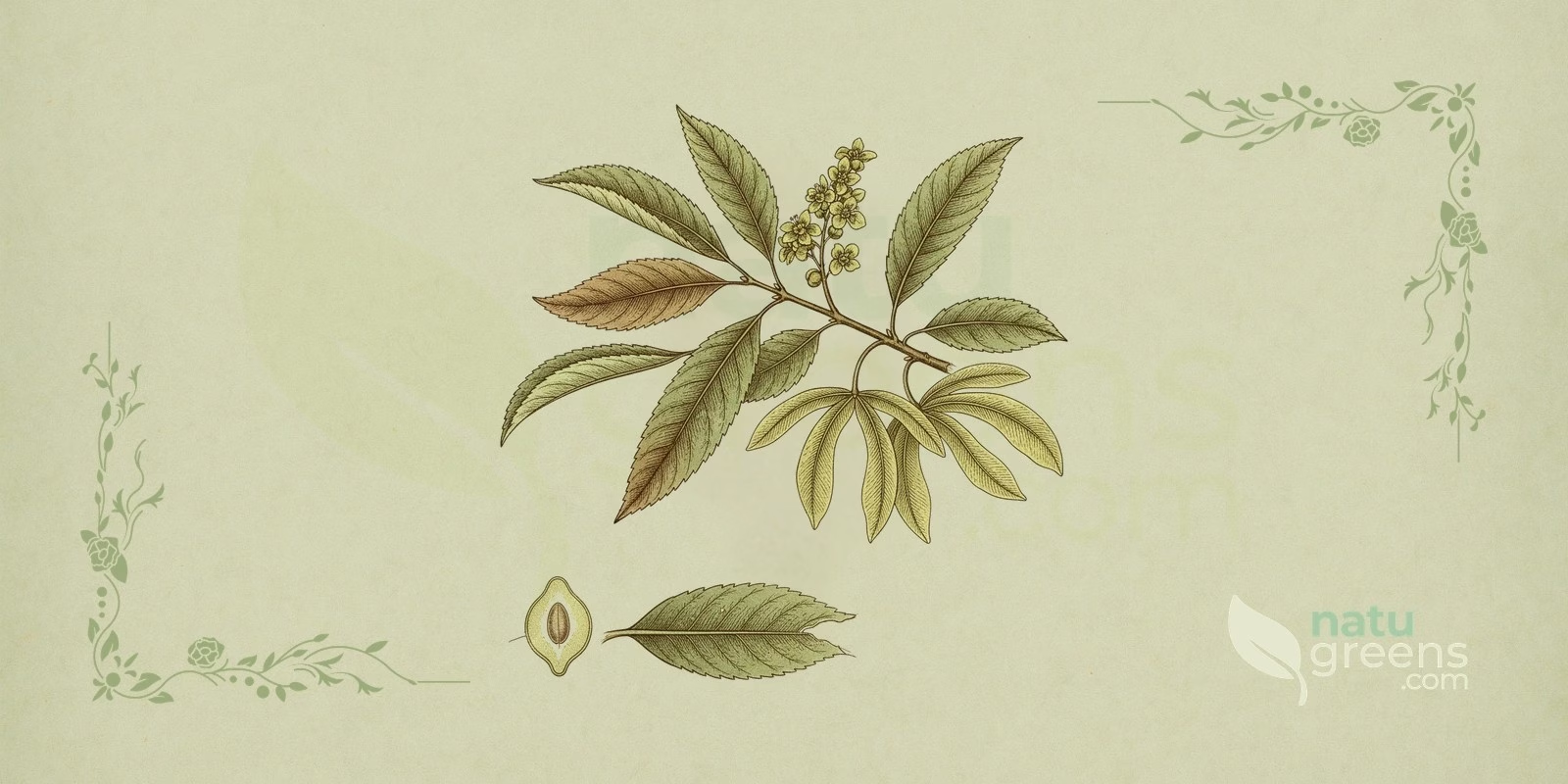
It is important to tell apart the two parts of the tree that are used, because they have different profiles of use and research and are not interchangeable: the stem bark, known in pharmacopoeias as Eucommiae cortex, is the classic drug of Chinese medicine and the focus of this article, while the leaf is the basis of the Japanese tea known as tochu. In tradition, the bark is associated with lower back pain, high blood pressure and what Chinese texts describe as fortifying the bones and tendons. Modern research looks into its phytochemical profile, rich in lignans and iridoids, but much of the data still comes from preclinical studies or small clinical trials.
Popular and International Names of Eucommia
- English: Chinese rubber tree, gutta percha tree, hardy rubber tree.
- Chinese: du zhong (杜仲).
- French: arbre à gutta-percha.
- German: chinesischer Guttaperchabaum.
- Italian: Eucommia ulmoides.
- Portuguese: árvore-da-guta-percha, du zhong, eucômia (BR).
- Spanish: eucomia, falso olmo chino.
Botanical Synonyms of Eucommia ulmoides
Eucommia ulmoides Oliv. is the only living species of the genus Eucommia, which in turn is the only genus in the family Eucommiaceae, so it has no botanical synonyms in current use derived from other species of the same genus. The plant is sometimes referred to by common names such as gutta-percha tree, Chinese rubber tree or du zhong, but these popular and trade names are not formal botanical synonyms. In the scientific literature the reference remains the binomial Eucommia ulmoides, accompanied by the name of the herbal drug, Eucommiae cortex, when the bark is the subject.
Botanical Family: Eucommiaceae
The family Eucommiaceae is monotypic: it contains only the genus Eucommia, of which Eucommia ulmoides Oliv. is the sole living species. The family stands out for its taxonomic uniqueness and for producing a latex that turns into an elastic material similar to gutta-percha, and in the past it was even treated as a separate order, Eucommiales, which shows how distinct it is within the plant kingdom.
Among the most curious morphological features of eucommia are the latex threads in the leaves and bark, which solidify into elastic filaments when a leaf is torn slowly. This trait, together with its own phytochemical makeup, sets it apart from other rubber-producing plants, and today the family is placed in the order Garryales, within the eudicots and asterids.
From a conservation standpoint, the species is considered rare or possibly extinct in a truly wild state, surviving mainly in cultivation in China and other countries, which means that commercial bark almost always comes from plantations.
Parts of Eucommia Used
- Stem bark (Eucommiae cortex), the classic drug of Chinese medicine
- Leaves, used in the Japanese tea tochu
Ethnobotanical and Traditional Uses of Eucommia
- Bones and tendons (classic Chinese indication, today only under study)
- Diabetes (traditional record; not a substitute for medical care)
- Erectile function (TCM record, described as tonifying Kidney Yang)
- High blood pressure (traditional use; modest blood pressure lowering effect observed in a small clinical trial)
- Inflammation (folk use)
- Liver and kidney nourishment (TCM concept)
- Lower back and lower limb pain (traditional use of the bark)
- Obesity (traditional record, under study)
- Rheumatoid arthritis (traditional record, without clinical evidence)
Classical Chinese medicine also records the bark in pregnancies at risk of miscarriage, but this use should not be reproduced: during pregnancy, medicinal use of eucommia should be avoided because there are not enough safety data.
Therapeutic Properties of Eucommia
- Antiallergic (preliminary laboratory studies)
- Antibacterial (activity observed in laboratory studies)
- Antidiabetic (preliminary animal studies)
- Antihypertensive (modest blood pressure lowering effect in a small clinical trial)
- Anti-inflammatory (preliminary laboratory and animal studies)
- Antimicrobial (activity observed in laboratory studies)
- Antioxidant (ability to neutralize free radicals in laboratory assays)
- Antiviral (activity observed in vitro)
- Bone-protective (effects on bone formation and resorption under study, with preclinical data)
- Cardioprotective (preliminary animal studies)
- Hypoglycemic (preliminary animal studies)
- Lipid-lowering (lipid reduction observed in animal studies)
- Neuroprotective (preliminary laboratory studies)
Detailed Phytochemical Profile of Eucommia
- Asperuloside
- Caffeic acid
- Chlorogenic acid
- Cryptochlorogenic acid
- Eucommiolides (A to C)
- Flavonoids
- Geniposide (iridoid glycoside)
- Gutta-percha (trans-1,4-polyisoprene)
- Iridoids
- Lignans
- Monoterpenoids
- Phenols
- Sterols
- Terpenoids
Lignans and iridoids predominate in the bark, while the leaves stand out for chlorogenic acid and flavonoids, another reason why data obtained from one part of the plant cannot automatically be applied to the other.
Preparation and Administration Forms of Eucommia
- Capsules and tablets
- Decoction (of the bark)
- Extracts (fluid and dry)
- Infusion (of the leaves, as in tochu tea)
- Tincture
Synergy with Other Medicinal Plants
Traditional Combination for the Lower Back
In traditional Chinese medicine, eucommia bark is often paired with Achyranthes bidentata in formulas traditionally used for lower back pain and weakness in the lower limbs, within the classic indication of fortifying the bones and tendons. Preclinical studies are looking at the effects of these plants on bone metabolism, but the data on osteoporosis and osteoarthritis are still under study and do not justify replacing medical care.
Classic Pair for the Liver and Kidneys in TCM
One of the most common combinations in TCM brings eucommia together with Rehmannia glutinosa, a pair traditionally used to nourish the Liver and Kidneys in patterns described as Yin and Yang deficiency of these organs, with dizziness, ringing in the ears and weakness in the knees and lower back. According to the internal logic of the Chinese system, the aim is to bring energetic and functional balance back, a traditional description that is not the same as scientific proof.
Traditional Formulas Linked to Blood Pressure
In traditional formulas related to blood pressure, eucommia appears alongside Chinese licorice (Glycyrrhiza uralensis) and Baikal skullcap (Scutellaria baicalensis), the plant from which baicalin is extracted, a flavonoid studied for antioxidant activity. Keep in mind that licorice, taken for long periods or in high doses, can raise blood pressure and cause fluid retention, and that adding plants that affect blood pressure to antihypertensive drugs can cause excessive drops, so these combinations require medical supervision.
Recipes and Usage Protocols of Eucommia
Traditional Leaf Tea (Tochu)
In Japan, the infusion of eucommia leaves is traditionally drunk as an everyday tea known as tochu.
Ingredients: a small amount of dried Eucommia ulmoides leaves and 200 ml of boiling water.
Preparation: place the leaves in a cup and pour in the boiling water. Cover, let steep for 10 to 15 minutes, strain and drink. Anyone taking medication for blood pressure or diabetes should talk to a health professional before drinking this tea regularly.
Traditional Bark Decoction
The bark decoction is the classic form of use in traditional Chinese medicine, traditionally associated with Liver and Kidney indications.
Ingredients: dried Eucommia ulmoides bark, in an amount set by a health professional, and 500 ml of water.
Preparation: put the bark and water in a pan and bring to the heat. Simmer over low heat for 15 to 20 minutes, strain and drink the liquid. Because high doses and prolonged use have been associated in studies with partially reversible kidney toxicity, the amount and duration should be guided by a professional.
Traditional Eucommia Wine
Du zhong medicinal wine is a traditional Chinese preparation, taken in small doses as a tonic.
Ingredients: 50 g of chopped Eucommia ulmoides bark and 500 ml of good-quality white wine or rice wine.
Preparation: place the chopped bark in a glass jar and cover it with the wine. Seal tightly and leave to macerate for at least one month, shaking from time to time, then strain and store in a cool, dark place. Tradition associates this wine with vigor and circulation, but because it contains alcohol it is not suitable for pregnant or breastfeeding women, children, people with liver disease or anyone taking medication that interacts with alcohol.
The preparations above follow traditional records and do not replace professional guidance. Before any internal use, check the contraindications and interactions described in this article.
Associated Therapies of Eucommia
Traditional Chinese Medicine (TCM)
In Traditional Chinese Medicine, the bark of Eucommia ulmoides, known as du zhong (杜仲), is one of the best-known tonics for the Liver and Kidneys, and the classical texts describe it as able to strengthen the bones and tendons, recommending it for lower back pain and weakness in the knees and lower limbs. Tradition also holds that the plant calms Liver Yang, a concept associated with high blood pressure, and uses it for erectile function, nearly always in decoctions, powders and extracts combined with other herbs. These indications belong to the logic of the Chinese system: modern data on osteoporosis and osteoarthritis are preclinical or come from small trials, and the old use to calm the fetus in high-risk pregnancies should not be followed, since medicinal use must be avoided during pregnancy.
Tochu Tea in Japan
In Japan, the eucommia leaf has found its own place as an everyday tea, tochu, consumed more like a beverage than a medicine. This use of the leaves differs from the classic use of the bark in Chinese medicine, and studies carried out with leaf extracts should not be confused with those carried out with the bark.
Contraindications and Side Effects of Eucommia
Interactions and Important Precautions
- Antihypertensives: a modest blood pressure lowering effect has been documented in a small clinical trial, so caution is needed, as the effect may add to that of blood pressure medication.
- Hypoglycemic drugs: hypoglycemia is possible when eucommia is combined with diabetes medication, with symptoms such as fainting, confusion, dizziness and cold sweats.
- Surgery: as a precaution, stopping use before surgical procedures is recommended, as with any plant that has a cardiovascular effect.
Contraindications
- Children: there are no safety data to support medicinal use.
- Estrogen-dependent conditions: eucommia may be contraindicated in these cases because of possible hormonal interactions.
- Hypersensitivity: anyone with a known allergy to any component of the plant should avoid it.
- Kidney disease and prolonged use: the safety of long-term or high-dose use is not fully established, and prolonged administration at high doses can lead to partially reversible kidney toxicity.
- Pregnancy and breastfeeding: medicinal use should be avoided because there are not enough safety data, and the plant should never be used for the traditional purpose of preventing miscarriage.
Side Effects
Clinical studies have documented some adverse effects of moderate intensity, such as headache, dizziness, swelling and the onset of cold-like symptoms. Although eucommia is generally considered well tolerated, any reaction should be watched, and people with pre-existing conditions or who take other medication need to consult a health professional before starting.
Historical Notes and Interesting Facts about Eucommia
The Last of Its Family
As the only living species of the genus Eucommia and of the family Eucommiaceae, eucommia is often called a living fossil, and this taxonomic uniqueness draws special interest from botanists who study its evolution. Ironically, the tree that survived so many geological eras is now rare or possibly extinct in a truly wild state and depends mainly on cultivation to keep existing.
A Temperate-Climate Rubber
The bark and leaves of eucommia produce an elastic latex similar to gutta-percha, making it one of the few temperate-climate plants able to yield this kind of material. When a leaf is torn carefully, fine threads of latex hold the two halves together, a property that led to the plant being used to make elastic and insulating materials, in addition to its traditional applications.
The Legend of Du Zhong
According to a Chinese legend, the name du zhong comes from a man called Du Zhong, who is said to have discovered the qualities of the tree's bark, used it on himself and his neighbors and become a master of herbal medicine. The folk tale illustrates the plant's deep connection with the culture and traditional medicine of China.
Frequently Asked Questions about Eucommia
Can Eucommia Be Used Every Day?
The leaf tea is drunk in Japan as an everyday beverage, but regular medicinal use of the bark should have its dose and duration set by a health professional. This matters even more for people with pre-existing conditions or who take medication for blood pressure or diabetes.
What Is Eucommia Traditionally Used For?
In Chinese medicine, the bark is traditionally used for lower back pain, high blood pressure and the classic indication of fortifying the bones and tendons. A small clinical trial observed a modest blood pressure lowering effect, and the data on osteoporosis and osteoarthritis are still preclinical or from small studies, which means they remain under study.
What Is the Difference between Eucommia Bark and Leaf?
The stem bark (Eucommiae cortex) is the classic drug of Chinese medicine, rich in lignans and iridoids, while the leaf is used in the Japanese tea tochu and stands out for its chlorogenic acid. They are parts with different profiles of use and research and should not be treated as interchangeable.
Does Eucommia Interact with Medications?
It can. Its blood pressure lowering effect may add to that of antihypertensives, and hypoglycemia is possible when combined with diabetes medication; as a precaution, use should also be stopped before surgery.
Does Eucommia Have Side Effects?
Clinical studies have recorded headache, dizziness, swelling and cold-like symptoms. High doses over long periods have been associated with partially reversible kidney toxicity, and people with hypersensitivity or estrogen-dependent conditions should avoid the plant.
Can Pregnant Women Use Eucommia?
It is not recommended. Although classical Chinese medicine mentions the bark in high-risk pregnancies, there are not enough safety data, and medicinal use should be avoided during pregnancy and breastfeeding.
Notice: this content is for informational purposes and does not replace professional medical advice. Consult a physician or herbal practitioner before using medicinal plants, especially during pregnancy, breastfeeding, or alongside medication.
How to cite this article
NATUGREENS. Eucommia (Eucommia ulmoides): Properties and Benefits. Natugreens, 19 Nov. 2026. Disponível em: https://natugreens.com/eucommia-ulmoides-eucommia/. Accessed: Nov. 20, 2026.
Natugreens. (2026). Eucommia (Eucommia ulmoides): Properties and Benefits. Natugreens. https://natugreens.com/eucommia-ulmoides-eucommia/
References and Scientific Studies
- PMC2016 Hussain T, et al. Health-Promoting Properties of Eucommia ulmoides: A Review. Evid Based Complement Alternat Med. 2016.
- PMC2021 Huang L, et al. Traditional application and modern pharmacological research of Eucommia ulmoides Oliv.. Chin Med. 2021.
- PMC2019 Wang CY, et al. Ethnobotany, Phytochemistry and Pharmacological Properties of Eucommia ulmoides: A Review. Am J Chin Med. 2019.
- PMC2014 He X, et al. Eucommia ulmoides Oliv.: ethnopharmacology, phytochemistry and pharmacology of an important traditional Chinese medicine. J Ethnopharmacol. 2014.
You May Also Like
Take your time and tell us everything you think, details included. Every response is read by someone on our editorial team and goes into the article's revision. An honest critique helps us more than a polite compliment.
Take your time and tell us everything you think, details included. Every response is read by someone on our editorial team and goes into the article's revision. An honest critique helps us more than a polite compliment.