



Quick summary
Houttuynia cordata Thunb. / Houttuynia, commonly known as fish mint, fish leaf, chameleon plant or heart leaf, is a perennial herbaceous plant in the Saururaceae family, described by the Swedish botanist Carl Peter Thunberg. Native to Asia, Houttuynia cordata ranges from Nepal, Bhutan, Sikkim and northeast India to…
Main caution: Warning: injectable formulations of Houttuynia cordata were suspended in China in 2006 after severe anaphylactic reactions, including deaths. This warning refers exclusively to the parenteral route, that is, to…
Houttuynia cordata Thunb. / Houttuynia, commonly known as fish mint, fish leaf, chameleon plant or heart leaf, is a perennial herbaceous plant in the Saururaceae family, described by the Swedish botanist Carl Peter Thunberg. Native to Asia, Houttuynia cordata ranges from Nepal, Bhutan, Sikkim and northeast India to Myanmar, Thailand, Vietnam, China, Taiwan, Korea, Japan and Indonesia. It is widely used both in traditional medicine and in Asian cooking, where it is eaten as a fresh leafy vegetable in Vietnam, northeast India and the Chinese province of Sichuan.
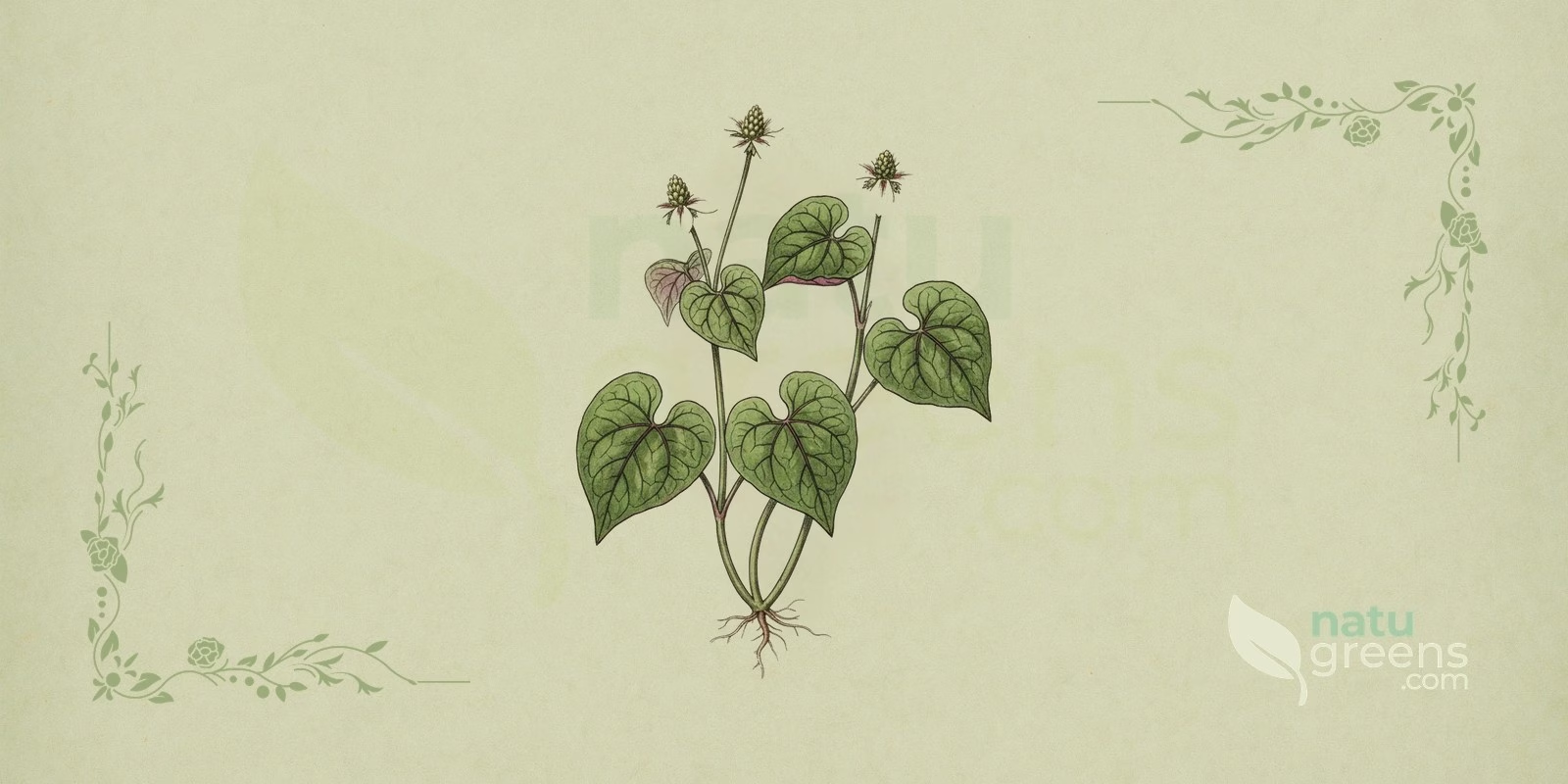
The plant grows in damp, shady places, reaches 0.6 to 1 meter in height and can spread up to 1 meter wide thanks to its rhizomes. Its leaves are alternate and heart-shaped, and the tiny greenish-yellow flowers are gathered in terminal spikes surrounded by conspicuous white bracts that are often mistaken for petals. Its phytochemical makeup, which includes volatile oils, flavonoids and alkaloids, has been studied in the laboratory and in animals, but most of the effects under investigation have not yet been confirmed by good-quality clinical research.
Popular and International Names of Houttuynia
- English: chameleon plant, Chinese lizard tail, fish leaf, fish mint, fish wort, heart leaf, rainbow plant.
- Chinese: yu xing cao (魚腥草).
- French: menthe de poisson, plante caméléon.
- German: Chamäleonpflanze, Eidechsenschwanz.
- Italian: menta di pesce, pianta camaleonte.
- Japanese: dokudami.
- Portuguese: erva-camaleão, erva-coração, erva-peixe, peixe-hortelã, planta-camaleão.
- Spanish: hierba de pescado, planta camaleón.
Botanical Synonyms of Houttuynia cordata
Houttuynia emeiensis Z.Y.Zhu & S.L.Zhang is a botanical synonym of Houttuynia cordata Thunb. The name was once used to describe plants from a particular region of China, but today it is widely accepted as referring to the same species. The taxonomy of Houttuynia cordata is well established, and the name published by Thunberg remains the most recognized and widely used in the international scientific literature, including studies on its cultivated varieties such as the ornamental form with colorful leaves.
Botanical Family: Saururaceae
The Saururaceae family is a small group of flowering plants in the order Piperales, made up of herbs with alternate leaves and spike-like inflorescences, often accompanied by petal-like bracts. It includes genera such as Houttuynia, Saururus and Anemopsis, and its species occur mainly in temperate and subtropical regions of Asia and North America.
Houttuynia cordata shares with its relatives the structure of the inflorescence and the presence of rhizomes, as well as the production of bioactive compounds such as essential oils and flavonoids, which drive pharmacological research on the family. Botanically, the Saururaceae are close to the Aristolochiaceae, a fact that becomes important in the safety section of this article.
Parts of Houttuynia Used
- Aerial parts (leaves and stems)
- Rhizome
- Whole plant
Ethnobotanical and Traditional Uses of Houttuynia
- Allergies (folk use)
- Arthritis (folk use)
- Colds (folk use)
- Cough (folk use)
- Fever (folk use)
- Fresh vegetable and seasoning (Vietnam, northeast India and Sichuan)
- Inflammation (folk use)
- Mumps (recorded in traditional Chinese medicine)
- Pneumonia and lung abscesses (recorded in TCM; require medical treatment)
- Respiratory and urinary infections (traditional record; require medical evaluation)
- Sinusitis (folk use)
- Tumors (traditional record, with no clinical evidence and no substitute for cancer treatment)
Therapeutic Properties of Houttuynia
- Antibacterial (activity observed in laboratory studies)
- Anti-inflammatory (preliminary laboratory and animal studies)
- Antioxidant (ability to neutralize free radicals in laboratory assays)
- Antiproliferative (activity observed in laboratory studies, with no clinical evidence)
- Antiviral activity under investigation (preliminary laboratory and animal studies are looking at influenza and coronaviruses, with no evidence in people)
- Hepatoprotective (preliminary animal studies)
- Immunomodulatory (preliminary laboratory studies)
- Nephroprotective (preliminary animal studies)
During the SARS epidemic and later the COVID-19 pandemic, houttuynia drew attention because of preliminary laboratory studies investigating how its extracts act on respiratory viruses. That work was carried out in vitro or in animal models and does not allow anyone to claim that the plant has an established antiviral effect in humans.
Detailed Phytochemical Profile of Houttuynia
- Alkaloids (including traces of aristolactams detected in some analyses)
- Decanoyl acetaldehyde (houttuynin)
- Flavonoids (hyperoside, kaempferol, quercetin, quercitrin, rutin)
- Organic acids (chlorogenic acid)
- Polysaccharides
- Volatile oils
Preparation and Administration Forms of Houttuynia
- Culinary use (fresh in salads, cooked, in chutneys or as a garnish)
- Decoction
- Standardized extracts (capsules, tablets)
- Tea (infusion of dried leaves)
All traditional forms are taken by mouth or as food. Injectable preparations of the plant once existed in China, but they were suspended over serious safety concerns, and there is no home or complementary use of any kind by that route.
Synergy with Other Medicinal Plants
Traditional Blends for the Scalp
In traditional Asian herbal blends, Houttuynia cordata is combined with perilla (Perilla frutescens var. acuta) and green tea (Camellia sinensis) in formulas traditionally used for scalp and hair care. The idea behind this pairing is to bring together plants studied for anti-inflammatory and antioxidant activity, but the available data are preliminary and offer no assurance of any effect on hair loss, which should be assessed by a dermatologist.
Traditional Formulas in Experimental Research
Houttuynia also appears in traditional Chinese formulas associated with the stomach, some of which have been examined in the laboratory for possible antiproliferative activity against gastric carcinoma cells. The mechanisms are still being investigated and the results come from cells and animals, so these combinations offer no proven protection against cancer and are no substitute for cancer care, and any suspected stomach disease calls for medical evaluation.
Recipes and Usage Protocols of Houttuynia
Traditional Houttuynia Tea
An infusion of the dried leaves is traditionally used in Asia for colds, fever and inflammation, and in Japan dokudami tea is a popular drink.
Ingredients: a small amount of dried Houttuynia cordata leaves and 200 ml of boiling water.
Preparation: place the dried leaves in a cup and pour in the boiling water. Cover and let steep for 5 to 7 minutes, then strain and drink, sweetening with honey or adding lemon if you want to soften its distinctive flavor. As a precaution, avoid prolonged use at high doses and talk to a health professional before drinking the tea regularly, especially if you have kidney disease.
Fresh Houttuynia Salad
As a vegetable, houttuynia is served fresh in salads in Vietnam, northeast India and Sichuan, where its peppery, faintly briny flavor is much appreciated.
Ingredients: fresh Houttuynia cordata leaves, cherry tomatoes, cucumber, red onion, soy sauce, rice vinegar, sesame oil and red chili (optional).
Preparation: wash the leaves well and chop them roughly. Halve the cherry tomatoes, slice the cucumber into thin rounds and the red onion into thin slices, and toss everything together in a bowl. Make a dressing with soy sauce, rice vinegar, sesame oil and chili to taste, pour it over the salad and serve right away.
The preparations above follow traditional records and do not replace professional guidance. Before any internal use, check the contraindications and interactions described in this article.
Associated Therapies of Houttuynia
Modern Herbal Medicine
In modern herbal medicine, Houttuynia cordata appears in oral supplements because of interest in the anti-inflammatory and antibacterial activity seen in the laboratory, and standardized extracts are being studied for respiratory and inflammatory complaints. High-quality clinical trials confirming the safety and efficacy of these uses are still lacking, however, and current research is focused precisely on isolating the active compounds and better understanding their safety profile. Respiratory infections with persistent fever or shortness of breath require medical evaluation.
Traditional Chinese Medicine (TCM)
In Traditional Chinese Medicine, Houttuynia cordata, called yu xing cao (魚腥草), literally "fishy-smelling herb", is classed among the herbs that "clear heat and relieve toxicity", with a cold nature and a pungent taste. The tradition uses it for conditions such as pneumonia, lung abscesses, urinary complaints and various inflammations, usually in decoctions or within complex formulas, always following the logic of the Chinese system. Today, pneumonia, abscesses and urinary infections require medical diagnosis and treatment, and using the plant in these cases is no substitute for antibiotics or other appropriate care.
Contraindications and Side Effects of Houttuynia
Suspended Injectable Formulations
Warning: injectable formulations of Houttuynia cordata were suspended in China in 2006 after severe anaphylactic reactions, including deaths. This warning refers exclusively to the parenteral route, that is, to injections, and is entirely separate from the traditional oral and dietary use of the plant, which is eaten as a fresh leafy vegetable in Vietnam, northeast India and Sichuan. Houttuynia must never be used by injection, and the history of the injections does not mean that eating it as food carries the same risk.
Contraindications and Precautions
- Aristolactams and kidney disease: the Saururaceae family is botanically close to the Aristolochiaceae, and traces of aristolactams have been detected in analyses of the plant. This is still an open question in the literature, with no reason for alarm but also no guarantee that there is no risk, so prolonged use at high doses and use by people with kidney disease are not advised.
- Pregnancy and breastfeeding: medicinal use should be avoided due to a lack of sufficient safety data.
- Children: the safety of medicinal doses in children has not been studied, and use should be avoided without professional guidance.
- Allergy: people with a history of plant allergies should be cautious.
- Medications: there are no well-documented interactions, but anyone taking medication on an ongoing basis should consult a health professional before taking medicinal doses.
Side Effects
- Allergic skin reactions: these have been reported, including with topical use of extracts, which should first be tested on a small area.
- Digestive discomfort: the fishy flavor may cause nausea or stomach upset in some people.
- Photosensitization: there are reports of increased skin sensitivity to sunlight.
Historical Notes and Interesting Facts about Houttuynia
A Flavor That Divides Opinion
The fishy aroma of the leaves, which gave rise to names such as fish mint, fish leaf and the Chinese yu xing cao, is attributed to a volatile compound, decanoyl acetaldehyde, also called houttuynin. This profile can challenge Western palates, yet it is prized in many Asian cuisines, and its intensity varies with the part of the plant and the way it is prepared.
Dokudami and Yu Xing Cao
In Japan the plant is called dokudami and has featured in homemade teas for generations, while in China the name yu xing cao refers directly to the distinctive smell of the leaves. The two names show how the same species holds different places in neighboring cultures, from traditional beverage to ingredient in formulas.
An Ornamental Turned Invasive
Houttuynia is grown as an ornamental, above all in the multicolored-leaf form that earned it the name chameleon plant, but it has become invasive in temperate climates outside its native range. Its underground rhizomes spread quickly, can smother other plants and are hard to eradicate, so it needs careful management in gardens.
An Ingredient in Korean Skincare
Extracts of Houttuynia cordata are popular in Korean skincare products, especially in formulas described as soothing, such as toners, serums and masks. The interest comes from the anti-inflammatory and antioxidant activity observed in the laboratory, and this cosmetic use reflects the value placed on plant ingredients in Korean beauty routines.
Frequently Asked Questions about Houttuynia
Can Houttuynia Be Eaten Every Day?
As a vegetable and seasoning, houttuynia is part of the everyday diet in several regions of Asia. For medicinal use, however, long-term safety studies are lacking, and as a precaution high doses over long periods should be avoided, especially in people with kidney disease.
Does Houttuynia Help against Infections and Viruses?
The plant is used traditionally for infections, and preliminary laboratory studies are investigating its antibacterial activity and its activity against viruses such as influenza and coronaviruses. These data come from cells and animals and do not prove any effect in people, and infections require medical evaluation and treatment.
Why Were Houttuynia Injections Suspended?
The injectable formulations were suspended in China in 2006 after severe anaphylactic reactions, including deaths. The warning applies only to the injectable route, entirely separate from traditional oral and dietary use, and the plant must never be used that way.
Can Children Eat Houttuynia?
As a food, the plant is eaten in Asian households, but the safety of medicinal doses in children has not been studied. Medicinal use in children should be avoided without the guidance of a health professional.
Can Houttuynia Cause Allergies or Skin Reactions?
Yes, allergic skin reactions and photosensitization have been reported. People with a history of plant allergies should be cautious and stop using it if they notice itching, redness or sensitivity to sunlight.
Does Houttuynia Interact with Medications?
There are no well-documented interactions with medications. Even so, given the plant's complex composition, anyone taking medication on an ongoing basis should talk to a health professional before taking medicinal doses.
Notice: this content is for informational purposes and does not replace professional medical advice. Consult a physician or herbal practitioner before using medicinal plants, especially during pregnancy, breastfeeding, or alongside medication.
How to cite this article
NATUGREENS. Houttuynia (Houttuynia cordata): Properties and Benefits. Natugreens, 19 Nov. 2026. Disponível em: https://natugreens.com/houttuynia-houttuynia-cordata/. Accessed: Nov. 20, 2026.
Natugreens. (2026). Houttuynia (Houttuynia cordata): Properties and Benefits. Natugreens. https://natugreens.com/houttuynia-houttuynia-cordata/
References and Scientific Studies
- PMC2024 Wei P, et al. Houttuynia Cordata Thunb.: A comprehensive review of traditional applications, phytochemistry, pharmacology and safety. Phytomedicine. 2024.
- PMC2021 Wu Z, et al. Houttuynia cordata Thunb: An Ethnopharmacological Review. Front Pharmacol. 2021.
- PMC2022 Rafiq S, et al. Pharmacological Effects of Houttuynia cordata Thunb (H. cordata): A Comprehensive Review. Pharmaceuticals (Basel). 2022.
- PMC2022 Laldinsangi C. The therapeutic potential of Houttuynia cordata: A current review. Heliyon. 2022.
You May Also Like
Take your time and tell us everything you think, details included. Every response is read by someone on our editorial team and goes into the article's revision. An honest critique helps us more than a polite compliment.
Take your time and tell us everything you think, details included. Every response is read by someone on our editorial team and goes into the article's revision. An honest critique helps us more than a polite compliment.