



Quick summary
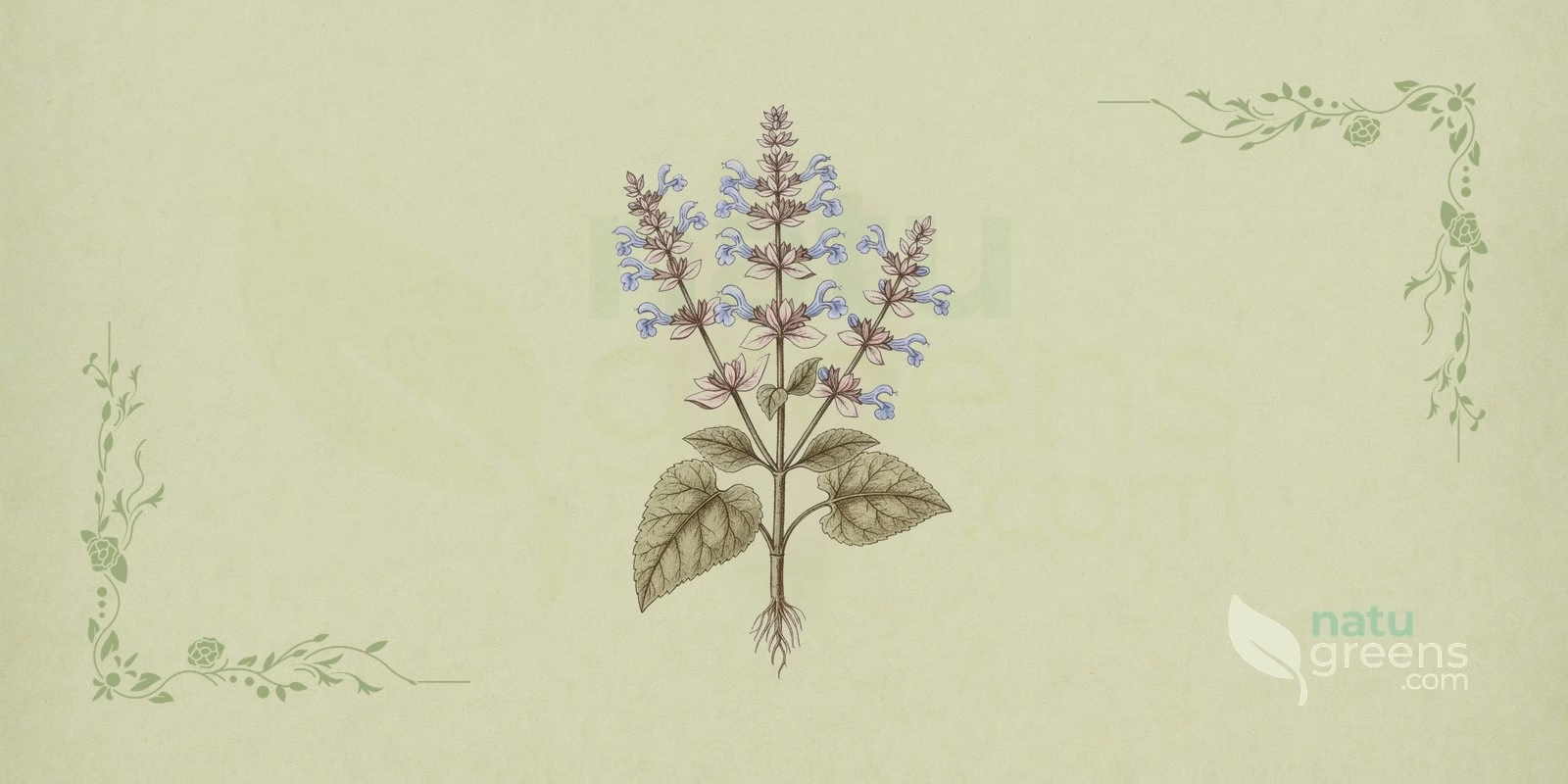
Salvia sclarea L., known in English as clary sage, is a biennial or short-lived perennial herb of the Lamiaceae family, native to the northern Mediterranean basin, parts of North Africa and Central Asia. In its second year it sends up flowering stems that can grow taller than a meter, covered in lilac and pink bracts…
Main caution: Excessive inhalation can cause headaches. People allergic to plants of the Lamiaceae family should be cautious.
Salvia sclarea L., known in English as clary sage, is a biennial or short-lived perennial herb of the Lamiaceae family, native to the northern Mediterranean basin, parts of North Africa and Central Asia. In its second year it sends up flowering stems that can grow taller than a meter, covered in lilac and pink bracts and carrying a strong scent somewhere between musky and herbaceous. It has been grown for this fragrance since antiquity, and today its main use is the essential oil, which goes into perfumery, flavors for drinks and aromatherapy. The claims about hormones and menopause that tend to accompany the oil come from small studies and are still under investigation.
Popular and International Names of Clary Sage
- English: clary sage, clear eye.
- French: sauge sclarée.
- German: Muskatellersalbei.
- Italian: erba moscatella, salvia moscatella, schiarea.
- Polish: szałwia muszkatołowa.
- Portuguese: esclareia, sálvia-esclareia.
- Spanish: amaro, esclarea, salvia esclarea, salvia romana.
- Swedish: muskatellsalvia.
Not to Be Confused with Other Sages
Clary sage is not common kitchen sage (Salvia officinalis), it is not chia (Salvia hispanica), and it has no connection in use with Salvia divinorum, a psychoactive plant. Clary sage oil is dominated by linalyl acetate and linalool and contains little thujone, whereas common sage oil can be rich in thujone. Their safety profiles are therefore different, and information about one species does not apply to the other.
Botanical Synonyms of Clary Sage
The accepted name is Salvia sclarea L. Synonyms recorded in the literature include:
- Aethiopis sclarea (L.) Opiz
- Salvia coarctata Vahl
- Salvia foetida Lam.
- Salvia haematodes Scop.
Botanical Family: Lamiaceae
Clary sage belongs to the Lamiaceae, the mint family, which brings together many aromatic herbs used in cooking and medicine, such as basil, oregano, rosemary and common sage itself. Plants in this family usually have square stems, opposite leaves and glands that produce volatile oils. In clary sage the leaves are large, wrinkled and velvety, and the flowers are gathered in long spikes among colorful bracts.
Parts of Clary Sage Used
The flowering aerial parts are distilled to obtain the essential oil. The leaves are used in teas and once flavored drinks and dishes. The seeds, which release mucilage when wet, had a historical use that has since been abandoned. Industry also extracts an absolute and sclareol from the plant, perfumery raw materials that are not meant for consumption.
Ethnobotanical and Traditional Uses of Clary Sage
The plant appears in the writings of Theophrastus, Dioscorides and Pliny the Elder. In medieval Europe the mucilaginous seeds were placed in the eyes to remove specks of dust, the practice behind the English name clear eye, and one that should not be repeated today: nothing other than a sterile ophthalmic product should go into the eyes. Tradition also turned to it for digestive complaints and discomfort linked to the menstrual cycle.
In the sixteenth century the plant was added to Rhine wines, and for a long time it served to flavor beers, vermouths and liqueurs. These are records of traditional use and carry no weight as medical indications.
Therapeutic Properties of Clary Sage
Most of the properties attributed to clary sage refer to the essential oil, inhaled or applied to the skin, and come from animal studies or small trials in people:
- Antidepressant (effect observed in rats, under study)
- Antimicrobial (activity of the oil against bacteria and fungi in the laboratory, under study)
- Antioxidant (activity against free radicals in laboratory assays)
- Antispasmodic (traditional use for cramps)
- Anxiolytic (calming effect of inhalation in small studies, under study)
Small aromatherapy studies have looked at the oil in menopausal women, finding changes in cortisol and serotonin levels after inhalation, and in massage for menstrual cramps, always in blends with other oils. These are preliminary results. There is no basis for saying that the plant regulates hormones or acts as a proven phytoestrogen.
Detailed Phytochemical Profile of Clary Sage
The essential oil is the most studied fraction, and its composition varies with origin and harvest time:
- Alpha-terpineol (monoterpene alcohol)
- Beta-caryophyllene (sesquiterpene also common in black pepper)
- Geranyl acetate (ester with a floral note, present in smaller amounts)
- Germacrene D (sesquiterpene with a woody note)
- Linalool (second most abundant component, with a floral note)
- Linalyl acetate (main component of the oil)
- Sclareol (diterpene used by industry as a raw material for fixatives)
The leaves and flowers also contain flavonoids and phenolic acids, which are common in the family.
Preparation and Administration Forms of Clary Sage
The essential oil, obtained by steam distillation of the flowering parts, is the most common form. A few rules always apply:
- Do not swallow the essential oil.
- On the skin, use it only diluted in a vegetable oil and after a patch test, because there is a risk of sensitization.
- Do not put any part of the plant in the eyes.
- The absolute and sclareol are perfumery raw materials and are not for direct personal use.
The dried leaves appear in homemade infusions, a traditional use with little research behind it.
Synergy with Other Medicinal Plants
In perfumery and aromatherapy, clary sage oil blends well with the following oils. These are fragrance pairings, with no therapeutic effect demonstrated for the blends:
- Atlas cedar (Cedrus atlantica)
- Bergamot (Citrus bergamia), phototoxic when not rectified
- Black pepper (Piper nigrum)
- Cardamom (Elettaria cardamomum)
- Coriander (Coriandrum sativum)
- Cypress (Cupressus sempervirens)
- Frankincense (Boswellia sacra)
- Geranium (Pelargonium graveolens)
- Grapefruit (Citrus paradisi)
- Lavender (Lavandula angustifolia)
- Lemon (Citrus limon), phototoxic when cold-pressed
- Roman chamomile (Chamaemelum nobile)
- Sandalwood (Santalum album)
- Sweet orange (Citrus sinensis)
- Ylang-ylang (Cananga odorata), also a skin sensitizer
Recipes and Usage Protocols of Clary Sage
Room Diffusion
A few drops in a diffuser, for short periods and in a well-ventilated room, are the simplest way to enjoy the scent. Because it can cause drowsiness, avoid it before driving.
Massage Oil
For massage, the oil should be well diluted in a vegetable oil such as sweet almond or jojoba. Do a test on the forearm first and wait 24 hours, stopping if any redness or itching appears. Severe menstrual cramps, or cramps that get worse over time or keep you from your daily activities, need a gynecological assessment.
Leaf Tea
Tea made from the dried leaves is a traditional use with culinary roots and no safety studies. Anyone who wants to try it should do so in moderation and talk to a health professional first if they take any medication.
The preparations above follow traditional records and do not replace professional guidance. Before any internal use, check the contraindications and interactions described in this article.
Associated Therapies of Clary Sage
Aromatherapy
In aromatherapy, clary sage is one of the oils most associated with relaxation and women's well-being. Small trials suggest effects on anxiety, on blood pressure during uncomfortable medical examinations and on menstrual cramps, but larger studies are still lacking. Aromatherapy can be a pleasant complement, though it does not replace medical care.
Flower Essences
There is a clary sage flower essence, used by flower essence practitioners with a focus on mental clarity. Flower essences follow their own principles, and no studies have evaluated specific effects of this essence.
Contraindications and Side Effects of Clary Sage
- Pregnancy: avoid the essential oil. The popular use of the oil to bring on labor has no scientific support and is not safe without obstetric supervision.
- Breastfeeding and children: not recommended.
- Hormone-dependent cancer and hormone therapy: as a precaution, anyone who has or has had breast, ovarian, uterine or prostate cancer, or who is on hormone therapy, should talk to their doctor before using the concentrated oil.
- Drowsiness: the oil can make you sleepy. Take care when driving and avoid combining it with alcohol and sedatives, whose effects may add up.
- Skin: risk of sensitization. Always use it diluted and do a patch test.
- Ingestion: the essential oil must not be swallowed.
Excessive inhalation can cause headaches. People allergic to plants of the Lamiaceae family should be cautious.
Historical Notes and Interesting Facts about Clary Sage
The most widely accepted explanation for the name sclarea links the plant to the Latin clarus, meaning clear, because of the old practice of putting the seeds in the eyes. In sixteenth-century Germany, clary sage was mixed into Rhine wines to give them a scent reminiscent of muscatel, which is the origin of the German name Muskatellersalbei.
The sclareol extracted from the plant is one of the raw materials industry uses to produce ambroxide, the molecule that replaces sperm whale ambergris in perfumery. In this way, a field of clary sage indirectly helps spare an animal substance that was once highly coveted.
Frequently Asked Questions about Clary Sage Tea
Can Clary Sage Tea Be Drunk Every Day?
Daily use has not been studied. Leaf tea is a traditional use, and the most prudent approach is to drink it only occasionally, talking to a health professional if you take any medication.
Does Clary Sage Regulate Female Hormones?
There is no evidence for this. Small aromatherapy studies observed some changes after menopausal women inhaled the oil, but they do not show a hormonal effect or phytoestrogen activity.
Does Clary Sage Tea Interact with Medications?
Its effects may add up with alcohol, tranquilizers and sleeping pills. Anyone on hormone therapy or being treated for a hormone-dependent cancer should talk to their doctor before using the concentrated oil.
Does Clary Sage Tea Improve Sleep?
There are no studies on the tea. The relaxing effect that has been studied is that of inhaling the oil, in small, preliminary trials.
Are Clary Sage and Common Sage the Same Plant?
No. Common sage is Salvia officinalis, whose oil can be rich in thujone. Clary sage oil is dominated by linalyl acetate and linalool and has a different safety profile.
Can Pregnant Women Use Clary Sage Oil?
No. The oil should be avoided throughout pregnancy, including as a way to bring on labor, unless there is obstetric supervision.
Can I Take Clary Sage Essential Oil by Mouth?
No. The essential oil must not be swallowed. On the skin, use it only diluted and after a patch test.
Notice: this content is for informational purposes and does not replace professional medical advice. Consult a physician or herbal practitioner before using medicinal plants, especially during pregnancy, breastfeeding, or alongside medication.
How to cite this article
NATUGREENS. Clary Sage (Salvia sclarea): Oil, Uses and Precautions. Natugreens, 20 Nov. 2026. Disponível em: https://natugreens.com/salvia-sclarea-clary-sage/. Accessed: Nov. 20, 2026.
Natugreens. (2026). Clary Sage (Salvia sclarea): Oil, Uses and Precautions. Natugreens. https://natugreens.com/salvia-sclarea-clary-sage/
References and Scientific Studies
- DOI2014 Lee, K. B., Cho, E. and Kang, Y. S. (2014). Changes in 5-hydroxytryptamine and cortisol plasma levels in menopausal women after inhalation of clary sage oil. Phytotherapy Research, 28(11), 1599-1605. Small study in menopausal women that observed a drop in cortisol after inhalation of the oil. ↗
- DOI2010 Seol, G. H. et al. (2010). Antidepressant-like effect of Salvia sclarea is explained by modulation of dopamine activities in rats. Journal of Ethnopharmacology, 130(1), 187-190. Antidepressant-like effect observed in rats. ↗
- DOI2013 Seol, G. H. et al. (2013). Randomized controlled trial for Salvia sclarea or Lavandula angustifolia: differential effects on blood pressure in female patients with urinary incontinence undergoing urodynamic examination. Journal of Alternative and Complementary Medicine, 19(7), 664-670. Inhalation of the oil associated with lower blood pressure during an uncomfortable examination, in a small sample. ↗
- DOI2012 Ou, M. C. et al. (2012). Pain relief assessment by aromatic essential oil massage on outpatients with primary dysmenorrhea: a randomized, double-blind clinical trial. Journal of Obstetrics and Gynaecology Research, 38(5), 817-822. Massage with a blend of lavender, clary sage and marjoram shortened the duration of menstrual pain. ↗
- DOI2015 Cui, H. et al. (2015). Antimicrobial activity and mechanisms of Salvia sclarea essential oil. Botanical Studies, 56, 16. Antimicrobial activity of the oil in the laboratory. ↗
You May Also Like
Take your time and tell us everything you think, details included. Every response is read by someone on our editorial team and goes into the article's revision. An honest critique helps us more than a polite compliment.
Take your time and tell us everything you think, details included. Every response is read by someone on our editorial team and goes into the article's revision. An honest critique helps us more than a polite compliment.