



Quick summary
Fumaria officinalis L., commonly known as fumitory, is an annual herbaceous plant in the Papaveraceae family, first described by Carl Linnaeus in 1753. The species is native to Europe and western Asia, but has naturalized across many temperate regions, including farmland and disturbed soils in Brazil. Small pink to…
Main caution: Fumitory is the subject of an EMA/HMPC traditional-use monograph for digestive complaints linked to bile flow, which underscores its standing as a folk-use plant, not a medicine with fully established efficacy. Use is…
Fumaria officinalis L., commonly known as fumitory, is an annual herbaceous plant in the Papaveraceae family, first described by Carl Linnaeus in 1753. The species is native to Europe and western Asia, but has naturalized across many temperate regions, including farmland and disturbed soils in Brazil. Small pink to purple flowers and finely divided, almost feathery leaves give the plant a delicate, airy look that inspired several of its common names. Despite a long history of use in traditional European medicine, many of the effects attributed to fumitory still rest on preclinical studies and traditional observation, with few robust clinical trials carried out in humans.
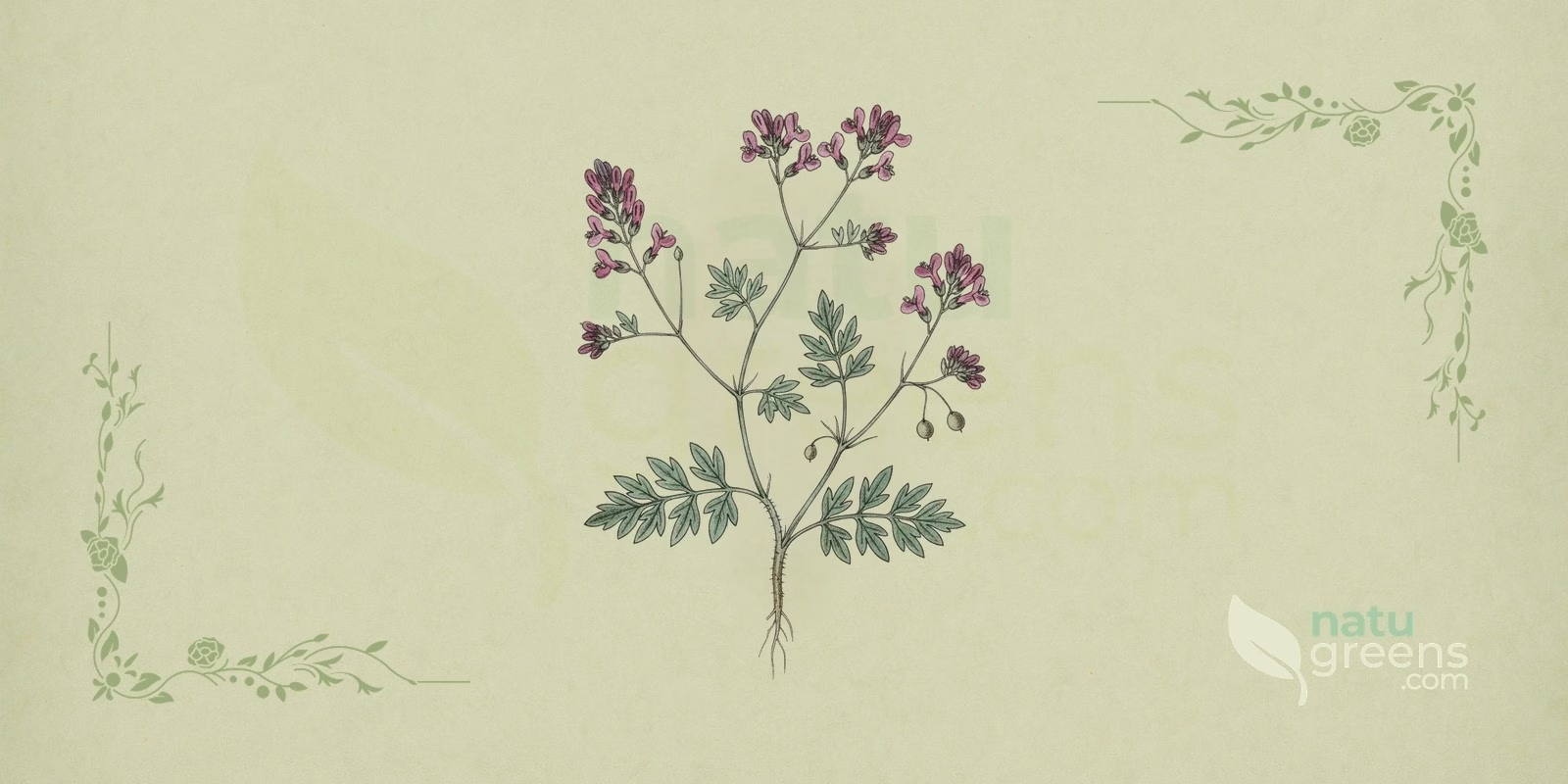
The plant contains a diverse set of bioactive compounds, among them isoquinoline alkaloids, flavonoids and other polyphenols, which the phytochemical literature links to antioxidant, anti-inflammatory and bile-related activity. Because of this, fumitory commonly turns up in formulations aimed at the liver, the gallbladder and, used topically, certain skin conditions. Since it acts on sensitive organs and contains alkaloids that can turn toxic in excess, it is a plant that calls for guided use over a limited period, as detailed in the contraindications and frequently asked questions sections below.
Popular and International Names of Fumitory
- English: common fumitory, drug fumitory, earth smoke.
- French: fumeterre, fleur de terre.
- German: Erdrauch, Gemeiner Erdrauch.
- Italian: fumaria, erba fumaria.
- Portuguese: fumária, erva-moleirinha, fumo-da-terra, erva-pombinha, pé-de-perdiz.
- Spanish: fumaria, palomilla, zapaticos, hierba de la ictericia.
Not to Be Confused with Other Fumaria Species
The genus Fumaria brings together several species of very similar appearance, distinguished mainly by fine details of the flower and the fruit. This close morphological resemblance makes careful botanical identification especially important, since subtle differences between species can correspond to variations in alkaloid content and, as a result, in the safety profile of each harvested plant.
Botanical Synonyms of Fumitory
The name Fumaria officinalis L. is the accepted binomial, widely used in current botanical and pharmaceutical literature. The species was originally published by Carl Linnaeus in Species Plantarum, volume 2, page 700, in 1753, and that record remains the reference point for valid nomenclature. Older synonyms occasionally turn up in historical databases, but they see no current use in the most recent phytochemical and pharmacological studies on the species.
Botanical Family: Papaveraceae
Fumaria officinalis belongs to the Papaveraceae family, which brings together around 770 species spread across 44 genera worldwide. Among the best known members of this family are the opium poppy (Papaver somniferum), source of opium and several of its derivatives, and greater celandine (Chelidonium majus), likewise used for centuries in folk medicine. Showy flowers and the frequent presence of latex or colored sap are recurring traits of the group.
From a chemical standpoint, Papaveraceae stands out for its steady production of isoquinoline alkaloids, compounds studied for their possible analgesic, sedative, antispasmodic and anti-inflammatory actions. This chemical tendency shows up directly in fumitory, whose effects on the digestive and hepatobiliary systems are, for the most part, tied to this same group of substances.
Parts Used of Fumitory
With fumitory, the flowering aerial parts are the ones mainly used: stem, leaves, flowers and the flowering top, harvested at the start of flowering, when alkaloid concentration tends to be more consistent. The root is not part of the most common traditional preparations, and there is no established recommendation for its medicinal use.
Ethnobotanical and Traditional Uses of Fumitory
In European folk medicine, fumitory is traditionally linked to digestive complaints tied to bile flow, such as a feeling of heaviness after meals, slow digestion and mild abdominal discomfort. Drinking it as a tea to support gallbladder function, and, more mildly, as an occasional aid for sluggish bowels, ranks among the oldest ethnobotanical records on the plant. Externally, compresses made with fumitory tea turn up in folk accounts aimed at skin irritations such as eczema and psoriasis, always as a complementary traditional use, never as a substitute for dermatological treatment. These accounts reflect the accumulated experience of folk herbal medicine, not definitive clinical proof in humans.
Medicinal Properties of Fumitory
The properties attributed to fumitory come mostly from preclinical studies, phytochemical analysis and continued traditional use, without robust confirmation in large-scale human clinical trials. They are best read as biological potential observed in the laboratory, or as accumulated folk experience, not as a guarantee of results.
- Choleretic and cholagogue (traditional use to stimulate bile production and flow)
- Hepatoprotective (suggested in preclinical studies, without confirmation in humans)
- Anti-inflammatory (observed mainly in experimental models)
- Antioxidant (attributed to the polyphenols and flavonoids present in the plant)
- Antispasmodic (traditional use to ease mild digestive tract spasms)
- Mild diuretic (traditional use, without robust confirming studies)
- Mild laxative (occasional traditional use, without solid clinical evidence)
- Depurative (a folk-use term without a precise pharmacological definition)
- Topical wound healing (reported in traditional use and in small studies on the skin)
Detailed Phytochemical Profile of Fumitory
The chemical profile of fumitory is dominated by isoquinoline alkaloids, the group behind much of the biological activity described for the plant. Protopine is the most abundant and most studied alkaloid in the species, followed by allocryptopine, both linked to antispasmodic and anti-inflammatory effects in experimental models.
- Protopine (the main isoquinoline alkaloid, linked to antispasmodic action)
- Allocryptopine (a secondary alkaloid with a similar pharmacological profile)
- Flavonoids (contribute to the plant's antioxidant activity)
- Polyphenols (reinforce the extract's overall antioxidant potential)
- Saponins (glycosylated compounds of phytochemical interest)
- Tannins (associated with astringent action in topical preparations)
- Steroids and triterpenoids (present in smaller amounts in the plant)
- Glycosides and amino acids (make up the species' complementary chemical fraction)
Forms of Preparation and Administration of Fumitory
The most common way to use fumitory is as a tea, made by infusing the dried aerial parts. The plant is also sold as a fluid extract, a standardized dry extract and a tincture, more concentrated options with a more predictable dosage. Compresses made with the tea, along with commercial creams or ointments containing fumitory extract, are the preferred topical presentations for use on the skin. In any of these forms, the choice of concentration and frequency of use should follow the manufacturer's instructions or the guidance of a health professional, since the margin between the traditional dose and a dose associated with unwanted effects is not very wide.
Synergy with Other Medicinal Plants
Fumitory and Calendula for Skin Health
For topical use on irritated skin, fumitory tea is commonly paired with calendula flowers (Calendula officinalis), a plant traditionally used to soothe the skin and support its recovery. In folk practice, a small portion of dried calendula flowers is simply added to the fumitory infusion before applying the compresses, or a cream that already brings both plants together in its formula is used instead.
Fumitory and Boldo for Liver and Bile Balance
When the goal is to support digestion after heavier meals, fumitory is often paired with boldo (Peumus boldus), another plant with a traditional use geared toward bile function. The combination shows up often in compound digestive teas, always meant for occasional use over short periods, never as a prolonged daily routine.
Recipes and Usage Protocols for Fumitory
Fumitory Tea for Digestion and Bile Flow
For the traditional preparation, use one level teaspoon of the dried plant for each cup of water that has already been boiled, letting it steep for about ten minutes before straining. It is usually drunk one to three cups a day, preferably before main meals, and a touch of honey can be added to soften the plant's characteristic bitter taste. Because of its protopine and other alkaloids, this tea should not be kept up for more than a few weeks in a row without a pause and a reassessment.
Topical Use and Fluid Extract
For the skin, compresses soaked in the cooled tea are applied to the affected area two to three times a day, with use stopped at any sign of irritation. The fluid extract, which is fairly concentrated, is usually diluted in a little water as indicated by the manufacturer or a health professional, generally up to three times a day. These uses follow traditional records and do not replace professional guidance, especially in the presence of any persistent digestive change or an already diagnosed liver disease.
The preparations above follow traditional records and do not replace professional guidance. Before any internal use, check the contraindications and interactions described in this article.
Therapies Associated with Fumitory
Clinical Phytotherapy
In clinical phytotherapy, fumitory appears mainly in formulations for digestive and hepatobiliary support, almost always paired with other choleretic plants and rarely used on its own. The choice of pharmaceutical form, dried, fluid or tinctured, usually depends on the patient's routine and on how precise a dosage is needed.
Homeopathy
In homeopathy, Fumaria officinalis is used mainly for hepatobiliary and dermatological complaints, in dilutions ranging between 4CH, 5CH and 9CH. The choice of potency, dosing and length of treatment rests entirely with the homeopathic physician, based on an individual assessment of the patient and on the principles specific to this therapeutic approach.
Contraindications and Side Effects of Fumitory
Fumitory is the subject of an EMA/HMPC traditional-use monograph for digestive complaints linked to bile flow, which underscores its standing as a folk-use plant, not a medicine with fully established efficacy. Use is contraindicated in cases of bile duct obstruction, cholangitis, gallstones and liver disease, conditions in which stimulating bile secretion could worsen the clinical picture. Fumitory is also not recommended for people under eighteen, nor during pregnancy and breastfeeding, given the lack of consistent safety data for these groups. Because it contains isoquinoline alkaloids, protopine among them, the plant should be used only for short periods of a few weeks, since high doses or prolonged use can cause intoxication, with symptoms ranging from tremors and drowsiness to muscular and respiratory paralysis in extreme cases. The plant is also contraindicated in people with a known allergy to plants of the Papaveraceae family. People with low blood pressure should use it with extra caution, since fumitory may lower blood pressure even further.
Drug Interactions
There are no well documented drug interactions in the available literature on fumitory, but caution still matters. Because of its possible hypotensive effect, concurrent use with blood pressure medication may intensify a drop in blood pressure. The fluid extract, since it contains alcohol, is contraindicated for people being treated for alcohol dependence or taking disulfiram. Any other medication, supplement or herb in use should be reported to a doctor or pharmacist before starting fumitory.
Curiosities and Historical Facts about Fumitory
The name Fumaria most likely comes from the Latin phrase fumus terrae, which can be translated as smoke of the earth, a nod to the smoky look of the plant when seen from a distance, or, according to another folk explanation, to the way the plant's juice can make the eyes water on contact, much like smoke. Present in European herbals for many centuries, fumitory was described as a depurative plant, thought capable of purifying the blood in the language of the time, an idea that today translates, more cautiously, into its role for the liver and gallbladder. Its ease of growing in disturbed soils, farmland and roadsides helped the species spread across much of the world, carrying along the traditional use that still accompanies it today.
Frequently Asked Questions about Fumitory
Is Fumitory Safe for Long-Term Use?
No. Extended use, generally beyond a few weeks, raises the risk of intoxication from the plant's alkaloids, which can cause tremors, excessive drowsiness and, in severe cases, impaired respiratory muscle function. For this reason, it is best to limit use to short periods and to seek professional guidance before repeating the treatment.
Can Fumitory Be Used by Children?
There are not enough safety and dosing studies to support the use of fumitory in children and adolescents, so it is not recommended for anyone under 18. For digestive complaints in children, evaluation by a pediatrician is the safer path, since better studied therapeutic options exist for this age group.
What Are the Drug Interactions of Fumitory?
There are no widely documented drug interactions so far, but that does not mean there is no risk at all. The main concern involves combined use with blood pressure medication, due to the possibility of an added hypotensive effect. Telling a doctor about every herb and supplement in use remains the most prudent approach.
Can Fumitory Be Used during Pregnancy or Breastfeeding?
It is not recommended during these periods. The lack of conclusive studies on the safety of fumitory during pregnancy and lactation leads most herbal medicine sources to advise against its use, and it is best to seek obstetric guidance before considering any medicinal plant during these stages.
Can Fumitory Lower Blood Pressure?
Yes, this is a traditionally reported effect, and it deserves extra attention from anyone who already has low blood pressure or takes antihypertensive medication. In these cases, a prior medical evaluation helps avoid a drop in blood pressure sharper than desired.
Notice: this content is for informational purposes and does not replace professional medical advice. Consult a physician or herbal practitioner before using medicinal plants, especially during pregnancy, breastfeeding, or alongside medication.
How to cite this article
NATUGREENS. Fumitory (Fumaria officinalis): Benefits and Traditional Uses. Natugreens, 21 Nov. 2026. Disponível em: https://natugreens.com/fumaria-officinalis-fumitory/. Accessed: Nov. 21, 2026.
Natugreens. (2026). Fumitory (Fumaria officinalis): Benefits and Traditional Uses. Natugreens. https://natugreens.com/fumaria-officinalis-fumitory/
References and Scientific Studies
View All 14 Cited References
Peer-Reviewed Scientific Studies (1)
- PEER2025 Prokopenko, Y., et al. (2025). Fumaria officinalis: Phytochemical complexity and its medicinal significance. Fitoterapia, 186, 106780. ScienceDirect
Supplementary Readings (13)
- Infopédia. (n.d.). Fumária. Retrieved from Infopédia, Dicionários Porto Editora
- Tropicos.org. (n.d.). Fumaria officinalis L. Retrieved from Tropicos.org, Missouri Botanical Garden
- Jardim Botânico UTAD. (n.d.). Fumaria officinalis. Retrieved from Jardim Botânico UTAD
- 2010 Sequeira, M., Espírito-Santo, D., Aguiar, C., Capelo, J., & Honrado, J. (Coord.). (2010). Checklist da Flora de Portugal (Continental, Açores e Madeira). Associação Lusitana de Fitossociologia (ALFA).
- Flora-On. (n.d.). Flora de Portugal. Retrieved from Flora-On
- 2023 Tua Saúde. (2023). Fumária: para que serve, como usar e efeitos colaterais. Retrieved from Tua Saúde
- 2011 Moura, M. F. (2011). Segredos e virtudes das plantas que curam (1st ed.). Lisboa: Seleções.
- 2010 Iburg, A. (2010). O guia das plantas medicinais: ingredientes, efeitos medicinais e aplicações (1st ed.). Caracter.
- 2022 Iraji, F., et al. (2022). Effect of herbal cream containing Fumaria officinalis and silymarin for treatment of eczema: A randomized double-blind controlled clinical trial. Avicenna J Phytomed, 12(2), 155-162.
- 2020 Raafat, K. M., et al. (2020). Niosomes of active Fumaria officinalis phytochemicals: antidiabetic, antineuropathic, anti-inflammatory, and possible mechanisms of action. Chin Med, 15(40).
- 2020 Zhang, R., et al. (2020). Diverse alkaloids and biological activities of Fumaria (Papaveraceae): An ethnomedicinal group. Fitoterapia, 146, 104697.
- 2014 Grandi, T. S. M. (2014). Tratado das plantas Medicinais Mineiras, Nativas e Cultivadas (1st ed.). Belo Horizonte, MG: Adaequatio Estudio.
- WebMD. (n.d.). Fumitory: Overview, Uses, Side Effects, Precautions, Interactions, Dosing and Reviews. Retrieved from WebMD
You May Also Like
Take your time and tell us everything you think, details included. Every response is read by someone on our editorial team and goes into the article's revision. An honest critique helps us more than a polite compliment.
Take your time and tell us everything you think, details included. Every response is read by someone on our editorial team and goes into the article's revision. An honest critique helps us more than a polite compliment.