



Quick summary
Bistorta officinalis Delarbre, also known as bistort, common bistort or European bistort, is a perennial herbaceous plant of the Polygonaceae family, native to Europe and to northern and western Asia. The species is recognized by its twisted rhizome, which gave the plant its own botanical name, and by dense spikes of…
Main caution: The rhizome's high tannin content is the central point of attention in this article: for that reason, short-term use is recommended, never prolonged for weeks without supervision. At high doses or with continuous use…
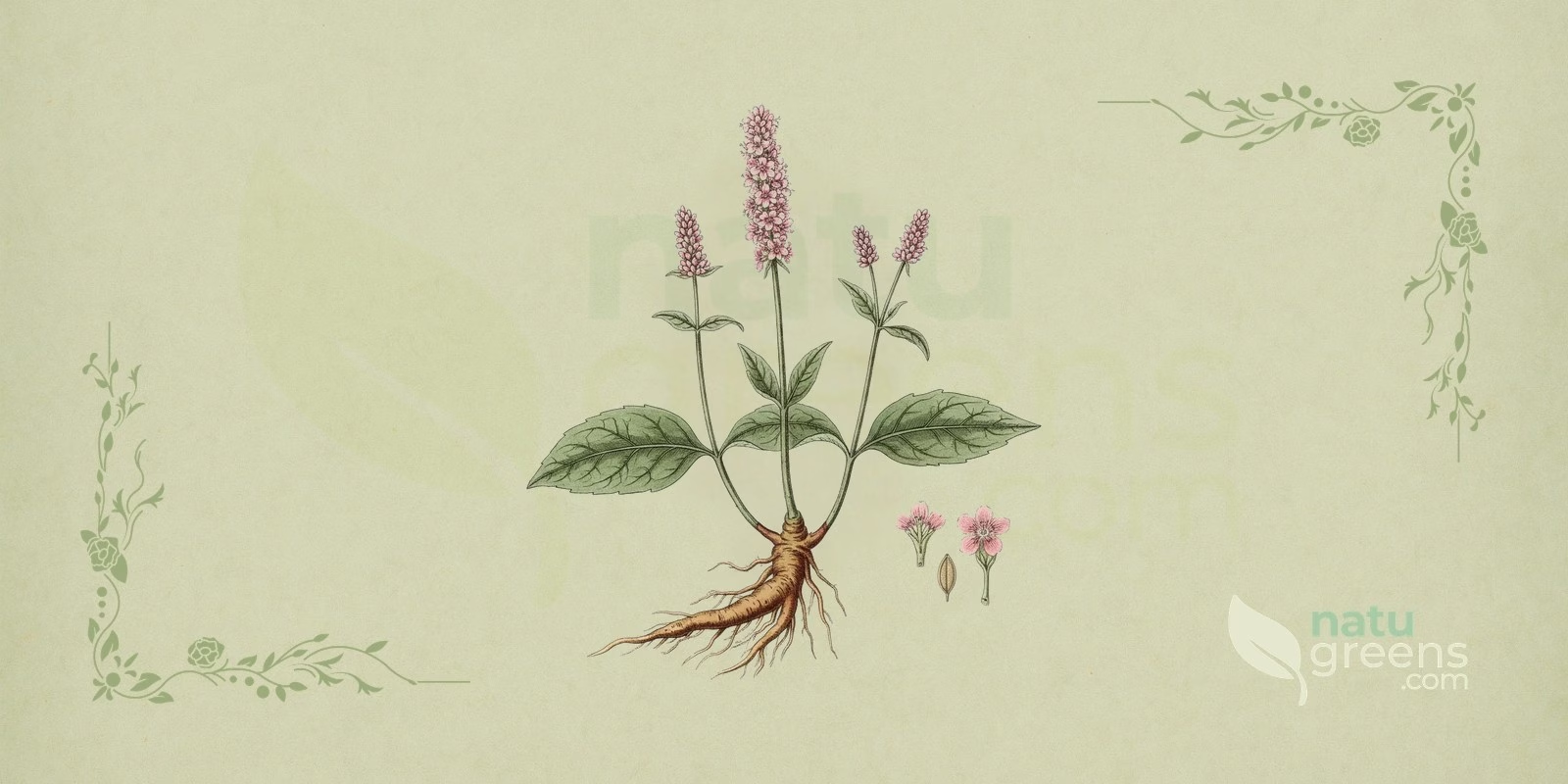
Bistorta officinalis Delarbre, also known as bistort, common bistort or European bistort, is a perennial herbaceous plant of the Polygonaceae family, native to Europe and to northern and western Asia. The species is recognized by its twisted rhizome, which gave the plant its own botanical name, and by dense spikes of pink flowers that appear in late spring. In Europe, the dried rhizome of bistort has been part of the folk pharmacopoeia for centuries, mainly as an astringent remedy for digestive complaints and skin wounds. The name bistort is used both for the plant itself and for products made from its rhizome, sold in health food stores and herbal shops. Most of the effects attributed to bistort come from traditional use and preclinical studies, and human clinical trials capable of confirming benefits and establishing safe doses are still lacking.
Popular and International Names of Bistort
- English: bistort, common bistort, European bistort, meadow bistort, snakeroot, snakeweed.
- French: herbe aux serpents, renouée bistorte.
- German: Schlangen-Knöterich, Wiesen-Knöterich.
- Italian: bistorta, erba serpentina.
- Portuguese: bistorta, bistorta-major, flor-de-lã, serpentária, serpentária-vermelha, serpentina-vermelha.
- Spanish: bistorta, hierba de la culebra, sanguinaria.
Not to Be Confused with Polygonum aviculare and Persicaria hydropiper
Bistort has been classified under three different genera throughout the history of botany, so the names Polygonum bistorta and Persicaria bistorta refer to exactly the same plant covered in this article, not to different species. The real source of confusion lies with two other plants of the Polygonaceae family that have their own article on this site: Polygonum aviculare, known as prostrate knotweed, a low-growing annual plant quite distinct from bistort in both appearance and traditional use, and Persicaria hydropiper, water pepper, with its pungent flavor and distinct chemistry, used in a very different way. Before buying any product labeled only as "polygonum" or "persicaria," it is worth checking the full binomial name, because the genus alone does not guarantee that the product is actually bistort.
Botanical Synonyms of Bistort
Bistorta officinalis Delarbre is the name currently accepted for the species, but scientific literature and supplier catalogs still frequently use the synonyms Persicaria bistorta (L.) Samp. and Polygonum bistorta L., the result of successive reclassifications of the plant among the genera Polygonum, Persicaria and Bistorta. This taxonomic history also left behind the synonym Bistorta major Gray, along with a series of rarer names now treated as classification variants in botanical databases. In practice, this means that a study published under the name Polygonum bistorta and another under Bistorta officinalis may be referring to exactly the same plant.
Botanical Family: Polygonaceae
The Polygonaceae family brings together about 50 genera and more than 1,200 species of flowering plants, distributed across temperate and tropical regions of the planet. A common trait of the group is a stem that is often swollen at the nodes, along with the presence of an ocrea, a membranous sheath that wraps around the stem at the base of each leaf. The family includes relatives of great dietary importance, such as rhubarb and buckwheat, alongside dozens of species traditionally used as medicinal plants.
Bistort shares with much of the family a richness in phenolic compounds, especially tannins, flavonoids and phenolic acids, which account for much of the astringent properties attributed to these plants. This similar chemical composition among species of the same family is also a reason to be extra careful with botanical identification before medicinal use.
Parts Used of Bistort
The rhizome is the most used and most studied part of bistort, generally harvested in autumn and dried for later use in decoctions, powders and tinctures. The thin roots that accompany the rhizome are usually used together with it, while the leaves have a more occasional traditional use, especially in home infusions of lower concentration. Nearly all of the species' recent pharmacological interest is concentrated in the rhizome, due to its higher concentration of tannins.
Ethnobotanical and Traditional Uses of Bistort
In European folk medicine, the rhizome of bistort is remembered mainly for diarrhea, intestinal cramps and flatulence, and is also used topically on wounds, skin inflammation and insect bites. Traditional accounts also associate the plant with relief from mild bleeding, throat complaints and episodes of fever, as well as an old folk use as a calming remedy for nervousness. In older historical records, bistort is also mentioned for scrofula, epilepsy, tetanus and snake bites, uses that have no recognized validity in current medicine and should not be followed as treatment. All of these uses are traditional, passed down from generation to generation, and do not replace diagnosis and medical follow-up for any of these conditions.
Medicinal Properties of Bistort
The properties listed below were described in laboratory studies, in animal models, or are part of traditional European use alone. None of them is confirmed by robust clinical trials in humans with bistort:
- Antibacterial (observed in laboratory assays with the rhizome's aqueous extract)
- Antidiabetic (digestive enzyme inhibition seen only in vitro with an aqueous extract, an effect that was not confirmed in in vivo models)
- Anti-inflammatory (observed in experimental models, under study)
- Antioxidant (activity against free radicals in laboratory assays)
- Antirheumatic (traditional use, without clinical studies confirming it)
- Astringent (effect attributed to the rhizome's high tannin content, well documented in traditional use)
- Carminative (traditional use for flatulence and intestinal discomfort)
- Demulcent (traditional use to soothe irritated mucous membranes)
- Diuretic (traditional use, little studied in this species)
- Expectorant (traditional use for throat complaints, poorly documented)
- Hepatoprotective (suggested in preliminary extract studies, without clinical confirmation)
- Refrigerant (traditional term for plants used against sensations of heat and fever)
Detailed Phytochemical Profile of Bistort
The chemistry of bistort's rhizome is dominated by tannins, the group of compounds responsible for most of the astringent properties and the use precautions described in this article:
- Catechins (flavonoids of the condensed tannin class)
- Coumarins (present in smaller amounts, common in the Polygonaceae family)
- Flavonoids (associated with the antioxidant activity observed in laboratory studies)
- Gallic acid (structural basis of much of the rhizome's hydrolyzable tannins)
- Miscellaneous phenolics (a broad fraction, still only partially characterized)
- Phenolic acids (compounds related to tannins, with antioxidant activity)
- Saponins (present in lower concentration than tannins)
- Sterols (structural compounds found in variable amounts in the rhizome)
- Tannins (the main chemical group of the rhizome, which can reach high concentrations)
- Terpenes (a minor fraction, little studied in this species)
Forms of Preparation and Administration of Bistort
The dried rhizome is the most traditional form of use, prepared as a decoction or ground into a powder to be encapsulated or dissolved in water. Standardized aqueous and hydroethanolic extracts also exist, used mainly in research, along with tinctures sold in compounding pharmacies and specialized stores. The leaves, when used, are usually prepared as a simple infusion, milder than the rhizome decoction.
Because of the rhizome's high tannin content, commercial products containing bistort should list the species' scientific name on the label along with guidance for short-term use. Avoid homemade preparations without standardized dosing, since tannin concentration varies considerably depending on the rhizome's origin and drying method.
Synergy with Other Medicinal Plants
For Gastrointestinal Disorders
In European herbal traditions, bistort is often combined with chamomile (Matricaria chamomilla) and peppermint (Mentha × piperita) in formulas for digestive discomfort. Chamomile contributes calming and antispasmodic properties, while peppermint adds carminative action, useful against gas and cramps. This is a traditional combination, with no clinical trials evaluating the mixture compared to each plant on its own.
For Wounds and Skin Inflammation
In external preparations, bistort appears alongside calendula (Calendula officinalis) and comfrey (Symphytum officinale) in poultices aimed at skin healing. Calendula is traditionally associated with skin regeneration, and comfrey with stimulating the formation of new tissue on intact skin. Combining these plants is a long-standing practice among herbalists, again without clinical studies confirming any advantage over using each plant on its own.
Recipes and Usage Protocols of Bistort
Rhizome Decoction
In the European tradition, the decoction is prepared with one tablespoon of dried, chopped rhizome per 500 ml of water, boiled together for 10 to 15 minutes. After removing from the heat, the mixture is strained and usually taken in small portions throughout the day, following the guidance of a professional or the product manufacturer.
Poultice for the Skin
For external use, fresh leaves are crushed into a paste, to which a little warm water is added if needed. The paste is applied to the affected area, covered with a clean gauze and left in place for 30 minutes to 1 hour, a practice repeated according to the guidance of whoever recommended the preparation.
Rhizome Tincture
Homemade tinctures are made by macerating the dried, ground rhizome in grain alcohol for about two weeks, in a cool place away from light, with daily shaking. The final product, strained and stored in a dark bottle, is usually diluted in water before use, always in small doses and under professional guidance, since concentration varies greatly between homemade preparations.
These preparations follow traditional records and do not replace professional guidance. Before any internal use of the rhizome, check the contraindications and interactions described later in this article.
Therapies Associated with Bistort
Clinical Phytotherapy
In phytotherapy, bistort rhizome extracts are used as a support for mild digestive discomfort, always under the guidance of a qualified professional. Use is usually short-term, precisely because of the tannin concentration, and does not replace medical investigation of persistent diarrhea or digestive bleeding.
Homeopathy
Bistort has a little-known homeopathic use, prepared in extremely high dilutions, following the principles specific to that practice, distinct from the pharmacology described in this article. The choice of homeopathic remedy is individualized, based on the person's overall set of symptoms, and has no direct relationship with the phytochemical studies on the rhizome.
Contraindications and Side Effects of Bistort
The rhizome's high tannin content is the central point of attention in this article: for that reason, short-term use is recommended, never prolonged for weeks without supervision. At high doses or with continuous use, tannins can cause constipation and reduce the absorption of iron and other medications taken orally, so the practical recommendation is to separate bistort from medications and supplements by at least two hours. Due to the lack of safety data, the use of bistort should be avoided during pregnancy. Breastfeeding women and young children should also avoid the rhizome without professional guidance, as should anyone with known hypersensitivity to the plant. Allergic reactions are rare, but may appear as skin rashes, itching or swelling, in which case use should be stopped immediately.
Drug Interactions
Because of the tannins, bistort can reduce the digestive absorption of oral iron, other minerals and several medications taken by mouth, including some used continuously. The practical guidance is simple: take bistort and any medication or supplement at least two hours apart, and inform your doctor or pharmacist about using the plant before starting or adjusting any treatment.
Curiosities and Historical Facts
The name of the genus Bistorta comes from the Latin bis, twice, and torta, twisted, a direct reference to the peculiar shape of the plant's rhizome, twisted upon itself. This same rhizome inspired folk names in several languages that refer to snakes, such as serpentária in Portuguese and snakeroot in English.
In northern England, the young leaves of bistort were traditionally used in a bitter pudding prepared during Lent, known as dock pudding, a custom that still survives in regional festivals in small English towns. In Russia and parts of northern Asia, the plant's roots also became part of the traditional diet, showing how, throughout history, the same rhizome has had culinary and medicinal uses side by side.
Frequently Asked Questions about Bistort
What Is Bistort Used For?
In the European tradition, bistort rhizome is used mainly for digestive discomfort and mild diarrhea, and externally for wounds and skin inflammation. These are traditional and preclinical uses, without confirmation in robust human clinical trials.
How to Prepare Bistort Decoction?
The traditional method uses one tablespoon of dried rhizome per 500 ml of water, boiled for 10 to 15 minutes and then strained. The amount and frequency of use should follow professional guidance, because of the rhizome's high tannin content.
Can Bistort Be Used during Pregnancy?
It is not recommended. The safety of medicinal use of bistort during pregnancy has not been established, and the guidance is to avoid the rhizome until more robust data become available.
Does Bistort Interact with Medications or Iron Supplements?
Yes. The rhizome's tannins can reduce the absorption of iron and other medications taken orally. The recommendation is to separate bistort from any medication or supplement by at least two hours.
What Are the Most Common Side Effects of Bistort?
The most frequently reported effect is constipation, linked to the high tannin content, especially with prolonged use. Mild gastrointestinal discomfort and, rarely, allergic skin reactions have also been reported.
Notice: this content is for informational purposes and does not replace professional medical advice. Consult a physician or herbal practitioner before using medicinal plants, especially during pregnancy, breastfeeding, or alongside medication.
How to cite this article
NATUGREENS. Bistort (Bistorta officinalis): Uses, Tannins and Safety. Natugreens, 21 Nov. 2026. Disponível em: https://natugreens.com/bistort/. Accessed: Nov. 21, 2026.
Natugreens. (2026). Bistort (Bistorta officinalis): Uses, Tannins and Safety. Natugreens. https://natugreens.com/bistort/
References and Scientific Studies
Peer-Reviewed Scientific Studies (2)
- PMC2020 Pawłowska, K. A., Hałasa, R., Dudek, M. K., Majdan, M., Jankowska, K. and Granica, S. (2020). Antibacterial and anti-inflammatory activity of bistort (Bistorta officinalis) aqueous extract and its major components. Justification of the usage of the medicinal plant material as a traditional topical agent. Journal of Ethnopharmacology, 260, 113077. ↗
- PEER2024 Javid, H., Shaheen, I., Qadir, R. U., Magray, J. A., Wani, B. A., Nawchoo, I. A. and Gulzar, S. (2024). A comprehensive review on ethnomedicinal, phytochemical and pharmacological properties of genus Bistorta (L.) Scop. Fitoterapia, 176, 105977. ↗
Supplementary Readings (4)
- 2023 Bauer, I., Rimbach, G., Nevermann, S., Neuhauser, C., Schwarzinger, B., Schwarzinger, C., Weghuber, J. and Luersen, K. (2023). In-vitro antidiabetic activity of a Bistorta officinalis Delarbre root extract can not be confirmed in the in-vivo models hen's egg test and Drosophila melanogaster. Journal of Physiology and Pharmacology, 74(1), 31-42. ↗
- WebMD. (n.d.). Bistort: Uses, Side Effects, and More. WebMD. ↗
- Wikipedia. (n.d.). Bistorta officinalis. Wikipedia. ↗
- PFAF. (n.d.). Polygonum bistorta L. Plants For A Future. ↗
You May Also Like
 Water PepperPersicaria hydropiper
- KnotgrassPolygonum aviculare
- Fumitory (Fumaria officinalis): Benefits and Traditional UsesFumaria officinalis
- Alisma (Ze Xie): Traditional Uses and ContraindicationsAlisma plantago-aquatica subsp. orientale
- Bulbine (Bulbine frutescens): Healing Gel, Uses and Safety TipsBulbine frutescens
Take your time and tell us everything you think, details included. Every response is read by someone on our editorial team and goes into the article's revision. An honest critique helps us more than a polite compliment.
Take your time and tell us everything you think, details included. Every response is read by someone on our editorial team and goes into the article's revision. An honest critique helps us more than a polite compliment.