



Quick summary
Alisma plantago-aquatica subsp. orientale (Sam.) Sam., whose currently accepted name is Alisma orientale (Sam.) Juzep., is a perennial aquatic plant of the Alismataceae family, commonly known as Alisma. Native to regions of Asia such as China, Russia, Japan, Mongolia and northern India, it grows in marshes, ditches…
Main caution: Alisma has a diuretic action described in traditional use and in experimental studies, which calls for special attention in anyone already taking other medications with a similar effect or who depend on stable kidney…
Alisma plantago-aquatica subsp. orientale (Sam.) Sam., whose currently accepted name is Alisma orientale (Sam.) Juzep., is a perennial aquatic plant of the Alismataceae family, commonly known as Alisma. Native to regions of Asia such as China, Russia, Japan, Mongolia and northern India, it grows in marshes, ditches and riverbanks, where it forms clumps of basal leaves and branched flowering stems bearing small white flowers. The rhizome of this species is the part used for centuries in traditional Chinese medicine, where it is known as ze xie, and for this reason the plant often appears in Asian phytochemistry studies focused on diuretic plants. Much of the activity attributed to Alisma comes from preclinical research and documented traditional use, and robust human clinical trials that would definitively confirm these applications are still lacking.
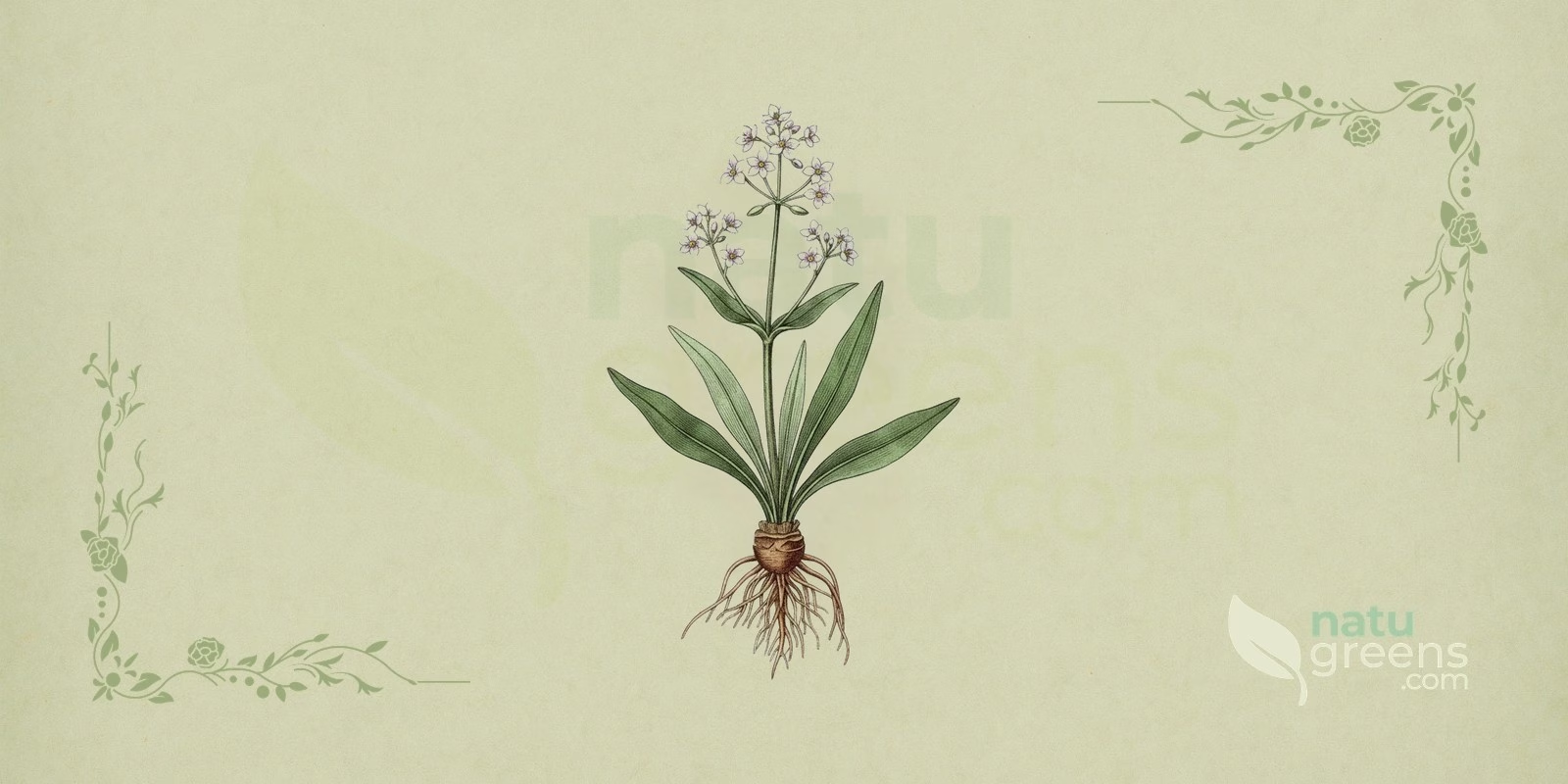
Popular and International Names of Alisma
- Portuguese: Alisma, Alisma Oriental, Alismastis, Colhereira, Orelha-de-mula, Tanchagem-da-água.
- English: Asian water plantain, Oriental water plantain.
- Spanish: Llantén acuático, Plátano asiático de agua.
- German: Orientalischer Froschlöffel.
- French: Alisme, Plantain d'eau oriental.
- Italian: Alisma orientale.
- Chinese (Mandarin): Ze xie (泽泻).
Not to Be Confused with Alisma canaliculatum and Alisma lanceolatum
The genus Alisma includes other species that circulate under similar names and should not be treated as synonyms of the plant used in Chinese medicine. Alisma canaliculatum and Alisma lanceolatum are distinct species, each with its own distribution, morphology and chemical profile, and the pharmacological studies gathered in this article refer specifically to Alisma orientale, the species recognized as ze xie. When buying dried rhizome or extracts, it is worth confirming the botanical identification given by the supplier, since mix-ups between species of this genus are a common problem in the medicinal plant trade.
Botanical Synonyms of Alisma
The botanical name currently accepted for this plant is Alisma orientale (Sam.) Juzep. For a long time, and still in much of the pharmacological literature, it appears as Alisma plantago-aquatica subsp. orientale (Sam.) Sam., treated as a subspecies of the common water plantain. Other recorded synonyms include Alisma coreanum H.Lév., Alisma flavum Thunb. and Alisma jianshiensis J.K.Chen, X.Z.Sun & H.Q.Wang. Botanical databases may disagree on whether it ranks as a subspecies or a full species, but the name Alisma orientale is the one most used in recent work on the plant.
Botanical Family: Alismataceae
Alismataceae is a family of aquatic and semi-aquatic monocots found mainly in temperate and tropical zones around the world. Its species typically have basal leaves arranged in a rosette, often arrow or lance shaped, and small flowers with three sepals and three petals, usually white or pink. Besides the genus Alisma, the family also includes the genus Sagittaria, likewise linked to traditional uses in different cultures. Most Alismataceae species occupy waterlogged habitats such as marshes, ditches and the banks of freshwater bodies, and this shapes both their physiology and the way their underground parts accumulate bioactive compounds.
Parts of Alisma Used
The rhizome is the part used in Alisma's traditional medicine and pharmacological studies. After harvesting, it is washed, stripped of its fine roots and dried, and in many Chinese medicine preparations it also undergoes additional processing, such as light stir-frying with wheat bran or with salt water, to adjust its action before use. The fresh plant, by contrast, is known for being irritating to skin and mucous membranes, which explains why almost no traditional recipe recommends using it fresh, always favoring the dried, processed rhizome instead.
Ethnobotanical and Traditional Uses of Alisma
In traditional Chinese medicine, the rhizome of Alisma, known as ze xie, has appeared for centuries in formulas aimed at clearing excess dampness from the body, a concept specific to TCM that, in Western terms, is roughly comparable to fluid retention and urinary discomfort. Traditional use includes easing diarrhea and dizziness associated with this excess dampness, supporting bladder and urinary tract complaints, reducing swelling linked to edema, addressing vaginal discharge, and increasing urine output in cases of oliguria. TCM practitioners also turn to the plant as traditional support for balancing blood sugar levels, always as part of a broader treatment and never as a substitute for medical care for diabetes. All of these uses come from classical texts and the continued practice of Chinese medicine, and they are not equivalent to clinical proof by current evidence-based medicine standards.
Medicinal Properties of Alisma
The properties listed below come mainly from preclinical studies in cells and animals, and from established use in traditional Chinese medicine. None of them have been confirmed in robust human clinical trials, and for this reason they do not replace medical diagnosis or treatment.
- Diuretic (increases urine production, the pharmacological basis for the traditional use for edema)
- Anti-inflammatory (reduces inflammation markers in experimental models)
- Antinephritic (associated with kidney function protection in animal studies)
- Antioxidant (neutralizes free radicals in laboratory assays)
- Anti-urolithiatic (studied for its effect on urinary stone formation in animal models, without clinical confirmation)
- Hepatoprotective (evaluated in preclinical models, without confirmation in humans)
- Hypoglycemic (effect on blood glucose observed in animal studies, not clinically validated)
- Immunomodulatory (modulates immune system responses in experimental assays)
Detailed Phytochemical Profile of Alisma
The chemical composition of the Alisma rhizome is dominated by terpenoids, especially a distinctive group of protostane triterpenoids known as alisols, along with other compounds that help explain the plant's traditional use.
- Alisol A, alisol B and their acetylated derivatives (protostane triterpenoids typical of the genus Alisma)
- Guaiane sesquiterpenoids (a class of terpenoids also present in the rhizome)
- Volatile oil (a minor aromatic fraction of the rhizome)
- Starch (the main energy reserve of the rhizome tissue)
- Proteins (present in a smaller proportion in the dried rhizome)
- cis-2,4,5-Trihydroxycinnamic acid (a phenolic compound identified in the seeds)
- Ethyl ester of cis-aconitic anhydride (a compound also described in the plant's seeds)
Preparation and Administration Forms of Alisma
In Chinese tradition, the dried, processed Alisma rhizome is usually taken as a decoction, either on its own or, more often, as part of formulas made up of several plants. Outside China, simple infusions of powdered rhizome, standardized extracts and tinctures are also found, generally aimed at the herbal supplement market. Whichever form is chosen, the traditional guidance is always to use the already processed rhizome, never the fresh plant, and to respect the amounts indicated in each preparation.
Synergy with Other Medicinal Plants
For Fluid Retention and Edema
Within TCM, Alisma often appears alongside Poria cocos (fu ling) and Atractylodes macrocephala (bai zhu) in formulas such as Wuling San, designed to work together on fluid drainage and digestive balance. This pairing illustrates the logic of Chinese herbal medicine well, which rarely relies on a single plant alone and instead favors planned combinations that cover different aspects of the same pattern of imbalance.
For Kidney and Urinary Support
In formulas aimed at kidney function, Alisma appears alongside plants such as Rehmannia glutinosa (shu di huang) and Cornus officinalis (shan zhu yu), as in the classic Liu Wei Di Huang Wan. The TCM logic here is to support yin balance and kidney function, with Alisma playing the role of draining excess dampness while the other plants nourish and tonify the body.
Recipes and Usage Protocols for Alisma
Traditional Rhizome Decoction
Ingredients: 9 to 15 grams of dried, processed Alisma rhizome, 500 ml of water.
Preparation: Quickly rinse the dried rhizome, place it in cold water and let it simmer over low heat for about 20 to 30 minutes, until the volume reduces to roughly 200 to 250 ml. Strain and drink warm, split into one or two doses over the day. As with most ze xie preparations, this decoction is usually part of larger TCM formulas, and using it alone for a prolonged period should first be discussed with a health professional familiar with herbal medicine.
Light Infusion of Powdered Rhizome
Ingredients: 3 to 5 grams of powdered rhizome, 250 ml of very hot water, without pouring it boiling directly onto the powder.
Preparation: Mix the powder into the hot water, cover and let it infuse for 10 to 15 minutes, straining before drinking. This gentler version is common outside the context of classical Chinese formulas, used on its own by people looking for a tea with a milder diuretic action. These uses follow traditional records and do not replace professional guidance, especially for anyone already taking diuretics, lithium or blood pressure medication.
The preparations above follow traditional records and do not replace professional guidance. Before any internal use, check the contraindications and interactions described in this article.
Therapies Associated with Alisma
Clinical Phytotherapy
In Western clinical phytotherapy, Alisma has been studied mainly for its triterpenoid compounds and for the diuretic, hepatoprotective and anti-inflammatory potential observed in preclinical models. Researchers are still working to better understand the plant's mechanisms of action and safety when used on its own, outside the context of traditional Chinese formulas, and for now it is seen as a promising research subject, not as a standardized treatment.
Traditional Chinese Medicine
Within TCM, Alisma, under the name ze xie, is one of the plants most used to drain excess dampness and support kidney and bladder function, according to the terminology of that system. It appears in classical formulas such as Liu Wei Di Huang Wan and Wuling San, almost always paired with other plants, and is rarely prescribed on its own by practitioners trained in this system.
Contraindications and Side Effects of Alisma
Alisma has a diuretic action described in traditional use and in experimental studies, which calls for special attention in anyone already taking other medications with a similar effect or who depend on stable kidney elimination. Pregnant women should avoid using the plant, since there is not enough safety data for this period. The fresh plant is known to be irritating to skin and mucous membranes, which is why traditional use is always with the dried, processed rhizome, never with the fresh part collected directly. Animal studies with high doses and prolonged use have reported signs of kidney and liver toxicity, which reinforces the need to respect traditional amounts and not prolong use without supervision. This article does not present or endorse any claim that Alisma helps with weight loss or lowering cholesterol, and this content should not be used as a basis for that kind of use.
Drug Interactions
Because of its diuretic effect, Alisma can add to the effect of conventional diuretics and increase drops in potassium and other electrolyte imbalances. Anyone taking lithium needs extra caution, since diuretic plants and medications can reduce the kidneys' elimination of lithium and raise its blood levels into the toxic range. The same caution applies to people taking anti-hypertensive drugs, since the combined diuretic effect can lead to larger blood pressure drops than expected. Anyone in these situations, or with already diagnosed kidney or liver disease, should talk to a doctor before using Alisma in any form.
Curiosities and Historical Facts about Alisma
About Two Thousand Years of Recorded Use
The medicinal use of Alisma in China is old enough to appear in the Shen Nong Ben Cao Jing, one of the earliest known Chinese herbal treatises, compiled around the Han dynasty. The text already described the plant as able to promote water metabolism, an old way of referring to the diuretic effect that science studies today under different terminology. Over the centuries, Alisma has remained one of the reference components in classical formulas still used by TCM practitioners.
Origin of the Scientific Name
The genus name Alisma comes from ancient Greek and was already used by classical authors to describe aquatic plants resembling common plantain, found in ditches and along riverbanks. The epithet orientale, in turn, marks the species' Asian distribution, in contrast with other species of the same genus found in Europe and North America.
Frequently Asked Questions about Alisma
Is Alisma Safe for Everyone to Use?
No. Alisma is contraindicated during pregnancy and calls for special caution in anyone taking diuretics, lithium or anti-hypertensive drugs, as well as people with already diagnosed kidney or liver disease. Before using any form of the plant, it is best to talk to a health professional, especially if other medications are being taken continuously.
What Is the Difference between Alisma orientale and Other Species in the Genus?
Alisma orientale is the species studied and used as ze xie in Chinese medicine, with its own chemical profile and history of use. Alisma canaliculatum and Alisma lanceolatum are different species, with distinct composition and geographic distribution, and the research findings gathered here should not be extended to them.
Does Alisma Help with Weight Loss or Lowering Cholesterol?
This article does not present that claim, because there is no solid basis for stating it about the plant on its own, and for that reason it should not be used with that goal in mind. The traditional use of Alisma is linked to diuresis and support for kidney and urinary function, not to weight loss or cholesterol control.
How Is Alisma Rhizome Traditionally Prepared?
The most traditional form is the decoction, boiling 9 to 15 grams of dried rhizome in 500 ml of water until the volume reduces, but lighter versions also exist, such as the powdered rhizome infusion. In any case, the processed, dried rhizome is always used, never the fresh plant, and traditional amounts should not be exceeded without professional guidance.
Which Plants Are Commonly Combined with Alisma?
In traditional Chinese medicine, Alisma appears alongside Poria cocos, Atractylodes macrocephala, Rehmannia glutinosa and Cornus officinalis in classical formulas such as Wuling San and Liu Wei Di Huang Wan. These combinations follow a logic specific to TCM, which rarely treats a single plant as the sole solution for any condition.
Notice: this content is for informational purposes and does not replace professional medical advice. Consult a physician or herbal practitioner before using medicinal plants, especially during pregnancy, breastfeeding, or alongside medication.
How to cite this article
NATUGREENS. Alisma (Ze Xie): Traditional Uses and Contraindications. Natugreens, 21 Nov. 2026. Disponível em: https://natugreens.com/ze-xie-alisma-orientale/. Accessed: Nov. 21, 2026.
Natugreens. (2026). Alisma (Ze Xie): Traditional Uses and Contraindications. Natugreens. https://natugreens.com/ze-xie-alisma-orientale/
References and Scientific Studies
View All 10 Cited References
Peer-Reviewed Scientific Studies (2)
- PMC2016 Shu, Z., Pu, J., Chen, L., Zhang, Y., Rahman, K., Qin, L., & Zheng, C. (2016). Alisma orientale: Ethnopharmacology, Phytochemistry and Pharmacology of an Important Traditional Chinese Medicine. Am J Chin Med, 44(2), 227-251. PMID: 27080939
- PEER ScienceDirect. (n.d.). Alisma orientale: An Overview. ScienceDirect
Supplementary Readings (8)
- Wikipedia. (n.d.). Alisma orientale. Wikipedia
- RxList. (n.d.). Water Plantain: Health Benefits, Side Effects, Uses, Dose and Warnings. RxList
- World Flora Online. (n.d.). Alisma plantago-aquatica subsp. orientale (Sam.) Sam. World Flora Online
- White Rabbit Institute of Healing. (n.d.). Alisma (Ze Xie). White Rabbit Institute of Healing
- Florien. (n.d.). Alismastis. Florien
- 2023 Antropocene.it. (2023). Alisma orientale: Systematics, Etymology, Habitat, Cultivation. Antropocene.it
- 2018 Dietetique Tuina. (2018). The Rhizome of Alisma Orientale (Ze Xie). Dietetique Tuina
- Wikipedia. (n.d.). Tanchagem-da-água (Water Plantain). Wikipedia
You May Also Like
Take your time and tell us everything you think, details included. Every response is read by someone on our editorial team and goes into the article's revision. An honest critique helps us more than a polite compliment.
Take your time and tell us everything you think, details included. Every response is read by someone on our editorial team and goes into the article's revision. An honest critique helps us more than a polite compliment.