



Quick summary
The common alder (Alnus glutinosa (L.) Gaertn.) is a tree in the Betulaceae family native to most of Europe, North Africa, the Caucasus and western Siberia, where it prefers riverbanks, lake shores and waterlogged ground. Its dark, tannin-rich bark has featured for centuries in European folk medicine as an astringent…
Main caution: Common alder bark is very rich in tannins, which is why traditional use is limited to short-term gargles, mouth rinses and topical applications. Taken internally in high doses, tannins can cause gastrointestinal…
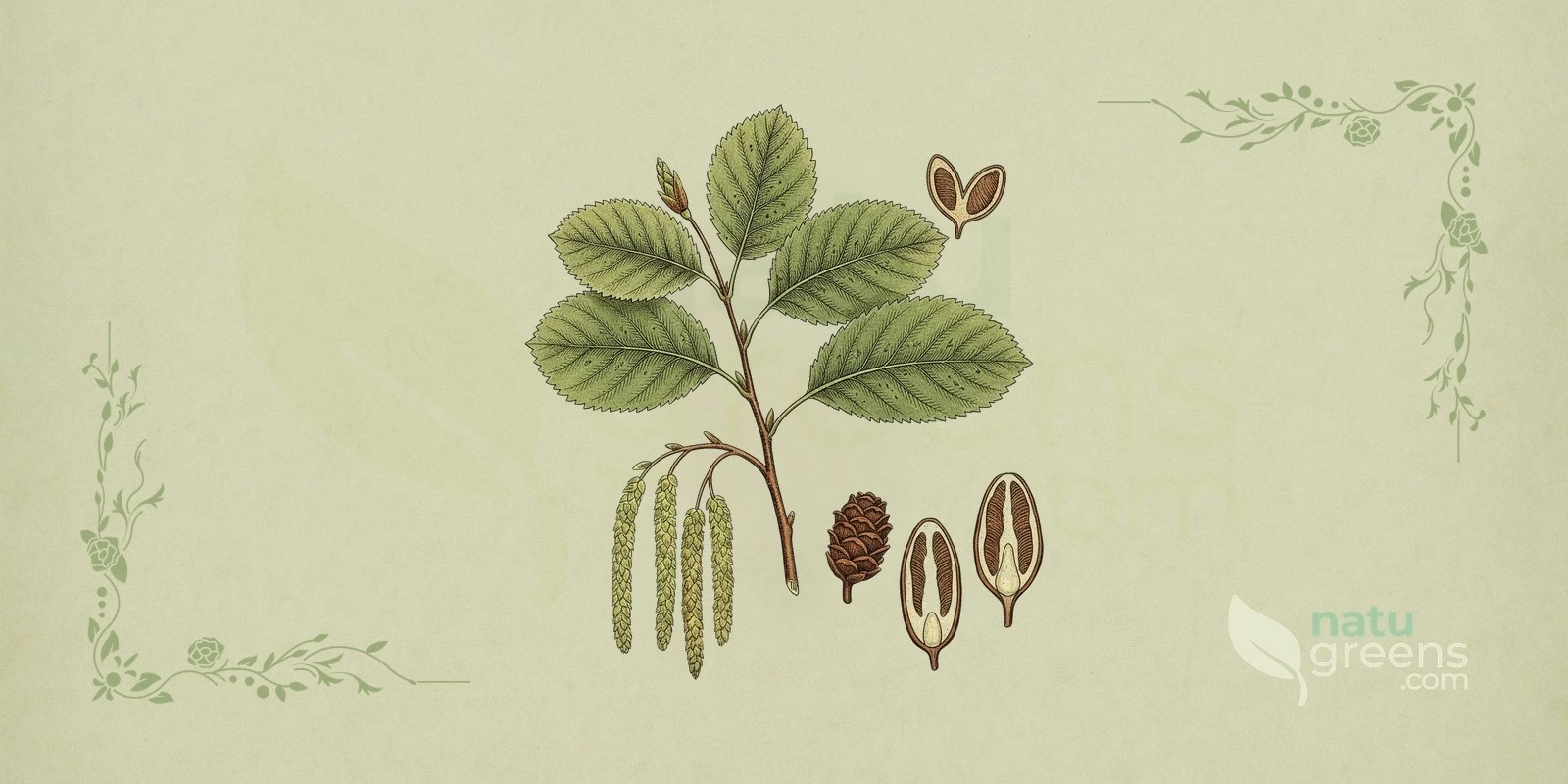
The common alder (Alnus glutinosa (L.) Gaertn.) is a tree in the Betulaceae family native to most of Europe, North Africa, the Caucasus and western Siberia, where it prefers riverbanks, lake shores and waterlogged ground. Its dark, tannin-rich bark has featured for centuries in European folk medicine as an astringent for gargles, mouth rinses and compresses. Current research on the species is limited to chemical analyses and laboratory or animal studies, so none of these uses has been shown to work in clinical trials with people.
Popular and International Names of Common Alder
- Catalan: vern
- Danish: rødel
- Dutch: zwarte els
- English: black alder, common alder, European alder
- French: aulne glutineux, aulne noir, verne
- German: Schwarzerle
- Italian: ontano comune, ontano nero
- Japanese: ヨーロッパハンノキ (yōroppa hannoki)
- Norwegian: svartor
- Polish: olsza czarna
- Spanish: aliso, aliso común
- Swedish: klibbal
Not to Be Confused With Alder Buckthorn
Despite the similar name, alder buckthorn is a different plant altogether: Frangula alnus Mill., a shrub in the Rhamnaceae family whose bark is used as a stimulant laxative because of its anthraquinones. Common alder (Alnus glutinosa) has the opposite traditional use, since its bark is astringent and is remembered precisely for tightening tissues and easing irritated mucous membranes. The mix-up is easy to make because the epithet "alnus" appears in both scientific names, both plants carry "alder" in their English common names, and common alder itself is often sold as "black alder". Before buying dried bark or an extract, always check the scientific name on the label.
Botanical Synonyms of Common Alder
The accepted name is Alnus glutinosa (L.) Gaertn. Linnaeus described the plant in 1753 as Betula alnus var. glutinosa L., placing it in the birch genus, and Joseph Gaertner moved it to Alnus in 1790. Synonyms recorded in taxonomic databases include Alnus communis Desf., Alnus rotundifolia Mill., Alnus vulgaris Hill and Betula glutinosa (L.) Lam. The epithet "glutinosa" refers to the sticky film that coats the young leaves and buds in spring.
Botanical Family: Betulaceae
The Betulaceae family brings together trees and shrubs of the temperate Northern Hemisphere, such as birches (Betula), hazels (Corylus), hornbeams (Carpinus) and the alders (Alnus), a genus of more than 40 species. Their unisexual flowers are grouped in catkins, pollinated by the wind, and open before or alongside the new leaves. Alders stand out in the family for forming root nodules with bacteria of the genus Frankia, which fix nitrogen from the air and allow the tree to colonize poor, waterlogged soils. The complete genome of Alnus glutinosa was sequenced in 2024 by the Darwin Tree of Life project.
Parts of Common Alder Used
The part most often cited in tradition is the bark of the branches and trunk, ideally harvested in spring and always dried before use, because old sources describe fresh bark as irritating to the stomach. The leaves, fresh or dried, also appear in compresses and in tinctures for external use. The woody fruiting cones, small dark structures resembling miniature pine cones that stay on the tree through winter, were used in tinctures for gargling and are now studied for their high ellagitannin content.
Ethnobotanical and Traditional Uses of Common Alder
European ethnobotanical literature records alder bark mainly as an astringent, febrifuge, hemostatic and tonic. Older sources also mention emetic and cathartic effects of the bark, probably linked to the use of fresh bark or high doses, which supports the traditional advice to use only dried material and only for a short time. In Belarus, decoctions of fresh leaves and bark are used as gargles for mouth ulcers and bleeding gums, and tinctures of the fruiting cones serve to rinse the mouth and throat. The main folk uses on record are these:
- Bark decoctions during bouts of diarrhea, a use reported for several species in the genus
- Compresses of leaves or bark decoction over minor wounds, swellings and superficial skin inflammation
- Infusions and decoctions during fevers, a use now largely abandoned
- Mouth rinses and gargles with a decoction of the bark or fruiting cones for sore throats, mouth ulcers and tender gums
Medicinal Properties of Common Alder
The properties below come from traditional use or from laboratory and animal studies. None of them has been confirmed in clinical trials in humans, and results obtained with standardized extracts on cells cannot be applied directly to homemade teas.
- Anti-inflammatory (trunk bark extract active in in vitro assays, with results also in zebrafish embryos)
- Antimicrobial (extracts of bark, leaves and fruiting cones inhibited Gram-positive bacteria and yeasts in the laboratory)
- Antioxidant (strong, concentration-dependent activity in in vitro tests, linked to diarylheptanoids and polyphenols)
- Astringent (traditional effect attributed to the bark tannins, the basis for gargles and compresses)
- DNA-protective (diarylheptanoids isolated from the bark reduced chromosomal damage in human lymphocytes grown in the laboratory)
- Wound-healing (an aqueous bark extract sped up wound closure in keratinocyte cultures, and a gel made with leaf tincture was tested in an experimental wound model)
Detailed Phytochemical Profile of Common Alder
Diarylheptanoids, molecules with two aromatic rings joined by a seven-carbon chain, are the dominant chemical group in the genus Alnus and especially in common alder bark. A 2022 study found a high total phenolic content in bark extract, with oregonin alone accounting for about three quarters of the extract. In the leaves, tannins were the most abundant group of compounds, while ellagitannins predominate in the fruiting cones.
- Alnusides A and B (glycosylated diarylheptanoids isolated from the bark)
- Ellagic acid and derivatives (present in the fruiting cones and associated with antimicrobial activity)
- Ellagitannins (the predominant polyphenols in fruiting cone extracts)
- Flavonoids (found at low levels in trunk bark)
- Hirsutanonol (a diarylheptanoid with a DNA-protective effect in lymphocytes in vitro)
- Hirsutenone (a diarylheptanoid first described in the species in 2013)
- Oregonin (the main compound in the bark, about 75% of the analyzed extract)
- Platyphylloside (a glycosylated diarylheptanoid from the bark)
- Rubranosides A and B (glycosylated diarylheptanoids from the bark)
- Tannins (the most abundant group in the leaves, about 7% of dry material, and responsible for the astringent taste of the bark)
- Terpenoids (triterpenes and steroids described for the genus Alnus)
Preparation and Administration of Common Alder
The most common traditional form is a decoction of dried, chopped bark, simmered for a few minutes and strained, then used lukewarm as a mouth rinse or gargle without swallowing. Once cooled, the same decoction can be used to moisten clean cloth compresses applied to intact skin or to minor scrapes. The leaves go into infusions for external use and into hydroalcoholic tinctures, which some studies have used as a base for topical gels. On the European market, alder appears mainly in cosmetic extracts and in bud macerates used in gemmotherapy, and it has no herbal medicine monograph from the European Medicines Agency. Because of its high tannin content, prolonged internal use is not recommended.
Synergy With Other Medicinal Plants
Astringent Blend for the Mouth and Throat
In European tradition, alder bark is combined in gargles with oak bark (Quercus robur), sage (Salvia officinalis) and tormentil rhizome (Potentilla erecta), all tannin-rich plants cited for mild irritation of the oral mucosa. Adding several astringent plants together raises the total tannin load, which is why these blends are made in small amounts and used only as mouth rinses, not as drinks.
Blend for Skin Care
In compresses, alder appears alongside calendula (Calendula officinalis) and witch hazel (Hamamelis virginiana), plants that folk herbalism also uses for minor skin injuries and irritation. The pairing follows the same astringent and soothing logic, but no studies have tested these combinations, and deep, infected or extensive wounds need medical assessment.
Recipes and Usage Protocols for Common Alder
Bark Decoction for Gargling
Folk records describe using about one tablespoon of dried, chopped bark per 250 mL of water, simmered over low heat for ten minutes and strained once it has cooled to lukewarm. The liquid is used as a gargle and mouth rinse two or three times a day for a few days, and always spat out afterwards. If a sore throat comes with high fever, white patches of pus or difficulty swallowing, see a doctor before trying any home preparation.
Leaf or Bark Compress
For compresses, tradition uses the same bark decoction, or a strong infusion of dried leaves, left to cool completely before soaking a clean cloth and applying it to the area for 10 to 15 minutes. These uses follow traditional records and do not replace professional advice, especially for wounds that will not heal, signs of infection or persistent skin problems.
The preparations above follow traditional records and do not replace professional guidance. Before any internal use, check the contraindications and interactions described in this article.
Associated Therapies for Common Alder
Clinical Phytotherapy
In clinical phytotherapy, common alder plays a modest role, almost entirely limited to external use, as one more option among the tannin-rich astringent plants. Current research interest focuses on the diarylheptanoids in the bark, above all oregonin, which have been studied for antioxidant and anti-inflammatory activity in the laboratory, as well as on the use of the bark as a forestry by-product for cosmetics. Since there are no clinical trials with the species, it is not part of any official treatment protocol.
Gemmotherapy
Gemmotherapy, a practice derived from homeopathy and popularized mainly in France and Belgium from the 1950s onwards, uses glycerin macerates of fresh alder buds. Its practitioners associate this preparation with inflammatory and circulatory complaints, but these indications rest on the practitioners' own observations, with no controlled clinical studies to confirm them. The macerate contains alcohol and glycerin, which anyone who needs to avoid alcohol should take into account.
Contraindications and Side Effects of Common Alder
Common alder bark is very rich in tannins, which is why traditional use is limited to short-term gargles, mouth rinses and topical applications. Taken internally in high doses, tannins can cause gastrointestinal discomfort, with nausea, stomach pain, constipation or irritation of the mucous membranes, and fresh bark is described as emetic, which is why only dried bark is used. Tannins also bind to iron from food and reduce its absorption, making internal use inadvisable for people with anemia or iron deficiency. Pregnant and breastfeeding women should avoid concentrated preparations of the plant, because there are no safety data for these stages, and the same caution applies to young children. People with gastritis, ulcers or a sensitive bowel should avoid internal use, and any skin reaction after a compress is a reason to stop applying it.
Drug Interactions
Tannins can bind to iron salts, mineral supplements and a range of oral medications, reducing the amount the body absorbs. For this reason, anyone who takes an iron supplement or any long-term medication and decides to ingest alder preparations should take them at least 2 hours apart. People being treated for anemia or chronic conditions, or taking several medications, should talk to their doctor or pharmacist before using the plant, even for just a few days.
Curiosities and Historical Facts
Alder wood turns orange shortly after cutting and, when kept permanently underwater, resists rot for centuries, which made it a material for foundation piles in buildings on flooded ground, including some of the piles that support Venice. Thanks to its tannins, the bark was used to tan leather and, combined with iron salts, to dye fabric and leather black. In ecology, the tree is valued for restoring riverbanks and land degraded by mining, thanks to its root nodules with nitrogen-fixing bacteria. Its pollen, released in late winter, is among the leading causes of seasonal respiratory allergy in northern Europe.
Frequently Asked Questions About Common Alder
Are Common Alder and Alder Buckthorn the Same Plant?
No. Common alder is Alnus glutinosa, in the Betulaceae family, with astringent, tannin-rich bark. Alder buckthorn is Frangula alnus, in the Rhamnaceae family, with bark that has a laxative effect. Mistaking one for the other leads to effects opposite to those expected, so the scientific name on the package is the best way to check.
Can I Drink Common Alder Tea Every Day?
Traditional use is mainly external, in gargles and compresses, and short-term. Frequent intake of tannin-rich preparations can cause gastrointestinal discomfort and reduce the absorption of iron and medications, so daily, prolonged consumption is not recommended.
Does Common Alder Help With a Sore Throat?
Bark decoction has long been used as a gargle for sore throats and mouth ulcers, and extracts of the plant have shown antimicrobial and anti-inflammatory activity in the laboratory. Even so, no clinical studies confirm this effect in people, and a sore throat with fever or pus needs medical assessment.
Can Pregnant Women Use Common Alder?
There are no safety data on the use of common alder during pregnancy or breastfeeding. As a precaution, concentrated preparations should be avoided during these stages, and any use should first be discussed with an obstetrician or pediatrician.
Notice: this content is for informational purposes and does not replace professional medical advice. Consult a physician or herbal practitioner before using medicinal plants, especially during pregnancy, breastfeeding, or alongside medication.
How to cite this article
NATUGREENS. Common Alder (Alnus glutinosa): Astringent Bark and Safety. Natugreens, 26 Nov. 2026. Disponível em: https://natugreens.com/alnus-glutinosa-common-alder/. Accessed: Nov. 26, 2026.
Natugreens. (2026). Common Alder (Alnus glutinosa): Astringent Bark and Safety. Natugreens. https://natugreens.com/alnus-glutinosa-common-alder/
References and Scientific Studies
View All 11 Cited References
- DOI2026 Bazargaliyeva, A. et al. (2026). Phytochemical Profiles and Antimicrobial Activity of Alnus glutinosa (L.) Gaertn. Leaves Growing in Kazakhstan. Molecules, 31(7), 1189. ↗
- DOI2024 Christenhusz, M. J. M. et al. (2024). The genome sequence of the common alder, Alnus glutinosa (L.) Gaertn. (Betulaceae). Wellcome Open Research, 9, 570. ↗
- DOI2017 Delimont, N. M., Haub, M. D. and Lindshield, B. L. (2017). The Impact of Tannin Consumption on Iron Bioavailability and Status: A Narrative Review. Current Developments in Nutrition, 1(2), 1-12. ↗
- DOI2025 Gunnarsdottir, S. H. et al. (2025). Leveraging crude extracts from European tree bark to combat oxidative stress, enhance wound healing, and inhibit pathogenic bacterial growth. Scientific Reports, 15, 21340. ↗
- DOI2021 Mushkina, V. (2021). Effect of wound healing in gels containing tinctures of Alnus glutinosa (L) leaves. Clinical Phytoscience, 7, 62. ↗
- DOI2022 Nawirska-Olszańska, A., Zaczyńska, E., Czarny, A. and Kolniak-Ostek, J. (2022). Chemical Characteristics of Ethanol and Water Extracts of Black Alder (Alnus glutinosa L.) Acorns and Their Antibacterial, Anti-Fungal and Antitumor Properties. Molecules, 27(9), 2804. ↗
- DOI2013 Novaković, M. et al. (2013). Diarylheptanoids from Alnus glutinosa bark and their chemoprotective effect on human lymphocytes DNA. Planta Medica, 79(6), 499-505. ↗
- DOI2017 Ren, X. et al. (2017). The Genus Alnus, A Comprehensive Outline of Its Chemical Constituents and Biological Activities. Molecules, 22(8), 1383. ↗
- DOI2011 Sati, S. C., Sati, N. and Sati, O. P. (2011). Bioactive constituents and medicinal importance of genus Alnus. Pharmacognosy Reviews, 5(10), 174-183. ↗
- DOI2022 Smeriglio, A. et al. (2022). New Insights on Phytochemical Features and Biological Properties of Alnus glutinosa Stem Bark. Plants, 11(19), 2499. ↗
- DOI2022 Sukhikh, S. et al. (2022). Study of the Antioxidant Properties of Filipendula ulmaria and Alnus glutinosa. Plants, 11(18), 2415. ↗
You May Also Like
Take your time and tell us everything you think, details included. Every response is read by someone on our editorial team and goes into the article's revision. An honest critique helps us more than a polite compliment.
Take your time and tell us everything you think, details included. Every response is read by someone on our editorial team and goes into the article's revision. An honest critique helps us more than a polite compliment.