



Quick summary
Cinchona officinalis L. / Cinchona, a shrub or small tree in the Rubiaceae family, is native to a narrow strip of the southern Ecuadorian Andes, in the provinces of Loja, Azuay, Cañar and El Oro, where it grows in montane forests at roughly 1,700 to 3,100 meters above sea level, with populations also reported in…
Main caution: Cinchona is the historical source of quinine, and the risks of the bark mirror those of this alkaloid and of quinidine. The best-known picture is cinchonism, which can appear even at treatment doses and shows up as…
Cinchona officinalis L. / Cinchona, a shrub or small tree in the Rubiaceae family, is native to a narrow strip of the southern Ecuadorian Andes, in the provinces of Loja, Azuay, Cañar and El Oro, where it grows in montane forests at roughly 1,700 to 3,100 meters above sea level, with populations also reported in northern Peru. It was the first species of the genus described by science and gave its name to the group of trees whose bark, for more than three centuries, supplied the quinine used against malaria. There is, however, a distinction that changes everything: commercial cinchona bark with a high quinine content comes mainly from Cinchona calisaya (including the form known as Cinchona ledgeriana) and from Cinchona pubescens, while Cinchona officinalis in the strict sense is poor in this alkaloid. Much of what is written about "cinchona" applies to the genus as a whole or to these related species, and the bark contains potent substances capable of causing serious harm, so this article handles the subject with the rigor it demands.
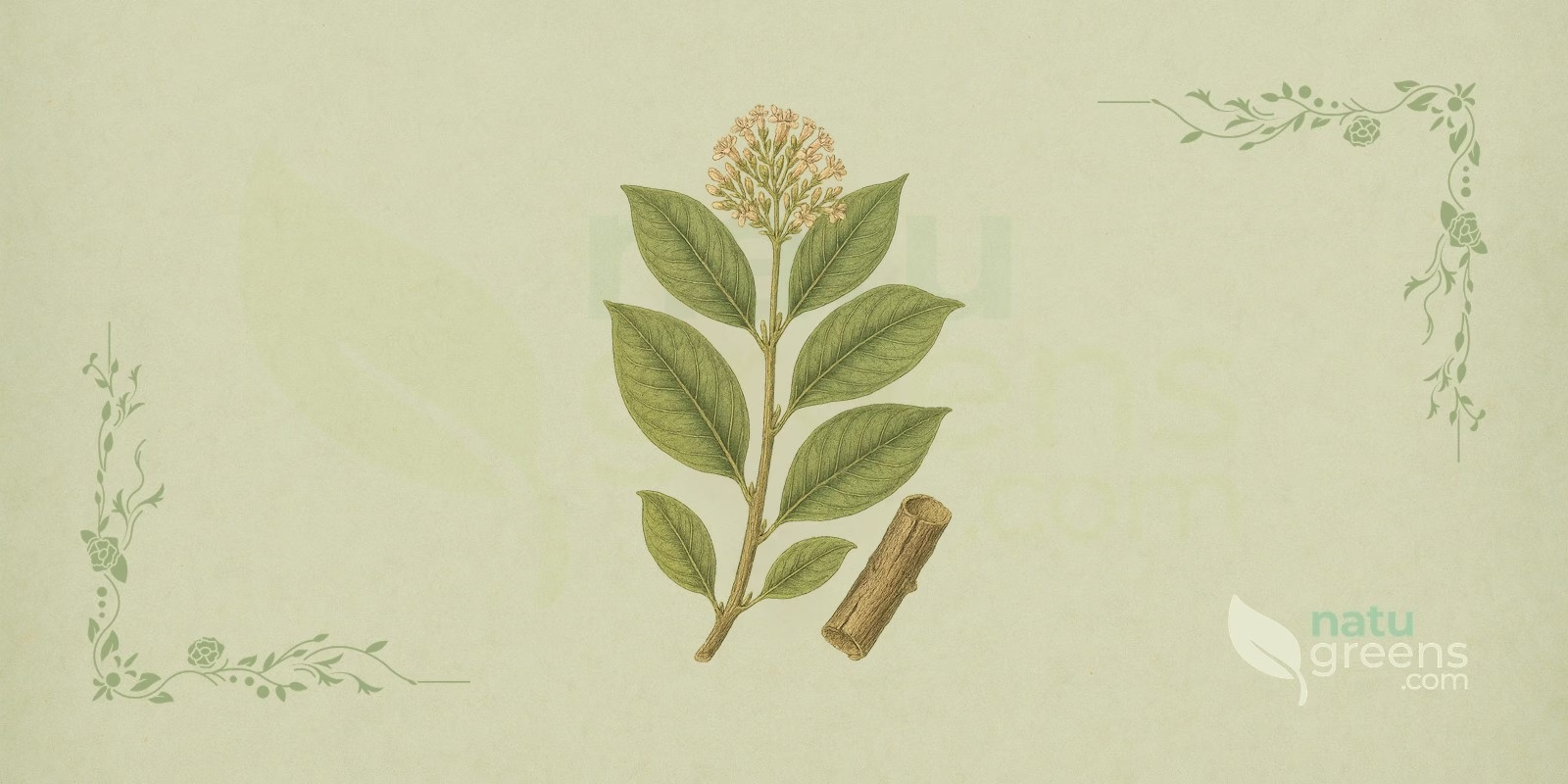
Common and International Names of Cinchona
- Dutch: kina, kinaboom.
- English: cinchona, crown bark, Jesuit's bark (a historical name applied to the bark of the genus), Loja bark.
- French: quinquina, quinquina de Loja.
- German: Chinarinde (the bark), Chinarindenbaum.
- Italian: china, chinachina.
- Japanese: kinanoki (キナノキ).
- Portuguese: árvore-da-quina, quina, quineira.
- Spanish: árbol de la quina, cascarilla, cascarilla fina de Loja, quina.
Not to Be Confused with Quinine-Rich Cinchonas or Brazilian Quinas
The name cinchona, and its Portuguese and Spanish counterpart quina, covers plants that are quite different from one another. Within the genus itself, the yellow bark of Cinchona calisaya, native to Bolivia and southern Peru, and the red bark of Cinchona pubescens, which ranges widely across the Andes, were the industrial sources of quinine, and most alkaloid content data and pharmacological studies come from them. In the taxonomic revision of the genus published by Lennart Andersson in 1998, the name Cinchona officinalis was restricted to a southern Ecuadorian form with no modern medicinal importance, whose bark contains no quinine or only traces of it, although the populations near Loja were probably harvested in the early years of the bark trade. In Brazil, the word quina also refers to bitter native species from other genera and even other families, which naturalists of the eighteenth and nineteenth centuries used as substitutes for Andean cinchona, among them the quina-do-cerrado (Strychnos pseudoquina). For this reason, a product sold simply as "quina" or "cinchona" may contain the bark of several different plants, each with its own composition and risks, and only the scientific name on the label tells you what is actually inside.
Botanical Synonyms of Cinchona
The accepted name is Cinchona officinalis L., published by Linnaeus in 1753 in Species Plantarum, and the species is the type of the genus Cinchona. Names now treated as synonyms include Cinchona condaminea Humb. & Bonpl., Cinchona legitima Ruiz ex C.J.Laubert, Cinchona uritusinga Pav. ex Howard and Cinchona officinalis var. vera Cárdenas. The taxonomy of the genus was muddled for a long time: in the 1930s the botanist Paul Standley lumped dozens of names under Cinchona officinalis based on a broad and vague concept of the species, and it was Andersson's revision that reassigned many of them, moving, for example, Cinchona ledgeriana to Cinchona calisaya and Cinchona succirubra to Cinchona pubescens. This historical confusion explains why older texts credit Cinchona officinalis with properties and alkaloid levels that actually belong to other species.
Botanical Family: Rubiaceae
Rubiaceae, known as the coffee family, comprises more than 13,000 species distributed mainly across the tropics, and is recognized by its simple opposite leaves accompanied by stipules between the leaf stalks. Besides the cinchonas, it includes the coffee plant (Coffea arabica), ipecac (Carapichea ipecacuanha), cat's claw (Uncaria tomentosa) and genipap (Genipa americana), which shows how strongly the family concentrates plants rich in alkaloids and other compounds with marked effects on the body. Cinchona officinalis has glossy, elliptic to lanceolate leaves with small pits in the vein axils on the underside, fragrant tubular flowers in shades of pink to reddish, borne in panicles at the branch tips, and capsular fruits that split open from the base toward the apex, releasing small winged seeds dispersed by the wind.
Parts of Cinchona Used
The part of historical interest is the bark, stripped from the trunk, the branches and, at certain periods, the roots, then dried and ground. Throughout the genus, the alkaloids are concentrated in the bark, and their amount varies widely with the species, the age of the tree, the altitude and even the genetic lineage, as a study of Bolivian populations of Cinchona calisaya showed. The leaves, flowers and seeds have no significant traditional use. In practice, the bark used by the pharmaceutical and beverage industries throughout the twentieth century came from plantations of Cinchona calisaya, Cinchona pubescens and their hybrids, not from Cinchona officinalis, which is now a species threatened by habitat loss.
Ethnobotanical and Traditional Uses of Cinchona
The oldest records link cinchona bark to intermittent fevers. From the 1630s onward, Jesuit missionaries carried the powdered bark from the Viceroyalty of Peru to Europe, where it became known as Jesuit's powder and, over the seventeenth and eighteenth centuries, came to be regarded as useful against at least some of the fevers we now know to be malaria. The folk uses recorded for the bark of the genus include:
- Aperitif bitter, in quinquina wines and liqueurs taken before meals to whet the appetite
- Bark teas and powders against intermittent fevers, a historical practice long since replaced by medical treatment
- Digestive use for a heavy feeling in the stomach and poor appetite
- Tonic during convalescence, a European tradition of the eighteenth and nineteenth centuries
In colonial and imperial Brazil, the difficulty of obtaining Andean bark gave rise to the native quinas, bitter plants used as tonics and against fevers in place of Cinchona, and much of the Brazilian folk memory of "chá de quina" (quina tea) actually refers to these substitute species.
Medicinal Properties of Cinchona
The properties below concern the bark of the genus Cinchona and, above all, the alkaloids isolated from it; almost none has been studied specifically in Cinchona officinalis, and none justifies home use of the bark, whose dose is unpredictable and whose safety margin is narrow.
- Antiarrhythmic action (a property of isolated, purified quinidine, used as a prescription heart medicine under monitoring, and never obtained safely from a tea)
- Antifebrile action (historical use against intermittent fevers, linked to the action of the alkaloids on the malaria parasite rather than to a general fever-lowering effect)
- Antimalarial action (demonstrated for quinine as a medicine given at controlled doses, now reserved for specific situations defined by a physician; bark tea or tincture is not a treatment for malaria)
- Appetite and digestion stimulation (an effect associated with the bitter taste of the bark, traditional in Europe, with limited clinical evidence)
- Astringent action (attributed to the tannins in the bark, the basis of its traditional use as a bitter and tonic, without modern clinical studies)
- Effect on muscle cramps (a Cochrane review found low to moderate quality evidence that quinine tablets reduce cramps, at the cost of more adverse effects, and the U.S. FDA warns against this use because of the risk of serious blood reactions)
Detailed Phytochemical Profile of Cinchona
Cinchona chemistry is among the most thoroughly studied in the plant kingdom, but almost always based on the commercial species. The four main alkaloids of the genus are quinine, quinidine, cinchonine and cinchonidine, and their proportions shift from one species to another; for Cinchona officinalis in the strict sense, Andersson's revision reports quinine as absent or present only in minimal amounts, and the high levels described in the literature belong to Cinchona calisaya, Cinchona pubescens and their hybrids. Compounds described in the bark of the genus include:
- Cinchona red (phlobaphene-type pigments derived from the tannins, which give aged bark its reddish color)
- Cinchonidine (an alkaloid isolated in 1844, a stereoisomer of cinchonine)
- Cinchonine (an alkaloid obtained in impure form in 1810 by the Portuguese physician Bernardino António Gomes and characterized in 1820 by Pelletier and Caventou, along with quinine)
- Hydroquinine (an alkaloid related to quinine, present in smaller proportions)
- Quinic acid (an organic acid that gives the group its name and also occurs in coffee)
- Quinidine (a stereoisomer of quinine with a pronounced effect on heart rhythm, more cardiotoxic than quinine)
- Quinine (a bitter alkaloid with antimalarial action, abundant in Cinchona calisaya and Cinchona pubescens, scarce in Cinchona officinalis in the strict sense)
- Quinotannic acid (the characteristic tannin of the bark, responsible for its astringency)
- Quinovin (a bitter glycoside of quinovic acid)
Preparation and Administration of Cinchona
Historically, the dried bark was ground and taken as a powder mixed into wine, prepared as a decoction, steeped in alcohol to make tinctures, or added to quinquina wines and bitter liqueurs. Once quinine was isolated in 1820, medical use came to rely on the purified alkaloid, in tablets and injections of known strength, precisely because bark varies so much from one tree to the next. Today, most people encounter cinchona through drinks: tonic water, vermouths and bitter aperitifs contain small amounts of quinine, and in the United States the limit for soft drinks is 83 milligrams per liter. Even so, a systematic review of reactions to quinine found serious cases triggered by beverages, which shows that sensitive people can react even to small doses. Bark teas, tinctures and capsules sold without standardization do not provide a reliable dose and are not recommended for self-use.
Synergy with Other Medicinal Plants
Traditional Pairings in Digestive Bitters
In the European tradition of aperitif bitters, cinchona bark appears alongside gentian root (Gentiana lutea) and bitter orange peel (Citrus aurantium) in formulas meant to stimulate the appetite before meals. These combinations grew out of taste and the craft of apothecaries and distillers, not out of studies proving a combined effect, and gentian on its own already serves as a digestive bitter without the risks of cinchona alkaloids.
Traditional Pairings in Quinquina Wines
The quinquina wines of the nineteenth and twentieth centuries usually combined cinchona with cinnamon (Cinnamomum verum), bitter orange peel and other spices, both to soften the intense bitterness of the bark and to round out the aromatic profile of the drink. These are records of culinary use and old-fashioned tonics with no clinical backing, and any homemade blend containing cinchona bark carries the same risks of cinchonism and serious reactions described in the contraindications section.
Recipes and Usage Protocols for Cinchona
Bark Decoction in Historical Records
Old formularies described ground bark boiled in water for several minutes and strained, sometimes sweetened or mixed with wine to mask the bitterness. This article deliberately gives no quantities, because the alkaloid content of the bark varies widely and the gap between a dose with no effect and a toxic one is small, especially in children, pregnant women and people with heart disease. These uses follow traditional records and are no substitute for professional advice, and preparing cinchona tea at home is not recommended.
Quinquina Wines, Vermouths and Tonic Water
The safest way to get to know the flavor of cinchona is through commercial drinks, which use small, controlled amounts of quinine or bark extract. Even so, anyone who has reacted to quinine-containing medicines, has a low platelet count, G6PD deficiency or an arrhythmia, or is pregnant should avoid these drinks as well, since serious reactions caused by tonic water have been reported in sensitized people.
The preparations above follow traditional records and do not replace professional guidance. Before any internal use, check the contraindications and interactions described in this article.
Therapies Associated with Cinchona
Clinical Herbal Medicine
In twentieth-century European herbal medicine, cinchona bark, obtained mainly from Cinchona pubescens, was accepted as a bitter for poor appetite and mild digestive complaints, always with caveats about pregnancy and sensitivity to the alkaloids. The Committee on Herbal Medicinal Products of the European Medicines Agency has not published a monograph on cinchona bark, and the current trend is to favor safer bitters. In modern medicine, quinine and quinidine left the realm of plants and became isolated drugs, prescribed for specific situations under medical supervision, so cinchona now holds a place in herbal medicine that is more historical than practical.
Homeopathy
Cinchona bark holds a special place in the history of homeopathy: in 1790, while translating a materia medica by the Scottish physician William Cullen, Samuel Hahnemann took the bark himself and described symptoms he likened to those of intermittent fevers, an experience that inspired the principle of similars. Homeopathic remedies prepared from the bark, known as China officinalis or China rubra, are highly diluted and have no efficacy demonstrated by good-quality clinical studies. No homeopathic preparation should ever be used in place of medical treatment for malaria.
Contraindications and Side Effects of Cinchona
Cinchona is the historical source of quinine, and the risks of the bark mirror those of this alkaloid and of quinidine. The best-known picture is cinchonism, which can appear even at treatment doses and shows up as ringing in the ears (tinnitus), hearing loss, headache, nausea, dizziness and visual disturbances such as blurred vision and altered color perception; in severe cases there is vomiting, significant loss of hearing or vision and cardiac arrhythmias, including QT interval prolongation, which can be fatal in overdose. Quinine can also cause serious immune reactions such as thrombocytopenia (a sharp drop in platelets, with a risk of bleeding), hemolytic anemia, hemolytic uremic syndrome, acute kidney injury and skin reactions, reported with tablets and even with drinks that contain quinine, often requiring hospitalization. Use of cinchona bark, teas, tinctures or supplements is contraindicated in pregnancy because of the risk to the fetus, and should also be avoided while breastfeeding and in children; when a pregnant woman has malaria, the choice of medicine rests solely with the medical team. Cinchona should also be avoided by people with arrhythmias or a prolonged QT interval, G6PD deficiency, myasthenia gravis, a history of optic neuritis or tinnitus, a tendency toward hypoglycemia, and anyone who has ever had a reaction to quinine. Never use cinchona to self-medicate for malaria or cramps. Malaria is a serious disease that can kill within a few days, and it requires laboratory diagnosis and immediate medical treatment with the drugs set out in health protocols; if you develop a fever after traveling to or staying in an area with malaria transmission, such as the Amazon, seek care without delay. As for cramps, the U.S. FDA warns that quinine is not approved for this use and exposes patients to potentially fatal blood reactions.
Drug Interactions
Quinine and the other bark alkaloids interact with commonly used medicines, and some of these combinations are dangerous. With antiarrhythmics such as amiodarone, quinidine and flecainide, and with other drugs that prolong the QT interval, there is an added risk of serious arrhythmias; the same applies to combining it with mefloquine, another antimalarial. With digoxin, a pharmacokinetic study showed that quinine reduced the drug's clearance by 26% and lengthened its half-life from about 34 to 52 hours, which promotes accumulation and digitalis toxicity. Quinine can also enhance the effect of anticoagulants such as warfarin and add to the hypoglycemia risk of diabetes medicines. Anyone taking a long-term medicine, especially for the heart, should talk to a doctor before consuming cinchona products, including large amounts of tonic drinks.
Curiosities and Historical Facts
Linnaeus coined the name Cinchona in 1742 in honor of the Countess of Chinchón, wife of a viceroy of Peru who, according to an oft-repeated legend, recovered from a fever thanks to the bark in the 1630s; historians consider the story doubtful, and the name itself came out misspelled, missing the "h" in Chinchón. The type species, Cinchona officinalis, was described from material collected around Loja, Ecuador, the region that supplied the so-called Loja bark in the early days of the trade. In 1820, the French chemists Pierre Joseph Pelletier and Joseph Bienaimé Caventou isolated quinine, and in the 1860s the English trader Charles Ledger obtained Cinchona calisaya seeds in Bolivia that gave rise to the Dutch plantations on Java, which produced most of the world's quinine until the Second World War. The quina is regarded as Peru's national tree and appears on the country's coat of arms, while the wild populations of Cinchona officinalis in Ecuador are now fragmented and the focus of conservation studies.
Frequently Asked Questions About Cinchona
Is Cinchona officinalis the Cinchona That Supplies Quinine?
Not exactly. Cinchona officinalis is the type species of the genus and gave the group its name, but commercial quinine came mainly from Cinchona calisaya (including the former Cinchona ledgeriana) and from Cinchona pubescens. As the species is defined today, its bark contains no quinine or only traces of it.
Can Cinchona Tea Be Used Against Malaria?
No, and trying to do so is dangerous. Malaria can progress to severe forms within days, and current treatment relies on specific medicines chosen according to the type of parasite and the region, after diagnosis by a blood test. Bark tea or tincture has an unpredictable alkaloid content and can delay proper treatment. If you develop a fever after a stay in a malaria area, seek medical care immediately.
Does Cinchona Help with Night Cramps?
Quinine tablets were once used for cramps, but a Cochrane review concluded that the benefit is modest and that adverse effects are more frequent than with placebo. The U.S. FDA warns that this use is not approved and has led to serious blood reactions, some of them fatal. For this reason, neither quinine nor cinchona bark should be used on your own for cramps, which deserve a medical evaluation to look into the cause.
Is Tonic Water Harmful Because of the Quinine?
For most people, tonic water consumed in moderation does not usually cause problems, because the amount of quinine is small and regulated. There are, however, reports of serious reactions in sensitized people, such as a drop in platelets, and anyone who has reacted to quinine, is pregnant, has G6PD deficiency or takes antiarrhythmics or digoxin should avoid the drink and talk to their doctor.
Can Pregnant Women Use Cinchona?
No. Cinchona bark, teas, tinctures and supplements are contraindicated in pregnancy because of the risk to the fetus, and should also be avoided while breastfeeding. If a pregnant woman is suspected of having malaria, she needs care immediately, and the choice of medicine is the sole responsibility of the medical team.
Is the Brazilian Quina-do-Cerrado the Same Plant?
No. In Brazil, several native bitter plants were given the name quina because they were used as substitutes for Andean bark, such as the quina-do-cerrado (Strychnos pseudoquina), which belongs to a different botanical family. They have their own composition and risks, and the information in this article does not apply to those species.
Notice: this content is for informational purposes and does not replace professional medical advice. Consult a physician or herbal practitioner before using medicinal plants, especially during pregnancy, breastfeeding, or alongside medication.
How to cite this article
NATUGREENS. Cinchona officinalis (Loja Bark): History, Quinine and Risks. Natugreens, 26 Nov. 2026. Disponível em: https://natugreens.com/cinchona-officinalis-cinchona/. Accessed: Nov. 26, 2026.
Natugreens. (2026). Cinchona officinalis (Loja Bark): History, Quinine and Risks. Natugreens. https://natugreens.com/cinchona-officinalis-cinchona/
References and Scientific Studies
View All 13 Cited References
Peer-Reviewed Scientific Studies (11)
- DOI2019 Cueva-Agila, A., Vélez-Mora, D., Arias, D., Curto, M., Meimberg, H., Brinegar, C. (2019). Genetic characterization of fragmented populations of Cinchona officinalis L. (Rubiaceae), a threatened tree of the northern Andean cloud forests. Tree Genetics & Genomes, 15(6). ↗
- DOI2021 Arbizu, C. I., Ferro-Mauricio, R. D., Chávez-Galarza, J. C., Guerrero-Abad, J. C., Vásquez, H. V., Maicelo, J. L. (2021). The complete chloroplast genome of the national tree of Peru, quina (Cinchona officinalis L., Rubiaceae). Mitochondrial DNA Part B, 6(9), 2781-2783. ↗
- DOI2017 Maldonado, C., Barnes, C. J., Cornett, C., Holmfred, E., Hansen, S. H., Persson, C., Antonelli, A., Rønsted, N. (2017). Phylogeny predicts the quantity of antimalarial alkaloids within the iconic yellow Cinchona bark (Rubiaceae: Cinchona calisaya). Frontiers in Plant Science, 8, 391. ↗
- DOI2018 Eyal, S. (2018). The fever tree: from malaria to neurological diseases. Toxins, 10(12), 491. ↗
- DOI2011 Achan, J., Talisuna, A. O., Erhart, A., et al. (2011). Quinine, an old anti-malarial drug in a modern world: role in the treatment of malaria. Malaria Journal, 10, 144. ↗
- PMC2016 Liles, N. W., Page, E. E., Liles, A. L., Vesely, S. K., Raskob, G. E., George, J. N. (2016). Diversity and severity of adverse reactions to quinine: a systematic review. American Journal of Hematology, 91(5), 461-466. ↗
- DOI2015 El-Tawil, S., Al Musa, T., Valli, H., Lunn, M. P. T., Brassington, R., El-Tawil, T., Weber, M. (2015). Quinine for muscle cramps. Cochrane Database of Systematic Reviews, (4), CD005044. ↗
- DOI1980 Wandell, M., Powell, J. R., Hager, W. D., et al. (1980). Effect of quinine on digoxin kinetics. Clinical Pharmacology & Therapeutics, 28(4), 425-430. ↗
- DOI2017 Gachelin, G., Garner, P., Ferroni, E., Tröhler, U., Chalmers, I. (2017). Evaluating Cinchona bark and quinine for treating and preventing malaria. Journal of the Royal Society of Medicine, 110(1), 31-40. ↗
- DOI2005 Kaufman, T. S., Rúveda, E. A. (2005). The quest for quinine: those who won the battles and those who won the war. Angewandte Chemie International Edition, 44(6), 854-885. ↗
- PMC2013 Cosenza, G. P., Somavilla, N. S., Fagg, C. W., Brandão, M. G. L. (2013). Bitter plants used as substitute of Cinchona spp. (quina) in Brazilian traditional medicine. Journal of Ethnopharmacology, 149(3), 790-796. ↗
Institutional Sources (1)
- GOV2010 U.S. Food and Drug Administration (2010). FDA Drug Safety Communication: New risk management plan and patient Medication Guide for Qualaquin (quinine sulfate). ↗
Supplementary Readings (1)
- 1998 Andersson, L. (1998). A revision of the genus Cinchona (Rubiaceae-Cinchoneae). Memoirs of the New York Botanical Garden, 80, 1-75. ↗
You May Also Like
Take your time and tell us everything you think, details included. Every response is read by someone on our editorial team and goes into the article's revision. An honest critique helps us more than a polite compliment.
Take your time and tell us everything you think, details included. Every response is read by someone on our editorial team and goes into the article's revision. An honest critique helps us more than a polite compliment.