



Quick summary
Parkia biglobosa (Jacq.) R.Br. ex G.Don / Néré, a tree of the Fabaceae family widely known in English as African locust bean, grows across the Sudanian and Sahelian savannas of Africa, in a belt that runs from Senegal and the Gambia to South Sudan and Uganda, and farmers almost always leave it standing in their fields…
Main caution: The fermented seeds have been eaten as food in small amounts for generations, and this culinary use has a long tradition. Concentrated medicinal use is a different matter: the bark and fermented seeds used as remedies…
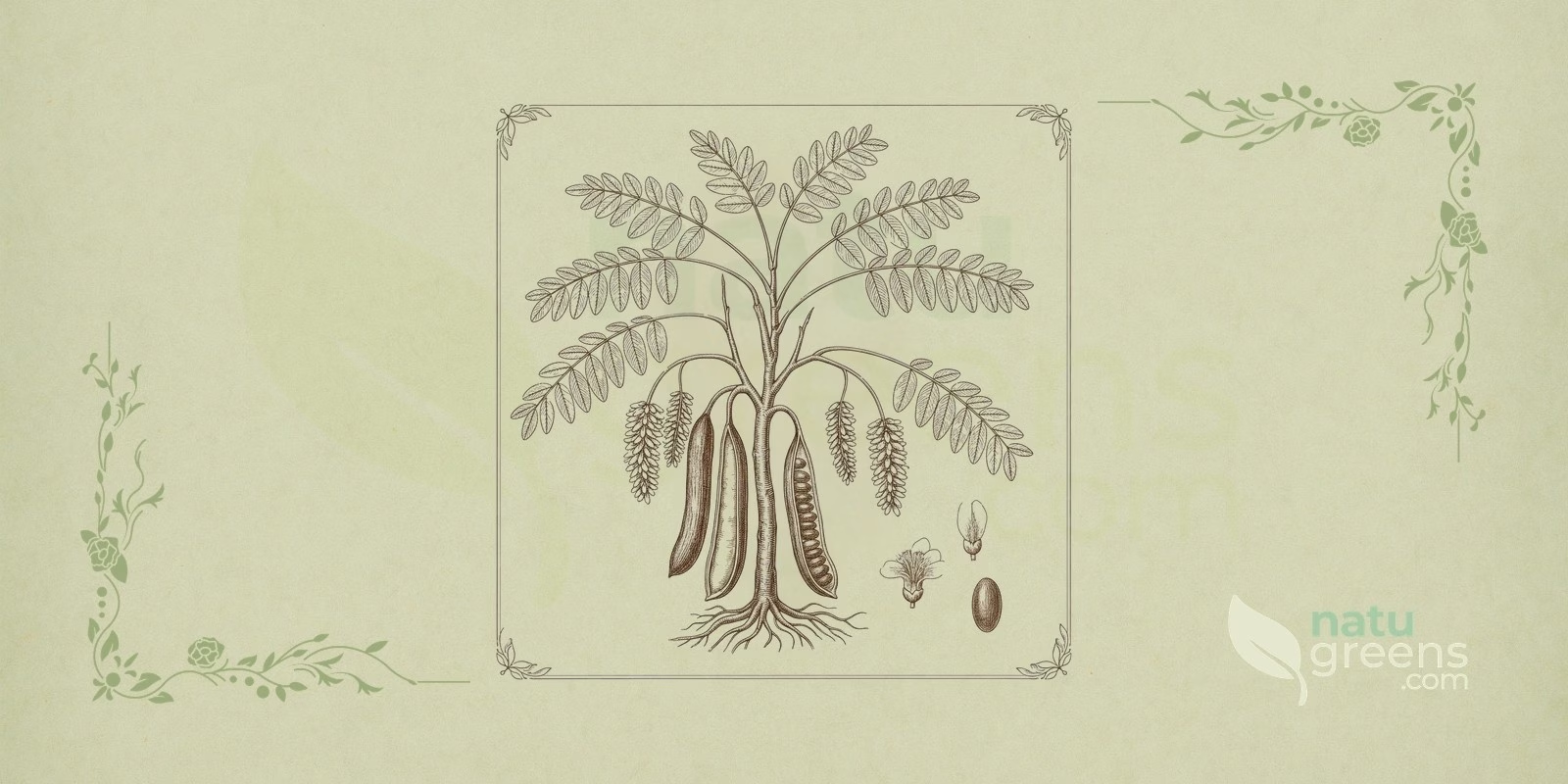
Parkia biglobosa (Jacq.) R.Br. ex G.Don / Néré, a tree of the Fabaceae family widely known in English as African locust bean, grows across the Sudanian and Sahelian savannas of Africa, in a belt that runs from Senegal and the Gambia to South Sudan and Uganda, and farmers almost always leave it standing in their fields alongside the shea tree. Its fermented seeds become soumbala, dawadawa and iru, pungent condiments that season sauces and soups across much of West Africa, while the bark, the leaves and the yellow pulp of the pods turn up in the home remedies of many of the region's peoples. Research on how the fermented seeds affect blood pressure has drawn scientific interest over the past few decades, yet nearly everything known so far comes from rat experiments, laboratory tests and a single observational comparison between two communities in Togo, so none of these effects can be considered proven in humans.
Common and International Names of Néré
- Bambara: néré (tree), soumbala or sumbala (fermented seed condiment).
- English: African locust bean, néré.
- French: arbre à farine, néré.
- Hausa: dorowa (tree), daddawa or dawadawa (condiment).
- Spanish: algarrobo africano.
- Wolof: néte (tree), nététou (condiment).
- Yoruba: igba (tree), iru (condiment).
Not to Be Confused with the Carob Tree
In English, the name locust bean on its own also refers to carob, the fruit of Ceratonia siliqua, a Mediterranean tree of the same family whose sweet pods are used as a cocoa substitute, which is why careless translations often blend the two species. Néré should not be mistaken either for Parkia speciosa, the petai of Southeast Asia, or for Parkia filicoidea, a related African species that grows in wetter areas and sometimes shares similar local names. Everything in this article refers only to Parkia biglobosa.
Botanical Synonyms of Néré
The accepted name is Parkia biglobosa (Jacq.) R.Br. ex G.Don, and its basionym is Mimosa biglobosa Jacq., described in the eighteenth century. Older literature and herbarium sheets also list Inga biglobosa (Jacq.) Willd., Parkia africana R.Br. and Parkia clappertoniana Keay, the last of which was long applied to populations in Nigeria and Ghana. Earlier scientific papers usually place the species in the family Mimosaceae, a grouping that now corresponds to the mimosoid clade of the subfamily Caesalpinioideae, within Fabaceae.
Botanical Family: Fabaceae
Fabaceae, the legume family, brings together around 20,000 species and includes foods such as beans, soybeans and peanuts, along with trees valued for timber, fodder and folk medicine. The genus Parkia belongs to the former mimosoid group, marked by bipinnate leaves, small flowers packed into dense inflorescences and pods with hard seeds, and its species are spread across Africa, tropical Asia and South America, including the Amazon. Néré is a tree 7 to 20 meters tall with a broad crown and grey, fissured bark. Its bipinnate leaves carry many tiny leaflets, its red, ball-shaped flower heads hang from long stalks and are pollinated mainly by bats, and its dark brown pods, 30 to 45 centimeters long, hold seeds wrapped in a floury yellow pulp.
Parts of Néré Used
The seeds are the most prized part and are nearly always eaten after being boiled, hulled and fermented. A survey of 1,587 people from 13 ethnic groups in northern Benin found that seeds lead in use, followed by the pulp, bark, branches and leaves, with smaller roles for the roots, pod husks and flowers. The yellow pulp is eaten raw or stirred into porridges and drinks, the trunk bark goes into decoctions and macerations, and the leaves and roots appear in preparations for external use. In the same study, medicinal use accounted for almost half of all mentions, ahead of food use and sale in local markets.
Ethnobotanical and Traditional Uses of Néré
Folk medicine in West Africa uses different parts of néré for a wide range of complaints, according to ethnobotanical surveys and literature reviews. The records below describe traditional use and are not the same as proven efficacy:
- Body aches and malaria (decoctions and macerations of bark and root)
- Bronchitis, cough and pneumonia (trunk bark as a decoction or as steam for inhalation)
- Burns and hemorrhoids (leaves, external use)
- Diarrhea, dysentery and vomiting (trunk bark, a use shared by several Parkia species)
- Earache and toothache (bark and leaves, applied locally or as a mouth rinse)
- Fever and mild constipation (pod pulp, regarded as mildly laxative and diuretic)
- Hypertension (fermented seeds eaten as food, a widespread belief in several regions)
- Skin infections, ulcers and wounds (powdered or macerated bark, external use)
Medicinal Properties of Néré
The properties below come from animal studies, laboratory assays and, for blood pressure, a single observational comparison between populations, and none of them has been confirmed by a controlled clinical trial in humans:
- Antibacterial (bark extracts inhibited bacteria in culture plates, no clinical data)
- Antidiarrheal (activity reported in animal models, consistent with the traditional use of the bark)
- Antihypertensive (fermented seeds lowered blood pressure in rats; human evidence is observational only)
- Anti-inflammatory (scattered preclinical data, mechanism still poorly defined)
- Antioxidant (bark, leaf, root and seed extracts in in vitro tests)
- Hypoglycemic (bark extract in rats with induced type 2 diabetes, no human study)
- Lipid-lowering (effect on cholesterol and triglycerides in rats, with one observational data point in people)
- Vasorelaxant (relaxation of isolated rat aorta with extracts of roasted and fermented seeds)
The most frequently cited human study compared residents of Bogou, in Togo, where the fermented condiment is part of the diet, with residents of Goumou-Kopé, where it is not eaten, and found lower blood pressure and higher HDL cholesterol among those who consumed it. Because the two communities also differ in other habits, the result points to an association and does not prove that the seeds caused the difference. In rats, both whole seeds and hulled, fermented seeds lowered blood pressure, with a stronger effect in hypertensive animals, and a 2023 study found that fermentation raises polyphenol content and antioxidant activity, although the peptides that inhibit angiotensin-converting enzyme were more active in unfermented seeds.
Detailed Phytochemical Profile of Néré
Composition varies widely with the plant part, soil and climate and, for the seeds, with processing, since roasting or fermenting changes the bioactive compounds. Available reviews and analyses highlight:
- Bioactive peptides (released from seed proteins, some showing angiotensin-converting enzyme inhibition in vitro)
- Catechins (epicatechin, epigallocatechin and epigallocatechin gallate, mainly in leaves and bark)
- Fatty acids (linoleic, oleic, palmitic and stearic, among others, in the seed oil)
- Flavonoids (kaempferol, quercetin and rutin in the leaves, naringenin in the pulp)
- Gallic acid (phenolic identified by HPLC in the bark and also present in the leaves)
- Lupeol (triterpene reported in the bark)
- Phytosterols (beta-sitosterol, campesterol and stigmasterol in the seeds)
- Procyanidins (condensed tannins from leaves and bark)
- Proteins (main fraction of the seed, with a protein isolate of close to 60% protein)
- Protocatechuic acid (main phenolic in the bark extract studied in diabetic rats)
- Pyrogallol (derivatives abundant in ethanolic extracts analyzed by GC-MS)
- Tannins (plentiful in the bark and pod husks, responsible for the astringent taste)
Preparation and Administration of Néré
Néré is mostly eaten as food. The seeds are boiled for hours, hulled, boiled again and left to ferment for two or three days in baskets or cloths, an alkaline process driven mainly by bacteria of the genus Bacillus that yields a dark, aromatic paste sold in balls or discs at the market. Cooks use this condiment sparingly to flavor sauces, soups and stews, a role it now shares with industrial stock cubes. The yellow pulp is eaten raw, stirred into water as a drink or mixed into porridge, while folk healers use the bark, leaves and roots in decoctions, macerations, steam baths and external applications, with no standardized dose. No registered herbal medicines made from néré exist in Brazil.
Synergy with Other Medicinal Plants
Traditional Cooking of the Sahel
In West African cooking, soumbala shares the pot with leaves and fruits of other savanna trees, such as young baobab leaves (Adansonia digitata), used to thicken sauces, and shea butter (Vitellaria paradoxa), the traditional fat of the same farming landscape. Moringa leaves (Moringa oleifera) go into similar dishes in many countries of the region. These pairings have well-recognized food and cultural value, but no studies have looked at any combined medicinal effect.
Popular Drinks and Circulation
In Senegal, Mali and Burkina Faso, the same diet that features néré often includes bissap, a drink made from hibiscus calyces (Hibiscus sabdariffa), and kinkeliba (Combretum micranthum), a leaf infusion drunk at breakfast. Hibiscus has also been studied for its effect on blood pressure, so combining these plants in concentrated doses may add up effects in an uncontrolled way, and that alone is reason enough for anyone taking blood pressure medication to talk to a doctor before trying any such combination.
Recipes and Usage Protocols for Néré
Soumbala as a Seasoning
In kitchens across Burkina Faso and Mali, a teaspoon of mashed soumbala is usually stirred into peanut, leaf or okra sauce as it cooks, always in small amounts, because its strong aroma can overwhelm the dish. Outside Africa the product can be found dried or powdered in African grocery stores and should be kept tightly sealed.
Yellow Pulp as Food
The floury pulp around the seeds is sweet and rich in carbohydrates, and in many villages people eat it straight from the pod or whisk it with water into a thick drink, served mostly in the dry season, when other foods become scarce.
Bark Decoction in Folk Medicine
Local healers describe bark decoctions for cough, diarrhea and toothache, and powdered bark applied to wounds, with no standardized amounts and wide variation between ethnic groups. These uses follow traditional records and do not replace professional advice, and the bark should not be used as an alternative to medicines prescribed for high blood pressure, diabetes or infections.
The preparations above follow traditional records and do not replace professional guidance. Before any internal use, check the contraindications and interactions described in this article.
Associated Therapies for Néré
Clinical Herbal Medicine
In evidence-based herbal medicine, néré is still regarded as a functional food under study rather than a medicinal plant with established use, because clinical trials, standardized extracts and formal safety studies are lacking, a gap that the most recent reviews themselves point out. Laboratory findings on blood pressure, blood sugar and cholesterol justify further research but do not support clinical recommendations.
Traditional Medicine of West Africa
There is no documented homeopathic use of néré. Its place is in the traditional medicine of West Africa, where healers among peoples such as the Bambara, Fula, Hausa and Yoruba combine the bark, leaves and roots with other savanna plants and with ritual practices, and where the tree also carries economic and symbolic value. This knowledge is passed down orally and varies greatly between ethnic groups, as the survey in northern Benin showed.
Contraindications and Side Effects of Néré
The fermented seeds have been eaten as food in small amounts for generations, and this culinary use has a long tradition. Concentrated medicinal use is a different matter: the bark and fermented seeds used as remedies in West Africa have been studied as antihypertensives only in animals, in the laboratory and in one observational comparison between populations, and this evidence should always be treated as preliminary. There are no robust safety data on concentrated medicinal use during pregnancy and breastfeeding, so pregnant and breastfeeding women should avoid extracts, bark decoctions and any amounts beyond normal dietary intake. In mice, the median lethal dose of seed extracts given intraperitoneally was between 1,600 and 1,800 mg/kg, while oral doses of up to 3,000 mg/kg caused no deaths, which suggests low acute toxicity but is no substitute for studies in people. Anyone with low blood pressure, diabetes under treatment or a chronic illness should talk to a doctor before any use that goes beyond seasoning.
Drug Interactions
The main caution concerns antihypertensive drugs: because néré extracts lowered blood pressure in animals, combining them with medication for high blood pressure may add up effects and cause an excessive drop in blood pressure, dizziness or fainting. Given the hypoglycemic effect seen in rats, the same care applies to anyone using insulin or diabetes medication, since there is a theoretical risk of hypoglycemia. These interactions have not been tested in humans, which reinforces the advice to tell a doctor or pharmacist about any medicinal use of the plant.
Curiosities and Historical Facts
The genus Parkia honors Mungo Park, the Scottish explorer who traveled the Niger River in the late eighteenth century, and the epithet biglobosa refers to the globe-shaped flower heads. In the farming landscapes of the Sahel, néré is one of the trees that farmers spare when clearing fields, along with shea, because it provides food, income and shade, and the pods are harvested and sold mainly by women. In Togo, a tannin-rich extract made from the pod husks has long been used to protect earthen walls from rain, a practice that has since been studied as a sustainable building solution.
Frequently Asked Questions About Néré
What Is Soumbala?
Soumbala is the name used in Burkina Faso, Mali and neighboring countries for the condiment made from boiled, hulled and fermented néré seeds. The same product is called dawadawa in northern Ghana and Hausa-speaking Nigeria, iru among the Yoruba and nététou in Senegal.
Does Néré Lower Blood Pressure?
Results in rats and in isolated rat aorta show lower blood pressure and relaxed blood vessels, and a comparison between two communities in Togo linked eating the condiment with lower blood pressure. There are no controlled clinical trials, so néré should not be used in place of medication for hypertension.
Can People on Blood Pressure Medication Eat Soumbala?
Culinary use in small amounts is part of the diet of millions of people and is not usually a cause for concern. Extracts, bark teas or concentrated doses are a different story and may add to the effect of antihypertensive drugs, so they call for a conversation with a doctor first.
Can Pregnant Women Use Néré?
As food, in the usual culinary amounts, there are no signs of a problem. For concentrated medicinal use there are no reliable safety data during pregnancy and breastfeeding, and the most prudent course is to avoid extracts and decoctions during these stages.
Are Néré and Carob the Same Thing?
No. Both plants are legumes and English calls both a locust bean, but carob comes from Ceratonia siliqua, a Mediterranean tree, while néré is Parkia biglobosa, a tree of the African savannas, with different uses and composition.
Notice: this content is for informational purposes and does not replace professional medical advice. Consult a physician or herbal practitioner before using medicinal plants, especially during pregnancy, breastfeeding, or alongside medication.
How to cite this article
NATUGREENS. Néré (Parkia biglobosa): Uses, Soumbala and Safety. Natugreens, 26 Nov. 2026. Disponível em: https://natugreens.com/nere-parkia-biglobosa/. Accessed: Nov. 26, 2026.
Natugreens. (2026). Néré (Parkia biglobosa): Uses, Soumbala and Safety. Natugreens. https://natugreens.com/nere-parkia-biglobosa/
References and Scientific Studies
View All 13 Cited References
- DOI2013 Abioye, E. O., Akinpelu, D. A., Aiyegoro, O. A., Adegboye, M. F., Oni, M. O., Okoh, A. I. (2013). Preliminary Phytochemical Screening and Antibacterial Properties of Crude Stem Bark Extracts and Fractions of Parkia biglobosa (Jacq.). Molecules, 18(7), 8485-8499. ↗
- DOI2023 Arouna, N., Gabriele, M., Tomassi, E., Pucci, L. (2023). Traditional Fermentation Affects the Nutraceutical Properties of Parkia biglobosa Seeds. Plant Foods for Human Nutrition, 78(2), 452-457. ↗
- PMC1993 Assane, M., Baba Moussa, R., Bassene, E., Sere, A. (1993). Action antihypertensive des graines de Parkia biglobosa (Jacq) Benth chez le rat. Dakar Médical, 38(1), 49-54. ↗
- DOI2016 Banakinao, S., Tiem, S., Lolo, K., Koutsawa, Y., Bedja, K. S. (2016). Dataset of the use of tannin of néré (Parkia biglobosa) as a solution for the sustainability of the soil constructions in West Africa. Data in Brief, 8, 474-483. ↗
- DOI2013 Ibrahim, M. A., Koorbanally, N. A., Islam, M. S. (2013). In vitro anti-oxidative activities of the various parts of Parkia biglobosa and GC-MS analysis of extracts with high activity. African Journal of Traditional, Complementary and Alternative Medicines, 10(5), 283-291. ↗
- DOI2018 Komolafe, K., Akinmoladun, A. C., Komolafe, T. R., Olaleye, M. T., Boligon, A. A., Akindahunsi, A. A., Rocha, J. B. T. (2018). Angiotensin-1-converting enzyme inhibition, antioxidant activity, and modulation of cerebral Na+/K+ ATPase by free phenolics of African locust bean (Parkia biglobosa). Health Science Reports, 1(1), e17. ↗
- DOI2024 Komolafe, K., Olaleye, M. T., Huang, H.-C., Pacurari, M. (2024). Contemporary Insights into the Biological Mechanisms of Parkia biglobosa. International Journal of Environmental Research and Public Health, 21(4), 394. ↗
- DOI2011 Koura, K., Ganglo, J. C., Assogbadjo, A. E., Agbangla, C. (2011). Ethnic differences in use values and use patterns of Parkia biglobosa in Northern Benin. Journal of Ethnobiology and Ethnomedicine, 7, 42. ↗
- DOI2011 Ognatan, K., Adi, K., Lamboni, C., Damorou, J. M., Aklikokou, K. A., Gbeassor, M., et al. (2011). Effect of Dietary Intake of Fermented Seeds of Parkia biglobosa (Jacq) Benth (African Locust Bean) on Hypertension in Bogou and Goumou-kope Areas of Togo. Tropical Journal of Pharmaceutical Research, 10(5), 603-609. ↗
- DOI2017 Ogunyinka, B. I., Oyinloye, B. E., Osunsanmi, F. O., Kappo, A. P., Opoku, A. R. (2017). Comparative study on proximate, functional, mineral, and antinutrient composition of fermented, defatted, and protein isolate of Parkia biglobosa seed. Food Science and Nutrition, 5(1), 139-147. ↗
- DOI2011 Ouédraogo, S., Somé, N., Ouattara, S., Kini, F. B., Traore, A., Bucher, B., Guissou, I. P. (2011). Acute Toxicity and Vascular Properties of Seed of Parkia biglobosa (Jacq) R. Br Gift (Mimosaceae) on Rat Aorta. African Journal of Traditional, Complementary and Alternative Medicines, 9(2), 260-265. ↗
- DOI2022 Oyedemi, S. O., Eze, K., Aiyegoro, O. A., Ibeh, R. C., Ikechukwu, G. C., Swain, S. S., Ejiofor, E., Oyedemi, B. O. (2022). Computational, chemical profiling and biochemical evaluation of antidiabetic potential of Parkia biglobosa stem bark extract in type 2 model of rats. Journal of Biomolecular Structure and Dynamics, 40(20), 9948-9961. ↗
- DOI2021 Saleh, M. S. M., Jalil, J., Zainalabidin, S., Asmadi, A. Y., Mustafa, N. H., Kamisah, Y. (2021). Genus Parkia: Phytochemical, Medicinal Uses, and Pharmacological Properties. International Journal of Molecular Sciences, 22(2), 618. ↗
You May Also Like
 Cumaru (Amburana cearensis): Uses, Coumarin and SafetyAmburana cearensis
- Sensitive Plant (Mimosa pudica): Uses, Science and SafetyMimosa pudica
- Copaiba Oil (Copaifera officinalis): Properties and UsesCopaifera officinalis
- Candle Bush (Senna alata): Benefits, Uses and SafetySenna alata
- Desmodium (Desmodium adscendens): Uses, Risks and ChemistryDesmodium adscendens
Take your time and tell us everything you think, details included. Every response is read by someone on our editorial team and goes into the article's revision. An honest critique helps us more than a polite compliment.
Take your time and tell us everything you think, details included. Every response is read by someone on our editorial team and goes into the article's revision. An honest critique helps us more than a polite compliment.