



Quick summary
Alternanthera brasiliana (L.) Kuntze, known as Brazilian joyweed, is a perennial herb in the Amaranthaceae family, native to tropical America, where it ranges from Mexico to southern South America and turns up in every Brazilian biome, from urban backyards to forest edges. In Brazil it became famous above all as a…
Main caution: Despite its very widespread folk use in Brazil, Brazilian joyweed is not an antibiotic, and the nicknames "penicilina" and "terramicina" are only folk names, with no real equivalence whatsoever to those medicines.…
Alternanthera brasiliana (L.) Kuntze, known as Brazilian joyweed, is a perennial herb in the Amaranthaceae family, native to tropical America, where it ranges from Mexico to southern South America and turns up in every Brazilian biome, from urban backyards to forest edges. In Brazil it became famous above all as a backyard plant used in teas and compresses, so much so that it earned nicknames such as "penicilina" and "terramicina" (Portuguese for penicillin and Terramycin), which are only folk names and imply no equivalence whatsoever with those antibiotics. Almost all of the available studies were carried out in the laboratory or in animals, so none of the uses described here has been confirmed by clinical trials in people.
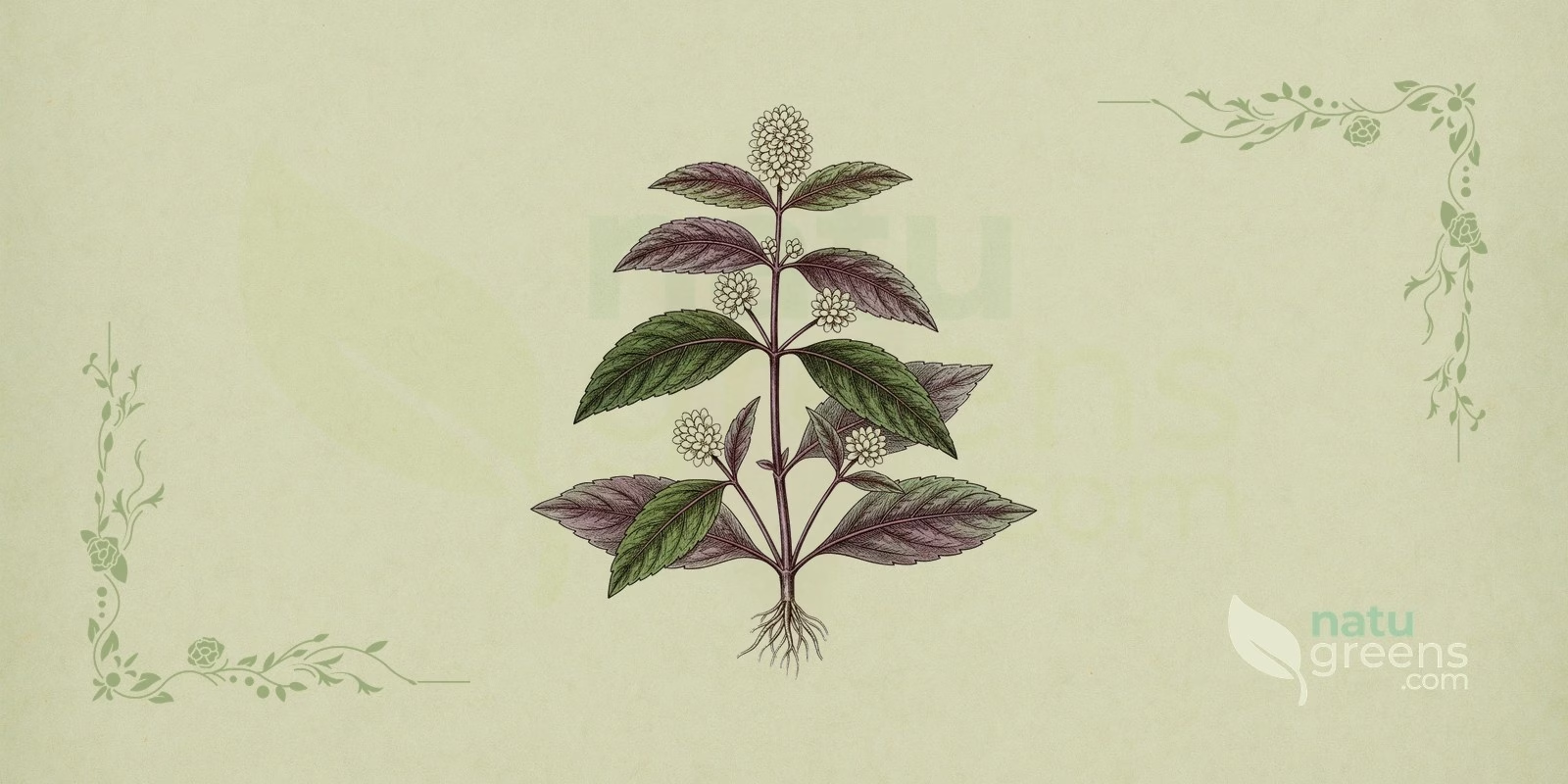
Common and International Names of Brazilian Joyweed
- English: Brazilian joyweed, purple joyweed
- French: bouton blanc, marguerite à feuilles rouges
- Portuguese (Brazil): anador, caaponga, doril, penicilina, perpétua-do-brasil, perpétua-do-mato, sempre-viva, terramicina
- Spanish: botoncito, sanguinaria
Not to Be Confused with Globe Amaranth
In Brazil the name "perpétua" is also given to Gomphrena globosa, the globe amaranth, a member of the same family grown for its round purple, pink or white flower heads that dry without losing their shape. The two plants are relatives, but one cannot stand in for the other. The Portuguese nicknames "penicilina", "terramicina", "anador" and "doril" are another source of confusion, since in different parts of the country they are applied to more than one species, including other Alternanthera. Before any use, the safest course is to confirm the identification by the scientific name, ideally with help from someone who knows the local flora.
Botanical Synonyms of Brazilian Joyweed
The accepted name is Alternanthera brasiliana (L.) Kuntze, a combination published by Otto Kuntze in 1891 on the basis of Gomphrena brasiliana, described by Linnaeus in 1756. The synonyms listed in taxonomic databases include Gomphrena brasiliensis, Gomphrena dentata and Alternanthera dentata, the name under which the popular wine-leaved garden forms are sold in the ornamental plant trade. Some databases also recognize varieties, such as A. brasiliana var. villosa, with hairier leaves, which helps explain the variation in appearance among plants grown in different regions.
Botanical Family: Amaranthaceae
The Amaranthaceae family brings together herbs, subshrubs and a few climbers spread across tropical and temperate regions, including familiar vegetables such as amaranth greens, beet and spinach, as well as ornamentals like cockscomb and globe amaranth itself. Many species produce betalains, red and purple pigments that take the place of anthocyanins in coloring leaves and stems, and it is precisely this group of pigments that gives Brazilian joyweed its purplish tones. The genus Alternanthera is recognized by its small, dry, papery flowers clustered in whitish glomerules and by the alternation of fertile stamens with sterile structures, the feature that gave the genus its name.
Parts of Brazilian Joyweed Used
The leaves are by far the most widely used part, accounting for about three quarters of the citations in the ethnobotanical surveys gathered in a recent review. Stems and flowering branches appear less often, usually mixed with the leaves when teas or compresses are prepared. Communities that keep the habit of growing the plant near the house mention both fresh leaves, picked from the yard at the moment of use, and leaves dried in the shade.
Ethnobotanical and Traditional Uses of Brazilian Joyweed
Brazilian joyweed is one of the backyard plants most often cited in Brazilian folk medicine, with especially numerous records from Rio Grande do Sul, Mato Grosso and Minas Gerais, and there are also reports of its use in Colombia and India. In interviews with local residents it is frequently described as a "natural antibiotic", an idea that laboratory tests do not support, as discussed further on. The most frequently recorded traditional uses include the following:
- Aches and pains in general, the likely origin of the nicknames "anador" and "doril", both names of Brazilian painkiller brands
- Coughs, in teas and homemade syrups
- Diarrhea, as a leaf tea
- Diuresis, to increase urine output
- Inflammation of various kinds, internal and external
- Postpartum complaints, in folk medicine records
- Urinary tract infections, as a folk use that does not replace medical diagnosis and treatment
- Wounds and scrapes, in compresses and washes
Medicinal Properties of Brazilian Joyweed
The properties listed below come from in vitro studies and from laboratory animals, using extracts prepared in different ways and at doses that cannot be compared directly with a homemade tea. None of them has been demonstrated in humans, and the most honest reading is that these results point to lines of research rather than indications for use.
- Analgesic (aqueous and hydroalcoholic extracts reduced acetic acid-induced abdominal writhing in mice)
- Anti-inflammatory (fewer inflammatory cells in experimental pleurisy in rats and less edema in animal models)
- Antimicrobial (weak or absent activity against most of the bacteria and fungi tested, according to a 2024 review, which contradicts the plant's folk reputation as an "antibiotic")
- Antioxidant (modest free radical scavenging capacity in extract fractions, observed in the laboratory)
- Antiviral (an aqueous extract fraction inhibited herpes simplex virus in cell culture, in a 1994 study never reproduced in people)
- Diuretic (higher urine volume in rats given a hydroethanolic leaf extract)
- Hepatoprotective (attenuation of carbon tetrachloride-induced liver injury in mice)
- Nephroprotective (partial protection against cisplatin-induced kidney injury in rats)
- Wound-healing (gels and ointments containing the extract sped up the closure of skin wounds in rats, including burn models and diabetic animals)
Detailed Phytochemical Profile of Brazilian Joyweed
Chemical analyses of the species point to a predominance of phenolic compounds and flavonoids, followed by fatty acids, plant sterols and terpenoids. The purplish color of the leaves comes from betacyanins, and the most characteristic flavonoids are kaempferol and quercetin glycosides with an unusual sugar linkage, first described in the genus from this very plant.
- Amaranthine and isoamaranthine (betacyanins that, together with betanin, are responsible for the wine color of the foliage)
- Betanin and isobetanin (betalain pigments of interest as natural colorants)
- Beta-sitosterol (plant sterol isolated from the dichloromethane fraction of the leaves)
- Clovin (quercetin glycoside described in the aerial parts)
- Gallic acid (phenolic acid identified by chromatography in the leaf extract)
- Kaempferol and its glycosides (the most abundant flavonols, among them kaempferol-3-O-robinobioside, which inhibited lymphocyte proliferation in the laboratory)
- Linoleic acid oxylipins (seventeen compounds with antibacterial activity in the laboratory, some of them also produced by endophytic bacteria living inside the plant)
- Luteolin (flavone reported as the major compound in an ethanolic extract analyzed by chromatography)
- Oxalic acid (detected in the hydroethanolic extract, common in plants of this family)
- p-Coumaric acid (hydroxycinnamic acid present in the leaves)
- Robinin (kaempferol glycoside belonging to the group of flavonoids typical of the species)
- Spinasterol (sterol identified together with beta-sitosterol and stigmasterol)
- Stigmasterol (plant sterol from the same mixture isolated from the leaves)
Preparation and Administration of Brazilian Joyweed
In folk tradition, the most common way to use the plant is as an infusion of the leaves, made with hot water and taken in small amounts over the course of the day. For external use, the same tea, once lukewarm, is applied in compresses or used to wash minor cuts, and some people prepare poultices with crushed fresh leaves. In laboratory studies, the plant was tested as hydroalcoholic extracts, gels and ointments with standardized concentrations, preparations that are not equivalent to a homemade tea and that are not registered as herbal medicines in Brazil.
Synergy with Other Medicinal Plants
Traditional Pairing for Skin Care
In homemade compresses and washes, Brazilian joyweed appears alongside other plants that folk culture associates with wound healing, such as barbatimão (Stryphnodendron adstringens), known for the tannins in its bark, and calendula (Calendula officinalis), a traditional ingredient in skin ointments. These combinations reflect the custom of bringing together plants with a similar reputation, and no studies have looked at their combined effect.
Traditional Pairing for Gargles and Mouth Rinses
For mouth and throat discomfort, folk medicine tends to combine emollient and astringent plants, and in this context Brazilian joyweed may be used with broadleaf plantain (Plantago major) and common mallow (Malva sylvestris) in warm gargles, without swallowing the liquid. This is a practice of traditional origin whose combined effect has never been assessed in controlled research.
Recipes and Usage Protocols for Brazilian Joyweed
Leaf Infusion
According to folk descriptions, the tea is made with a few fresh leaves, or the equivalent of one tablespoon of dried leaves, per cup of freshly boiled water, leaving the mixture covered for about ten minutes before straining. Intake is usually limited to one or two cups a day for a few days, since no studies have established a safe dose or duration for prolonged use in people.
Compress for External Use
In home tradition, the same tea, once it has cooled to lukewarm and been strained through a clean cloth, is used to moisten a piece of gauze that is laid over scratches and minor abrasions for a few minutes. Deep or extensive wounds, wounds with pus, spreading redness or fever, and burns all require medical care and should not be treated with homemade preparations. These uses follow traditional records and do not replace professional guidance.
The preparations above follow traditional records and do not replace professional guidance. Before any internal use, check the contraindications and interactions described in this article.
Associated Therapies for Brazilian Joyweed
Clinical Herbal Medicine
In clinical herbal medicine, Brazilian joyweed is still regarded as a plant of research interest rather than an established option. The species has no official monograph for medicinal use, and the review published in 2024 concluded that most of the extracts tested showed little or no activity against microorganisms, which argues against any use intended to replace antibiotics. For now, the most consistent results come from animal models of wound healing and inflammation.
Folk Medicine in Brazil and India
There is no documented homeopathic use of the species. Its place is in folk medicine, where it is grown in pots and flower beds as a household plant across much of Brazil. In India, where the plant has become naturalized, research groups in the state of Assam studied leaf extracts precisely because of the local use on wounds, and their work accounts for a large share of the experimental wound-healing studies available today.
Contraindications and Side Effects of Brazilian Joyweed
Despite its very widespread folk use in Brazil, Brazilian joyweed is not an antibiotic, and the nicknames "penicilina" and "terramicina" are only folk names, with no real equivalence whatsoever to those medicines. Urinary, throat, skin or any other infections need medical assessment, and stopping or delaying a prescribed antibiotic in order to use the tea can allow the infection to get worse. The evidence for wound-healing and anti-inflammatory effects comes from preclinical studies, in cells and animals, and does not support conclusions about efficacy in people. Studies in rats found no signs of toxicity at high doses for up to 28 days, but these data are no substitute for a safety assessment in humans. There are no robust safety data on concentrated use during pregnancy and breastfeeding, such as extracts, tinctures or strong and frequent teas, so pregnant and breastfeeding women should avoid these preparations and talk to their doctor before any use. Given the lack of studies, it is also best not to give the plant to young children. Because the leaf extract contains oxalic acid, people with a history of kidney stones or kidney disease should take extra caution. Anyone allergic to plants of the Amaranthaceae family should avoid the species, and any skin reaction after compresses, such as itching or redness, is a reason to stop using it.
Drug Interactions
There are no clinical studies on interactions between Brazilian joyweed and medicines. Because the extract increased urine volume in rats, prudence is advised for people already taking diuretics or drugs whose dose depends on kidney function, such as lithium. The most important point, however, is a different one: the plant should never be used in place of a prescribed antibiotic, nor to cut short the course of treatment set by the doctor. People on long-term medication should tell their healthcare professional before adding any tea to their routine.
Curiosities and Historical Facts
The genus name comes from Latin and refers to the anthers that alternate with sterile structures in the flowers, a detail visible only under a magnifying glass. The Portuguese nickname "perpétua", in turn, evokes the dry, long-lasting look of the small flowers, similar to that of everlastings. A curious discovery came from Brazilian and German researchers, who isolated antibacterial compounds called oxylipins from the stems of the plant and found that some of them are also produced by bacteria of the genus Bacillus living inside the plant's own tissues, raising the hypothesis of a chemical partnership between Brazilian joyweed and its microorganisms. The red pigments of the leaves, for their part, have drawn interest from the food industry as a possible source of natural colorants.
Frequently Asked Questions About Brazilian Joyweed
Can Brazilian Joyweed Replace Penicillin or Any Other Antibiotic?
No. The names "penicilina" and "terramicina" are only folk nicknames, and the most comprehensive scientific review of the species, published in 2024, concluded that most of the extracts tested had weak or no activity against disease-causing bacteria and fungi. Infections should be assessed and treated by a healthcare professional.
Which Part of the Plant Is Used and How Is the Tea Made?
Tradition relies mainly on the leaves, fresh or dried, in a quick infusion with hot water. No dose has been established by studies in people, which is why folk records speak of small amounts for a few days, always as a complement and never as a substitute for a prescribed treatment.
Can Pregnant or Breastfeeding Women Use Brazilian Joyweed?
There are no robust safety data on concentrated use during pregnancy and breastfeeding. Given this gap, the prudent course is to avoid extracts, tinctures and strong teas during this period and to consult a doctor before using any preparation of the plant.
How Can Brazilian Joyweed Be Told Apart from Globe Amaranth?
Globe amaranth (Gomphrena globosa) forms large, round, colorful flower heads, whereas Brazilian joyweed has small whitish glomerules on long stalks and opposite leaves that are often purplish. When in doubt, confirming the scientific name avoids mix-ups.
Are There Any Human Studies on Brazilian Joyweed?
So far, published work has focused on laboratory and animal experiments, mainly in rats and mice. These results are promising for wound healing and inflammation, but they have not yet been tested in clinical trials that would allow the plant to be recommended for people.
Notice: this content is for informational purposes and does not replace professional medical advice. Consult a physician or herbal practitioner before using medicinal plants, especially during pregnancy, breastfeeding, or alongside medication.
How to cite this article
NATUGREENS. Brazilian Joyweed (Alternanthera brasiliana): Uses and Safety. Natugreens, 26 Nov. 2026. Disponível em: https://natugreens.com/alternanthera-brasiliana-brazilian-joyweed/. Accessed: Nov. 26, 2026.
Natugreens. (2026). Brazilian Joyweed (Alternanthera brasiliana): Uses and Safety. Natugreens. https://natugreens.com/alternanthera-brasiliana-brazilian-joyweed/
References and Scientific Studies
View All 16 Cited References
Peer-Reviewed Scientific Studies (13)
- DOI2024 Lima Bezerra, J. J., Vieira Pinheiro, A. A., Melo Coutinho, H. D. (2024). Phytochemical and ethnomedicinal evidences of the use of Alternanthera brasiliana (L.) Kuntze against infectious diseases. Journal of Ethnopharmacology, 331, 118304. ↗
- DOI2021 Marchete, R., Oliveira, S., Bagne, L., et al. (2021). Anti-inflammatory and antioxidant properties of Alternanthera brasiliana improve cutaneous wound healing in rats. Inflammopharmacology, 29(5), 1443-1458. ↗
- DOI2012 Formagio, E. L., Mendel, M. T., Fracasso, R., et al. (2012). Evaluation of the pharmacological activity of the Alternanthera brasiliana aqueous extract. Pharmaceutical Biology, 50(11), 1442-1447. ↗
- PMC2009 Barua, C. C., Talukdar, A., Begum, S. A., et al. (2009). Wound healing activity of methanolic extract of leaves of Alternanthera brasiliana Kuntz using in vivo and in vitro model. Indian Journal of Experimental Biology, 47(12), 1001-1005. ↗
- PMC2012 Barua, C. C., Begum, S. A., Talukdar, A., et al. (2012). Influence of Alternanthera brasiliana (L.) Kuntze on altered antioxidant enzyme profile during cutaneous wound healing in immunocompromised rats. ISRN Pharmacology, 2012, 948792. ↗
- DOI2013 Pereira, D. F., Zanon, R. B., Dos Santos, M., Boligon, A. A., Athayde, M. L. (2013). Antioxidant activities and triterpenoids isolated from Alternanthera brasiliana (L.) Kuntze leaves. Natural Product Research, 27(18), 1660-1663. ↗
- DOI2017 Deladino, L., Alvarez, I., De Ancos, B., et al. (2017). Betalains and phenolic compounds of leaves and stems of Alternanthera brasiliana and Alternanthera tenella. Food Research International, 97, 240-249. ↗
- DOI2018 Coutinho, H. D. M., Oliveira-Tintino, C. D. M., Tintino, S. R., et al. (2018). Toxicity against Drosophila melanogaster and antiedematogenic and antimicrobial activities of Alternanthera brasiliana (L.) Kuntze (Amaranthaceae). Environmental Science and Pollution Research, 25(11), 10353-10361. ↗
- DOI2025 Bilal, M. H., Bibi, I. (2025). Nephroprotective and diuretic effect of Alternanthera brasiliana (L.) Kuntze leaf extract; acute and sub-acute toxicity assessment. Journal of Ethnopharmacology, 340, 119225. ↗
- DOI2023 Paliwal, V. M., Kundu, S., Kulhari, U., et al. (2023). Alternanthera brasiliana L. extract alleviates carbon tetrachloride-induced liver injury and fibrotic changes in mice: Role of matrix metalloproteinases and TGF-β/Smad axis. Journal of Ethnopharmacology, 303, 115992. ↗
- DOI1994 Lagrota, M. H. C., Wigg, M. D., Santos, M. M. G., et al. (1994). Inhibitory activity of extracts of Alternanthera brasiliana (Amaranthaceae) against the herpes simplex virus. Phytotherapy Research, 8(6), 358-361. ↗
- DOI2015 Trapp, M. A., Kai, M., Mithöfer, A., Rodrigues-Filho, E. (2015). Antibiotic oxylipins from Alternanthera brasiliana and its endophytic bacteria. Phytochemistry, 110, 72-82. ↗
- DOI2020 Alencar Filho, J. M. T., Teixeira, H. A. P., Sampaio, P. A., et al. (2020). Phytochemical analysis in Alternanthera brasiliana by LC-MS/MS and GC-MS. Natural Product Research, 34(3), 429-433. ↗
Supplementary Readings (3)
- 2003 Brochado, C. O., Almeida, A. P., Barreto, B. P., et al. (2003). Flavonol robinobiosides and rutinosides from Alternanthera brasiliana (Amaranthaceae) and their effects on lymphocyte proliferation in vitro. Journal of the Brazilian Chemical Society, 14(3), 449-451. ↗
- 2025 Royal Botanic Gardens, Kew. (2025). Alternanthera brasiliana (L.) Kuntze. Plants of the World Online. ↗
- 2025 EPPO. (2025). Alternanthera brasiliana (ALRBR). EPPO Global Database. ↗
You May Also Like

Take your time and tell us everything you think, details included. Every response is read by someone on our editorial team and goes into the article's revision. An honest critique helps us more than a polite compliment.
Take your time and tell us everything you think, details included. Every response is read by someone on our editorial team and goes into the article's revision. An honest critique helps us more than a polite compliment.