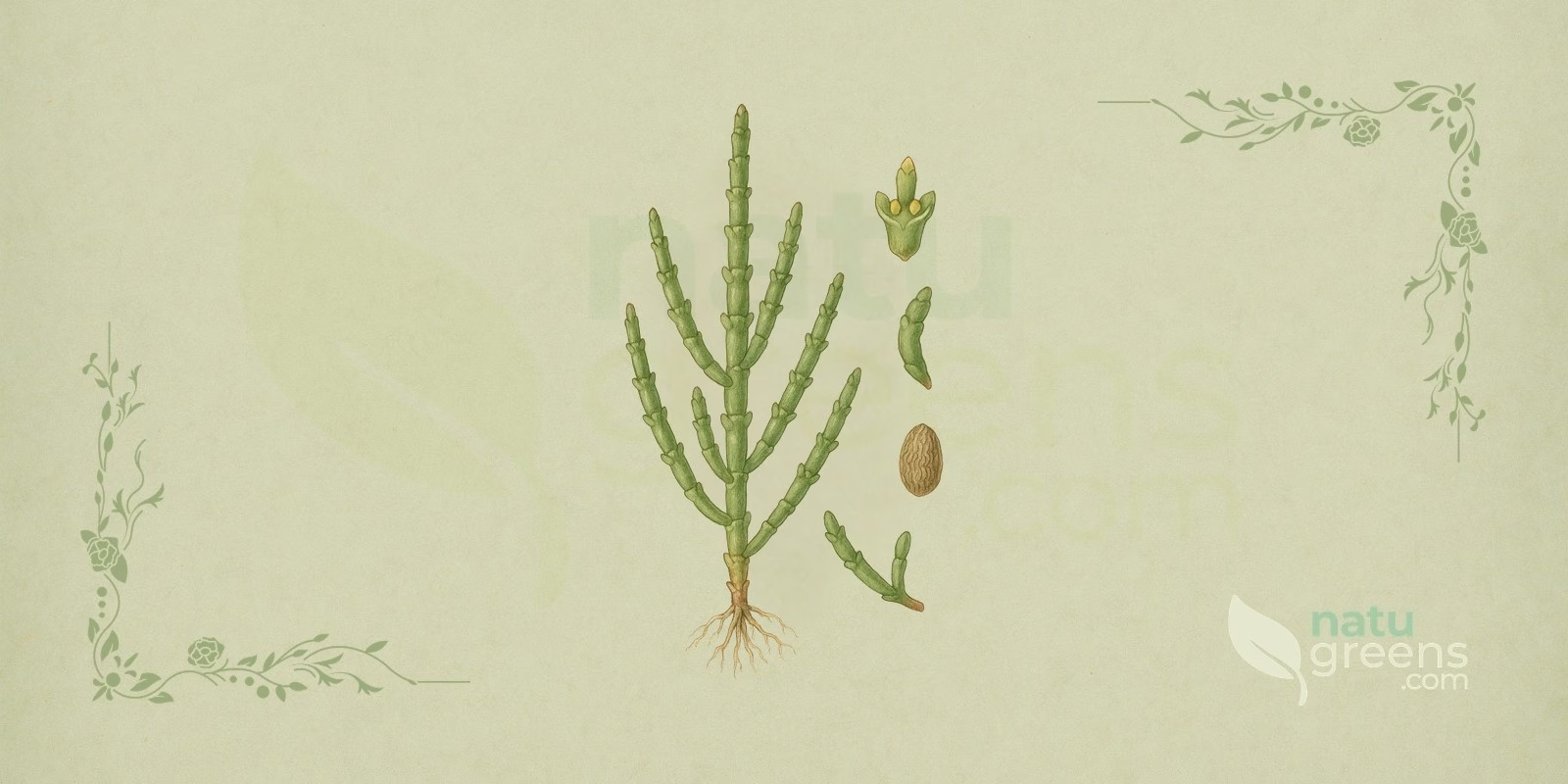
Salicornia europaea L. / Glasswort, commonly known as glasswort, marsh samphire, sea asparagus or sea pickle, is an annual herbaceous halophyte of the Amaranthaceae family, described by Carl Linnaeus in 1753. Native to the coastal zones of Europe, Asia and North America, the species is widely distributed across salt marshes, estuaries and beaches, where it adapts to highly saline soils that few plants can tolerate. Its succulent morphology, with jointed stems and leaves reduced to tiny scales, takes on reddish or purplish tones in autumn. Throughout history, the plant has been used both in cooking and in traditional medicine, because of its nutritional value and the properties that tradition attributes to it.
In ethnobotanical tradition, glasswort has always been valued as both food and remedy. Its uses range from direct consumption, raw or cooked, to folk medicine applications for gastrointestinal disorders and inflammation. Modern scientific research has been exploring the plant’s phytochemical profile and has identified bioactive compounds with antioxidant, anti-inflammatory and antidiabetic potential in laboratory and animal studies. These findings echo several traditional uses, although clinical trials in humans are still needed to confirm them. Taken together, the data open the way for applications in the food, pharmaceutical and cosmetic industries and explain why glasswort attracts growing scientific and commercial interest.
Popular and International Names of Glasswort
- English: chicken toe, common glasswort, glasswort, marsh samphire, pickle weed, saltwort, sea asparagus, sea pickle.
- French: corne de mer, cornichon de mer, fausse algue, haricot de mer, passe-pierre, perce-pierre, salicorne, salicorne d’Europe, salicot.
- German: Europäischer Queller, Glasschmalz, Meeresspargel, Queller, Salzkraut.
- Italian: asparago di mare, erba salata, salicornia.
- Portuguese: aspargo-do-mar, espargo-do-mar, sal verde, salicórnia.
- Spanish: alacranera de las marismas, espárrago de mar, hierba salada, pollo, polluelo, salicornia.
Botanical Synonyms of Salicornia europaea
The botanical nomenclature of Salicornia europaea L. has accumulated many synonyms, reflecting the taxonomic complexity of the genus and the wide morphological variation the species shows from one population to another. This variation led different botanists to describe very similar plants under different names over time. The most frequently cited synonyms include:
- Salicornia annua Sm.
- Salicornia biennis Afzel. ex Sm.
- Salicornia brachystachya (G.Mey.) D.König
- Salicornia brachystachya var. gracilis D.König
- Salicornia europaea subsp. brachystachya (G.Mey.) R.Dahmen & Wissk.
- Salicornia europaea subsp. simonkaiana Soó
- Salicornia europaea var. herbacea L.
- Salicornia europaea var. polystachya (W.D.J.Koch) Fernald
- Salicornia europaea var. prona (Lunell) B.Boivin
- Salicornia europaea var. simplex (Pursh) Fernald
- Salicornia herbacea (L.) L.
- Salicornia herbacea var. annua (Sm.) Pursh
- Salicornia herbacea var. biennis (Afzel. ex Sm.) Fiori
- Salicornia herbacea var. brachystachya G.Mey.
- Salicornia herbacea var. gracilis G.Mey.
- Salicornia ramosissima var. gracilis (D.König) Soó
- Salicornia simonkaiana Soó
- Salicornia stricta Dumort.
Botanical Family: Amaranthaceae
Salicornia europaea belongs to the Amaranthaceae family, a diverse group comprising about 160 genera and more than 2,000 species. Cosmopolitan in distribution, the family is best represented in arid and semi-arid regions and stands out for its ability to adapt to extreme environments such as saline soils. Amaranthaceae are characterized by small flowers, often grouped in dense inflorescences, and by the presence of pigments such as betalains in some species. Several of its members are economically important as food crops (quinoa and amaranth among them), ornamental plants or medicinal species.
The inclusion of Salicornia europaea in Amaranthaceae reflects modern phylogenetic relationships, since the reclassification based on molecular phylogeny absorbed the former family Chenopodiaceae, where the genus was previously placed. Plants in this group tend to be rich in nutrients and bioactive compounds, which makes them a subject of study in fields ranging from nutrition to pharmacology. Their resilience in harsh environments also makes them promising candidates for phytoremediation and for agriculture in regions where fresh water is scarce.
Parts of Glasswort Used
- Leaves
- Seeds
- Tender stems
Because the scale-like leaves are almost fused to the stems, the part used in the kitchen is the tender tips of the branches, while the seeds are the raw material for the oil described in the phytochemical profile.
Ethnobotanical and Traditional Uses
- Diabetes (recorded in traditional Korean medicine, without replacing medical treatment)
- Digestive support (folk use)
- Food (raw, cooked, in salads, soups and hot dishes)
- Inflammation (recorded in folk medicine)
- Intestinal disorders, such as diarrhea and constipation (recorded in folk medicine)
Therapeutic Properties of Glasswort
The properties listed below come mostly from laboratory and animal studies and indicate what science is investigating in the plant, not a guaranteed effect in people.
- Antibacterial (activity against bacteria observed in laboratory tests)
- Antidiabetic (potential investigated in preliminary studies, without clinical proof)
- Anti-inflammatory (reduction of inflammatory markers observed in preclinical studies)
- Antioxidant (capacity to neutralize free radicals measured in the laboratory)
- Antiproliferative (activity observed in laboratory studies, without clinical proof)
- Hypoglycemic (reduction in blood glucose reported in animal studies)
- Hypolipidemic (reduction in blood lipids observed in studies in rats)
- Immunomodulatory (modulation of the immune system described in preclinical studies)
- Osteoprotective (less bone loss observed in studies in mice)
Detailed Phytochemical Profile of Glasswort
Salicornia europaea has a rich and diverse phytochemical profile, which helps explain why researchers are interested in the biological activities attributed to the plant. The main bioactive compounds identified include:
- Alkaloids
- Chlorogenic acid derivatives
- Coumarins
- Fatty acids (linoleic acid, linolenic acid, oleic acid, palmitic acid, stearic acid)
- Flavonoids
- Phenolic acids
- Polyphenols
- Saponins
- Steroids
- Sterols
- Triterpenoids
Studies on fatty acid composition indicate that Salicornia europaea oil is particularly rich in linoleic acid (about 75%), followed by oleic acid (13%), palmitic acid (7%), linolenic acid (2.6%) and stearic acid (2.3%). Linoleic and linolenic acids are essential, since the human body cannot produce them and must obtain them from the diet, and they take part in cellular functions associated with cardiovascular health. The presence of a wide range of polyphenols and flavonoids gives the plant high antioxidant capacity in laboratory assays, with the potential to protect cells against oxidative stress. This effect has yet to be confirmed in human studies.
Preparation and Administration Forms of Glasswort
- Cooked
- Extract
- Infusion
- Oil
- Powder
- Raw
- Tincture
In cooking, the raw and cooked forms are the most common, and the powder obtained from the dried plant is often used as a salty seasoning. Extract, oil and tincture appear mainly in research and in manufactured products, and their use for health purposes should be guided by a professional.
Synergy with Other Medicinal Plants
Blood Sugar Balance
Based on the traditional record and on preliminary studies investigating its effect on glucose, glasswort appears in combination with plants such as cinnamon (Cinnamomum verum) or gymnema (Gymnema sylvestre), which have been studied for the same reason. The hypothesis is that the compounds in glasswort could add to the polyphenols of cinnamon or the gymnemic acids of gymnema in terms of insulin sensitivity and glucose absorption. This combination, however, has not been tested in clinical trials and must never replace the medical management of type 2 diabetes. Anyone taking glucose-lowering drugs or insulin needs professional guidance, because the combined effects can lead to hypoglycemia.
Digestive Comfort
To support digestion and ease intestinal discomfort, tradition pairs glasswort with carminative and digestive plants such as ginger (Zingiber officinale) and peppermint (Mentha × piperita). The idea behind this combination is to bring together the anti-inflammatory activity described for glasswort in preclinical studies, the prokinetic action attributed to ginger and the antispasmodic action attributed to peppermint. This pairing is traditionally used to reduce gas and cramps and to contribute to gastrointestinal well-being, which does not amount to a promise of results.
Antioxidant Intake
The antioxidant capacity measured for glasswort in the laboratory also motivates its pairing with other plants rich in these compounds, such as green tea (Camellia sinensis) and açaí (Euterpe oleracea). The proposal is to add the flavonoids and polyphenols of glasswort to the catechins of green tea or the anthocyanins of açaí within a varied, vegetable-rich diet, which tradition and nutrition science associate with neutralizing free radicals. There is no evidence, however, that this combination on its own wards off chronic disease or premature aging.
Recipes and Usage Protocols of Glasswort
Traditional Glasswort Infusion
Ingredients: 1 teaspoon of dried glasswort (stems and leaves) and 200 ml of boiling water.
Preparation: Place the glasswort in a container, add the boiling water, cover and let it steep for 5 to 7 minutes. Strain and drink warm. Traditionally, this infusion is taken after meals to support digestion and ease mild gastrointestinal discomfort, offering a gentle way to use the plant; anyone on a sodium-restricted diet should talk to a health professional first.
Fresh Glasswort Salad
Ingredients: 100 g of fresh glasswort from controlled cultivation or of stated origin, extra virgin olive oil, lemon juice and freshly ground black pepper.
Preparation: Wash the fresh glasswort thoroughly to remove excess salt and, if you like, cut the stems into small pieces. In a bowl, mix the glasswort with the olive oil, lemon juice and black pepper to taste, and serve as a side dish or starter. This salad is a good way to eat glasswort raw, preserving its nutrients and crunchy texture, and it needs no added salt, since the plant itself tastes salty.
Glasswort Sautéed with Garlic
Ingredients: 150 g of fresh glasswort, 2 cloves of garlic, chopped, and 1 tablespoon of extra virgin olive oil.
Preparation: Wash the glasswort and drain it well. Heat the olive oil in a frying pan over medium heat, add the chopped garlic and sauté for about 1 minute, until fragrant. Add the glasswort and sauté for 3 to 5 minutes, until tender and glossy, then serve right away as a side for fish or meat. This preparation brings out the characteristic flavor of glasswort and is ready in a few minutes; for anyone who needs to cut down on sodium, blanching the plant briefly in boiling water before sautéing helps reduce the salt.
Glasswort Tincture
Ingredients: 50 g of fresh glasswort or 25 g of dried glasswort, and 250 ml of 70% grain alcohol.
Preparation: Chop the glasswort and place it in a dark glass jar, covering it with the alcohol so that it is fully submerged. Seal tightly and leave to macerate for 2 to 4 weeks in a cool, dark place, shaking the jar every day; then strain and store the tincture in a dark bottle. Because it is a concentrated form of the plant’s compounds, with no established safety data for prolonged use, the amount and frequency of use should not be decided on your own: consult a health professional, especially in case of pregnancy, breastfeeding, chronic illness or medication use, and do not give the tincture, which contains alcohol, to children.
The preparations above follow traditional records and do not replace professional guidance. Before any internal use, check the contraindications and interactions described in this article.
Associated Therapies
Clinical Phytotherapy
In clinical phytotherapy, Salicornia europaea is studied mainly for its nutritional value and for the biological activities observed in the laboratory. Standardized extracts of the plant are being investigated as possible adjuncts in metabolic conditions such as diabetes, because of the hypoglycemic potential reported in preliminary studies, but they do not replace medication or medical follow-up. Its wealth of antioxidants and minerals also makes glasswort a possible addition to diets focused on general health. Any recommendation must be individualized, taking into account the patient’s profile, the sodium content of the plant and interactions with other medications.
Functional Nutrition
In modern nutrition, glasswort is considered a functional food and is valued for its content of minerals (such as calcium, iodine and magnesium), vitamins (A, C and B complex) and antioxidant compounds. It is incorporated into diets that aim to support cardiovascular health and modulate the inflammatory response. Its natural salty flavor makes it possible to season dishes with less added table salt, and this trait, together with its ability to grow in saline environments, helps diversify the diet with nutrient-rich vegetables. This does not make it sodium-free, because its sodium content is naturally high, so glasswort should be counted in the daily sodium intake of people with hypertension or on a low-sodium diet.
Contraindications and Side Effects of Glasswort
Salicornia europaea is generally considered safe when eaten as food, in culinary amounts. Glasswort has a naturally high sodium content, so it calls for caution in people with hypertension, heart failure or kidney failure, or on a low-sodium diet. In these cases, consumption should be discussed with a doctor or nutritionist. Because it grows in tidal and estuarine environments, the plant can accumulate heavy metals if the water is polluted; the recommendation is to eat only glasswort from controlled harvesting or cultivation, and not to gather it freely from just any location.
Although rare, the possibility of an allergic reaction in people sensitive to plants of the Amaranthaceae family cannot be ruled out. Any sign of allergy calls for stopping consumption immediately and seeking medical care. Pregnant and breastfeeding women and young children should consult a health professional before using glasswort in amounts above those used in cooking, in extracts or as a supplement, as safety studies in these groups are lacking.
Drug Interactions
Because of its sodium and other mineral content, glasswort may, in theory, interfere with the effect of diuretics and blood pressure medications. The hypoglycemic potential reported in preliminary studies also calls for caution in people taking oral glucose-lowering drugs or insulin, given the possibility of additive effects. Anyone on long-term medication should talk to their doctor or pharmacist before taking extracts, tinctures or large amounts of the plant.
Common Side Effects
Side effects associated with eating glasswort are rare and usually mild, and may include gastrointestinal discomfort such as bloating or diarrhea, especially when the plant is eaten in large amounts or by sensitive people. The intense salty taste may not suit every palate. Excessive intake can temporarily raise blood pressure in people who are sensitive to sodium, which is why it is best to start with small portions and watch how the body responds.
Historical Notes and Interesting Facts
Glasswort, also known as sea asparagus, has a rich history and has been valued by many cultures over the centuries. The scientific name Salicornia comes from the Latin sal (salt) and cornu (horn), a reference to the plant’s preference for saline environments and to the shape of its stems. Glasswort ash was used to make glass and soap because of its high sodium carbonate content, a practice that gave the plant its English name, glasswort. This use goes back centuries and shows its industrial importance long before the plant gained recognition in cooking and folk medicine.
In cooking, glasswort is a prized ingredient in many coastal regions, especially in Europe, where its salty flavor and crunchy texture make it a classic accompaniment to fish and seafood. In some regions it is still gathered in salt marshes, a practice that today requires attention to water quality because of the risk of heavy metal accumulation, while in others it is grown commercially in controlled systems. Growing demand for healthy and sustainable foods has boosted interest in the plant. Its ability to grow in saline soils also makes it a promising crop for arid and semi-arid regions, with the potential to contribute to food security and agricultural sustainability.
Frequently Asked Questions about Glasswort
Can Glasswort Be Eaten Every Day?
Yes, glasswort can be part of a balanced everyday diet, as long as it is eaten in moderate amounts, since its sodium content is naturally high. People with hypertension, heart failure or kidney failure, or on a low-sodium diet, should talk to their doctor or nutritionist before eating it often. For everyone else, regular inclusion can bring a wider variety of nutrients and diversify the vegetables in the diet.
Does Glasswort Help Control Blood Sugar?
Preliminary studies, mostly in the laboratory and in animals, and some records from traditional medicine suggest that glasswort may have a blood glucose-lowering effect, but this has not yet been confirmed in clinical trials in people. People with diabetes should consult a health professional before using it for this purpose, because the plant does not replace medical treatment and may add to the effect of glucose-lowering drugs.
Can Children Eat Glasswort?
Glasswort can be included in children’s diets in small amounts, as part of varied meals. Because of its salty taste and its concentration of sodium and other minerals, it is wise to consult a pediatrician or nutritionist before offering it regularly to young children, especially when there is a pre-existing health condition, and extracts or tinctures should not be given to them.
Can Glasswort Contain Heavy Metals?
Yes, because it grows in tidal and estuarine environments, glasswort can accumulate heavy metals if the water is polluted. Field studies have already measured these elements in plants from contaminated coastal areas. For this reason, the recommendation is to eat only glasswort from controlled harvesting or cultivation, from suppliers who state its origin, and never to gather it freely from just any location.
Does Glasswort Interact with Medications?
Because of its sodium and other mineral content and its possible impact on metabolic functions, glasswort may, in theory, interact with diuretics, blood pressure medications and glucose-lowering drugs. Anyone on long-term medication should discuss regular consumption of the plant, and especially of extracts and tinctures, with their doctor or pharmacist.
What Is the Best Way to Prepare Glasswort?
Glasswort is versatile and can be eaten raw in salads, sautéed with garlic and olive oil, or added to soups and stews. To reduce its salt content, it is worth blanching it briefly in boiling water before cooking. The choice of method depends on personal taste and the recipe at hand.
Notice: this content is for informational purposes and does not replace professional medical advice. Consult a physician or herbal practitioner before using medicinal plants, especially during pregnancy, breastfeeding, or alongside medication.
References and Scientific Studies
- PMC2023 Döndü M, et al. Bioaccumulation and human health risk assessment of some heavy metals in sediments, Sparus aurata and Salicornia europaea in Güllük Lagoon, the south of Aegean Sea. Environ Sci Pollut Res Int. 2023.
- PMC2023 Jang AR, et al. Water Extract of Desalted Salicornia europaea Inhibits RANKL-Induced Osteoclast Differentiation and Prevents Bone Loss in Ovariectomized Mice. Nutrients. 2023.
- PMC2021 Khalilzadeh R, et al. The Salicornia europaea potential for phytoremediation of heavy metals in the soils under different times of wastewater irrigation in northwestern Iran. Environ Sci Pollut Res Int. 2021.
- PMC2021 Kim S, et al. Chemical Structure and Biological Activities of Secondary Metabolites from Salicornia europaea L.. Molecules. 2021.
- PMC2024 Souid A, et al. Assessment of the Antioxidant and Hypolipidemic Properties of Salicornia europaea for the Prevention of TAFLD in Rats. Antioxidants (Basel). 2024.