



Quick summary
Averrhoa carambola L. / Carambola, a fruit tree in the Oxalidaceae family, comes from the Malay Archipelago, where the Royal Botanic Gardens, Kew database places its native range across Java, Sulawesi and the Maluku Islands. Today it is grown throughout the tropical belt, from Southeast Asia to Brazil, where the…
Main caution: Carambola, both the fruit and the other parts of the plant, contains caramboxin, a neurotoxin, and oxalate, and can cause severe and potentially fatal poisoning. In people with kidney failure of any degree, including…
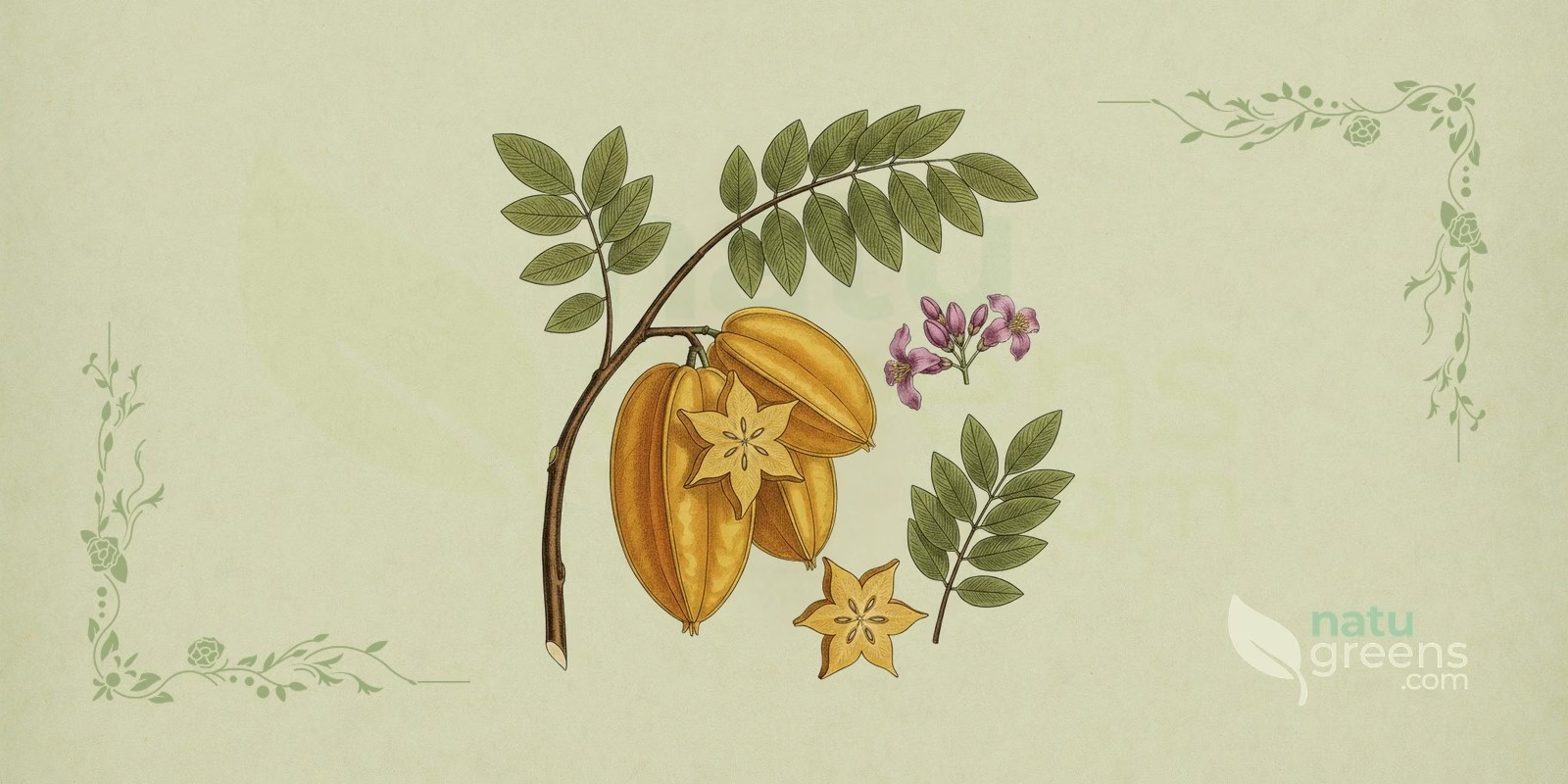
Averrhoa carambola L. / Carambola, a fruit tree in the Oxalidaceae family, comes from the Malay Archipelago, where the Royal Botanic Gardens, Kew database places its native range across Java, Sulawesi and the Maluku Islands. Today it is grown throughout the tropical belt, from Southeast Asia to Brazil, where the carambola tree has become a familiar sight in backyards and orchards. The five-ribbed fruit, which turns into stars when sliced, is eaten fresh, juiced and made into sweets, while the leaves, roots and fruit appear in the folk medicine of China, India, Malaysia, Sri Lanka and Brazil, above all in teas taken for "blood sugar" and high blood pressure. That traditional use sits alongside a fact that Brazilian nephrologists helped document: carambola contains caramboxin and oxalate, substances that can cause severe neurological poisoning and acute kidney injury, sometimes fatal, in people whose kidneys are impaired, even when they are unaware of it. For that reason, any benefit attributed to the plant should be read as traditional use or a laboratory finding, never as a treatment recommendation, and the contraindications described further down apply to every reader who is thinking of using it beyond eating the fruit now and then.
Common and International Names of Carambola
- Chinese: yangtao (杨桃).
- English: carambola, star fruit.
- French: carambole, carambolier (the tree).
- German: Karambole, Sternfrucht.
- Hindi: kamrakh.
- Italian: carambola.
- Japanese: gorenshi (五斂子), suta furutsu (スターフルーツ).
- Malay: belimbing manis.
- Portuguese: carambola, caramboleira (the tree), fruta-estrela.
- Spanish: carambola, carambolo (the tree), fruta estrella.
Do Not Confuse with Bilimbi (Averrhoa bilimbi)
The genus Averrhoa has a sister species that is widely grown in Brazil, the bilimbi or biri-biri (Averrhoa bilimbi), whose green, cylindrical and very sour fruits grow in clusters straight from the trunk. The two plants share the same safety problem, because bilimbi is also rich in oxalate, and there is already a Brazilian report of acute kidney injury after drinking its juice. This article deals with carambola itself, the star-shaped fruit with five ribs, but the kidney warnings should be extended to bilimbi as well. Carambola should not be confused with tamarind or with wood sorrel (Oxalis) either, sour-tasting plants that sometimes share regional names with it.
Botanical Synonyms of Carambola
The accepted name is Averrhoa carambola L., published by Linnaeus in 1753 in Species Plantarum. Taxonomic databases such as World Flora Online list as synonyms Averrhoa acutangula Stokes, Averrhoa pentandra Blanco, described from Philippine material, Connaropsis philippica Fern.-Vill. and Sarcotheca philippica (Fern.-Vill.) Hallier f. None of these names is in current use, but they can turn up on herbarium sheets and in older texts. In the English-language scientific literature the species almost always appears as star fruit, a term that makes it easier to track down the toxicity studies published over recent decades.
Botanical Family: Oxalidaceae
Carambola belongs to the Oxalidaceae, a family of tropical and subtropical distribution whose best-known genus is Oxalis, the wood sorrels that grow as weeds in gardens and sidewalk cracks. The family name comes from the Greek oxys, sour, a nod to the taste of the oxalic acid found in many of its species. Unlike most of its herbaceous relatives, Averrhoa carambola is a small to medium-sized tree, usually 5 to 10 meters tall, with a dense crown, compound leaves of oval leaflets that fold slightly at night, small pink or purplish flowers and fleshy fruits that turn yellow when ripe and carry five prominent ridges.
Parts of Carambola Used
The fruit is by far the most widely consumed part, both as food and in folk preparations, and it is the focus of the studies on oxalate and caramboxin. The leaves are used in homemade teas, mainly in Brazil and China, and were the source of the extracts tested in mice and rats in research on blood glucose and inflammation. Roots, shoots and flowers are mentioned less often in traditional Asian medicine, in decoctions and local applications, while the wood has little commercial value. Because oxalate content varies widely between sweet and sour varieties and between unripe and ripe fruit, there is currently no way to know at home how much of these substances a tea or a juice actually contains.
Ethnobotanical and Traditional Uses of Carambola
In traditional Chinese medicine, the roots, leaves and fruit of the carambola tree are recorded as diuretic, fever-reducing and appetite-stimulating, and the leaves appear in preparations used for headache, vomiting, cough and hangover. In Malaysia, crushed shoots or leaves are applied to the skin for headache, chickenpox and ringworm, and decoctions of the leaves and fruit go into folk remedies for fever and mouth ulcers. Sources linked to Ayurveda and Indian folk medicine mention the ripe fruit for bleeding hemorrhoids, eczema, fever and diarrhea, and also regard it as a digestive aid. In Sri Lanka and Brazil, the fruit, its juice and leaf tea gained a reputation as a home remedy for diabetes and high blood pressure, a practice that now worries nephrologists, since people with diabetes and hypertension are among those most likely to have kidney disease that has not yet been diagnosed. A 2018 review of poisoning cases in Sri Lanka went so far as to recommend explicitly that carambola not be used as a treatment for diabetes.
Medicinal Properties of Carambola
The properties below come from cell studies, laboratory-tested extracts, animal experiments and records of folk use. None of them has been confirmed in clinical trials in people, and several depend on doses or forms of preparation that bear no relation to everyday household consumption.
- Anti-hyperglycemic (observed only in rats, with extracts and flavonoids isolated from the leaves; there is no clinical study in humans, and use of the fruit or the tea by people with diabetes is discouraged because of the kidney risk)
- Anti-inflammatory (topical effect of a leaf extract in a mouse ear edema model, described by the authors themselves as preliminary)
- Antimicrobial (activity of extracts against some bacteria and fungi in laboratory tests, with no clinical evaluation)
- Antioxidant (attributed to vitamin C, proanthocyanidins and other polyphenols in the fruit in chemical assays, which is not the same as a proven effect in the body)
- Diuretic (traditional use of the root and fruit in Chinese medicine, without consistent experimental confirmation)
- Hypolipidemic (lower blood fat levels reported in rodents fed fiber or extracts from the fruit, a result still limited to animals)
Detailed Phytochemical Profile of Carambola
A review published in 2021 in Frontiers in Pharmacology brought together some 130 compounds identified in the species, spread across flavonoids, terpenes, phenolics, phenylpropanoids and other classes, in addition to the fruit's nutrients and the two substances responsible for its toxicity.
- Apigenin C-glycosides (among them apigenin-6-C-β-fucopyranoside, a leaf flavonoid studied in rats for its effect on blood glucose)
- Ascorbic acid (vitamin C, present in moderate amounts in the ripe fruit)
- Carambolaflavones (flavonoids first described in this species, hence the name)
- Caramboxin (an amino acid similar to phenylalanine, identified in 2013 as the fruit's neurotoxin; it stimulates glutamate receptors in the brain and is cleared by the kidneys)
- Carotenoids (pigments responsible for the yellow color of the ripe flesh)
- Catechin and epicatechin (flavan-3-ols, the building blocks of proanthocyanidins)
- Dietary fiber (mainly cellulose, hemicellulose and pectin, which make up the insoluble part of the flesh)
- Oxalic acid (oxalate, most abundant in sour varieties and in fresh juice; in large amounts it forms crystals that damage the kidneys)
- Proanthocyanidins (condensed tannins associated with astringency and with antioxidant activity measured in vitro)
- Saponins (mentioned in analyses of the leaves and fruit, with no specific pharmacological study)
Forms of Preparation and Administration of Carambola
The most common way to eat carambola is fresh, in slices or tossed into salads, but it is also made into juice, jam, fruit in syrup and preserves, and in some Asian countries into pickles and fermented drinks. In Brazilian folk medicine, the most frequently cited preparation is a leaf tea made by infusion, along with the fruit juice itself taken as a home remedy. These two uses are precisely the most worrying, because juice packs the oxalate of several fruits into a single glass and because no study shows how much oxalate or caramboxin ends up in the tea. The cases of kidney injury in people with healthy kidneys described in the literature generally involved large amounts of undiluted juice, often from a sour variety and drunk on an empty stomach or with little water. There are no capsules, standardized extracts or official monographs for medicinal use of the plant.
Synergy with Other Medicinal Plants
Folk Combinations in Blood Sugar Teas
In popular lists of plants for "blood sugar", carambola leaf often appears alongside species such as Brazilian orchid tree, known in Brazil as pata-de-vaca (Bauhinia forficata), as part of the same homemade tea routine. These combinations have never been evaluated in safety or efficacy studies, and mixing several plants without dose control is not a sensible practice, especially for people with diabetes, a group in which silent kidney disease is common. Anyone taking blood sugar medication should talk to their doctor before adding teas to their treatment.
Culinary Pairings with Ginger and Mint
In the kitchen, the tartness of carambola goes well with ginger (Zingiber officinale) and peppermint (Mentha × piperita) in fruit salads, chutneys and infused water made with a few slices of the fruit. In this context the pairing is purely about flavor, and the main precaution is still the amount of carambola, which should be small and never concentrated in the form of juice.
Combinations to Avoid
There is no good reason to combine carambola with other concentrated sources of oxalate, such as bilimbi, wood sorrel, large amounts of raw spinach or rhubarb, or with plants and supplements that put strain on the kidneys. People with a history of calcium oxalate kidney stones have an extra reason to avoid these combinations.
Recipes and Usage Protocols for Carambola
Eating the Fruit in Moderation
For adults whose kidney function has been confirmed as normal, carambola can be part of the diet in small portions, such as one fruit or a few slices at a time, preferably ripe and of the sweet variety, always after a meal and with plenty of water. Science has not established any amount considered safe, and even this common-sense guidance does not apply to anyone with any degree of kidney disease, who should avoid the fruit entirely.
Leaf Tea in Folk Tradition
Folk records describe a tea made by steeping a few fresh or dried leaves in hot water and drinking it throughout the day, mainly by people trying to lower their blood glucose. Because the amount of oxalate and caramboxin extracted in this preparation is unknown and there is no safety study in humans, this article gives no dose or duration, and the tea is not advised for anyone with diabetes, high blood pressure, advanced age or any doubt about the health of their kidneys.
Jams and Preserves
Jams, fruit in syrup and preserves are traditional ways of making use of the harvest, and cooking with sugar spreads the fruit across a larger portion of food, without making the product suitable for people with kidney disease. These uses follow traditional records and do not replace professional guidance, especially for anyone being monitored for diabetes, hypertension or kidney disease.
The preparations above follow traditional records and do not replace professional guidance. Before any internal use, check the contraindications and interactions described in this article.
Therapies Associated with Carambola
Clinical Herbal Medicine
Carambola is not on Brazil's official lists of medicinal plants with recognized indications, nor does it have a European Medicines Agency monograph, and in clinical herbal medicine it appears far more often as a warning plant than as a treatment option. Practitioners who know the literature tend to ask about carambola consumption when assessing patients with kidney disease, diabetes or persistent hiccups and confusion with no obvious cause, because the poisoning is often recognized only when someone links the symptoms to the fruit.
Traditional Chinese Medicine and Ayurveda
In traditional Chinese medicine, the root, leaves and fruit are described as able to "open" the urine, bring down fever and stimulate the appetite, and the plant appears in folk formulas for joint pain and diabetes. In Ayurveda and Indian folk medicine, the ripe fruit is considered digestive and cooling, and is mentioned for hemorrhoids, fever and skin complaints. There is no documented homeopathic use of the species, and the indications from these systems reflect tradition, not modern clinical evidence.
Contraindications and Side Effects of Carambola
Carambola, both the fruit and the other parts of the plant, contains caramboxin, a neurotoxin, and oxalate, and can cause severe and potentially fatal poisoning. In people with kidney failure of any degree, including those on dialysis and those with mild or moderate chronic kidney disease, caramboxin is not eliminated and builds up in the body, causing a neurological syndrome that usually begins with intractable hiccups, the kind that will not stop, and can progress to vomiting, weakness, insomnia, mental confusion, agitation, seizures, coma and death. In a Brazilian series of 32 patients with kidney disease poisoned by the fruit, published in 2003, persistent hiccups occurred in 30 of them, and the severe cases that did not receive hemodialysis in time did not survive, while an earlier report from the same group described poisoning after two or three fruits or a small glass of juice. For this reason, carambola and any preparation made from it are contraindicated for people with kidney failure of any degree. The problem is made worse by the fact that many people have kidney disease without a prior diagnosis, which is common among those with diabetes, hypertension or advanced age, who should know their own kidney function before eating the fruit with any regularity. Even in people with healthy kidneys, oxalate can cause potentially fatal acute kidney injury through crystal deposits, mostly reported after drinking large volumes of undiluted juice, eating sour fruit, or consuming it on an empty stomach or while dehydrated, and chronic kidney disease has been reported following frequent, excessive consumption. People with a history of kidney stones should avoid the fruit. Persistent hiccups, vomiting or confusion in the hours or days after eating carambola are emergency signs that call for immediate medical care, telling the staff that the fruit was eaten, since the treatment for severe cases is hemodialysis started as early as possible. There are no safety data on medicinal use of the tea or juice during pregnancy, breastfeeding or childhood, and such use should be avoided in these groups. As for blood glucose, the hypoglycemic effect has been seen only in animals, evidence in humans is nonexistent, and using the fruit or the leaf tea as a treatment for diabetes is discouraged, both because of the lack of proof and because of the kidney risk in this group of patients.
Drug Interactions
In a laboratory test with human enzymes, carambola juice was the most potent of several tropical fruit juices at inhibiting CYP3A4, the same enzyme affected by grapefruit juice, and in rats it increased exposure to carbamazepine. How far this carries over to people is not yet known with any precision, but the possibility of interaction warrants caution with drugs metabolized by this pathway, such as some statins (atorvastatin, simvastatin), calcium channel blockers (felodipine, nifedipine), immunosuppressants (cyclosporine, tacrolimus), benzodiazepines such as midazolam and anticonvulsants such as carbamazepine. People taking diabetes medication should consider a possible additive effect on blood glucose, not yet studied in humans, and those taking drugs that require care with the kidneys, such as nonsteroidal anti-inflammatory drugs, some antibiotics and contrast agents, have an additional reason to avoid carambola. Anyone on long-term medication should talk to a doctor or pharmacist before eating the fruit or its products on a regular basis.
Curiosities and Historical Facts
Linnaeus named the genus in honor of Averroes, as Europeans called the Andalusian philosopher and physician Ibn Rushd, who lived in the 12th century and wrote commentaries on Aristotle. The word carambola, for its part, reached European languages through Portuguese navigators in India, probably from a local name for the fruit on the country's west coast. The oxalic acid that makes the fruit dangerous for the kidneys is the same compound that led people in parts of Asia to use it for removing rust stains and polishing metal utensils. Brazil plays a central role in the scientific history of carambola toxicity: a 2017 review counted 123 cases of acute kidney injury linked to the fruit in eight countries, with the highest number recorded in Brazil, and it was a group of Brazilian researchers in Ribeirão Preto who isolated and described caramboxin in 2013.
Frequently Asked Questions About Carambola
Can People with Kidney Problems Eat Carambola?
No. People with kidney failure of any degree, including those on dialysis or with mild kidney disease, should not consume carambola in any form, whether the fruit, the juice or the leaf tea, because caramboxin builds up in the body and can cause seizures, coma and death, even in small amounts.
Does Carambola Leaf Tea Lower Blood Sugar?
The studies suggesting this effect were carried out in rats, using extracts and flavonoids isolated from the leaves, and there is no clinical trial in people. Since diabetes is one of the leading causes of kidney disease, which often goes undiagnosed, specialists advise against using carambola as a treatment for blood glucose.
Is Hiccuping After Eating Carambola a Warning Sign?
Yes. Hiccups that will not stop, with or without vomiting, weakness or confusion in the hours after eating the fruit, are the most typical sign of poisoning and call for immediate medical care, making sure to mention that carambola was eaten, since early treatment with hemodialysis makes a difference to the outcome.
Can Healthy People Eat Carambola?
Adults with kidneys confirmed to be healthy usually tolerate the fruit in small portions, preferably ripe and after meals. The risk rises with large amounts of undiluted juice, sour fruit, fasting and dehydration, situations in which acute kidney injury has been reported even in people with no previous disease.
Does Carambola Interact with Medications?
In the laboratory, carambola juice strongly inhibited the enzyme CYP3A4, which is responsible for metabolizing many medicines, and in rats it altered carbamazepine levels. Human data are still limited, but anyone taking statins, immunosuppressants, anticonvulsants or blood pressure medication should consult a doctor before eating the fruit regularly.
Notice: this content is for information and prevention only and does not replace assessment by a healthcare professional. This plant must not be used for self-medication in any form. In case of contact or ingestion, seek emergency medical care immediately.
How to cite this article
NATUGREENS. Carambola (Averrhoa carambola): Uses, Kidney Risks and Safety. Natugreens, 26 Nov. 2026. Disponível em: https://natugreens.com/carambola-averrhoa-carambola/. Accessed: Nov. 26, 2026.
Natugreens. (2026). Carambola (Averrhoa carambola): Uses, Kidney Risks and Safety. Natugreens. https://natugreens.com/carambola-averrhoa-carambola/
References and Scientific Studies
View All 13 Cited References
Peer-Reviewed Scientific Studies (11)
- DOI2021 Luan, F., Peng, L., Lei, Z., Jia, X., Zou, J., Yang, Y., He, X., Zeng, N. (2021). Traditional Uses, Phytochemical Constituents and Pharmacological Properties of Averrhoa carambola L.: A Review. Frontiers in Pharmacology, 12, 699899. ↗
- DOI2021 Lakmal, K., Yasawardene, P., Jayarajah, U., Seneviratne, S. L. (2021). Nutritional and medicinal properties of Star fruit (Averrhoa carambola): A review. Food Science & Nutrition, 9(3), 1810-1823. ↗
- DOI2003 Neto, M. M., et al. (2003). Intoxication by star fruit (Averrhoa carambola) in 32 uraemic patients: treatment and outcome. Nephrology Dialysis Transplantation, 18(1), 120-125. ↗
- DOI2013 Garcia-Cairasco, N., et al. (2013). Elucidating the Neurotoxicity of the Star Fruit. Angewandte Chemie International Edition, 52(49), 13067-13070. ↗
- PMC2020 Yasawardene, P., Jayarajah, U., De Zoysa, I., Seneviratne, S. L. (2020). Mechanisms of star fruit (Averrhoa carambola) toxicity: A mini-review. Toxicon, 187, 198-202. ↗
- DOI2001 Chen, C. L., Fang, H. C., Chou, K. J., Wang, J. S., Chung, H. M. (2001). Acute oxalate nephropathy after ingestion of star fruit. American Journal of Kidney Diseases, 37(2), 418-422. ↗
- DOI2018 Wijayaratne, D. R., et al. (2018). Star fruit nephrotoxicity: a case series and literature review. BMC Nephrology, 19, 288. ↗
- DOI2014 Moysés Neto, M. (2014). Carambola como causa de lesão renal aguda. Jornal Brasileiro de Nefrologia, 36(2). ↗
- DOI2004 Hidaka, M., Fujita, K., Ogikubo, T., et al. (2004). Potent inhibition by star fruit of human cytochrome P450 3A (CYP3A) activity. Drug Metabolism and Disposition, 32(6), 581-583. ↗
- DOI2012 Cazarolli, L. H., et al. (2012). Anti-hyperglycemic action of apigenin-6-C-β-fucopyranoside from Averrhoa carambola. Fitoterapia, 83(7), 1176-1183. ↗
- DOI2011 Cabrini, D. A., et al. (2011). Analysis of the Potential Topical Anti-Inflammatory Activity of Averrhoa carambola L. in Mice. Evidence-Based Complementary and Alternative Medicine, 2011, 908059. ↗
Institutional Sources (2)
- GOV2016 Muthu, N., Lee, S. Y., Phua, K. K., Bhore, S. J. (2016). Nutritional, Medicinal and Toxicological Attributes of Star-Fruits (Averrhoa carambola L.): A Review. Bioinformation, 12(12), 420-424. ↗
- GOV2015 Abeysekera, R. A., et al. (2015). Star fruit toxicity: a cause of both acute kidney injury and chronic kidney disease: a report of two cases. BMC Research Notes, 8, 796. ↗
You May Also Like




Take your time and tell us everything you think, details included. Every response is read by someone on our editorial team and goes into the article's revision. An honest critique helps us more than a polite compliment.
Take your time and tell us everything you think, details included. Every response is read by someone on our editorial team and goes into the article's revision. An honest critique helps us more than a polite compliment.