Mahonia aquifolium (Pursh) Nutt. / Oregon Grape, also known as holly-leaved barberry or Oregon grape holly, is a perennial shrub of the Berberidaceae family, described by Frederick Traugott Pursh in 1814 and reclassified by Thomas Nuttall in 1818. Native to North America, especially the Pacific Northwest, this plant is valued for its medicinal properties and its ornamental use. Historically, the Indigenous tribes of North America used Oregon grape to treat various ailments, from digestive complaints to skin conditions.
Oregon grape stands out for its rich phytochemical composition, with alkaloids such as berberine that give it potent antimicrobial, anti-inflammatory, and immunomodulatory actions. Its spiny leaves, vibrant yellow flowers, and dark blue, grape-like berries not only make it visually attractive, but also point to its ecological and medicinal importance. Modern scientific research has been validating many of its traditional uses, consolidating its reputation as a medicinal plant of great interest.
Popular and International Names of Oregon Grape
- English: Oregon grape, holly-leaved barberry, Oregon grape holly.
- Spanish: uva de Oregón, mahonia, agracejo de Oregón.
- Portuguese: uva-do-oregon, bérberis-do-oregon.
- French: mahonia à feuilles de houx, vigne de l’Oregon.
- Italian: mahonia, uva dell’Oregon.
- German: Mahonie, Stechdorn-Mahonie, Oregon-Traube.
Botanical Synonyms of Oregon Grape
The most widely recognized scientific name for this species is Mahonia aquifolium (Pursh) Nutt. However, because of taxonomic reclassifications, the plant is sometimes referred to as Berberis aquifolium Pursh. This change reflects the tendency of some botanists to include the genus Mahonia within the genus Berberis, based on genetic and morphological studies indicating a close relationship between them. Both denominations are accepted in the literature, but Mahonia aquifolium remains the most common in horticultural and herbal contexts.
- Berberis aquifolium Pursh
- Mahonia piperiana Abrams
- Odostemon aquifolium (Pursh) Rydb.
Botanical Family: Berberidaceae
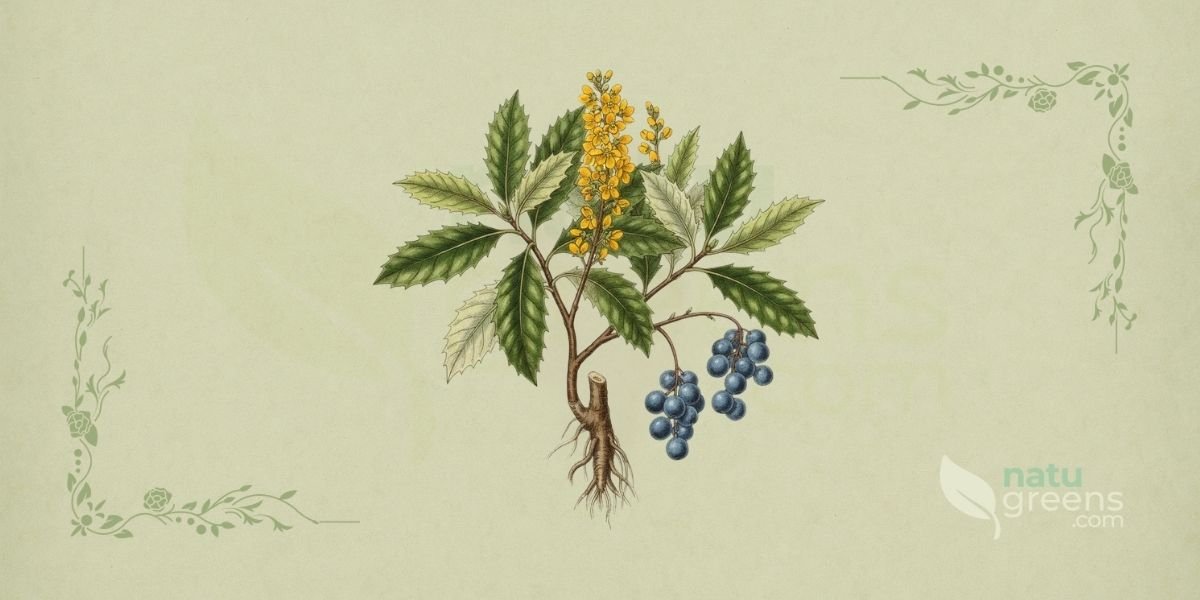
Botanical illustration of Mahonia aquifolium (Pursh) Nutt. (Oregon grape, holly-leaved barberry), a perennial shrub of the Berberidaceae family, native to North America, showing a branch with shiny, spiny, dark green leaves, clusters of vibrant small yellow flowers, and dark blue, grape-like berries, in 19th-century botanical encyclopedia style on an aged herbarium paper background with a sage-green tone.
The Berberidaceae family is a group of dicotyledonous plants that includes about 15 genera and more than 700 species, distributed mainly in the temperate regions of the Northern Hemisphere. It is characterized by the presence of isoquinoline alkaloids, such as berberine, which are responsible for many of its medicinal properties. Members of this family are frequently shrubs or small trees, with alternate leaves and usually yellow or white flowers arranged in clusters.
Oregon grape, as a member of the Berberidaceae, shares these distinctive features. The family is known for its importance in traditional medicine across several cultures, used to treat a variety of conditions, from infections and inflammation to digestive complaints. The bioactive compounds of this family have been the subject of extensive pharmacological research, contributing to the development of new medicines and herbal supplements.
Parts of Oregon Grape Used
- Berries
- Leaves
- Rhizome
- Root bark
Ethnobotanical and Traditional Uses of Oregon Grape
- Arthritis and rheumatism
- Atopic dermatitis
- Bacterial and fungal infections
- Colds and flu
- Diarrhea and dysentery
- Digestive disorders
- Eczema
- Liver and biliary complaints
- Psoriasis
Therapeutic Properties of Oregon Grape
- Analgesic (relieves pain)
- Antibacterial (fights bacteria); traditional use, without established clinical efficacy
- Antifungal (fights fungi)
- Anti-inflammatory (reduces inflammation)
- Antioxidant (fights free radicals)
- Antiparasitic (fights parasites); traditional use, without established clinical efficacy
- Antiproliferative (inhibits abnormal cell growth)
- Antipsoriatic (helps in the treatment of psoriasis)
- Cholagogue (stimulates bile secretion)
- Hepatoprotective (protects the liver); traditional use, without established clinical efficacy
- Immunomodulatory (modulates the immune system); traditional use, without established clinical efficacy
Detailed Phytochemical Profile of Oregon Grape
- Berbamine
- Berberine
- Canadine
- Hydrastine
- Jatrorrhizine
- Mahoniaquinone
- Oxyacanthine
- Palmatine
- Protopine
- Tannins
Preparation and Administration Forms of Oregon Grape
- Capsules
- Dry extract
- Fluid extract
- Poultice
- Tea (root decoction)
- Tincture
- Topical creams and ointments
Synergy with Other Medicinal Plants
Skin Health
Oregon grape, rich in berberine, acts synergistically with calendula (Calendula officinalis) and aloe vera (Aloe vera) to optimize the treatment of skin conditions such as psoriasis and eczema. Berberine offers anti-inflammatory and antimicrobial properties, while calendula promotes healing and aloe hydrates and calms the skin. This combination can reduce inflammation, relieve itching, and support cell regeneration, improving overall skin health.
Digestive Support
For digestive complaints, Oregon grape can be combined with ginger (Zingiber officinale) and peppermint (Mentha × piperita). Oregon grape’s berberine helps fight intestinal infections and regulate the flora, while ginger relieves nausea and peppermint reduces spasms and flatulence. Together, these plants promote healthy digestion and relieve gastrointestinal discomfort.
Immune Boost
Combining Oregon grape with echinacea (Echinacea purpurea) and elderberry (Sambucus nigra) can strengthen the immune system. Berberine has immunomodulatory effects, while echinacea is known for stimulating the immune response and elderberry offers antiviral properties. This synergy should be avoided by anyone with an autoimmune disease or taking immunosuppressants, because echinacea stimulates the immune system. For everyone else, it is traditionally used in the prevention and treatment of colds and flu, helping the body fight pathogens more effectively.
Recipes and Usage Protocols
Root Decoction for Internal Use
To prepare a decoction, add 1 to 2 teaspoons of dried, chopped Oregon grape root to 500 ml of cold water. Bring the mixture to the heat and simmer gently for 10 to 15 minutes. Strain and drink up to 3 cups a day. This decoction is traditionally used to support liver and digestive function and to fight infections. Do not exceed the recommended dose, and consult a health professional for prolonged use.
Topical Ointment for Psoriasis and Eczema
To make a homemade ointment, combine 1 part liquid Oregon grape extract with 4 parts of a neutral ointment base (such as petroleum jelly or shea butter). Mix well until smooth. Apply a thin layer to the affected skin areas 2 to 3 times a day. This ointment can help reduce the inflammation, redness, and scaling associated with psoriasis and eczema. Do a sensitivity test on a small area before applying widely.
Tincture for Immune Support
Oregon grape tincture can be prepared by macerating the chopped root in 40-60% grain alcohol for 2 to 4 weeks, at a typical ratio of 1:5 (1 part plant to 5 parts alcohol). After maceration, strain and store in a dark bottle. The usual dose is 1 to 2 ml, 2 to 3 times a day, diluted in water. Use it to boost the immune system, especially during cold and flu season, or as antimicrobial support. Consult an herbal practitioner for specific dosages.
Associated Therapies
Herbal Medicine
Oregon grape is a fundamental plant in herbal medicine, valued for its antimicrobial, anti-inflammatory, and immunomodulatory properties, mainly thanks to berberine. It is widely used in preparations such as tinctures, extracts, and decoctions to treat a variety of conditions, including gastrointestinal infections, skin complaints such as psoriasis and eczema, and to support liver and biliary health. Its versatility and efficacy make it a valuable resource in modern herbal medicine.
Homeopathy
In homeopathy, Mahonia aquifolium is cited for chronic skin conditions such as psoriasis and eczema, particularly when the picture involves dry, scaly, itchy skin. The homeopathic tradition also associates it with liver and digestive complaints and with conditions affecting the mucous membranes. There are no clinical studies confirming the efficacy of these uses. Psoriasis and eczema are chronic conditions that warrant medical diagnosis and follow-up, and persistent liver or digestive symptoms likewise call for a medical assessment. The homeopathic preparation is made from the mother tincture of the root bark, and the dosage is highly individualized, determined by a qualified homeopath.
Naturopathy
In naturopathy, Oregon grape is frequently integrated into holistic treatment plans to address the root cause of various diseases. It is used for liver detoxification, digestive support, and as a natural antimicrobial agent. Naturopaths may recommend Oregon grape together with dietary changes, nutritional supplements, and other therapies to optimize health and general well-being, focusing on the body’s innate capacity to heal.
Contraindications and Side Effects of Oregon Grape
Oregon grape is generally safe when used at recommended doses; however, there are some contraindications and potential side effects. Because of the presence of berberine, it is not recommended for pregnant or breastfeeding women, since berberine can stimulate uterine contractions and cross the placenta and breast milk, potentially harming the fetus or infant. Young children should also avoid it. Individuals with severe liver disease or biliary obstruction should use it with caution and under medical supervision, since berberine can affect liver metabolism.
Drug Interactions
Oregon grape can interact with several medications. It can potentiate the effect of anticoagulant medications, increasing the risk of bleeding. It can also interfere with drugs metabolized by the liver (via cytochrome P450), altering their efficacy. Patients taking immunosuppressants or medications for diabetes or blood pressure should consult a doctor before using Oregon grape, as significant interactions can occur. At high doses, it can cause gastrointestinal irritation, nausea, vomiting, and diarrhea. Allergic reactions are rare but possible. Always seek medical advice before starting any supplementation.
Historical Notes and Interesting Facts about Oregon Grape
State Symbol of Oregon
Mahonia aquifolium, or Oregon grape, has been the state flower of Oregon, in the United States, since 1899. Although commonly called Oregon grape, it is actually its vibrant yellow flowers that are designated as the state symbol. The choice reflects the plant’s abundance and cultural importance in the region.
Use by Native Americans
The Indigenous tribes of the Pacific Northwest coast, such as the Chinook, Cowlitz, and Squaxin, used Oregon grape for a wide range of purposes. The root and bark were made into decoctions to treat liver and gallbladder complaints and to purify the blood. The berries, although acidic, were eaten fresh or dried and used to make a fermented beverage. The spiny leaves were sometimes used as symbolic protection.
Frequently Asked Questions about Oregon Grape
Is Oregon Grape Edible?
Yes, Oregon grape berries are edible, but quite acidic. They are rich in vitamin C and can be used to make jams, wines, and sauces, usually with added sugar to balance the acidity. The root and other parts of the plant are not eaten as food, being reserved for medicinal use.
What Is the Difference Between Oregon Grape and Common Barberry?
Although both belong to the Berberidaceae family and contain berberine, Oregon grape (Mahonia aquifolium) and common barberry (Berberis vulgaris) are different species. The main visual difference is in the leaves: Oregon grape has compound, pinnate, spiny leaves similar to holly, while common barberry has simple leaves and spines on the stems. Both have similar medicinal uses thanks to berberine.
Is It Safe to Use Oregon Grape Creams for Psoriasis?
Clinical studies have shown that topical creams containing Oregon grape extract (usually 10% extract) can be effective and safe for the treatment of mild to moderate psoriasis. These creams help reduce inflammation, scaling, and redness. However, it is important to consult a dermatologist before starting any new treatment and to do a sensitivity test to avoid allergic reactions.
Notice: this content is for informational purposes and does not replace professional medical advice. Consult a physician or herbal practitioner before using medicinal plants, especially during pregnancy, breastfeeding, or alongside medication.
References and Scientific Studies
- PMC2005 Gulliver, W. P., & Donsky, H. J. (2005). A report on three recent clinical trials using Mahonia aquifolium 10% topical cream and a review of the worldwide clinical experience with Mahonia aquifolium for the treatment of psoriasis. American Journal of Therapeutics, 12(5), 398-406.
- PMC2018 Janeczek, M., Moy, L., & Riopelle, A. (2018). Review of the Efficacy and Safety of Topical Mahonia aquifolium for the Treatment of Psoriasis and Atopic Dermatitis. Journal of Clinical and Aesthetic Dermatology, 11(12), 42-48.
- PMC2015 He, J. M., & Mu, Q. (2015). The medicinal uses of the genus Mahonia in traditional Chinese medicine: An ethnopharmacological, phytochemical and pharmacological review. Journal of Ethnopharmacology, 175, 666-683.