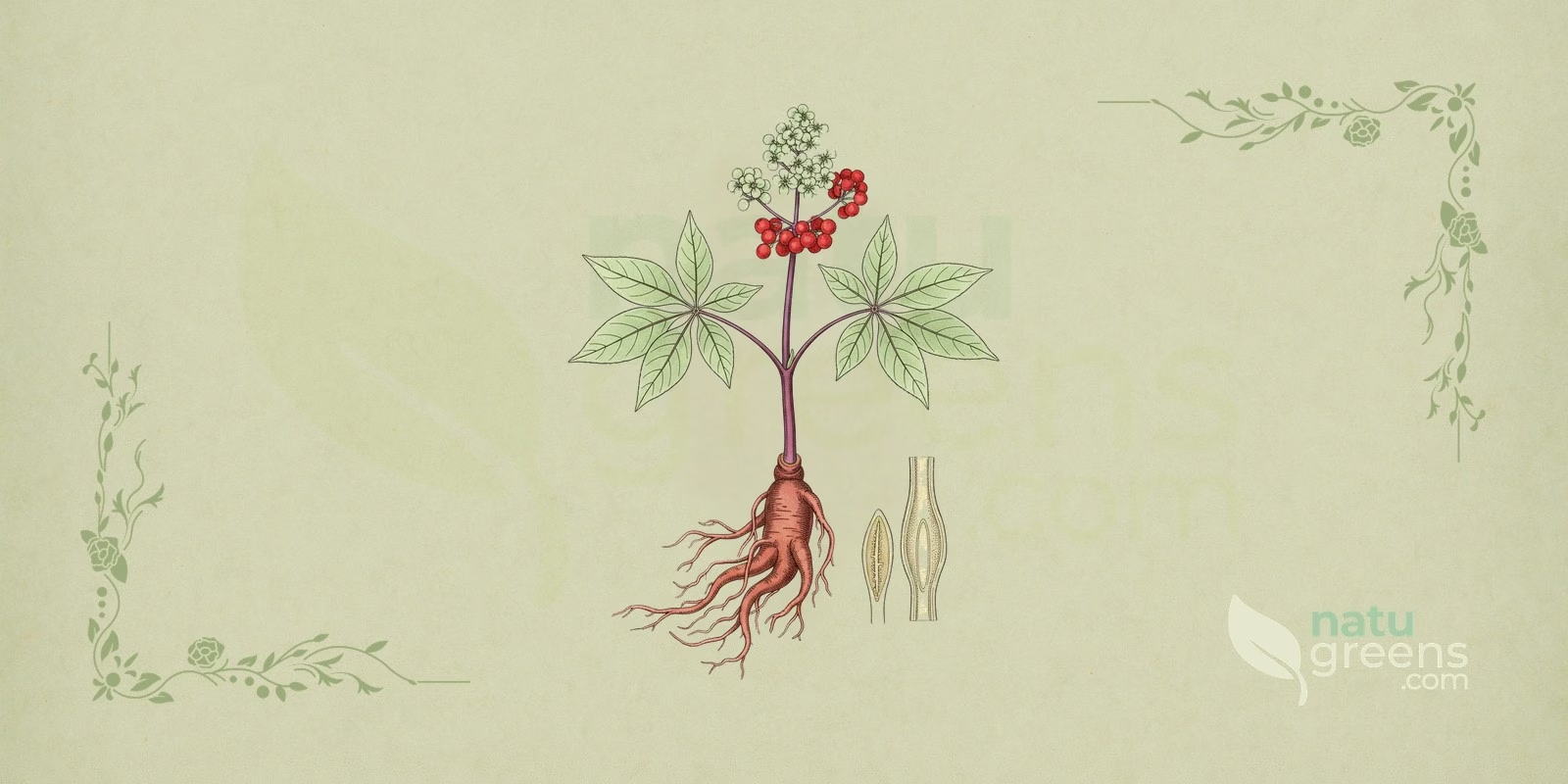
Panax ginseng C.A. Mey. / Ginseng, popularly known as Asian ginseng, Chinese ginseng, or Korean ginseng, is a perennial herbaceous plant of the Araliaceae family, described by Carl Anton von Meyer in 1842. Native to the mountainous regions of East Asia, this species has been revered for millennia in traditional medicine, especially in China and Korea, for its notable therapeutic properties. Its root, which often resembles the shape of a human figure, is the most valued and widely used part, harvested after a maturation period of five to six years to ensure the highest concentration of bioactive compounds.
In Eastern herbal tradition, ginseng holds a place of prominence as a potent adaptogen, tonic, and revitalizer. Its historical applications range from combating fatigue and stress to improving cognitive function and physical performance. The plant is recognized for its complex phytochemical composition, rich in ginsenosides, which are the main compounds responsible for its many pharmacological actions, including anti-inflammatory, antioxidant, and neuroprotective effects. Modern scientific research continues to validate many of ginseng’s traditional uses, cementing its position as one of the most studied and respected medicinal plants in the world.
Popular and International Names of Ginseng
- English: Asian ginseng, Chinese ginseng, Korean ginseng, red ginseng, white ginseng.
- Spanish: ginseng, ginseng asiático, ginseng coreano.
- Portuguese: ginseng, ginseng-asiático, ginseng-coreano, ginseng-chinês.
- French: ginseng, ginseng asiatique, ginseng de Corée.
- Italian: ginseng, ginseng asiatico, ginseng coreano.
- German: Ginseng, Asiatischer Ginseng, Koreanischer Ginseng.
Botanical Synonyms of Panax ginseng
Aralia ginseng (C.A.Mey.) Baill. is one of the botanical synonyms found in older literature. However, the name Panax ginseng C.A. Mey. is universally accepted and used in contemporary botanical taxonomy and scientific research. Another, less common synonym is Panax verus Oken. It is crucial not to confuse Panax ginseng with other species of the same genus, such as American ginseng (Panax quinquefolius) or notoginseng (Panax notoginseng), which have distinct phytochemical profiles and applications.
Botanical Family: Araliaceae
The family Araliaceae, to which ginseng belongs, comprises about 70 genera and more than 1,400 species, distributed mainly across tropical and subtropical regions. This family is notable for including several plants of economic and medicinal importance, such as ivy (Hedera helix) and Eleutherococcus senticosus, also known as Siberian ginseng. Plants in this family are typically characterized by compound leaves, umbel-type inflorescences, and drupe- or berry-type fruits. Araliaceae is recognized for producing unique bioactive compounds, such as triterpenoid saponins (ginsenosides in the case of ginseng), which are responsible for many of its therapeutic properties.
Parts of Ginseng Used
- Leaves (secondary use)
- Root
Ethnobotanical and Traditional Uses
- Anti-aging support
- Erectile dysfunction
- Improved blood circulation
- Improved cognitive function
- Improved physical performance
- Increased energy
- Stress reduction
- Thirst relief
Therapeutic Properties of Ginseng
- Adaptogenic (helps the body adapt to stress)
- Anti-inflammatory (studied effect in reducing inflammation)
- Antioxidant (studied activity against free radicals)
- Cardioprotective (studied protective effect on the heart)
- Hypoglycemic (studied effect in lowering blood sugar)
- Immunomodulatory (studied effect on the immune system)
- Neuroprotective (studied protective effect on the nervous system)
- Vasorelaxant (studied effect on the relaxation of blood vessels)
Detailed Phytochemical Profile of Ginseng
- Alkaloids
- Amino acids
- Ginsenosides (triterpenoid saponins)
- Glycosides
- Phenolic acids
- Polysaccharides
- Volatile oils
Preparation and Administration Forms of Ginseng
- Capsules
- Creams (topical use)
- Extracts (liquid or dried)
- Infusion (tea)
- Soups
- Tablets
Synergy with Other Medicinal Plants
Erectile Dysfunction and Vitality
The combination of ginseng with Tribulus terrestris and L-arginine has been associated with the potential to improve erectile function. Ginseng is thought to act synergistically by supporting circulation and nitric oxide production, while Tribulus terrestris may influence hormone levels and L-arginine serves as a precursor to nitric oxide, resulting in a combined effect on male sexual health, always under medical evaluation.
Cognitive Function and Neuroprotection
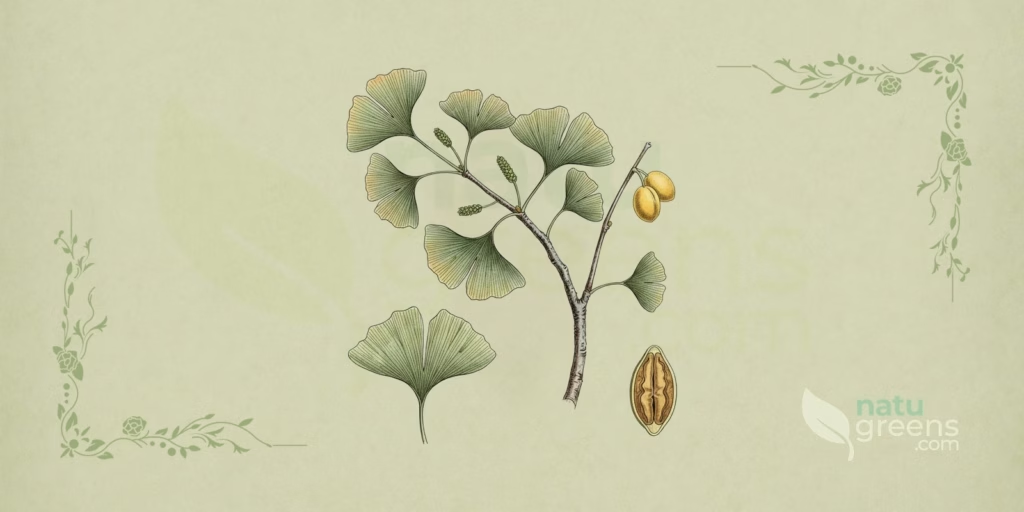
The pairing of Panax ginseng with Ginkgo biloba is often used to enhance cognitive function, memory, and concentration. Ginseng contributes its neuroprotective and adaptogenic effects, while Ginkgo biloba is studied for its effect on cerebral blood flow. This combination is studied for its possible effect on mental performance, without proof that it prevents age-related cognitive decline.
Cardiovascular Health and Circulation
In combination with Angelica sinensis (dong quai), ginseng is used in traditional Chinese medicine as complementary support for blood circulation, always as an adjunct and never as a substitute for emergency medical treatment. Those taking anticoagulants or antiplatelet agents should not combine ginseng without medical evaluation. Ginseng contributes to heart function and vasorelaxation, while Angelica sinensis is traditionally associated with blood-building support, together forming a synergy studied for overall cardiovascular health.
Recipes and Usage Protocols of Ginseng
Revitalizing Ginseng Infusion
Ingredients: 1 to 2 grams of sliced dried ginseng root, 250 ml of boiling water, honey or lemon (optional).
Preparation: Place the ginseng slices in a cup and add the boiling water. Cover and let steep for 5 to 10 minutes. Strain and, if desired, sweeten with honey or add a few drops of lemon. Drink once or twice a day, preferably in the morning or early afternoon, to combat fatigue and improve concentration.
Korean Ginseng Chicken Soup (Samgyetang)
Ingredients: 1 small chicken, 2 to 3 fresh ginseng roots, 1/4 cup glutinous rice (previously soaked), 2 to 3 garlic cloves, 2 to 3 dried jujubes.
Preparation: Stuff the chicken with the rice, ginseng roots, garlic, and jujubes. Place the chicken in a large pot and cover with water. Bring to a boil, then reduce the heat and simmer slowly for about 1 to 1.5 hours, or until the chicken is tender. Season with salt and pepper to taste. This dish is traditionally eaten in Korea during the summer to restore energy and vitality.
Ginseng Tincture for Stress and Fatigue
Ingredients: 50 g of dried, powdered ginseng root, 250 ml of 45% alcohol (such as vodka).
Preparation: Place the ginseng powder in a glass jar and cover with the alcohol. Seal tightly and let macerate for 4 to 6 weeks in a dark place, shaking daily. Strain through a fine cloth and store in a dark glass bottle. Take 1 to 2 ml (20 to 40 drops) diluted in water, twice a day, to help the body cope with physical and mental stress.
The preparations above follow traditional records and do not replace professional guidance. Before any internal use, check the contraindications and interactions described in this article.
Associated Therapies
Clinical Herbal Medicine
In clinical herbal medicine, ginseng is prescribed in the form of standardized extracts, ensuring a consistent concentration of ginsenosides. It is used as complementary support in a wide range of conditions, including chronic fatigue, cognitive decline, and erectile dysfunction, and it contributes to the modulation of immune response. The prescription is carefully tailored to the patient’s individual needs, taking into account their overall health status and possible drug interactions, always under professional supervision.
Traditional Chinese Medicine (TCM)
In TCM, ginseng (Rénshēn) is one of the most important herbs, classified as a superior Qi tonic. It is used to strengthen the spleen and lungs, generate bodily fluids, calm the spirit, and enhance wisdom. It is frequently included in complex formulas to treat general weakness, loss of appetite, shortness of breath, thirst, insomnia, and impotence, with its use based on a detailed diagnosis according to TCM principles.
Contraindications and Side Effects of Ginseng
General Contraindications
The use of ginseng is contraindicated for individuals with known hypersensitivity to plants of the Araliaceae family. It should be avoided during pregnancy and breastfeeding, as animal studies suggest that one of its components may cause birth defects. Its use in children and infants is not advised, with isolated reports of severe poisoning in newborns, some of them attributed to adulterated products. People with autoimmune diseases, such as multiple sclerosis or lupus, should avoid ginseng due to its ability to stimulate the immune system. People with uncontrolled hypertension should avoid its use, and prolonged consumption may have hormonal effects, which calls for breaks in use and professional supervision.
Common Side Effects
The most common side effect associated with ginseng consumption is difficulty sleeping (insomnia), especially with high doses. Other, less frequent effects include severe skin rashes, liver damage, and allergic reactions. Topical application may, in rare cases, cause irritation and a burning sensation on the skin.
Drug Interactions
Ginseng can interact with several medications. Its combination with anticoagulants, such as warfarin, may increase the risk of bleeding. It can potentiate the effect of sedatives and interfere with hypoglycemic medications used to treat diabetes, requiring careful monitoring of blood glucose levels. Additionally, it may interfere with the effectiveness of immunosuppressant medications.
Historical Notes and Interesting Facts
The Root Shaped Like a Man
The name “ginseng” derives from the Chinese term “rénshēn,” meaning “man root” or “root shaped like a man.” This name refers to the forked appearance of the root, which resembles human legs. In traditional medicine, this resemblance was believed to indicate its ability to treat the human body as a whole.
A Symbol of Longevity and Vitality
Throughout history, ginseng was considered an elixir of youth and a symbol of longevity and vitality in Asian cultures. It was so valuable that, at certain times, its worth exceeded that of gold, and it was reserved for emperors and nobility as a means of preserving health and prolonging life.
Discovery by the West
The plant was formally introduced to the Western world in the eighteenth century through the accounts of French Jesuit Pierre Jartoux, who described the plant and its uses in China in detail. His illustration, dated 1713, was one of the first detailed botanical records of ginseng to reach Europe, sparking enormous scientific and commercial interest.
Frequently Asked Questions about Ginseng
What Is the Best Time of Day to Drink Ginseng Tea?
It is recommended to drink ginseng tea in the morning or early afternoon. Because of its stimulating properties, drinking it later in the day or at night may interfere with sleep and cause insomnia in some people.
Can Ginseng Tea Be Consumed Daily?
Daily consumption is generally considered safe for periods of up to six months. However, long-term use may not be safe due to possible hormonal effects. It is always advisable to take breaks from consumption and consult a healthcare professional.
What Is the Difference Between Red and White Ginseng?
The difference lies in processing. White ginseng is the root cleaned and dried, while red ginseng is steamed before being dried. This steaming process alters the root’s chemical composition and may enhance some of its therapeutic effects.
Who Should Not Drink Ginseng Tea?
Ginseng tea should not be consumed by pregnant or breastfeeding women, since animal studies link one of its components to birth defects, nor by children or infants, given records of severe poisoning in this age group. People with autoimmune diseases, such as multiple sclerosis or lupus, should also avoid it, as ginseng may stimulate the immune system. Those taking anticoagulants, sedatives, or diabetes medications should seek medical guidance before consuming it, due to the risk of interactions.
Are There Side Effects to Drinking Ginseng Tea?
Yes, the most common side effect is difficulty sleeping, especially at high doses and when consumed at night. Less frequently, ginseng tea can cause skin rashes, liver damage, and allergic reactions; topical application, in rare cases, causes irritation and a burning sensation on the skin. People with pre-existing health conditions or who take other medications should consult a healthcare professional before drinking it.
What Is the Difference Between Panax Ginseng and Other Ginseng Species?
Panax ginseng, also called Asian ginseng or Korean ginseng, is different from American ginseng (Panax quinquefolius) and notoginseng (Panax notoginseng), species of the same genus with distinct phytochemical profiles and traditional uses. It should also not be confused with so-called Siberian ginseng (Eleutherococcus senticosus), which belongs to a different genus within the Araliaceae family. For this reason, it is important to check the scientific name when choosing a ginseng product.
Notice: this content is for informational purposes and does not replace professional medical advice. Consult a physician or herbal practitioner before using medicinal plants, especially during pregnancy, breastfeeding, or alongside medication.
References and Scientific Studies
Peer-Reviewed Scientific Studies (1)
- DOI2018 Kim, J. H. (2018). Pharmacological and medical applications of Panax ginseng and ginsenosides: a review for use in cardiovascular diseases. Journal of ginseng research, 42(3), 264-269. ↗
Institutional Sources (2)
- GOV2011 Wee, J. J., Park, K. M., & Chung, A. S. (2011). Biological Activities of Ginseng and Its Application to Human Health. In Herbal Medicine: Biomolecular and Clinical Aspects (2nd ed.). CRC Press/Taylor & Francis. ↗
- GOV2020 National Center for Complementary and Integrative Health. (2020). Asian Ginseng. NCCIH. ↗