



Quick summary
Guazuma ulmifolia Lam. / West Indian Elm, known in English as West Indian elm, bastard cedar or guacima, and in Brazil as mutamba, mutambo, embira or chico-magro, is a deciduous tree of the Malvaceae family, described by Jean-Baptiste Lamarck and native to the tropical Americas, from Mexico and the Caribbean to South…
Main caution: The bark is rich in tannins, which can irritate the stomach and cause nausea, as well as reduce the absorption of iron and of medications taken at the same time. Anyone using the plant should space the tea at least a…
Guazuma ulmifolia Lam. / West Indian Elm, known in English as West Indian elm, bastard cedar or guacima, and in Brazil as mutamba, mutambo, embira or chico-magro, is a deciduous tree of the Malvaceae family, described by Jean-Baptiste Lamarck and native to the tropical Americas, from Mexico and the Caribbean to South America. In Brazil it is common in dry forests, pastures and along roadsides, and it is easy to recognize by its round, dark fruits covered in small bumps, which look rather like a dried mulberry.
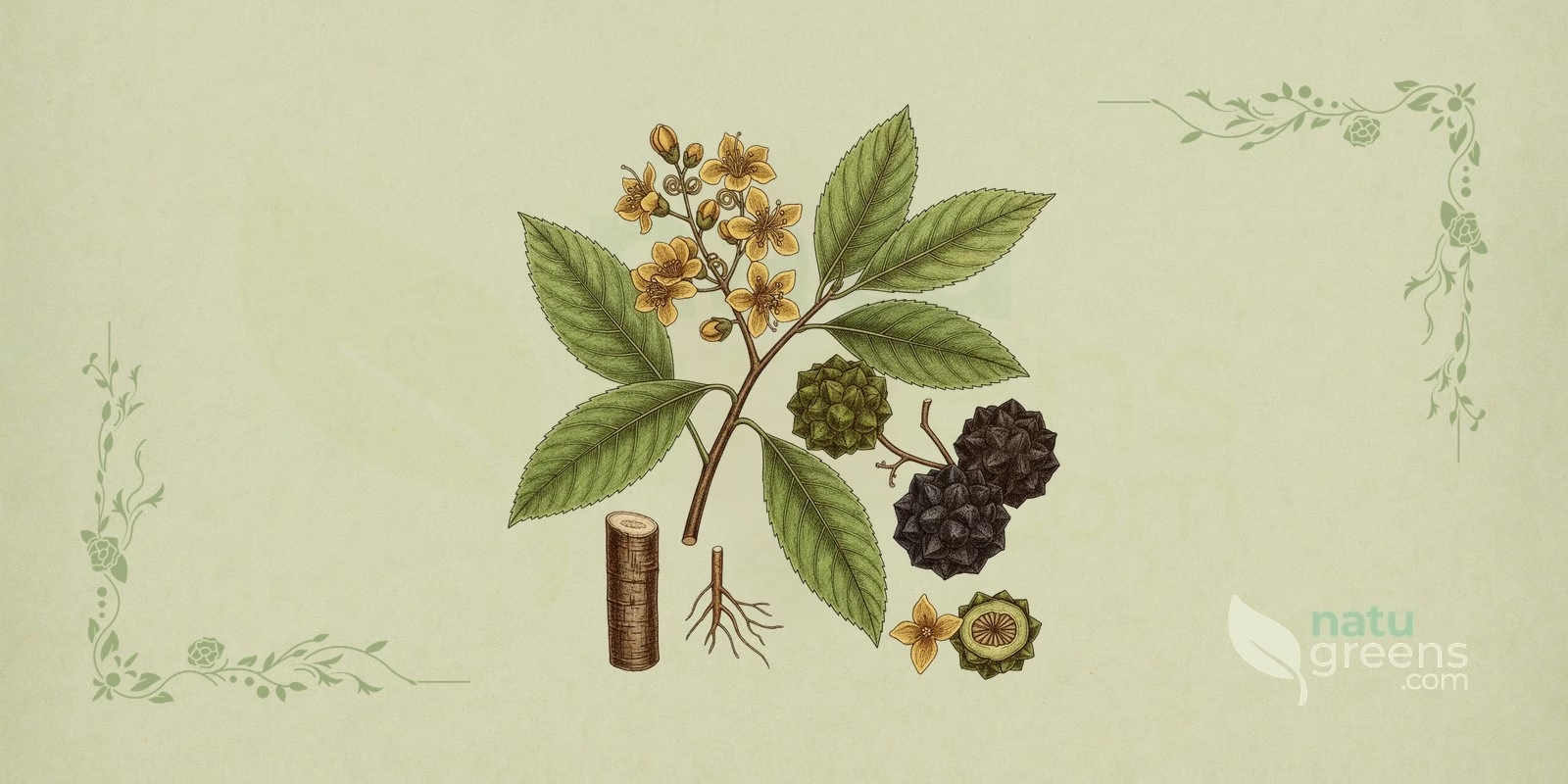
In folk medicine, the bark of the West Indian elm is traditionally used in teas for diarrhea, and the leaves for fevers and coughs. In recent years the plant has become known above all through hair tonics and shampoos sold under the Brazilian name mutamba for hair growth. Researchers are studying compounds in the bark, especially procyanidins, but the effects on hair, blood sugar and blood pressure come from laboratory and animal work and are still being studied.
Popular and International Names of the West Indian Elm
- English: bastard cedar, West Indian elm.
- German: Westindische Ulme.
- Portuguese: chico-magro, embira, mutamba, mutambo.
- Spanish: caulote, guácima, guácimo, guásima.
Despite the English name West Indian elm and the epithet ulmifolia, meaning "elm-leaved", this tree is not an elm: the resemblance lies only in the shape of its leaves. In some parts of Brazil it is also called araticum-bravo, a name best avoided, because it mainly refers to species of Annona, the genus of the sugar apple and the custard apple.
Botanical Synonyms of the West Indian Elm
The accepted name of the species is Guazuma ulmifolia Lam. Before that, Linnaeus had placed the plant in the same genus as cacao, and other authors described it under different names.
- Bubroma guazuma (L.) Willd.
- Guazuma tomentosa Kunth
- Theobroma guazuma L.
Botanical Family: Malvaceae
The West Indian elm belongs to the Malvaceae family in its current circumscription, a huge family of more than 4,000 species that includes plants of great economic importance, such as cotton (Gossypium), cacao (Theobroma cacao) and okra (Abelmoschus esculentus). Its flowers usually have five petals and numerous stamens, often fused into a tube.
Older works place the West Indian elm in a different family, which DNA studies have since merged into the Malvaceae. It is closely related to cacao, and the two plants share procyanidins and mucilages.
Parts of the West Indian Elm Used
- Bark (the part most used in folk medicine)
- Fruits
- Leaves
Ethnobotanical and Traditional Uses of the West Indian Elm
- Coughs and bronchitis (traditional use)
- Diarrhea (traditional use of the bark; diarrhea with blood or fever requires medical care)
- Digestive complaints (traditional use)
- Fever (traditional use of the leaves)
- Hair (popular cosmetic use in tonics and shampoos, under study)
These records document the folk use of the West Indian elm and are not the same as proven efficacy. Uses mentioned in some sources for diabetes, high blood pressure and heart disease come from animal studies and are no substitute for medical treatment.
Therapeutic Properties of the West Indian Elm
- Antioxidant (observed in laboratory assays)
- Antisecretory (under study; bark proanthocyanidins in experimental models)
- Astringent (traditional use of the bark, linked to its tannins)
- Blood glucose (under study; data from cells and animals)
- Blood pressure (under study; data from rats)
- Gastroprotective (under study; data from rats)
West Indian Elm and Hair Growth
The plant's reputation for hair care rests on procyanidin B2, which is present in the bark. The studies linking procyanidin B2 to the hair cycle were carried out in the laboratory and with procyanidins from other sources, such as apple, not with West Indian elm products in people. The effect on hair is therefore still being studied: there is no basis for saying that West Indian elm makes hair grow or that it is a treatment for baldness. Heavy, sudden or patchy hair loss calls for an assessment by a dermatologist.
Detailed Phytochemical Profile of the West Indian Elm
The bark of the West Indian elm is rich in proanthocyanidins, flavonoid polymers with antioxidant activity that include procyanidin B2, and in catechins. These compounds are the main focus of research on the plant, which is still largely confined to the laboratory and to animals.
The plant also contains a large amount of tannins, which give it an astringent taste and explain its traditional use for diarrhea, but which can irritate the stomach and reduce the absorption of iron and medications. It also contains saponins, coumarins, triterpenes and phytosterols. Acute toxicity studies with leaf extracts found low toxicity in rodents, but another study observed kidney changes in rats given an extract of the plant, which calls for caution with prolonged use.
- Catechins
- Coumarins
- Phytosterols
- Proanthocyanidins (procyanidin B2)
- Saponins
- Tannins
- Triterpenes
Preparation and Administration Forms of the West Indian Elm
- Bark decoction (traditional use)
- Extracts (used in research and in herbal products)
- Hair tonics and shampoos (cosmetic use)
- Leaf infusion (traditional use)
Synergy with Other Medicinal Plants
Brazilian Orchid Tree and Bitter Melon
In Brazilian folk medicine, the West Indian elm appears in blends with Brazilian orchid tree (Bauhinia forficata) and bitter melon (Momordica charantia) for blood sugar. The effects of all three plants are still being studied and may add to those of antidiabetic drugs, with a risk of hypoglycemia. These blends are no substitute for medical diabetes care, and medication should never be changed on your own.
Espinheira-Santa and Chamomile
For digestive complaints, tradition pairs the West Indian elm with espinheira-santa (Maytenus ilicifolia) and chamomile (Matricaria chamomilla). This is a traditional combination that no study has evaluated, and persistent stomach pain, vomiting or blood in the stool require a medical assessment.
Cat's Claw and Turmeric
Cat's claw (Uncaria tomentosa) and turmeric (Curcuma longa) are also mentioned alongside the West Indian elm in folk preparations for inflammation. There are no studies on the combination, and each plant has its own precautions, such as the interactions of cat's claw with immunosuppressant and anticoagulant medications.
Recipes and Usage Protocols of the West Indian Elm
Traditional Use of the Bark
In folk tradition, the dried bark of the West Indian elm is boiled in water and the tea is drunk during bouts of diarrhea. Because it is very rich in tannins, this preparation can cause nausea and stomach irritation, so its use should be brief and guided by a health professional, with no set homemade doses. Diarrhea with blood, with fever or lasting more than 2 days, especially in children and older adults, requires medical care and rehydration, not tea.
Traditional Use of the Leaves
In some regions the leaves are prepared as an infusion for fevers and coughs. This is a traditional use without clinical studies, and a high or persistent fever, shortness of breath or a cough lasting more than a week call for a medical assessment.
Homemade Hair Tonic
Some people make a tea from the bark, let it cool and apply it to the scalp as a tonic. External use tends to be well tolerated, but it is best to test it first on a small area and stop if irritation occurs. The effect on hair growth is still being studied.
The preparations above follow traditional records and do not replace professional advice. Before any internal use, read the contraindications and interactions described in this article.
Associated Therapies of the West Indian Elm
Herbal Medicine
In folk herbal medicine, the bark and leaves of the West Indian elm are traditionally used for digestive and respiratory complaints. Researchers are studying extracts of the plant in the laboratory and in animals, but there are no clinical trials proving efficacy in people.
Hair Cosmetics
The cosmetics industry uses West Indian elm extracts, usually labeled mutamba, in tonics and shampoos. These are cosmetic products, not medicines, and their effect on hair growth is still being studied.
Contraindications and Side Effects of the West Indian Elm
Pregnancy, Breastfeeding and Children
- Pregnancy: avoid. The bark has a traditional use in childbirth, and uterine activity has been reported in the laboratory.
- Breastfeeding: no safety data; avoid internal use.
- Children: no safety data; do not use without medical advice.
Tannins, Stomach and Absorption
The bark is rich in tannins, which can irritate the stomach and cause nausea, as well as reduce the absorption of iron and of medications taken at the same time. Anyone using the plant should space the tea at least a few hours apart from medicines and iron supplements, and people with anemia or gastritis should avoid it.
Blood Sugar, Blood Pressure and Medications
Animal studies suggest effects on glucose and blood pressure, which are still being studied. People taking antidiabetic or antihypertensive drugs should talk to their doctor before using the plant, because the effects may add up and cause hypoglycemia or a drop in blood pressure.
Diarrhea That Requires Medical Care
Diarrhea with blood, with fever or lasting more than 2 days, especially in children and older adults, requires medical care. The main risk of diarrhea is dehydration, which is corrected with oral rehydration solution, not with astringent teas.
Kidneys and Prolonged Use
One study observed kidney changes in rats treated with an extract of the plant. People with kidney disease should avoid the West Indian elm, and internal use should not be prolonged without professional supervision.
Historical Notes and Interesting Facts about the West Indian Elm
A Tree of Many Uses
The wood of the West Indian elm is used for rural buildings, tool handles and firewood, and its fibrous bark was once made into rope, which is where Brazilian names such as embira and envira come from.
Food for Livestock and Wildlife
Cattle and wild animals seek out the fruits and leaves, and because it grows quickly the tree is widely planted in silvopastoral systems and in the restoration of degraded land.
Elm Leaf
The epithet ulmifolia means "elm-leaved", a reference to how closely the serrated, asymmetrical leaves resemble those of the European elm, which is also the origin of the English name West Indian elm.
Frequently Asked Questions about the West Indian Elm
Which Part of the West Indian Elm Is Used Most?
The bark is the part most used in folk tradition, mainly for diarrhea, but the leaves and fruits also appear in regional preparations.
Does West Indian Elm Make Hair Grow?
There is no proof that it does. Procyanidin B2 from the bark has been studied in the laboratory, and many of the studies used procyanidins from other sources, such as apple. The effect on hair is still being studied, and West Indian elm is not a treatment for baldness.
Can Children Use West Indian Elm?
There are no safety data for children, so internal use is not recommended without medical advice. In childhood diarrhea, what matters most is rehydration and a medical assessment.
Can Pregnant Women Use West Indian Elm?
No. The bark has a traditional use in childbirth and uterine activity has been reported in the laboratory, so the plant should be avoided during pregnancy.
Does West Indian Elm Interact with Medications?
It may. Its tannins reduce the absorption of iron and of medicines taken at the same time, and its effects on glucose and blood pressure, observed in animals, may add to those of antidiabetic and antihypertensive drugs.
Is West Indian Elm a Type of Elm?
No. The name ulmifolia simply means "elm-leaved", because of the resemblance of the leaves. The West Indian elm belongs to the Malvaceae and is a relative of cacao.
Notice: this content is for informational purposes and does not replace professional medical advice. Consult a physician or herbal practitioner before using medicinal plants, especially during pregnancy, breastfeeding, or alongside medication.
How to cite this article
NATUGREENS. West Indian Elm (Guazuma ulmifolia): Uses and Precautions. Natugreens, 20 Nov. 2026. Disponível em: https://natugreens.com/guazuma-ulmifolia-west-indian-elm/. Accessed: Nov. 20, 2026.
Natugreens. (2026). West Indian Elm (Guazuma ulmifolia): Uses and Precautions. Natugreens. https://natugreens.com/guazuma-ulmifolia-west-indian-elm/
References and Scientific Studies
- DOI2007 Berenguer B, et al. (2007). The aerial parts of Guazuma ulmifolia Lam. protect against NSAID-induced gastric lesions. Journal of Ethnopharmacology, 114(2), 153-160. Gastroprotective effect in rats. ↗
- DOI2008 Alonso-Castro AJ, Salazar-Olivo LA. (2008). The anti-diabetic properties of Guazuma ulmifolia Lam are mediated by the stimulation of glucose uptake in normal and diabetic adipocytes without inducing adipogenesis. Journal of Ethnopharmacology, 118(2), 252-256. Study in cultured fat cells. ↗
- DOI2008 Magos GA, et al. (2008). Hypotensive and vasorelaxant effects of the procyanidin fraction from Guazuma ulmifolia bark in normotensive and hypertensive rats. Journal of Ethnopharmacology, 117(1), 58-68. Effect on blood pressure in rats. ↗
- DOI1996 Hör M, et al. (1996). Proanthocyanidin polymers with antisecretory activity and proanthocyanidin oligomers from Guazuma ulmifolia bark. Phytochemistry, 42(1), 109-119. Bark proanthocyanidins and experimental antisecretory activity. ↗
You May Also Like
Take your time and tell us everything you think, details included. Every response is read by someone on our editorial team and goes into the article's revision. An honest critique helps us more than a polite compliment.
Take your time and tell us everything you think, details included. Every response is read by someone on our editorial team and goes into the article's revision. An honest critique helps us more than a polite compliment.