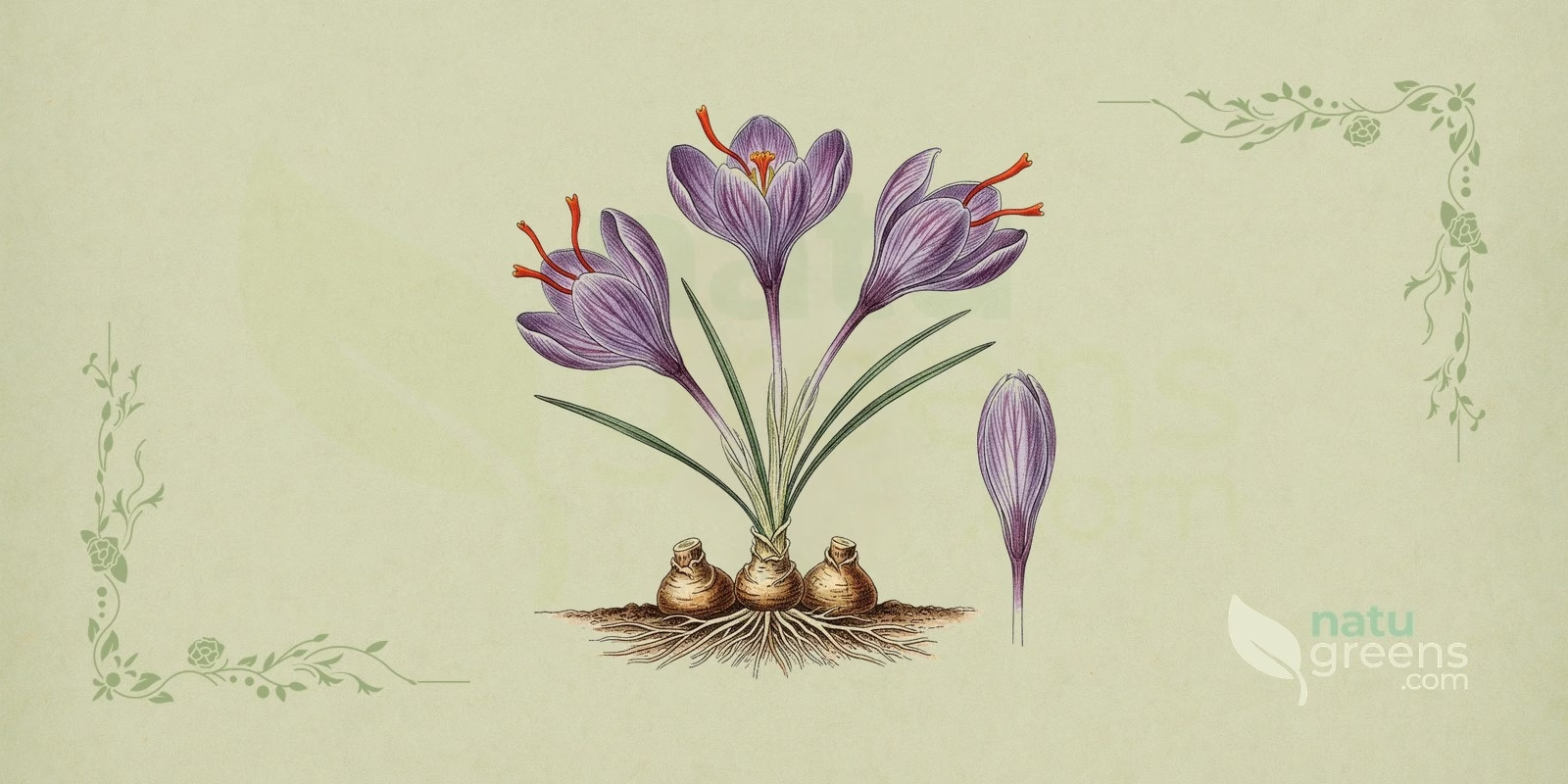
Crocus sativus L., commonly known as saffron or saffron crocus, is a perennial herbaceous plant of the Iridaceae family. It is prized for the stigmas of its flowers, which once dried become the red spice sold as threads. Its exact origin in the wild is unknown, but it is believed to have arisen from the selection of the wild Crocus cartwrightianus in mainland Greece. The cultivation and use of saffron go back more than 3,500 years and span many cultures and continents, from cooking to traditional medicine [1].
In herbal tradition, saffron has been used for millennia, and modern research has begun to investigate some of these uses, which has placed Crocus sativus among the most studied medicinal plants in the world. The most consistent findings concern mild to moderate symptoms of depression and anxiety, while most other applications still rest on preliminary studies [1][2]. In Brazil, the Portuguese name for saffron, açafrão, is also given to turmeric (Curcuma longa), known there as açafrão-da-terra, but the two are different plants. Everything described below refers only to Crocus sativus.
Popular and International Names of Saffron
- English: saffron, saffron crocus.
- French: safran.
- German: Echter Safran, Safran.
- Italian: zafferano.
- Portuguese: açafrão, açafrão-verdadeiro.
- Spanish: azafrán.
Names along the lines of “autumn crocus” have been left off this list because they usually refer to Colchicum autumnale, a toxic plant that must not be confused with saffron.
Botanical Synonyms of Crocus sativus
Crocus sativus L. is the accepted botanical name for saffron, although some sources still refer to it by uncommon or obsolete synonyms. The species is a sterile triploid, which means it does not reproduce sexually and can only be grown through vegetative propagation from corms. Its most likely ancestor is the wild species Crocus cartwrightianus, native to Greece.
Botanical Family: Iridaceae
Crocus sativus belongs to the Iridaceae family, made up of monocotyledonous plants, many of them known for their showy, colorful flowers. The family includes genera such as Crocus, Gladiolus and Iris. In saffron, each flower has three stamens and a style that divides into three red stigmas, which are precisely the threads of the spice. This structure helps distinguish it from similar-looking plants such as those of the genus Colchicum (family Colchicaceae), which are toxic and have six stamens.
Parts of Saffron Used
- Dried flower stigmas (saffron threads)
Ethnobotanical and Traditional Uses
Traditional records from different cultures describe the use of saffron in the situations listed below, which documents the plant’s history of use but does not amount to clinical proof of efficacy.
- Anti-inflammatory and antiseptic
- Aphrodisiac
- Depressive states and insomnia
- Digestive problems
- Eye problems
- Nervous and vascular system tonic
- Respiratory problems
- Skin conditions
- Urinary and menstrual disorders
Therapeutic Properties of Saffron
Many of the properties below come from laboratory and animal studies, and human clinical trials, which are still small, focus mainly on mood and anxiety [1][2].
- Analgesic (pain relief observed in preliminary studies)
- Antidepressant (meta-analyses of small clinical trials point to an effect on mild to moderate symptoms of depression and anxiety, without replacing medical treatment)
- Anti-hyperglycemic (effect on blood glucose investigated in preliminary studies)
- Anti-inflammatory (reduction of inflammatory processes observed in experimental studies)
- Antimicrobial (activity against bacteria and fungi observed in the laboratory)
- Antioxidant (protection of cells against oxidative damage in experimental studies)
- Antiproliferative (activity observed in laboratory studies, without clinical proof)
- Cardioprotective (heart protection investigated in experimental studies)
- Expectorant (traditional record of helping clear mucus)
- Immunostimulant (stimulation of the immune system observed in preliminary studies)
- Lipid-lowering (reduction of blood lipids observed in preliminary studies)
- Nerve sedative (traditional record of a relaxing effect)
- Neuroprotective (protection of the nervous system observed in experimental studies)
- Retinoprotective (protection against retinal damage investigated in preliminary studies)
Detailed Phytochemical Profile of Saffron
The deep color of the threads comes mainly from the crocins, the bitter taste from picrocrocin and the aroma from safranal, the plant’s main volatile component. These compounds account for most of the pharmacological research on saffron [1].
- Crocetin
- Crocin
- Flavonoids (kaempferol, quercetin)
- Picrocrocin
- Safranal
- Volatile compounds (isophorone)
Preparation and Administration Forms of Saffron
- Capsules and tablets of standardized extract
- Culinary use
- Essential oil
- Extracts
- Infusion
In clinical studies, saffron is usually evaluated as a standardized extract in capsules, in very small daily amounts and for defined periods. Home use in infusions and cooking, by contrast, involves only a few threads per preparation. Outside the culinary range, the amount, form and duration of any medicinal use need to be determined case by case. Doses well above culinary levels can cause adverse effects and poisoning, as detailed under Contraindications. Before using extracts, capsules or infusions on a regular basis, consult a health professional, since the information in this article is for informational purposes only and does not replace that assessment.
Synergy with Other Medicinal Plants
Combinations Associated with Mood and Anxiety
Saffron’s effects on mood are attributed mainly to safranal and the crocins, which is why it may be combined with plants traditionally used for the same purpose, such as St. John’s wort (Hypericum perforatum) and rhodiola (Rhodiola rosea). The idea behind the combination is that each plant would act through different neurochemical pathways [1]. This is a hypothesis based on the mechanisms of each plant, not a proven result of the combination. St. John’s wort calls for special care, as it also acts on serotonin and interacts with many medications, so this pairing should only be used under professional guidance.
Combinations Aimed at Cognitive Support
Because of the neuroprotective activity seen in experimental studies, saffron also appears alongside bacopa (Bacopa monnieri) and ginkgo (Ginkgo biloba), plants with a traditional record of supporting memory and brain function [1]. The protection against cognitive decline expected from this combination remains clinically unproven. Since ginkgo and saffron both have a described antiplatelet effect, the pairing calls for extra caution in people taking anticoagulants or antiplatelet drugs.
Anti-Inflammatory and Antioxidant Combinations
Rich in antioxidants such as the crocins, saffron is paired in culinary and herbal tradition with turmeric (Curcuma longa) and ginger (Zingiber officinale). The combination brings together the anti-inflammatory and antioxidant activity described for each plant in experimental studies [1]. This blend has a traditional record of use in chronic inflammatory conditions, but a combined effect of the three plants has not yet been demonstrated in clinical trials.
Recipes and Usage Protocols of Saffron
Saffron Infusion for Relaxation and Mood
An infusion of a few saffron threads, in an amount equivalent to culinary use, is traditionally used for moments of relaxation and for emotional well-being.
Ingredients: a small pinch of saffron threads (culinary amount), 1 cup (200 ml) of hot but not boiling water, and honey to taste (optional).
Preparation: place the threads in a cup, heat the water to about 80 to 90 °C and pour it over them, then let them steep for 5 to 10 minutes. How often to drink it should be agreed with a health professional, especially by people who take antidepressants or other long-term medications.
Saffron Tincture for Cognitive Support
An alcohol-based tincture of the stigmas is traditionally used for cognitive support and keeps for longer, but the amount taken requires professional guidance.
Ingredients: 1 g of saffron stigmas and 100 ml of 70% grain alcohol.
Preparation: lightly crush the stigmas and place them with the alcohol in a dark glass bottle, leaving them to macerate for 2 to 4 weeks and shaking every day. Then strain and store in a dropper bottle. The number of drops and how often to use it should not be decided on your own, so consult a health professional. Because it contains alcohol, the tincture is not suitable for pregnant women, children or anyone who needs to avoid alcoholic drinks.
Culinary Use for General Well-Being
Culinary use is the most common and safest way to consume saffron, and the soaked threads are traditionally used to add color, aroma and flavor to dishes such as paella, risotto and soups.
Ingredients: 3 to 5 saffron threads, a pinch of salt and 1 tablespoon of hot water or warm milk.
Preparation: crush the threads with the salt, add the liquid and let it steep for 15 to 20 minutes before adding the mixture to the dish.
The preparations above follow traditional records and do not replace professional guidance. Before any internal use, check the contraindications and interactions described in this article.
Associated Therapies
Clinical Phytotherapy
In clinical phytotherapy, standardized saffron extracts in capsules and tablets are studied as support in mild to moderate depression, anxiety and cognitive complaints, including in comparison with antidepressants of the selective serotonin reuptake inhibitor class [1][2][3]. This use presupposes diagnosis, prescription and professional follow-up, and it should never serve as a way to replace a treatment on one’s own initiative.
Traditional and Complementary Medicine
Saffron holds a prominent place in systems such as Ayurveda and Traditional Persian Medicine, which use it as a tonic, to lift the spirits and to aid digestion, according to records spanning centuries [1].
Aromatherapy
Safranal, the main volatile component of saffron, has shown anxiolytic and relaxing activity in experimental studies, which has sparked interest in aromatherapy as a well-being resource [1]. This use is still exploratory and does not replace proper follow-up of stress or anxiety.
Contraindications and Side Effects of Saffron
General Contraindications
Culinary amounts of saffron are safe, but adverse effects appear above about 1.5 g per day, and 5 g or more is a toxic dose that can cause vomiting, bleeding and jaundice [4]. Saffron is contraindicated in pregnancy at medicinal doses, both because there is a traditional record of its use as an abortifacient at high doses and because it may stimulate uterine contractions, so pregnant women should limit themselves to culinary amounts. During breastfeeding and in children, the lack of safety data on medicinal doses calls for the same limit. People with an allergy to plants of the Iridaceae family or with bleeding disorders should avoid medicinal use or undertake it only under medical supervision. Anyone with bipolar disorder needs particular caution, since a manic switch associated with saffron has been reported.
Common Side Effects
Side effects are rare at usual amounts but may include gastrointestinal upset, allergic reactions, dizziness and drowsiness, especially at high doses. Unusual bleeding, persistent vomiting or yellowing of the skin and eyes are signs to stop use and seek medical care immediately.
Drug Interactions
Saffron should not be combined with serotonergic antidepressants, or with St. John’s wort, without guidance from whoever oversees the treatment. Because of its antiplatelet effect, it calls for caution with anticoagulants and antiplatelet drugs. It may also interact with antihypertensives, with sedatives and, in theory, with blood glucose-lowering drugs, since preliminary studies are investigating its action on blood glucose. Consulting a health professional is essential before any use for medicinal purposes.
Adulteration and Dangerous Mix-Ups
Saffron adulteration is common, with blends of Carthamus tinctorius (safflower), turmeric and dyed fibers. For this reason, the recommendation is to buy whole stigmas of traceable origin rather than the powdered product [5]. Two dangerous mix-ups also need to be cleared up. Colchicum autumnale, known as meadow saffron, contains colchicine, is lethal and is not saffron, even though its flowers resemble those of Crocus sativus. Curcuma longa, the turmeric that Brazilians also call açafrão-da-terra, is another plant altogether, from the Zingiberaceae family, and its yellow powder comes from the rhizome, not the stigmas.
Historical Notes and Interesting Facts
Saffron cultivation dates back more than 3,500 years, placing it among the spices with the longest history of use [1]. Over that time it has featured in both the cooking and the traditional medicine of many cultures and continents. The plant is not known in the wild, and it is believed to have arisen in mainland Greece through the selection of Crocus cartwrightianus, a wild species considered its most likely ancestor.
As a sterile triploid, saffron does not reproduce sexually and multiplies only through its corms, underground structures that growers separate and replant. The plants grown today are therefore the product of millennia of vegetative propagation. Another peculiarity lies in the flower itself, which yields only three stigmas, the red threads of the spice, and whose three stamens make it possible to tell saffron apart from the toxic Colchicum, which has six.
Frequently Asked Questions about Saffron
Are Saffron and Turmeric the Same Plant?
No, they are different plants, even though in Brazil both are called açafrão. True saffron is Crocus sativus, of the Iridaceae family, and the spice consists of the dried stigmas of the flower, whereas turmeric (Curcuma longa), known in Brazil as açafrão-da-terra, is a yellow powder that comes from the rhizome.
Is Meadow Saffron the Same as Saffron?
No, and the confusion can be fatal, because meadow saffron is Colchicum autumnale, a plant of the Colchicaceae family that contains colchicine and is lethal. The flowers of the two species look alike, but Colchicum has six stamens, while true saffron has three.
Which Part of Saffron Is Used?
Only the dried flower stigmas are used, known as saffron threads, which concentrate the crocins, picrocrocin and safranal responsible for the color, taste and aroma of the spice. Because adulteration with safflower, turmeric and dyed fibers is common, the safest choice is to buy whole stigmas of traceable origin.
How Much Saffron Is Considered Safe?
Culinary amounts, a few threads per preparation, are considered safe for most people. Adverse effects appear above about 1.5 g per day, and 5 g or more is a toxic dose, with vomiting, bleeding and jaundice, so any medicinal use should be guided by a health professional.
Can Pregnant Women Consume Saffron?
During pregnancy, saffron should be limited to culinary amounts, because use at medicinal doses is contraindicated. There is a traditional record of its use as an abortifacient at high doses, and the plant may stimulate uterine contractions.
Does Saffron Interact with Medications?
Yes, especially with serotonergic antidepressants, which should not be combined with saffron without guidance, and with anticoagulants and antiplatelet drugs, because of its antiplatelet effect. It also calls for caution with antihypertensives and sedatives, and people with bipolar disorder should know that a manic switch associated with its use has been reported.
Notice: this content is for informational purposes and does not replace professional medical advice. Consult a physician or herbal practitioner before using medicinal plants, especially during pregnancy, breastfeeding, or alongside medication.
References and Scientific Studies
- PMC2022 Butnariu M, et al. The Pharmacological Activities of Crocus sativus L.: A Review Based on the Mechanisms and Therapeutic Opportunities of its Phytoconstituents. Oxidative Medicine and Cellular Longevity. 2022.
- PMC2024 Seyedi-Sahebari S, et al. The Effects of Crocus sativus (Saffron) on ADHD: A Systematic Review. Journal of attention disorders. 2024.
- PMC2014 Lopresti AL, et al. Saffron (Crocus sativus) for depression: a systematic review of clinical studies and examination of underlying antidepressant mechanisms of action. Human psychopharmacology. 2014.