



Quick summary
Stachytarpheta cayennensis (Rich.) Vahl, popularly known as blue porterweed, is a perennial herbaceous or subshrubby plant of the Verbenaceae family, native to the tropical regions of Central and South America and now naturalized across almost all of Brazil, where it grows spontaneously along roadsides, in backyards…
Main caution: The safety of blue porterweed is still poorly studied, and the available evidence on the plant in humans is practically nonexistent: almost all the data come from studies in animals or in the laboratory, which calls for…
Stachytarpheta cayennensis (Rich.) Vahl, popularly known as blue porterweed, is a perennial herbaceous or subshrubby plant of the Verbenaceae family, native to the tropical regions of Central and South America and now naturalized across almost all of Brazil, where it grows spontaneously along roadsides, in backyards and in areas of secondary vegetation. The species is part of the folk medicine of several Latin American and Caribbean communities, which traditionally use it as a tea for fevers, digestive problems and inflammation. Despite its rich history of traditional use, scientific studies on blue porterweed are still mostly preclinical, carried out in animals and in the laboratory, so that many of the effects attributed to the plant still lack confirmation in people.
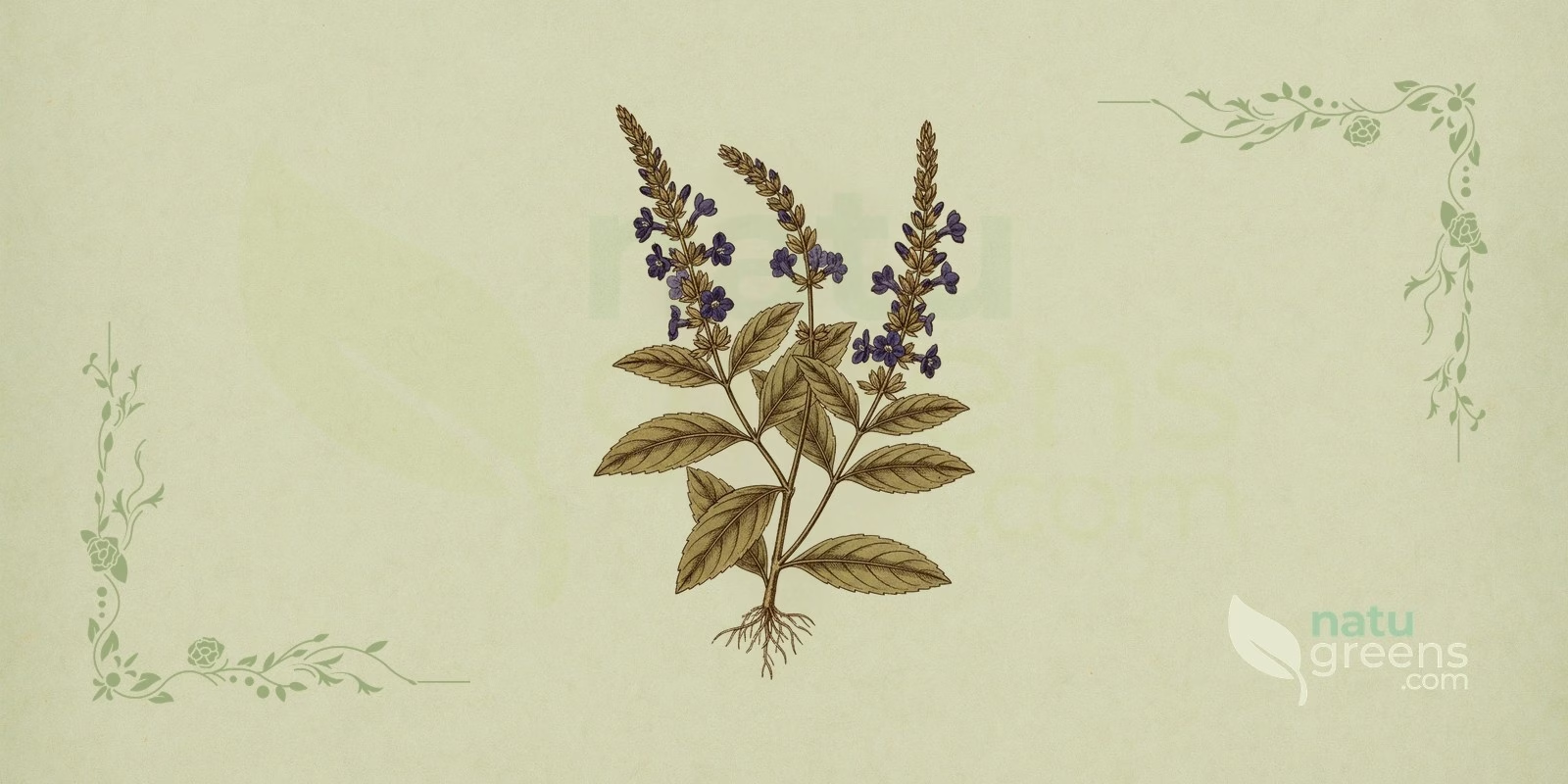
Popular and International Names for Blue Porterweed
- English: blue porterweed, blue rat's tail, blue snakeweed, bluetop, Brazilian tea, Cayenne porterweed, Cayenne vervain, nettle-leaf porterweed, rattail.
- French: herbe à chenille, herbe bleue, queue de rat.
- German: Blaues Eisenkraut, Cayenne-Eisenkraut.
- Italian: verbena blu, verbena di Cayenne.
- Japanese: honagaso.
- Portuguese: gervão-roxo, gervão, gervão-azul, gervão-urticante, rabo-de-rato, vassourinha-de-botão, verbena-falsa, chá-do-brasil, aguarapá.
- Spanish: verbena azul, verbena cimarrona, rabo de zorro, piche de gato.
Do Not Confuse Blue Porterweed with Stachytarpheta jamaicensis
In Brazil, the Portuguese common name gervão is used both for Stachytarpheta cayennensis and for Stachytarpheta jamaicensis, a different species of the same genus and the same Verbenaceae family that is also called gervão-azul in some regions. The overlap carries over into English, where porterweed and blue porterweed are applied to both species, and the name is in fact most often given to Stachytarpheta jamaicensis. The two plants look similar in general appearance and in the shape of their flower spikes, but their phytochemical profile and traditional indications are not identical. Before using any preparation labeled only as gervão, porterweed or blue porterweed, check the full scientific name on the packaging or with the supplier, since results from studies done with one species cannot automatically be transferred to the other.
Botanical Synonyms of Blue Porterweed
The accepted botanical name for the species is Stachytarpheta cayennensis (Rich.) Vahl. Throughout the history of its taxonomy, the plant received several other scientific names that are now considered synonyms, among them Stachytarpheta urticifolia Sims, Stachytarpheta hirta Kunth, Stachytarpheta dichotoma (Ruiz & Pav.) Vahl, Verbena cayennensis Rich. and Valerianoides cayennensis (Rich.) Kuntze. This variety of names reflects the plant's wide geographic distribution and the different classifications proposed by botanists at different times, which sometimes causes confusion in older publications on the subject.
Botanical Family: Verbenaceae
The Verbenaceae family brings together around 1,200 species distributed across a little more than 30 genera, concentrated mainly in the tropical and subtropical regions of the planet. Many of its members have ornamental, aromatic or medicinal uses, and the European vervain, the plant that lent its name to this group of herbs in many languages, also belongs to this family. Plants in the family typically have square-sectioned stems, opposite leaves and inflorescences arranged in elongated spikes or clusters.
From a chemical standpoint, the Verbenaceae stand out for the frequent presence of iridoids, flavonoids and terpenoids, classes of compounds that help explain part of the pharmacological interest in these plants. Blue porterweed is a typical example of this profile, bringing together several of these phytochemical groups in its leaves and stems.
Parts of Blue Porterweed Used
In folk medicine, the leaves and the whole plant of blue porterweed are the parts used most, ideally harvested before or during flowering. The stems, and less often the root, also appear in some traditional recipes, especially in more concentrated decoctions.
Ethnobotanical and Traditional Uses of Blue Porterweed
Blue porterweed has accumulated a long list of traditional uses in different countries across the Americas and the Caribbean, almost always in the form of tea, decoction or external application. Among the most commonly cited uses are relief from fevers, including reports of use against yellow fever and malaria, care for digestive disturbances such as cramps, flatulence and dyspepsia, and external care for wounds, boils and skin ulcers. The plant is also associated with relief from headaches, muscle and joint pain, cough, flu and colds, as well as menstrual complaints and difficulty sleeping. In some regions, it is traditionally used as a vermifuge against intestinal parasites and as an aid to breast milk production. All of these uses are traditional and popular in nature, without rigorous clinical proof in most cases.
Medicinal Properties of Blue Porterweed
The properties listed below come mainly from preclinical studies, carried out in animals or laboratory models, and from records of traditional use. None of them should be interpreted as proof of effectiveness in humans, and blue porterweed does not replace medical diagnosis or treatment.
- Analgesic (traditional use for pain relief, with preliminary signs from animal studies)
- Anti-inflammatory (reduction of inflammatory markers in preclinical studies)
- Antimalarial (activity observed in experimental models, traditional use against malaria)
- Antimicrobial (action observed against some microorganisms in the laboratory)
- Antioxidant (ability to neutralize free radicals in in vitro tests)
- Antispasmodic (traditional use for cramps and intestinal spasms)
- Antiviral (activity investigated in the laboratory against some viruses)
- Anxiolytic (calming effect observed in animal models of anxiety)
- Bronchodilator (traditional use for asthma and respiratory discomfort)
- Cardioprotective (effects observed in preclinical studies on the cardiovascular system)
- Cholagogue (traditional stimulation of bile secretion)
- Diaphoretic (traditional use to induce sweating during fevers)
- Diuretic (traditional use to increase urine production)
- Gastroprotective (protection of the gastric mucosa observed in animal studies)
- Hepatoprotective (protective effect on the liver observed in experimental models)
- Hypoglycemic (reduction in glucose levels observed in preclinical studies)
- Immunomodulatory (effects on immune response described in laboratory studies)
- Laxative (mild traditional use for constipation)
- Neuroprotective (preliminary effects described in experimental models)
- Sedative (calming and sleep-inducing effect observed in animal studies)
- Vermifuge (traditional use against intestinal parasites)
Detailed Phytochemical Profile of Blue Porterweed
The chemical composition of blue porterweed helps explain the pharmacological research interest in the species. Among the main groups of compounds already identified in the leaves and in the whole plant are:
- Alkaloids
- Carbohydrates
- Flavonoids, such as scutellarein and hispidulin
- Glycosides
- Iridoids, such as ipolamiide
- Minerals
- Phenols
- Proteins
- Saponins
- Steroids
- Terpenes
- Verbascoside, also called acteoside
Preparation and Administration Forms of Blue Porterweed
The most common way to prepare blue porterweed is as a tea, made by infusion or decoction of the dried or fresh leaves. Concentrated extracts are also described, along with poultices of crushed leaves for external use on the skin and external washes with the decoction for cleaning wounds. The plant's latex occasionally appears in records of traditional topical use, although less often than the other forms.
Synergy with Other Medicinal Plants
Traditional Support against Intestinal Parasites
In some traditional preparations from the Antilles and Jamaica, blue porterweed is combined with soursop (Annona muricata) and wormseed (Chenopodium ambrosioides) with the aim of helping the body eliminate worms and other intestinal parasites. This combination is a documented folk use in the Caribbean region, without any specific clinical study evaluating the combination of the three plants.
Calm and Sleep Support
Because of its traditional calming effect, blue porterweed is also combined, in some popular Brazilian recipes, with lemon balm (Melissa officinalis) or chamomile (Matricaria chamomilla) in teas meant for moments of nervous tension and difficulty sleeping. This is a popular practice without scientific proof of this particular combination, and it therefore deserves the same caution recommended for the use of blue porterweed on its own, especially regarding the combined sedative effects.
Recipes and Usage Protocols for Blue Porterweed
Tea for Fever
Boil 500 ml of water and add one tablespoon of dried blue porterweed leaves. Let it steep for 10 minutes, strain and drink warm, two to three times a day. This preparation is a traditional use widely cited in folk records for fever relief.
Decoction for Digestive Discomfort
Place two tablespoons of the whole plant, including leaves and stems, in 750 ml of water and simmer for 15 minutes after it comes to a boil. Strain, let it cool slightly and drink one cup twice a day to help relieve stomach pain and gastrointestinal discomfort, following the traditional use described among indigenous peoples of the Amazon.
External Wash for Wounds and Boils
Crush fresh blue porterweed leaves and boil three tablespoons of them in one liter of water for five minutes. Let the mixture cool slightly, strain it and use the liquid to wash wounds, cuts or skin ulcers, or apply the crushed leaves themselves, as a poultice, directly on boils, covering with a clean cloth for a few hours. These uses follow traditional records and do not replace professional guidance, especially for extensive or deep wounds, or those with signs of infection, which require medical evaluation.
The preparations above follow traditional records and do not replace professional guidance. Before any internal use, check the contraindications and interactions described in this article.
Therapies Associated with Blue Porterweed
Clinical Phytotherapy
In clinical phytotherapy, when available, standardized extracts and tinctures of blue porterweed aim to provide a more consistent concentration of compounds such as iridoids and flavonoids, which makes it easier to track the dose compared with homemade tea. Even so, because this is a plant with virtually no evidence in humans, any more structured therapeutic use should be supervised by a qualified phytotherapy professional, able to assess the patient's condition and any possible drug interactions.
Traditional Folk Medicine
Outside the clinical context, blue porterweed remains present in the traditional folk medicine of countries such as Cuba, Belize and Peru, where it appears in teas, decoctions and topical applications passed down from generation to generation. In these traditions, the plant is valued mainly for its antipyretic, analgesic and digestive properties, and it is often used in baths for headaches and colds, as well as in external applications for wounds and boils.
Contraindications and Side Effects of Blue Porterweed
The safety of blue porterweed is still poorly studied, and the available evidence on the plant in humans is practically nonexistent: almost all the data come from studies in animals or in the laboratory, which calls for extra caution when extrapolating to people. Animal studies show a hypotensive effect, meaning a reduction in blood pressure, and a sedative effect of the plant, so anyone taking anti-hypertensive or sedative medications should take special care with blue porterweed, because of the risk that these effects will add up, with possible drops in blood pressure or excessive drowsiness. Because of this same sedative effect, it is wise to avoid driving or operating machinery until you know how your body reacts to the preparation. There is also a traditional record of abortive use of the plant in different cultures, which contraindicates the use of blue porterweed throughout the entire pregnancy; pregnant women should not use the plant in any form or dose. People with known hypersensitivity to plants of the Verbenaceae family should also avoid consuming it, due to the risk of allergic reactions. During breastfeeding and in children, use should only occur under the guidance of a healthcare professional, given the scarcity of safety data for these groups.
Drug Interactions
Because of the hypotensive effect observed in animals, blue porterweed may add to the effect of anti-hypertensive medications, with a risk of an excessive drop in blood pressure. Because of its sedative effect, the plant may also potentiate sedatives, anxiolytics, benzodiazepines and other central nervous system depressants. Because it contains flavonoids and iridoids that can influence the hepatic metabolism of drugs, it is prudent for people taking anticoagulants or diabetes medications to consult a doctor before combining blue porterweed with their treatment, since there are still no specific human studies that rule out these interactions.
Curiosities and Historical Facts
The scientific name Stachytarpheta cayennensis refers to Cayenne, the capital of French Guiana, the region where the species was collected and described by the first botanists who studied it. In Brazil, the Portuguese common name gervão is itself an adaptation of urgebão or urgevão, old names for European vervain, a plant of the same family that inspired much of the folk use of similar herbs in the country. In several tropical regions where it was introduced, such as New Caledonia, the plant behaves as an invasive species, competing with native vegetation and spreading easily in pastures, since cattle tend to avoid its leaves because of their unpleasant taste. On the other hand, its flowers attract an impressive number of butterflies, with records of up to 98 different species visiting the plant in search of nectar in its native range.
Frequently Asked Questions about Blue Porterweed Tea
Can Blue Porterweed Tea Be Consumed Every Day?
Daily use is not recommended without professional guidance. Blue porterweed has a hypotensive and sedative effect documented in animal studies, and the lack of long-term studies in humans makes it wise to limit how often it is used and to watch for any adverse reaction, such as a drop in blood pressure, excessive drowsiness or digestive discomfort.
Does Blue Porterweed Help Control Blood Sugar?
Preclinical studies indicate a possible hypoglycemic effect of blue porterweed, and there are reports of traditional use for this purpose in some South American countries. Even so, the plant should not replace medical treatment for diabetes, and any complementary use needs to be supervised by a healthcare professional, especially because of the risk of interaction with other blood-sugar-lowering medications.
What Are the Main Contraindications of Blue Porterweed?
The most important contraindication is pregnancy, because of the traditional record of abortive use of the plant. People taking anti-hypertensive or sedative medications also deserve attention, since blue porterweed may add to these effects, as do people with a known allergy to plants of the Verbenaceae family.
Does Blue Porterweed Have Side Effects?
The available studies do not describe the side effects of blue porterweed in humans in much detail, since the evidence in this population is practically nonexistent. Allergic reactions are possible in people sensitive to the Verbenaceae family, and the sedative effect can cause drowsiness. For this reason, it is recommended to start with small doses and seek medical guidance if any unusual symptom appears.
Is Blue Porterweed the Same Plant as Stachytarpheta jamaicensis?
No. Although they share the common names gervão and porterweed and belong to the same genus, Stachytarpheta cayennensis and Stachytarpheta jamaicensis are botanically distinct species, with a phytochemical profile and traditional uses that should not be treated as interchangeable. Before buying or using any product labeled only as gervão or porterweed, it is best to confirm the full scientific name.
Notice: this content is for informational purposes and does not replace professional medical advice. Consult a physician or herbal practitioner before using medicinal plants, especially during pregnancy, breastfeeding, or alongside medication.
How to cite this article
NATUGREENS. Blue Porterweed (Stachytarpheta cayennensis): Uses and Safety. Natugreens, 21 Nov. 2026. Disponível em: https://natugreens.com/stachytarpheta-cayennensis-blue-porterweed/. Accessed: Nov. 21, 2026.
Natugreens. (2026). Blue Porterweed (Stachytarpheta cayennensis): Uses and Safety. Natugreens. https://natugreens.com/stachytarpheta-cayennensis-blue-porterweed/
References and Scientific Studies
View All 10 Cited References
Peer-Reviewed Scientific Studies (6)
- PEER2024 Alvarenga, N., et al. (2024). Unraveling the antiviral activity of Stachytarpheta cayennensis against SARS-CoV-2 variants using in vitro and molecular docking analysis. South African Journal of Botany. ↗
- PEER2004 Mesia-Vela, S., et al. (2004). Pharmacological study of Stachytarpheta cayennensis Vahl in rodents. Phytomedicine, 11(7-8), 616-624. ↗
- PMC2013 Olayiwola, G., et al. (2013). Sedative and Anxiolytic Effects of the Extracts of the Leaves of Stachytarpheta cayennensis in Mice. African Journal of Traditional, Complementary and Alternative Medicines, 10(6), 568-579. ↗
- PMC2008 Okokon, J. E., et al. (2008). In vivo antimalarial activity of ethanolic leaf extract of Stachytarpheta cayennensis. Indian Journal of Pharmacology, 40(3), 111-113. ↗
- PMC2014 Okoye, T. C., et al. (2014). Immunomodulatory effects of Stachytarpheta cayennensis leaf extract and its synergistic effect with artesunate. BMC Complementary and Alternative Medicine, 14, 376. ↗
- PEER2006 Penido, C., et al. (2006). Anti-inflammatory and anti-ulcerogenic properties of Stachytarpheta cayennensis (LC Rich) Vahl. Journal of Ethnopharmacology, 104(1-2), 225-233. ↗
Supplementary Readings (4)
You May Also Like





Take your time and tell us everything you think, details included. Every response is read by someone on our editorial team and goes into the article's revision. An honest critique helps us more than a polite compliment.
Take your time and tell us everything you think, details included. Every response is read by someone on our editorial team and goes into the article's revision. An honest critique helps us more than a polite compliment.