Bupleurum falcatum L. / Bupleurum, popularly known as Chinese thorowax, is a perennial herbaceous plant belonging to the Apiaceae family. This species, described by Carl Linnaeus, is native to Europe and the Caucasus, with some subspecies extending into East Asia. Bupleurum has been valued in traditional Chinese medicine for more than two thousand years, where it is known as Chai Hu.
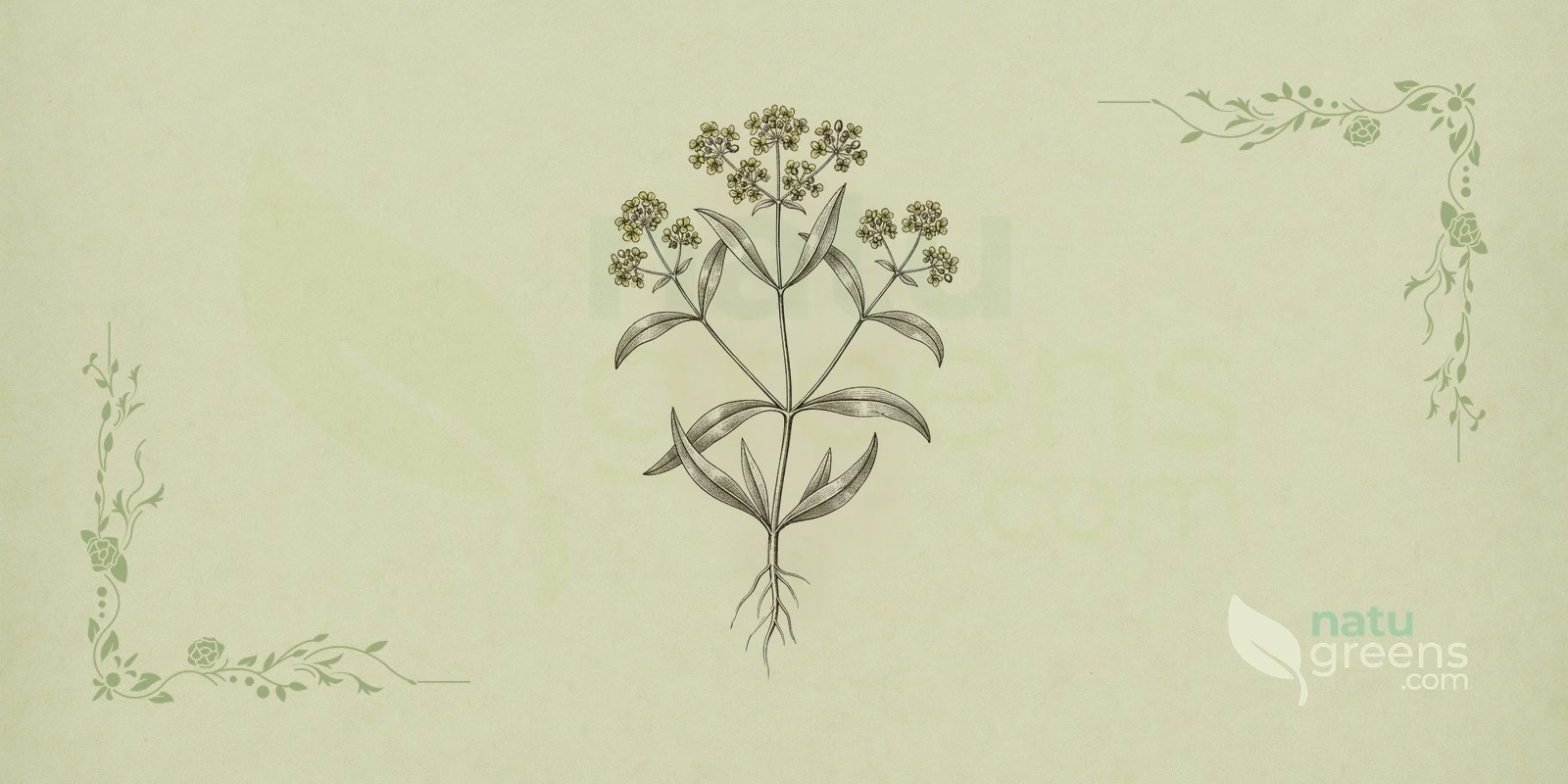
Historically, the roots of Bupleurum falcatum have been widely used in herbal formulations to address a variety of conditions. Its applications range from inflammatory and infectious disorders to liver problems and emotional imbalances. The plant is recognized for its notable properties, which include anti-inflammatory, antiviral, and hepatoprotective effects. Modern research continues to explore the potential of this medicinal plant.
Popular and International Names of Bupleurum
- English: Chinese thorowax, sickle hare’s ear, sickle-leaf hare’s ear, sickle-leaved hare’s-ear.
- Spanish: hierba gitana, manzanilla de puerto, oreja de liebre, tajueco.
- Portuguese: bupleurum, chai hu, orelha-de-lebre, raiz-de-orelha-de-lebre.
- French: buplèvre en faux.
- Italian: bupleuro falcato.
- German: Sichelblättriges Hasenohr.
Botanical Synonyms of Bupleurum falcatum
The botanical synonym most frequently associated with Bupleurum falcatum L. is Bupleurum rossicum (K.-Pol.) Woronow. This designation reflects taxonomic variations and historical classifications of the species. It is worth noting that, in traditional Chinese medicine contexts, the name Bupleurum falcatum is sometimes mistakenly applied to other species, such as Bupleurum chinense, which has similar uses and phytochemical profiles but is a distinct species.
Other synonyms may appear in different botanical literature, but Bupleurum falcatum L. remains the name accepted by most authorities. Distinguishing between species is crucial to ensuring correct identification and therapeutic application of the plant. Ongoing botanical research helps refine the classification and understanding of the relationships among the various species of the genus Bupleurum.
Botanical Family: Apiaceae
Bupleurum falcatum belongs to the Apiaceae family, formerly known as Umbelliferae. This is a vast family of flowering plants that includes around 3,700 species distributed across approximately 434 genera. It is characterized by umbel inflorescences, clusters of flowers with pedicels arising from a single point, resembling an umbrella.
Many plants in this family are economically important, such as carrot, celery, parsley, and coriander. Apiaceae is known for producing essential oils and bioactive compounds. These give many of its species aromatic and medicinal properties. The family’s chemical diversity is the subject of intense pharmacological research.
Parts of Bupleurum Used
- Leaves and young shoots
- Root
Ethnobotanical and Traditional Uses
- Abdominal bloating
- Dysmenorrhea
- Emotional instability relief
- Feverish illness support
- Hemorrhoids
- Herpes simplex
- Liver disorders
- Liver protection
- Malaria
- Uterine and rectal prolapse
Therapeutic Properties of Bupleurum
- Analgesic (traditional use to relieve pain)
- Antibacterial (studied activity against bacteria)
- Antidepressant (preliminary studies investigate its effect on mood and a possible reduction of mild depressive symptoms)
- Antifibrotic (studied in preventing excessive fibrous tissue formation)
- Anti-inflammatory (effect studied in reducing inflammation)
- Antimalarial (studied activity against malaria)
- Antipyretic (effect studied in reducing fever)
- Antiviral (studied activity against viruses)
- Carminative (helps expel gas)
- Cytoprotective (protective effect studied on cells)
- Diaphoretic (effect studied on perspiration)
- Emmenagogue (effect studied on menstrual flow)
- Hemolytic (causes destruction of red blood cells)
- Hepatoprotective (protective effect studied on the liver)
- Immunomodulatory (effect studied on the immune system)
- Pectoral (traditional use to relieve respiratory issues)
- Sedative (effect studied on relaxation)
Detailed Phytochemical Profile of Bupleurum
- Flavonoids (narcissin, rutin)
- Polysaccharides
- Saikosaponins (A, B, C, D)
- Volatile oils
Preparation and Administration Forms of Bupleurum
- Decoction
- Infusion
- Tincture
Synergy with Other Medicinal Plants
Liver Health and Detoxification
In traditional Chinese medicine, Bupleurum is often combined with white peony root (Paeonia lactiflora) and licorice root (Glycyrrhiza uralensis) in formulas such as “Xiao Yao San” to harmonize the liver, relieve Qi stagnation, and nourish the blood. Adding milk thistle (Silybum marianum) may enhance the hepatoprotective action, shielding liver cells from toxins and supporting their regeneration.
Depression and Anxiety
For conditions of depression and anxiety linked to liver Qi stagnation, Bupleurum is combined with herbs such as Chinese angelica root (Angelica sinensis) and field mint (Mentha haplocalyx). The synergy of these plants helps move Qi, calm the mind, and relieve emotional tension. Combining it with St. John’s wort (Hypericum perforatum) is traditionally added as complementary support in mild to moderate cases of low mood, always under professional supervision, since St. John’s wort has known interactions with antidepressants and other medications.
Anti-Inflammatory Action
To enhance its anti-inflammatory action, Bupleurum can be paired with turmeric (Curcuma longa) and ginger (Zingiber officinale). Curcumin, found in turmeric, and the gingerols found in ginger, are potent anti-inflammatories that act in synergy with Bupleurum’s saikosaponins, making the combination useful in managing chronic pain and inflammatory conditions such as arthritis.
Recipes and Usage Protocols of Bupleurum
Decoction for Liver Support
Ingredients: a small portion of dried Bupleurum falcatum root (the amount should be guided by a healthcare professional), water in sufficient quantity.
Preparation: Add the bupleurum root to the water and bring to a boil. Reduce the heat and simmer for 20 to 30 minutes. Strain and drink warm. This decoction is traditionally used as support for liver function and relief of liver Qi stagnation, preferably before meals. Consult a healthcare professional before starting any treatment, since the appropriate dose and duration of use vary according to each person’s condition.
Infusion for Stress Relief
Ingredients: a small portion of dried Bupleurum falcatum leaves (the amount should be guided by a healthcare professional), boiling water in sufficient quantity.
Preparation: Place the bupleurum leaves in a cup and add the boiling water. Cover and let steep for 10 to 15 minutes. Strain and drink. This infusion is traditionally associated with relaxing the nervous system and relieving symptoms of stress and anxiety, without prolonged use and always under professional guidance, since the safety of continuous consumption is not well established. Consult a healthcare professional before starting use.
Tincture for Emotional Imbalances
Ingredients: dried Bupleurum falcatum root in an amount guided by a healthcare professional, 70% grain alcohol in sufficient quantity to cover the root.
Preparation: Crush the root and place it in a dark glass jar. Cover with the alcohol, making sure the plant is completely submerged. Seal well and let macerate for 2 to 4 weeks in a cool, dark place, shaking daily. Strain and store the resulting tincture. This preparation is traditionally used in small doses diluted in water as support for managing emotional imbalances and irritability. Consult a healthcare professional to determine the appropriate dose and do not exceed the guidance received.
The preparations above follow traditional records and do not replace professional guidance. Before any internal use, review the contraindications and interactions described in this article.
The preparations above follow traditional records and do not replace professional guidance. Before any internal use, check the contraindications and interactions described in this article.
Associated Therapies
Aromatherapy
Although Bupleurum falcatum is not as common in aromatherapy as other plants, its essential oil has been studied for its composition and potential effects. The essential oil from Bupleurum falcatum root contains components that may have anti-inflammatory and analgesic properties. In aromatherapy, oils with these characteristics are used to relieve muscle tension and promote a sense of well-being. Inhalation or diluted topical application may contribute to relaxation and relief of physical discomfort.
Clinical Herbal Medicine
In modern clinical herbal medicine, Bupleurum falcatum is valued for its saikosaponins, the main bioactive compounds responsible for its hepatoprotective, anti-inflammatory, and immunomodulatory properties. It is frequently included in formulations for liver support, treatment of chronic inflammatory conditions, and modulation of the immune response. The prescription of standardized Bupleurum extracts is made by healthcare professionals, who consider dosage and possible interactions with other medications to guide safer use.
Homeopathy
In homeopathy, Bupleurum falcatum may be used as a remedy for conditions that align with its action profile, especially those related to the liver, the digestive system, and emotional balance. Although it is not one of the best-known homeopathic remedies, its application may be considered in cases of irritability, digestive disturbances, and feelings of stagnation. The homeopathic preparation follows the principles of dilution and dynamization, aiming to stimulate the body’s capacity for self-healing.
Contraindications and Side Effects of Bupleurum
General Contraindications
Bupleurum falcatum is contraindicated for individuals with known hypersensitivity to plants of the Apiaceae family. Pregnant or breastfeeding women should avoid use due to a lack of research on its safety in these groups and the potential for hepatotoxicity at high doses. People with autoimmune diseases, such as multiple sclerosis, lupus, or rheumatoid arthritis, should avoid bupleurum, as it may increase immune system activity, worsening symptoms.
Potential Side Effects
At high doses and with prolonged use, bupleurum may cause liver inflammation and injury, and studies in rats have indicated liver damage with very high doses. In humans, cases of hepatotoxicity and interstitial pneumonitis (inflammation of lung tissue) have been reported mostly in association with the combined Japanese formula Sho-saiko-to, which combines Bupleurum falcatum with other herbs, and not necessarily with the isolated plant; even so, prolonged unmonitored use is contraindicated in people with pre-existing liver disease. Common side effects may include nausea, and bupleurum may also lower blood pressure. Stop use and seek medical evaluation if a dry cough or shortness of breath appears during treatment, and always use under medical supervision, especially if pre-existing health conditions are present.
Drug Interactions and Precautions
Bupleurum may interact with medications that affect the immune system, reducing their effectiveness, and it may also slow blood clotting, increasing the risk of bleeding in people taking anticoagulants. Because of its effect on blood pressure, combining it with antihypertensive drugs and sedatives requires caution, as it may intensify the drop in pressure and the relaxation of the central nervous system. Diabetics should monitor their blood sugar levels, as bupleurum may raise them. It is recommended to stop using bupleurum at least two weeks before any surgery due to the risk of prolonged bleeding, and to always consult a healthcare professional before use.
Historical Notes and Interesting Facts
Millennia-Old Use in Traditional Chinese Medicine
Bupleurum falcatum, known as Chai Hu in Traditional Chinese Medicine (TCM), has a history of use spanning more than 2,000 years. It is one of the most fundamental and frequently prescribed herbs in TCM, serving as a key component in many classical formulas. Its importance lies in its ability to “harmonize the Shao Yang,” one of the six energetic divisions of the body in TCM, and to “soothe the liver and relieve Qi stagnation,” addressing both physical and emotional symptoms.
Applications Beyond Medicine
Beyond its medicinal use, some Bupleurum species are cultivated as ornamental plants for their attractive foliage and delicate yellow flowers. Their resilience and adaptability to different soil types and climates make them an appealing choice for low-maintenance gardens. However, it is crucial to distinguish between ornamental and medicinal species, since not all of them share the same properties.
Modern Scientific Research
Modern science has been validating many of the traditional uses of Bupleurum falcatum. Saikosaponins, the main active compounds found in the root, have been the subject of extensive research due to their anti-inflammatory, antiviral, hepatoprotective, and immunomodulatory properties. These studies contribute to a deeper understanding of the plant’s mechanisms of action and to the development of new evidence-based applications.
Frequently Asked Questions about Bupleurum
What Is Bupleurum Falcatum?
Bupleurum falcatum, also known as Chinese thorowax or Chai Hu, is a perennial herbaceous plant of the Apiaceae family. It is widely used in Traditional Chinese Medicine for its properties, especially for harmonizing the liver and relieving Qi stagnation.
What Is Bupleurum Used For?
Bupleurum is traditionally used to address a variety of conditions, including liver disorders, inflammation, fevers, digestive problems, and emotional imbalances such as depression and anxiety. It has anti-inflammatory, antiviral, hepatoprotective, and immunomodulatory properties.
What Are the Main Active Compounds in Bupleurum?
The main active compounds in Bupleurum are saikosaponins, triterpenoids responsible for many of its pharmacological actions. Other components include flavonoids, polysaccharides, and volatile oils.
Are There Contraindications for Using Bupleurum?
Yes, Bupleurum is contraindicated for pregnant or breastfeeding women, people with autoimmune diseases, and individuals allergic to plants of the Apiaceae family. It should be used with caution by people with pre-existing liver problems and may interact with anticoagulant and immunosuppressant medications.
How Is Bupleurum Prepared for Medicinal Use?
Bupleurum roots are generally prepared as decoctions (boiled in water), infusions (leaves in hot water), or tinctures (alcoholic extracts). The preparation method depends on the condition being treated and the desired concentration of active compounds.
Notice: this content is for informational purposes and does not replace professional medical advice. Consult a physician or herbal practitioner before using medicinal plants, especially during pregnancy, breastfeeding, or alongside medication.