Guaiacum officinale L. / Lignum Vitae, popularly known as guaiac, guaiacwood, or holywood, is a slow-growing tree belonging to the Zygophyllaceae family. Native to the Caribbean and the northern coast of South America, this species has been valued for centuries for its medicinal properties and its extremely dense wood.
Historically, lignum vitae was widely used in traditional European medicine, especially for the treatment of various ailments, consolidating its reputation as a plant of great therapeutic importance. The lignum vitae tree is evergreen and can reach up to 10 meters in height, with a trunk of about 60 cm in diameter.
Its leaves are compound and its blue, five-petaled flowers give rise to yellow-orange fruits with red pulp and black seeds. The resin extracted from the wood, known as guaiac, has a rich phytochemical composition that gives the plant its remarkable anti-inflammatory, antioxidant, and antimicrobial properties, among others.
Popular and International Names of Lignum Vitae
- English: lignum vitae, guaiacwood, roughbark lignum-vitae, holywood.
- Spanish: guayacán, guayaco, palo santo.
- Portuguese: guaiaco, pau-santo.
- French: bois de gaïac, arbre de vie.
- Italian: guajaco, legno guajacano, legno santo.
- German: Franzosenholz, Guajakholz, Pockholz.
Botanical Synonyms of Lignum Vitae
The scientific name Guaiacum officinale L. is widely accepted and recognized in the botanical literature. However, some historical and regional sources may present variations. It is important to note that Guaiacum sanctum is a related but distinct species that also produces lignum vitae wood.
Botanical Family: Zygophyllaceae

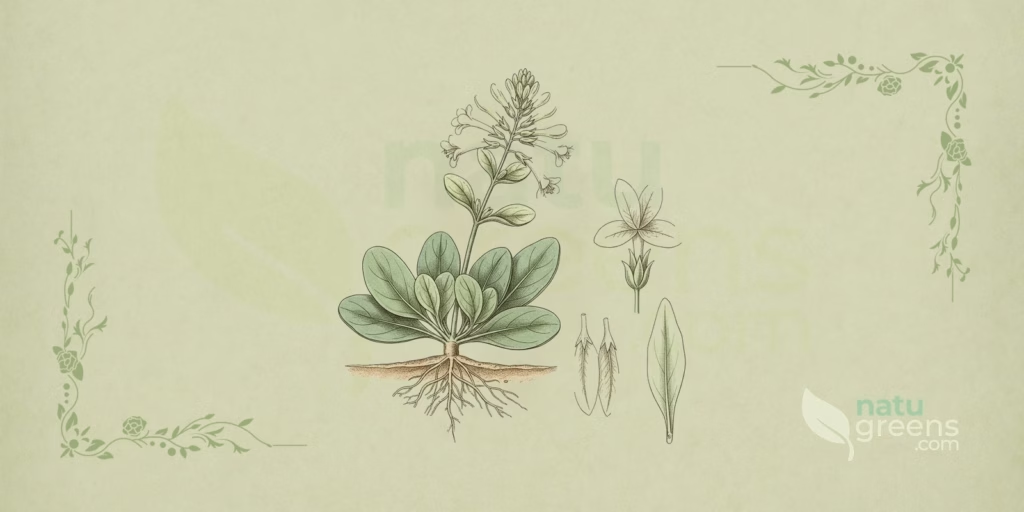
Botanical illustration of Guaiacum officinale L. (lignum vitae, guaiac, holywood), an evergreen tree of the Zygophyllaceae family, native to the Caribbean and South America, showing the complete plant with dark green compound leaves, blue five-petaled flowers, and yellow-orange fruits with black seeds, in 19th-century botanical encyclopedia style on a herbarium paper background.
The Zygophyllaceae family is composed of about 25 genera and 250 species, distributed mainly in arid and semi-arid regions of the world. It is characterized by plants with opposite or alternate, frequently compound leaves, and generally bisexual flowers with five petals and sepals. Many species of this family are known for their resistance to adverse environmental conditions and for the production of secondary compounds with significant biological activities.
Guaiacum officinale, as a member of this family, shares botanical and phytochemical characteristics that make it a notable specimen. The presence of resins and other secondary metabolites is common in the Zygophyllaceae, contributing to the medicinal properties of several of its species. Adaptation to tropical and subtropical environments is a distinctive characteristic of many members of this family.
Parts of Lignum Vitae Used
- Bark
- Flowers
- Leaves
- Resin
- Wood
Ethnobotanical and Traditional Uses of Lignum Vitae
- Digestive stimulant
- Gout prevention
- Mild laxative
- Relief of joint and muscle pain (rheumatism)
- Respiratory problems
- Skin diseases
- Toothaches
- Treatment of syphilis (historical use in Europe)
- Treatment of tonsillitis, pharyngitis, and laryngitis
Therapeutic Properties of Lignum Vitae
- Anti-inflammatory (reduces inflammation)
- Antimicrobial (fights microorganisms); traditional use, without established clinical efficacy
- Antimutagenic (prevents cellular mutations)
- Antioxidant (fights free radicals)
- Antiseptic (prevents infections); traditional use, without established clinical efficacy
- Diuretic (increases urine production)
- Epithelizing (promotes skin healing)
- Expectorant (facilitates the elimination of mucus)
- Fungicidal (fights fungi)
- Immunomodulatory (modulates the immune system); traditional use, without established clinical efficacy
- Laxative (promotes bowel movements)
Detailed Phytochemical Profile of Lignum Vitae
- Glycosides
- Guaiacin
- Guaianin
- Guaiaretic acid
- Guaiazulene
- Lignans
- Pinoresinol
- Saponins
- Triterpenoids
Preparation and Administration Forms of Lignum Vitae
- Decoction (bark and wood)
- Dry extract
- Fluid extract
- Infusion (leaves and flowers)
- Resin (in powder or tincture)
- Tincture
Synergy with Other Medicinal Plants
Joint Pain Relief
Lignum vitae can be combined with plants such as devil’s claw (Harpagophytum procumbens) and white willow (Salix alba) to enhance the anti-inflammatory and analgesic effects. This synergy is particularly useful in the treatment of rheumatic and arthritic conditions, where the combined action of the bioactive compounds can offer more effective relief from pain and inflammation.
Respiratory Support
For respiratory problems, lignum vitae can be paired with expectorant plants such as ivy (Hedera helix) or thyme (Thymus vulgaris). The combination helps thin bronchial secretions and facilitate their expulsion, being beneficial in cases of productive cough, bronchitis, and other respiratory conditions involving congestion.
Recipes and Usage Protocols of Lignum Vitae
Decoction for Rheumatism
Ingredients: 4 g of wood chips or dried lignum vitae bark, 500 ml of water.
Preparation: Add the chips or bark to the water and bring to a boil. Reduce the heat and let the decoction simmer for 20 to 30 minutes. Strain and divide the preparation into three portions over the course of the day, without exceeding that daily amount. This decoction is traditionally used to relieve rheumatic and joint pain, taking advantage of the anti-inflammatory properties of lignum vitae.
Tincture for Topical Use
Ingredients: 50 g of powdered guaiac resin, 250 ml of 70% alcohol.
Preparation: Mix the resin with the alcohol in a dark glass jar and let macerate for 7 to 10 days, shaking daily. Strain and store. Apply a few drops of the tincture diluted in water to the skin for localized pain, inflammation, or skin problems. Do not apply to open wounds.
Associated Therapies
Homeopathy
In the homeopathic materia medica, Guaiacum is cited for conditions such as laryngitis, pharyngitis, rheumatism, and tonsillitis, particularly when symptoms worsen with movement and improve with rest. Homeopathic tradition also associates it with joint pain accompanied by swelling and stiffness, and with sore throats marked by a sensation of dryness and burning. No clinical studies demonstrate the effectiveness of these preparations for any of these conditions. The choice of a homeopathic remedy is always individualized, based on the totality of the patient’s symptoms, and belongs to a qualified practitioner.
Phytotherapy
In phytotherapy, lignum vitae is valued for its anti-inflammatory, antioxidant, and antimicrobial properties. It is frequently used in the treatment of chronic conditions such as rheumatism, gout, and certain skin diseases. Guaiac resin, in particular, entered the European pharmacopoeia of the 16th century as a depurative, a category of the humoral medicine of that period which corresponds to no physiological action recognized today. Its application is based on centuries of traditional use and on studies investigating its bioactive compounds.
Contraindications and Side Effects of Lignum Vitae
Drug Interactions
Lignum vitae can interact with anticoagulant medications, such as warfarin, which may increase the risk of bleeding. Patients being treated with anticoagulants should consult a healthcare professional before using guaiac-based products. Beyond the warning about anticoagulants, there are no drug interaction studies on lignum vitae, and that absence of data is not the same as safety: tell your doctor or pharmacist that you are using the plant if you take any medication on an ongoing basis.
General Contraindications
The use of lignum vitae is contraindicated in individuals with known hypersensitivity to any component of the plant or to other plants of the Zygophyllaceae family. Pregnant and breastfeeding women should avoid its use due to the lack of conclusive studies on its safety in these groups. People with severe gastrointestinal disorders, such as ulcers or colitis, should use it with caution, as lignum vitae can irritate the gastric mucosa at high doses.
Historical Notes and Interesting Facts about Lignum Vitae
Historical Treatment of Syphilis
Lignum vitae gained great notoriety in Europe in the 16th century as one of the first treatments for syphilis, a then-devastating disease. Although it is now known to have no real effectiveness against syphilis, the belief in its healing properties led to an intense trade in the wood and resin, contributing to its fame and, unfortunately, to the overexploitation of the species. This historical use highlights the cultural and medicinal importance that lignum vitae had in past eras.
The Wood of Life
Guaiacum officinale is known as lignum vitae, which means “wood of life” in Latin, due to its extreme hardness and durability. This wood is so dense that it does not float in water, and it was historically used to manufacture machine parts and, notably, the bearings of ships’ propeller shafts, which the resin of the wood itself lubricated on contact with seawater, and where its resistance to wear was unmatched. Its reputation as the “wood of life” also extends to its medicinal uses, which became widespread after its introduction to Europe in the 16th century.
Frequently Asked Questions about Lignum Vitae
Is Lignum Vitae Tea Safe for Everyone?
No, lignum vitae tea is not safe for everyone. It is contraindicated for pregnant and breastfeeding women, and for people with an allergy to plants of the Zygophyllaceae family. Individuals with severe gastrointestinal problems or taking anticoagulant medications should consult a doctor before use, due to the risk of interactions and irritation of the gastric mucosa.
What Are the Main Benefits of Lignum Vitae?
Traditionally, lignum vitae is valued for its anti-inflammatory, antioxidant, antimicrobial, and diuretic properties. It is used to relieve rheumatic, muscle, and joint pain, treat respiratory problems and skin diseases, and as a digestive stimulant. However, most of these uses lack rigorous modern scientific validation.
How Should Lignum Vitae Be Prepared for Medicinal Use?
The most common forms of preparation include decoctions of the wood or bark for internal use, and tinctures or extracts for topical application. The decoction is made by boiling the wood chips or bark in water. It is essential to follow the recommended dosages and, ideally, seek guidance from a qualified healthcare professional.
Are There Known Side Effects?
Yes, although generally mild, side effects can occur. Excessive use can cause gastrointestinal irritation. Allergic reactions are possible in individuals sensitive to plants of the Zygophyllaceae family. Interactions with anticoagulant medications are a concern reported in the literature.
Notice: this content is for informational purposes and does not replace professional medical advice. Consult a physician or herbal practitioner before using medicinal plants, especially during pregnancy, breastfeeding, or alongside medication.
References and Scientific Studies
Institutional Sources (2)
- GOV “Guaiacum officinale“. Germplasm Resources Information Network.
- GOV1993 Francis, J. K. (1993). Guaiacum officinale L. Zygophyllaceae. USDA Forest Service.
Supplementary Readings (2)
- 2019 Barstow, M. (2019). “Guaiacum officinale”. IUCN Red List of Threatened Species
- 2017 Maneechai, S. (2017). “Total Phenolic Contents and Free Radical Scavenging Activities of Guaiacum officinale L. Extracts”. Pharmacognosy Journal.