Actaea racemosa L. / Black Cohosh, also popularly known as black snakeroot, is a perennial herbaceous plant of the Ranunculaceae family, described by Carl Linnaeus in 1753 and native to eastern North America. Over the centuries, black cohosh spread globally because of its well-known medicinal properties and became a fixture of traditional medicine, especially among Native American peoples, who prized the plant’s roots and rhizomes above all for their herbal preparations.
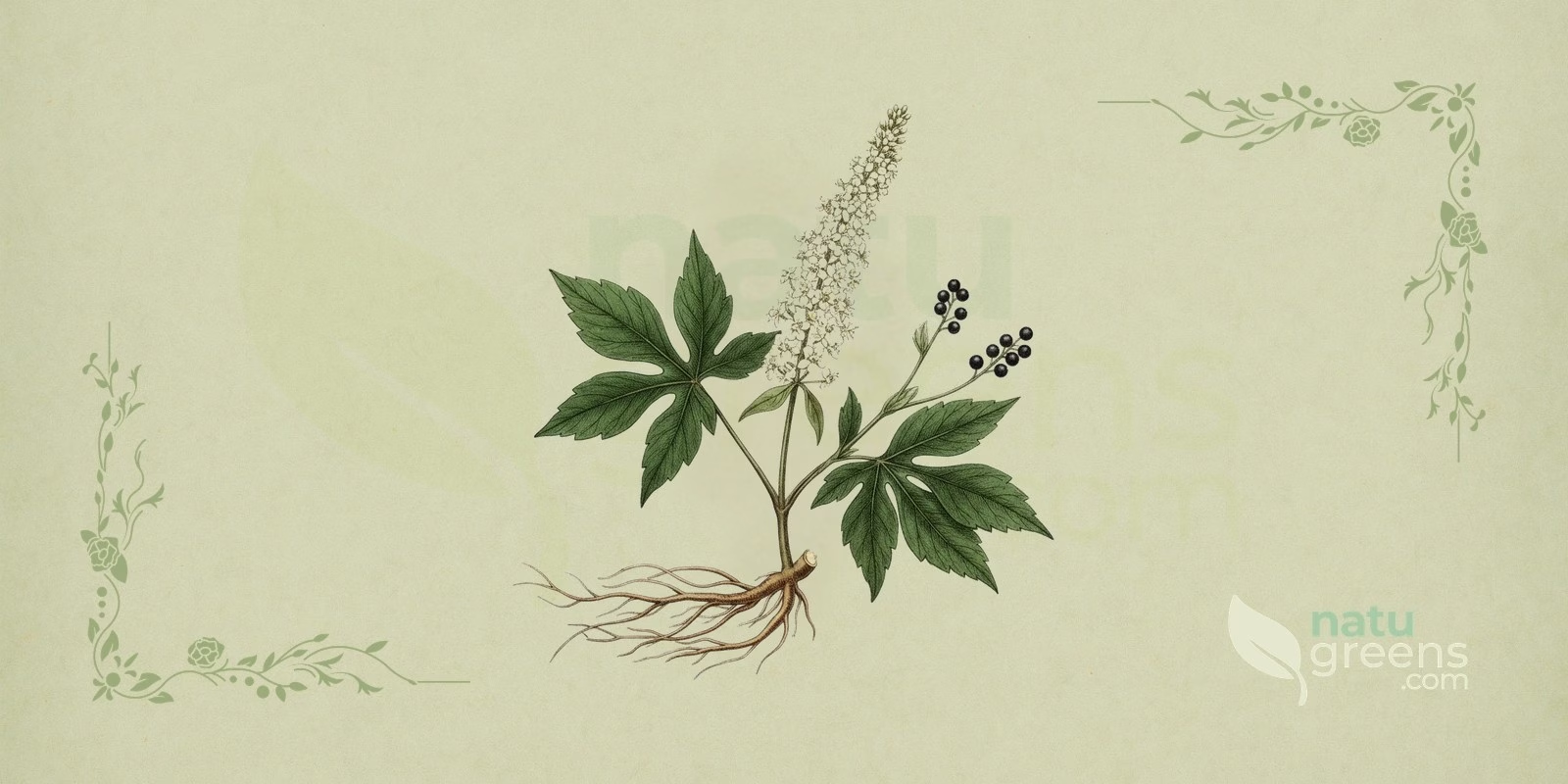
In herbal tradition, black cohosh stands out as a resource geared toward women’s health, with applications ranging from easing menopausal symptoms to traditional support for musculoskeletal pain. Rich in phytochemical content, especially triterpene glycosides and isoflavones, the plant has had part of its traditional uses examined by modern scientific research, which reinforces its relevance as a medicinal plant.
Popular and International Names of Black Cohosh
- English: black cohosh, black bugbane, black snakeroot, fairy candle.
- Spanish: cimicífuga, cohosh negro.
- Portuguese: cimicífuga, erva-de-são-cristóvão.
- French: actée à grappes, cimicifuga.
- Italian: cimicifuga, actea racemosa.
- German: Silberkerze, Traubensilberkerze.
Botanical Synonyms of Actaea racemosa
Actaea racemosa L. is the accepted botanical name for this plant, although Cimicifuga racemosa (L.) Nutt., a name proposed by Thomas Nuttall, remains a widely used synonym. Other synonyms include Cimicifuga serpentaria Pursh, Macrotrys racemosa (L.) Sweet, and Thalictrodes racemosum (L.) Kuntze, and this variety of names reflects the taxonomic complexity and classification history of the species.
Botanical Family: Ranunculaceae
The Ranunculaceae family, known as the buttercup family, is a diverse group of flowering plants comprising around 2,500 species distributed across more than 60 genera, characterized by flowers with numerous stamens and carpels. Many Ranunculaceae species are known for their medicinal and ornamental properties, such as hellebore, anemone, and delphinium.
Actaea racemosa shares the morphological traits typical of the Ranunculaceae family, recognized for producing bioactive compounds such as alkaloids, glycosides, and saponins. The chemical diversity of this family has been the subject of intense research, contributing to the development of phytopharmaceuticals and natural supplements.
Parts of Black Cohosh Used
- Rhizomes
- Roots
Ethnobotanical and Traditional Uses
- Childbirth complications treatment
- Cough relief
- Fever relief
- Gynecological problems relief
- Malaria treatment
- Menopausal symptoms relief
- Musculoskeletal pain relief
- Pneumonia treatment
- Sore throat treatment
Therapeutic Properties of Black Cohosh
- Anti-inflammatory (effect studied for reducing inflammation)
- Antirheumatic (traditional use to relieve rheumatic pain, arthritis, and osteoarthritis)
- Cough reduction (antitussive action)
- Hormonal balance (effect studied on hormone levels)
- Menopausal symptom relief (hot flashes, night sweats, mood swings, vaginal dryness, tachycardia)
- Menstrual cycle regulation (helps regulate the cycle); traditional record, without established clinical efficacy
- PMS and menstrual cramp relief (traditional use to relieve premenstrual symptoms)
- Sleep improvement (sedative properties)
- Support for depressive symptom relief (traditional use, especially associated with menopause)
Detailed Phytochemical Profile of Black Cohosh
- Alkaloids
- Chromones
- Flavonoids
- Isoflavones (formononetin)
- Nitrogen compounds
- Phenolic acids (caffeic acid, ferulic acid, isoferulic acid, phenylpropanoid acids)
- Triterpene glycosides (acteine, 27-deoxyacteine, cimicifugosides A and M, cimiracemosides A-H)
Preparation and Administration Forms of Black Cohosh
- Capsules
- Extracts
- Homeopathic pellets
- Infusions
- Tablets
- Tinctures
Synergy with Other Medicinal Plants
Black Cohosh and Red Clover for Menopause
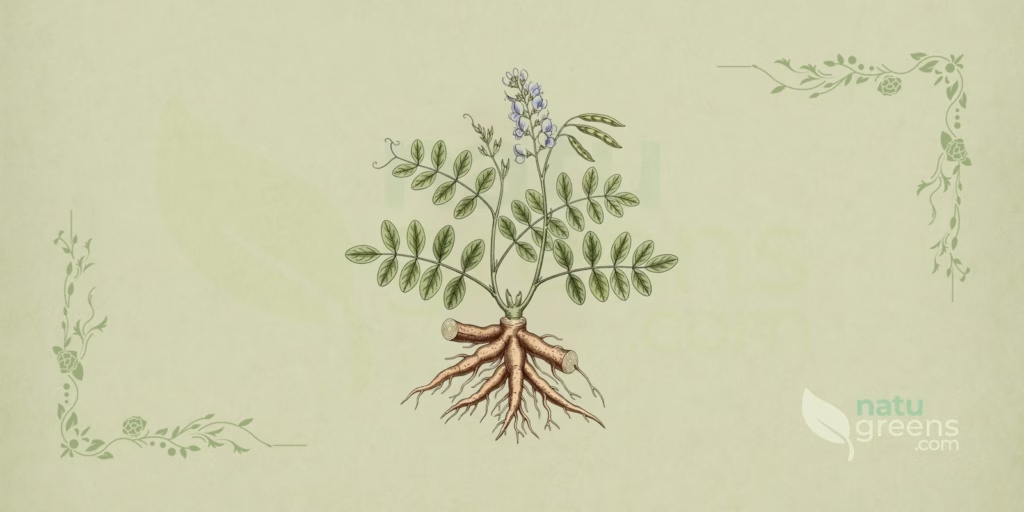
The combination of black cohosh with red clover (Trifolium pratense) is frequently used in herbal tradition to ease menopausal symptoms, since both plants contain phytoestrogens that act in a complementary way. According to this tradition, the synergy may enhance the beneficial effects of reducing hot flashes and night sweats, offering more comprehensive relief for women.
Black Cohosh in Herbal Blends
Black cohosh is a common component in various herbal blends formulated to support women’s health during menopause, including, in less common combinations, green tea (Camellia sinensis) and licorice (Glycyrrhiza glabra). Since the results of these blends can vary from person to person, it is important to seek guidance from a health care professional before using them.
Recipes and Usage Protocols of Black Cohosh
Tea for Menopause Relief
To prepare a tea for menopause, use 1 teaspoon of dried black cohosh root and 1 teaspoon of dried chamomile flowers, brought to a boil in 2 cups of water and simmered over low heat for 5 minutes, followed by an additional 10 minutes of steeping. Strain, drink warm, and add honey to taste if desired, consuming in moderation throughout the day and seeking guidance from a health care professional, since black cohosh carries contraindications and possible rare liver effects.
Tablets and Capsules
Oral administration of black cohosh tablets or capsules is one of the most common forms of use, generally spread throughout the day according to the product’s concentration. Tablets should be swallowed whole, without chewing, with a sufficient amount of water, and both the amount and frequency of use should always follow the guidance of a health care professional or the package insert, given the potential for rare liver effects associated with the plant.
Black Cohosh Tincture
Black cohosh tinctures are prepared from the plant’s root, and the dosage and method of use vary according to the product’s concentration and the health care professional’s recommendation. Generally, a few drops are diluted in water and taken throughout the day, offering a concentrated form with rapid absorption of the plant’s active compounds.
The preparations above follow traditional records and do not replace professional guidance. Before any internal use, check the contraindications and interactions described in this article.
Associated Therapies
Homeopathy
In homeopathy, Cimicifuga is a remedy frequently recommended for people who show extreme irritability and hypersensitivity to pain, with symptoms that tend to worsen with heat and at night. Traditional use is common for infant colic, toothaches, and insomnia, including the restlessness and irritability associated with sleeplessness, but dosage and potency should always be determined by a homeopathic practitioner.
Contraindications and Side Effects of Black Cohosh
Important Contraindications
Black cohosh is contraindicated during pregnancy, as it may promote menstrual flow and have a uterine stimulant effect, increasing the risk of premature labor; women who are breastfeeding should also consult a health care professional before using it. People with sensitivity to acetylsalicylic acid and individuals with active liver disease or a history of liver disease should avoid its use, as should people with hormone-sensitive cancers, such as certain types of breast and endometrial cancer. The plant is also not recommended for children and adolescents under 18 years of age.
Common Side Effects
The most common side effects include gastrointestinal discomfort, with nausea, diarrhea, and abdominal pain, as well as headache, dizziness, and, in some people, a feeling of heaviness in the legs. These effects tend to be mild and temporary, but if they persist or worsen, seeking medical guidance is advisable.
Rare Side Effects and Interactions
Among the rare but serious side effects is hepatitis, along with allergic reactions such as contact dermatitis and anaphylaxis, which can occur in sensitive individuals; visual disturbances and tremors are even less common. Black cohosh may interact with anticoagulant medications, such as warfarin, increasing the risk of bleeding, and it can enhance the effects of sedatives and anxiolytics, including benzodiazepines and alcohol. In vitro studies also suggest additive effects with tamoxifen in breast cancer cells, which calls for caution.
Historical Notes and Interesting Facts
Origin of the Name and Traditional Use
The common name “cohosh” comes from an Algonquian word meaning “rough,” a reference to the appearance of the plant’s rhizomes. Actaea racemosa has a long history of medicinal use: Native American peoples traditionally used it to treat musculoskeletal pain, fever, cough, pneumonia, sore throat, malaria, childbirth complications, and various gynecological problems.
Discovery and Popularity in Europe
The plant was first described in 1705, when botanist Leonard Plukenet recorded it in his work Phytographia as Christopheriana facie; later, in 1753, Carl Linnaeus published the name Actaea racemosa in his work Species Plantarum, formalizing the nomenclature. In the 19th century, black cohosh became a popular herbal remedy in Europe, used mainly for women’s health issues, and it is native to eastern North America, ranging from southern Ontario to central Georgia and, to the west, to Missouri and Arkansas, where it grows in a variety of forest habitats.
Frequently Asked Questions about Black Cohosh
Is Black Cohosh Effective for Hot Flashes?
Black cohosh is widely studied and used for hot flash relief, and several clinical studies suggest effectiveness in reducing the frequency and intensity of these episodes. For this reason, it is a popular option among menopausal women seeking natural treatments, although effects can vary between individuals, making consistent use important.
What Is the Recommended Dose of Black Cohosh?
The recommended dose of black cohosh varies according to the product’s form and concentration, and it should therefore always follow the manufacturer’s instructions or the guidance of a health care professional, since the species has contraindications and possible rare liver effects. Self-medication can be dangerous, and both the dose and the duration of treatment should be supervised by that professional.
Are There Drug Interactions with Black Cohosh?
Yes, black cohosh can interact with certain medications, so it is essential to inform your doctor about all the medicines and supplements you use. It interacts with anticoagulants, such as warfarin, increasing the risk of bleeding, and it can enhance the effects of sedatives and anxiolytics; caution is also needed with tamoxifen use. For this reason, guidance from a health care professional is always recommended.
What Is the Difference Between Black Cohosh and Red Clover for Menopause?
Black cohosh and red clover (Trifolium pratense) are used in a complementary way to relieve menopausal symptoms, since both plants contain phytoestrogens. In herbal tradition, this combination is associated with more comprehensive relief from hot flashes and night sweats, although the response can vary between women.
Which Parts of Black Cohosh Are Used in Herbal Medicine?
The roots and rhizomes are the most valued parts of black cohosh for herbal preparations, available in forms such as capsules, tablets, extracts, infusions, tinctures, and homeopathic pellets. These were precisely the parts that Native American peoples traditionally used in folk medicine.
Who Should Not Use Black Cohosh?
Black cohosh is contraindicated during pregnancy, as it may stimulate the uterus and increase the risk of premature labor, and breastfeeding women should consult a health care professional before use. It should also be avoided by people with sensitivity to acetylsalicylic acid, active liver disease or a history of it, hormone-sensitive cancers, or those under 18 years of age.
Notice: this content is for informational purposes and does not replace professional medical advice. Consult a physician or herbal practitioner before using medicinal plants, especially during pregnancy, breastfeeding, or alongside medication.
References and Scientific Studies
Peer-Reviewed Scientific Studies (1)
Institutional Sources (2)
- GOV2023 Wobser, R.W. Black Cohosh. StatPearls, 2023.
- GOV2006 Predny, M.L. Black cohosh (Actaea racemosa): an annotated bibliography. USDA Forest Service, 2006.