Red clover is a modest-looking herb that occupies a disproportionately large place in the agricultural history of the northern hemisphere. Described scientifically as Trifolium pratense, it belongs to the Fabaceae, the legume family, which gathers beans, soybeans, alfalfa and something close to twenty thousand species spread across every continent except Antarctica. Within that immensity, the genus Trifolium holds roughly 250 species, nearly all of them temperate, and red clover covers more ground than any of them apart from white clover.
Its native range takes in Macaronesia, northwest Africa and an unbroken belt running from western Europe to Mongolia and the slopes of the Himalayas. From the seventeenth century onward, settlers and seed houses carried the species to the Americas, Oceania, South Africa and the far North Atlantic, where it naturalised readily in pastures, roadsides and abandoned fields. In Brazil it turns up mainly in the southern states, tied to winter grazing systems.
What makes the plant remarkable is not its appearance, striking though the globose rose-magenta heads are in a June meadow. It is the root. The nodules that form along the rootlets house bacteria of the genus Rhizobium able to convert atmospheric nitrogen into usable ammonia, and it was that capacity, long before anyone understood the biochemistry behind it, that made red clover a linchpin of the crop rotations which reshaped European farming between the sixteenth and eighteenth centuries.
Taxonomy
The accepted name is Trifolium pratense L., published by Carl von Linné in Species Plantarum in 1753 and confirmed in the International Plant Names Index under Leguminosae, the conserved nomenclatural synonym of Fabaceae. The full hierarchical classification follows below.
- Kingdom: Plantae
- Division: Magnoliophyta
- Class: Magnoliopsida
- Order: Fabales
- Family: Fabaceae (Leguminosae)
- Subfamily: Faboideae (Papilionoideae)
- Tribe: Trifolieae
- Genus: Trifolium Tourn. ex L.
- Species: Trifolium pratense L., 1753
Synonyms and Infraspecific Taxa
The synonymy of the species is fairly extensive, although much of it now attaches to the typical subspecies, Trifolium pratense subsp. pratense. The names treated as synonyms in the Kew databases include the following.
- Trifolium microphyllum Desv.
- Trifolium pratense var. frigidum Gaudin
- Trifolium pratense var. sativum Afzel.
- Trifolium pratense var. variegatum M.Y.Liu & F.C.Wang
- Trifolium seravschanicum Ovcz.
The IPNI lists more than twenty infraspecific epithets published under the binomial, across subspecies, varieties and forms, which reflects less any real diversity than the obsessive attention European botanists and breeders paid to the plant over two centuries. Taxa such as subsp. baeticum (Boiss.) C.Vicioso, subsp. nivale (Sieber ex W.D.J.Koch) Ces. and subsp. kotulae (Pawl.) Soják describe montane or Mediterranean populations whose acceptance varies from one flora to the next.
Etymology
The generic name joins the Latin elements tres, three, and folium, leaf, a direct nod to the three-parted leaf that defines almost the whole genus. The epithet pratense comes from pratum, meadow, and means literally “growing in meadows”, a habitat label Linné applied to dozens of grassland species. In English the standard common name is red clover, while meadow clover, purple clover and cow clover survive in older agricultural writing.
Morphological Description
This is a short-lived perennial herb, generally lasting two to five years, ranging from 20 to 80 centimetres in height depending on the agronomic type and the soil it grows in. The habit runs from erect to semi-prostrate, and the ascending stems branch from the base, often under a coat of fine pubescence. The plant builds a woody crown at ground level, the structure from which new shoots emerge each season and whose health largely dictates how many years the individual survives.
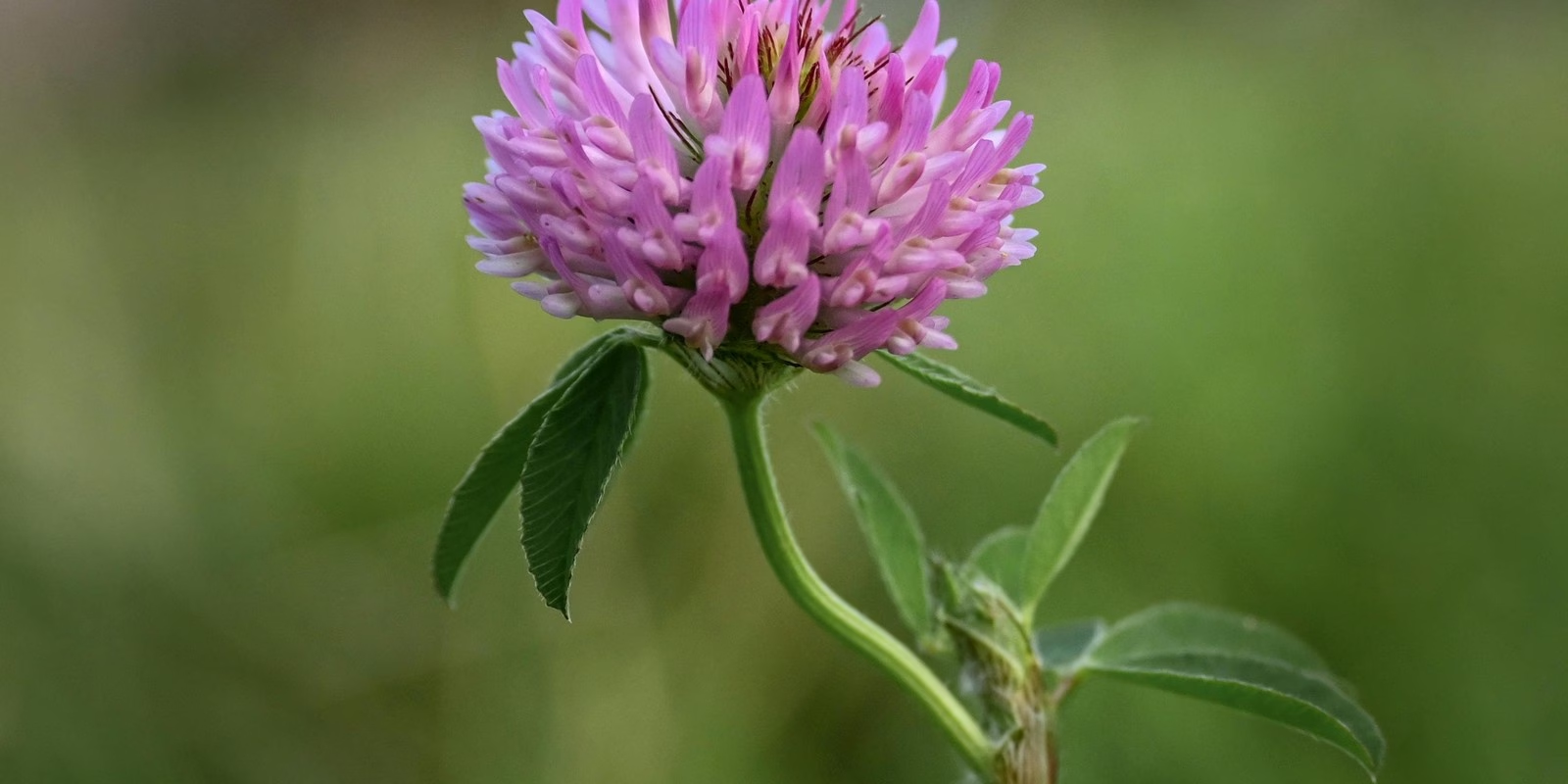
A globose head of Trifolium pratense showing the characteristic rose-magenta corolla and, at its base, the three-parted leaves that give the genus its name.
Leaves
The leaves are alternate and trifoliolate, with membranous basal stipules fused to the petiole and an aristate tip drawn out into a fine point. The leaflets measure 1.5 to 4 centimetres long by 1 to 2.5 centimetres wide, are ovate to elliptic in outline and have entire or finely toothed margins. The petiole is long on the basal leaves, reaching 10 centimetres, and shortens steadily towards the top of the stem.
The most useful field character is the pale, sometimes whitish, V-shaped mark across the centre of each leaflet. It shows up on most individuals but not on all, and its absence does not rule out the identification. Appressed hairs cover both surfaces of the blade, giving the foliage a faintly velvety feel.
Flowers
The inflorescence is a globose to ovoid terminal head, 2 to 3 centimetres across, gathering 20 to 100 individual flowers on a short receptacle. Each flower measures 12 to 18 millimetres and carries the papilionaceous corolla typical of the subfamily, with a standard, two wings and a keel. The colour dominates the field of view: deep reddish pink to magenta, with rare white-flowered forms bearing cream or white corollas. The calyx is tubular and hairy, ending in five unequal teeth that persist after anthesis.
Nectar pools at the bottom of the floral tube, at a depth most honeybees cannot reach. That geometry explains why efficient pollination depends on long-tongued insects, above all bumblebees of the genus Bombus, and why commercial seed production in regions without robust bumblebee populations tends to be troublesome.
Fruits and Seeds
The fruit is a tiny legume, 3 to 4 millimetres long, membranous and operculate, wrapped in the persistent calyx that hides it completely until maturity. Each pod holds one seed, rarely two, kidney-shaped and 1.5 to 2.5 millimetres long. The seeds are greenish yellow when fresh and darken through honey-yellow to light brown during storage, a colour shift growers use as a rough guide to the age of a lot.
Dispersal is essentially barochorous: the dry calyx splits open and the seed drops close to the parent plant. Long-distance movement, in this species, has historically been the work of livestock and the seed trade rather than of any morphological adaptation of its own.
Root and Stem
The root is a stout taproot reaching 60 to 150 centimetres down in loose, deep soils, which gives the plant better drought tolerance than white clover. Rounded nodules form along the lateral rootlets, pink when active, occupied by nitrogen-fixing bacteria of the Rhizobium leguminosarum biovar trifolii complex. The stems are cylindrical, hollow at the longer internodes and clothed in appressed hairs, and they rise from a basal crown that turns progressively woody with age.
Distribution and Habitat
The native range recognised by Plants of the World Online covers Macaronesia, northwest Africa and a continuous block stretching from Europe to Mongolia, reaching south into northern India and the Himalayan slopes. Within that territory the species settles in mid-altitude meadows, clearings in deciduous woodland, streamsides and disturbed ground with reasonably fertile soil.
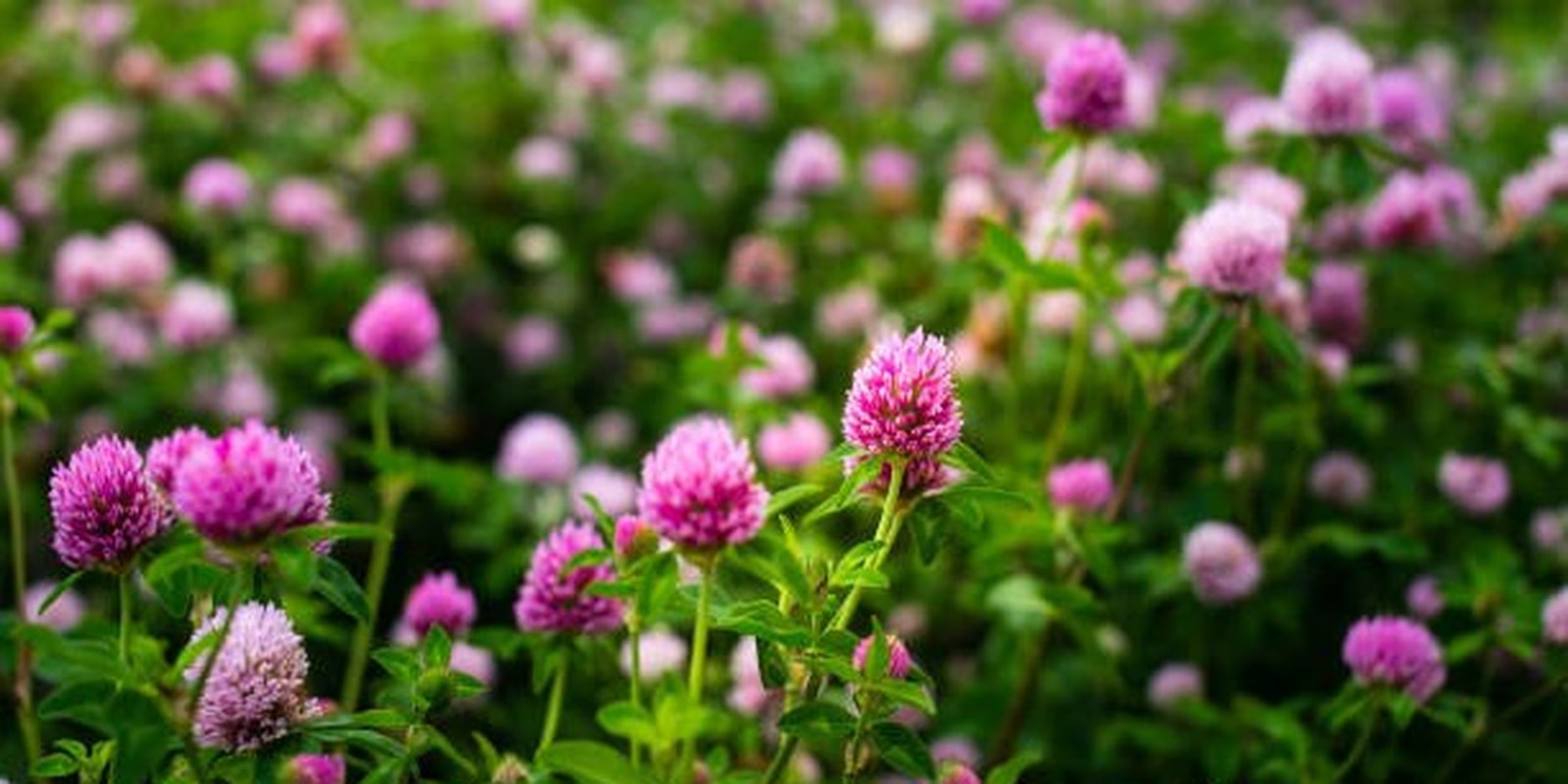
A red clover meadow in full bloom, the classic setting for the species in temperate pastures at the start of summer.
Its spread beyond the native range followed the expansion of European livestock farming. The species is now naturalised across much of North America, the Southern Cone, New Zealand, southeastern Australia, South Africa, Iceland and Greenland. In Brazil it occurs both as a cultivated and as a naturalised plant in the three southern states, above all in Rio Grande do Sul and Santa Catarina, where it forms part of winter pastures and of green manure schemes rotated with summer crops.
The climatic optimum sits between 15 and 25 degrees Celsius, with annual rainfall of 600 to 1,200 millimetres spread evenly through the cycle. The plant withstands severe frost while dormant, which places it comfortably in USDA zones 4 to 8, but it suffers through long hot, dry summers. As for soil, it favours fertile, deep, well-drained substrates with a pH between 6.0 and 7.5, and responds poorly to marked acidity below 5.5. Its altitudinal range runs from sea level to around 2,500 metres in the Alps and the Andes.
On the question of invasiveness, red clover counts as naturalised and occasionally ruderal, but it does not appear among the high-impact invaders in most risk assessment systems. Limited competitiveness in natural settings and dependence on specific pollinators help explain that relatively restrained behaviour.
Red Clover Cultivation
Propagation is by seed alone, broadcast or drilled at 1 to 2 centimetres deep. In soils with no history of Trifolium cropping, inoculating the seed beforehand with compatible Rhizobium strains is all but mandatory, on pain of the stand never developing effective nodulation. Germination takes five to ten days at a suitable temperature, and early establishment is the most vulnerable stretch of the cycle.
Nutritional demands show a characteristic asymmetry: nitrogen fertiliser is unnecessary, since the symbiosis covers the requirement, but the response to phosphorus and potassium is strong and liming is usually needed to correct acidity. Full sun is a requirement, as the species tolerates significant shade poorly. Mixed sowing with perennial grasses such as Dactylis glomerata, Lolium perenne and Phleum pratense is the commonest practice in pasture swards.
Among the pests, weevils of the genus Hypera defoliate stands grown for hay, the aphids Acyrthosiphon pisum and Therioaphis trifolii cause direct damage and transmit viruses, and the nematode Ditylenchus dipsaci distorts and swells the stems. On the disease side, anthracnose caused by Kabatiella caulivora is the leading cause of premature plant death, followed by crown rot from Sclerotinia trifoliorum in cold, wet winters, by powdery mildew from Erysiphe trifoliorum and by viruses of the clover mosaic complex.
Cutting for hay is done at the onset of flowering, with 10 to 25 per cent of the heads open, the point at which the trade-off between bulk and nutritional quality is most favourable. Stand persistence runs two to three years under intensive cutting and stretches to four or five under moderate grazing, after which resowing becomes unavoidable.
Phenology
Flowering runs from May to September in the northern hemisphere and from October to March in the southern, peaking in early summer. Early-type plants flower sooner and allow two or three cuts a season; late types, taller and longer-lived, flower later and yield one or two cuts.
Pollination is entomophilous and heavily dependent on bumblebees of the genus Bombus, whose tongue reaches the nectar at the bottom of the floral tube. Apis mellifera visits the heads but works them with reduced efficiency, and tends to gather pollen rather than nectar. The species is predominantly outcrossing and shows gametophytic self-incompatibility, which means seed set depends on effective cross-pollination.
Fruiting follows flowering after three to five weeks, and the seeds ripen inside the persistent calyx. Dispersal is gravitational and short-range, supplemented incidentally by the movement of animals and farm machinery. Some of the seed shows physical dormancy through an impermeable coat, a mechanism that spreads germination over several seasons and builds a persistent seed bank in the soil.
Related Species and Confusions
The genus Trifolium is large and morphologically cohesive, so mistakes in the field are common. The most useful distinguishing points appear below, set against the species most often involved.
- Trifolium hybridum L. (alsike clover): pinkish white rather than magenta corolla, slimmer and hairless stems, leaflets without the V-shaped mark and without obvious stalks.
- Trifolium incarnatum L. (crimson clover): cylindrical, elongated head rather than globose, crimson flowers and dense soft hairs over the whole plant; annual cycle.
- Trifolium medium L. (zigzag clover): the most serious confusion, given the general similarity in size and colour. It is told apart by its zigzag stems, narrower leaflets, linear rather than triangular stipules and the absence of the V-shaped mark.
- Trifolium repens L. (white clover): stoloniferous, creeping habit, white corolla, very long petioles rising straight from stolons rooted at the nodes.
There are no dangerous lookalikes in the strict sense for this species, since the other trifoliolate Fabaceae sharing its habitats, such as Medicago and Melilotus, bear racemose inflorescences easily told from the compact heads of red clover.
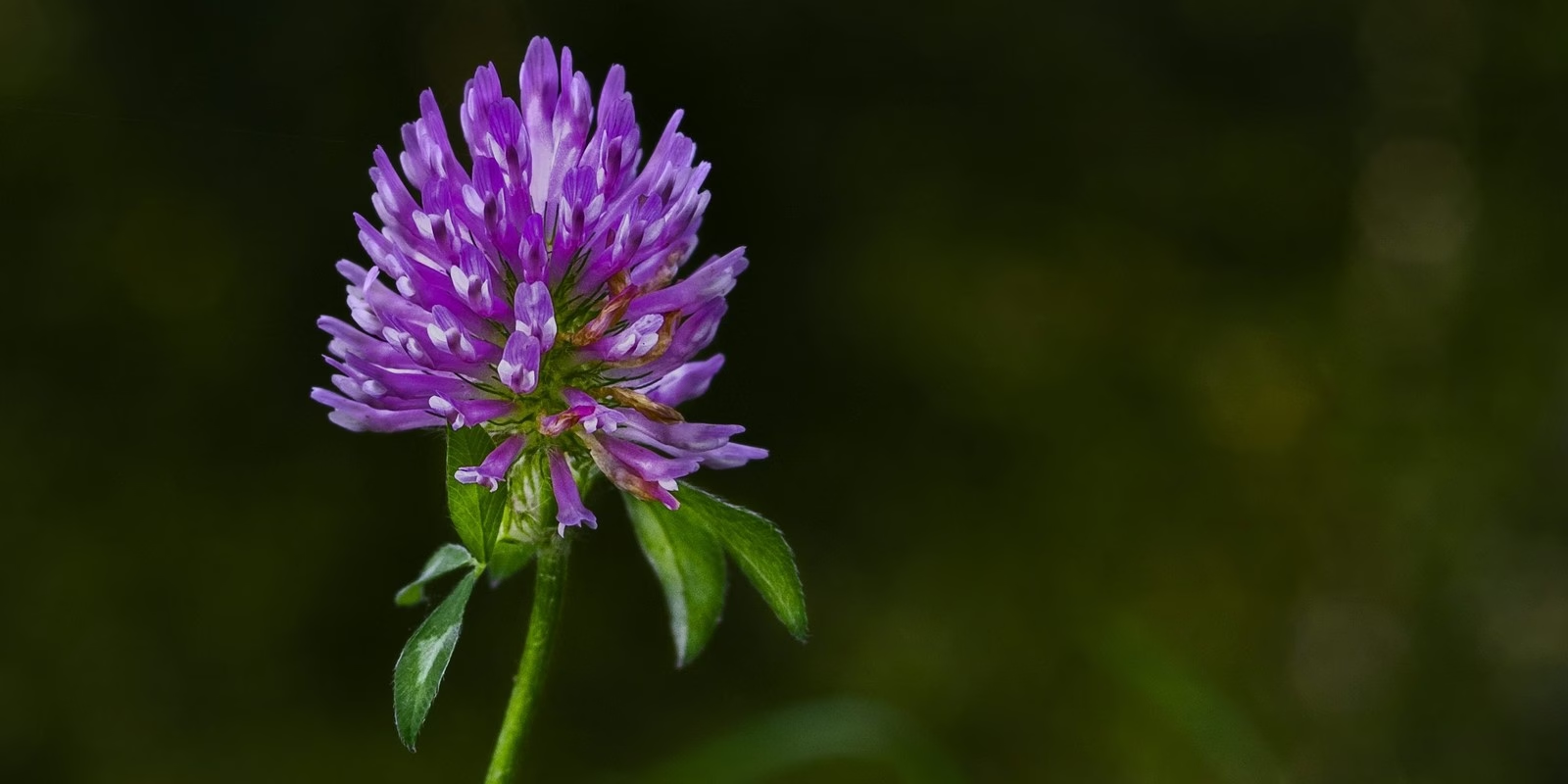
The compact, rounded head is what separates red clover from crimson clover, whose inflorescence is cylindrical and elongated.
Phytochemistry
The chemical profile of Trifolium pratense is dominated by isoflavones, a class of flavonoids characteristic of the Fabaceae. The inflorescences and young leaves concentrate formononetin and biochanin A as major components, alongside smaller proportions of daidzein and genistein, present both as aglycones and as glycosides and malonyl glycosides. Content varies with phenological stage, genotype and growing conditions, and tends to be higher in young aerial tissue than in mature stems.
Coumestrol occurs beside the isoflavones, a coumestan whose concentration is low in healthy tissue and rises in material subjected to fungal stress or mechanical damage. The plant also accumulates phenolic acids, chlorogenic acid and caffeic acid derivatives foremost among them, glycosylated flavonols such as quercetin and kaempferol, triterpene saponins and condensed tannins in modest amounts, well below the levels found in other forage legumes.
The protein fraction of the dry matter sits between 15 and 20 per cent for the whole plant in full vegetative growth, a figure that underpins the agronomic interest in the species as forage. The root, for its part, does not mirror the isoflavone profile of the shoot and concentrates storage carbohydrates instead.
Toxicity
Healthy plant tissue is not regarded as toxic to livestock under normal grazing conditions. The documented risk comes from outside the plant: the fungus Slafractonia leguminicola, agent of black patch disease of clover, infects the foliage in cool, damp seasons and produces slaframine, an indolizidine alkaloid that survives drying and stays active in stored hay for long periods. Animals that eat contaminated forage show profuse salivation, watering eyes, diarrhoea and frequent urination within hours of ingestion, a picture known in the veterinary literature as slobbers. Horses are particularly sensitive and cattle are affected as well. Second-cut hay made in wet years carries the greatest risk, and cases of secondary photosensitisation linked to consumption of infected clover also appear in the veterinary record.
History and Ethnobotany
The oldest written record of red clover as fodder comes from Roman authors of the first century, among them Pliny the Elder, who mentioned meadow legumes fed to working animals. Systematic cultivation, however, came much later: it began in the Low Countries and the Iberian peninsula around the fifteenth century and reached England and northern Europe in the seventeenth and eighteenth.
That late spread had enormous consequences. Bringing red clover into the so-called Norfolk system, alongside fodder turnips and perennial grasses, made it possible to do away with fallow and to carry larger herds through the winter, and agricultural historians point to it as one of the engines of the British Agricultural Revolution. Farmers of the day knew only that the land “rested” better with clover; the mechanism of biological nitrogen fixation was not demonstrated until 1888, by Hermann Hellriegel and Hermann Wilfarth.
On the ethnobotanical side, European herbals and books of simples from the sixteenth to the nineteenth century record that healers and apothecaries employed the dried flower heads against respiratory complaints and skin irritations, and that country people across central Europe applied the fresh plant in household compresses. Communities in the British Isles and Scandinavia ground seeds and dried heads as a flour extender in years of scarcity, a practice documented in nineteenth-century famine accounts. Indigenous peoples of North America took the species into their local repertoire after its European introduction, and nineteenth-century ethnographic records describe the heads being eaten among groups of the Great Plains. All of these are historical records of past practice, with no bearing on any present-day recommendation.
Conservation
Trifolium pratense has been assessed by the International Union for Conservation of Nature and sits in the Least Concern (LC) category, in keeping with an enormous range, abundant populations and no detectable decline on a global scale. The species appears in no CITES appendix.
The relevant threats are local and indirect. Agricultural intensification has cut back the area of semi-natural meadow in western Europe, and with it the genetic diversity of wild populations, while the replacement of mixed pastures by forage monocultures has reduced the nectar available to long-tongued bumblebees. That contraction appears in the literature as one of the factors associated with the decline of several Bombus species across the continent, which produces a feedback effect, since the plant’s own seed production depends on those pollinators.
Ex situ conservation is reasonably well covered. Germplasm banks in Europe, North America and Russia hold thousands of accessions of landraces, old cultivars and wild populations, material that underpins breeding programmes aimed at persistence and disease resistance.
Interesting Facts
- Red clover has been the official flower of the US state of Vermont since 1894, chosen to represent the dairy pastures that shaped the region’s economy.
- A well-established stand can add somewhere between 100 and 200 kilograms of nitrogen per hectare per year to the soil, an amount comparable to a full conventional nitrogen dressing.
- The difficulty Apis mellifera has in pollinating the species led New Zealand to import European bumblebees in the late nineteenth century, one of the first deliberate pollinator introductions on record and a case still cited in farm management handbooks.
- Tetraploid cultivars exist, obtained through induced chromosome doubling, with leaves and heads visibly larger than those of the original diploid lines and greater biomass production.
- The four-leaf clover of folklore is not a separate species: it is a developmental anomaly occurring in both Trifolium pratense and Trifolium repens, at an estimated frequency of about one plant in five thousand.
Notice: this content is for informational purposes and does not replace professional medical advice. Consult a physician or herbal practitioner before using medicinal plants, especially during pregnancy, breastfeeding, or alongside medication.
References and Scientific Studies
View All 8 Cited References
Peer-Reviewed Scientific Studies (1)
- DOI1996 Taylor, N. L., Quesenberry, K. H. Red Clover Science. Kluwer Academic Publishers, Dordrecht. 1996. ↗
Supplementary Readings (7)
- Flora e Funga do Brasil. Trifolium in Flora e Funga do Brasil. Jardim Botânico do Rio de Janeiro. ↗
- International Plant Names Index. Trifolium pratense L. The Royal Botanic Gardens, Kew, Harvard University Herbaria & Australian National Botanic Gardens. ↗
- IUCN. The IUCN Red List of Threatened Species. Trifolium pratense. ↗
- Linnaeus, C. Species Plantarum, vol. 2, p. 768. Impensis Laurentii Salvii, Stockholm. 1753. ↗
- Merck Veterinary Manual. Slaframine Toxicosis in Animals. ↗
- POWO. Plants of the World Online. Trifolium pratense L. Royal Botanic Gardens, Kew. ↗
- 1984 Zohary, M., Heller, D. The Genus Trifolium. Israel Academy of Sciences and Humanities, Jerusalem. 1984.